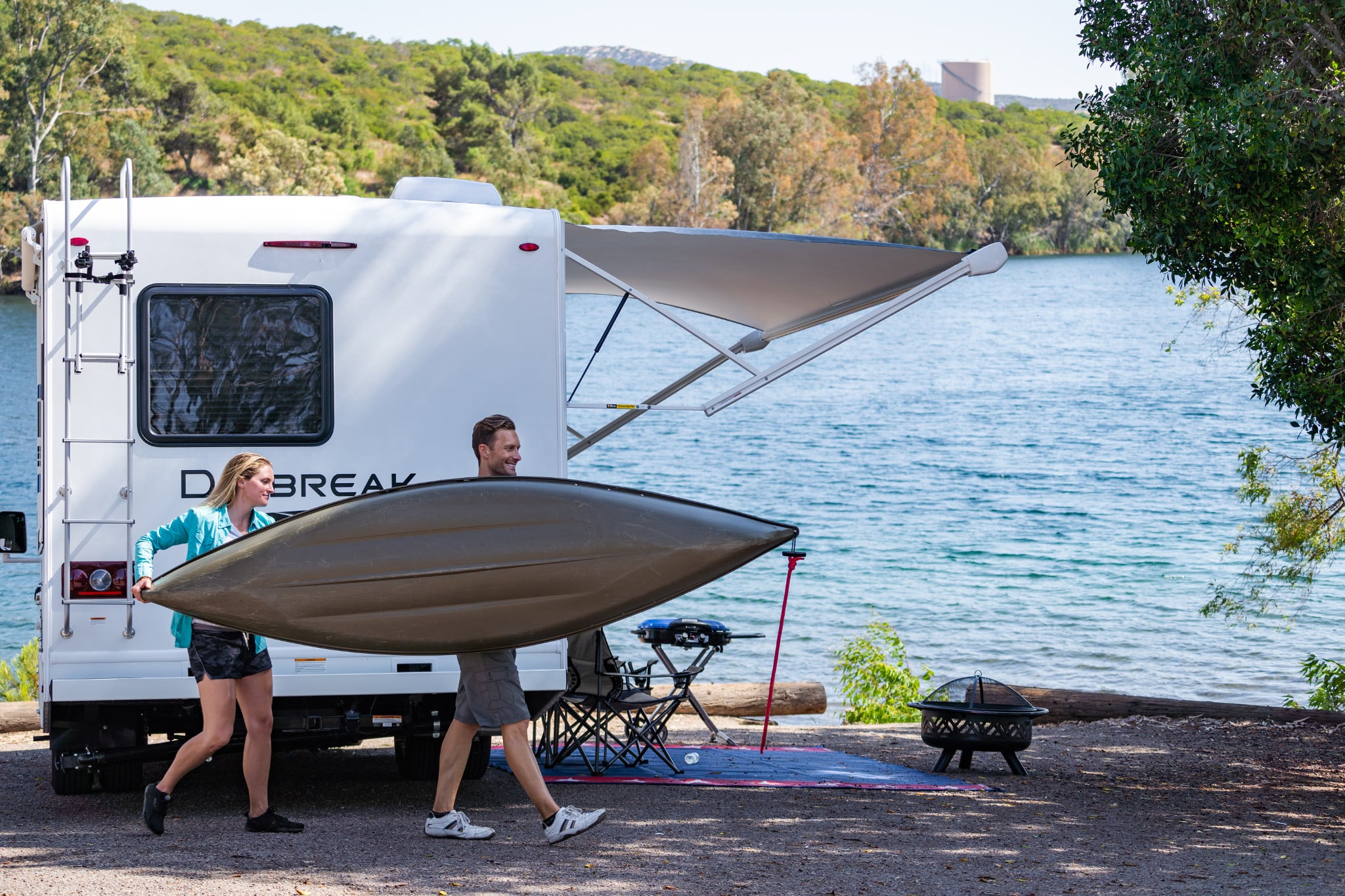
Another one of the top questions people ask when they’re starting their RV journey—should I buy a new or used RV?
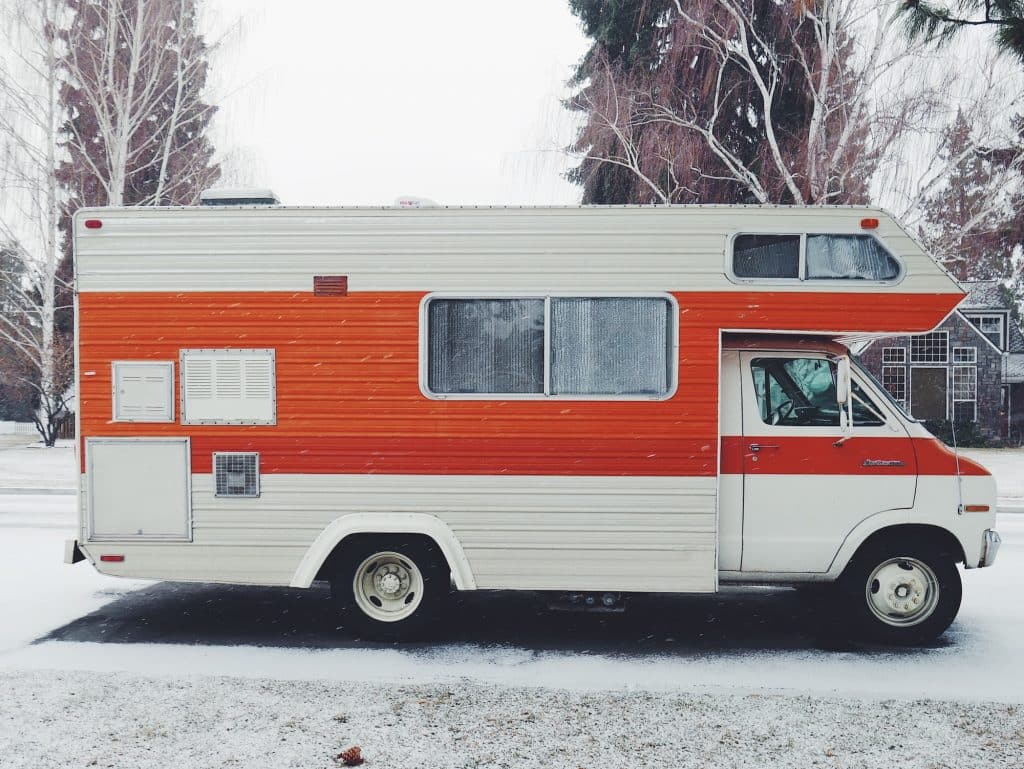
While there are some definite pros to buying new, choosing a used RV is a great option with a lot of benefits. Here are a few:
Save Money!
Clearly, the biggest benefit of buying used is the amount of money you’ll save. Used RVs can often be 30-40% cheaper than a similar new RV.
That lower purchase price tag may also mean lower insurance costs, less money toward interest payments (if you’re financing), and in some cases, even less in-state registration fees.
Used RVs also depreciate much more slowly than a brand new RV—you won’t get that familiar “new car” hit as you drive it off the lot for the first time.
If you’re looking to save a little money on the front end, a used RV is a great option.
Truly Learn What You Like at a Lower Cost
You might be wondering why there are so many used RVs to begin with.
The fact is, RVers tend to upgrade their RV fairly quickly—within a couple camping seasons. They’re finding out what they like and don’t like in their current rig as they’re out traveling in it.
That said, it’s likely you’ll go through the same process. The only real way to learn what you like and don’t like in an RV is to use it.
Not only can you take advantage of the price savings off a new RV, spending a camping season or two in a used RV will show you what’s important for your family, and you’ll be better informed when you’re ready to upgrade your rig.
“New RV Problems” Will Be Resolved
Photo by Frankie Valentine on Unsplash
Camping World takes great pride in inspecting every RV before it leaves our lot with a customer. Every inch of the RV is checked to minimize any issues.
Unfortunately, there’s no accounting for issues that occur when driving or towing an RV down the road over the first few hundred miles.
There’s no way to completely avoid issues with an RV’s systems or construction as it rumbles down the interstate, rolling over potholes or construction; or as it traverses bumpy trails in search for the perfect campsite.
When you buy a used RV, those issues will have been caused (by travel), identified, and fixed. You’ll be getting a road-tested RV, ready to hit the campground or tailgate lot right away.
Some Common Used RV Concerns
So why doesn’t everyone just buy used? Here are some concerns you may come across in your research.
Unsure of the RVs Quality
When you’re buying used, you don’t know what the previous owners have done in the RV. You might be concerned about the state of the RV and whether some problems may have been hidden by the owner.
Avoid these concerns by buying from a reputable dealer. Camping World completes an end-to-end inspection on every used RV it sells, done by a trained and experienced RV technician.
Lack of a New RV Manufacturer’s Warranty
Depending on the manufacturer, the original warranty might not be transferable to a new owner, even if the RV is under the age or mileage of the original warranty.
Your best bet is to get a third-party warranty for any Used RV you buy, no matter where you buy it from. Good Sam offers a variety of warranty options on used RVs.
When you’re looking for an RV, especially your first RV, a used RV could be a great option.
If you’re ready to start looking, find the perfect used RV for you in our inventory.
Sitting by the campfire telling stories, or quietly allowing yourself to be mesmerized by the flames, make for some of the best camping trip moments.
Of course, there is an art to the campfire. Preparation is key. We’ve probably all been caught, at least once, without our best campfire setup during perfect campfire conditions.
To help you always be ready for the perfect campfire, here’s a list of must-have campfire accessories for your next camping trip.
1. Multi Tool or Knife
Image by Markus Spiske from Unsplash
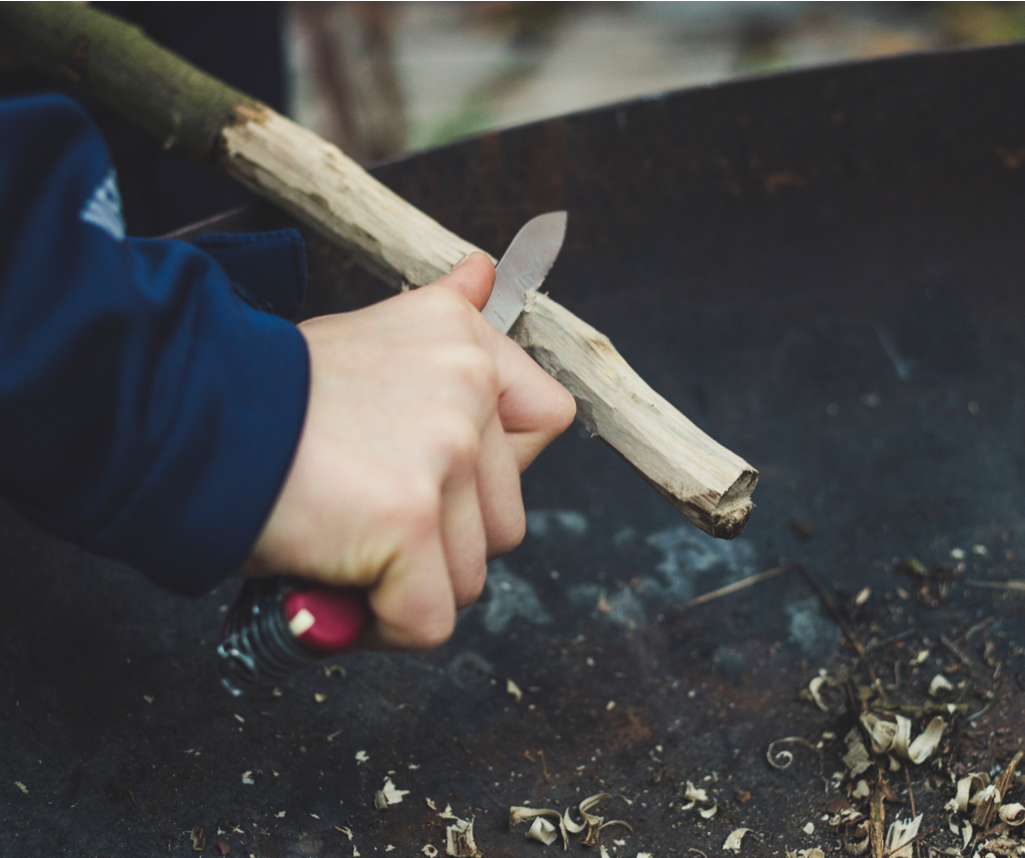
A vital component of building a campfire is tinder. Ideally, you use something like dry grass or dead pine needles. Of course, there are times, especially at some very developed campgrounds where there are none to be found. While there are many hacks out there, a multi tool with a knife guarantees you’ll have tinder without the need to find or remember anything––well except for your firewood or logs!
Grab your bundle of firewood and take out one of the logs in the bundle. Using the knife in your multi-tool, carefully shave off small pieces of the wood. Wood shavings make great tinder.
2. Fire Starter
Image by Devin Avery from Unsplash
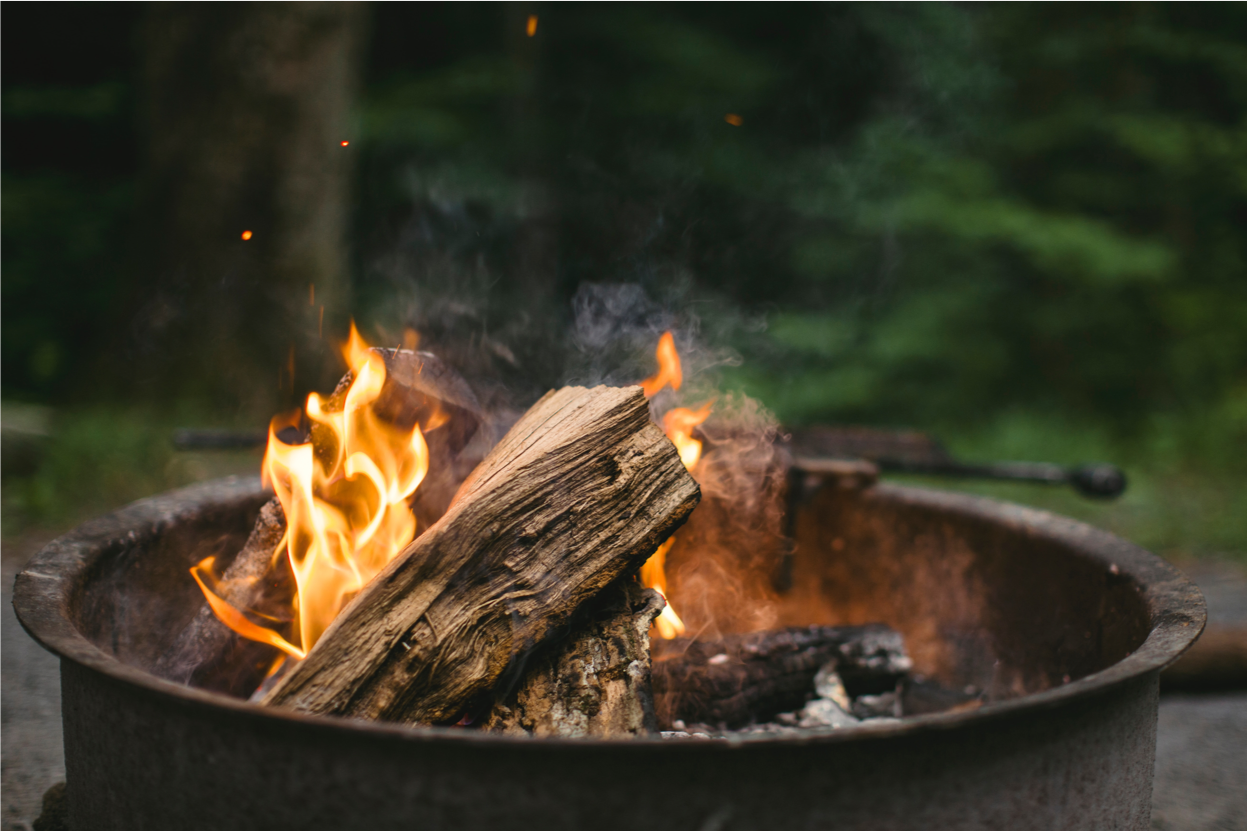
You can’t have a perfect campfire if you can’t start the fire!
Once you have your tinder, kindling, and logs set up, it’s time to start the fire. Matches are certainly tried and true, especially waterproof matches. Be sure to pack some before your trip. A lighter works well too.
Speaking of fire starters you can also get a bit of help with the tinder step, and use fire starter sticks or fire starter squares. Duraflame logs are also popular. Avoid using lighter fluid. It smells foul and is dangerous.
3. Fire Poker and Bellows
Image by Roya Ann Miller from Unsplash
To avoid burning your fingers and hands––surely not part of a relaxing campfire experience––use a fire poker to move the wood in the campfire around. Don’t be that person quickly reaching into the fire to shift a log over with their hand. While you can use a stick, you may not find one in more developed campgrounds, not to mention a fire poker will keep you at a safe distance from the flames.
And, speaking of safe distances. An important step to building the perfect campfire is blowing at the base of your fire. Safely add oxygen at a distance with a bellows. These often pocket-sized expandable metal tubes help you safely blow on your fire as long as you follow good fire safety practices. (Like don’t inhale through the tube, etc.)
4. Comfy Camp Chairs
Image by Black Sierra
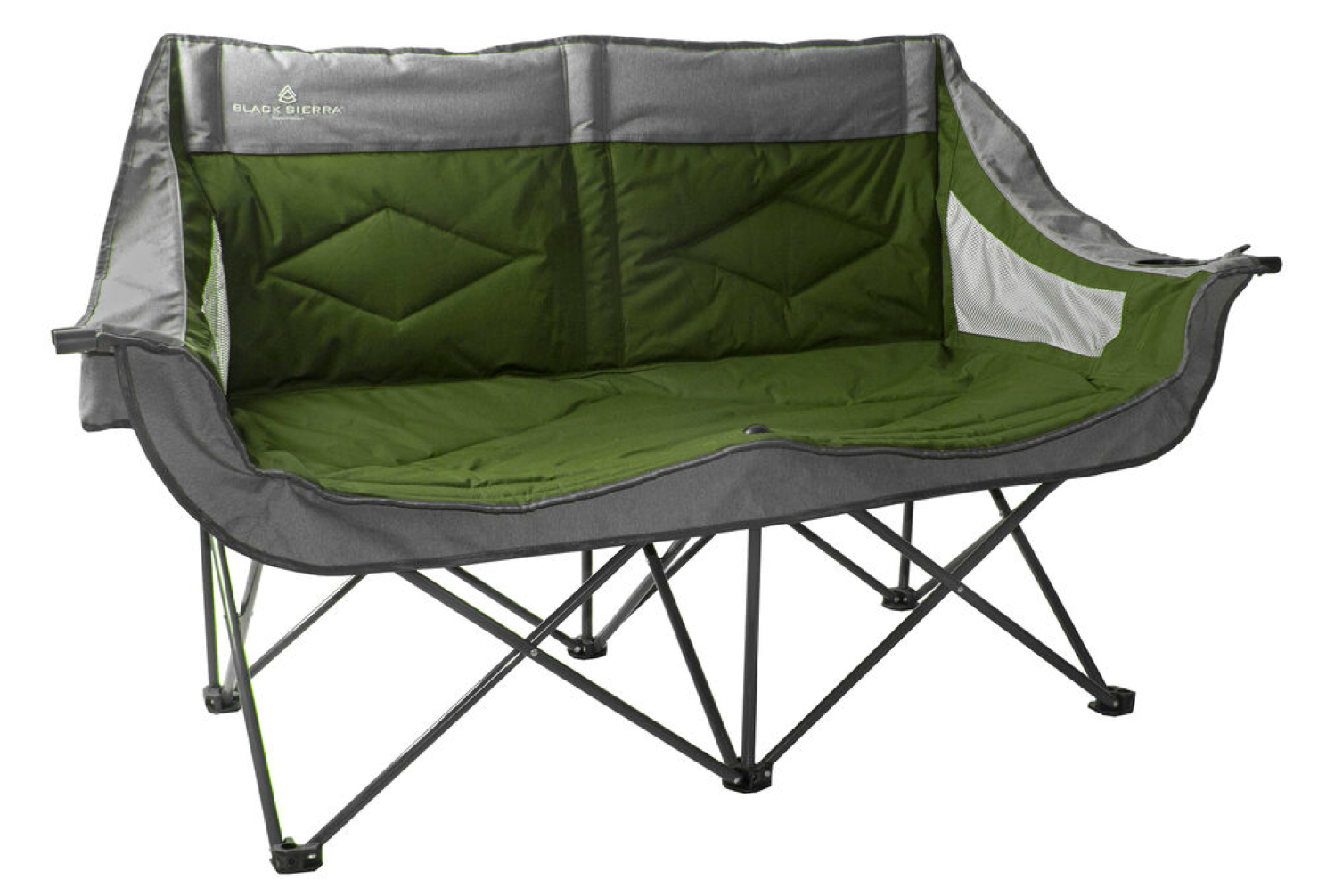
You can stand around a fire sure, but after a long day, there’s nothing like sitting by the campfire. Be sure to pack some comfy camp chairs. If you’re up for it, go all out with reclinable camp chairs.
Sitting around the campfire invites conversation and bonding. You might even get inspired to whip out the ukulele or guitar and sing songs. If you happen to be tight on space, or you’re camping with kids who prefer to sit on the floor, an RV patio mat can be a nice spot to enjoy the campfire from too.
5. Marshmallow S’more Sticks & Mugs
Image by Leon Contreras from Unsplash
Whether it’s cold or not, a campfire isn’t complete without some snacks. Be prepared for some marshmallow roasting with marshmallow s’more sticks.
If it’s chilly out, a hot mug of coffee, tea, or hot cocoa will nicely complement your campfire. Be sure to pack some mugs for your next trip. If it’s not chilly, try an adult beverage instead. And if you’re not into drinking wine from a mug––who are we to judge––go ahead and bring wine glasses.
6. Collapsible Bucket
Image by Camping World
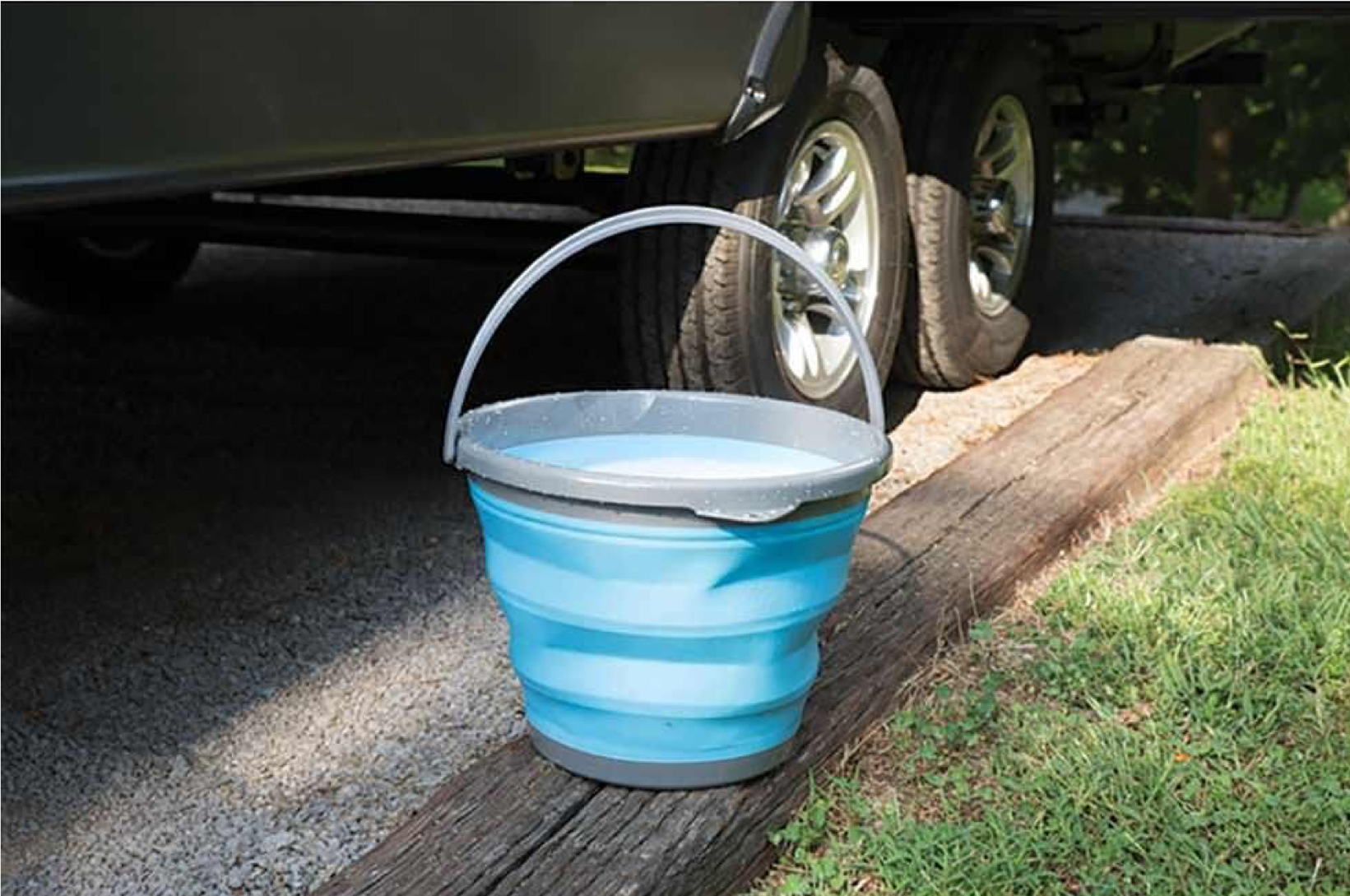
This is a must. Being a responsible camper and campground RV neighbor means putting your fire completely out when you’re done.
Keep water in your bucket, and at the end of the night (or after breakfast) pour water on your fire until it no longer hisses at you.
7. Smokeless Campfire Option
Image by BioLite
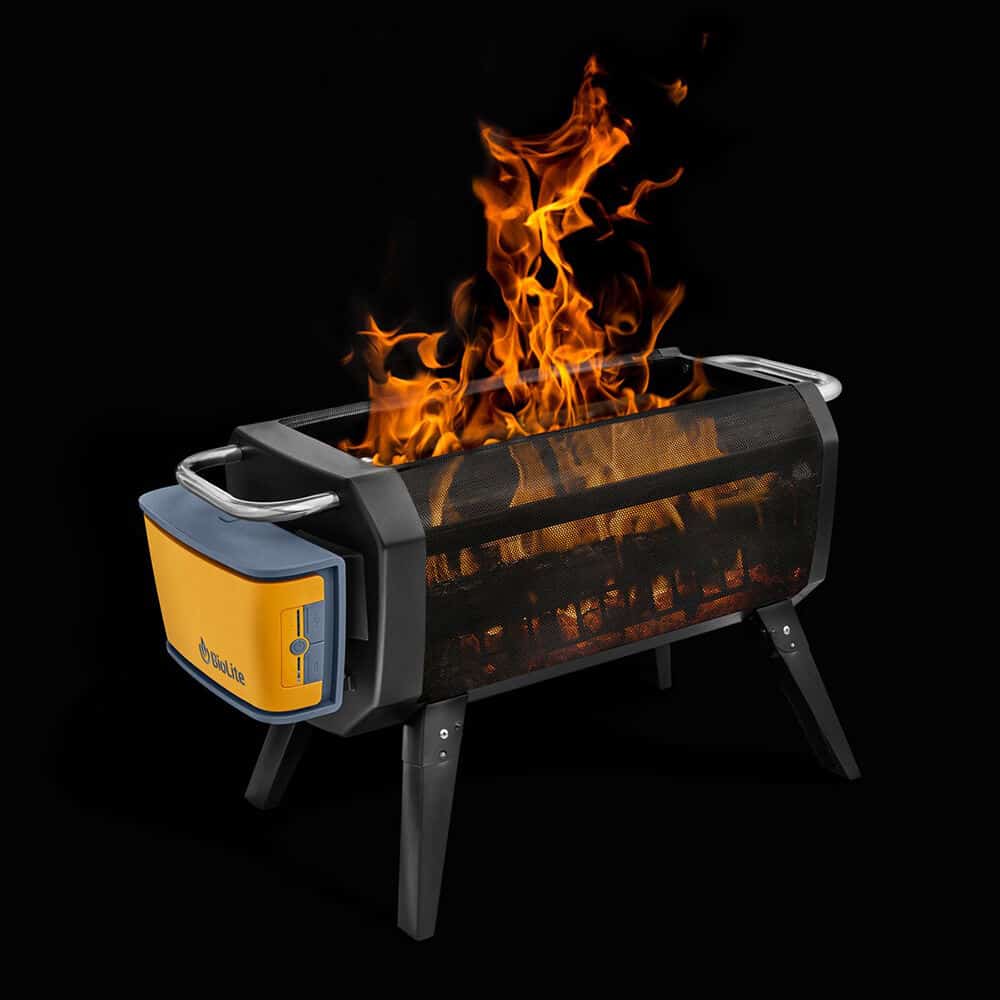
A smokeless campfire option is a must-have for anyone wanting to upgrade the campfire experience. We all love sitting around the campfire, but how many of us truly love the campfire smoke.
That campfire smoke tends to envelop you as your drifting off to sleep at the end of the night. It’s smell can linger on your clothes or in your hair. And of course, how many of us have had nights where the smoke chases you around the fire until sitting around the campfire becomes a game of musical chairs?
For those of who want to skip the smoke, we recommend Biolite’s Smokeless Fire Pit. You still get to use wood and keep all the joys of a campfire without the smoke. It even doubles as a hibachi grill.
And if you want to skip building a fire and using wood altogether, try a portable propane fire pit. This is a great option for those of us that were never camp scouts! And, you’ll be able to enjoy a consistent, smokeless campfire. We promise you’ll still enjoy sharing life stories while sitting around it.
With just a few simple accessories your on your way to your perfect campfire.
Do you have any tips for the perfect campfire? Leave a comment below!
Illinois is home to a rich topography of gorgeous, glacier-forged sandstone bluffs, waterfalls, canyons, and natural springs. Its unique geology is reason enough to visit, but everyone will find something to fall in love with at these state parks.
Native American history has played a part in much of Illinois due to its abundant hunting and fishing grounds, which still exist today. Clean springs and rivers still offer and support great fishing and wildlife in Illinois.
Tons of options for camping (and glamping) and outdoor recreation are offered within the following state parks, and are sure to appeal to just about everyone in your extended family.
Matthiessen State Park
Image by Miguel Bandeira from Unsplash
Budding geologists and nature-lovers will find much to delight in within this park. The numerous unusual and beautiful sandstone rock formations are the most popular feature of Matthiessen State Park, and it is home to the largest anticline in Illinois. The mile-long main canyon, formed by ancient water erosion and colored by minerals, is a unique sight to behold. Hikers will enjoy the five miles of trails that traverse the many steep cliffs, deep canyons, streams, and waterfalls.
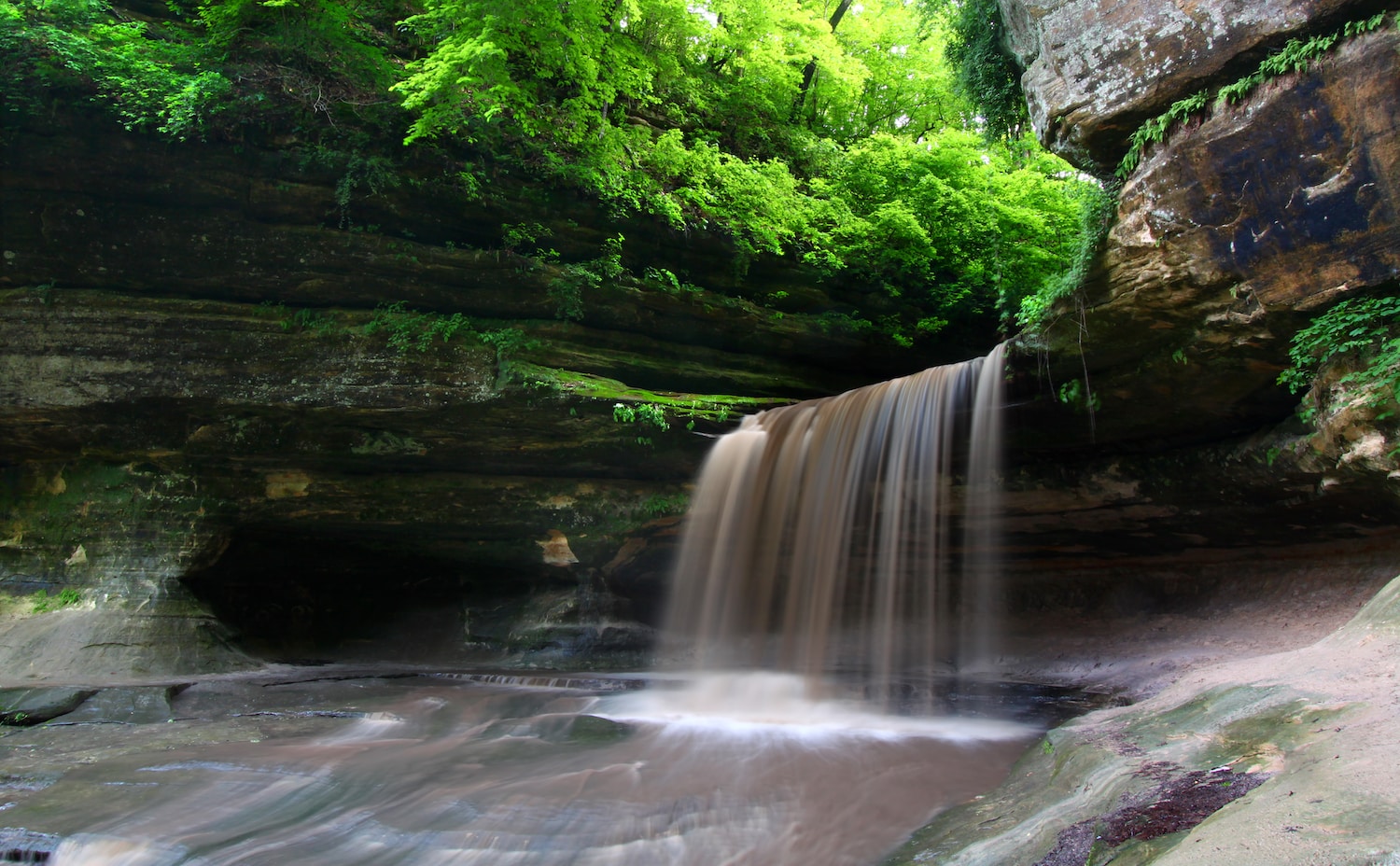
Cascade Falls features a gorgeous 45-foot waterfall, carrying spring-fed mineral water from the Upper Dells of the Deer Park Lake, to the Lower Dells of the Vermillion River. In addition, several mineral springs are a worthwhile sight at Matthiessen, attracting a large deer population for salt licks.
Along with hiking, visitors will find six miles of cross-country ski trails, nine miles of equestrian and mountain bike trails, a field archery range, geocaching, and a radio-controlled model airplane field.Dove, coyote, squirrel, and turkey hunting are offered seasonally. This is an excellent park for bird-watching, as Matthiessen offers a wide variety of habitats and plant life. Camping at the park appears to be limited to equestrian camping, but multiple accommodations exist within a few miles.
Starved Rock State Park
Image from Getty
Arguably the most beautiful state park destination in Illinois, Starved Rock State Park features eighteen canyons of sandstone bluffs that were formed by ancient glacial meltwater. The vertical walls of the canyons allow for fantastic overlooks of waterfalls and natural springs, surrounded by a lush arrangement of cedar, oak, hickory, and pine trees. In the spring, waterfalls are found at the heads of all 18 canyons, as groundwater seeps through the sandstone.
Starved Rock’s namesake and pièce de résistance derive from an early NativeAmericann legend surrounding the 125-foot sandstone butte within the park. The rich ecosystem of this area has attracted and sustained mankind for at least 10,000 years. Starved Rock State Park’s cultural history can be identified all the way back to 8000 B.C., the history of which can be explored through visitor center exhibits and guided tours of the park.
An abundance of wildlife and plantlife inhabit Starved Rock State Park, which can be enjoyed along the thirteen miles of trails spanning the park. Bald Eagles are a major attraction in the winter months as they migrate from Canada and the Great Lakes for the unfrozen waters of Starved Rock’s Lock and Dam. In the spring and summer months, many varieties of wildflowers and plants bloom, sprout, and sustain wildlife. Flying squirrels can be spotted soaring from tree to tree, alongside Indigo Buntings, Vireos, and Yellowbellied Sapsuckers.
Starved Rock State Park hosts many guided tours and hikes, including full moon hikes, sunrise hikes, and haunted trail hikes. In addition to hiking, many fishing, boating, hunting, and camping opportunities are available throughout the park. The campground has 129 Class-A Premium campsites, all equipped with a cement pad for RV or camper, electric hook-ups, an area for two tents, and a picnic table and grated fire pit. Luxury lodging can be found within the Starved Rock lodge and cabins, in addition to fine dining.
Kankakee River State Park
Image from Getty
There is a tremendous amount of history to this park, which is sure to add interest to your visit. Kankakee River State Park was once home to several large Native American tribes in the 1600-1700s, including the Miami, Potawatomi, Ottawa, and Chippewa nations. The most extensive village was “Rock Village” or “Little Rock Village” inside the present-day park near the mouth of Rock Creek. In 1830, it was the site of the last great Indian Council.
Like the Native Americans, fishers and hunters will find much to enjoy and sustain themselves within this park. Roughly half of Kankakee River State Park’s 4000 acres are wetlands, including eleven miles along both sides of the Kankakee River. Great fishing can be found along this Federal Clean Streams registered river, including smallmouth bass, walleye, northern pike, and channel catfish.
There are two boat ramps for fishers, but the water can be shallow. A seasonal hunting program includes archery deer, waterfowl, and upland game. Firearm hunting is permitted for duck, pheasant, turkey, dove, rabbit, squirrel, fox, coyote and raccoon.
There are many other family-friendly activities within the confines of Kankakee River State Park. Hiking, biking and cross-country ski trails, in addition to horse and snowmobile trails can be explored seasonally. Geocaching, an archery range, dog-training sites, canoeing, and metal-detecting count among other popular activities.
There are more than 200 campsites within the Kankakee River State Park, including equestrian campgrounds (no water). 98 sites are limited in regard to electricity and showers. Another 110 sites with full electricity and showers are offered in another part of the park. Picnic sites, shelters, and two rental cabins are also located within the park.
Pere Marquette State Park
This is a great state park to visit for those interested in Native American history and nature, and for families with a variety of preferred camping styles. Pere Marquette State Park features 8,000 pristine acres of nature, including gorgeous views of the Illinois River from atop its bluffs.
A vast network of streams and rivers were formed in the area following the glacial period, creating rich topsoil that lent itself to a deciduous forest. Over the centuries, six Native American cultures made their home amongst this abundant topography, and several burial mounds have been identified within Pere Marquette State Park.
When European explorers first came to this site in the late 1600s, they were met with mural depictions of the Piasa Bird, a dragon-human creature, painted on the bluffs of the Mississippi River. A representation of the Piasa Bird can be seen today painted on bluffs about 20 miles away from the park.
Year-round recreational activities are held here, including horseback riding, fishing, hiking, hunting, boating, and camping. 80 campsites are available with electrical hookups, with a sanitary dump station, drinking water, and a shower building available on the grounds. The park offers two Rent-A-Camp cabins, a Youth Tent Camp Area, and a fantastic luxury lodge featuring 50 spacious guest rooms and 22 guest cabin rooms.
Among the lodge facilities are a cocktail lounge, gift shop, indoor swimming pool, whirlpool, saunas, game room and tennis court. An excellent brunch is also offered within the lodge, making this park a great choice for glampers and campers alike.
Have you visited any of these Illinois state parks? Did we miss any important ones? Leave us a comment below!
Your health should be a priority no matter your living situation. Whether you live in a sticks and bricks house or RV full-time, it’s important to make time for yourself and exercise. If you do full-time, living in a 300 square foot RV is no excuse to not work out. There are so many ways to stay in shape on the road. Here are six ways to exercise while full-time RVing.
Biking
Image by Pexels.com
Whether it’s on a mountain, around town, or even around the campground, biking is a great work out. It gets the heart pumping and is also a wonderful way to check out the area where you are camping.
It can be a fun work out for the entire family or the perfect opportunity to clear your mind on a solo ride. Not sure how to travel with a bicycle in tow? A bike rack can easily mount onto the bumper or rear hitch of your rig.
Hiking
Image by Pexels.com
There is no better way to get outside and see this beautiful country than by hiking. Hiking allows you to access places not a ton of people go and see an area’s natural beauty.
It is also a great workout! Burn some calories, stretch your legs, and get to know a place even better by getting out and taking a hike. Whether it’s a short stroll or a strenuous hike, it’s great for your body and mind. So grab your hiking gear and hit the trail!
Yoga
Image by Pexels.com
Yoga is the perfect way to exercise the body and relax the mind while full-time RVing. It takes up very little space so it is something that can be done outdoors on nice days or even indoors when the weather isn’t great.
All you need is enough space for your yoga mat! Not sure where to start with yoga? Try attending a class in the local area where you are camped or find a video online. There are a number of free resources online to get you started on your yoga journey!
Exercise Videos
Image by Pexels.com
Long gone are the days of jazzercise videos on VHS but that doesn’t mean exercise videos no longer exist. Using your smartphone, tablet, or computer, you can easily find resources online to guide your workout.
YouTube is filled with free videos to get you moving, or you can pay for a more structured series of workouts that can be tailor-made to fit your health goals. Guided workout videos are a great way to exercise if you’re not sure where to start or need a little bit of motivation.
Home Gym
Image by Pexels.com
If you think you don’t have room in your tiny home on wheels for a home gym, think again! You really don’t need much to get your body moving and have a successful workout.Dumbbells can be used in a number of ways to assist in a full-body workout and don’t need to take up much storage space.
An exercise mat can be used for situps, pushups, or stretching. Even a mini exercise bike and arm exerciser doesn’t take up much space and it is a great addition to any home gym. With just a few workout staples, you can stay fit without even leaving your campsite.
Gym Membership
Image by Pexels.com
Do you wish you could have a gym membership like you did before you started traveling full-time? Well, you can! There are a number of gyms with locations nationwide where your membership can be used. For example, YMCA and Planet Fitness have gyms in almost every state in the U.S. and membership is good at any location.
Heading to the gym for your workout is a great way to get out of your rig and spend time focused on yourself. A gym membership can also come with other perks such as daycare, showers, and free Wi-Fi!
There is no excuse for skipping a workout if you full-time RV. It doesn’t take much to stay healthy and have fun at the same time. Make sure to keep your body in shape so you are able to really enjoy all of the beautiful places you visit while living the travel lifestyle dream.
How do you stay in shape while on the road? Leave a comment below!
Looking for new ways to celebrate Thanksgiving? It’s coming up fast. While many people don’t do Thanksgiving while camping, you always can try hosting your Thanksgiving dinner in your RV.
Read on for our best tips on how to plan the perfect RV Thanksgiving. These tips are great for RVers and anyone looking for new Thanksgiving, or Friendsgiving, ideas. An RV Thanksgiving is so easy to plan, you might just make it your new Thanksgiving tradition.
Book Your Thanksgiving Campsite in Advance
Believe it or not, campgrounds fill up for Thanksgiving. Camping on Thanksgiving is a thing so be sure to book your site as soon as possible.
Consider booking your stay for Wednesday through Sunday to take advantage of the time off and relax in the great outdoors for your holiday.
We tend to associate Thanksgiving with the changing leaves, pumpkin spice, and all things fall. If you’re able to travel, for an idyllic Thanksgiving dinner setting, try celebrating at a state park or Corps of Engineer campground in Tennessee, North Carolina, or Georgia.
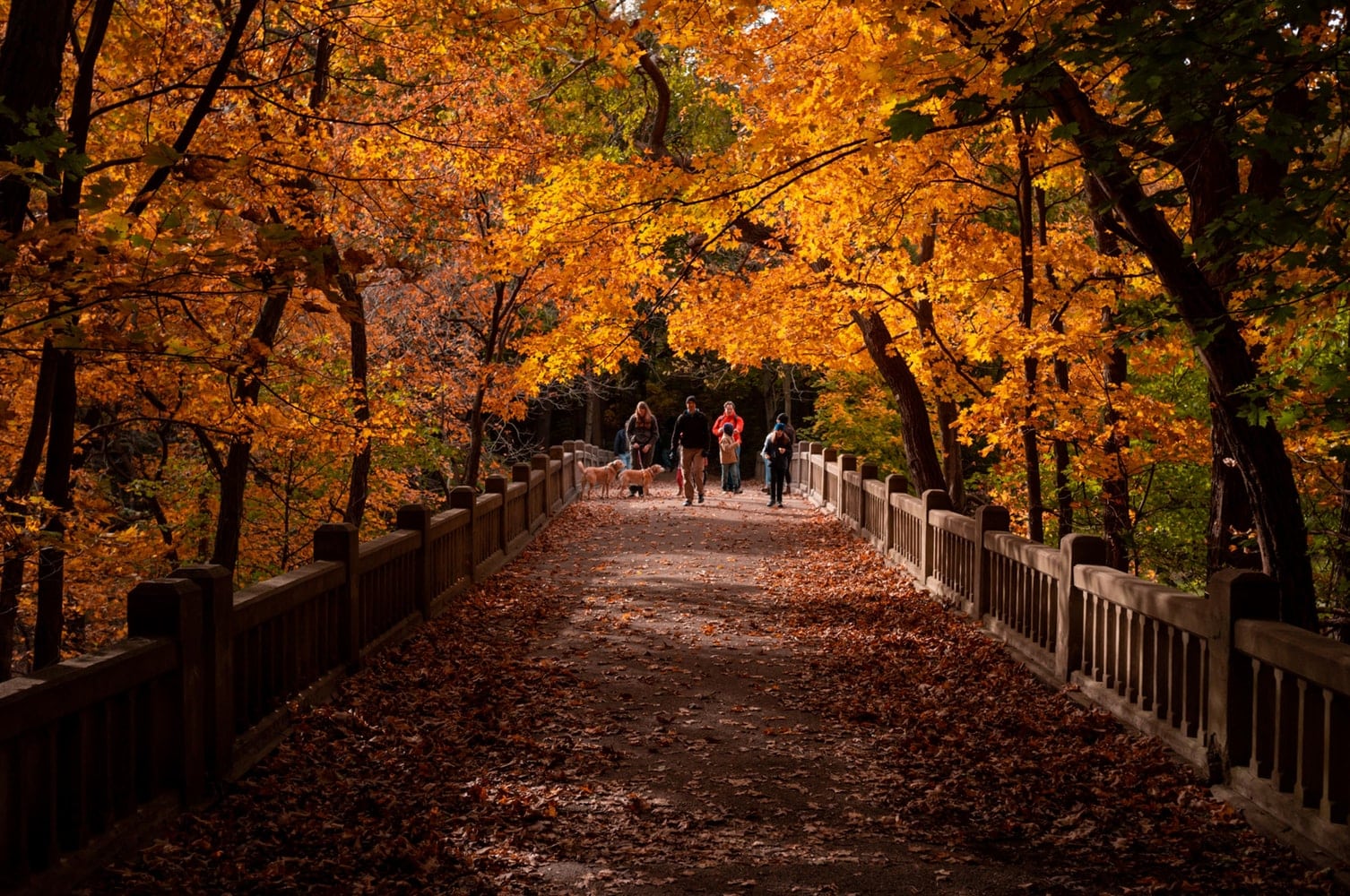
Most years the weather will be just right and the leaves will still be ablaze with color. Otherwise, try your local state park or campground.
Thanksgiving Dinner: Cater or Cook Ahead
Image by Element5 Digital on Unsplash
Catering Your RV Thanksgiving Meal
The easiest way to enjoy a traditional turkey and fixings in your RV is to have your meal catered. This way everyone gets to relax by the campfire in the morning, catch the big game, and enjoy their Thanksgiving camping.
Try to avoid tasking one person with all the cooking. Also remember, your RV oven may not be big enough or tall enough to fit a whole bird.
Depending on your preferences and budget try ordering your catered Thanksgiving meal from Whole Foods Market, Cracker Barrel, or Boston Market. Many supermarket chains like Kroger, Safeway, and Publix (for those of you in Florida and Georgia), also offer great options. Believe it or not, some reports have shown these options cost less than making everything from scratch.
Try to set up your order to be picked up on Wednesday evening so you can pick up your meal on your way to your campsite, especially if you won’t be taking a tow car.
Cooking Ahead and Reheating
If there’s a famous side dish in your family––the kind where it’s just not Thanksgiving without it–– cook ahead and reheat on the grill, in the microwave, or on the stove the day of.
You can also roast your turkey at home, slice it up, and then reheat the already sliced turkey in the RV oven.
If you full-time, you can have the turkey catered, and still make your sides from scratch.
No matter what, be sure your campsite is developed and has power hookups if you plan on using a non-propane appliance like a microwave or Instapot for your Thanksgiving Day cooking.
If your Thanksgiving is spent at a National Park, remember most National Park sites are unserviced. Plan on a catering option, and then reheat the meal on your propane RV stove or on a skillet over the grill.
Bring Out the Fall Feels
Image by Nadia Bajuelo
Thanksgiving dinner is a special meal. Just because you’re out camping in your RV doesn’t mean you can’t incorporate fall touches like you would at home.
The easiest way to add a festive touch to your table is a tablecloth. Decorate your campsite picnic table with a fall tablecloth. A white or off-white tablecloth is always a winner if you don’t have one with that fall harvest feel. Add a table runner if you really want to go all out.
Depending on where you are you can also add fallen leaves or pine cones lying around your campsite site to your table decor.
If you’re eating inside your RV, fabric placemats might do the trick, especially if your dinette table is smaller.
You can also hang a Fall wreath on your RV door, or bring a Thanksgiving lawn ornament (think one of those little banners you stick into the ground) to hang by your campsite post.
Inside the RV, add some fall throw pillows and blankets to seating areas and beds.
Know Your Game Plan
Image by David Adamson from Unsplash
If anyone taking part in your RV Thanksgiving is a big football fan, definitely plan to have them be able to tune in.
Some campgrounds will have a cell signal and so streaming services you subscribe to may be a good option (Think YouTube TV, ESPN+, etc.) A cell booster can help if you’re going this route.
For those of you college football fans, you’ll find a very festive atmosphere at the campgrounds near some of the big college football schools. Bring your fan gear and show your school pride at the campsite with banners, apparel, and camp chairs and make a full weekend out of your RV Thanksgiving.
If you or your football fan guests prefer tablets to TVs, be sure to have a tablet mount for hands-free watching.
Even if you don’t have any football fans at your RV Thanksgiving, it’s fun and cozy to plan on some holiday movies after the campfire.
What to Pack for an RV Thanksgiving
If possible begin to stock your RV a few days in advance. Pack cozy blankets, camp chairs, firewood, and fire starters for the campfire.
Be sure to bring hiking shoes, bikes, table games, outdoor games, books, hammocks, and any other recreation favorites. If the weather is nice, it’s a great time for hiking, biking, and other outdoor fun.
If the weather refuses to cooperate on any of the days during your camp stay, books, movies, and games will go a long way.
Most importantly remember to fully stock your kitchen with paper towels, coffee filters, aluminum foil, plastic wrap, and containers for left-overs. Stock utensils like forks, spoons, and knives, but don’t forget serving spoons, and other serve-ware.
Plates, mugs, wine glasses, and bowls are a must. A cutting board, skillets, pots, and casserole dishes may come in handy especially if you’ll be making anything from scratch.
So, you want to buy your family an RV? Well, awesome! RV ownership and all that comes with it can be one of the most rewarding things you can do.
You’ll learn new skills, go to awesome locations and show your family all that this great country has to offer. There’s state parks, national parks, and so much more. Before you can get started though, you’ll need to buy your RV. But where do you start?
Start At Your Kitchen Table
Image from Getty
It might sound kind of odd, but you should really start at your kitchen table. You need to sit down with your family, specifically your spouse or significant other and go over what you can afford. Don’t go into the RV buying process without knowing what you can easily afford.
You should have a full dollar amount you feel comfortable paying for the RV and a monthly amount that you can easily afford. If you’re taking out a loan to buy the RV (the vast majority of buyers do this) then you need to make sure you have a number that you can pay each month without putting needless strain on your family.
The good news is that many RVs can be had at very reasonable prices. The loan terms on an RV are much different than they are on a car, which means you can get an RV with an extremely reasonable monthly payment.
So, start there. Sit down at your table and discuss your budget with your family. You don’t necessarily need to include the kids (if you have some) at this point, but it can also be an easy way to teach your kids budgeting. Be realistic and err on the side of caution and you should find a number you’re comfortable with.
Think About How You Want to Use Your RV
Image by Camping World
The next step, before you start digging into the different types and classes of RV is to think about how you plan to use your RV. Are you going to spend a lot of time in it? Do you plan on taking long trips or short ones? How far do you plan to go? Who will be going on the trips with you?
These are all questions you need answers to before you start looking at motorhomes vs towable RVs or different classes of motorhomes.
Literally, get a pad of paper out and a pencil or pen and write this stuff down. Once you have all of these things figured out, or as close as they can be to being figured out, then you can start thinking about the individual RV you’d like to have.
It’s these early preparation tasks that will help ensure you get the right RV for you and your family.
When you’re ready to begin the shopping process, head over to Camping World’s website to see all of the RVs on sale.