Have you ever noticed how children love motorhomes, caravans or camping? Whenever a child comes either to collect our motorhome for hire or is staying with us in our motorhome they are simply in heaven. Whatever it is the miniature 'Doll's House' scenario, everything you need to live in such a small space, I'm not sure. For families motor homing is a reasonably priced way to spend time together and live an outdoor lifestyle with a lot of creature comforts.
For us, the over cab bed is always a hit with children, something about having to climb a ladder to bed (like bunk beds) and the fact the view is so high (when otherwise, sometimes, children's' visual perspective on life is at a much lower level). The fact they have their own private space – with their own light and curtained privacy, I do not know, but of course the clip up 'safety net' which ensures that both the children and parents feel safer and no accidents.
When we were children and my brother slept on his single hammock bed (something which drew much envy from me), my parents always had to tie a loose strap around his middle to stop him turning over in his sleep too enthusiastically and then flipping himself out of bed – no such problems with the safety net.
At the moment my friend and I are thinking what to do at October half term as 8 year old Anna is desperate to have a trip in the motorhome after her Mum and I went to Yorkshire two years ago in the motorhome to the 21st birthday of one of our Godchildren. I think the arrival of both of us in a motorhome after so long has gone down in family folklore to be retold on numerous occasions in the future.
Apart from the appeal of motorhome living compared to hotels, the outdoor lifestyle is ideal for children. Most campsites have play areas, they can run around, often taking their bikes and meet and play with new friends in a pretty safe environment – the battle is usually getting them to come in to eat or at night to go to bed and I don ' t remember it being any different when we were children either.
So for parents or grandparent's motor homing provides a comfortable environment for a family holiday whether wet or cold some days, and for children it's a holiday of adventure and freedom to explore new surroundings with new friends and they simply love it!
A lot of people are choosing Class A motorhomes as their traveling vehicle over fifth wheel and travel trailers these days. You see them everywhere now. And to be sure, traveling in a Class A motorhome has a lot of advantages. But you should also be aware of some of the disadvantages too before deciding for yourself. Here is a brief look at the matter from both sides:
Advantages:
1. Class A RVs are very easy to drive on the open road.
2. There is just no substitute for the comforts and amenities that can be enjoyed in a Class A as opposed to smaller, less roomy motorhomes and RVs. If you want it, usually you can get it in a Class A.
3. No compatibility issues to worry about here. Whenever you tow your home behind you there is always a need to make sure that the tow vehicle and the RV are in complete synchronization with each other because if they are not working together you will be fighting the wheel the whole time you drive down the highway. With a Class A, it’s an all-in-one package. Just jump in and go.
4. When you arrive at your destination, there is no need to even get out of your RV in the case of bad weather. When you tow a vehicle there is a certain amount of setup that has to be done initially and you have to transfer from the tow vehicle to the RV. With a Class A, you are already home when you arrive.
Disadvantages:
1. Price. Class A motorhomes can be very expensive and as more manufacturers keep packing in expensive features that trend will probably continue to grow. New units also take a serious depreciation hit, so bear that in mind when you buy.
2. If you want to get around town once you arrive, you probably will need to tow another vehicle behind you adding to the cost of this setup. It’s just too difficult to setup and take down your Class A every time you want to run to the store. Of course, you may opt for bicycles instead, but then that limits how far you can go and can be difficult to travel far in bad weather.
3. If your motorhome breaks down, you will probably have to spend a night or two in a motel while it is at the RV repair shop. Most shops try to get you in and out on the same day, but if the repair is serious enough, or parts are hard to get, that just may not be possible. With a towed vehicle, you still have your home to stay in if the truck has to go in for work.
4. Class A RVs can be very long, especially the more expensive models, and that can narrow your choices of where you can stay as some campgrounds simply don’t have the facilities to accommodate long rigs.
The disadvantages of owning a Class A motorhome that are listed above should not be taken to mean that you shouldn’t own one. Just don’t get so caught up in the advantages of Class A RVs, that you don’t also consider the disadvantages as well. After looking at both sides you can make an educated decision about whether it will be the best choice for you.
As you might be aware you can often get some incredibly good deals by purchasing your used motorhome at a police auction. Even though these auctions are called ‘Police’ auctions you shouldn’t get lulled into a sense of false security, there are still many risks involved and you are not guaranteed anything more than the fact that the vehicle will run.
In order to minimize the risk involved with buying at one of these auctions you need to know the value of the vehicle you are trying to buy because bidding can at times become fierce and shoot up to levels higher than the value of the motorhome.
You need to know exactly which sort of motorhome you are looking for. An auction viewing is not the time to be perusing several different classes of motorhome. If you are still at this stage then postpone your buying for a while and hire or borrow a similar model to the one you think you might be buying and get completely clear on what sort of motorhome or RV you really need. The viewing period at the auction will be short and all of the time should be spent checking it out for faults.
Being as there will be little time in which to check over one or more rigs then you should prepare a check list before you set out. Make mechanical checks (good idea to take a mechanic with you), check the water system for leaks, examine the fixtures and fittings and the electrical system.
For almost 20 years various manufacturers made the Toyota motor home in several models. During its heyday, this little camper was produced in over 60 different models and styles of motor homes.
Beginning with the rather small Toyota Chinook camper and carrying on through the largest of the Toyota based Winnebago and Itasca models, the Toyota based motor home help to establish many manufacturers in the RV industry.
Because of the large number of manufacturers it is not uncommon to see similar campers and very different names. The small overall size had to limit the variety of floor plans available. This caused a lot of the manufacturers to build virtual duplicates that varied only in some of the fit and finish type of details.
It wasn’t long until the manufacturers began to expand the size of the camper bodies. Using conventional manufacturing techniques found in the travel trailer industry, the stick and staple type of construction with aluminum siding became the standard.
In the decade of the 1980s production of the Toyota motor home peaked. Many different companies were producing many different models. Some of the larger companies that were in this business were national RV, the producers of the very popular Dolphin series. They also produced the Seabreeze models. At the same time Winnebago was producing the Brave, the Warrior, and the deluxe Itasca Spirit models.
Damen Corporation of Elkhart Indiana produce the Escaper motor home, while Coachman produced the popular Coachman and Savanna models. Leisure Odyssey was building the Americana, Santa Cruz, and the Laguna campers.
The Mini-Mirage was built by Mirage industries, while the still very popular SunRader was constructed with a fiberglass body by Gardener Pacific.
By the late 1980s the length of the camper body had expanded to 22 feet. This caused a severe overload problem on the original half ton pickup axle. A national safety recall was issued by the United States government to correct the problem. Most of the models were given a new one ton axle. However there are still a few units available today that have the unsafe axle. Caution is advised if you are looking at in 1980s version of this very popular camper.
In 1989 V6 appeared on the market in the Toyota chassis. This increased horse power became very popular with the camper owners and production continued until 1994 when Toyota stopped supplying the pickup chassis to the camper manufacturers for safety reasons. Winnebago produced some of the last V6 versions in 1994.
During its production lifetime, the Toyota motor home enjoyed a great popular success and was widely distributed across the country. Today the greatest number of units on the road seem to be concentrated on the east and west coast areas but these motor homes will turn up just about anywhere in the country.
Thinking of full-timing and know that a fifth-wheel is the right RV for you? Well, you have a lot of choices. While I could spend all day going through the various bands and floorplans, I thought it better and quicker to just highlight three fifth-wheels that are an excellent option for someone thinking of full-timing.
Here are three you shouldn’t overlook if you’re thinking of buying a fifth-wheel to live in all the time:
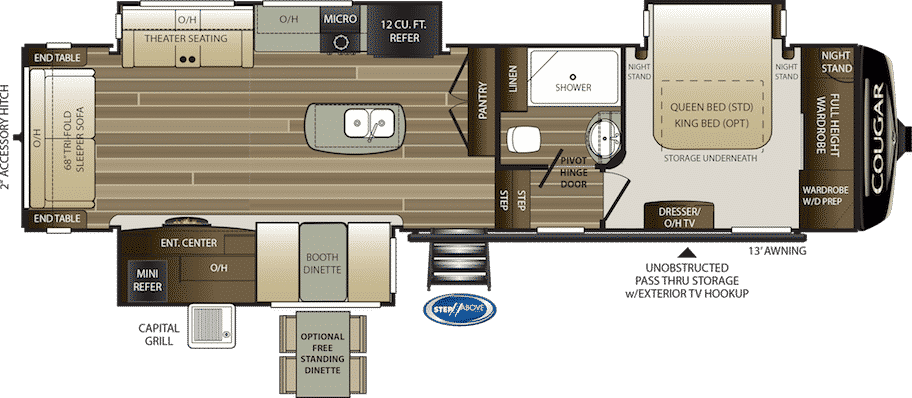
1. Keystone Cougar 338RLK Fifth-Wheel
A model that’s not too large, but still gives you plenty of living, sleeping, and kitchen space is the Keystone Cougar. While you can choose from the 11 floorplans the company offers, we like the 388RLK. I appreciate the large open living room and kitchen area. The kitchen island mounted double basin sink in the kitchen and theater seating in the living area provide a seriously homey feel.
Keystone quality is well-known, and the Cougar has been the best-selling fifth-wheel in its class for two decades. the Cougar comes with class-leading water tank sizes, high ceilings, and residential-sized appliances in most cases.
It’s also equipped with the latest technology like two large TVs with Key TV (the largest measuring 50 inches), an auto leveling system, and a powerful HVAC system that should keep the Cougar comfy in hot and cold weather. We’ve done plenty of video reviews on Cougars, so if you want to learn more, head over to our YouTube channel.
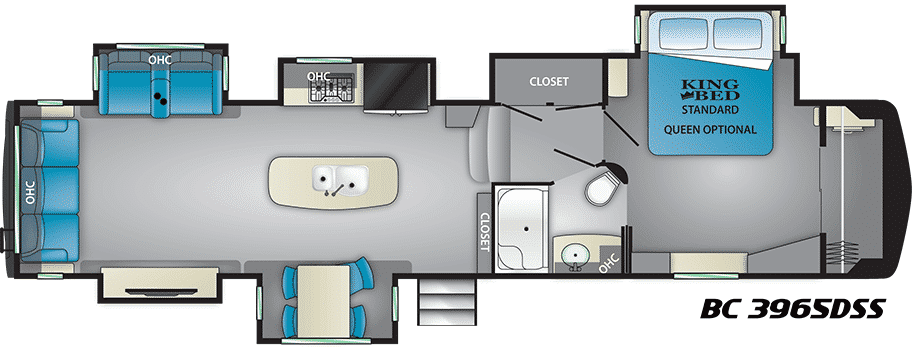
2. Heartland Big Country 3965 DSS Fifth-Wheel
The Heartland Big Country 3965 DSS fifth-wheel offers a similar floorplan to the Cougar 388RKL shown above but with some subtle differences. The bathroom is on the opposite side of the RV with a large closet across from it and the TV and dinette are on separate slides. You still get a double-basin sink located on an island and an open floor plan that makes it a dream to live in.
Heartland’s Big Country, specifically the 3965 DSS, is a large RV that comes with plenty of space and quality amenities and features perfect for full-timing. The spacious kitchen features a three-burner stovetop and large oven and refrigerator. The living room comes with theater seats, high ceilings, and a large 50-inch TV for easy lounging.
Heartland RVs aren’t quite as much of a high-selling RV as some of its competitors, but it provides a whole lot in a versatile and comfortable space. If the floorplan above doesn’t do it for you, the Heartland Big Country comes in seven different floorplans, so you’re bound to find one that fits your preferences and needs.
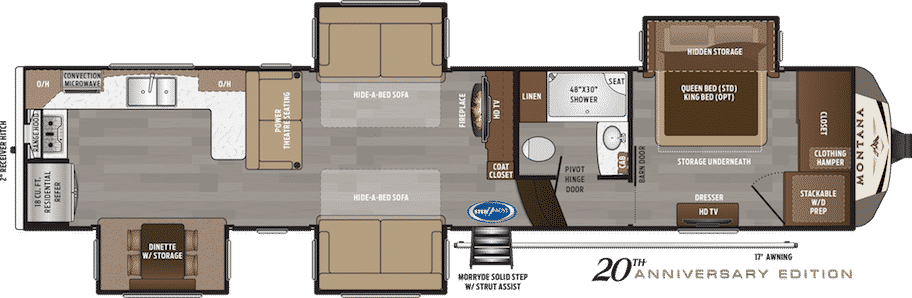
Keystone Montana 3701LK Fifth-Wheel
If you like the Keystone Cougar but just want something with a little more of everything, then the Keystone Montana is an excellent choice. The 3701LK fifth-wheel is one of my favorites. It has a spacious bedroom space up front, a bathroom in the center of the trailer, then a spacious living area with plenty of seating and a large L-shaped countertop in the kitchen.
I referred to the Keystone Cougar’s quality as high, but the Montana takes the cake if you were to compare the two. Everything from the basic construction to the high-quality materials sets the Montana apart. It’s a luxury fifth-wheel with 20 different floorplans to choose from.
It offers a host of industry-leading features, including residential appliances and amenities like a seamless fiberglass shower (or a soaker tub in certain floorplans), large 12-gallon water heater, and much more. Also, Keystone will honor its warranty for RVers who full-time. That’s not true of every manufacturer out there.
If you like the Cougar but want something a little bigger and more luxurious, then the Keystone Montana is an excellent option. We don’t have a video review of the specific floorplan I like, but we can show you walkthroughs of other versions of the Montana fifth-wheel on our YouTube channel.
Do you have a fifth-wheel in mind you think is fantastic for full-timing? Leave a comment below!
Big Bend National Park is one of the most unique and remote national parks in the country. In fact, it’s so remote that it’s one of the least visited parks. So, if you don’t like the crowds that most national parks have, Big Bend is where you should go RVing this year. Just because it’s the least visited doesn’t mean it isn’t worth the long drive south. There are so many reasons to visit this 801,163-acre park!
Why Visit Big Bend National Park in Your RV?
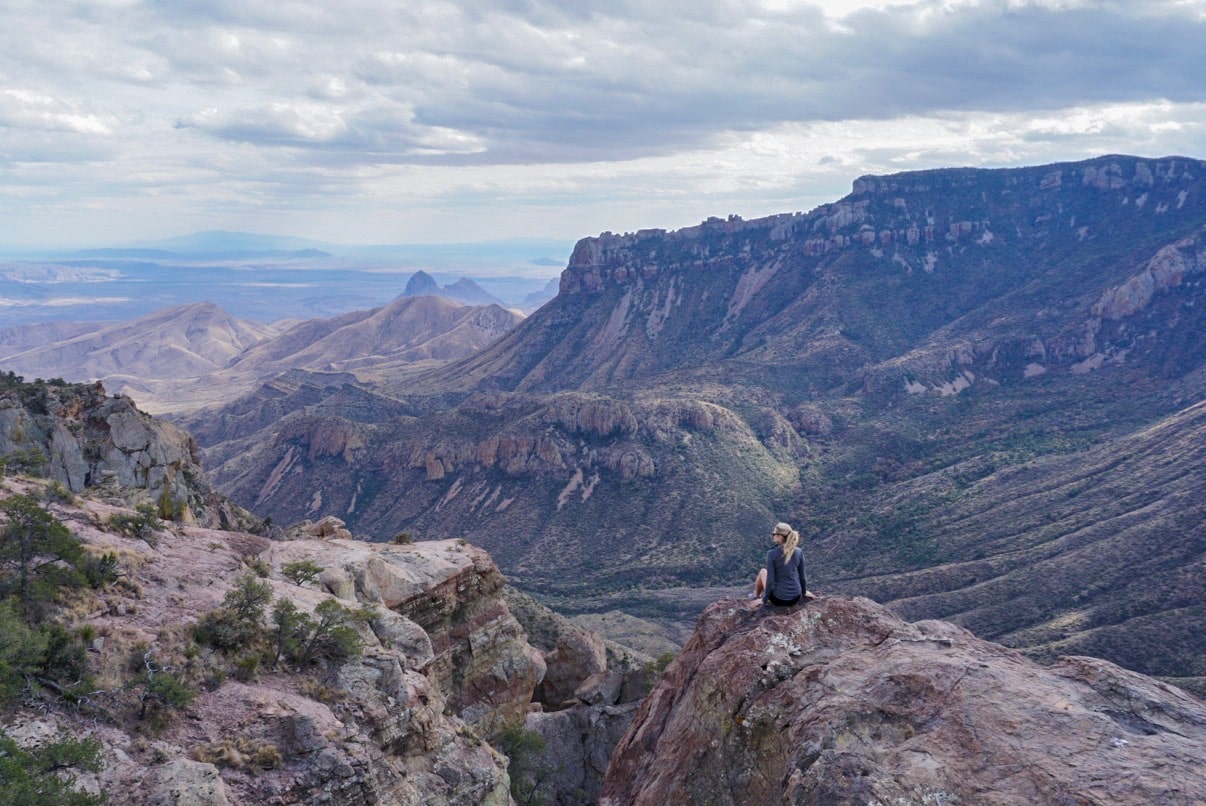
Big Bend has an incredibly diverse landscape: mountains, desert, rivers, forest, and even waterfalls. So, whatever your favorite outdoor activity is, you’re sure to enjoy it there.
It’s also the largest Chihuahuan Desert protected region in the country and home to the southernmost mountain range in the U.S., the Chisos Mountains. Its unique landscape is home to more than 1,200 plant species and more species of bird than any other national park. It’s openness and lack of light pollution also makes it one of the best places to stargaze.
Things to Do at Big Bend National Park
With over 800,000 acres of land in Big Bend. There’s plenty to do. Don’t come here without being prepared to explore. Here are a few options.
Take a Hike…or Three
There’s an abundance of hikes for all ability levels in Big Bend! A few of the most popular hikes are the Lost Mine Trail, The Santa Elena Canyon Trail, and the Window View Trail.
The Lost Mine Trail, which is about 4.8 miles round trip offers some of the best views. It’s moderately challenging, leads to a ridge overlooking Pine Canyon and Mexico’s Sierra del Carmen.
The Window Trail is an easier hike and one of the most popular in the park. It leads you to a narrow pour-off, overlooking the surrounding Chihuahuan Desert. The pour-off resembles a “window” and offers incredible views, especially at sunset, but only if you’re brave enough to hike back in the dark.
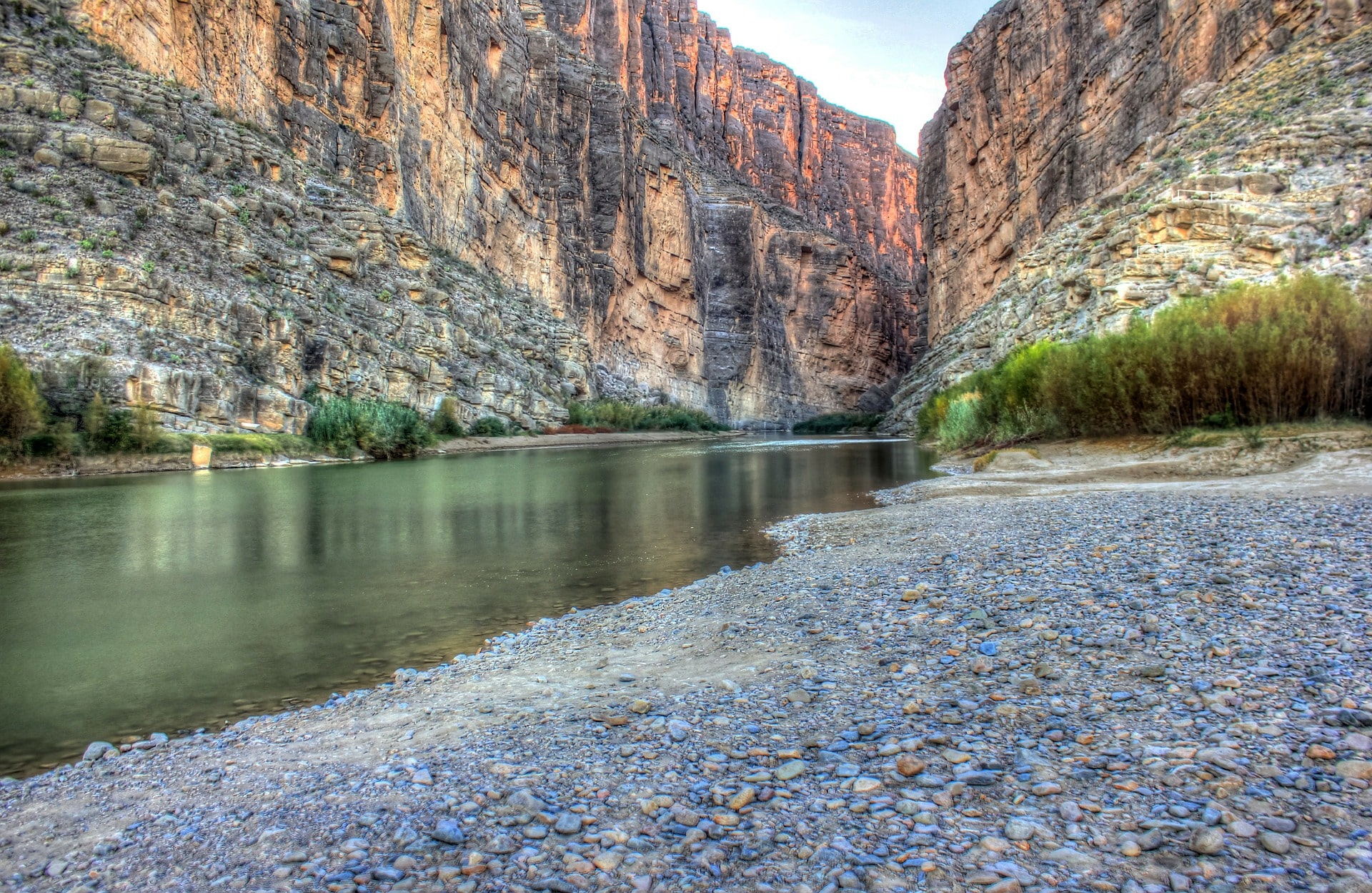
The Santa Elena Canyon Trail consists of stairs that take you up the canyon and then leads you to a trail down to the Rio Grande. You can cool off between the canyon walls in what feels like a little oasis. Walking just about half way across the river will put you in Mexico!
Go to Mexico
Don’t forget your passport. Around 118 miles of the Big Bend National Park border run along the international border between Mexico and the U.S. At the Boquillas Crossing, you can either walk or take a small boat across the Rio Grande to the small village of Boquillas.
Once across, you can hitch a ride in a pickup truck, walk, or if you’re feeling adventurous, rent your own donkey, to take you up into the village. While the village is very small, there are a few restaurants, souvenir shops, and even a B&B. Most tourists grab a margarita and a taco and head back to the park.
Soak in the Hot Springs
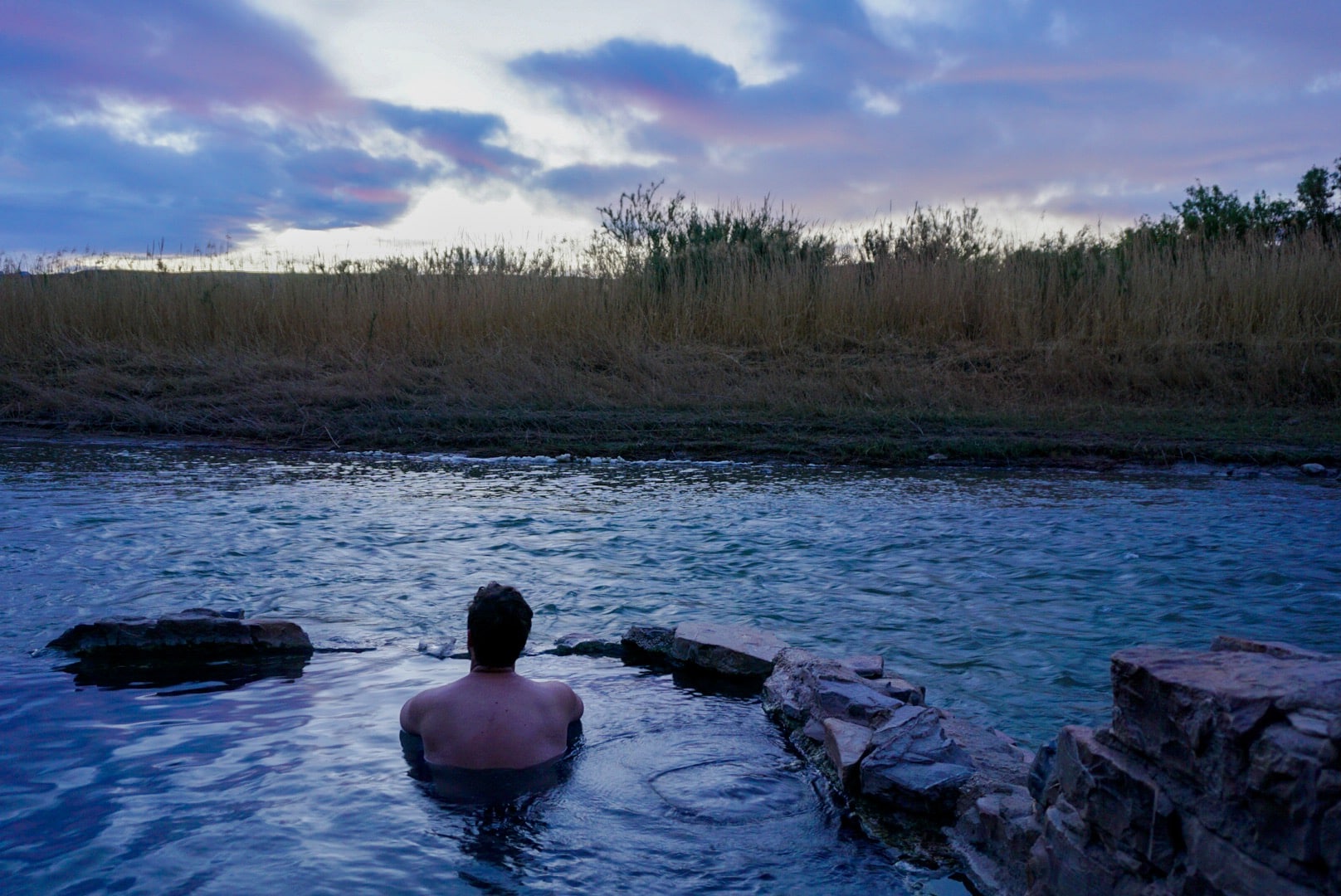
The hot springs are the perfect way to relax after all the outdoor activities you’ll enjoy. They offer the most peaceful setting since they are right along the Rio Grande. Since the daytime is too hot and sunset is the most popular time, making the springs a little crowded, we recommend visiting at sunrise. There’s a short, leisurely hike to the springs, making the soak extra rewarding!
Take a day trip to Terlingua and Lajitas
Depending on where you are in the park, Terlingua and Lajitas are both within a short drive and can’t be missed. Terlingua is an abandoned ghost town and home to the historic Chisos Mining Company. You’ll enjoy the quirky roadside attractions, local dining spots, and even some shopping.
Lajitas is quite the opposite of Terlingua. It features a modern resort with an 18-hole golf course, restaurant, swimming pools, zip line, spa, and horseback riding. Whatever you choose to do there, you absolutely can’t miss the town’s mayor, a beer drinking goat named Clay Henry III!
Don’t forget about Big Bend Ranch State Park
Many visitors skip a visit to Big Bend Ranch State Park and focus solely on the national park. But, many would argue that the state park offers equally, if not better, scenery. It’s actually Texas’s largest state park and offers a rugged volcanic landscape and a more “wild west” experience. Most of the hiking trails are primitive with few signs, making it a great place for some solitude.
Ross Maxwell Scenic Drive
The Ross Maxwell Scenic Drive is considered one of the best drives in Texas. It’s approximately 40 miles and takes you through the park’s most scenic landscapes. The drive ends at the breathtaking Santa Elena Canyon, where you can hike the canyon and then cool off in the Rio Grande.
When to Visit Big Bend National Park
The best time to visit Big Bend is in the spring or the fall. Summer brings crowds and temperatures of up to 100 degrees. It’s also important to remember that the desert is a place of extremes! In the winter, temperatures can dip down to the 30’s making it hard to enjoy everything the park has to offer.
The desert flowers bloom sometime between March and April, making it the most popular time to visit. However, fewer crowds and comfortable weather make September to November a great time as well.
Where RVers Can Stay
Rio Grande Village Campground
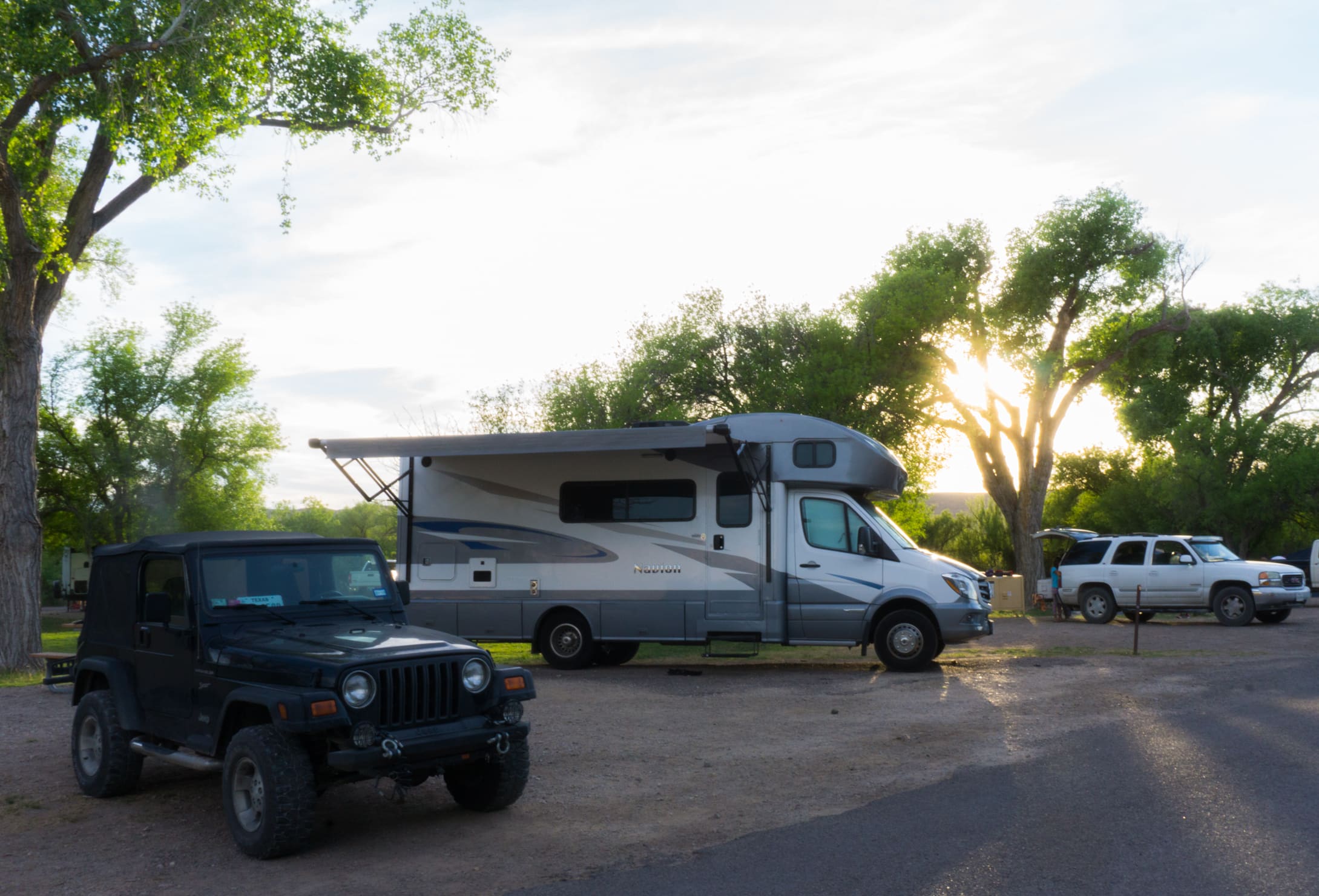
Choosing where to camp is really a matter of preference. There are four different campgrounds inside the park and while you’ll need to make reservations well in advance, camping inside the park can be a real treat. You’ll experience the best stargazing and be close to all the adventure.
Camping outside the park will likely mean you’ll have to drive long distances in order to explore since the park is so large. However, staying outside the park is the only way you’ll have cell service since the only way to get wifi is at the visitor centers.
Also, many campsites are without electricity and either don’t allow generators or have strict time frames in which you can use them. So you’ll need to decide which option is best for you, depending on these factors.
Getting to and Around Big Bend National Park
Since Big Bend is one of the most remote areas of the country, it’s extremely important to be well prepared for your drive to the park. Gas stations are hard to come by and can be hundreds of miles apart so be sure to gas up every chance you get and keep an extra couple gallons on hand, just in case.
Once inside the park, the visitor’s centers have gas, but it’s not uncommon for them to be out of service. Chances are you’ll be driving A LOT within the park since everything is spread out, so don’t risk it. That being said, you’ll definitely want a car or motorcycle inside the park, since it takes at least an hour to drive from one side to the other.
Tips and Tricks Specific to RVing at Big Bend National Park
Prepare to be out of cell service any time you are inside the park. Therefore, be sure to bring a paper map or download one on your phone. With the desert heat, you’ll want to make sure you always bring enough water along on your explorations.
Also, be aware of wildlife, especially at night, since many of the animals in the area are nocturnal. You’ll notice javelinas, coyotes, cougars, jack rabbits, deer, and even bear will be on the trails and along the side of the roads the moment the sun goes down. You’ll also want to be sure to keep your campsite clear of food and trash.
For the latest info on visiting Big Bend National Park, visit their website: Big Bend National Park
Have you been to Big Bend National Park? What tips can you share?