Blog

  • Tips for Making Friends at the Campground

    Tips for Making Friends at the Campground


    It can be a bit intimidating to make friends at a campground when you don’t know anyone, but there are some things in life that are often more fun with other people, camping included. You already have things in common—an interest in RVing and travel, for instance.

    Where else can you discuss the best way to cook over the fire and commiserate about black tank woes in the same conversation?

    Campers are a pretty friendly group of people to begin with, and it’s usually worth the effort to make friends with the other people around you. Here are a few of our tips for making friends at the campground.

    Be Outside
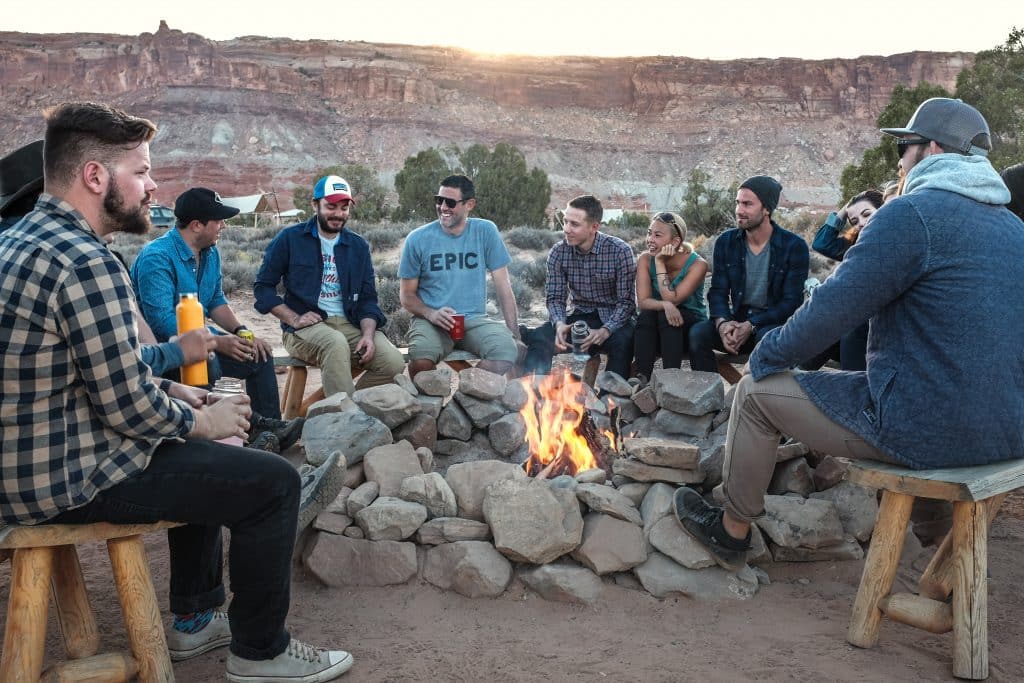
    Making friends at the campsite
    Photo by Phil Coffman on Unsplash

    It may seem obvious, but you won’t make any friends sitting inside your RV! If you want to meet new people, you have to put yourself where they are—usually enjoying the outdoors.

    So open those chairs by the campfire, grab a beverage of your choice, smile as people walk by, and invite them to join you for a cup of coffee around the fire in the morning or for a beer for happy hour in the evening. Having some extra s’more ingredients never hurts to attract people either.

    If the campground has a pool or activities center, head over there to meet up with others. Hosted activities are a great way to make friends, and people tend to be more willing to chat when everyone is congregated around a pool or hot tub. It’s a great place for hearing or telling those crazy camping stories!

    Ask Your Neighbors About Their Rigs, Tools, or Gear

    RVers love talking about their rigs! We’ve had some great conversations with people about their RVs, and several have turned into long term friendships.

    Do you have the same make or model as the person parked next to you? Talk about what you love about it or the little things that drive you crazy.

    If you see someone who has the type of rig you want or have been thinking about, ask them how they like it. Do they have any favorite aspects about it? Would they recommend it?

    The same goes for camping and RV gear. Maybe the family next to you has an interesting grill set up, or the guy across the way has camp chairs that look next level comfortable. Ask them about it! We’ve gotten some great recommendations on gear by asking people at campgrounds, and it usually ends up in a fun conversation with nice people.

    Ask Where People Have Been
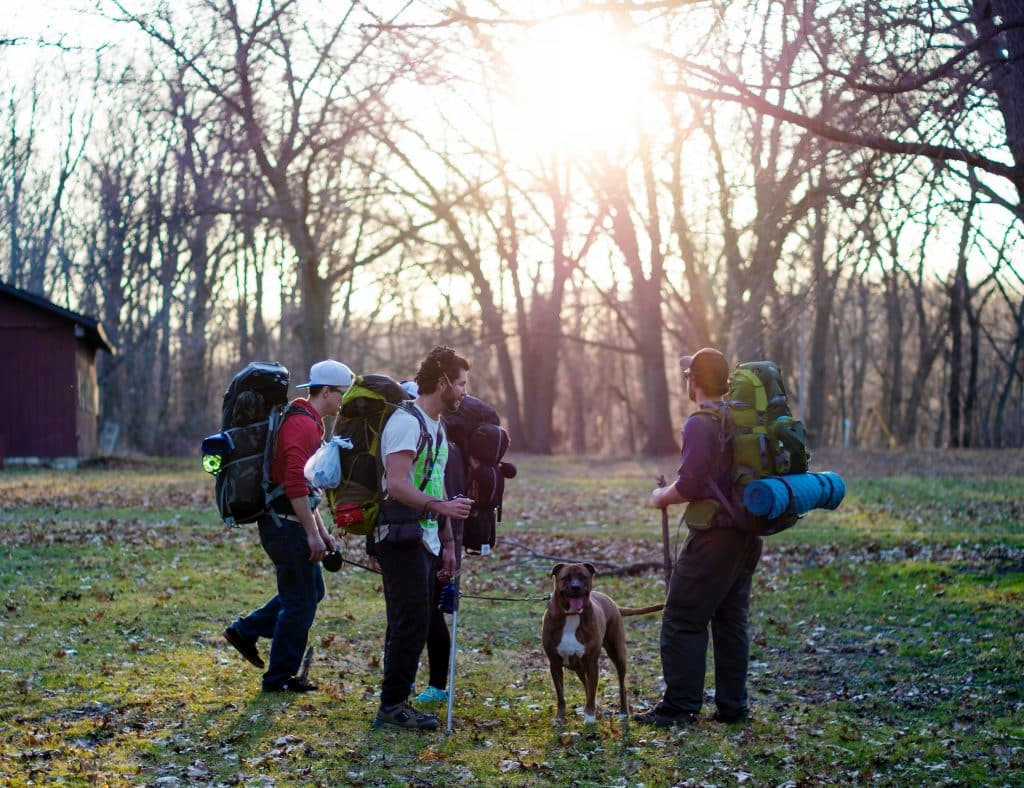
    Making friends while camping
    Photo by Jorge Flores on Unsplash

    Aside from some great ideas for places to go, you may pick up some good tips on must-hit towns or activities, and any roads to avoid with your RV.

    You’ll very likely hear some fun stories as well. Again, we RVers love to tell people where we’ve been, so if you find someone who’s been to a place you’re planning on visiting, pick their brains and listen to any tales they have.

    They may save you from driving down that road with the low overpass, and you might make a new friend in the process.

    Children and Pets are Great Ways to Meet People

    Kids have a fantastic ability to talk to pretty much anyone, be it other kids or adults.

    If you have children and they’ve found some friends their age at the campground, it’s a perfect opportunity to meet their parents and bond over the good time your kids are all having.

    Any organized kids activities at the campground are another great place to meet other parents.

    If your kids are more of the four-legged, furry kind as opposed to human, it’s very easy to strike up a conversation with other pet parents. If the campground has a dog park or run, ask another camper if they want to join you in taking your dogs to stretch their legs.

    Even just walking your pet around the campground for exercise or a potty break is a great way to meet fellow campers and pet lovers.

    5. Use social media to find other campers and RVers

    This happens before you even get to the campground, but many times online friendships can lead to real life meetups. Join groups like Escapees, RVillage, or Facebook groups for RVers.

    Follow other RVers on Instagram. Go to meetups. Join RV social memberships sites and you’ll know if other people will be in the area you’re planning on visiting. Then by the time you get there you’ll have a built-in community.

    Overall, just be friendly! Campers are fun people, and you already have a few similar interests. Be open, friendly, and interested in other people, and you’ll be making friends at the campground wherever you are.


    Do you have any tips you think would work well for campers? Leave a comment below.


    Source link

  • What Does My Motorhome’s Fuel Filter Do?

    What Does My Motorhome’s Fuel Filter Do?


    Taking care of your motorhome starts with the chassis and engine. Without the proper maintenance of the basics of the rig, you aren’t going anywhere even if the rest of the RV is in immaculate condition.

    Your motorhome’s fuel filter might seem like a small part of the overall unit, but the fuel filter plays a very important role in keeping your RV on the road and running well. Let’s take a look at the fuel filter and some things you should know about it.

    What Purpose Does the Fuel Filter Serve?

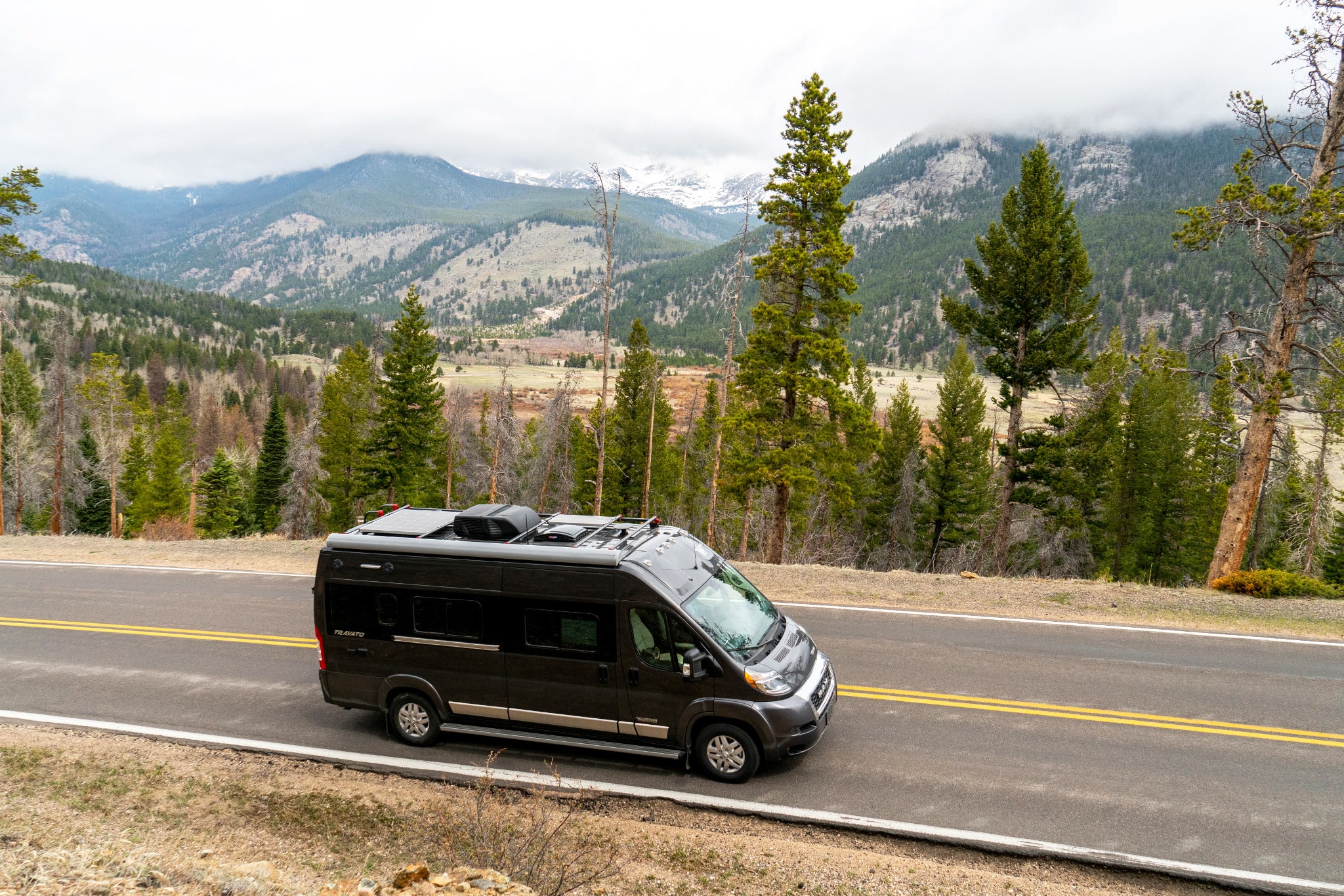
    winnebago travato motorhome
    Image from Camping World

    On the most basic level, the fuel filter keeps the dirt or debris that can make its way into the fuel system from damaging the engine. The filter is designed to catch this debris and dirt.

    Your engine’s injectors are built to very tiny tolerances. This means even the littlest bit of dirt or grime can plug those up. The fuel filter keeps those injectors clean, allowing them to do their job and keep your engine running strong.

    As you can imagine, fuel filters don’t last forever. A plugged up fuel filter isn’t going to work as well as a new one. That’s why it’s important to change your fuel filter from time to time.

    How Often Should You Change the Fuel Filter?

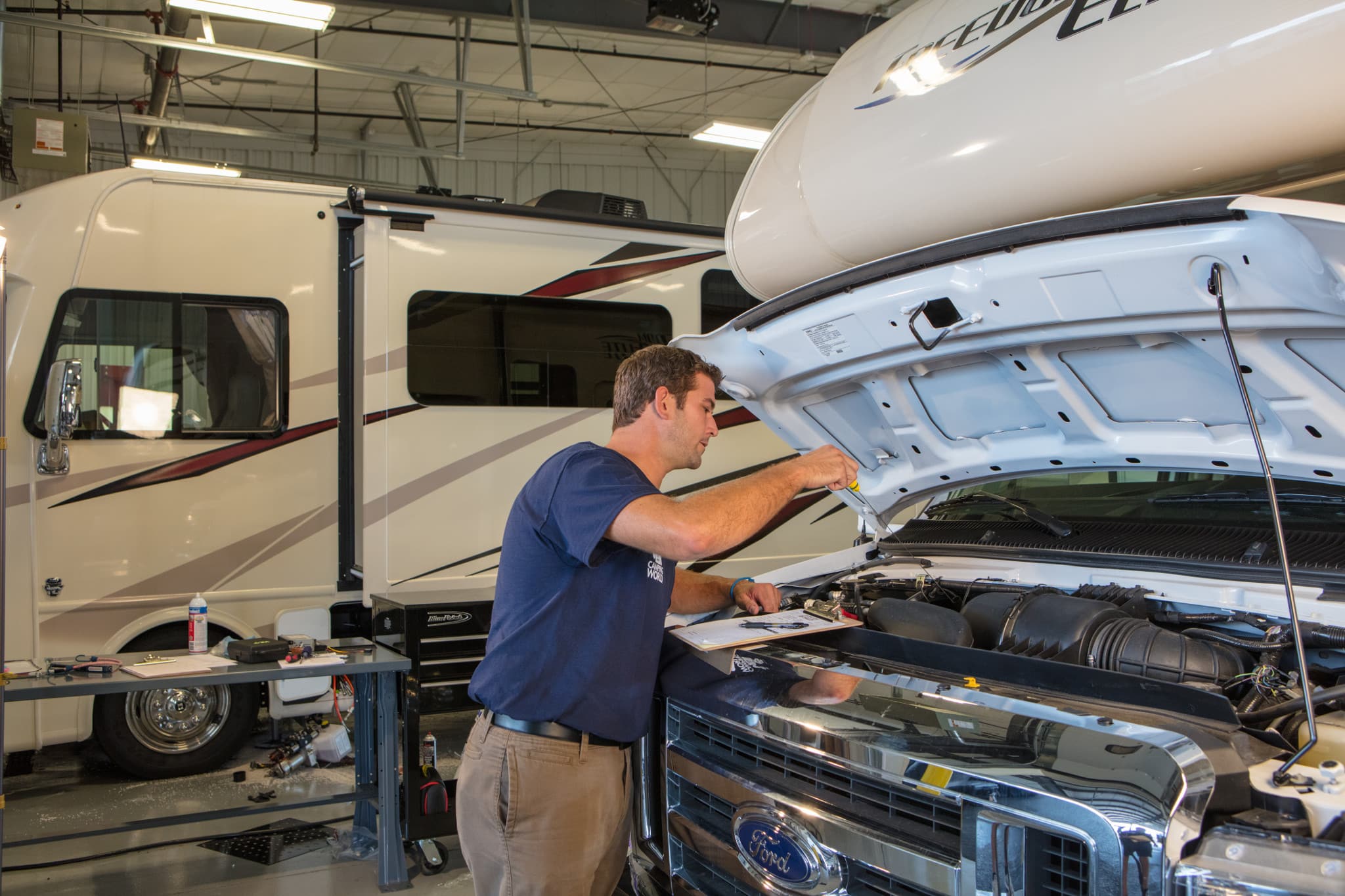
    Image from Camping World

    The simple answer here is that you should change it as your owner’s manual says you should. You can change it more often if you want, but don’t change it less often. If you do, you’re asking for an issue with your motorhome’s engine.

    Every RV is going to be a little different, and every manufacturer will have slightly different advice on changing your fuel filter. However, somewhere between 20,000 and 40,000 miles is probably smart.

    It’s also important to note that if your RV sits a lot, you might want to change the fuel filter, too. The fuel filter is full of fuel most of the time. If the vehicle sits for a long time, the fuel in that filter can age poorly and cause issues. If your motorhome sits for many months or even a year, then you should probably think about changing the fuel filter.

    If you don’t use your motorhome too much so you hardly ever come close to the mileage noted above but it doesn’t sit for months on end, then consider changing the fuel filter at least every two years. Doing it biannually even if you don’t use the RV much will help keep the engine running as smoothly as possible.

    Fuel Additives Can Help

    I’ve heard some people scoff at fuel additives, and I will say that they’re not all treated equally. However, putting in a fuel stabilizer in your fuel is important.

    If your RV sits at all for more than two weeks at a time, you need to add some kind of fuel stabilizer to your RV. Make sure it’s a fuel stabilizer that’s designed to work with your engine. Most fuel stabilizers, like this one from STA-BIL, are designed to work well in just about any engine, but you still need to do your due diligence to make sure you’re putting the right kind of fuel additive in your tank.

    Fuel additives are designed to keep gas fresh and can help to keep the inside of your engine clean. Most will protect for up to 24 months, so as long as your RV doesn’t sit longer than that, you should be good.

    Don’t Forget Your Motorhome’s Generator

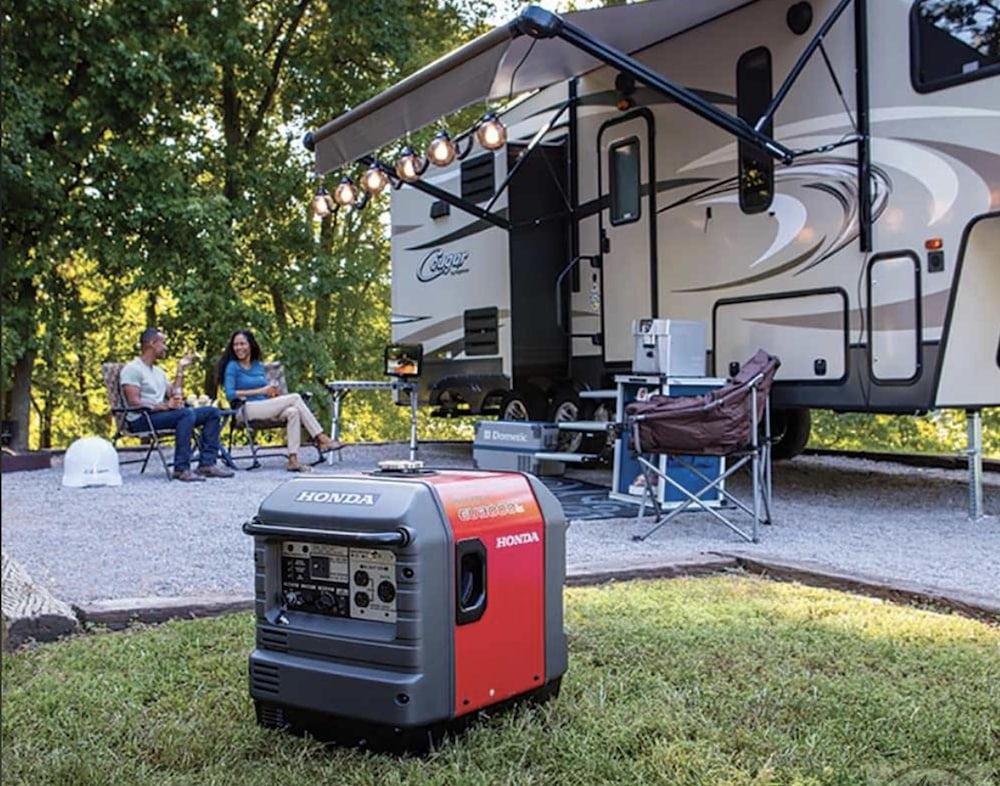
    Portable Generators for Travel Trailers
    Image from Camping World

    Don’t forget, there’s a fuel filter on almost all types of engines. Some are more robust than others. Your RV’s generator, or a portable generator you use while camping in your RV, probably has one on it. When you go to change the fuel filter on your motorhome, think about changing the one on your generator, too.

    The same goes for fuel additives and stabilizers. Your generator will benefit from having a stabilizer added to it any time it goes more than two weeks without being used.


    Have a question about your fuel filter? Need help with RV maintenance? Give the Camping World Service Department a call today!


    Source link

  • SftR 077: From Marketing VP to Digital Nomad with Hannah from Curly Nomad

    SftR 077: From Marketing VP to Digital Nomad with Hannah from Curly Nomad


    From marketing VP to digital nomad with Hannah from the curly nomad

    In this episode, Sam chats with Hannah (aka the.curly.nomad on Instagram!). After leaving her position as a VP at a marketing agency in LA to start her own business, Hannah realized that she could run her business from anywhere. She bought an RV and hit the road as a solo traveler!

    In this interview, Hannah shares what it’s really like living on the road, the good and the bad. She also shares her favorite destinations, experiences as a female solo traveler, advice for dating on the road, and how to travel if you don’t like to drive your RV.

    What we talk about in this episode:

    • 0:30 – Current travels and Xscapers Convergences
    • 3:00 – From marketing VP to digital nomad
    • 10:00 – Experiences as a solo female traveler
    • 14:00 – Advice for solo female travelers + dating on the road
    • 20:00 – Boondocking tips and favorite travel destinations
    • 26:00 – RVing tips for people who don’t like driving their RV

    Hannah’s tips on RVing

    • Once you find your community on the road, you never have to be lonely. Go to Xscapers Convergences and other meetups!
    • It’s easy to put business on the back burner when you’re traveling. All you want to do is explore! You want to go play, but you have to find that balance. You need to be a responsible adult and get work done to be able to afford the travel lifestyle.
    • People in the community (and in the world in general) can be very willing to help you, especially as a solo traveler.
    • You create such deep friendships while traveling. You automatically have some values in common with other full-time travelers.
    • Plan for breakdowns with your RV. They will happen! There are logistics problems right and left. You need to problem solve on the road and set aside money for repairs and gas.

    ** Subscribe to Stories from the Road on iTunesSpotify, or Google Play **


    Source link

  • How Much do Class A Motorhomes Vary in Size and Why Does It Matter?

    How Much do Class A Motorhomes Vary in Size and Why Does It Matter?


    Buying a Class A Motorhome is the right move for many people, but there are a lot of variables that come into play when thinking about buying the right RV. One of those variables is the size.

    Class A motorhomes vary in size. Size is defined as height, width, and length. These are all metrics that you need to think about when buying a Class A RV. 

    Height of Class A Motorhomes

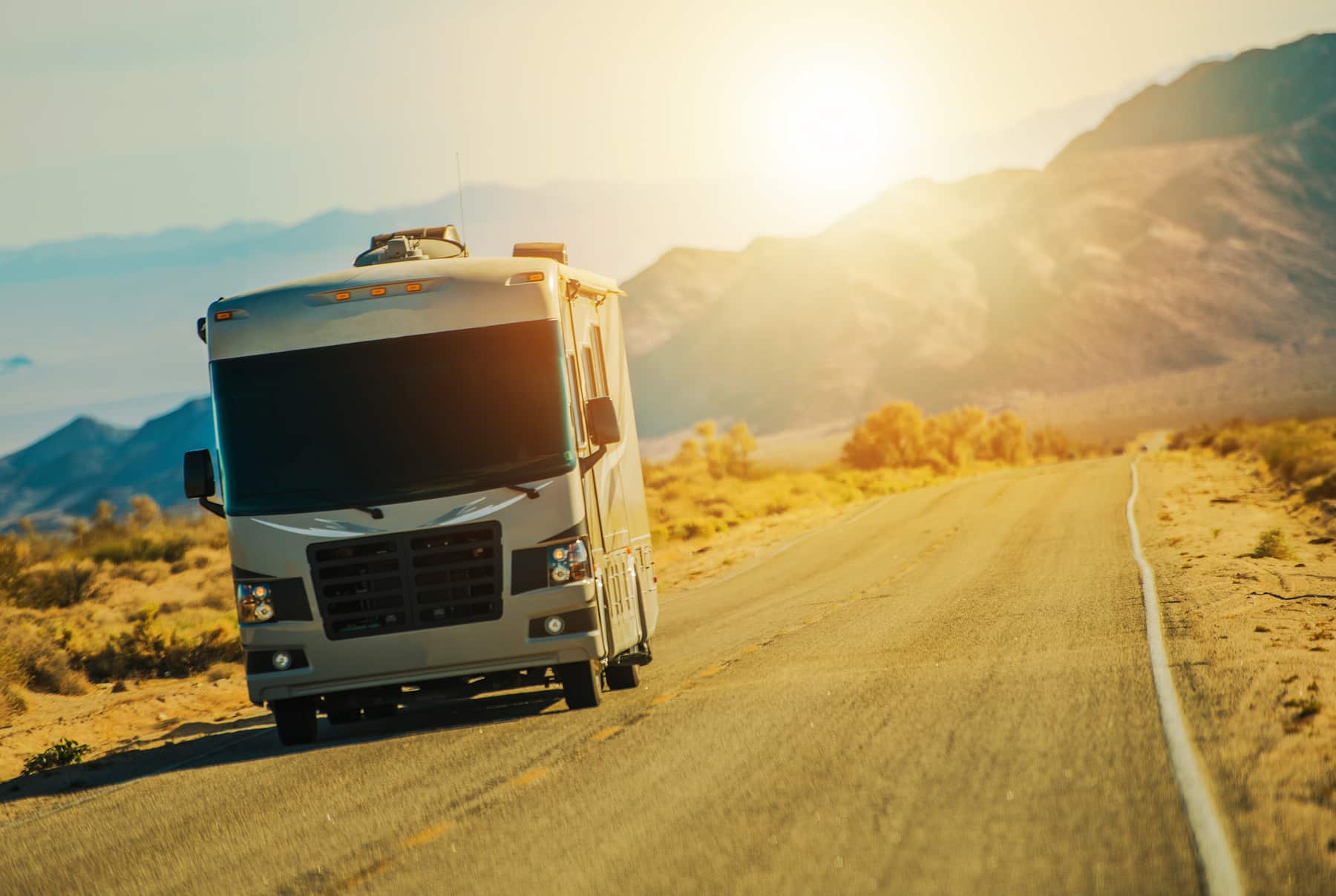
    Motorhome on the Desert Road Somewhere in the Southern California Mojave Desert. Class A Gasoline Engine Motorcoach. United States of America. American RVing. (Motorhome on the Desert Road Somewhere in the Southern California Mojave Desert. Class A Ga
    Image from Getty

    Class A motorhomes vary little in height, running from about 11 feet to 13 feet. This keeps them manageable while driving and parking while still giving you plenty of height in the interior of the unit so you don’t feel too cramped.

    Width of Class A Motorhomes

    As far as width, when closed they are all around eight to eight and a half feet in width.

    When open, larger ones with opposing living area slides can take up as much as an additional six to eight feet more on each side.

    The width will only affect you when you’re selecting a campground spot as that will be the primary place you’ll open your slide-outs.

    Length of Class A Motorhomes

    When it comes to what size aspect affects you more, it’s length. The pat answer to length is simple – they run from around 25 feet in length all the way up to nearly 45 feet.

    The simple numbers behind the length, however, are not going to truly help you in your overall decision when buying a new or used Class A motorhome.

    Length has many factors behind it. So how do you know what length to get? Let’s take a look at some questions for you to consider.

    Questions to Ask Yourself When Considering Size

    Don’t just go with your first gut instinct on size. Really think about it! Here are some things you need to consider.

    Where are You Planning on Going?

    If your planned adventures are to take your Class A into national parks and camp, national parks do have size restrictions either park-wide or from campground-to-campground within a particular park.

    As an example, America’s oldest national park, Yellowstone, does have a wide variety of campgrounds but does not have a lot of space for Class A motorhomes. They have limited space for those who reach a maximum of 40 feet in overall length, meaning if you have a toad, count that in as part of the length.

    If you are already over 40 feet just with your motorhome, plan on parking your RV outside of Yellowstone – as well as pretty much every national park – and enjoying the park via your toad.

    Are you planning on taking on the Rockies? Do you need a diesel pusher to get you over Colorado’s Rabbit Ears Pass without huffing and puffing your way to the summit?

    You’ll probably want to opt for a diesel. However, don’t think every Class A diesel is a massive 40+ feet behemoth. There are a select few 35-foot or so Class A diesels to consider.

    Who Will Travel With You?

    How is this affected by length? Simple. The shorter the motorhome, the chances are it has been specifically designed with a camping couple in mind.

    For the most part, every Class A motorhome has the capability of sleeping at least 5, but really put your eyeballs on respective floorplans to see what fits you best. If you are planning on taking quite a few members of your family (or camping family as it were), you will need more sleeping spaces, ergo a longer Class A, possibly even a Class A bunkhouse.

    Also, the longer the Class A, the more likely you’ll be able to get a master bedroom with a solid privacy door. When you’re taking out a large family, that will matter… as will the possibility of having a second bathroom. Bath-and-a-half models generally run 40+ feet in length.

    What About Storage?

    Differing sizes means storage issues in two different ways. Part one is regarding the actual amount of storage available in the motorhome.

    If you decide a shorter Class A would fit you better, double-check to see if everything you plan on taking with you fits into your decision as well. Sometimes opting for a slightly longer Class A is a better choice purely from a storage standpoint.

    Part two of storage is regarding how you’re planning on storing your Class A when you’re not out traveling the country. If you are a full-timer, no worries on this and congrats to you as that sounds amazing. But for the vast majority of us outdoor lovers, you will not be living in your Class A on a day-to-day basis.

    As such, long-term storage may need to be taken into consideration when thinking about the length of your future motorhome.

    To sum it up, Class A motorhomes vary in size. But, when you’re shopping for a Class A motorhome, it’s not the width or height that should concern you the most, it’s the length.


    If you’re interested in finding the perfect size Class A for you, check out our full inventory. 


    Source link

  • Why a Used Travel Trailer Is a Great Option for Large Families

    Why a Used Travel Trailer Is a Great Option for Large Families


    Have a large family who loves the great outdoors? Get yourself a travel trailer and truly enjoy being outside by going on camping trips! When you do so, you’ll build memories with your family and have all kinds of new and fun experiences.

    You don’t have to go out and buy a brand new unit either. There are plenty of great used units out there. With that in mind, I wanted to look at why a used travel trailer might be perfect for large families.

    Buying Used Saves You Money

    piggy bank
    Image from Getty

    Everyone knows that campers depreciate. While the level of depreciation is different than you have in a car, it’s still noticeable. That means buying new isn’t always a smart move.

    If you have a large family, chances are your budget is pretty tight. While camping is affordable, you might not have tons of money to put towards a travel trailer. Going with a used option will help you keep costs down.

    Sit down with your spouse or significant other and look at your budget. How much can you easily afford? That’s where you should start. Then you can start looking at the used travel trailers out there for sale.

    Travel Trailers Offer Plenty of Room

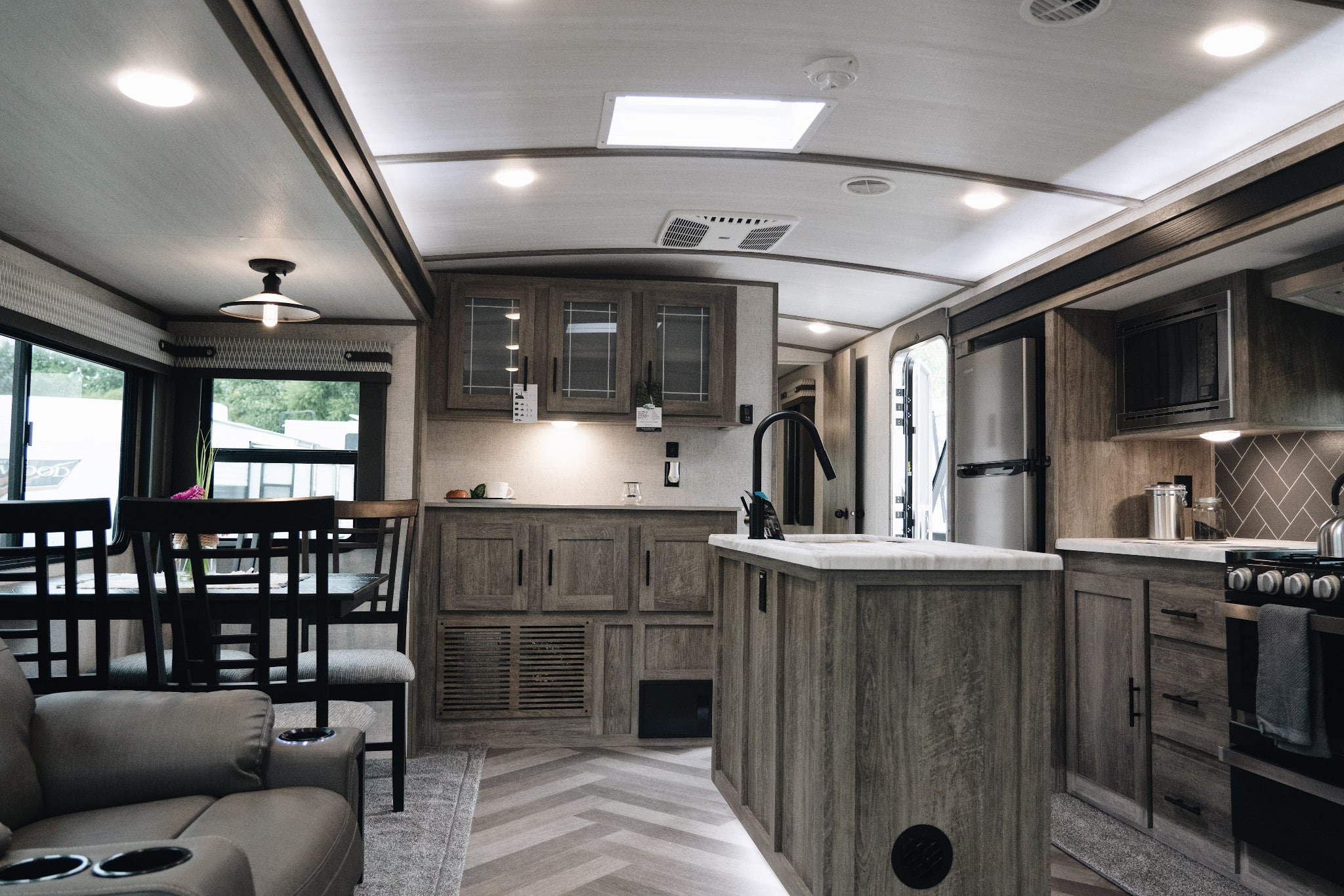
    RV interior
    Image from Camping World

    You can go big with any type of travel trailer, but many people find it impressive just how spacious travel trailers are.

    If you have a big family, space is important and that means you’ll need to get a fairly large travel trailer with plenty of sleeping spaces and room for the kids to lounge around when they aren’t outside enjoying the wilderness.

    Travel trailers can come with slide-outs that open up space, and they can offer multiple rooms, which helps provide privacy for you and your family members. Take your time when thinking about how much space you need and the floorplan that will work best for you.

    Chances are, there’s something that will work perfectly on the used market, you just have to take your time and find it.

    Travel Trailers Can be Towed With a Full-Size Van

    van driving through the forest

    If you have a large family, you’ll likely need to have a van to move everyone from place to place. The good news about travel trailers is that they can be towed by a van easily. Even ones measuring around 30 feet long will usually be under the tow rating of a full-size or heavy-duty van.

    Note that I said full-size or heavy-duty vans. Minivans are not included here. Minivans can tow smaller travel trailers, but if you’re looking for something that can easily sleep six or seven people, then a full-size van is generally the way to go.

    The Ford Transit, for example, can tow a maximum of 7,500 pounds when properly equipped. You have to get the model that’s properly equipped, though. The base Transit’s towing numbers are closer to 4,000 pounds. Keep that in mind if you’re thinking of shopping for a new van, too.

    If you’re not shopping for a new van and already own a full-size or heavy-duty van, look for a travel trailer that sleeps the number of people you need it to and that is well within your van’s towing capacity.


    Are you interested in a used travel trailer? Check out all of the used models available at Camping World!


    Source link

  • RVing the Rails – Excursion Trains in Alaska

    RVing the Rails – Excursion Trains in Alaska


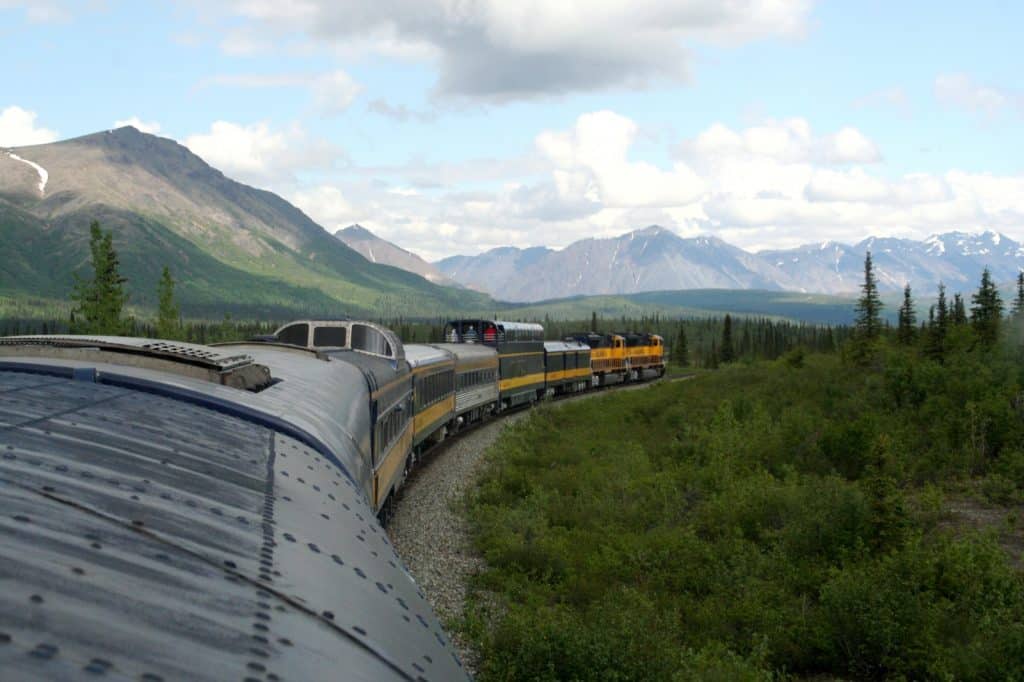
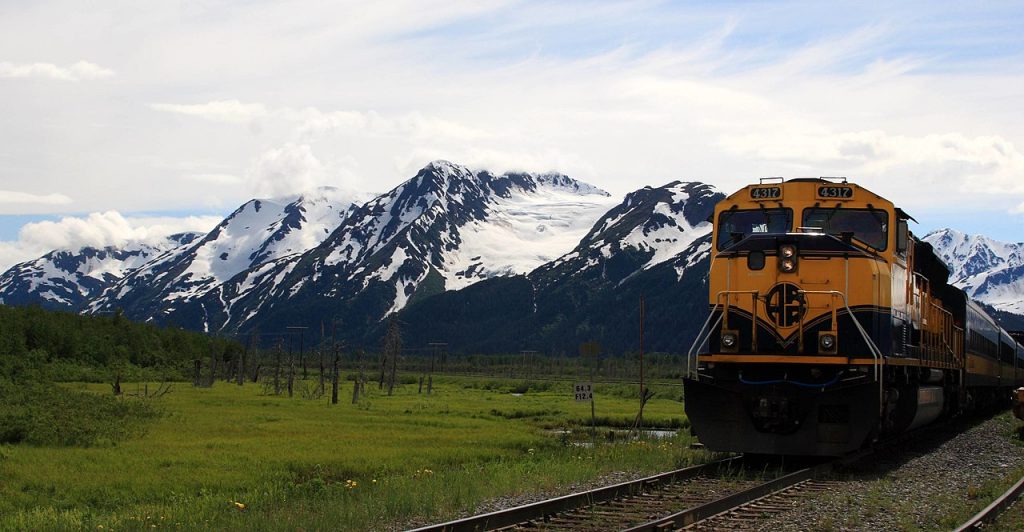
    Many times camping trips involve exploring new territory and discovering enticing attractions along the way. Passenger tour trains have that magnetic appeal for many RVers, providing a novel way to see hidden countryside not normally viewed from the road. Railroad passengers learn about local history, culture and the many colorful characters from the communities visited. And Camping World wants to make sure you don’t miss the departing whistle, so we have created a series entitled RVing the RailsYou will find the most popular excursion trains to ride in each state, complete with any specialty trains they might offer.

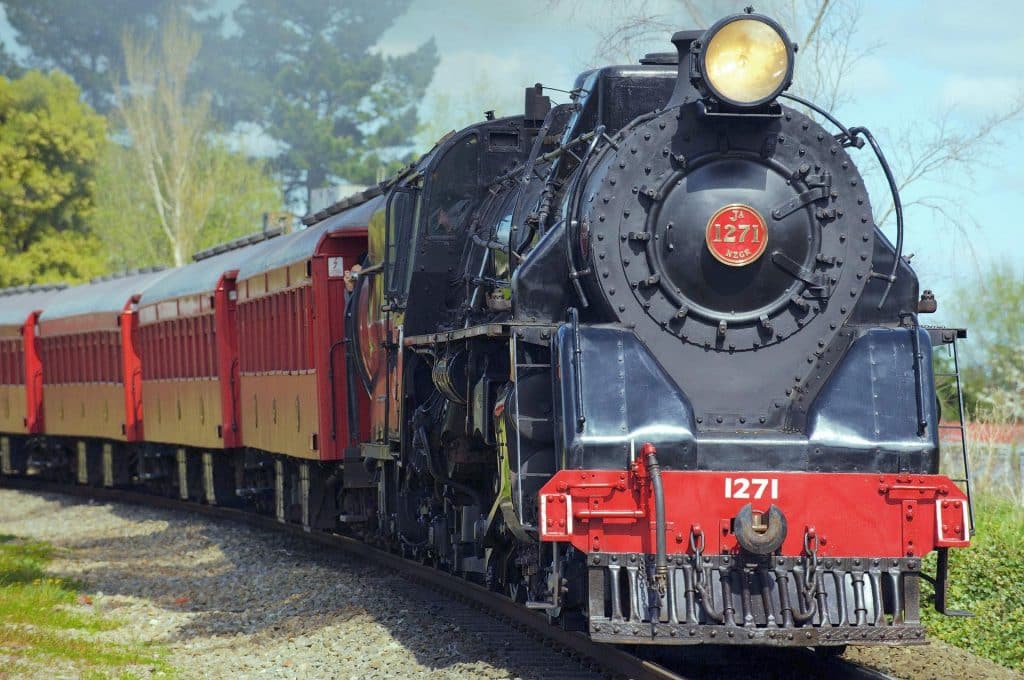
    Steam Locomotive on the rails
    Photo Credit: Pixabay

    Today we will explore the most popular trains in Alaska:

    White Pass & Yukon Route

    White Pass & Yukon Route
    Photo Credit: WPYR.com

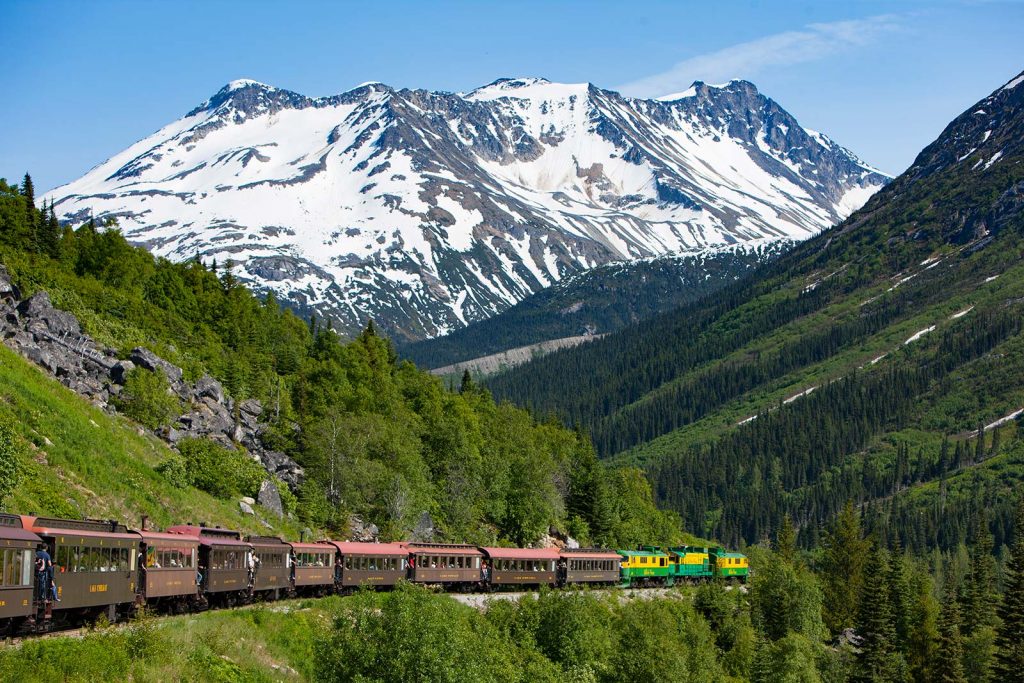
    The Klondike Gold Rush in 1896 brought sturdy miners to Skagway, looking for a way to the goldfields. But enterprising businessmen realized there was money to be made taking supplies to and from the camps, as well. So, by 1898 construction on a railroad over White Pass was begun. Today, the White Pass & Yukon Route train has discovered there is even more treasure in taking cruise ship passengers along the original route, with more than 14 excursion trains running on some days!

    Railway and Locomotive Types

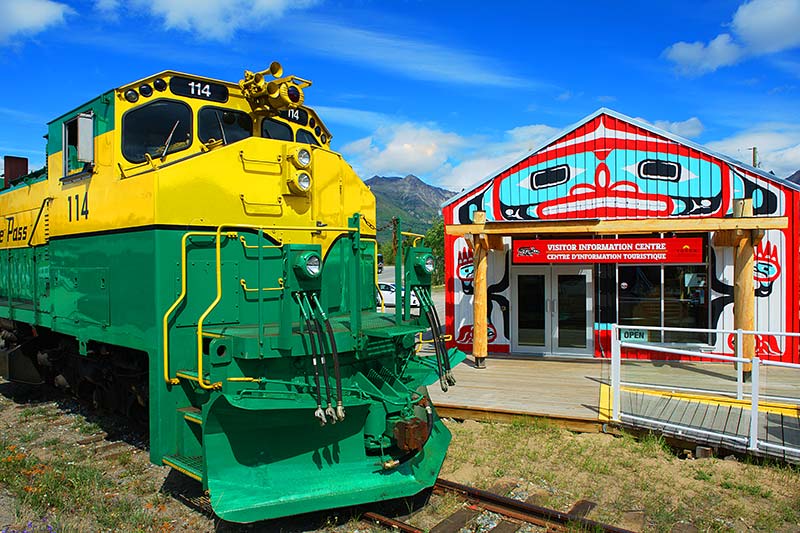
    The White Pass & Yukon Railroad utilizes both diesel and steam locomotives on narrow gauge rails. The engines split duties to pull several passenger coaches along this historic railway. In total, the railroad has 79 cars in its rolling stock!

    Seating Options

    All seating is assigned on the White Pass trains. Bottled water is offered with the price of your ticket, and each car has available restrooms onboard.

    Riding Options

    White Pass & Yukon Route Train
    Photo Credit: WPYR.com

    The railroad offers round trip service on a variety of trains, and one-way passage from Skagway to Lake Bennett. See Specialty Trains for optional trips.

    The White Pass & Yukon Route Railroad also provides hiker service on some of its routes and can combine rail service with motorcoach travel for more lengthy trips.

    Specialty Trains

    • Summer Excursion Train – Follow the original Klondike Trail up to White Pass, where the travelers from 1896 wore their path into the rocks, documenting a momentous expedition.
    • Bennet Scenic Journey – Take the train from Skagway to Carcross, Yukon Territories, with a stopover at Lake Bennett.
    • Fraser Meadows Steam Train – Ride the rails through two tunnels, over trestles and past waterfalls to Fraser Meadows.

    Length of Season

    White Pass & Yukon Route Train at Bennett
    Photo Credit: WPYR.com

    The trains run from May through September, on specific dates for each specialty train. Please check the railroad calendar to find the excursion that best fits your travel plans. You may also be interested in amending your train ticket with a motorcoach tour.

    Denali Star Train

    Denali Star Train in Autumn
    Photo Credit: Len Turner (CC BY-SA 2.0)

    As part of the Alaska Railroad, the Denali Star Train has colorful ancestry. Many towns along the route were founded as railroad communities almost 100 years ago. The railroad was built to establish villages that would provide for the needs of a growing state:  timber was used for railroad ties and building, fishing regions eventually needed to transport their catch, and miners required a way to bring minerals out of the mountains.

    Today’s train runs on some of those same tracks, hauling precious cargo once again, in the form of tourists and adventurers.

    Railway and Locomotive Types

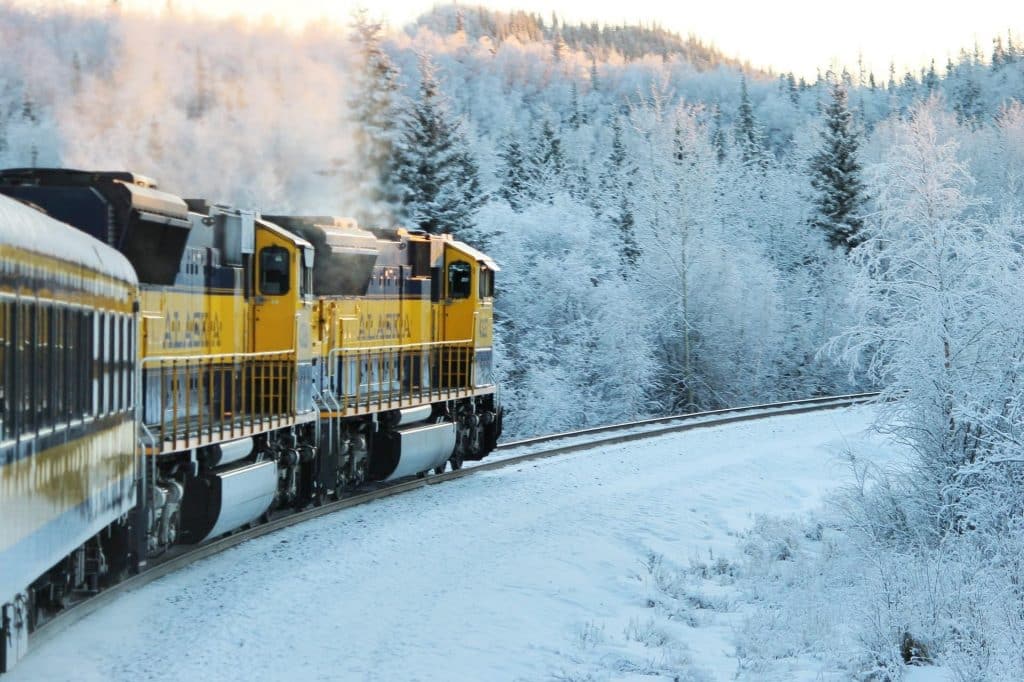
    The Denali Star is pulled by diesel engines on a standard gauge track. The rolling stock consists of several passenger cars, dining cars, and a baggage car. On some trips, the Wilderness Express dome cars are added for all-encompassing viewing of the Alaskan countryside.

    Seating Options

    Seating on the train is assigned within two different classes of service:

    • Goldstar Service – Passengers ride in luxurious dome railcars. On the lower level is a full-service dining room, and all tickets include meals, soft drinks and 2 adult beverages for those over 21 years of age.  A tour guide offers narration and a viewing platform is available in the car.
    • Adventure Class – Passengers ride in comfortable coach cars and have the freedom to move from car to car. Food and drink are available for purchase in the Wilderness Café car.

    Riding Options

    Denali Star Train in Summer
    Photo Credit: Andrew E. Russell (CC BY-SA 2.0)

    The Denali Star Train runs in two directions. The northbound train leaves Anchorage in the morning, with stops in Wasilla, Talkeetna and Denali before arriving in Fairbanks at 8:15pm. Passengers can load or unload at these stations and catch the train on another day to return.

    The southbound train leaves Fairbanks at 8:15am, stopping at the same stations and arriving at Anchorage by 6:15pm. Fairbanks passengers have the opportunity to ride the train to Denali, spend a few hours at the park, then catch the northbound train at 4:00pm back to Fairbanks.

    Specialty Trains

    • Fur Rondy Express – Celebrating Alaska’s Fur Rendevous Festival, the train takes riders from Anchorage along scenic Turnagain Arm. Enjoy drummers and dancers from Alaska Native Heritage Center, crafts and music.
    • Easter Train – Kids will marvel at a magic show, treats and a visit from the Easter Bunny, as the train explores Turnagain Arm before returning to Anchorage.
    • The Great Alaska Beer Train – With your engineer as a designated driver, passengers are able to enjoy a wide selection of local microbrews, along with a multicourse meal, as the train wanders from Anchorage to Portage and back.
    • Kid’s Halloween Train – Pull out the costumes and come enjoy a howling good time, with magicians, crafts, balloon animals and lots of treats. The ghoulish railroad takes passengers from Anchorage to Indian before returning, providing a spooky-good time!
    • Holiday Train – The entire family will delight in a Christmas train, where Santa, carolers, magicians, and treats all culminate in a festive experience.

    Length of Season

    Denali Star Train in Snow
    Photo Credit: Pixabay

    The Alaskan Railroad runs from mid-May through mid-September, with northbound departures leaving Anchorage and southbound departures leaving Fairbanks.  For pick-ups along the way, please check the train schedule.

    McKinley Explorer

    McKinley Express Before Departure
    Photo Credit: Brandon Wood (CC BY-SA 2.0)

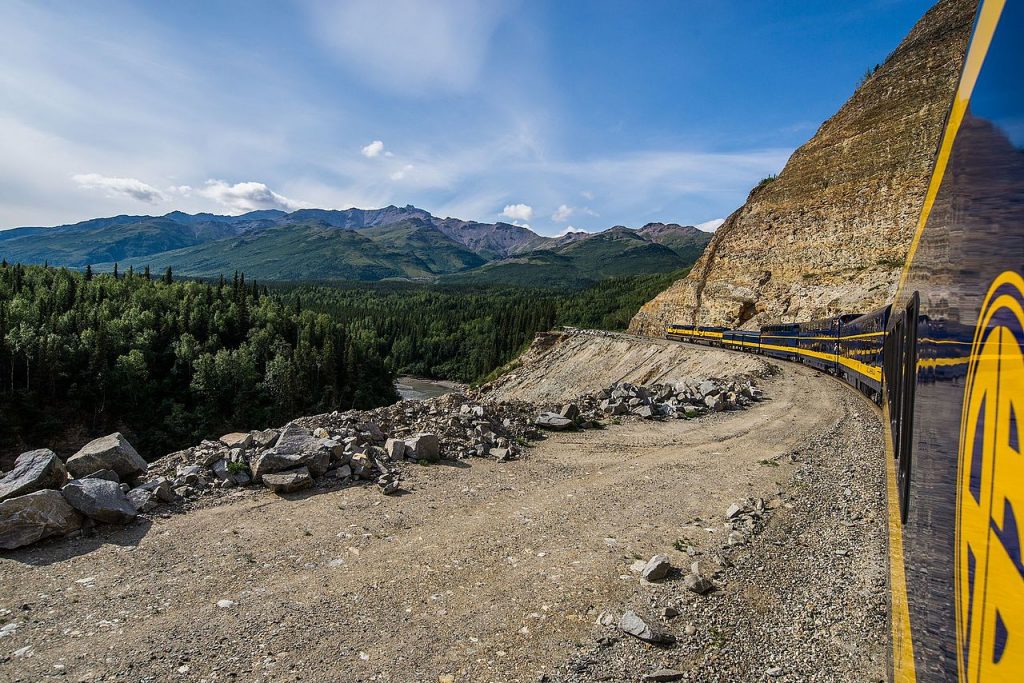
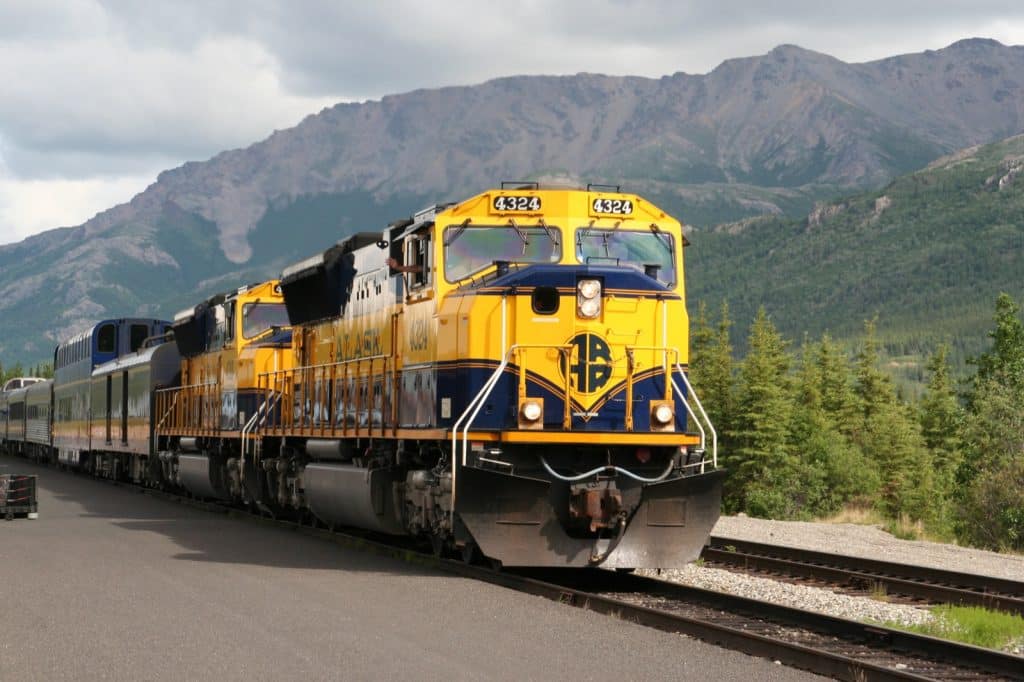
    The McKinley Explorer train covers ground that has exceptional views, landscapes, and geology. Running on a part of the Alaskan Railroad tracks, it encompasses vast forested lands, rushing glacier-fed rivers and the tallest mountain in the United States.

    Passengers never tire of the endless vistas or the countless wildlife spied along the way. The dome cars on this train offer a unique way to see Alaska’s wildness while riding in luxury!

    Railway and Locomotive Types

    Diesel locomotives pull the railcars on standard gauge tracks, with trains consisting of McKinley Explorer dome cars for prime viewing opportunities of the majestic lands between Talkeetna and Denali.

    Seating Options

    Seating on the McKinley Express is all assigned and only one class of service is offered. Passengers have dome car seats on the second level of the train, with an outdoor viewing platform available, as well as a fully stocked dining room below. Ticket prices do not cover food or drink, but both are optional purchases that can be made onboard.

    Riding Options

    McKinley Express Rounding a Curve
    Photo Credit: Brandon Wood (CC BY-SA 2.0)

    The railroad runs from Anchorage to Talkeetna, then on to Denali, with return trips. Passengers can purchase one-way or round-trip tickets, catching a train back to their departure point day(s) later, if desired.

    Specialty Trains

    The McKinley Express has no specialty trains available. However, if passengers will be in Anchorage, several event trains run from Anchorage to Turnagain Arm on specific dates. Please refer to the Denali Star Specialty Trains for descriptions and schedules.

    Length of Season

    McKinley Express Specialty Train
    Photo Credit: Frank Kovalchek (CC BY-SA 2.0)

    As part of the Alaska Railroad line, the traveling season for the McKinley Express runs from mid-May through mid-September.  Check the train schedule for specific dates and times of departure.


    Join the thousands of RVers that have a love affair with trains and ride the rails on your next camping trip.  Check out the other excursion trains available on a state-by-state basis in our series, RVing the Rails.


    Source link