Blog

  • RV Financing Frequently Asked Questions

    It’s that time of the year again, when many people are considering purchasing an RV. When I was a sales manager and finance manager for an RV dealership I would get asked lots of questions about financing RV’s. I organized some of these questions and included them in the RV financing section of my book, “The RV Book”. Here is an excerpt from my book on RV financing FAQ.

    Will one RV lender offer better interest rates than another RV lender?

    Interest rates change frequently. If the prime rate goes up RV finance rates will go up too. RV lenders send updated rate sheets to RV dealers whenever their finance rates change. RV specialty lenders watch each other closely and if one lender lowers rates the other lenders will generally follow suit. They will usually stay within a quarter to a half point of each other.

    Are there other factors that will determine what interest rate I get?

    Yes, there are several factors that will determine the rate you get.

    1) It depends if the RV is new or used. A used RV (normally over 3 or 4 years old) will get a higher interest rate than a new RV.

    2) Your down payment will affect your interest rate. If you finance the RV on a zero down program the interest rate will be higher.

    3) The term of the loan will affect the interest rate. The shorter the term the higher the rate, the longer the term the lower the rate.

    4) The amount financed will affect the interest rate. The lower the dollar amount the higher the rate, the higher the dollar amount the lower the rate.

    5) Your credit history (credit rating or score) will affect the rate. The higher your credit score is the lower the interest rate will be.

    Should I shop around for a better rate, or will the rate a dealer offers be the best rate I can get?

    You should be aware of what the current rates are for RV loans, and based on the criteria listed determine if you are getting the best possible rate you can get. If you think you qualify for a lower rate, by all means try securing a better rate elsewhere. There are several RV specialty lenders on the internet that would like your business and will offer competitive rates. Do not however let too many lenders run a credit check on you to try and get a lower rate. This can backfire so be selective about who, and how often your credit is being checked.

    Can you explain more about financing an RV with no money down?

    There are usually a couple of RV lenders that will offer no money down finance programs. These programs will have certain guidelines to qualify. The type of RV, dollar amount, term of the loan and your credit rating can all factor into these types of programs. The finance rate will usually be higher too.

    What length of term can I expect to get on an RV loan?

    The term of the loan will be based on the dollar amount financed and the age of the RV. Some RV lenders are offering 20 year loans on new RV’s with financed amounts over $100,000 and loans ranging from $25,000 to $99,000 can qualify for 15 year loans. Loan amounts between $10,000 and $25,000 may qualify for 10 to 12 years loan terms.

    Why would anybody want to pay the interest on a 15 or 20 year loan?

    Nobody wants to, but the biggest advantage of a long term loan is you get a lower monthly payment. Financing $100,000 for 240 months at 7% interest would be $775 a month. The same loan for 120 months would be $1,161 a month. You save almost $400.00 a month. But keep in mind you will have little or no equity if you try to trade within the first several years.

    Can I finance an RV with below average credit?

    RV’s are basically considered a luxury item, so the criteria to finance an RV are more stringent than it is to finance an automobile. There are lenders that will finance below average credit but interest rates will be higher.

    How is the interest on an RV loan calculated?

    The majority of RV loans from RV specialty lenders are simple interest fixed rate loans. What this means is you will only pay interest on the principle owed, and in most cases there is no penalty for paying the loan off early. If you choose to pay more than your required monthly payment you can shorten the term of the loan and save on interest.

    Can I write the interest off on my income taxes?

    Yes, a fully self contained RV is considered a 2nd home and the interest paid is deductible, if you are not already deducting the interest on a 2nd home. At the time of this writing an RV is considered a qualified residence if it is one of the two residences chosen by the taxpayer for purposes of deductibility. To qualify it must provide basic living accommodations; meaning it has cooking, sleeping and bathroom facilities with fresh water and waste water holding tanks. Talk to your tax advisor about what is required to write the interest off on your RV.

    Will I need a down payment and if so how much?

    Down payments will vary slightly between RV lenders but 10 to 20% down, in the form of cash or a trade-in, is usually the range. There are programs that offer low down, or no down payment but this will usually increase the interest rate. Most banks want to see your good faith commitment to the loan.

    Do I need to have insurance on the RV to get a loan?

    Yes, insurance is required when you close on the loan. The bank will not loan the money until they have proof of insurance.

    Should I finance the RV or pay cash?

    It is my personal opinion that it makes more sense to finance your RV purchase. If you finance the RV you can maintain your personal financial status without liquidating any assets. You can also take advantage of writing off the interest on your income taxes if the RV qualifies.

    These questions don’t cover everything you need to know about financing an RV, but hopefully they will provide you with a good understanding on the subject and help you when it comes time to purchase your RV.

    Happy Camping,

    Mark

    Copyright 2007 by Mark J. Polk owner of RV Education 101


    Source by Mark Polk

  • RV Must Haves

    RV Must Haves


  • 3 of the Best Fifth-Wheels for Full-Time Living

    3 of the Best Fifth-Wheels for Full-Time Living


    Thinking of full-timing and know that a fifth-wheel is the right RV for you? Well, you have a lot of choices. While I could spend all day going through the various bands and floorplans, I thought it better and quicker to just highlight three fifth-wheels that are an excellent option for someone thinking of full-timing.

    Here are three you shouldn’t overlook if you’re thinking of buying a fifth-wheel to live in all the time:

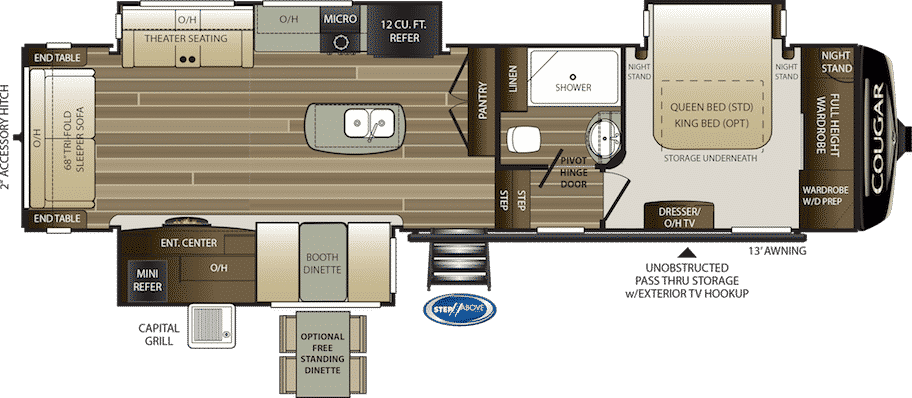
    1. Keystone Cougar 338RLK Fifth-Wheel

    Keystone Cougar 388RLK Fifth-wheel

    A model that’s not too large, but still gives you plenty of living, sleeping, and kitchen space is the Keystone Cougar.  While you can choose from the 11 floorplans the company offers, we like the 388RLK. I appreciate the large open living room and kitchen area. The kitchen island mounted double basin sink in the kitchen and theater seating in the living area provide a seriously homey feel.

    Keystone quality is well-known, and the Cougar has been the best-selling fifth-wheel in its class for two decades. the Cougar comes with class-leading water tank sizes, high ceilings, and residential-sized appliances in most cases.

    It’s also equipped with the latest technology like two large TVs with Key TV (the largest measuring 50 inches), an auto leveling system, and a powerful HVAC system that should keep the Cougar comfy in hot and cold weather. We’ve done plenty of video reviews on Cougars, so if you want to learn more, head over to our YouTube channel.

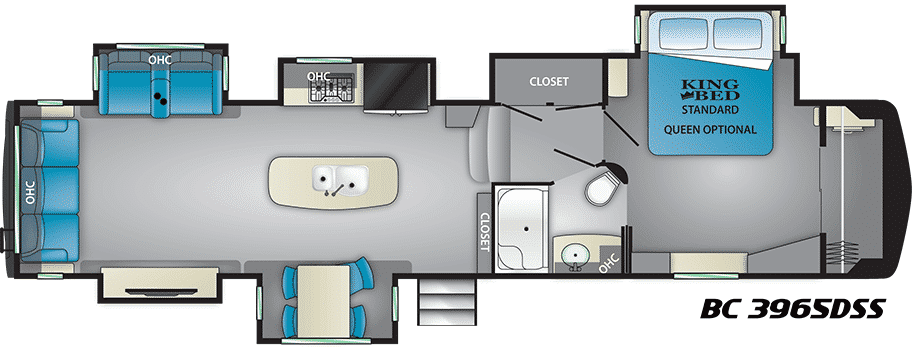
    2. Heartland Big Country 3965 DSS Fifth-Wheel

    Heartland Big Country 3965 DSS floorpan

    The Heartland Big Country 3965 DSS fifth-wheel offers a similar floorplan to the Cougar 388RKL shown above but with some subtle differences. The bathroom is on the opposite side of the RV with a large closet across from it and the TV and dinette are on separate slides. You still get a double-basin sink located on an island and an open floor plan that makes it a dream to live in.

    Heartland’s Big Country, specifically the 3965 DSS, is a large RV that comes with plenty of space and quality amenities and features perfect for full-timing. The spacious kitchen features a three-burner stovetop and large oven and refrigerator. The living room comes with theater seats, high ceilings, and a large 50-inch TV for easy lounging.

    Heartland RVs aren’t quite as much of a high-selling RV as some of its competitors, but it provides a whole lot in a versatile and comfortable space. If the floorplan above doesn’t do it for you, the Heartland Big Country comes in seven different floorplans, so you’re bound to find one that fits your preferences and needs.

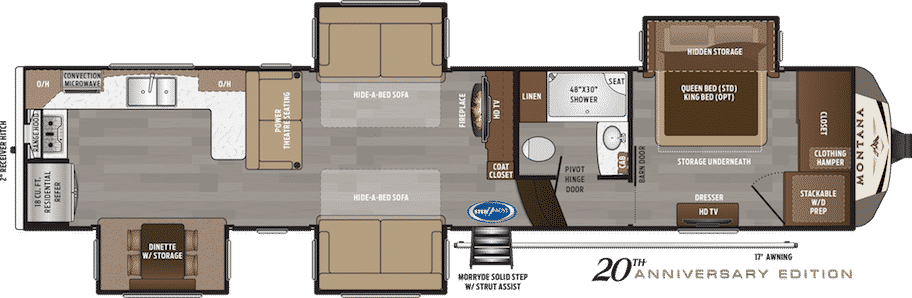
    Keystone Montana 3701LK Fifth-Wheel

    Keystone Montana 3701LK

    If you like the Keystone Cougar but just want something with a little more of everything, then the Keystone Montana is an excellent choice. The 3701LK fifth-wheel is one of my favorites. It has a spacious bedroom space up front, a bathroom in the center of the trailer, then a spacious living area with plenty of seating and a large L-shaped countertop in the kitchen.

    I referred to the Keystone Cougar’s quality as high, but the Montana takes the cake if you were to compare the two. Everything from the basic construction to the high-quality materials sets the Montana apart. It’s a luxury fifth-wheel with 20 different floorplans to choose from.

    It offers a host of industry-leading features, including residential appliances and amenities like a seamless fiberglass shower (or a soaker tub in certain floorplans), large 12-gallon water heater, and much more. Also, Keystone will honor its warranty for RVers who full-time. That’s not true of every manufacturer out there.

    If you like the Cougar but want something a little bigger and more luxurious, then the Keystone Montana is an excellent option. We don’t have a video review of the specific floorplan I like, but we can show you walkthroughs of other versions of the Montana fifth-wheel on our YouTube channel.


    Do you have a fifth-wheel in mind you think is fantastic for full-timing? Leave a comment below!


    Source link

  • Camping World’s Guide to RVing Big Bend National Park

    Camping World’s Guide to RVing Big Bend National Park


    Big Bend National Park is one of the most unique and remote national parks in the country. In fact, it’s so remote that it’s one of the least visited parks. So, if you don’t like the crowds that most national parks have, Big Bend is where you should go RVing this year. Just because it’s the least visited doesn’t mean it isn’t worth the long drive south. There are so many reasons to visit this 801,163-acre park!

    Why Visit Big Bend National Park in Your RV?

    Big Bend has an incredibly diverse landscape: mountains, desert, rivers, forest, and even waterfalls. So, whatever your favorite outdoor activity is, you’re sure to enjoy it there.

    It’s also the largest Chihuahuan Desert protected region in the country and home to the southernmost mountain range in the U.S., the Chisos Mountains. Its unique landscape is home to more than 1,200 plant species and more species of bird than any other national park. It’s openness and lack of light pollution also makes it one of the best places to stargaze.

    Things to Do at Big Bend National Park

    With over 800,000 acres of land in Big Bend. There’s plenty to do. Don’t come here without being prepared to explore. Here are a few options.

    Take a Hike…or Three

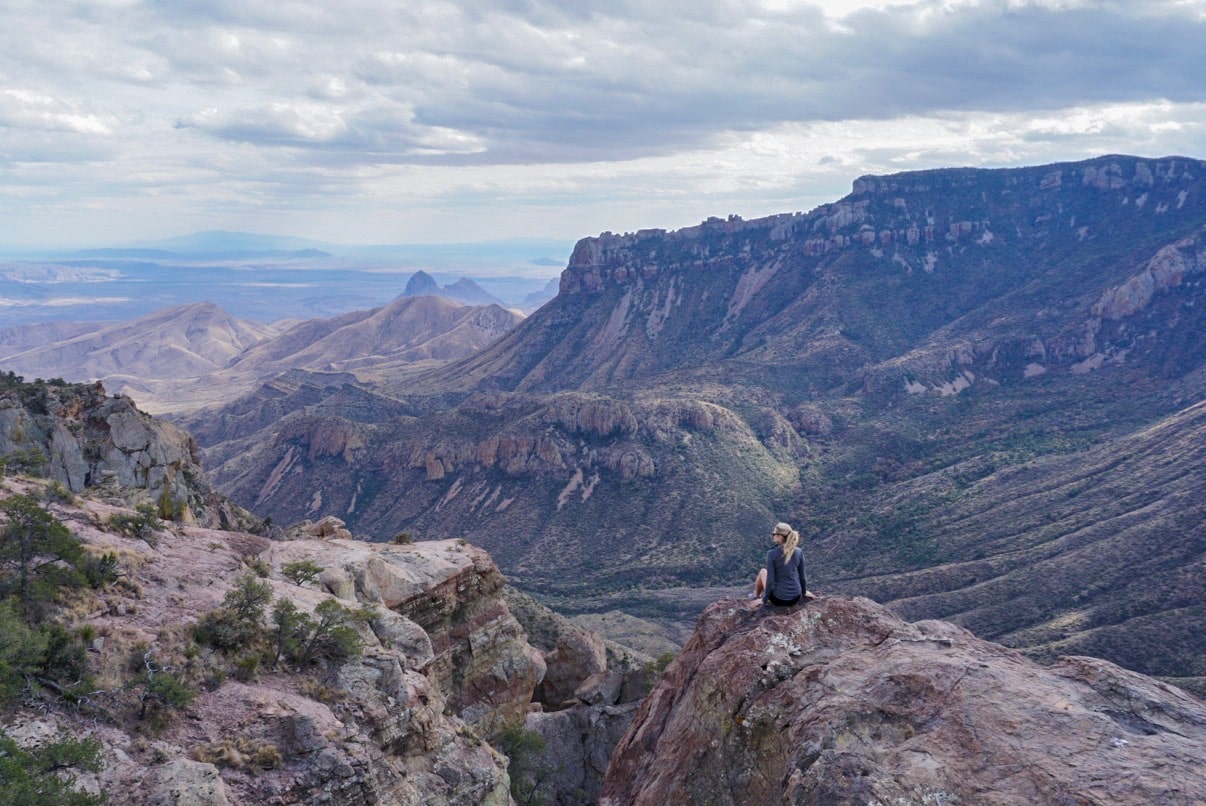
    Lost Mine Trail Big Bend National Park

    There’s an abundance of hikes for all ability levels in Big Bend! A few of the most popular hikes are the Lost Mine Trail, The Santa Elena Canyon Trail, and the Window View Trail.

    • The Lost Mine Trail, which is about 4.8 miles round trip offers some of the best views. It’s moderately challenging, leads to a ridge overlooking Pine Canyon and Mexico’s Sierra del Carmen.
    • The Window Trail is an easier hike and one of the most popular in the park. It leads you to a narrow pour-off, overlooking the surrounding Chihuahuan Desert. The pour-off resembles a “window” and offers incredible views, especially at sunset, but only if you’re brave enough to hike back in the dark.
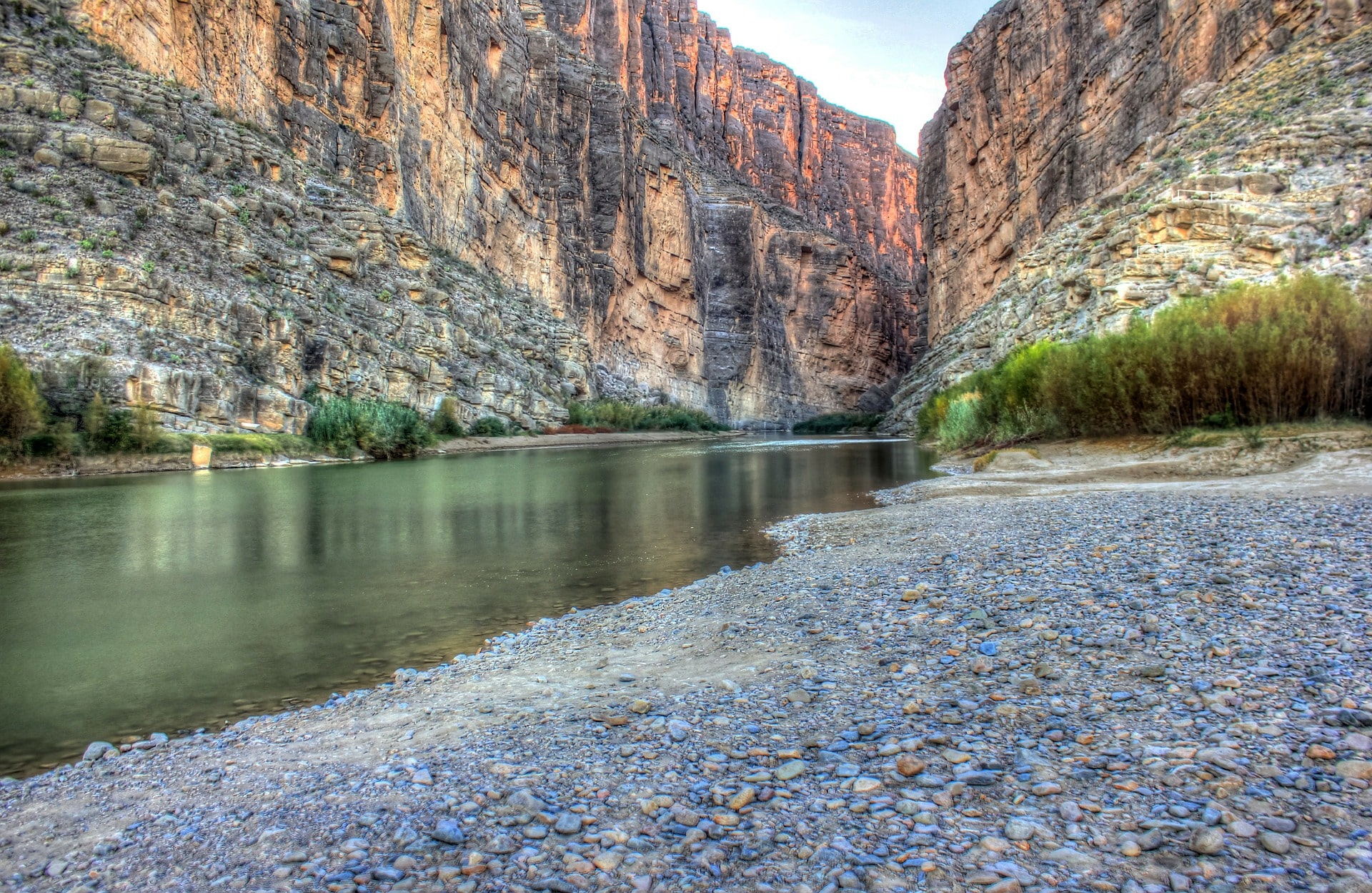
    • The Santa Elena Canyon Trail consists of stairs that take you up the canyon and then leads you to a trail down to the Rio Grande. You can cool off between the canyon walls in what feels like a little oasis. Walking just about half way across the river will put you in Mexico!

    Go to Mexico

    Don’t forget your passport. Around 118 miles of the Big Bend National Park border run along the international border between Mexico and the U.S. At the Boquillas Crossing, you can either walk or take a small boat across the Rio Grande to the small village of Boquillas.

    Once across, you can hitch a ride in a pickup truck, walk, or if you’re feeling adventurous, rent your own donkey, to take you up into the village. While the village is very small, there are a few restaurants, souvenir shops, and even a B&B. Most tourists grab a margarita and a taco and head back to the park.

    Soak in the Hot Springs

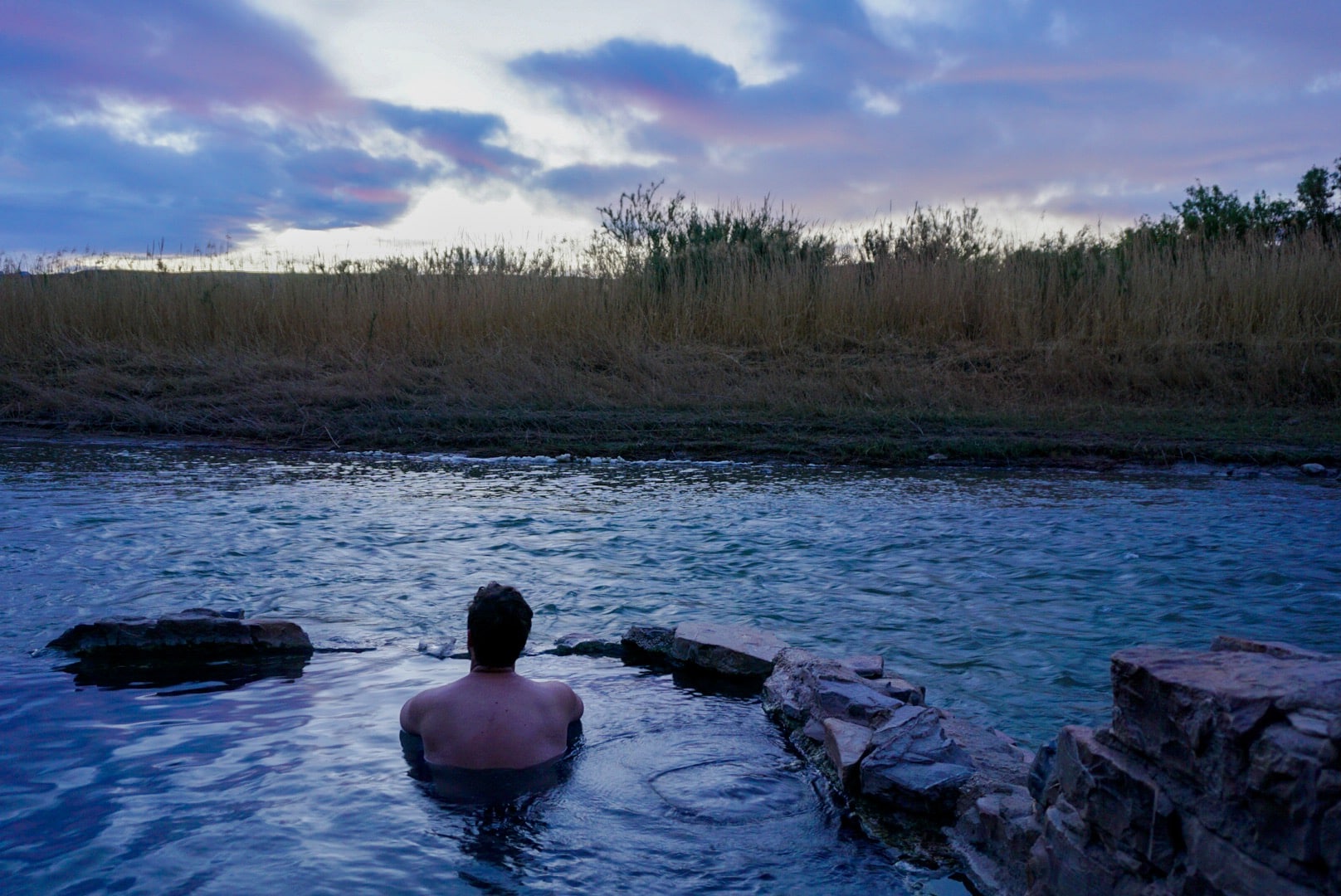
    The hot springs are the perfect way to relax after all the outdoor activities you’ll enjoy. They offer the most peaceful setting since they are right along the Rio Grande. Since the daytime is too hot and sunset is the most popular time, making the springs a little crowded, we recommend visiting at sunrise. There’s a short, leisurely hike to the springs, making the soak extra rewarding!

    Take a day trip to Terlingua and Lajitas

    Depending on where you are in the park, Terlingua and Lajitas are both within a short drive and can’t be missed. Terlingua is an abandoned ghost town and home to the historic Chisos Mining Company. You’ll enjoy the quirky roadside attractions, local dining spots, and even some shopping.

    Lajitas is quite the opposite of Terlingua. It features a modern resort with an 18-hole golf course, restaurant, swimming pools, zip line, spa, and horseback riding. Whatever you choose to do there, you absolutely can’t miss the town’s mayor, a beer drinking goat named Clay Henry III!

    Don’t forget about Big Bend Ranch State Park

    Many visitors skip a visit to Big Bend Ranch State Park and focus solely on the national park. But, many would argue that the state park offers equally, if not better, scenery. It’s actually Texas’s largest state park and offers a rugged volcanic landscape and a more “wild west” experience. Most of the hiking trails are primitive with few signs, making it a great place for some solitude.

    Ross Maxwell Scenic Drive

    The Ross Maxwell Scenic Drive is considered one of the best drives in Texas. It’s approximately 40 miles and takes you through the park’s most scenic landscapes. The drive ends at the breathtaking Santa Elena Canyon, where you can hike the canyon and then cool off in the Rio Grande.

    When to Visit Big Bend National Park

    The best time to visit Big Bend is in the spring or the fall. Summer brings crowds and temperatures of up to 100 degrees. It’s also important to remember that the desert is a place of extremes! In the winter, temperatures can dip down to the 30’s making it hard to enjoy everything the park has to offer.

    The desert flowers bloom sometime between March and April, making it the most popular time to visit. However, fewer crowds and comfortable weather make September to November a great time as well.

    Where RVers Can Stay

    Rio Grande Village Campground

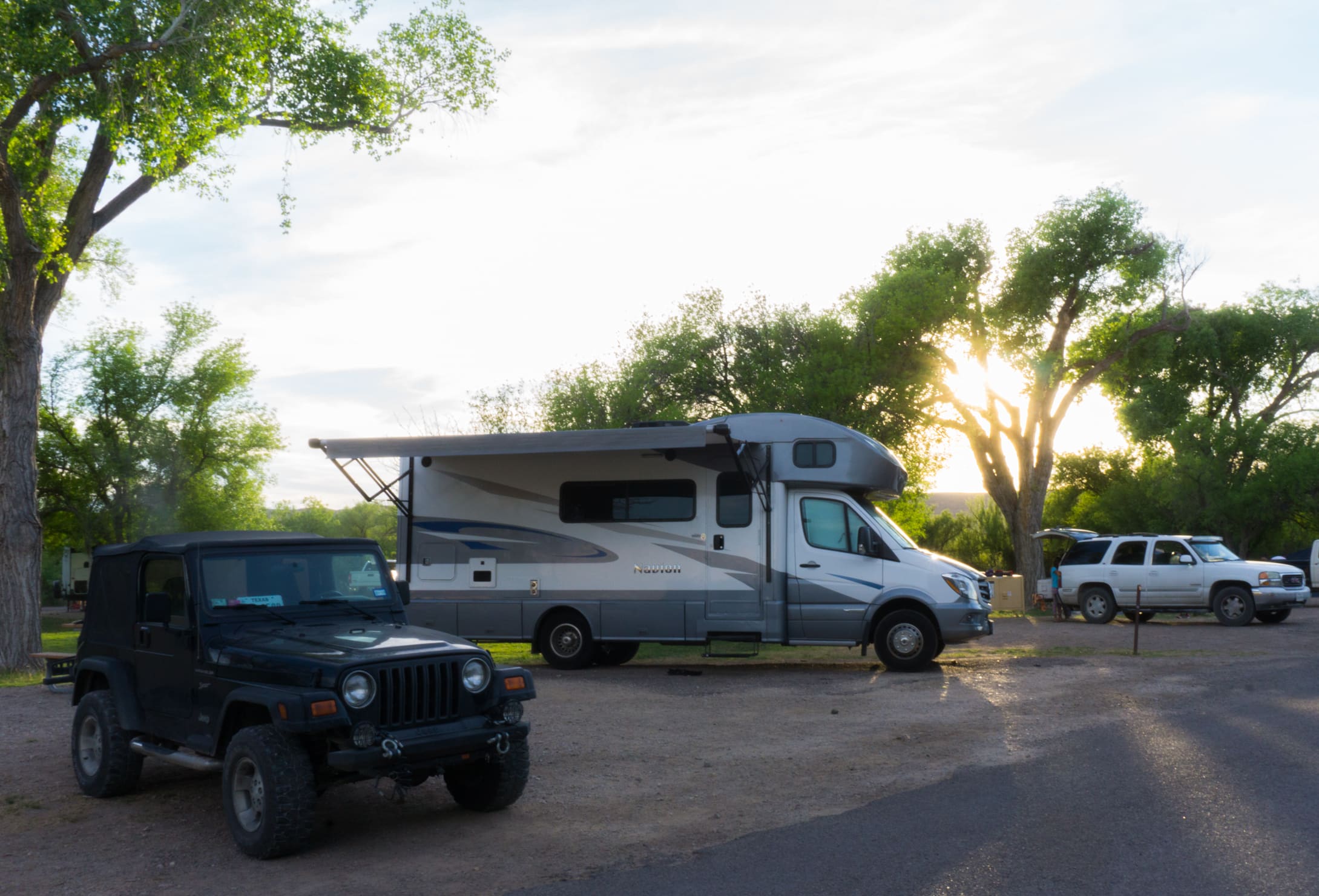
    Choosing where to camp is really a matter of preference. There are four different campgrounds inside the park and while you’ll need to make reservations well in advance, camping inside the park can be a real treat. You’ll experience the best stargazing and be close to all the adventure.

    Camping outside the park will likely mean you’ll have to drive long distances in order to explore since the park is so large. However, staying outside the park is the only way you’ll have cell service since the only way to get wifi is at the visitor centers.

    Also, many campsites are without electricity and either don’t allow generators or have strict time frames in which you can use them. So you’ll need to decide which option is best for you, depending on these factors.

    Getting to and Around Big Bend National Park

    Since Big Bend is one of the most remote areas of the country, it’s extremely important to be well prepared for your drive to the park. Gas stations are hard to come by and can be hundreds of miles apart so be sure to gas up every chance you get and keep an extra couple gallons on hand, just in case.

    Once inside the park, the visitor’s centers have gas, but it’s not uncommon for them to be out of service. Chances are you’ll be driving A LOT within the park since everything is spread out, so don’t risk it. That being said, you’ll definitely want a car or motorcycle inside the park, since it takes at least an hour to drive from one side to the other.

    Tips and Tricks Specific to RVing at Big Bend National Park

    Prepare to be out of cell service any time you are inside the park. Therefore, be sure to bring a paper map or download one on your phone. With the desert heat, you’ll want to make sure you always bring enough water along on your explorations.

    Also, be aware of wildlife, especially at night, since many of the animals in the area are nocturnal. You’ll notice javelinas, coyotes, cougars, jack rabbits, deer, and even bear will be on the trails and along the side of the roads the moment the sun goes down. You’ll also want to be sure to keep your campsite clear of food and trash. 

    For the latest info on visiting Big Bend National Park, visit their website: Big Bend National Park


    Have you been to Big Bend National Park? What tips can you share?


    Source link