Music and camping can be two of the greatest things. Large music festivals are often undertaken with a tent, but many of them allow RVs and even have a special area for RVs. If you’re interested in attending one of the festivals but don’t want to do the whole tent camping thing, I totally get it.
RVing at a music festival an make the whole experience a lot better. With that in mind, here a few tips to make RVing a music festival as fun and comfortable as possible.
1. Make Sure The Music Festival Is RV-Friendly
Image from Getty
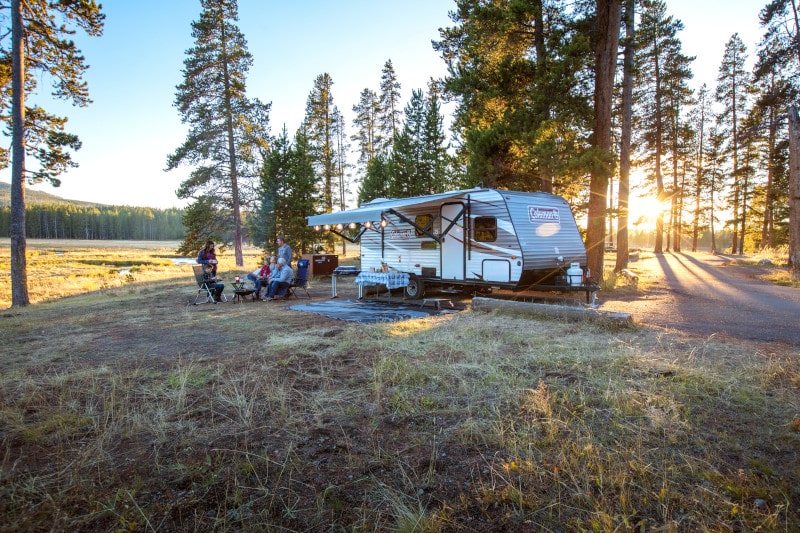
Not all music festivals are. If they aren’t, there should be a note on the festival’s website. Generally, the ones right in the heart of a big city are going to be less RV-friendly, whereas festivals in an area with a little more room will have RV accommodations.
It really all depends on the location of the festival and the type of music festival it is. If you can’t find that information on the festival’s website, get a number for the organizers and call. Someone there should be able to give you a clear answer. Another option is to look and see what people did last year. You can look up social media posts, youtube videos, blogs, and more about whatever festival you’re trying to go to. From there it’s a simple matter of identifying if the festival is RV-friendly and if so how to make the most of it.
2. Reach Out Ahead of Time to Get Details and Rules
Don’t just pay for things and show up. You should do your best to get as much information about the festival as possible. You want to know where you will be parking your RV in relation to the rest of the festival, how far it is to bathrooms, food, water, and the stage or stages.
While much of this information will be found on the festival’s website, I still highly recommend calling ahead to see if there’s anything else you need to know other than what’s on the website. If you can, another thing I suggest is going with someone who has already gone to that particular music festival. This way you’ll have a somewhat experienced person who can show you the ropes and help you get to where you want to be. Plus it’s always fun to go to these festivals with friends.
3. Gear Up Properly and Bring Food and Water
Image from Getty
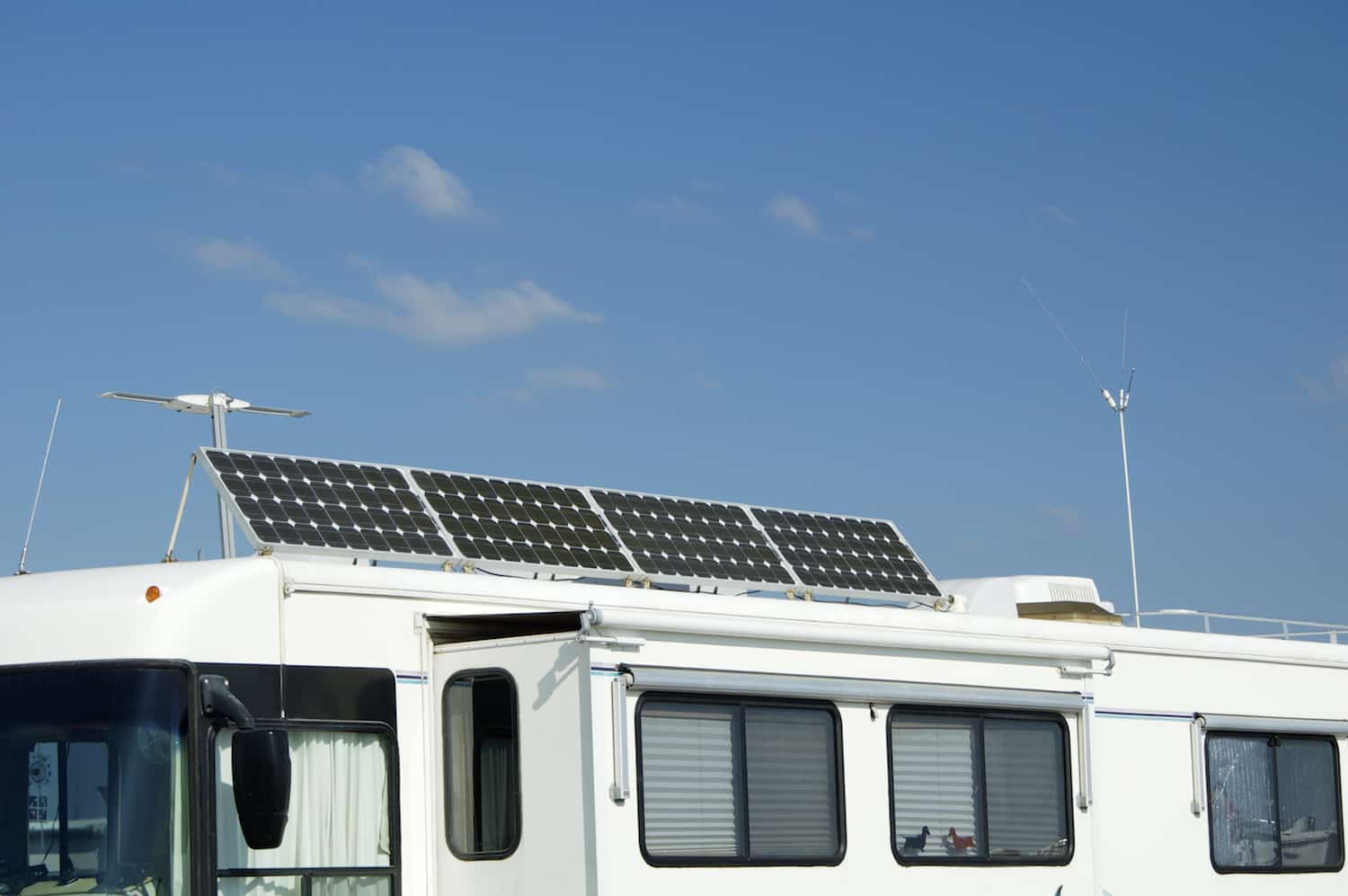
Camping in an RV at a music festival can be different than camping at a traditional campground. Oftentimes you’ll be boondocking, so keep this in mind. You’ll want to have a generator, solar panels (if possible), and anything else you need to go boondocking. If you have a full hook-up spot, it’s still a good idea to plan like you’re boondocking. There can always be a mix-up and you could end up without a power hook-up or sewer service.
Additionally, I’d say to bring plenty of potable water. Yes, you’ll often be able to find some at the festival, but it’ll be cheaper if you bring it along. Also, you’re going to be outside. This means you need to be ready for bugs, rain, excessive sun, heat, and anything else you might run across. This means dressing appropriately and having things like bug spray and sunscreen on hand.
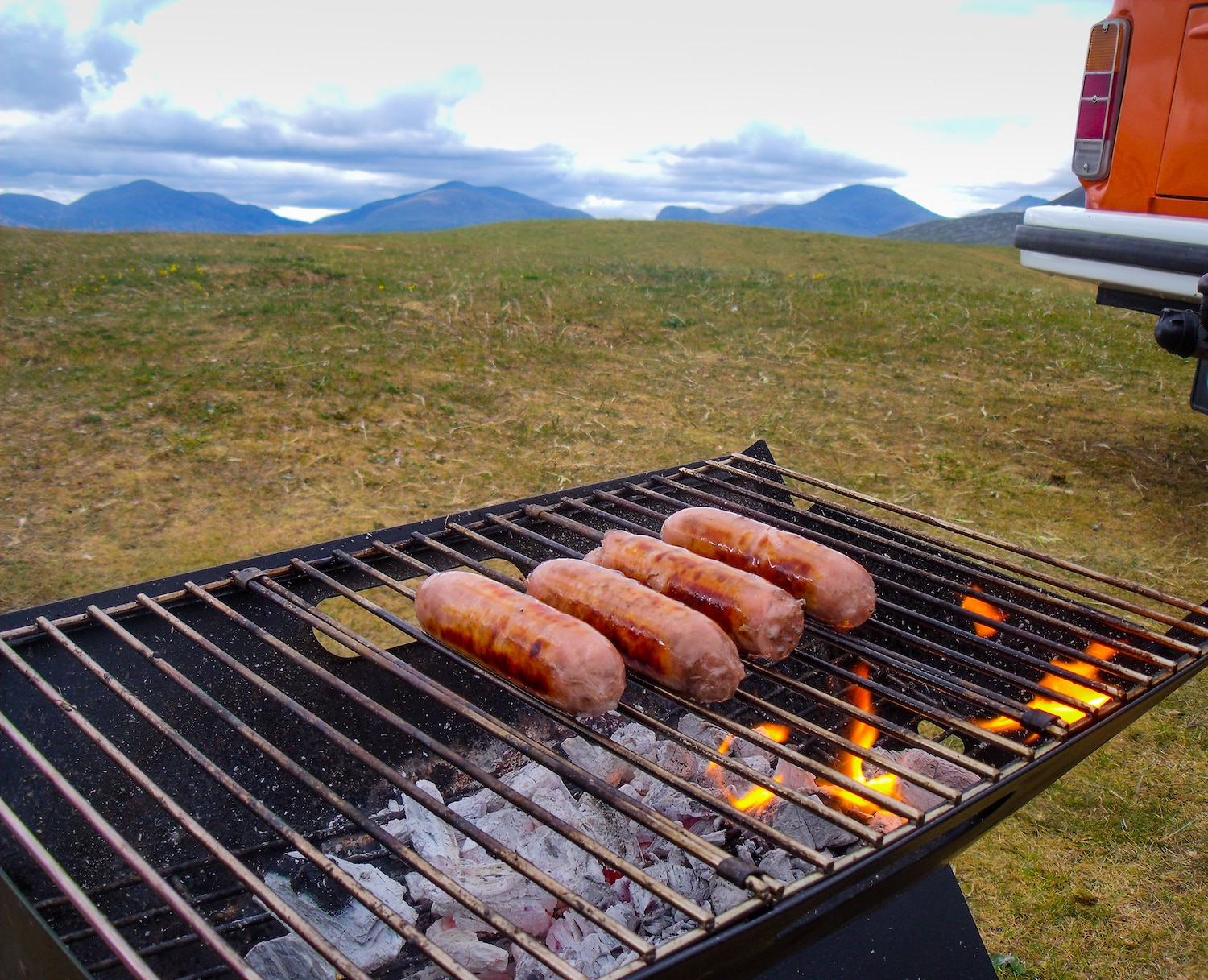
Also, come prepared on the food side of things. There’s likely food around to purchase, but you’ll save a ton if you grill for yourself or eat-in. It’s also a good way to make sure you still eat right while at the festival. I’m all for indulging a little bit in festival food, but coming with food of your own will help ensure not everything you eat while you’re there is deep-fried or otherwise unhealthy.
4. Don’t Bring Restricted Items
Or really anything that you know you’re not allowed to bring. If there’s anything that’s questionable, just don’t. The last thing you want is to get kicked out of the festival or run into issues with the law.
When inquiring about the details and rules for camping at the festival, you should get a list of things you can and cannot bring. Every festival is different so don’t make any assumptions. Typically, though, weapons, fireworks, and other possibly dangerous items are forbidden.
5. Get There Early and Don’t be in a Big Rush to Leave
Image from Getty
You want to give yourself plenty of time, so try to get to the festival early. This will allow you to get fully situated before things kick into gear. Find out what time you can get there at the earliest and then plan around that. You don’t have to and probably don’t want to be the first one there, but getting there before things get crazy is always smart.
A lot of people hit the road quickly after a music festival. This honestly isn’t super smart if you’re camping in an RV. Trying to make the rush of everyone leaving is stressful, and it usually still takes a long time. Go with the expectation that you’re going to hang out for a while.
You have your RV right there, so it shouldn’t be a problem to chill-out right at the end of the festival. Take a quick nap, read a book, watch some TV, surf the internet, or play some video games. Just do something to take up some time. Let the folks who are rushing out of there do so. You can leave after that initial rush and do so comfortably.
The only exception here is if the festival organizers are asking you to clear out by a certain time. If that’s the case, follow instructions and try to leave in a timely manner. Still, don’t rush. Rushing will only lead to issues and accidents. You want the end of the music festival to be as enjoyable as any other part.
Do you have any additional tips for RVing at a music festival? Leave a comment below!
The whole point of getting out and going camping for many folks is to reconnect with the natural world. They want to camp in the wilderness in their RV or at least camp at a nice campground and then hike out into the wilderness. So, it makes no sense to RV in a way that hurts the environment.
Many RVers enjoy the fact that they have a small footprint from an environmental perspective, and if you want to do your best to make your next RV trip more environmentally friendly, then here are some tips for you and your family.
1. Camp at Appropriate Campsites
Photo by Camping World
Boondocking can be one of the best ways to camp in your RV in an environmentally friendly way, but while you’re out there you can just as easily ruin the place that you camp. The rule of thumb here is to leave no trace and camp appropriately. Don’t camp somewhere where your presence there is going to seriously disrupt the natural world.
When it comes to finding the right campsite inside a campground, things are a little different. You can research ahead of time and find out how environmentally friendly or sustainable a campground is.
The best place to start? The campground’s website. Most will be excited about their efforts to help the environment and boast about it on the Web. Unclear as to whether or not a campground is environmentally friendly? Look for mentions of it on Yelp and other review sites.
You can also call the campground and just talk to somebody. I know most people would rather do things online these days, but a simple phone call can tell you everything you need to know and it makes making a reservation easy, too.
2. Replace All Lightbulbs with LEDs
Your RV might come with LED lights. If that’s the case, then you don’t have to do anything. If however, you have an older RV or simply an RV that doesn’t have LED lights, then it’s worth it to upgrade.
LED lights use far less energy. It doesn’t matter if you’re connected to shore power or if you are using your RV’s batteries, using less electrical energy is always a good thing. This goes two-fold if you’re out there boondocking. When boondocking, it’s important to make the most of all of the power you have and can harness through generators or solar panels.
3. Use Non-Toxic Cleaning Supplies and Septic Treatments
The cleaning supplies and septic treatments you use in your RV can have a negative impact on the environment. Try your best to find cleaning products (soaps, cleaning sprays, etc.) that are biodegradable. There are plenty of options out there that work just as well as the stuff with harsh chemicals.
When it comes to septic system treatments and chemicals, there are plenty of organic or eco-friendly items for sale. This will help make sure that even your personal waste doesn’t damage the environment negatively. Camping World sells eco-friendly cleaning supplies and septic supplies.
4. Collect Your Recyclables
Image from Getty
Just like you’d do anywhere, make sure you recycle plastics and paper if they can be. At certain campgrounds this is easy. Other times, it can be a little more difficult. I like to collect my recyclables and then find a place to get rid of them.
If you’re unsure of where to take your recyclables, a simple Google search will show you the closest areas near you. I admit this is sometimes easier than others. It depends on where you are. However, in my experience there’s a place to go that’s not too far off your route.
5. Leave No Trace at Campsites
I touched on the idea of leaving no trace in the section about campsites, but I wanted to discuss it a bit more in-depth. The idea is to be able to camp somewhere for a while and then leave and nobody knows you were there. Basically, you want to leave the place exactly as you found it, or at the very least as close to that as possible.
This means picking up trash and any of the things you bring with you before you leave, but it also means doing things like building a small fire instead of a large one and making sure it’s out fully when you leave, not damaging the plants or wildlife around you, and trying not to overcrowd any one area with people. Really think about the place you’re in and how you can make sure that it is left the same or even better off when you leave. If you have questions about the idea of leaving no trace, check out the official Leave No Trace website.
6. Use Solar Power
Solar power can be an expensive up-front cost, but it will pay for itself in time. The more you use it, the quicker you’ll see a return on your investment. That means getting solar power on your rig and going boondocking often is the way to go.
Solar power is free and it doesn’t hurt the environment at all. It’s one of the cleanest and best types of energy out there and if you can harness it, you’ll not be as reliant on petroleum and electricity from other sources of energy. The right solar setup can really change your camping experiences and help you to adventure further than you would have thought to otherwise. It opens up doors and allows you to explore more while not hurting the environment. It’s worth the investment, and Camping World sells solar kits and solar components if you’re interested. Our service team will even do the installation if you’d like or don’t feel comfortable doing it yourself.
These are just a few tips that you can use to be a little more environmentally friendly. There are many more things you can do. Do you have a suggestion? Leave a comment below!
There’s roughing it, there’s glamping, and then there are these literal mansions on wheels. If you enjoy the finest of the finer things in life as you travel from spot to spot, a luxury RV is just what you’re looking for. And not just any luxury RV, the most luxurious RV.
There’s plenty of them out there. Typically these RVs cost a million dollars or more. For that kind of money, you’ll get some of the very best features, amenities, and overall designs out there. You won’t for a second feel like you’re missing out, and you’ll have all the luxuries you need no matter where you go.
Here’s a look at five of the most seriously luxurious RVs that are on sale today. These RVs are some of the options out there that will put everything else on the road to shame, and even beat out most luxury resort hotel rooms and houses.
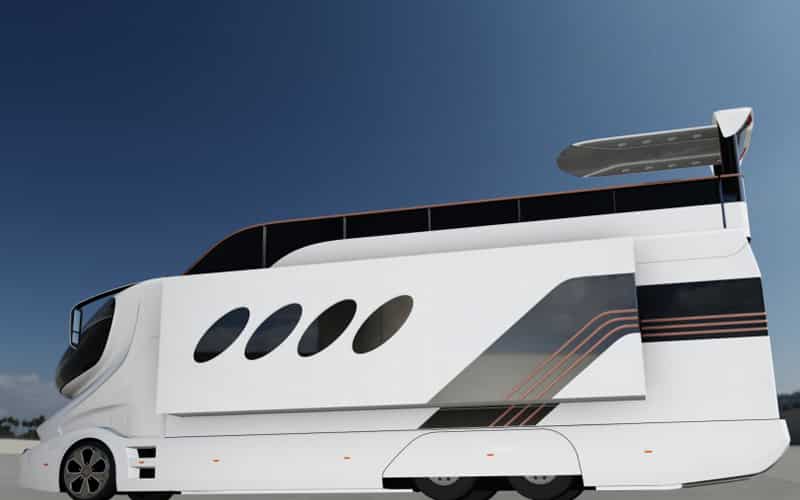
Marchi Mobile eleMMent Palazzo Superior – $2 Million or More
Often referred to as the most luxurious mobile home in the world, the Marchi Mobile eleMMent Palazzo Superior is the company’s top-of-the-line model and an absolute revelation for many RVers. The RV’s striking exterior is only rivaled by the luxuriousness of its interior and the features inside.
The RV offers a huge lounge area; a kitchen with modern premium-brand appliances; a bathroom with the Aqua Clean Hygiene Cleaning Program; a master bedroom with a King-size bed, a dressing table, large closets, and a lounge chair; and a Sky Lounge on top of the RV. As you can imagine, the Sky Lounge provides you with the ability to relax outdoors and up and away from all the hubbub on the ground. It provides an exclusive experience unlike any other.
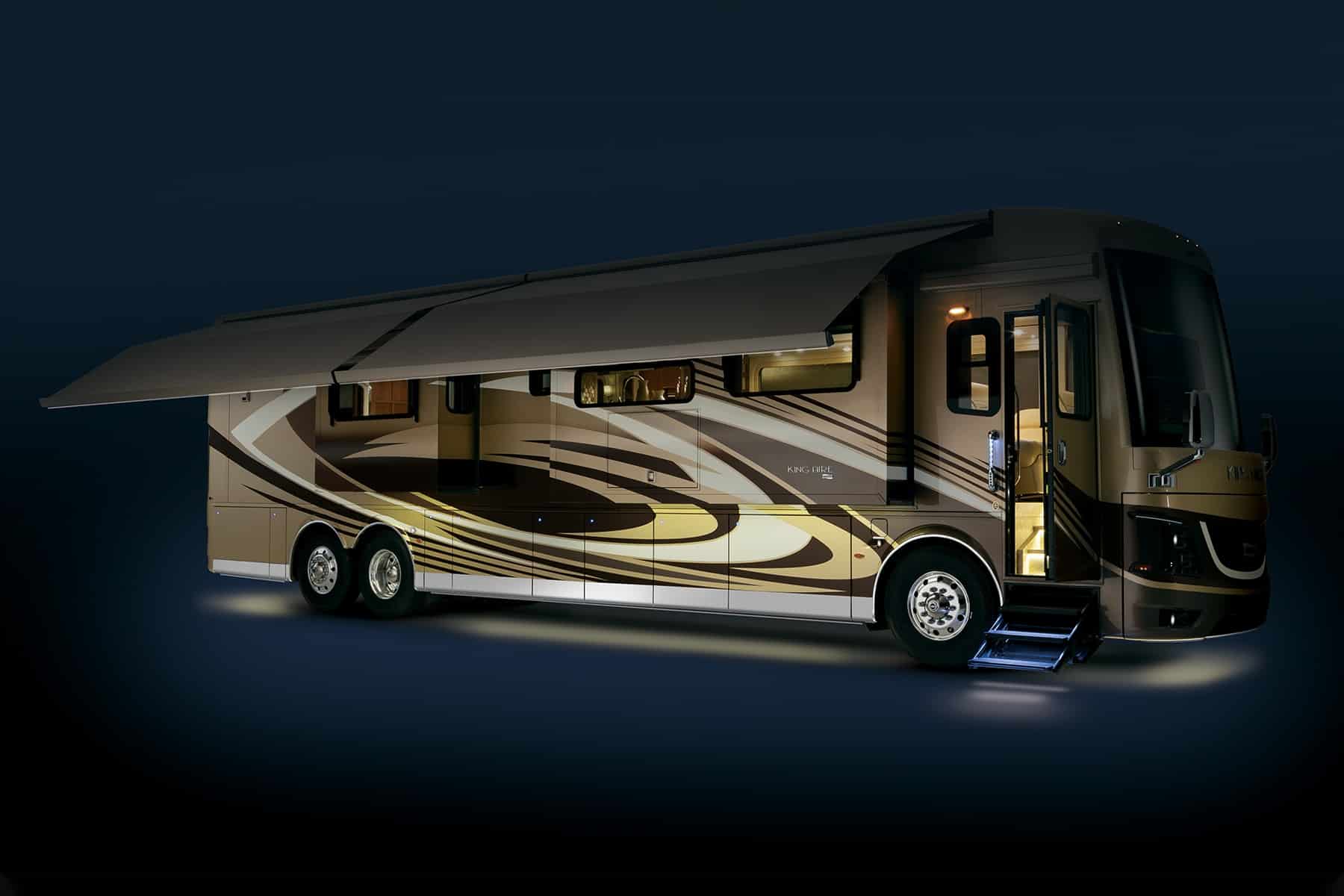
Priced under $1 million, the Newmar King Aire is a heavenly place to spend your time. The materials inside the motorhome put other options out there to shame and surpass most materials you’ll find in typical luxurious homes. This motorhome is built for a king.
The King Aire is a beautiful example of what Newmar is capable of. There’s luxurious, a spacious kitchen and dining area with the best appliances, multiple bathrooms should you want them, a spacious bedroom with a King Bed, and plenty of wardrobe and storage space. If you own this coach, you’ll live a life of luxury no matter where you go.
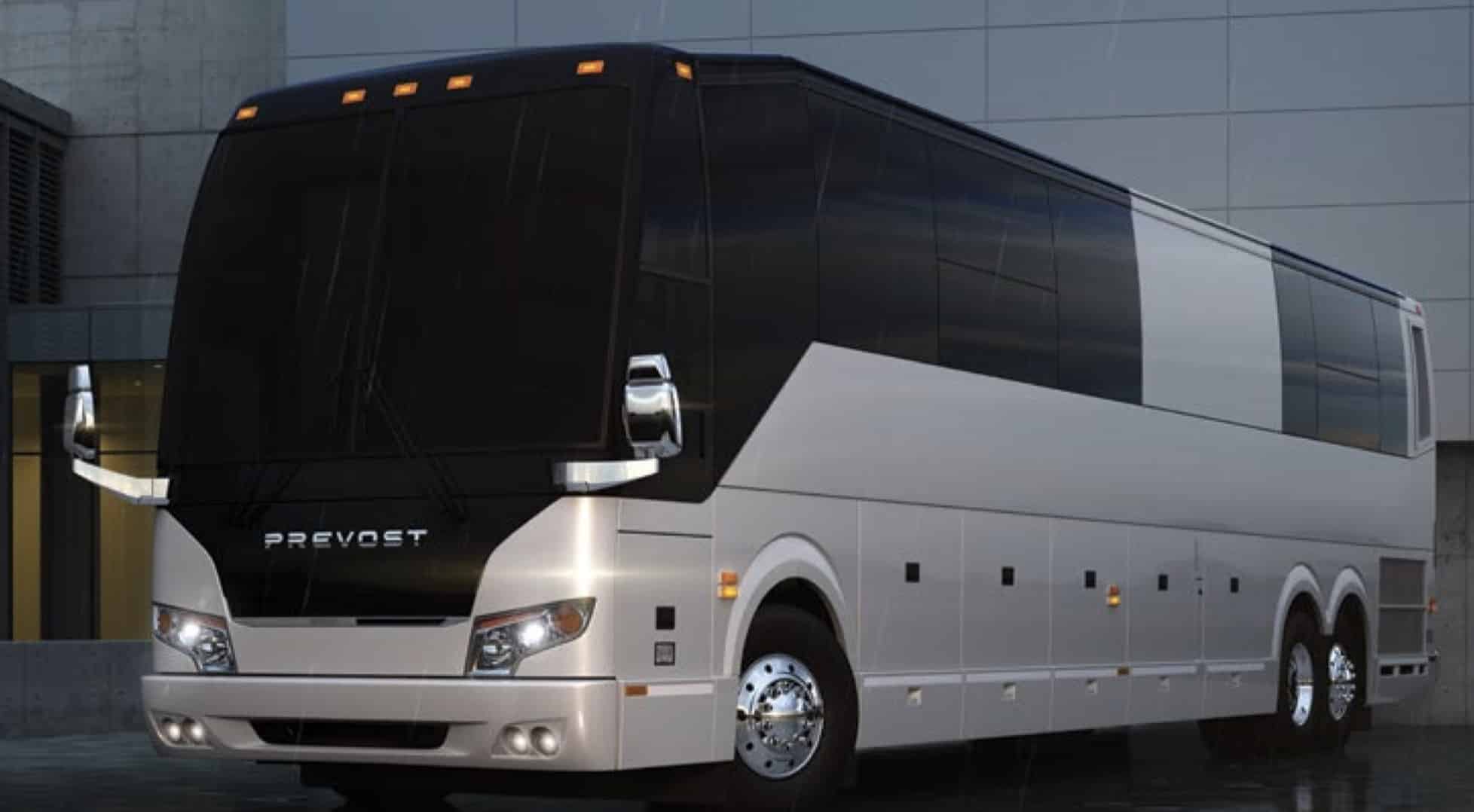
Next up we have the Prevost H3-45 VIP. Calling this model the VIP is very accurate. The people living or spending time in this RV are Very Important People. The motorhome features some of the best amenities and capabilities in the industry, and you’ll never go wanting in this RV.
The RV is built for comfort. The motorhome features the tallest bus shell enabling exceptional interior height, more floor space than the competition, large windows for natural light, 479 cubic feet of under-floor space for storage, several floorplan options that you can discuss with Prevost and plenty of high-class interiors and RV furniture.
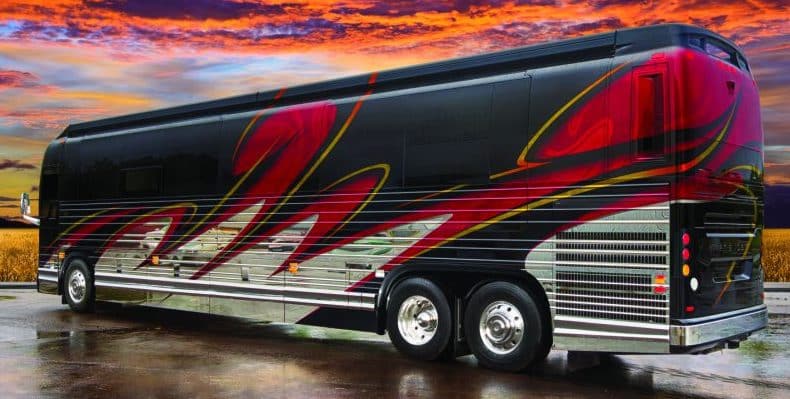
The Marathon Coach #1300 is really more of a line of RVs. Marathon takes the Prevost H3-45 and X3-45 chassis models to all new heights. The price for these amazing RVs is well over $2 million and they’re worth every penny.
They feature the absolute best materials out there and floorplans that are innovative and easy to navigate. There’s simply nothing like a Marathon Coach, and the #1300s are the best the company as ever produced. You can also have a motor coach custom built, if the options available to you are simply not enough or not quite right.
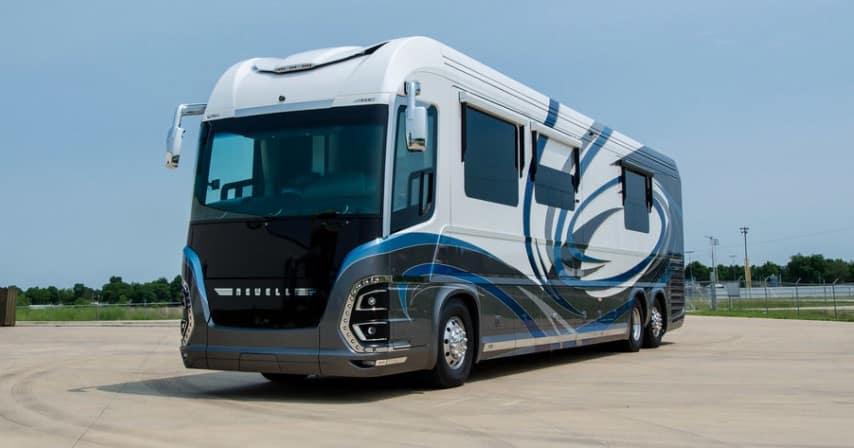
The Newell Coach is an ultra-luxury coachbuilder that makes motor coaches that run right around $2 million. They’re some of the most luxurious options out there, and if you’re looking for something with amazing attention to detail and a functional but extremely luxurious floorplan options, Newell Coach’s motorhomes are it.
The slideouts on the model open up the area and give you tons of floor space. The seating and dining areas are spacious and comfortable, the kitchen offers some of the best appliances and layouts you’ll find anywhere and there are a couple of bathrooms, a large master bedroom with a king bed and more storage than you’ll know what to do with. This is a luxurious home on wheels and one RV worth remembering and buying if you have the money.
The kitchen in your RV simply doesn’t have as much space as a kitchen in a house can and usually does. This is even more of an issue when you have a smaller RV.Small RVs are small on storage, and that means you won’t have much space to store your food. So, what do you do? You get creative.
Here are some ways to make the most of the food storage space you do have.
Organize The Storage Space
Image from Camping World
The first and the best thing you can do is organize the space. Rv manufacturers will give you some kind of pantry, but more often than not that pantry space is just that, space. It’s up to you to make the most of it and organize it. The more organized your space is, the easier it’s going to be to fit everything you need.
There are shelves you can add to your storage space and containers that will help you organize on those shelves. Camping World carries quite a lot of organization items to help you make the most of these spaces.
The same goes for your refrigerator. Most refrigerators come with drawers and shelves, but you can take that to the next level with some additional organizational items. Also, small RVs have small refrigerators, and some of these refrigerators are little more than a square space with a door. Take some time to organize your refrigerator and you’ll make the most of its space.
Think About What Can Go Into the Refrigerator and Into the Pantry
Image from Getty
The next step for making the most of your food storage space is to really think about what’s going into the refrigerator and what goes into the pantry. In a home, there’s plenty of stuff that we toss into the refrigerator that doesn’t need to be there.
It also comes down to the types of food we should bring on the trip. Many things that you’d usually buy frozen or refrigerated, you can also buy canned or dried. In some cases, it’s better to do so. Think critically about what you want to take with you on your trip and the space that you have in your RV.
Canned Foods
Canned foods are a big thing for me on any camping trip. Canned food is easy. It sits in whatever storage or pantry space you have. It can even be carried with you easily. When its time to eat, you pull out a can, open it up and cook the food inside. Super simple. Also, cans stack easily and generally do a good job of making the most of the space you have.
I bring canned soups and chili on most trips, but you can also get canned veggies, fruit, pasta, rice, and more. This helps keep unnecessary things out of your refrigerator, meaning you can keep more of the essentials in there. Things like milk, cheese, juices, and meats.
Dry Goods
Dry goods are another thing that you should think about having in your RV. I typically try to find different containers than the ones they come in, but beans, rice, and pasta are all things that can be easily kept in your RV’s pantry space and be the basis for a fantastic meal. Also, beef jerky, nuts, crackers, and chips all fit into this category. Prioritize what dry good you want to bring along, and consider creating a meal plan ahead of your trip if you can.
Keep Fruit and Vegetables Out
Unless it’s been cut open, the fruit and vegetables you buy can be left out. Will they stay good for a super long time? No, but then you shouldn’t be stocking your RV with fruit and veggies you don’t plan to eat for a while anyway.
Refrigerating fruit and veggies keeps them fresh longer, but that shouldn’t be a concern. Get yourself a fruit basket or a hanging fruit basket or hammock. This simple item will keep your fruit and veggies off the countertop while still providing you with easy access.
Do you have any suggestions or ideas on how to better organize food storage in a small RV? Leave a comment below!
If you ask 100 people to name a motorhome brand, odds are at least 95 will shout out ‘Winnebago’ first. Winnebago is essentially the ‘Kleenex’ of the motorhome industry.
When it comes to Class C motorhomes, there are a lot of options for you to consider in both Gas and Diesel versions. Since there are more diesel options, we will take a look at the gas ones first and do it in alphabetical order. Ready? Here we go.
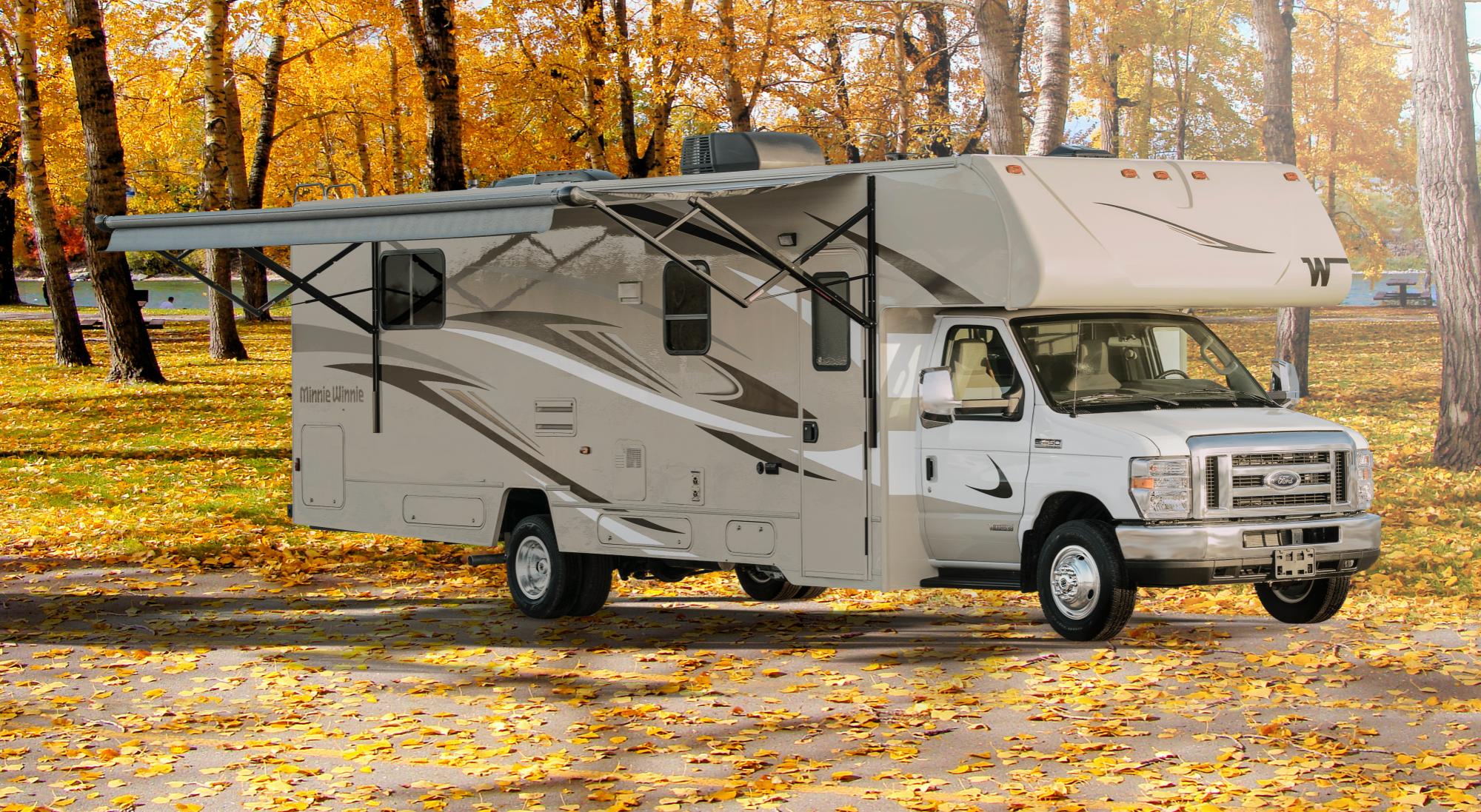
Winnebago Minnie Winnie
Image from Winnebago
A cute name but there really is nothing ‘Minnie’ about them. There are five Minnie Winnie floorplans—22M, 22R, 25B, 31H, and the 31K. All of them have a queen bed in the back, an overhead bed over the cab, and enough beds to sleep at least six.
They also all have a Ford chassis with 305 horsepower 6.8L SEFI Triton V10 engine and 402 ft-lbs torque. Other assets include a 32-inch HDTV with DVD player in the living area, a 24-inch HDTV in the bedroom, and a dash with a Radio/Rearview Monitor System w/integrated 6.2″ touchscreen monitor and color rear camera.
The 22M, just over 24 feet in length, has the bed housed in a slide-out, and a large U-shaped dinette. The 22R has no slide-out and is actually just a few inches shorter in total length. Its bed is located in the rear corner, and it has a large U-shaped dinette.
Moving up in length, we have the 25B. The 25B also has no slide-out but is nearly two feet longer than the 22R. The bed sits in a corner, the dinette is a regular booth dinette, but the 25B adds a sofa-bed to keep the sleep number at six.
Up next is the 31H. The ‘H’ must stand for ‘Holy Moly’ because Winnebago throws everything at you with this one. The 31H is nearly 33 feet long and has two slide-outs. The one on the driver’s side pulls out the large sofa bed and cooktop/range. Slide-out two is on the passenger side in the back and contains the wardrobe closet and chest for the master bedroom as well as a pair of twin bunks. This bunkhouse floorplan is capable of sleeping an impressive nine tired campers.
The final Minnie Winnie floorplan is the 31K. The 31K is the same length as the 31H and has a large slide-out on the driver’s side housing the sofa bed and U-shaped dinette. In the back, you’ll find the bed centered to create walkaround space, and a solid pocket door to create a master suite if you need and/or wish.
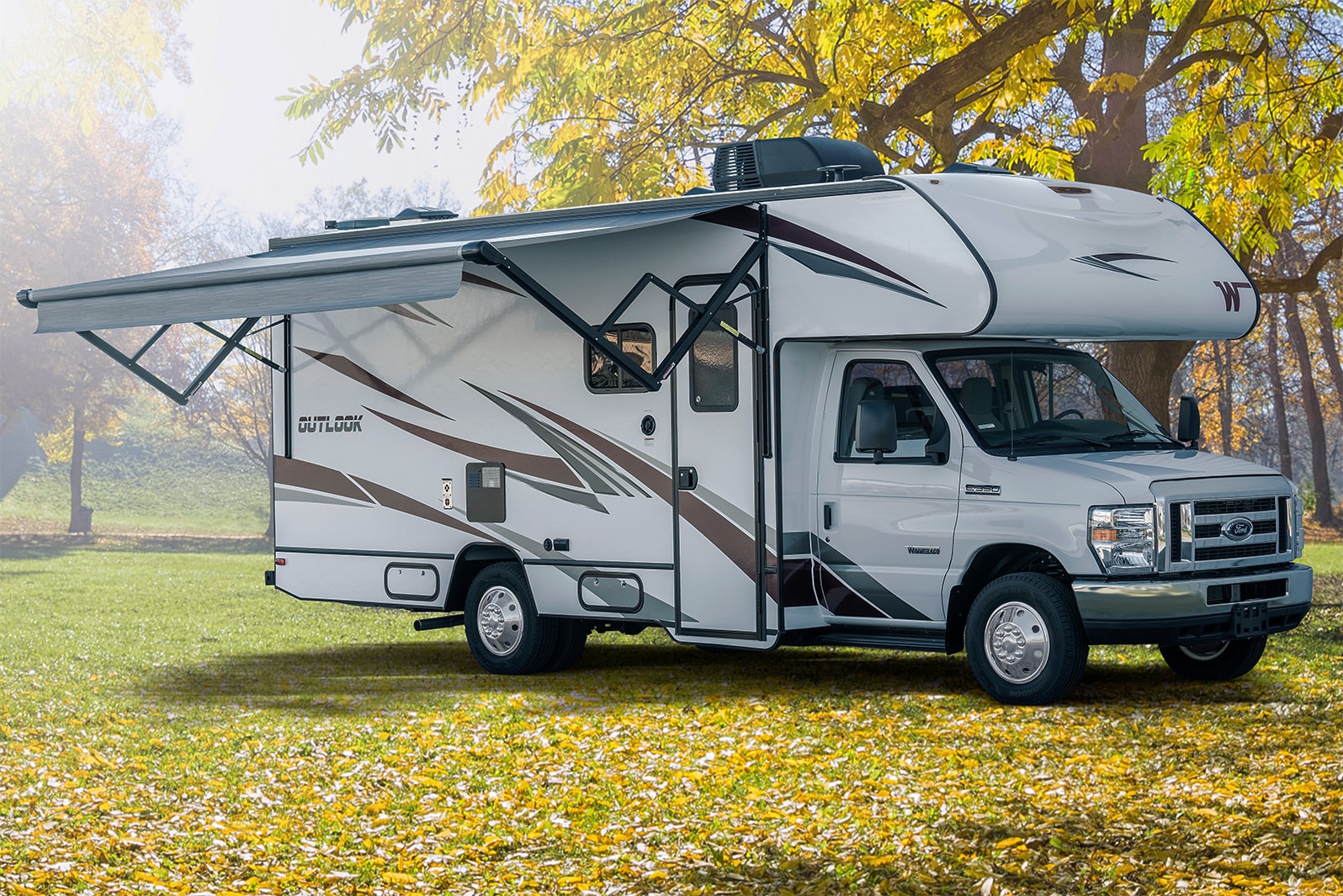
Winnebago Outlook
Image from Winnebago
The Outlook comes in four distinct floorplans—22C, 22E, 25J, and 31N. Like the Minnie Winnies, all of them come with a queen bed in the back and an overhead bed in the cab area. Every Outlook has a straight-line kitchen set-up with a three-burner cooktop on the passenger side of the model, plus a booth dinette 40-inches by 60 or 72 inches depending upon the floorplan. All of them can sleep at least six tired campers.
As with the Minnie Winnie, all Outlooks have a Ford chassis with 305 horsepower 6.8L SEFI Triton V10 engine and 402 ft-lbs torque. As far as camp-comfort features, each Outlook has a 32-inch HDTV in the living area and a convenient pet leash tie-down on the exterior.
The 22C and 22E are both the same length: 24 feet, eight inches. The difference sits in the back. The 22C has the bed in a slide-out and turned perpendicular to the front. It turns the wardrobe closet to face the bed and adds a pantry. The 25J is just a smidge over 26 feet in length. This Winnebago beauty has no slide-out, places the bed into a back corner, and adds a wardrobe closet sitting next to the fridge.
The largest Outlook, the 31N, has a pair of slide-outs on the driver’s side. The first has the queen bed contained within it, the second has the booth dinette and sofa bed. There is a solid pocket door to ensure the master bedroom has maximum privacy. Up-front, the kitchen has additional counter space.
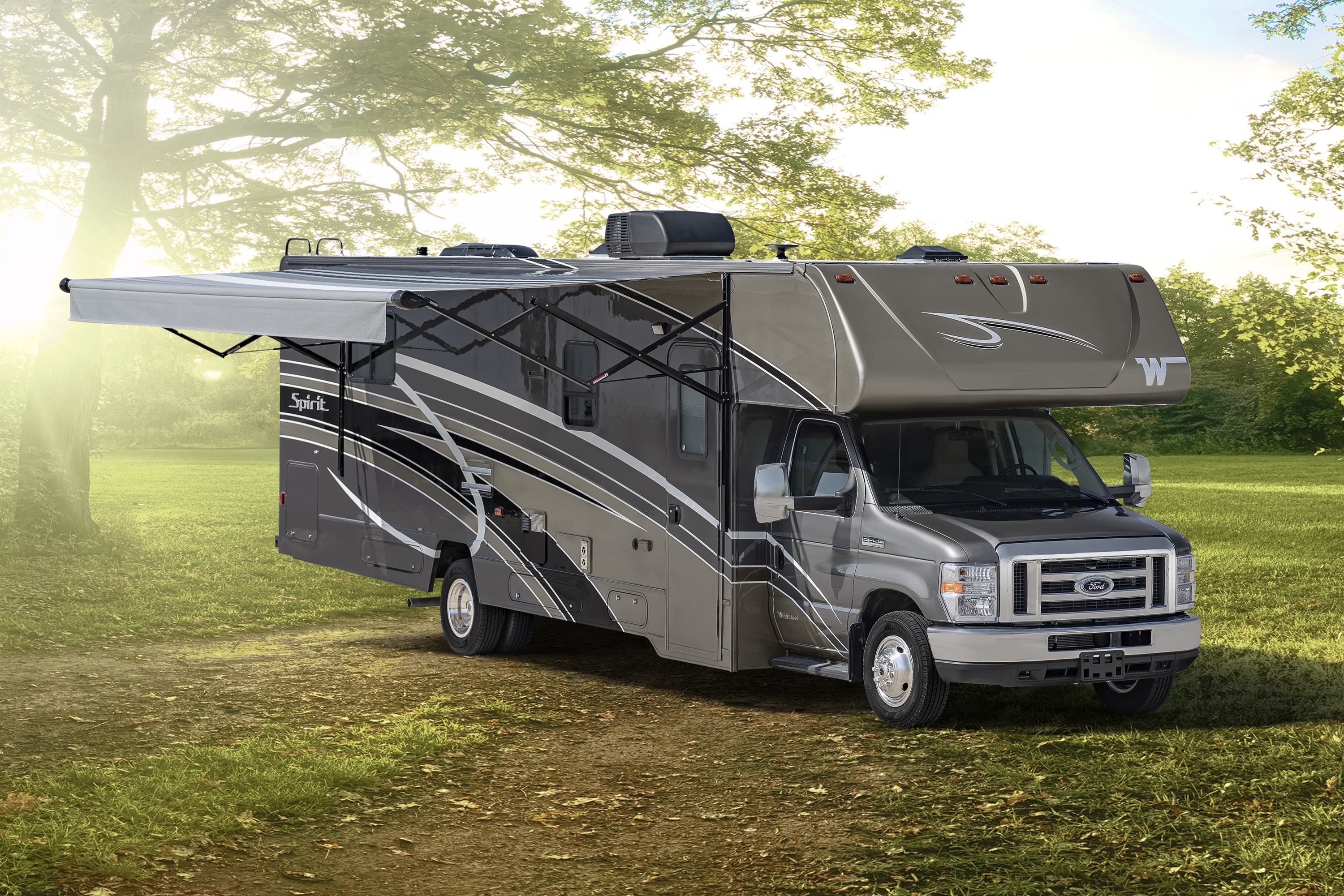
Winnebago Spirit
Image from Winnebago
With identical floorplans, the Spirit is the sister of the Minnie Winnie. The only change is in the graphics and paints on the outside of each model. This ‘twinning’ is a by-product of when Winnebago purchased Itasca years ago.
On to the diesel Class C Winnebago models. Rather than creating different sections for each of the diesel ‘twins’, I am going to give them to you upfront. Suffice to say the difference between the twins is purely cosmetic on their respective exteriors.
Winnebago View/Winnebago Navion
Image from Winnebago
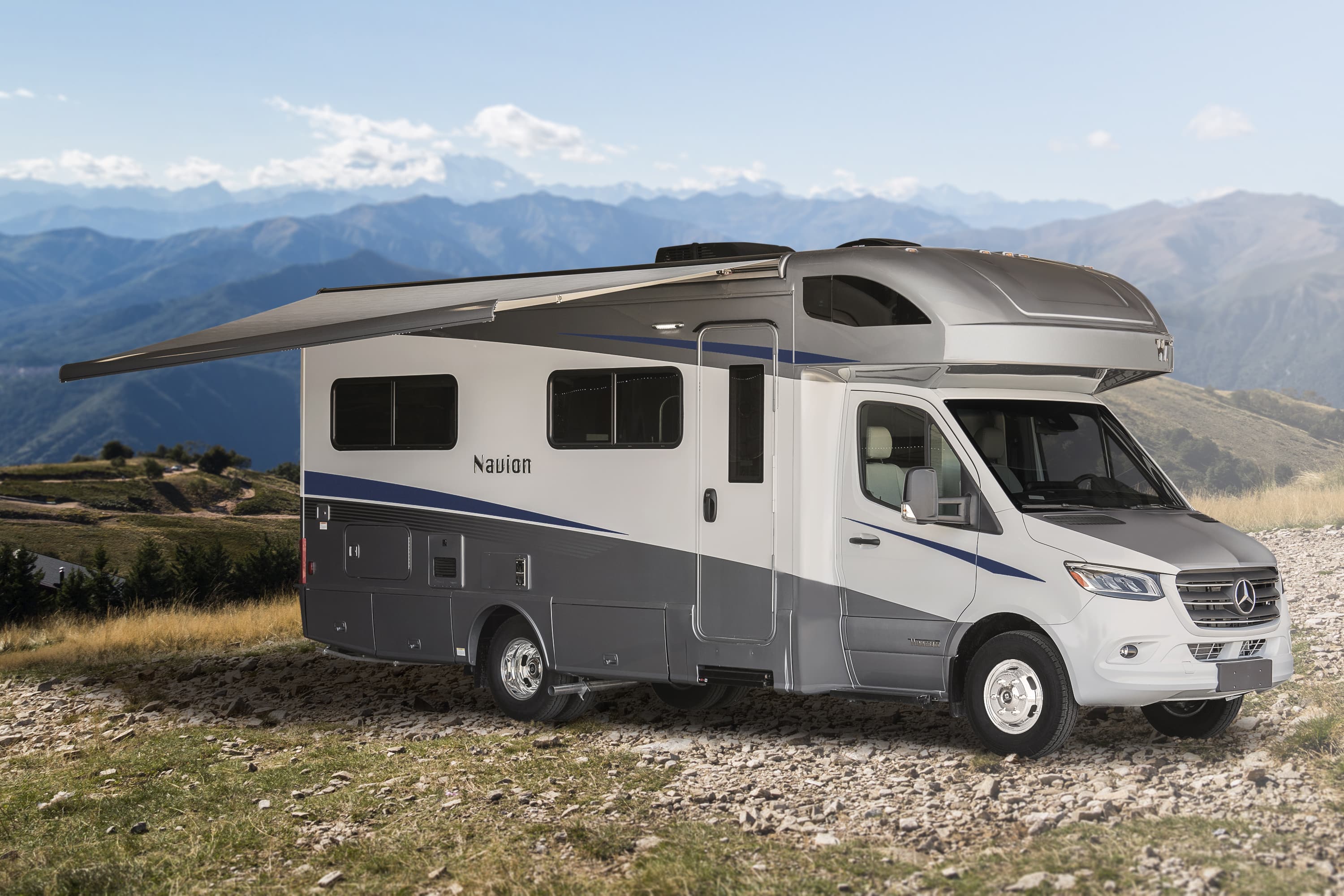
Three floorplans – the 24D, 24J, and 24V. Each of them runs 25-and-a-half feet, has a pair of swiveling captain’s chairs up-front, and the capability of sleeping four. They also all have the Mercedes-Benz Sprinter chassis with a 3.0L 6-cylinder engine with 188-horsepower and 325 ft-lbs torque. They all have a 32-inch HDTV in the main living area and two of them have an additional 24-inch LED HDTV in the bedroom.
The 24D is a true rear bath floorplan with the bathroom covering the back wall with access from the living area via a solid pocket door. A large slide-out on the driver’s side contains the bed and a U-shaped dinette. For the bed, the 24D has a versatile Murphy bed so you can lounge on a comfy sofa in the daytime and sleep on a queen bed at night. The 24J also has the large U-shaped dinette in a slide-out but makes the slide-out slightly smaller but keeps the wardrobe closet and a pantry along in the slide-out as well. The bed is placed in a corner. There is also a pair of TVs – one for viewing from the bed, the other sitting across from the dinette. The 24V also has a pair of TVs like the 24J. However, the 24V has a completely different layout. The slide-out contains a TrueComfort sofa with a hide-a-bed. The bathroom is moved to the driver’s side. In the back, you’ll find a twin bed set-up that can be flexed into a single king-size bed.
Winnebago Porto/Winnebago Vita
Image from Winnebago
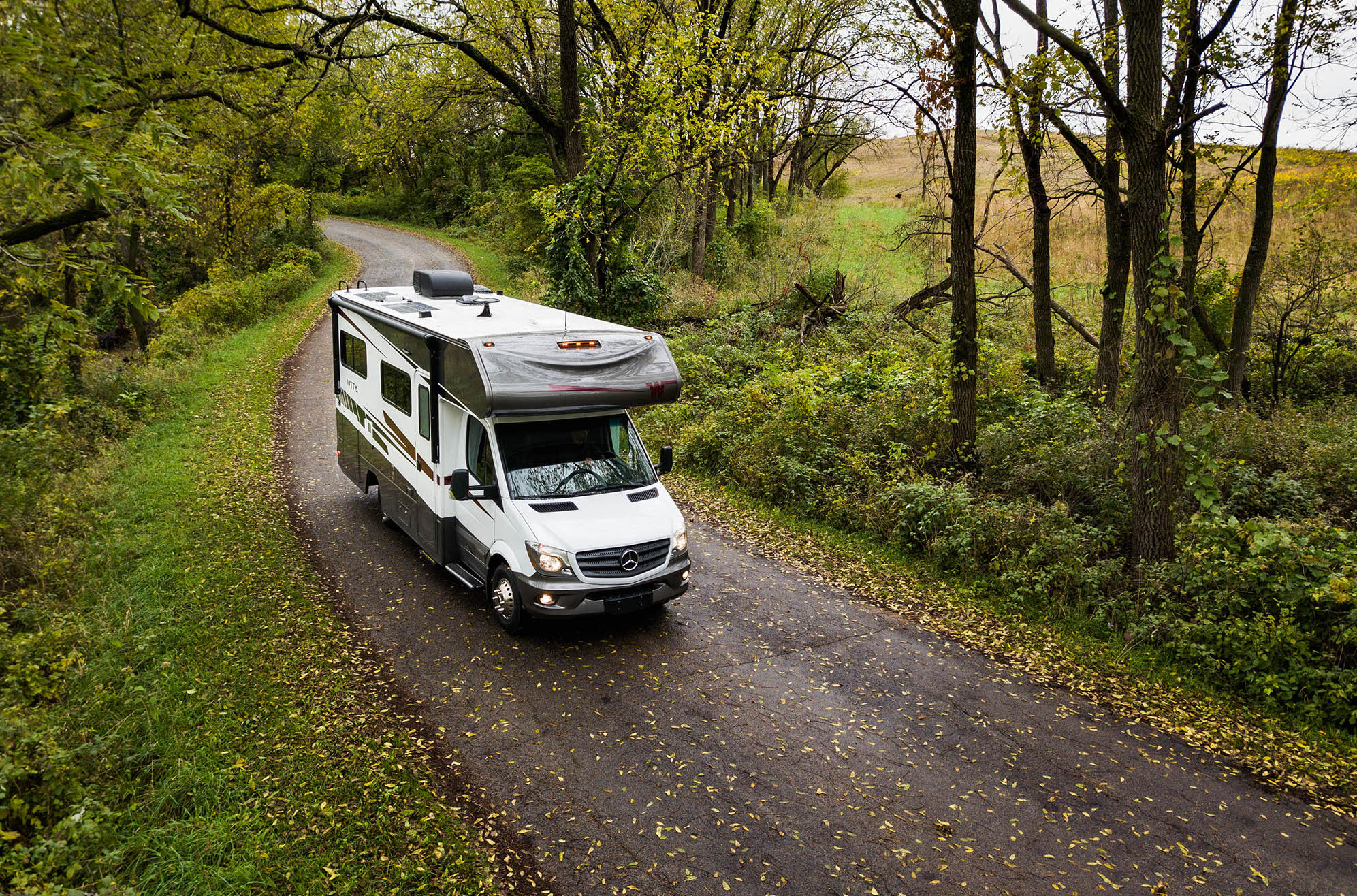
This twin set of Winnebago Class C motorhomes comes in two floorplans: 24F and 24P. Slightly shorter than the View/Navion, these Class C motorhomes sit at 24-feet, 5-inches but still have the capacity to sleep four.
They do share the Mercedes-Benz Sprinter chassis and identical engine, and the Porto/Vita combo both have an expandable booth dinette with an option to have a pair of theater seats and a pedestal table in lieu of the dinette. Both have the swivel captain’s chairs up front and sport a 32-inch HDTV in the main living area.
The 24F has a slide-out on the driver’s side pulling out the expandable dinette, fridge and multi-use storage. The bed sits in the corner nestled against more multi-use storage and the bathroom. The 24P has the same slide-out but expands it to include the queen bed. The bed has been turned to allow walkaround access. The bathroom is moved to the passenger side corner and has a unique sliding bi-fold door.
Winnebago Fuse
Image from Winnebago
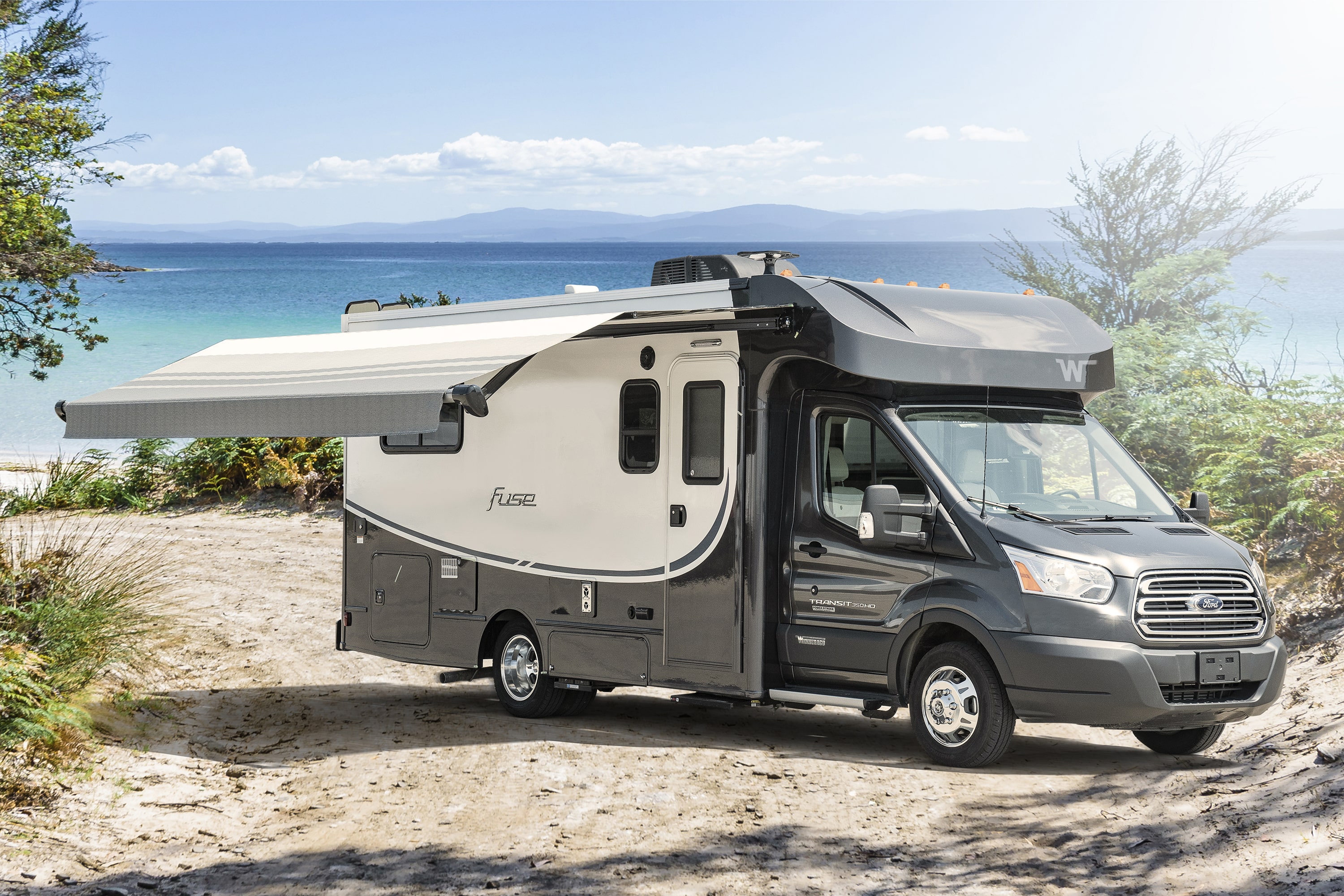
Now we come to the nonconformist in the group, the Winnebago Fuse. Also a diesel, the Fuse employs the energy-efficient Ford Power Stroke diesel engine – a 3.2L I5 with 185-horsepower and an impressive 350 ft-lbs torque.
What do the trio of Fuse 23A, 23F, and 23T have in common? All are 24 feet in length and sport swiveling captain’s chairs up-front. They each have an HDTV and a coach stereo system that includes AM/FM, CD/DVD player, and Bluetooth.
For the 23A, there is a single slide-out containing a TrueComfort+ sofa and the fridge. What makes the 23A unique is not only is it a true rear bath, but the side-by-side twin beds can flex into a queen+ bed.
The 23F moves the fridge to the passenger side to sit along with the rest of the kitchen and places a dinette into the slide-out. The bed is now a corner bed and sits alongside the bathroom.
The 23T keeps the bed on the passenger side but rotates it and puts it into a slide-out. This creates some walkaround space. The kitchen is split with the fridge and pantry right beside the entry and the rest of the kitchen on the driver’s side. Up-front you’ll find a flex bed system creating a near-queen size bed by combining the bench seat and kitchen table.
Yes, this is quite a bit to digest, but Winnebago is good at giving you what you need (as well as what you want) in a Class C motorhome. Interested in looking at our current inventory? Click here to check out Camping World’s offerings.
If you have any questions regarding Winnebago Class C motorhomes or anything camping in nature, drop us a line!
Cuyahoga Valley National Park in Ohio is truly a unique mixture of city attractions and rural life, where history is preserved in the midst of today’s hectic existence. It’s a fantastic place to go if you want to camp, and even if you have an RV and can’t camp right in the park, there are plenty of places nearby that offer camping accomodations.
In Cuyahoga Valley National Park, you can take a scenic train ride through the valley to discover a river tamed almost 200 years ago, with locks and canal boats moving precious cargo to Lake Erie and on to the East Coast long before semis and airplanes came on the scene. You can kayak the now clean waters that burned, not once but twice, from pollution years ago and wonder at the great blue heron who raise their young in this piece of paradise caught between two cities.
You can also see and do all sorts of other things. With all that in mind, let’s dig into what makes this park so special.
History of Cuyahoga Valley National Park
The early habitation of the Cuyahoga Valley included several Native American tribes, who moved in and out of the region. By the mid-1700s European explorers began to build trading posts in the area, eventually enticing New England settlers to spread throughout Ohio.
The settlements grew into productive cities, looking for a way to get their products to the markets back east. So, in the 1830s, the Ohio & Erie Canal was built, connecting Akron, Ohio with Lake Erie via the Cuyahoga River.
Within 50 years, as the industry grew in urban centers, city dwellers looked to escape to rural regions for their recreation. The land along the Cuyahoga River was just such a place. By 1880 the Valley Railway began bringing these “tourists” to the area for boat trips on the canal and carriage rides.
When Cleveland and Akron established their own parks districts, locals began to think about preserving the area between the two cities, limiting development there. In 1929, Hayward Kendall left 430 acres to be perpetually used for park purposes in the area, essentially beginning the formation of Cuyahoga Valley National Park.
It took 45 years and a great deal of cooperation among cities, private attractions and the park service, but this unique national park gained official status in 1974. Today it combines metropolitan regions with historic waterways, forestlands, and wildlife, giving visitors an example of yesteryear in the midst of progress.
Why Visit Cuyahoga Valley National Park in Your RV?
Photo Credit: NPS by Jim Schmidt
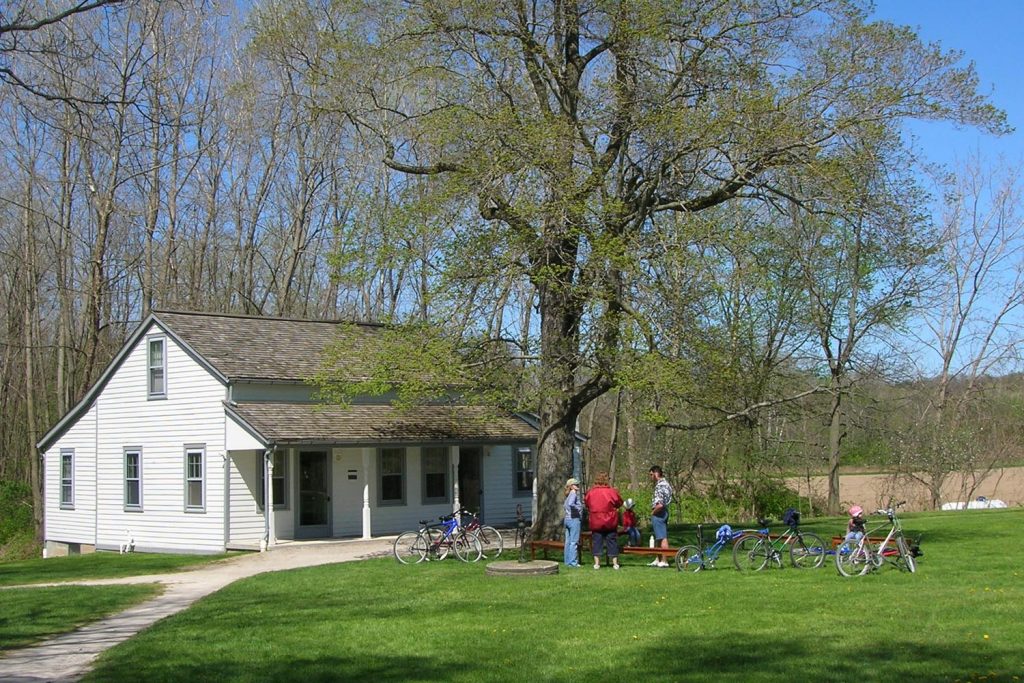
Cuyahoga Valley is unusual in that it lies between two urban areas and is crisscrossed by metropolitan attractions and amenities. RVs make a perfect home when parked in any of the nearby campgrounds. Then access the region by walking, biking or even riding the train through this unique national park. There’s plent to do and see here, and you should really take the time to make the most of it.
It’s the park’s unique location that makes it such a wonderful Midwestern destination to visit. Are there other fantastic places to camp in the Midwest? Yes, of course, but there’s really no other place out ther like this unique national park. Ohio has a real gem in this park, and it’s one that will often be overloooked in favor of the other more-famous national parks. You should spend some time at Cuyahoga Valley National Park. You won’t regret it.
Places to Go in Cuyahoga Valley National Park
The park is large, at well over 50 square miles. With that in mind, you’re bound to find plenty of unqiue places within the park’s boundaries. However, there are some places you should definitely visit if you go. Don’t miss out on any of these opportunities in the park:
Cuyahoga Valley Scenic Railroad
Let the engineer do all the driving while viewing the national park from the seat of the Cuyahoga Valley Scenic Railroad. A 2-1/2 hour trip will take riders past many of the highlights of the area while following the Cuyahoga River. Passengers can board and deboard at three different stops to do further exploring.
This is one of the best ways to see as much of the park as possible. As you can image, this large of a park can take some time to really get a feel for and the scenic railroad is a good way to really take everything in.
Ohio & Erie Canal Towpath Trail
Is a train ride not your thing? Another smart thing to do is hike, bike, or run on the packed gravel Towpath Trail, which follows the old Ohio & Erie Canal. The 85-mile long trail runs from Cleveland, and when finished at 101 miles, will end in North Philadelphia.
You certainly don’t need to do the whole thing, but it’s another great way to really take in all that this park has to offer. It’s also a great way to get a good workout in and stay active while there!
Brandywine Falls
Photo Credit: Erik Drost (CC BY-SA 2.0)
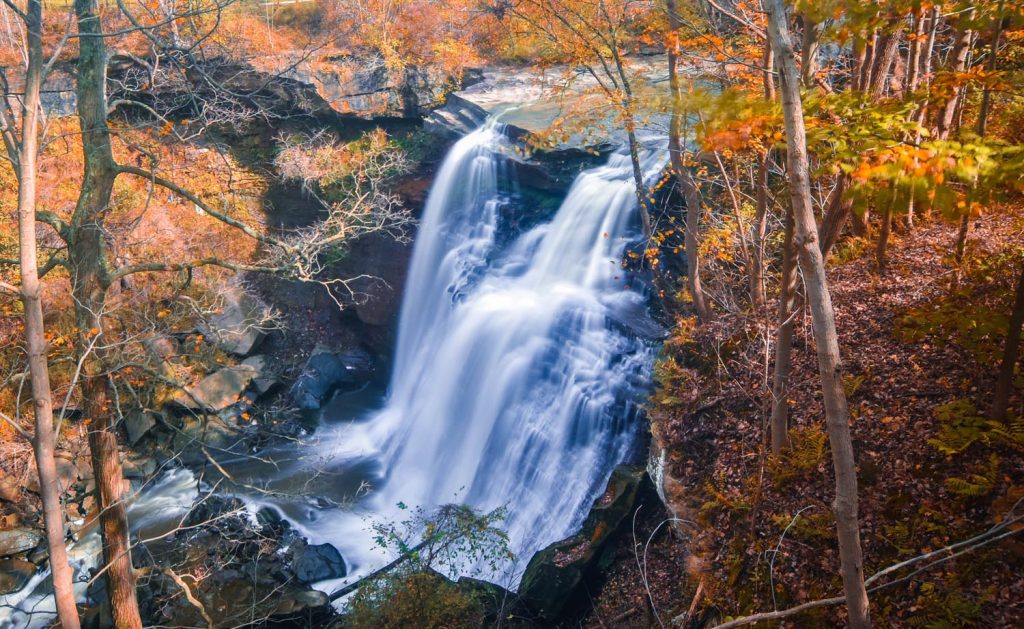
One of the most popular attractions at Cuyahoga Valley National Park is this 65-foot tall waterfall. When the area was first settled a sawmill was built at the top of Brandywine, and later grist and woolen mills utilized the falls’ power.
There’s something amazing about these falls. They’re an absolute must-see and one of the best photo opportunities in all of Ohio and much of the Midwest. If you’re with your family, make some time to go here to take in the falls in all their glory.
Boston Store Visitor Center
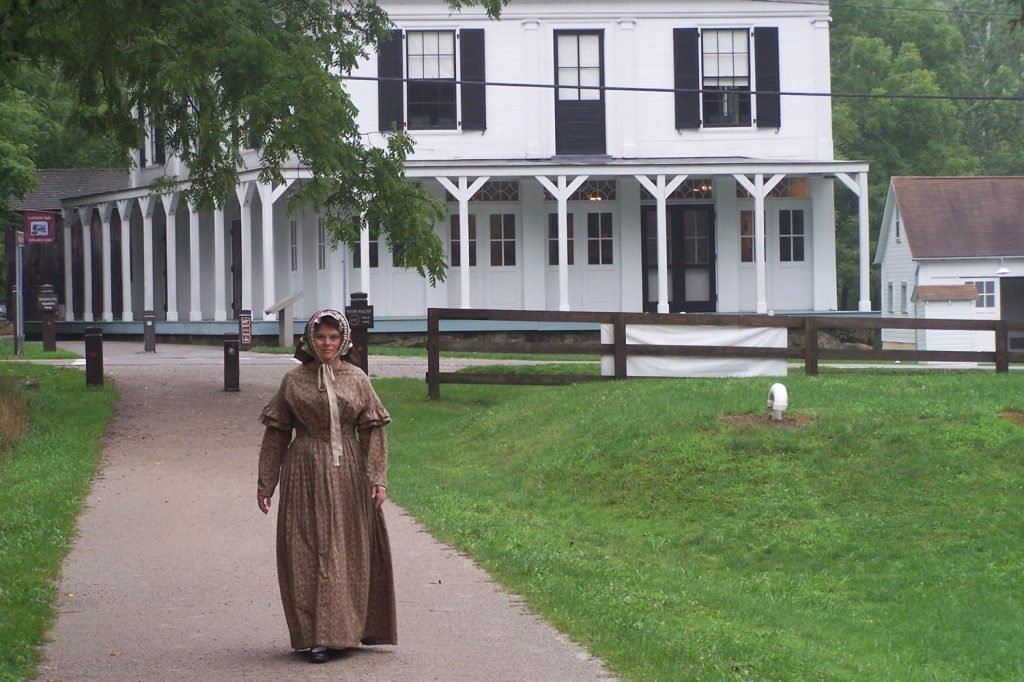
As the park’s main visitor center, Boston Store has a gift shop, restrooms and exhibits showcasing canal boat building in the valley. Ranger-led tours leave from this location, as well. The place iteself isn’t wildly impressive, but it’s somewhere worth stopping.
It can also make a smart location to kind of base all of your park activities out of. This is especially true if you plan on taking part in any of the ranger-led tours, which come highly recommended.
Canal Exploration Center
Purchase goods from the Canal Era here, and try your hand at guiding a canal boat through a lock with interactive touch screens. There’s all sorts of information here, and if you want to bring an educational aspect to your trip, which can make for a more memorable trip overall, then you should stop in.
The interactive site will go into why canals are and were important and what function the site itself served. You can check out the park’s website page on the center for more information.
Hunt House
Kids will love the nature exhibits at Hunt House, and adults will be grateful for a rest break here. It’s a wonderful place to sit back and relax for a few moments before moving on to the next location.
The Hunt House is along the canal towpath trail, so you may want to take some time and relax here after hiking, running, or biking. It operates seasonally, so make sure to check the schedule before going there.
Things to Do at Cuyahoga Valley National Park
There are several ways to enjoy the park. I’ve already discussed many of them in the text above, but it’s important to call them out specifically, so you know exactly what you can do while you’re here. Here are just a few:
Hiking
There are over 125 miles of hiking trails throughout Cuyahoga Valley. Many are accessible to all visitors, and several regional trails run through the park, as well, like the Ohio Buckeye Trail. Here are the different sections of the park, with links to maps for the trails within them:
I would suggest taking some time to look over the trails before you go and selecting a few areas you’d like to hike. Have a plan before you show up to the park. This will not only help you hike the trails you want, but it will help you decide what to bring with you in terms of snacks, water, etc.
Biking
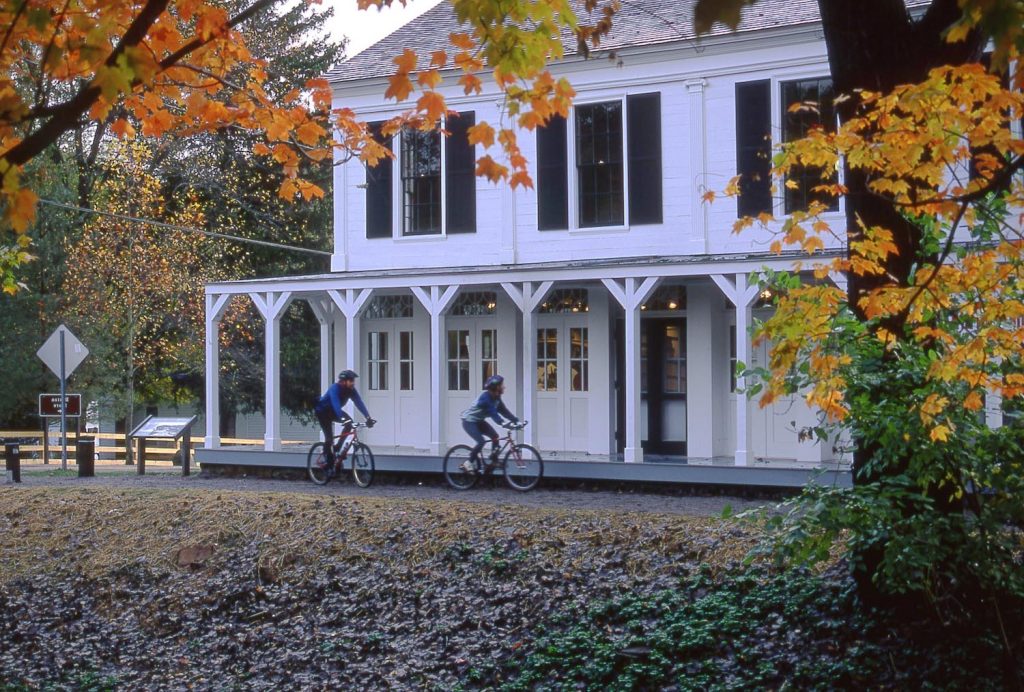
Ride along the Towpath Trail in either direction. If you get tired, you can catch the Cuyahoga Train at any stop. This helps make things easy and allows you to bike as far as you want and then be able to take some time to relax on the train when you need it.
Mountain biking is also popular on the East Rim Trail System. If you’re interested in more than just riding along the Towpath Trail, then this is the place to go. The trail system is a little more advanced and extreme.
Fishing
The Cuyahoga River is home to numerous steelhead, trout, and bullhead. Catch-and-release is suggested to keep the fish population healthy. There are also many lakes and ponds throughout the area that offer bluegill, bass, and crappy wherever you cast a line.
Fishing is allowed in the park, but make sure you have an Ohio fishing liscense on-hand. You don’t want to get a ticket for fishing without a license. Also licenses are inexpensive and the money goes back into the parks system in most cases.
Canoeing and Kayaking
The national park does not maintain the river for recreational use, but it is open to anyone bringing their own kayak or canoe. There are five different access points throughout the park.
Make sure to read up on the canoeing and kayaing rules for the park. These change from time to time, so check it before you go. You can do that by clicking here.
The link above is also a great place to find out about any warnings the Park’s Department puts out about the park. Don’t just blindly jump on the river with your kayak or canoe. Make sure to check with the website and see if there are any warnings or issues you need to be aware of.
Another way to enjoy the river is through companies that offer river experiences. There are several that will rent you a canoe or kayak. These companies take care of everything from dropping you off to picking you up. There are various trips you can take and they vary in length and duration. Paddle the River is one that offers a few different options.
Horseback Riding
Cuyahoga Valley has many different bridle trails within the park boundaries. Bring your own horse, as there is ample trailer parking at the Station Road parking lot.
BRIDLE TRAIL NAMES
DETAILS & LOCATIONS
Wetmore Trail
(See Wetmore Trail Map.)
Length: 4 miles Riding Time:1.5 hours Elevation Change: 250 feet Rating: Moderate Trailhead Location: On Wetmore Road .6 miles east of Akron Peninsula Road, 1.75 miles south of Peninsula, Ohio. Trail is north of Wetmore Road.
Tabletop Trail
(See Wetmore Trail Map.)
Length: 0.75 miles after access from Wetmore Trail Riding Time: 20 minutes Elevation Change: 100 feet Rating: Easy to moderate Trailhead Location: Wetmore Trailhead. On Wetmore Road .6 miles east of Akron Peninsula Road, 1.75 miles south of Peninsula, Ohio. Trail is north of Wetmore Road.
Langes Run Trail
(See Wetmore Trail Map.)
Length: 4.5 miles Riding Time: 2 hours Elevation Change: 190 feet Rating: Moderate to difficult Trailhead Location:Wetmore Trailhead. On Wetmore Road .6 miles east of Akron Peninsula Road, 1.75 miles south of Peninsula, Ohio. Trail is mostly south of Wetmore Road.
Butler’s Trail
(See Wetmore Trail Map.)
Length: 0.75 miles Riding Time: 20 minutes Elevation Change:150 feet Rating: Easy Trailhead Location:Wetmore Trailhead. On Wetmore Road .6 miles east of Akron Peninsula Road, 1.75 miles south of Peninsula, Ohio. Trail is south of Wetmore Road.
Valley Trail
(See Buckeye and Valley Trails: Station Road to Boston Trail Map.)
(See Buckeye and Valley Trails: Boston to Everett Trail Map.)
Length: Brecksville Stables to Wetmore is 11.4 miles
Wetmore to Riding Run is 3.1 miles
(Wetmore and Langes Run connect the north and south segments) Riding Time: 4-5 hours Elevation Change: 360 feet Rating: Moderate to difficult Trailhead Location: Trailhead is on the Langes Run Bridle Trail accessible via the Wetmore Trailhead. On Wetmore Road .6 miles east of Akron Peninsula Road, 1.75 miles south of Peninsula, Ohio.
Riding Run Trail
(See Riding Run and Perkins Trails Map.)
Length: 3.25 miles Riding Time: 1.5 hours Elevation Change: 260 feet Rating: Moderate to difficult Trailhead Location: Everett Road Covered Bridge Trailhead. On Everett Road .5 miles west of Riverview Road in Everett, Ohio.
Perkins Trail
(See Riding Run and Perkins Trails Map.)
Length: 3.75 miles Riding Time: 2 hours Elevation Change: 260 feet Rating: Difficult Trailhead Location: Everett Road Covered Bridge Trailhead. On Everett Road .5 miles west of Riverview Road in Everett, Ohio.
Length: 6 miles Riding Time: 2.5 hours Elevation Change: 270 feet Rating: Moderate to difficult Trailhead Location: Hemlock Creek Trailhead. On Dunham Road immediately across from Tinker’s Creek Road, 1.4 miles north of Alexander Road in Bedford Reservation.
Length: 3 miles Riding Time: 1 hour Elevation Change: 8 feet Rating: Easy Trailhead Location: Station Road Bridge Trailhead. On Riverview Road, 0.2 miles south of State Route 82 in Brecksville, Ohio.
Length: 9 miles Riding Time: 3 hours Elevation Change: 260 feet Rating: Moderate to difficult Trailhead Location: Stables Parking Area Trailhead. On Meadows Drive, 0.4 miles south of Valley Parkway on on Meadows Drive in Brecksville, Ohio.
If you’d like to get more information about horseback riding in the park, make sure to check out the park’s website page on the subject by clicking here.
Questing
Follow a map and clues to discover natural and historical gems throughout the park. No GPS is needed! This is something you’ll have to do of your own volition. It’s well worth it, though. Set various goals for yourself throughout the park and see if you can get to all of the places on your list.
You can also think about Geocaching. There are geocaches within the park. Read more about the caches in the park by clicking here.
Snowshoeing
Yes, the park is open during the cold winter months. And yes, it’s still a great time to visit the park. There’s still plenty to do and see and certain areas of the park are even more enjoyable and beautiful in the winter.
Grab some snowshoes at the Winter Sports Center at M.D. Garage, and wander the trails after a good storm has deposited at least six inches or so of snow. Any less and your regular snow boots will get the job done.
When To Visit Cuyahoga Valley National Park
The park is open year-round, some places close at dusk, but everything else is open 24 hours a day. Autumn is a popular season for leaf peepers to watch the changing colors, and summer brings tourists and locals alike, anxious to explore the attractions throughout the park and enjoy hiking and biking the many trails.
The winter months are also great, but generally, a day trip is what you’ll need. If you want to spend more time there, I suggest staying in an RV park that’s winter-ready or getting a hotel in a nearby town.
Where RVers Can Stay
Unfortunately, you can no longer camp within the park. However, there are four metro and state parks within the area that offer RV sites. They are:
If you really want to stay within the park, there are some lodging options. You can either stay at the Stanford House or the The Inn at Brandywine Falls. Both offer top-notch accomodations, though it’s nothing like the camping we all know and love.
Getting To and Around Cuyahoga Valley National Park
From the south, the park is accessible 18 miles from Akron via I-77 and Highway 8, and from the north, travelers from Cleveland can travel I-77 south to Highway 21. The Boston Store Visitor Center marks the entrance to Cuyahoga Valley National Park and is located in the center of the park.
Once inside, there are numerous roads, as this park sits in the midst of several outlying towns and districts. There are many forms of transportation to see the public and private attractions within the park, such as bicycling, walking or riding the Cuyahoga Valley Scenic Railroad.
From Past to Future
Cuyahoga Valley National Park is an anomaly. It is a collection of wilderness locales and historical locations protected from the encroachment of progress. One only has to trek a few miles from the city to travel back in time, viewing life as it was here 150 years ago. And yet, this park is looking far into the future, recognizing the need to preserve its heritage and natural habitat for the generations to come.
Have you been to Cuyahoga Valley National Park? If so, what’d you think? Leave a comment below.