Blog

  • Getting a Sewer Hose Replacement

    Getting a Sewer Hose Replacement


    While taking care of your RV’s sewer hose can really help you make your hose last and eliminate headaches associated with draining your gray and black water tanks, there will likely come a time when you need to get a sewer hose replacement.

    When that happens, don’t just run out and buy the first thing you see. Avoid cheaper products and focus on brand names people know and trust.

    What Should You Get?

    Shopping for a new sewer hose for your RV isn’t the most exciting experience. It’s not exactly something that you or anyone else likes to deal with. However, it is necessary, and if you’re going to buy a new hose, then you might as well get something good.

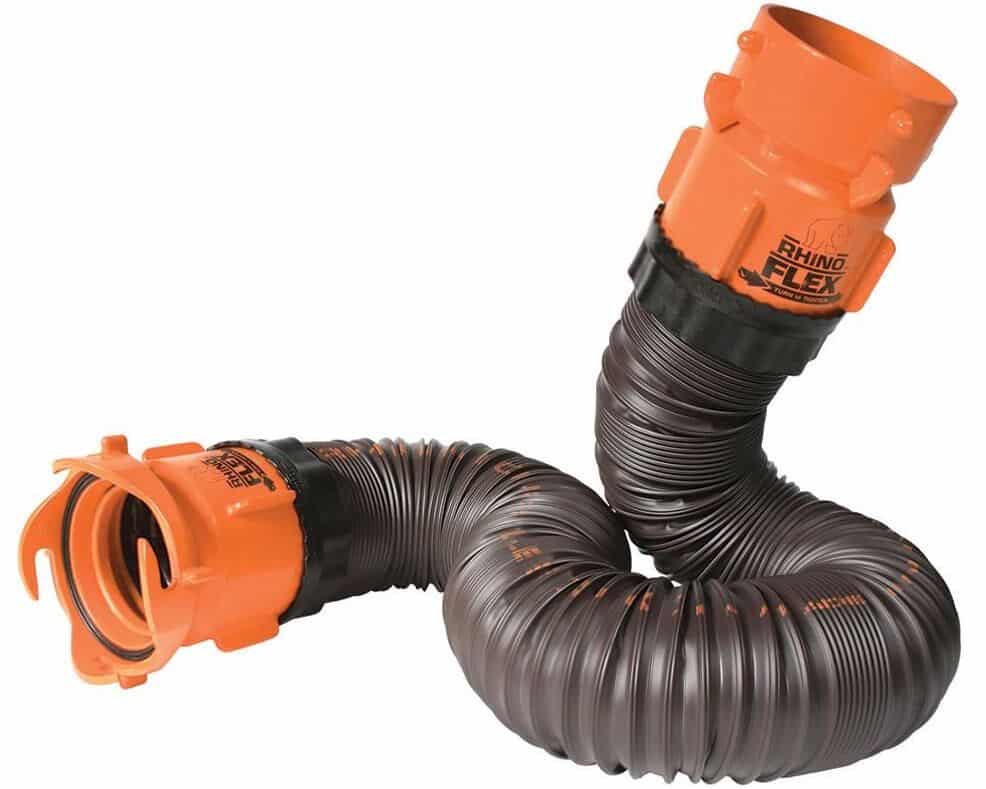
    RhinoFLEX makes some top-quality sewer hoses. While any of the brand’s products will do you right the RhinoFLEX Swivel Sewer Hose Kit is the way to go. This kit features a transparent elbow that allows you to see when the solids are through the hose.

    Another good option is the Thetford Titan Multi-Length Premium Sewer Hose Kit. This kit comes with an extension and a clear elbow as well. It’ll handle all of the dirty duties with ease so you can get back to enjoying your camping experience.

    You Should Also Buy an Extension

    Sewer hose extension
    Image from Camping World

    You don’t always know how close to a dump station you can actually get. Usually, you should have no problem with your standard sewer hose. However, it’s never a bad idea to have an extension in case you need to reach a little further. 

    Extension hoses are extremely affordable, and you can get an additional mount to house the hose or simply get some PVC pipe and add one above or below your bumper where the main hose is already stored.

    If you’re looking for a good extension for your RV, I’d suggest getting the same brand as your current sewer hose. So, if you purchased the RhinoFLEX hose recommended above, then consider this RhinoFLEX Extension Hose with Swivel fittings.

    What About Accessories?

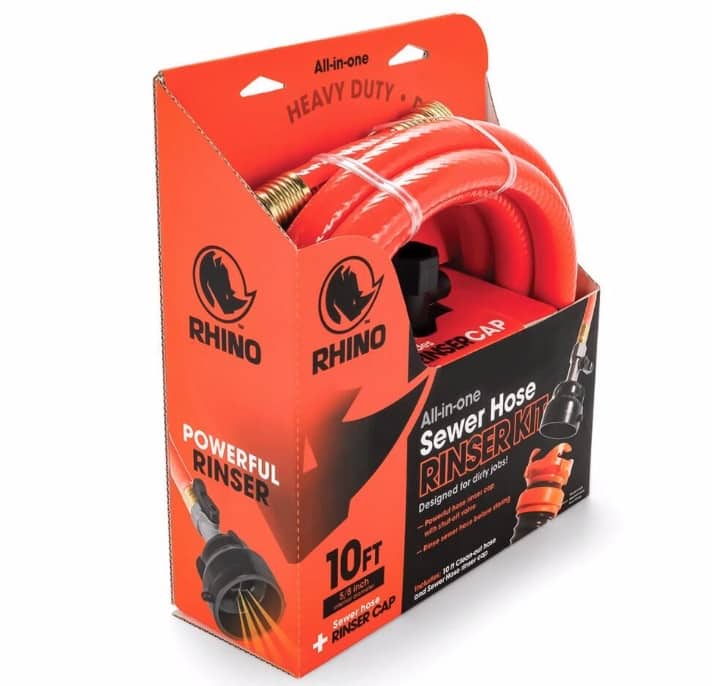
    hose rinse kit
    Image from Camping World

    There are all kinds of accessories out there, like clear elbows (which are included with the kits shown above), black tank rinsing hoses, sewer hose rinse caps, hose supports, and a whole lot more.

    These accessories aren’t needed, but they’re nice to have. At the very least, I’d say to get a clear elbow for your hose. It makes things a lot easier. Having a sewer hose rinse cap and a way to flush out your black tank are also recommended.


    If you need a sewer hose or any accessories for your rig, check out our full inventory of sewer hoses at Camping World.


    Source link

  • Is Retiring and Living in Your RV Full-Time Right for You?

    Is Retiring and Living in Your RV Full-Time Right for You?


    It’s never too early to start planning for retirement. Not just from a financial standpoint, but also thinking about where you’d like to be, what you’d like to be doing, and what you’d like the golden years of your life to look like.

    Purchasing the RV of your dreams might be at the top of that retirement wish list, but have you ever thought about going a step further and living in that RV full-time? More and more retirees are living in an RV full-time. Wondering if that’s the right idea for you?

    Here are a few things to think about when deciding if retiring and living in your RV full-time is right for you.

    Location
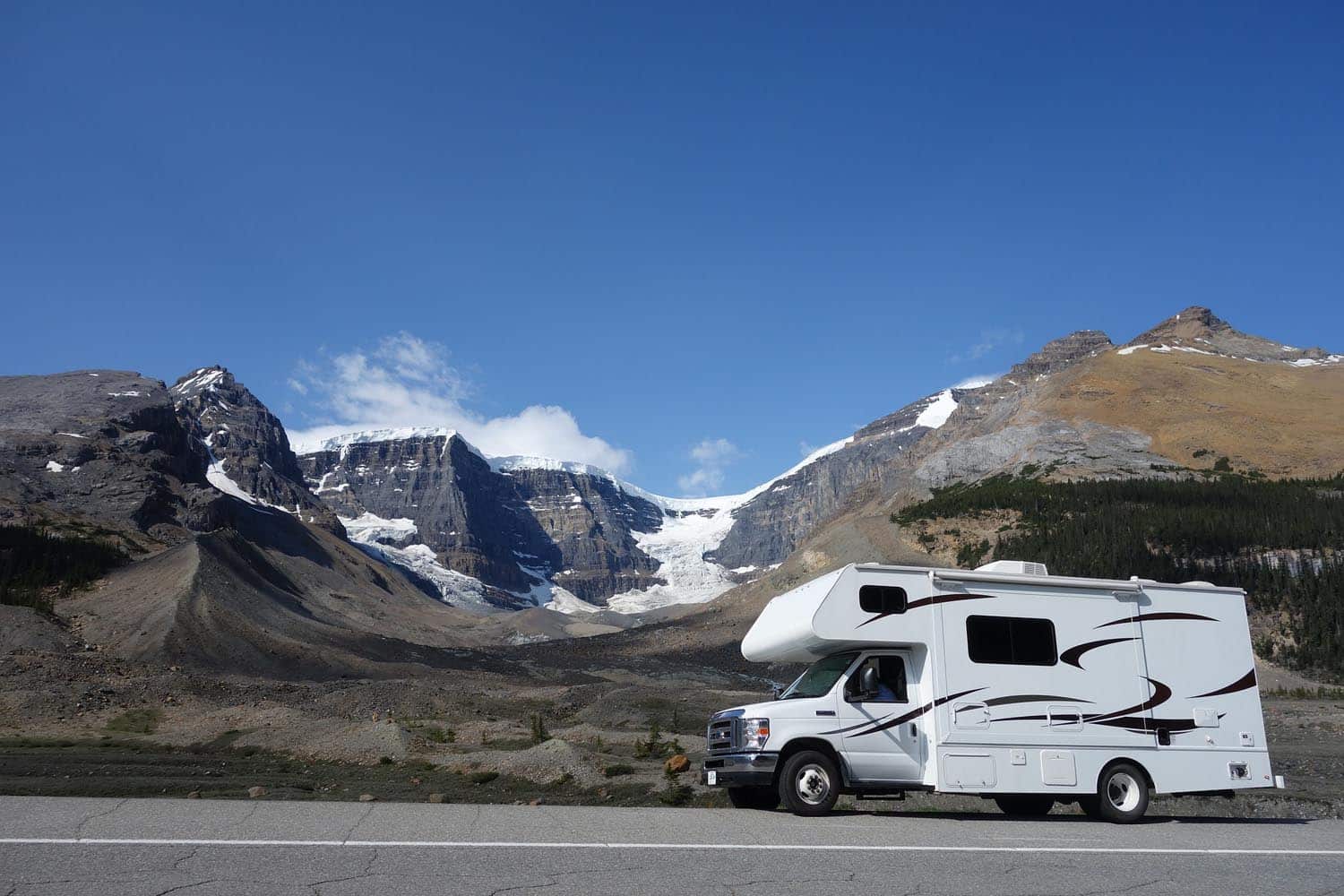
    Photo Tripping America - Find the Perfect RV - Camping World

    Maybe the biggest pro to living in your RV-fulltime during your retirement years is the fact that you have a ton of flexibility in choosing where you want to be.

    Having a mobile home on wheels means your location can change whenever you want it to. If 70 degrees is your ideal temperature, you are able to chase the warm weather all year long. If you have grandchildren spread throughout the country, you are able to visit them as much as possible and bring your home with you.

    Have you always wanted to see the Grand Canyon in the spring and fall foliage in New England? Well, you are able to get up and go wherever and whenever your heart desires. The possibilities of where to spend your retirement years are endless when you live in your RV full-time!

    On the other side of things, figuring out where you’ll park your RV each night can be daunting and involves a lot of planning. While you are enjoying one location, you’ll always need to be thinking ahead to your next stop.

    You’ll have to find RV parks or campgrounds that fit your needs and desired location, make reservations, route plans, etc. While this necessary part of full-time RV life may be exciting and fun for some, it can be a lot of work. To ease the headache of planning, doing extended stays at each location is an option.

    Spend six months in Arizona and six months in Colorado then you only have to figure out two places to call home each year!

    Costs

    piggy bank

    Making sure you live within your means is a huge part of enjoying your retirement. Nothing will take the joy out of these golden years quicker than having to worry about money. Living in your RV full-time can be a great way to cut living expenses.

    If you’ve been paying a mortgage for the majority of your life, you’re finally able to say goodbye to that huge monthly expense! Saving on living costs such as a mortgage payment is a huge part of why more and more people are full-time RVing these days. Other costs you’re able to cut when living this lifestyle are utilities, home repair costs, property taxes, and unnecessary stuff.

    If you have a 3,000 square foot home, chances are you spend money on filling it with “stuff”. When you downsize to an RV, you physically don’t have the room for all of the unnecessary things!

    While living in an RV full-time will help cut living expenses, it definitely doesn’t mean it’s free. Chances are your dream RV isn’t cheap. If you plan on financing your home on wheels, your monthly payment should be less than a mortgage, but it is still a bill that needs to be budgeted for. On top of the initial cost of the RV, there are unexpected costs that arise from time to time.

    It’s not uncommon for RV troubles to happen that require maintenance and repair. Depending on the severity of the issue, RV repair can be pricey. Need new landing gear for the fifth wheel? Parts and labor are going to set you back at least $500. How about a new transmission in your motorhome? That could be a huge expense if you don’t have good insurance!

    Labor

    When touring RVs, be sure to spend plenty of time in your favorites. Don't be afraid to sit down, lay on the bed, or stand in the shower.

    Living in a traditional home is hard work. Between the yard work, repairs, and cleaning, there is always something that needs to be done. As you reach retirement years, these tasks become less enjoyable and more of a pain…literally.

    The great thing about living in 300 square feet is there is much less home to care for. Cleaning the house takes a fraction of the time it used to and there is zero yard work to be done. Cutting out the time it takes to take care of a house means so much more time for relaxation and spending time doing activities you enjoy.

    While there will be no yard that needs mowing, there is still work that’ll need to be done around the RV. If you plan on traveling often, the set up of your site at each new spot can be hard. You’ll have to worry about leveling the RV, hooking up the sewage hose, getting out the generator, setting up the satellite dish, unpacking any items that needed to be stowed during travel, etc.

    There is a lot of bending over, kneeling down, and climbing that comes with RV life. It can be tough on the body! But, chances are, it’s a lot easier on the body than taking care of a house eight times the size.

    There is so much to consider when deciding what your retirement years will look like. Regardless of the less glamours side of full-time RV life, there is no denying it is a desirable way to live. The opportunity to see this beautiful country, visit friends and family, and enjoy some downtime is priceless.  But, before you make the leap, make sure you thoroughly think it through and make sure it’s the best decision for you.


    Are you considering retiring and living in your RV full-time? Comment below with your questions or concerns and we will help you get some answers!


    Source link

  • Tips for Caring for Your Sewer Hose

    Tips for Caring for Your Sewer Hose


    The sewer hose, lovingly referred to as the “stinky slinky,” is one of the most critical accessories for your RV. …


    Source link

  • Shopping Used: Motorhome Red Flags

    Shopping Used: Motorhome Red Flags


    Finding the right used motorhome for you and your family’s planned adventures can be a blessing. However, finding the wrong …


    Source link

  • Cook These Campfire Nachos Over the Fire

    Cook These Campfire Nachos Over the Fire


    One of the best things about camping in the fall is sitting around the campfire with friends or family on those cool, crisp evenings chatting, drinking, and eating.

    These campfire nachos are easy and fun to make, and a great option when you want to cook something over the fire but are tired of roasting hot dogs. While this recipe is more of an appetizer or snack, you can easily add some shredded rotisserie chicken to this dish to make it more like a meal.

    Campfire Nachos
    Photo by author

    Equipment:

    • 10 inch cast iron skillet
    • campfire grill or grate to set over the coals
    • tinfoil

    Ingredients:

    • 1/3 bag tortilla chips
    • 3 TBSP red onion, minced
    • ½ jalapeño, sliced
    • 2 Roma tomatoes, chopped
    • 4-6 oz shredded cheese (about half a bag)
    • 1 avocado
    • 2 TBSP chopped cilantro

    Optional: a sprinkle of cumin, chili powder, and dried oregano

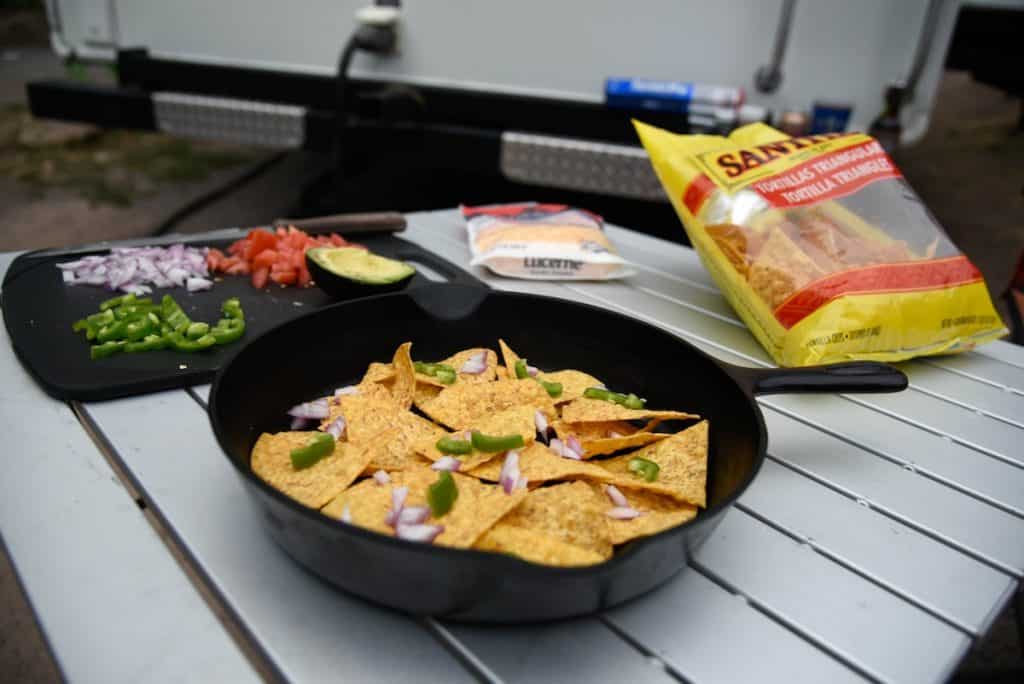
    Campfire Nacho Prep
    Photo by author

    Directions

    Layering is key for these nachos. You want two to three layers of chips and toppings, depending on the size of the cast-iron skillet. Cover the bottom of the skillet with a layer of tortilla chips.

    Scatter some of the minced onion, tomatoes, jalapeño, cilantro and avocado on top of the chips. Then add a generous layer of shredded cheese over the top. Leave out the jalapeño if you don’t like your nachos spicy.

    Campfire Nachos
    Photo by author

    Repeat with two more layers of chips, toppings, and cheese. If you want an extra bit of flavor, top the final layer with a sprinkle of cumin, chili powder, and dried oregano. But this step is fine to skip if you don’t have those spices with you while camping.

    Once the layers of nachos are finished, cover the top of the skillet loosely with tinfoil.

    Campfire Nachos
    Photo by author

    Get that fire going! Once your campfire has cooked down to a nice bed of coals, set up a cooking grate or campfire grill over the coals. Place the skillet on the grate and cook for 10-15 minutes or until the cheese melts.

    Carefully lift the tinfoil to check the nachos at the 10-minute mark. If the cheese isn’t melted yet, leave on the coals for a few more minutes. Remove the skillet from the fire with a hot pad and carefully remove the tinfoil. Serve with your favorite salsa, guacamole, or sour cream.


    Source link

  • Should You Get a Gas or Diesel Class A Motorhome?

    Should You Get a Gas or Diesel Class A Motorhome?


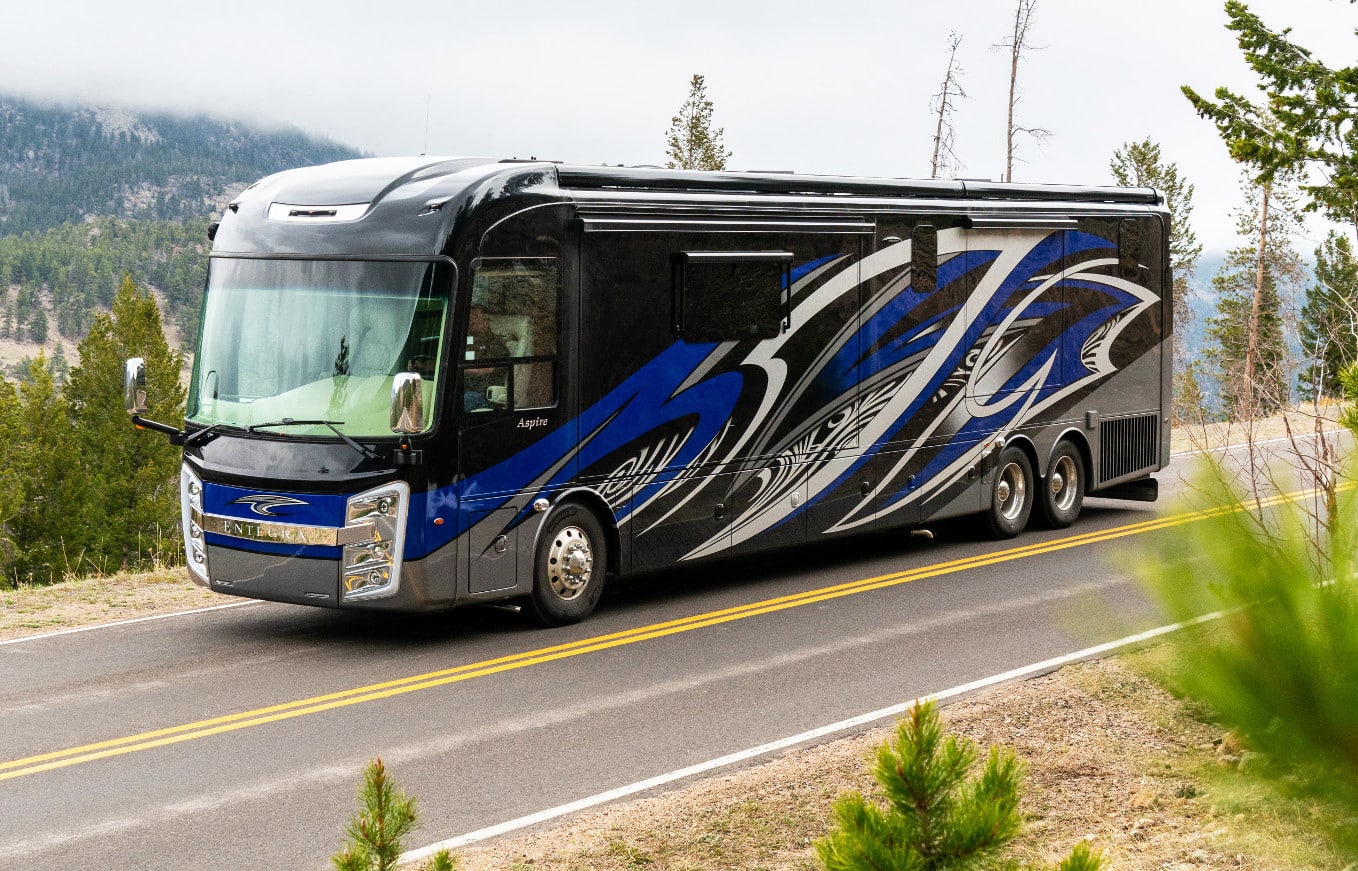
    After weighing all your options, you’ve decided on a Class A motorhome—now to answer the age-old question: gas or diesel?

    As with all things RV, there’s no right answer. Each has pros and cons in various categories. That said, if you can figure out what’s most important to you, the choice gets much easier.

    Here are a few things to consider:

    Purchase Cost—Winner: Gas

    Let’s get right to one of the chief drivers of your decision. All other things being equal, a Class A diesel motorhome is going to cost more than a Class A gas motorhome.

    The reality is, most other things aren’t going to be equal. In today’s RV market, Class A diesels are typically outfitted with higher-end finishes and features not found in gas models.

    Bonus tip: Consider depreciation and resale value. Historically, diesel motorhomes have maintained their resale value much better than their gas counterparts.

    Gas Mileage—Winner: Diesel (Maybe…)

    Image from Camping World

    If we’re going off strict MPG, diesel is the winner.

    That said, fuel prices fluctuate. In recent years, diesel fuel has consistently cost more than gas, so the actual fuel cost per mile is much evener.

    Newer diesel engines also use Diesel Exhaust Fluid (DEF) to help the diesel burn cleaner. Not technically fuel, but it is a recurring cost to keep in mind. Fortunately, most gas stations that offer diesel fuel also offer DEF, especially on major highways and interstates.

    Bonus tip: If time really is money, Diesel is the winner. Filling a diesel tank from a fast-flow nozzle can take 25% or less of the time it takes to fill a similar size gas tank at a standard auto fuel pump.

    Driveablility—Winner: Diesel

    Diesel engines have higher torque at lower RPMs. This means more available power when climbing hills and mountain roads—something RVs notoriously have trouble with. Diesels also handle better when descending.

    Gas engines do offer faster acceleration, but with RVs, this usually isn’t an issue. Careful, measured driving is the goal.

    Class A diesel motorhomes almost always come with air braking, which is more reliable and will stop a heavy vehicle more quickly than the standard disc brakes that come with Class A gas motorhomes.

    Another thing to consider: gas engines tend to perform better in cold climates and higher altitudes.

    Bonus tip: The rear engine in the majority of Class A diesel motorhomes makes for a much quieter driving experience. In gas motorhomes, you’re often sitting right on top of the engine—not always the most relaxing place to be.

    Maintenance—Winner: Tie!

    Maintenance costs on gas engines are lower than diesel engines. Just like on a car, owners may be able to perform some basic maintenance tasks. If you do need help, repair shops and techs are widespread, and almost always carry a lower hourly rate than diesel techs.

    However, diesel engines typically require less maintenance than gas engines. Running at a lower RPM means parts wear our less often and problems occur less frequently. It’s unlikely you’ll be able to service your own diesel engine, and parts may be more expensive and take longer to come in.

    Bonus tip: Oil changes for a diesel engine can be pricey. They’re huge and take much, much more oil than a gas engine.

    Towing Capacity—Diesel

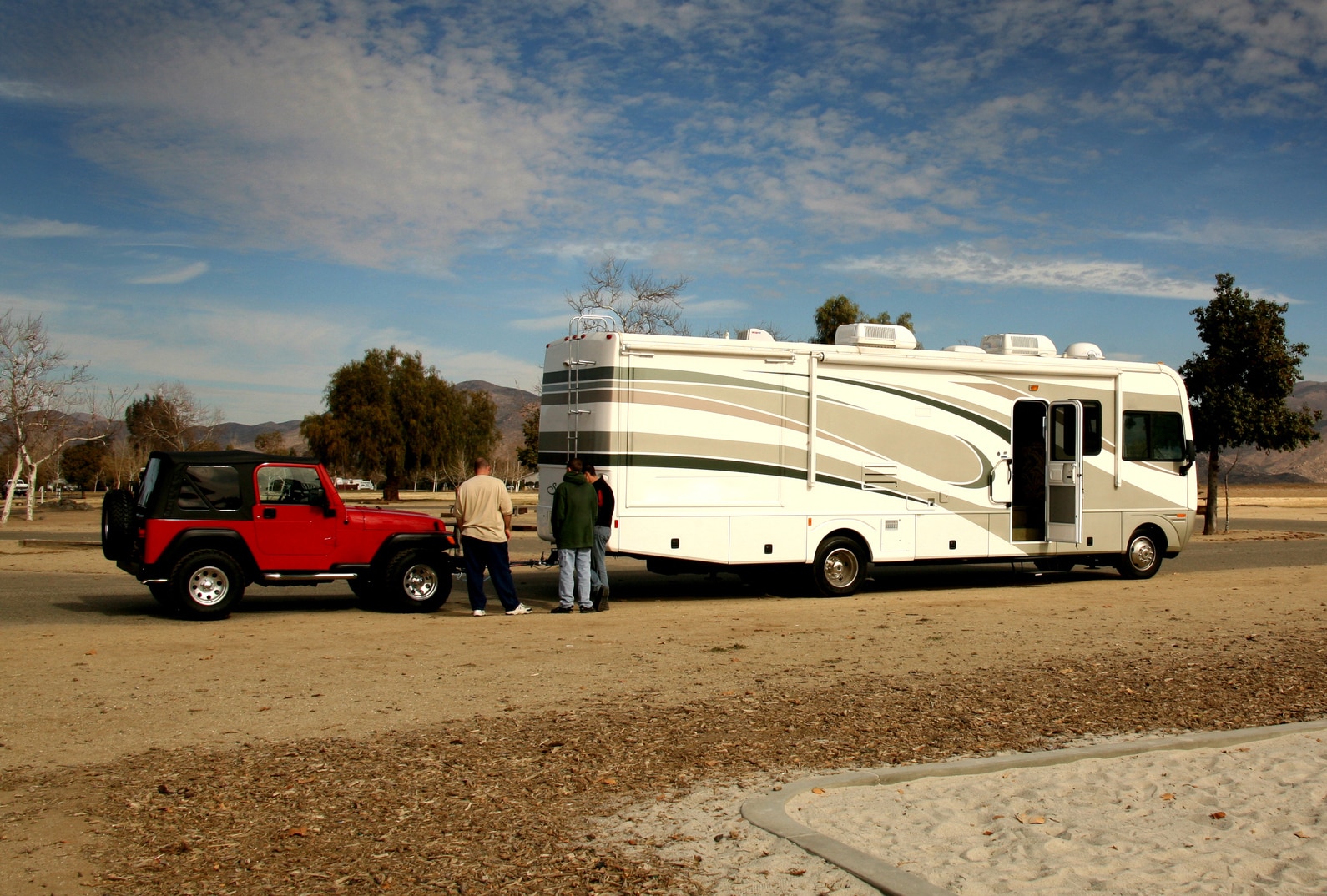
    RV Coach Towing an Offroad 4X4 Vehicle
    Image from Getty

    Thinking about a toad on your travels? The high torque at low RPMs means diesel engines have the power to pull more weight.

    Class A Gas Motorhomes usually max out at around 5,000 pounds of towing capacity, while diesels can often pull 10,000-15,000 pounds.

    Bonus tip: Take into account your hitch rating, overall weight ratings, and more when you’re calculating what you can tow. Here’s a post we put together on some best practices for towing.

    Conclusion

    So which one is right for you? It depends on how you want to RV.

    If you’re out a few weekends a year, a Class A gas motorhome might be worth the savings. If you’re full-timing, a Class A diesel motorhome might be a better fit.

    Staying in cold climates? Stick to Gas. Lots of climbing? Diesel is the way to go.


    No matter which type of Class A you choose, Camping World has the perfect motorhome for you. Browse our selection online or stop by your local Camping World today!


    Source link