Blog

  • RVing the Rails – Excursion Trains in Pennsylvania

    RVing the Rails – Excursion Trains in Pennsylvania


    Many times camping trips involve exploring new territory and discovering enticing attractions along the way. Passenger tour trains have that magnetic appeal for many RVers, providing a novel way to see hidden countryside not normally viewed from the road. Railroad passengers learn about local history, culture and the many colorful characters from the communities visited. Camping World wants to make sure you don’t miss the departing whistle, so we have created a series entitled RVing the Rails. You will find the most popular excursion trains to ride in each state, complete with any specialty trains they might offer.
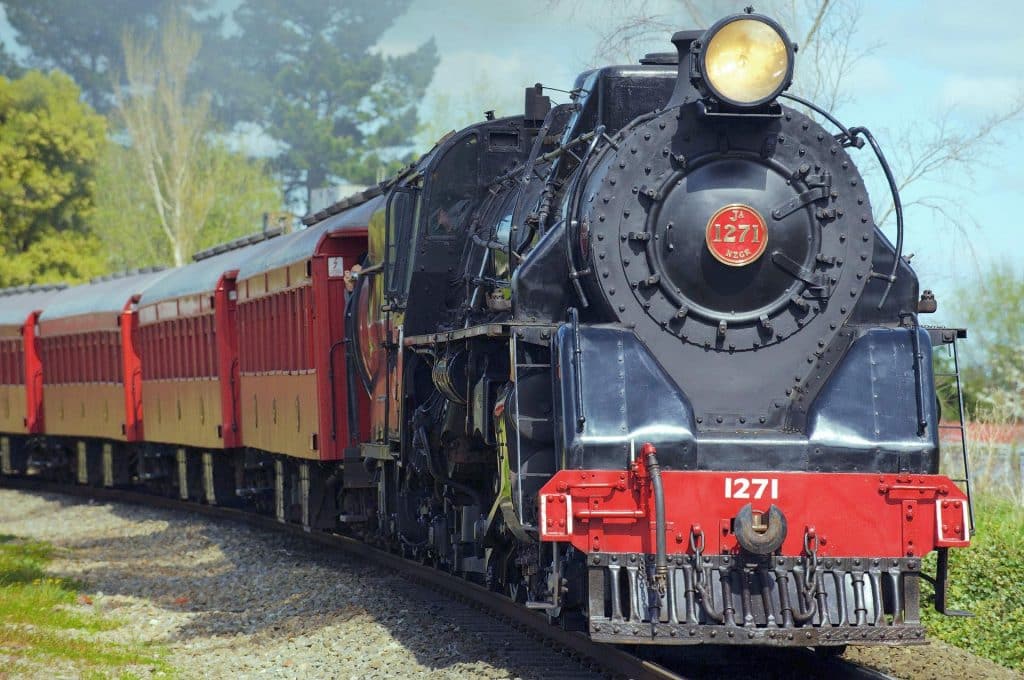
    Steam Train
    Photo Credit: Pixabay

    Today we will explore the most popular trains in Pennsylvania:

    Tioga Central Railroad
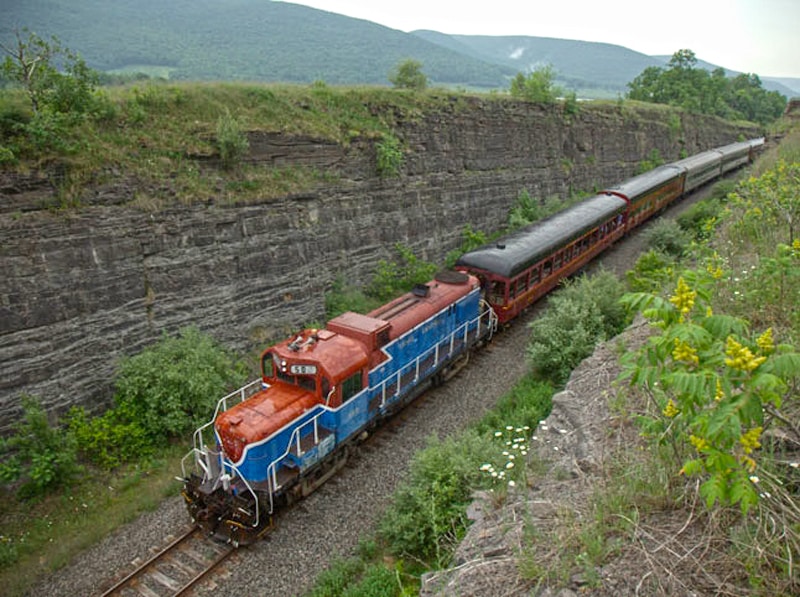
    Tioga Central Railroad Diesel Engine
    Photo Credit: TiogaCentral.com

    Running on tracks that date back to 1840, the Tioga Central Railroad has an intriguing history. The original railway connected Corning, New York to the coal mines in Atrium. It ran through today’s departure point at Wellsboro, Pennsylvania, carrying both passengers and freight. As parts of the line were abandoned, it was feared that railroading history would die, as well.

    But by 1994 the rails between Wellsboro and Corning were targeted to run an excursion train, preserving a piece of Tioga County’s past. Today the railroad showcases the forest and wetlands of the region, traveling from the depot to Hammond Lake.

    Railway and Locomotive Types

    The Tioga Central uses a diesel engine pulling cars on standard gauge tracks. The rolling stock includes a dining car with full kitchen, club car, coach and open cars, as well as table car. The dining car is climate controlled.

    Seating Options
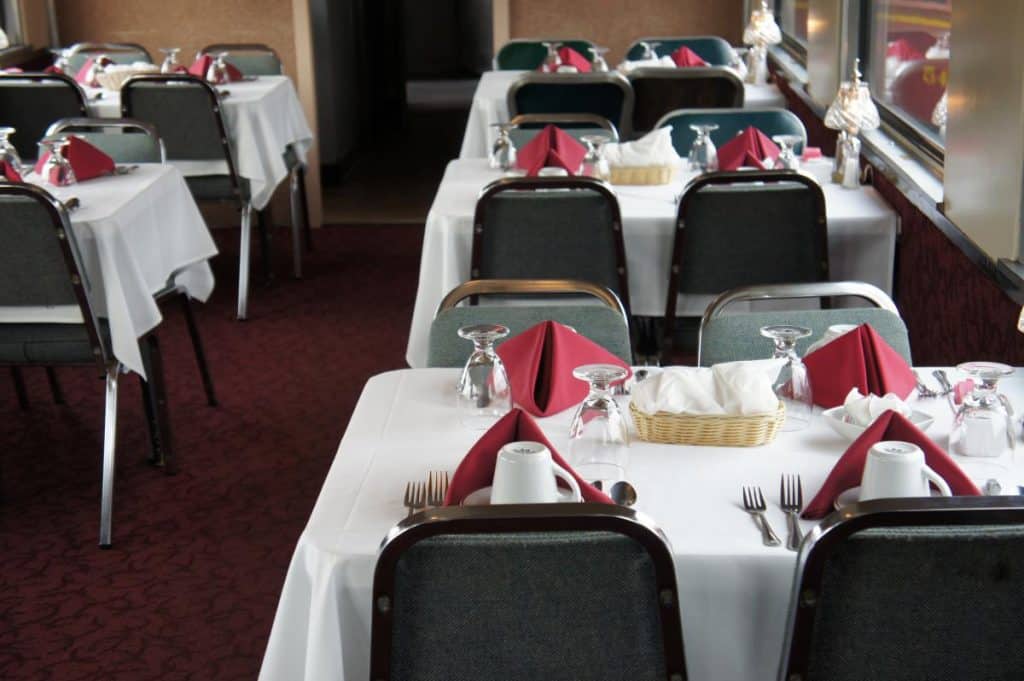
    Tioga Central Railroad Dining Car
    Photo Credit: TiogaCentral.com

    All seating during the Lakeshore Express and Sunset Express train rides is open and unassigned. However, dinner tickets have assigned table seating. Passengers are welcome to walk through the cars, and restrooms are available onboard.

    Riding Options

    Passengers can purchase round trip only tickets online or in person. Travel is from Wellsboro to Lake Hammond and back, a two-hour ride. The evening trains on Friday and Saturday offer an option to sit in the dining car and enjoy a catered meal as part of the ticket price. Other travelers that choose to bypass the dining option have open seating in the other railcars.

    Specialty Trains
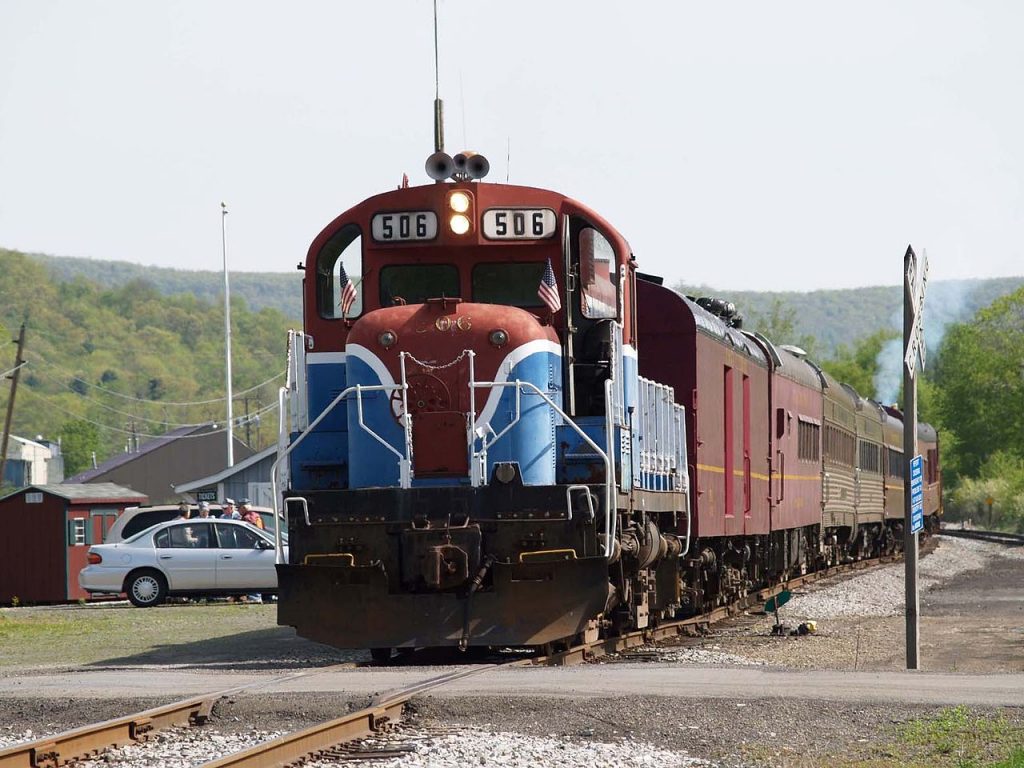
    Tioga Central Railroad Before Run
    Photo Credit: Jss5104 (CC BY-SA 3.0)

    The Tioga Central Railroad considers each of its “regular” trains a special event. Running weekends, the railway offers a Friday evening excursion with or without a catered meal. The Sunset Dinner Train and the Sunset Express are the same trips, on the same train but in different cars with different amenities.

    Saturdays a Lake Express Train is added to the lineup, leaving the depot in Wellsboro at noon.  The Sunset Train is offered on Saturday evenings, as well.

    Length of Season

    Capturing the attention of summer vacationers and autumn leaf peepers has determined the train’s schedule. It provides Friday and Saturday evening trains and Saturday noon trips every weekend from June through October.

    Strasburg Railroad
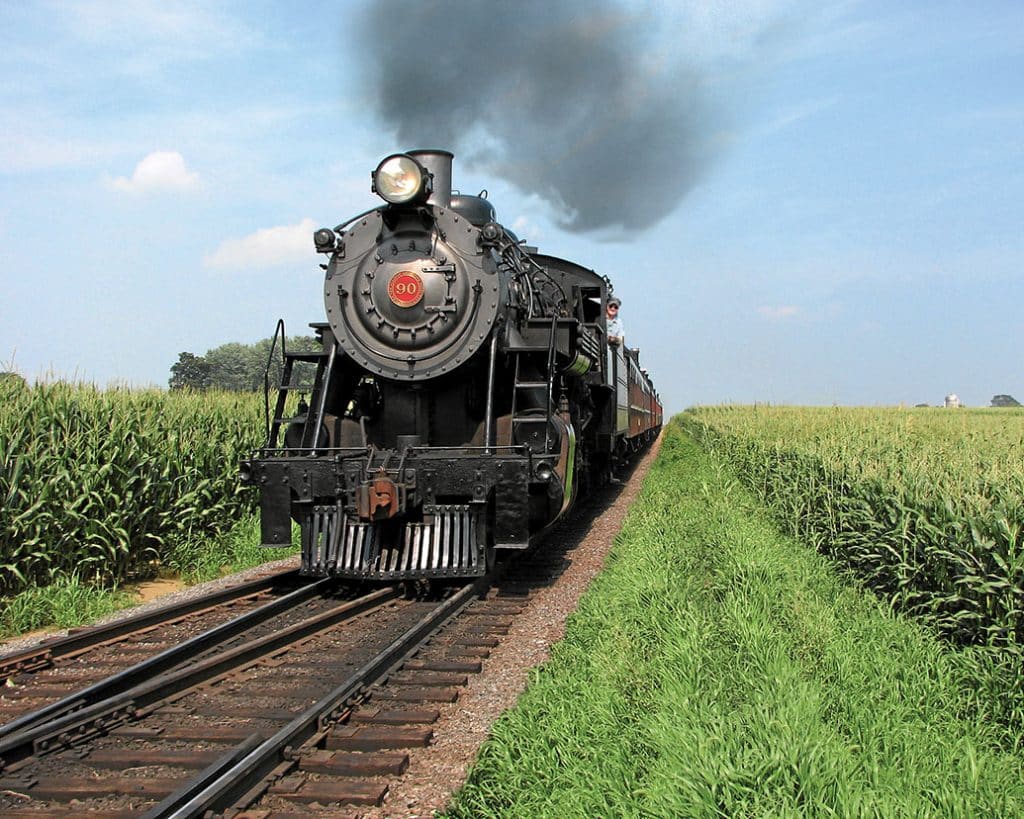
    Strasburg Railroad
    Photo Credit: StrasburgRailroad.com

    It could be difficult to live up to the expectations that come with being the oldest chartered train in the country, but the Strasburg Railroad has no problems doing so. Begun in 1832, the rail line was originally used to transport freight from the Pennsylvania Railroad hub, but after World War II, the railroads waned with the improvement of the highway system.

    Abandonment of the lines in Lancaster County was not to be, however, as the idea of a tourist train was suggested. So in 1958, 24 people purchased the rail line and the Strasburg Railroad became one of the biggest tourist draws for the region.

    Railway and Locomotive Types

    The Strasburg Railroad has five authentic steam locomotives working on standard gauge rails to pull restored lounge cars, coach and passenger cars, as well as dining and open rail cars through the Amish country of Pennsylvania on a 45-minute tour.

    Seating Options

    Strasburg Railroad Dining Car
    Photo Credit: StrasburgRailroad.com

    The railroad has assigned seating tickets for dinner cars only. All other cars have open, unassigned seats. There are, however, two separate classes of service, so there is no movement of passengers between cars during the excursion:

    • President’s Class – Passengers ride in the luxurious air-conditioned President’s Lounge car.
    • First Class – Passengers enjoy the journey in the air-conditioned lounge or parlor cars.
    • Coach Class – Passengers have their choice of a windowed coach car or an open gondola.

    Riding Options
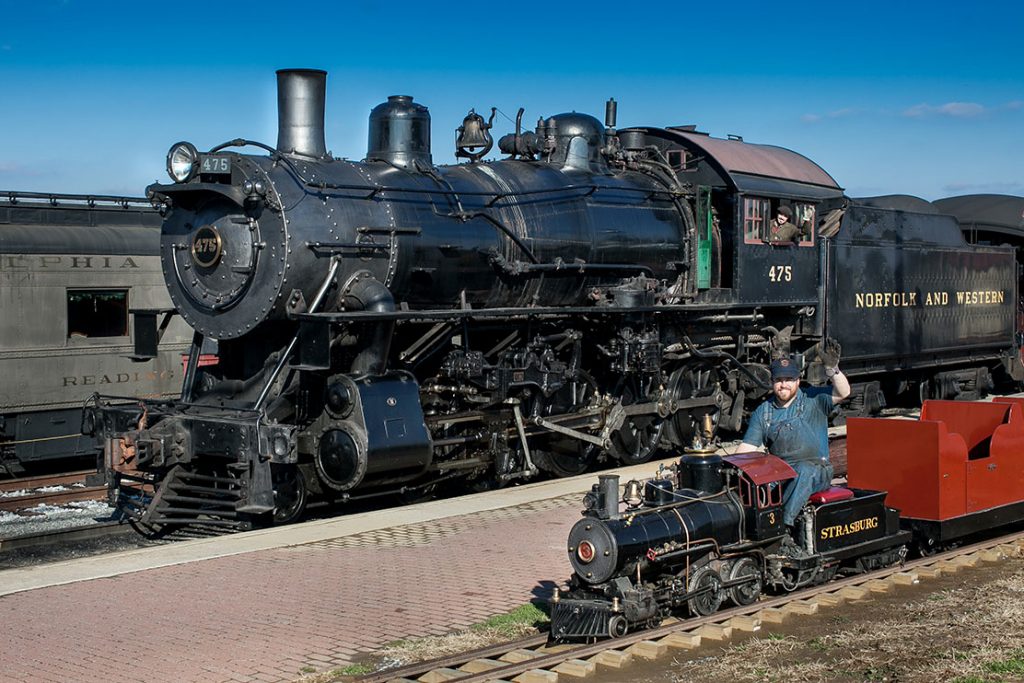
    Strasburg Railroad Full and Pint Size
    Photo Credit: StrasburgRailroad.com

    Tickets on the Strasburg Railroad are all round-trip. However, riders can choose to disembark at two different groves along the journey for picnics and children’s playtime. Since trains run on the hour from 11:00am to 4:00pm during high season, the riders can hop onboard a later train for the return to the depot.

    Passengers have the opportunity to purchase some extra experiences before or after their rides:

    • Shop Tour – See how these historic railcars are restored and repaired in a behind-the-scenes tour.
    • Hostling Tour – A morning exploration of the feed and caring of Strasburg’s five steam locomotives.

    Specialty Trains

    • Easter Bunny Train – Hop on this seasonal train for a trip that’s sure to be egg-cellent.
    • Day Out with Thomas – Tiny train lovers will enjoy a ride with Thomas The Tank Engine, with play available on cranky cars, in the Imagination Station and during storytime!

    Length of Season

    The Strasburg Railroad is only closed for the month of January. May through August the regular train runs seven days a week. During the slower seasons of winter and fall, weekend departures occur five times a day, with three daily departures on weekdays. Take a look at the schedule to plan your visit.

    Colebrookdale Railroad
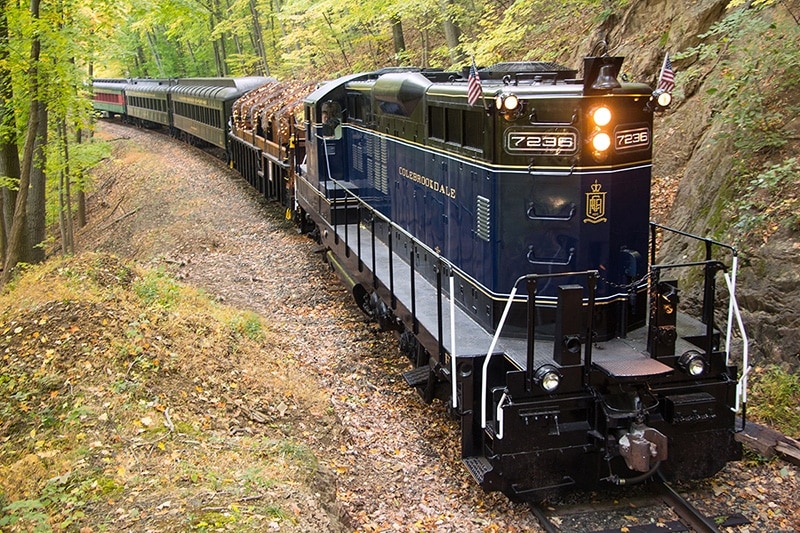
    Colebrookdale Railroad
    Photo Credit: ColebrookdaleRailroad.com

    Running through the Schuylkill Valley in eastern Pennsylvania, one might never realize the Colebrookdale Railroad has a storied past. The tracks were laid by returning Civil War soldiers over 150 years ago, and the railway ran past a gristmill and the first iron works and blast furnace ever built in Pennsylvania.

    Today the train runs from Boyertown to Pottstown, connecting passengers with the countryside known as the Secret Valley, a region admired for its natural beauty and history.

    Railway and Locomotive Types

    Running a diesel locomotive on standard gauge rails, the Colebrookdale Railroad runs dining cars, deluxe coaches, parlor cars and a garden café car as its rolling stock. Passengers will enjoy a two-hour excursion through the Secret Valley in these meticulously restored cars.

    Seating Options
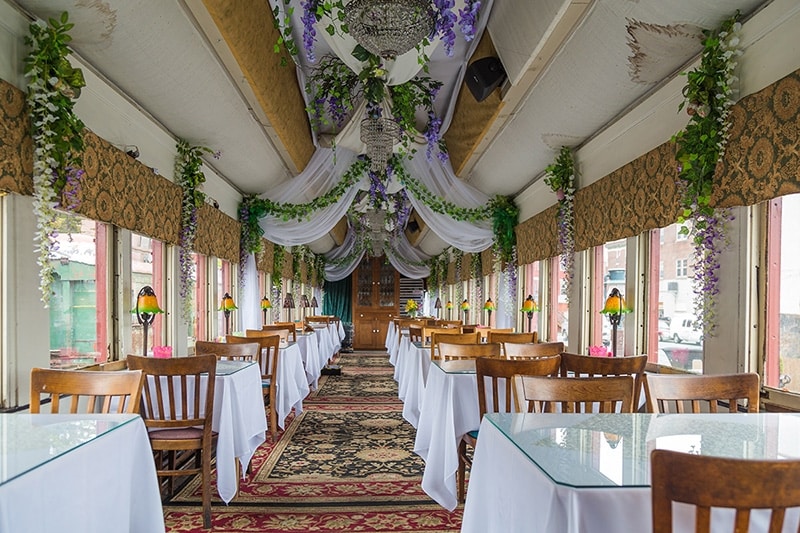
    Colebrookdale Railroad Dining Car
    Photo Credit: ColebrookdaleRailroad.com

    Passengers have their choice of cars and service when it comes to the train cars, as all seats are assigned by car:

    • First Class Service – Riders enjoy the journey in a nicely-appointed parlor car, complete with a baby grand piano!
    • Dining Service – Many of the trains offer meals in the dining car and the garden café car. There are a wide variety of menus offered, and some are also available on specialty trains.  Check the train schedule to see if your date of travel has this option.
    • Deluxe Coach Service – Passengers will travel in coach cars or an open gondola car.

    Riding Options

    The Colebrookdale Railroad departs from Boyertown and travels almost nine miles through the Secret Valley, returning by the same track. They do offer special runs by the Brill Motorcar (also known as “Doodlebug” during the zoo trains) on one-hour departure schedules.

    Passengers can also purchase a seat in the locomotive to watch the inner workings of the Iron Horse on most rides.

    Specialty Trains
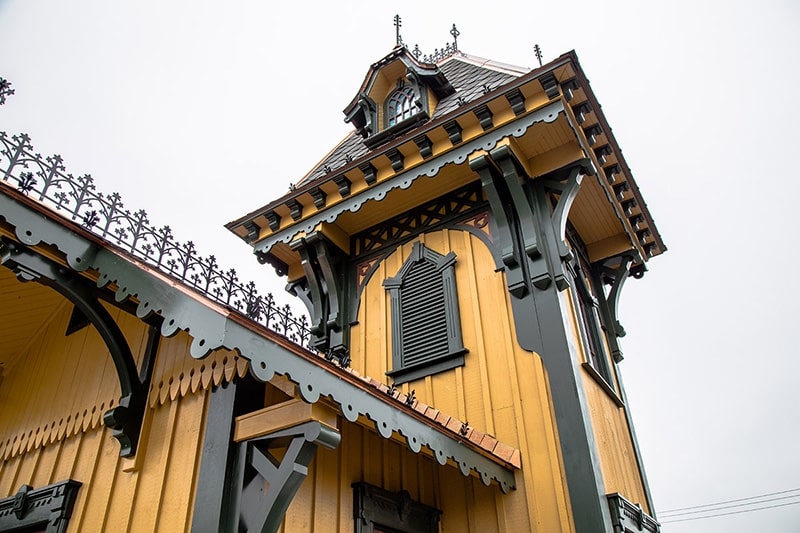
    Colebrookdale Depot
    Photo Credit: ColebrookdaleRailroad.com
    • Pumpkin Patch Excursion – Take the Brill Motorcar to Frog Hollow Farm for a day of pumpkin patch fun. The motorcar will shuttle passengers all day long, so stay and enjoy decorating your pumpkin, drinking cider and indulging in snacks.
    • Autumn Splendor Fall Foliage Train – Enjoy the colors of Autumn on a tour of the Secret Valley. A scrumptious brunch is offered to dining car patrons.
    • Zoo Train – Take the Doodlebug to Frog Hollow Farm for a children’s petting zoo. It’s sure to be a fun and furry experience!
    • Zombie Hunter Train – Blast zombies with provided “blaster packs” to rid the railroad of the pesky monsters at a stop along the way. Those not wishing to participate can become spectators to the zombie annihilation from the train!

    Length of Season

    The Colebrookdale Railroad season runs from March through mid-November, with specialty trains departing on specific dates throughout the year. Please check the train schedule to make your plans.


    Join the thousands of RVers that have a love affair with trains and ride the rails on your next camping trip. Check out the other excursion trains available on a state-by-state basis in our series, RVing the Rails.


    Source link

  • Camping World’s Guide to RVing Yellowstone National Park

    Camping World’s Guide to RVing Yellowstone National Park


    Yellowstone National Park is the nation’s first national park and still remains one of the most popular and visited parks in the country. Some people argue that it was the first established national park in the world. Yellowstone became a national park in 1872 and has been captivating visitors ever since. During our time at Yellowstone National Park, we continually felt like we were on a different planet. The landscape is vast, beautiful and wild.

    Why Visit Yellowstone National Park?

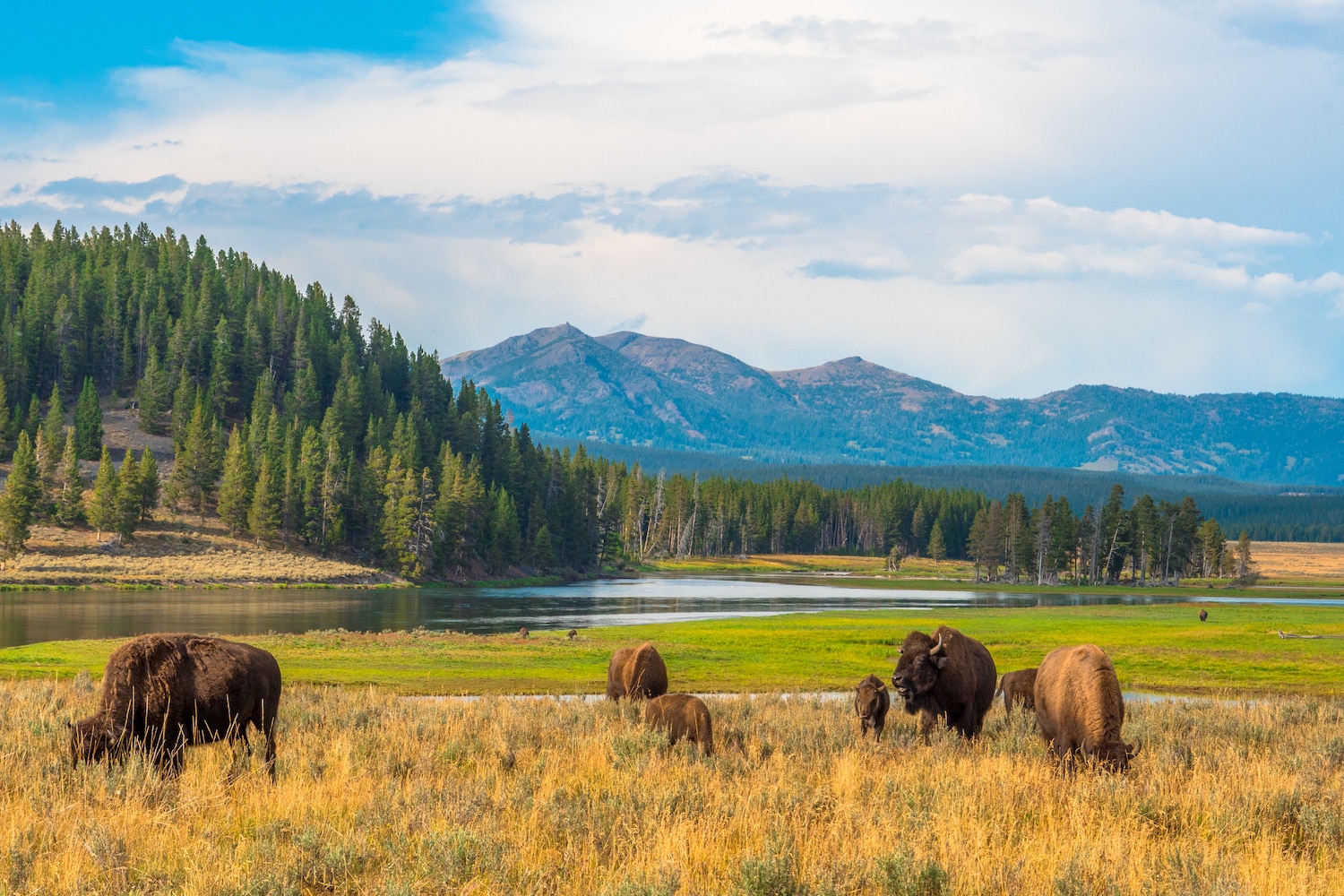
    Buffalos grazing at Hayden Valley, Yellowstone, National Park, Wyoming, USA
    Image by Manel Vinuesa from Getty

    It might be easier to think of reasons not to visit Yellowstone. Seriously, the park is unbelievable. There is so much to see and do and the grandeur of it all makes it an unforgettable experience.

    One of the primary reasons to visit Yellowstone, though, is the abundance of hydrothermal wonders. With over 10,000 thermal features, Yellowstone is the best place in the world see hydrothermal phenomena such as geysers, hot springs, mud pots, and steam vents. Over half of the world’s geysers and hydrothermal features are located in Yellowstone National Park. Even if you’ve never been to the park, you’ve likely heard and seen pictures of Old Faithful, the most famous geyser in the world. But, Yellowstone offers so many more thermal features than just Old Faithful.

    Probably the second most popular reason to visit Yellowstone is to experience the diverse wildlife. It’s not uncommon to see deer, moose, wolves, bighorn sheep, elk, bison, bears, and more just driving through the park. As with thermal features, Yellowstone National Park has the largest concentration of wildlife in the contiguous United States.

    Whatever the reason for your visit, Yellowstone offers something for everyone and is a can’t miss national park.

    Things to Do

    There is no way we can cover all of the things to do in Yellowstone in one blog post. Our goal is to highlight some of the most popular activities to give you some ideas for your trip.

    Experience the Incredible Thermal Features

    Old Faithful

    Located in the Upper Geyser Basin, Old Faithful is probably the most recognized feature in the park and no trip would be complete without seeing it erupt. An eruption is quite fascinating.

    The geyser erupts about every 1.5 hours and can shoot water nearly 200 feet in the air! Old Faithful is one of only six major geysers that are predicted regularly by the staff which is remarkable considering there are over 500 geysers in the park. Its regularity is the basis for its name and one of the reasons that developers were able to build viewing areas and lay the foundation of the village and visitor center that exists today at Old Faithful.

    Don’t forget to check out the rest of the Upper Geyser Basin. There are 150 geysers in one square mile so there are lots to see other than just Old Faithful.

    Grand Prismatic

    Grand Prismatic is the largest hot spring in the park and is one of the most interesting sites you will ever see. The colors are so intense and beautiful that it’s hard to even believe your eyes. The hot spring is huge—between 200 and 330 feet in diameter and over 120 feet deep.

    Be aware that parking at the hot spring is limited and doesn’t have enough capacity for Yellowstone’s large crowds. Try to get there early to get a parking spot or plan some extra time to wait for a spot to open up.

    Mammoth Hot Spring Terraces

    The Mammoth Hot Springs are located near the northern entrance of the park, and the springs offer visitors unique viewing experiences. You can walk along boardwalks above the hydrothermal features and get an up-close and personal view of the hot spring terraces. I can’t explain how these terraces are made, but I can say that they are really interesting and particularly inspiring.

    Norris Geyser Basin

    Take a stroll along the boardwalks at Norris Geyser Basin and enjoy the oldest, hottest and most dynamic of Yellowstone’s thermal areas. Hike the three-quarter-mile trail Porcelain Basin or the 1.5-mile trail that goes around Black Basin. Steamboat Geyser, the tallest geyser in the world, is located here. Although eruptions are uncommon, if you get the chance to see one, it will be something you remember for the rest of your life.

    Hiking

    With 2.2 million acres and 900 miles of hiking trails, there’s no shortage of wilderness to explore. Whether you prefer hiking through the forest, around lakes and rivers, or through canyons, Yellowstone has it all! Keep in mind though that many of these hikes are high in elevation and will still have snow until June and late July in some areas, so you’ll want to be prepared for cooler temperatures and harsh trail conditions.

    Here are some of the most popular day hikes in Yellowstone National Park:

    • Mystic Falls Trail and Fairy Creek (3.5 miles and rated moderate)
    • Canyon Rim North Trail to Inspiration Point (7.9 miles and rated moderate)
    • Uncle Tom’s Trail (.6 mile and rated easy)
    • Artists Paintpots Trail (1 mile and rated easy)
    • Dunraven Pass to Mount Washburn (6.8 miles and rated difficult)
    • Bunsen Peak Trail (4.4 miles rated moderate)
    • Lava Creek Trail (8 miles rated difficult)

    Fly Fishing

    Yellowstone is home to several of the most famous trout streams, including the Yellowstone, Gallatin, Snake, and Madison. In fact, anglers from across the world visit Yellowstone specifically to fish and they are an important part of the park’s native fish conservation goals.

    Cutthroat trout, mountain whitefish, arctic grayling, are some of Yellowstone’s native fishes that are crucial to its ecology. Be sure to read up on Yellowstone’s specific and strict fishing regulations before you head out on the lakes and rivers.

    Horseback Riding

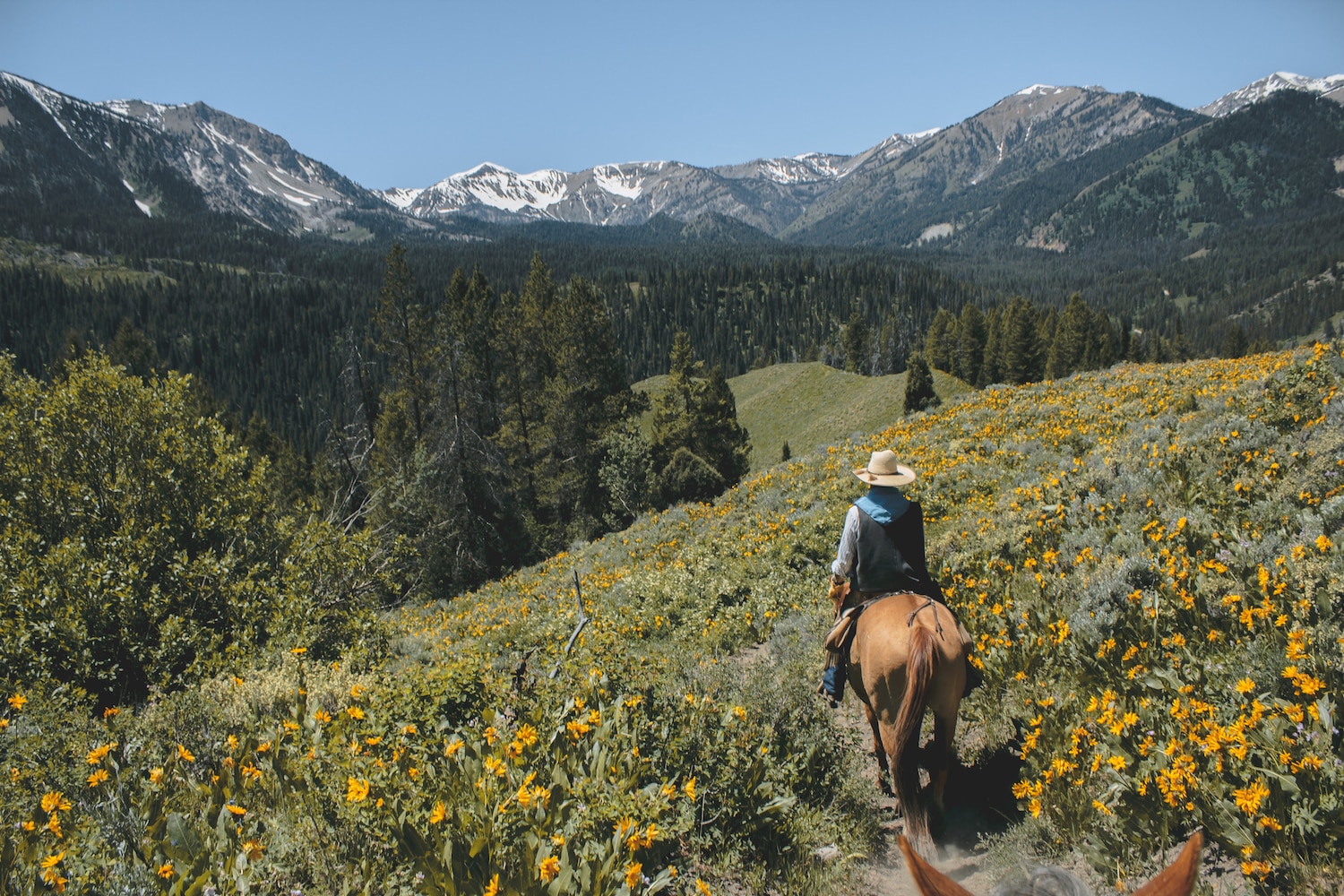
    Both guided and private horseback riding trips are available to Yellowstone visitors and an incredible, unique and memorable way to explore the park. There are outfitters who offer day trips and even overnight backcountry trips. Yellowstone National Park Lodges also offers one-to-two-hour rides at Tower-Roosevelt and Canyon.

    Many visitors prefer to bring private stock but must follow all regulations and should check the backcountry situation report and bear management area descriptions ahead of time.

    Boating

    Consider exploring beautiful Yellowstone from a different perspective by canoeing, kayaking, and motorized boating the park’s rivers and lakes. With a permit and inspection, you can bring your own watercraft. Otherwise, the lodges provide rentals at Bridge Bay Marina on Yellowstone Lake. You can also book guided services from these companies.

    When to Visit

    Horseback riding through the wildflowers in the Grand Teton Moutain range.
    Image by William Shafer from Getty

    Yellowstone is a seasonal national park. At an average elevation over 8,000 feet and surrounded by large mountains, it’s understandable that some of the park is closed during winter. That doesn’t mean that winter is not a great time to visit the park, just understand that the conditions are fairly extreme.

    Therefore, summer is the most popular time to visit the park and the time when all of the facilities are open. To determine which season is right for you as well as what amenities are generally available, please check out this information page.

    Where to Stay

    There are 12 campgrounds with 2,000 sites offered at Yellowstone National Park. While this sounds like a lot, the spots fill up quickly in high season and the park only takes reservations for five of the campgrounds with the rest being first-come, first-served.

    Fishing Bridge RV Park is the only campground that offers full hookups for RVs. Some of the campgrounds can only accommodate smaller RVs, so you’ll want to check the descriptions of each one on the NPS camping page.

    The good news is, there are a great number of campgrounds outside the park to choose from if you aren’t able to reserve a site in advance. There are several to choose from near each of the five entrances to the park.

    There is also dispersed RV camping (boondocking) spots throughout the forest. You can find these spots by using the official US Forest MVUM’s (motor vehicle use maps). Here’s a great list of all your options for camping around the outside of the park.

    Getting to and Around Yellowstone National Park

    Yellowstone National Park is located in the northwest corner of Wyoming but, technically, it resides in three states with three percent of the park in Montana and one percent in Idaho. There are five different entrance stations to the park but since the park covers around 3,500 square miles, it can take several hours to drive between the stations. Therefore, bringing your own vehicle is highly recommended for exploring the park.

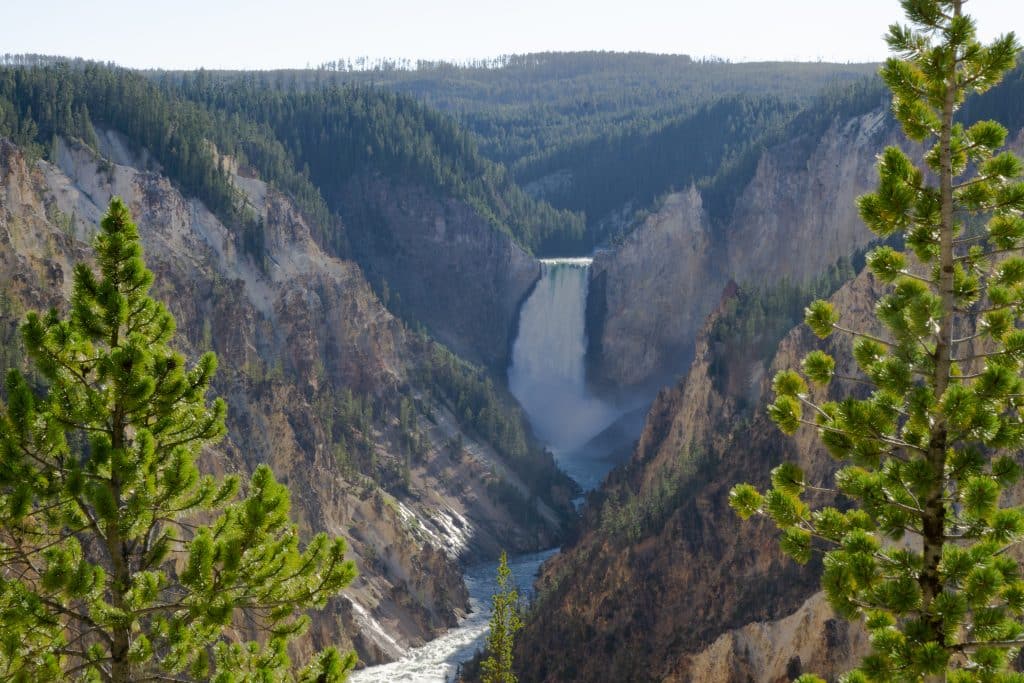
    It can take hours to travel the 50 miles from Old Faithful to the Grand Canyon of the Yellowstone because of traffic from the number of tourists in the park. But also, the buffalo tend to slow your travel down and it’s not uncommon for an entire herd to block the road for a long period of time. So, plan to travel slowly throughout the park. Some companies provide shuttle services and tours if you’d prefer to sit back and enjoy the ride.

    Tips and Tricks Specific to Yellowstone National Park

    Besides the obvious tips of getting your accommodations booked well in advance and remember to bring your camera and binoculars, here are a few more tips for visiting Yellowstone:

    • You’ll definitely want to stop at a Visitor Center upon arriving in Yellowstone. With it being such a big and complex park, there’s always a lot going on and updates you’ll want to be aware of. Rangers can also give you the best tips for what to do during the specific times you’re visiting and your preferred activities.
    • Consider seeing the top attractions, such as Old Faithful, in the early morning or evening to avoid crowds. This is also the best times to spot wildlife.
    • Don’t forget to spend time stargazing! Go outside after dark, with of course a flashlight and awareness of wildlife, and either walk or drive a short distance away from your campsite or lodge. You’ll enjoy a dazzling night sky.
    • Pack for all seasons! Bring layers as the days can be hot and the nights can get chilly, even in the middle of summer.
    • Visit nearby Grand Teton National Park while you’re in the area. It’s only a short drive and you absolutely won’t regret it!

    For the latest info on visiting Yellowstone National Park, visit the park’s website.


    Have you been to Yellowstone National Park? What tips can you share?


    Source link

  • SftR 075: Learn How to Become a Full-Time RVer at Full-Time Freedom Week!

    SftR 075: Learn How to Become a Full-Time RVer at Full-Time Freedom Week!


    In this episode, Sam interviews Lindsay McKenzie (Follow Your Detour) and Julie Chickery (Chickery’s Travels), half of the team for Full-time Freedom Week, a free online event that will teach you everything you need to know to become (and remain!) a successful full-time RVer! Along with Liz Wilcox (The Virtual Campground) and Camille Attell (More Than A Wheelin’), Lindsay and Julie are deep into preparing for this annual online event. Tune into the episode to hear all about the speakers, topics, and the newest addition to this event… an in-person meet-up!

    Full-Time Freedom Week is a free online event, featuring 30+ RV experts, from November 5-8th. You can also upgrade to a paid ticket for extended access to the video content or attend the event in person! Click here to learn more and grab your ticket!

    What we cover in this episode

    • 3:00 – What’s new with Full-time Freedom Week
    • 6:00 – Speakers from the event this year
    • 12:00 – How the event got started
    • 17:00 – How to sign up for the event!
    • 20:00 – Stories from Full-time Freedom Week

    Links mentioned in this episode

    ** Subscribe to Stories from the Road on iTunesSpotify, or Google Play **


    Source link

  • Tips for Taking Your RV to the Campground for the First Time

    Tips for Taking Your RV to the Campground for the First Time


    Taking your new (or new to you) RV out for the first time can be a little intimidating. It may seem like there is simply too much to remember, but don’t worry. The list of things that scare you will shrink with time, knowledge, and experience. But for your first time, these tips will help you make the most of your first campground stay.

    Advance Planning

    The best thing you can do to ensure a smooth first camping trip is plan in advance. More and more people are enjoying RV travel, making campground reservations important. The more popular the location, the farther out you need to make your reservations. If you are planning to visit a first-come, first-served campground, you’ll want to do a little research to determine the best time to show up in order to snag a site.

    It’s always a good idea to touch base with the campground office the day before you head out on your trip. Verify your reservation and verify what time you can check in. Even if you plan to arrive early, something unexpected could happen. Therefore, inquire about late check in procedures. You don’t want to roll up to a locked gate after a long day’s drive.

    Learn Your Rig

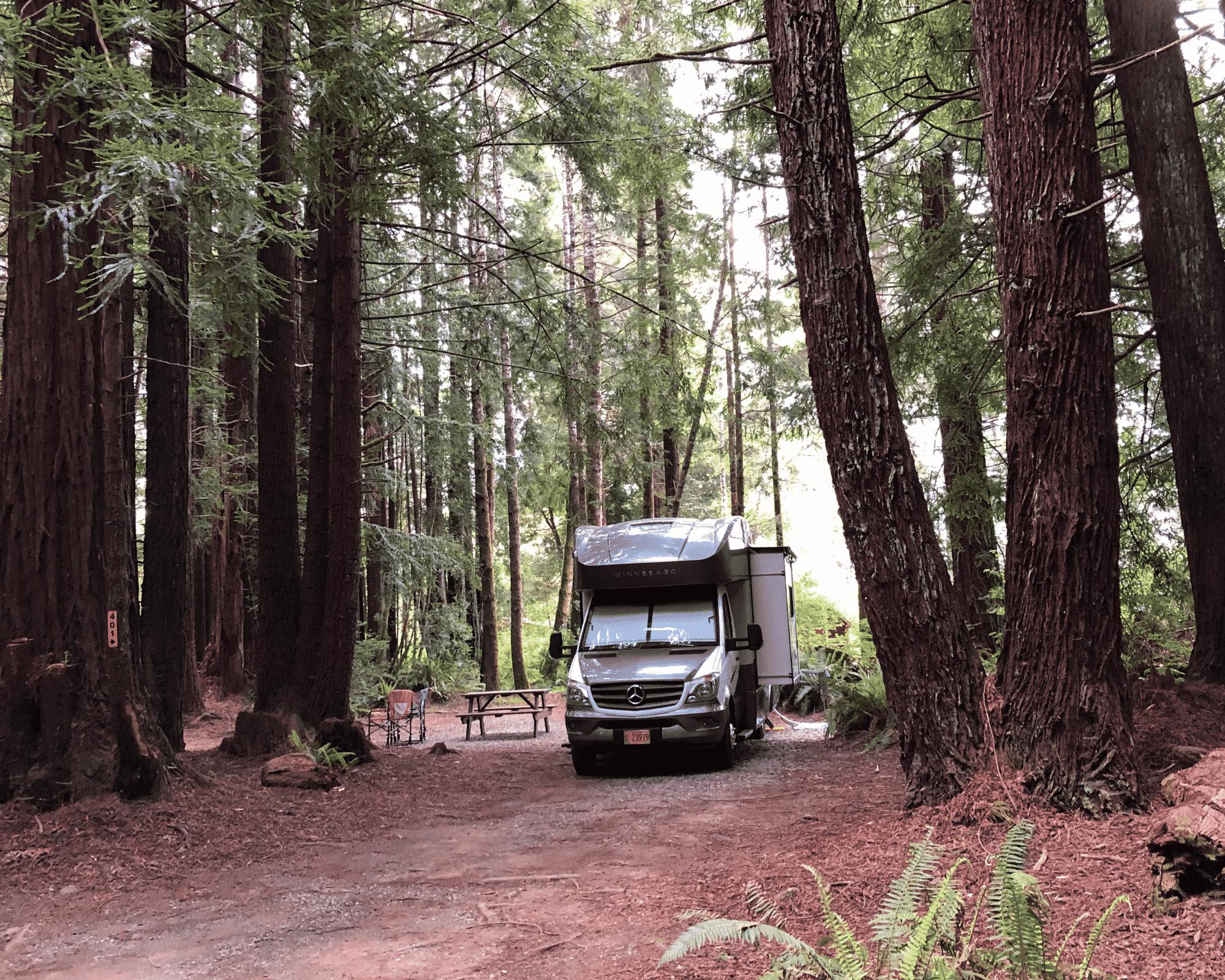
    Camping in Redwoods National Park
    Image by Julie Chickery

    Practice using the RV systems before you leave home. This includes the landing gear, leveling process, slide outs, as well as hitching and unhitching if applicable. Don’t forget driving and parking practice, especially backing up. We’ve arrived at a campground with a pull-thru site reservation only to find there was a mix up and needed to move to a back-in site.

    Make A Checklist

    As you are practicing with your rig, make a checklist for packing, arrival, and departure. You don’t need a lot of gear to enjoy a great camping trip, but you will need some essentials. Take a look at our essential packing guide for first time campers.

    Create a checklist of items for setting up the RV at the campground. You’ll want to include things like:

    • Deploy the jacks/levelers
    • Chock the wheels
    • Plug in the power
    • Connect to water and sewer (if provided)
    • Turn on the air conditioner (if needed)
    • Open slides
    • Turn on the water heater
    • Turn on the LP gas

    This itemized checklist will help things go smoothly at the campground and ensure you don’t forget anything. You’ll also be able to use the list in reverse upon departure.

    Campground Arrival

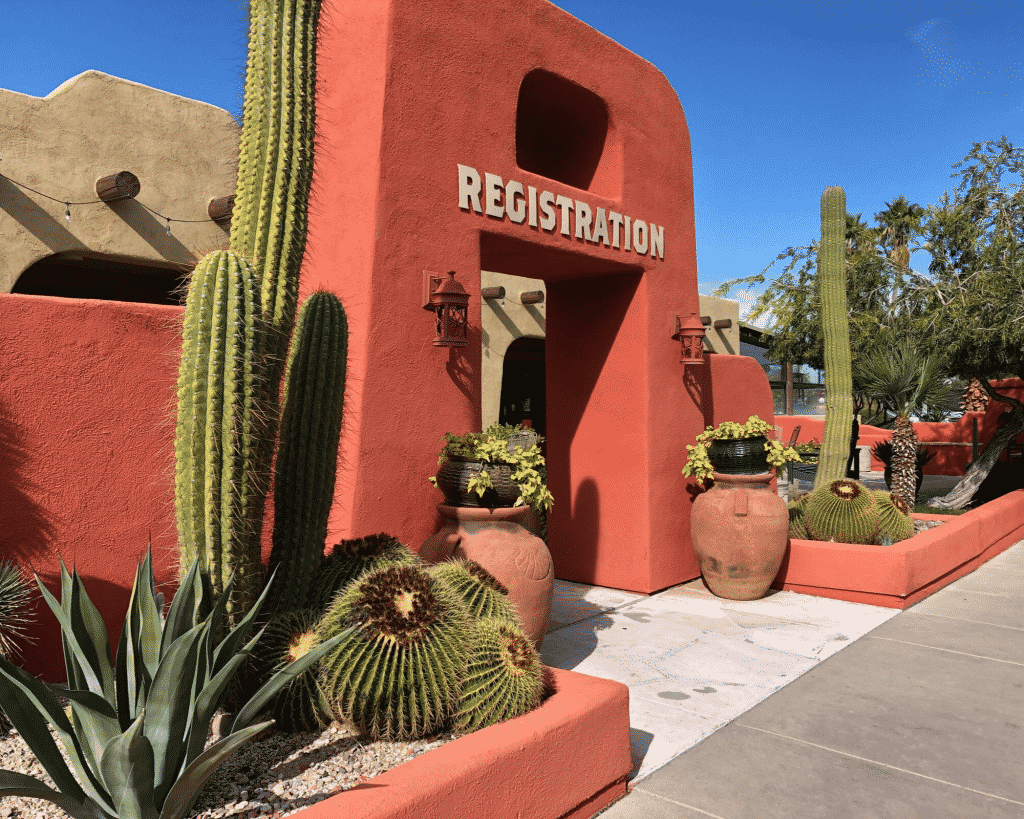
    Image of campground registration.
    Photo by Julie Chickery

    Many campgrounds have an office that you will stop at first to register. Some public campgrounds (state, city, national forest), especially smaller ones, don’t have an office, but do have a kiosk for self-registration. If you don’t have a reservations, look for guidelines on finding an open site. In some cases, there will be a list posted on a board with the campground map, and it others there may be a marker on the actual campsite.

    Pay attention to your site’s location on the campground map looking closely for the approach. The campgrounds are always marked well once you move beyond the entry and you want to be sure you’ve noted a few landmarks or site numbers to help you navigate to yours.

    It is also a good idea to arrive early in the afternoon so you can set up your campground in the daylight. Not only does this make things easier on you, but it also keeps the neighbors happy. No one likes headlights shining in their RV windows or the loud sounds of someone setting up at night.

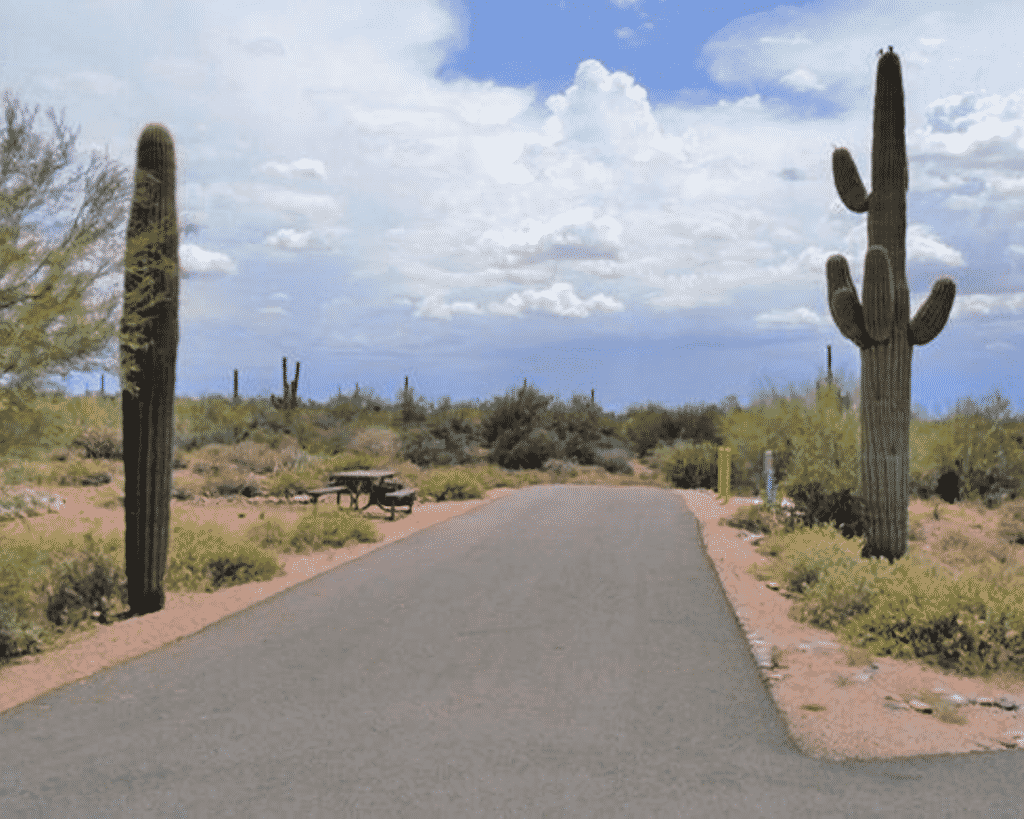
    View of a desert campsite
    Photo by Julie Chickery

    Scout out your site before actually pulling into it. Take notice of the power, water, and sewer hook ups. Be sure there is enough space to fully deploy your slides. More than once we’ve had to move the RV forward or backward to be safely clear the power pedestal with our bedroom slide. If there is a paved pad, keep an eye on your RV leveling jacks to ensure they stay on the pad.

    Campground Etiquette

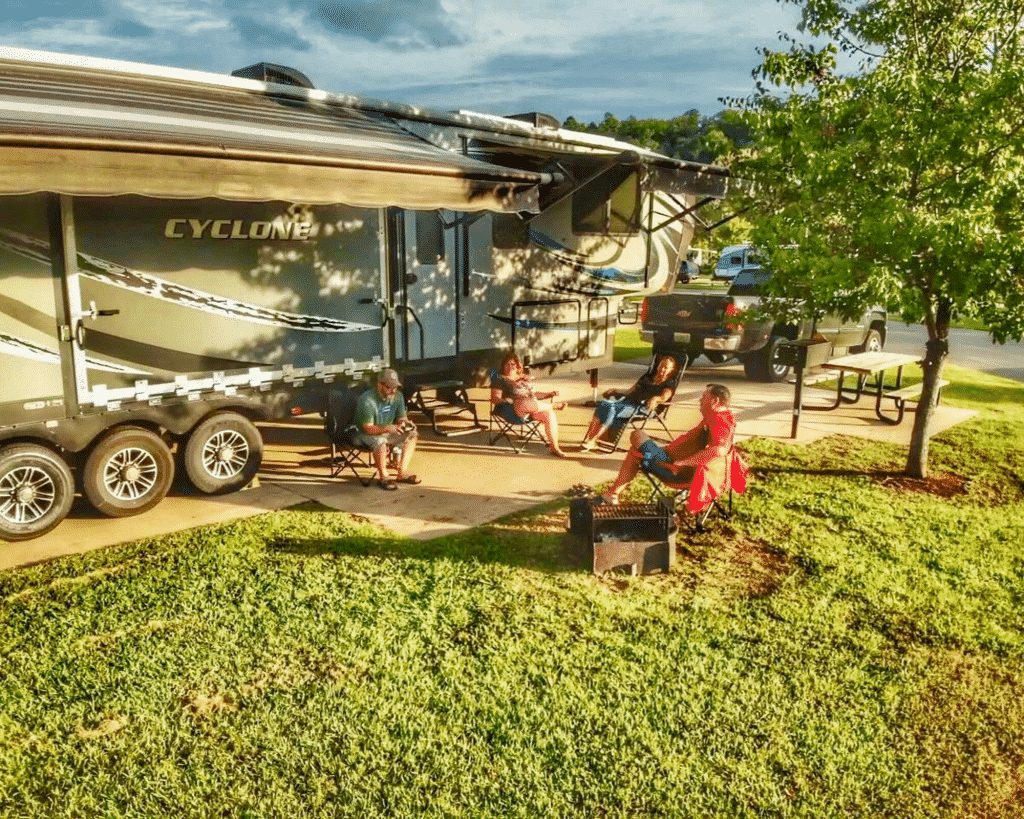
    Campers socializing in front of RV
    Photo by Julie Chickery

    Once you’ve gotten settled in and are ready to enjoy your stay, consider these few unwritten rules of campground etiquette. By following these few guidelines, you can help ensure that your good time doesn’t ruin someone else’s.

    First of all, remember that even if you can’t see your neighbors, they usually aren’t that far away. Be mindful of that when you are playing music or telling stories around the campfire. Most importantly, observe quiet hours. They are usually posted and typically start around 9 or 10pm.

    Also, be aware that the little privacy you have is limited to your campsite. Respect the space that other campers have chosen, and don’t walk through another campsite to get to another location in the campground.

    RVing is a great way for pet owners to travel with their fur babies, but there are a few courtesies you can extend to your fellow campers. Clean up after your pets, keep your dogs on a leash, and don’t leave them cooped up (and barking) all day while you’re away.

    Camping as a family is a joy, but be mindful that not every camper has children. Please make sure your children are properly supervised and respectful of others.

    Have Fun

    This is the most important tip of all! Don’t let any small mistakes or items left behind ruin your trip. Enjoy yourself and your first camping trip. We all learn as we go and any mishaps will make entertaining stories down the road.


    Source link

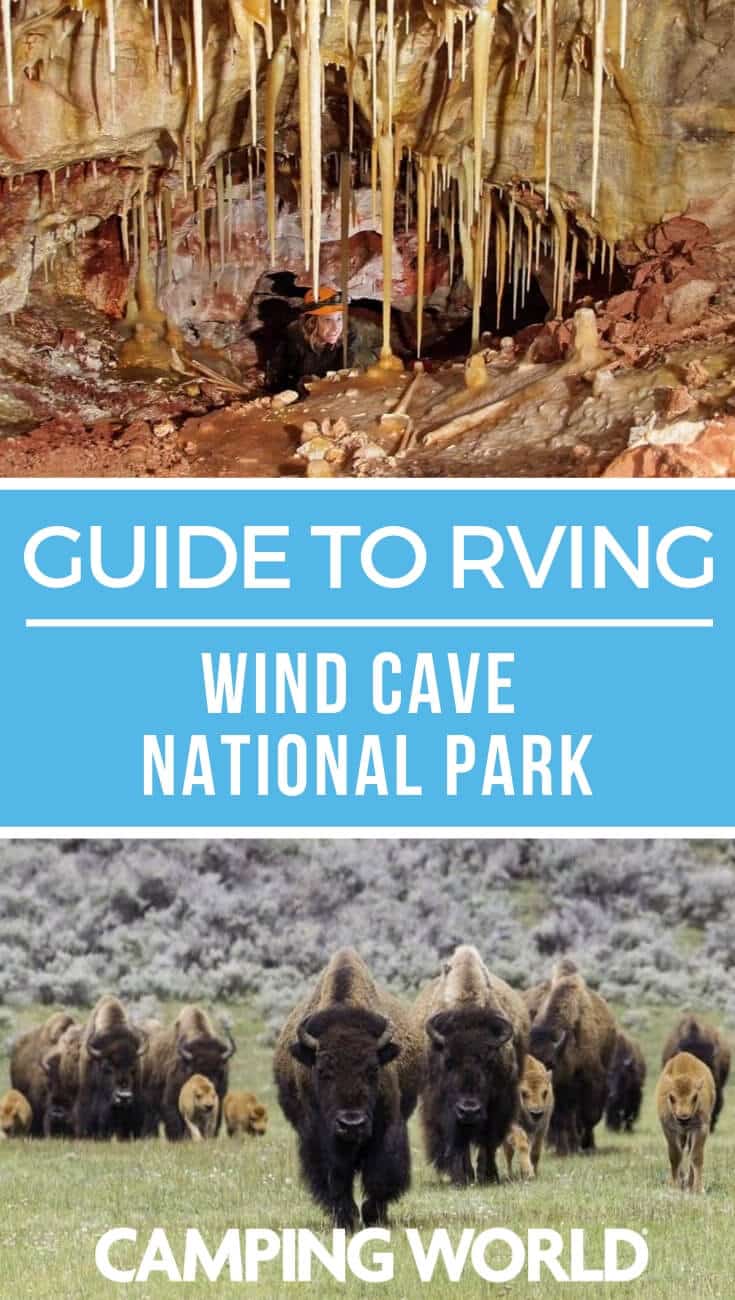
  • Camping World’s Guide to RVing Wind Cave National Park

    Camping World’s Guide to RVing Wind Cave National Park


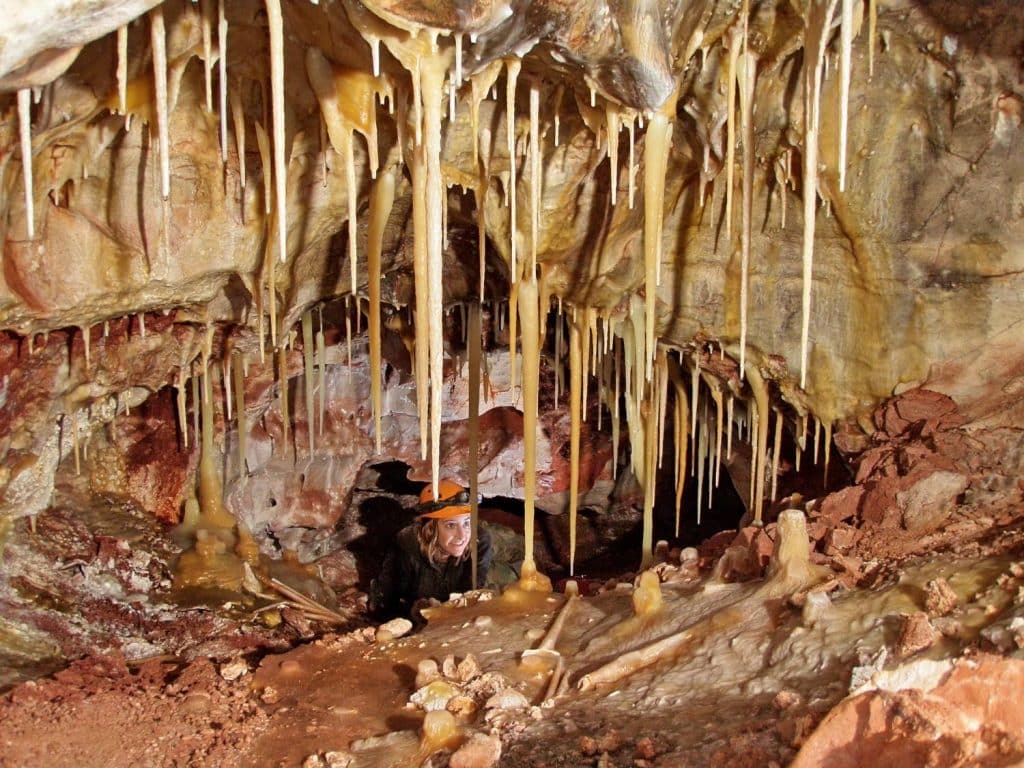
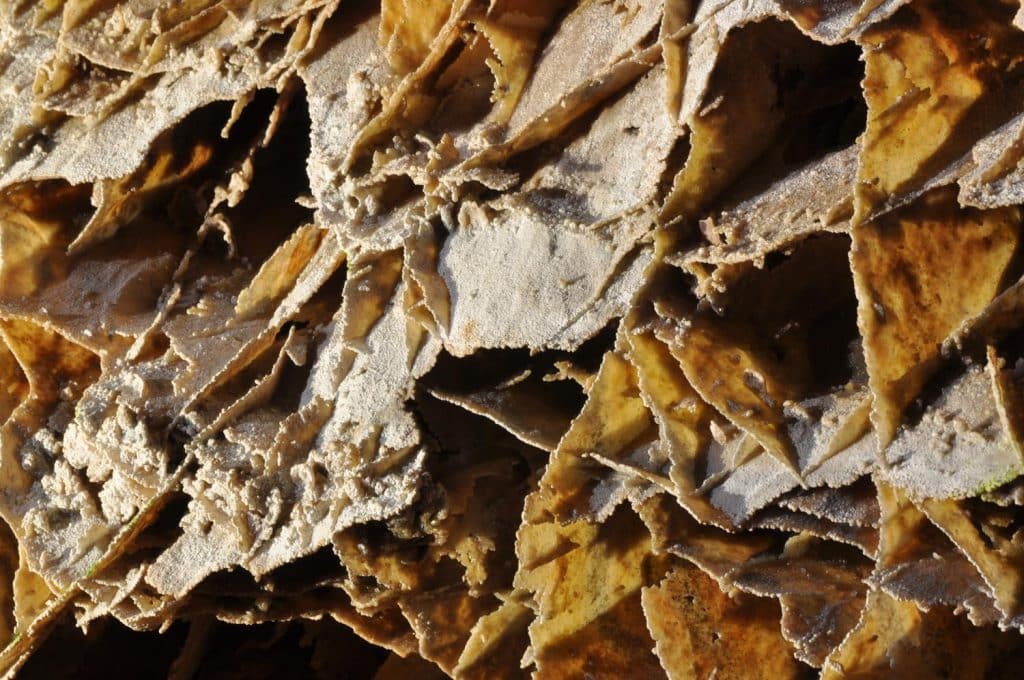
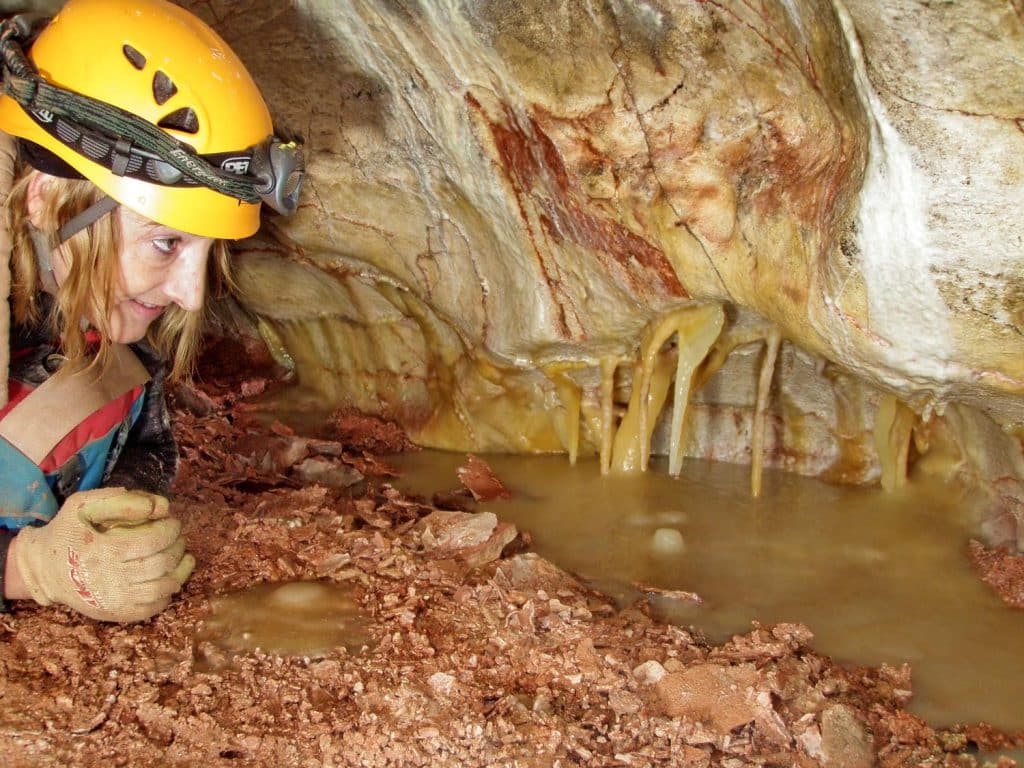
    As the world’s first cave to be named a national park, Wind Cave is an outstanding addition to the National Park Service. It is the world’s longest and most complex cave system, with 149 miles of explored passages, containing intricate boxwork and frostwork formations.

    Many miss its allure by only noticing the undulating prairie that lies above this geologic anomaly. In fact, the cave’s discovery by white Americans came from two brothers peering into a 10” x 14” hole as the wind whistled out of it. By knocking the hat off the boys’ heads, Wind Cave acquired a name and a reputation.

    History of Wind Cave National Park

    Photo Tripping America - Wind Cave - Camping World
    Photo Credit: NPS

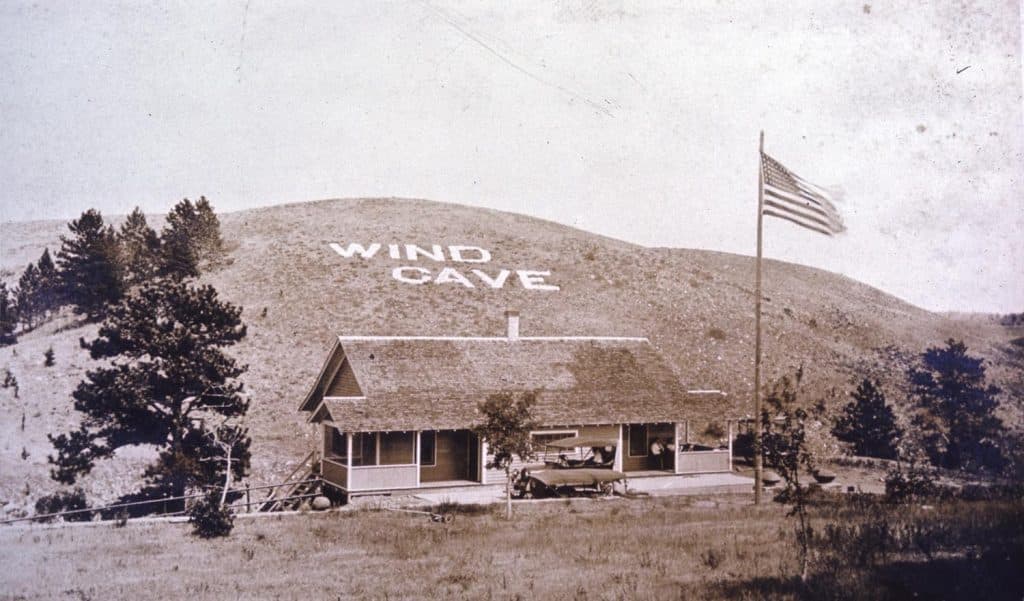
    The Lakota Sioux nation has revered Wind Cave as the underground birthplace of its people for thousands of years. It wasn’t until 1881 that white settlers in the area discovered the subterranean caverns when the Bingham brothers lost their hats by that small hole leading to the cave.

    Eventually, a local family was hired by a mining company to explore the area for mineral deposits, and 16-year-old Alvin McDonald crawled through the passageways. When no valuable minerals were found, the McDonald family decided to open the cave for tours in 1892.

    Photo Tripping America - Wind Cave - Camping World
    Photo Credit: NPS

    Just eleven years later, President Theodore Roosevelt designated the area as Wind Cave National Park, making it the first cave in the world to be protected as a national park. Today with room names like Lincoln’s Fireplace and Petrified Clouds, and rare calcite formations like boxwood and cave popcorn, Wind Cave entices visitors from around the globe to view its underground treasures and its abundant wildlife, both above and below the surface.

    Why Visit Wind Cave National Park in Your RV?

    Photo Tripping America - Wind Cave - Camping World
    Photo Credit: NPS

    Wind Cave is an excellent destination for RVers who enjoy hidden gems underground and the rolling hills and ranchland above. The park has one campground with plenty of space for motorhomes and travel trailers, and after hiking over scenic trails, then cooling off in the cave, RVers realize that Wind Cave National Park has even more going for it.

    The park lies in the midst of many other nationally recognized attractions.  In fact, its northern border abuts popular Custer State Park, and the Crazy Horse Memorial and Mount Rushmore National Memorial are also in close proximity. Using Wind Cave as a base camp offers great accessibility and a quieter, more relaxing camping experience away from the crowds of these other venues.

    Places to Go

    Photo Tripping America - Wind Cave - Camping World

    There are plenty of places and spots to visit at the park. You’ll have plenty to see and do.

    Visitor Center

    Located at the entrance to the park, the visitor center offers a movie about the cave’s formation and discovery, a bookstore, exhibits and cave tours. Rangers are available to answer questions and disperse backcountry permits.

    Sanson Ranch

    A 5,000-acre historic ranch and homestead include a 1,000-year-old buffalo jump, where Native Americans hunted bison, forcing them off low cliffs. There are also remnants of old tipi rings showcasing hundreds of years of habitation in the area.

    Things to Do

    Photo Tripping America - Wind Cave - Camping World

    In addition to there being plenty of spots to visit and things to see, you also will have plenty of activities to do.

    Hiking

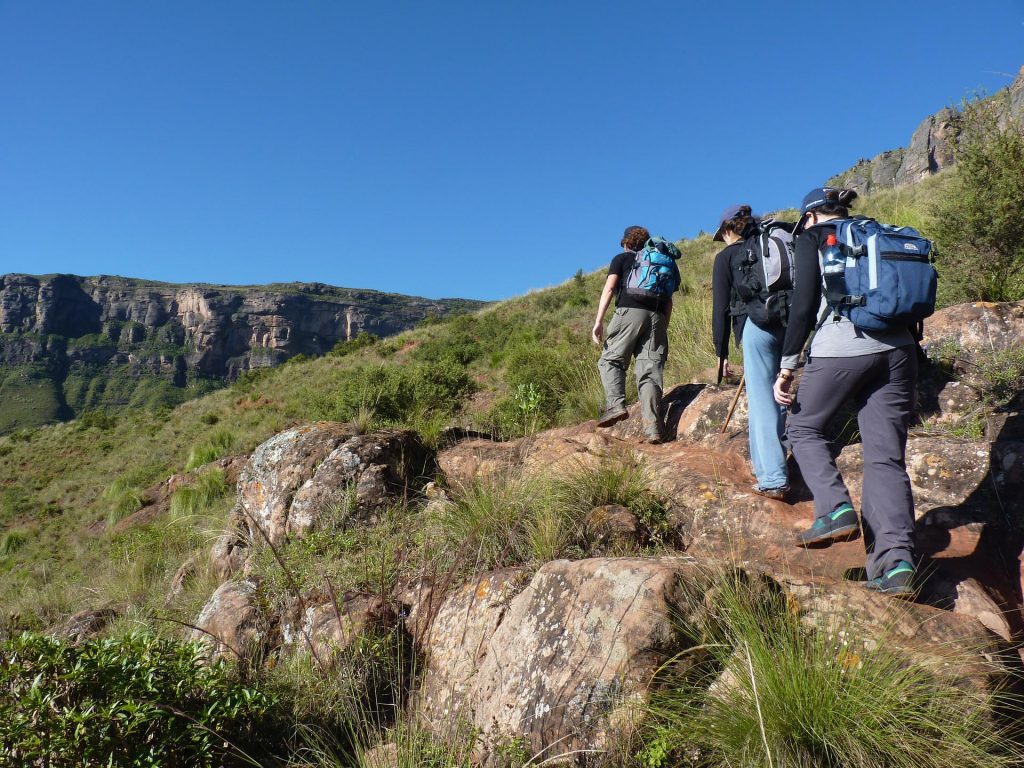
    There are 30 miles of hiking trails throughout the park, moving through meadows, prairies, and forest environments. It is conceivable that hikers will encounter wildlife like bison, elk and mountain lions, so be aware of surroundings and regulations. Each trail is designated by level of difficulty:

    Easy Trails:

    Moderate Trails:

    Strenuous Trails:

    Camping

    Wind Cave National Park has one organized campground and also allows backcountry camping in the northwest section of the park. A free permit is required, and off-trail hiking is allowed.

    Guided Cave Tours

    Ranger-led tours come in two different varieties.

         Regular Walking Tours consist of:

         Specialty Tours available are:

    All tours are limited in the number of participants and tickets are sold on a first-come, first-serve basis. The tours have different levels of difficulty, so be sure to read the descriptions of each, as some involve crawling through tight places, off-trail hiking, and numerous stairs.

    When to Visit Wind Cave National Park

    Photo Tripping America - Wind Cave - Camping World
    Photo Credit: NPS

    The park is accessible year-round, with its visitor center closed only on Thanksgiving, Christmas and New Year’s Day. Cave tours continue all year but have a limited schedule during winter months.

    Winter storms can sometimes close roads within Wind Cave National Park, so check online for closures if planning an off-season visit. If coming to enjoy the varied wildlife here, keep in mind that most animals are more active in cool temperatures.

    Where RVers Can Stay

    Wind Cave offers the perfect setting for RV vacations, with one campground within park boundaries. The Elk Mountain Campground lies on the edge of the prairie, with 25 pull-through sites available on a first-come, first-serve basis. Flush toilets and running water are available in summer, but there are no hookups or showers.

    If you would prefer to camp outside the park, here are a few of the many private campgrounds in the area:

    Getting to and Around Wind Cave National Park

    Photo Tripping America - Wind Cave - Camping World

    From Hot Springs, South Dakota travel 6 miles north on US Highway 385 to the park entrance. If coming from the town of Custer, travel 20 miles south on US Highway 385.

    Once in the park, visitors travel on the two paved roads, US Highway 385 or South Dakota Highway 87. The visitor center lies just inside the park entrance on Highway 385, where cave tours begin, but both roads have pullouts and scenic views throughout the park.

    There are also two gravel roads that take travelers to less developed areas of the park. They are suitable for two wheel drive vehicles, but are narrow and may have wildlife around which to navigate.

    Whistle a Tune

    Photo Tripping America - Wind Cave - Camping World

    Matching barometric pressure with the outside world, Wind Cave whistles its own tune as visitors enjoy its unusual attributes. Boxwood formations rarely found anywhere else display a delicate pattern on the ceilings as cavers navigate both tight tunnels and vast rooms in the complex.

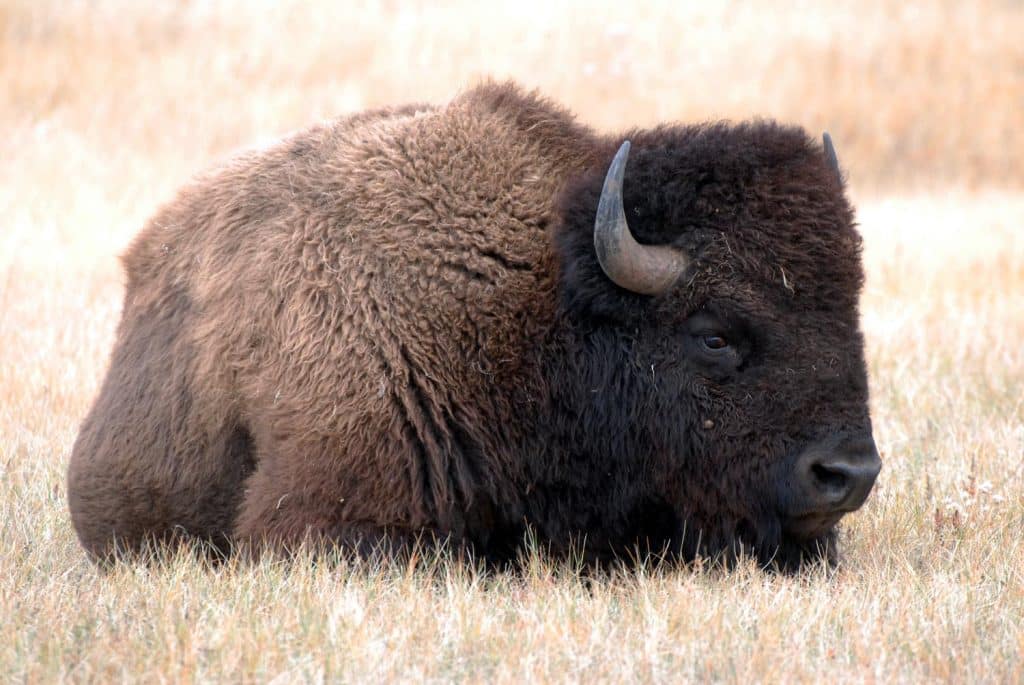
    Outside, one can envision what prairie life was like 150 years ago, with bison roaming the hills of this mixed-grass savanna and historic homesteads attempt to tame the rural landscape. Wind Cave National Park seems to encapsulate a bygone era full of natural beauty and endless vistas both above ground and below.


    Have you ever been to Wind Cave National Park?  What were your experiences there?

    Camping World's guide to RVing Wind Cave National Park


    Source link

  • Georgia’s Top 5 State Parks

    Georgia’s Top 5 State Parks


    Georgia is home to some of the most beautiful areas in the whole country. Many of the state’s best attractions and natural landscapes can be found within the state parks.

    The wild, rocky landscape of the Peach State is home to many gorgeous attractions. Some of these attractions are shrouded in mystery, like the ancient rock wall found in Fort Mountain State Park. Some state parks boast incredible canyons with powerful waterfalls, like those of Tallulah Falls or Cloudland Canyon. Another notable state park, Stone Mountain, is a veritable time capsule to the state’s complicated history, while others offer the unique feature of yurt-style glamping, a treat for campers of all ages (and levels of experience).

    If you’re looking for fun activities to do while camping in Georgia, look no further. Here’s the information you need to know about these gorgeous state parks. 

    1. Stone Mountain State Park

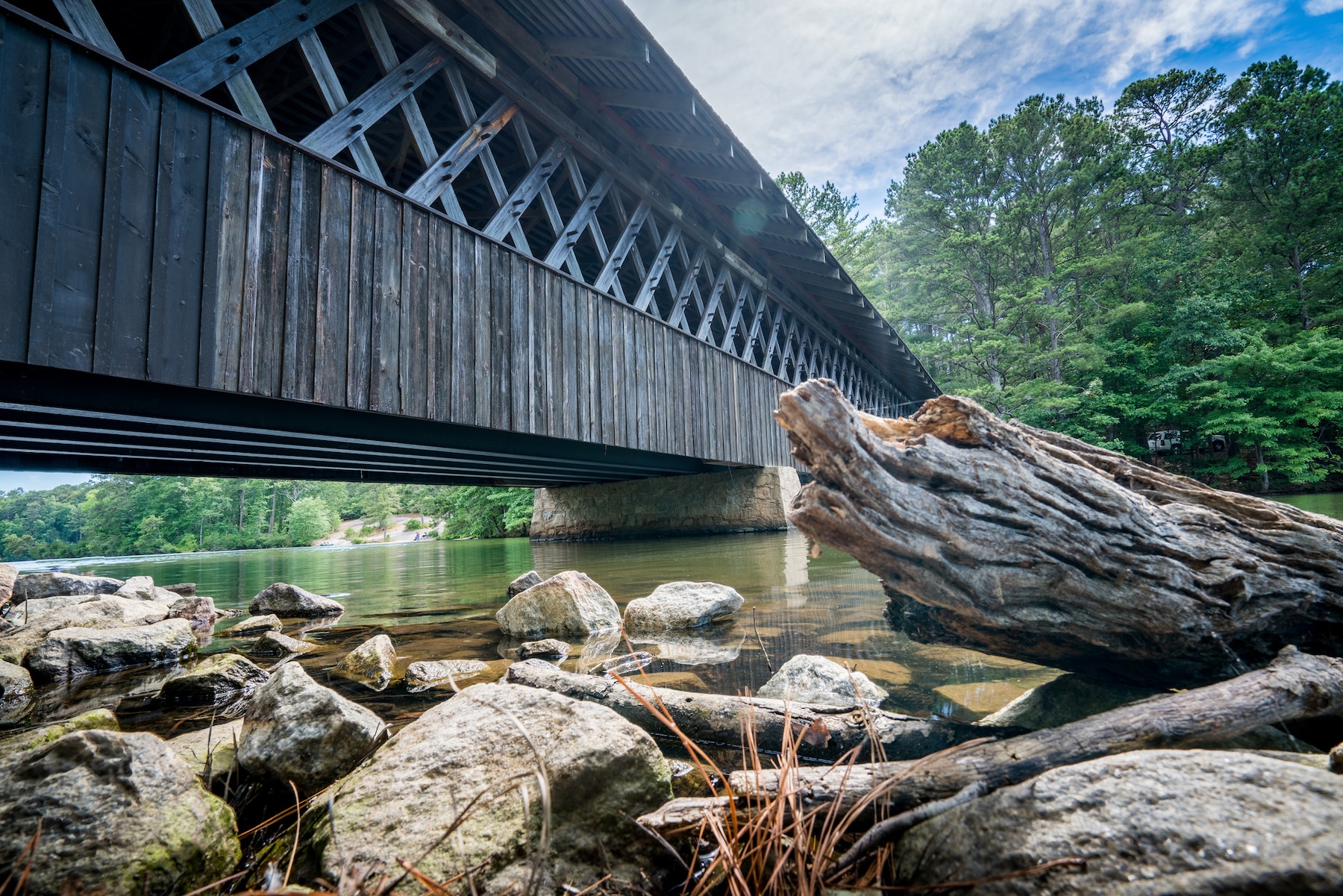
    Covered bridge, Stone Mountain Georgia
    Image by DavidTLC from Getty

    Located just 15 miles from Atlanta, Stone Mountain is the state’s most-visited attraction. The park highlights many unusual and exciting attractions, including The Lasershow Spectacular in MountainVision, an iconic show featuring lasers, choreographed drone flights, flame cannons, fireworks, lights, and music. The Summit Skyride uses a high-speed Swiss cable car to provide fantastic views of the world’s largest relief carving, the Atlanta skyline, the Appalachian Mountains, and up to 60 miles of the surrounding area!

    The Stone Mountain Museum at Memorial Hall displays artifacts and stories that span 12,000 years, from ancient civilizations that lived on the mountain, to Civil War history, to present-day events.

    Many options for camping are available at this park, including traditional RV, camper, and primitive sites. Stone Mountain is unique in offering furnished yurts, RV/campers, and safari tents for rent. WIFI is available throughout the park, which is great for downtime. Your family is sure to make tons of memories at Stone Mountain State Park.

    2. Tallulah Gorge State Park

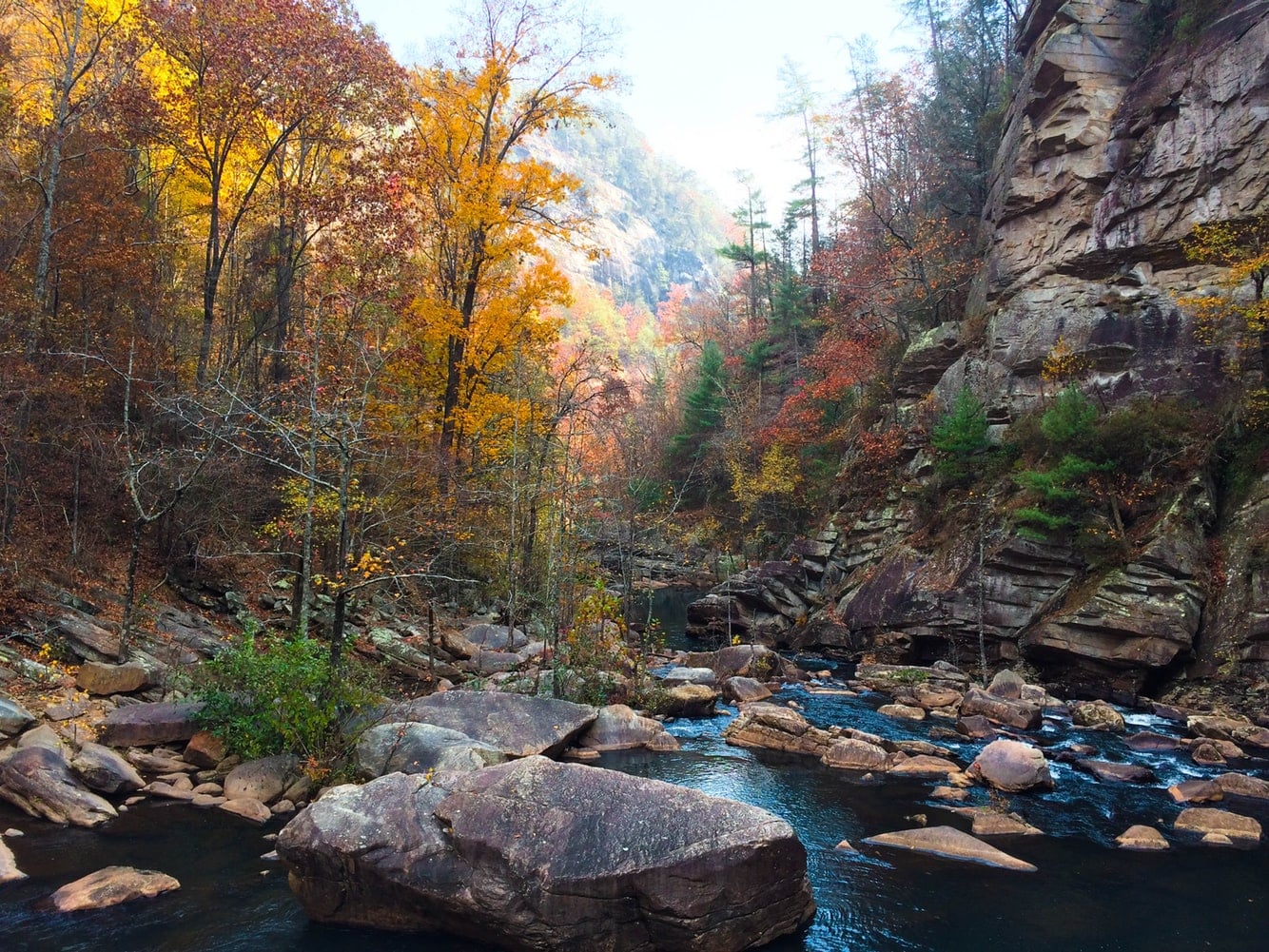
    Photo by Matt Lightfoot

    Tallulah Gorge’s key feature is a series of six waterfalls cascading down through the surprisingly-deep and treacherous rocky canyon. This is an excellent park for hiking and other outdoor athletic activities, but as camping is limited to 50 tent, RV, and trailer sites, reservations are recommended

    Breathtaking views can be found by simply walking to the edge of the 1000 foot canyon, or to the official Tallulah Point Overlook. For hikers, a reasonably-difficult (and beautiful) trek includes 750 stairs down to the 80-foot suspension bridge that spans the gorge and waterfalls and will take most about 30-45 minutes to complete. Expect to feel the burn and return feeling very-winded! Experienced hikers and athletes can complete the entire trek across the gorge and back to the park in about two hours. Experienced hikers will also enjoy exploring the gorge floor, but only 100 permits are issued each morning at the Interpretive Center, so get there early! 

    Children will enjoy the kitschy taxidermy displays in the park’s Interpretive Center, and adults will find plenty of information concerning the park’s history on the Center’s walls. A large, serene lake is located near the park and is great for picnics and swimming. Ten miles of mountain bike trails are available to the public. All in all, this is a fantastic park for families and athletes.

    3. Fort Mountain State Park

    Photo by Maxim Izbash9

    Fort Mountain State Park is a fascinating historical site, deriving its name from an ancient stone rock wall erected between 500-1500 CE. The 855-foot long wall was built near the crest of the mountain, and according to Cherokee lore, was constructed by the “Moon-eyed people,” who saw better during the night than the day. The Fort Mountain website also claims that “The wall’s purpose has also been debated by archaeologists and historians, with theories ranging from a military defense fortification to a spiritual structure. The true purpose of the Fort Mountain rock wall remains an enigma to this day.”

    Horseback riders, runners, and bikers will fall in love with the 60 miles of trails offered within the park. Fort Mountain’s Geocaching will engage the tech-savvy with nature. The restored fire tower, erected during the New Deal of the FDR era, is a testament to early conservation efforts (and incredible masonry work), and be accessed on weekends from 1-4 pm. Miniature golf is available at the park, along with great fishing on the 17-acre lake. Boat, kayak, canoe, paddleboard, aqua cycle, and pedal boat rentals are available seasonally. The Funk Heritage Center, located nearby, features art exhibits and Native American history tours.

    Fort Mountain State Park offers 70 tent, trailer, and RV campsites. Four walk-in campsites are available year-round, in addition to six platforms, three pioneers, and four backcountry campsites. 15 cottages are available for rentals year-round. Make your reservations early, as sites fill up fast!

    4. Cloudland Canyon State Park

    Cloudland CanyonA scenic view of a mountain canyon.
    Image by John_Brueske from Getty

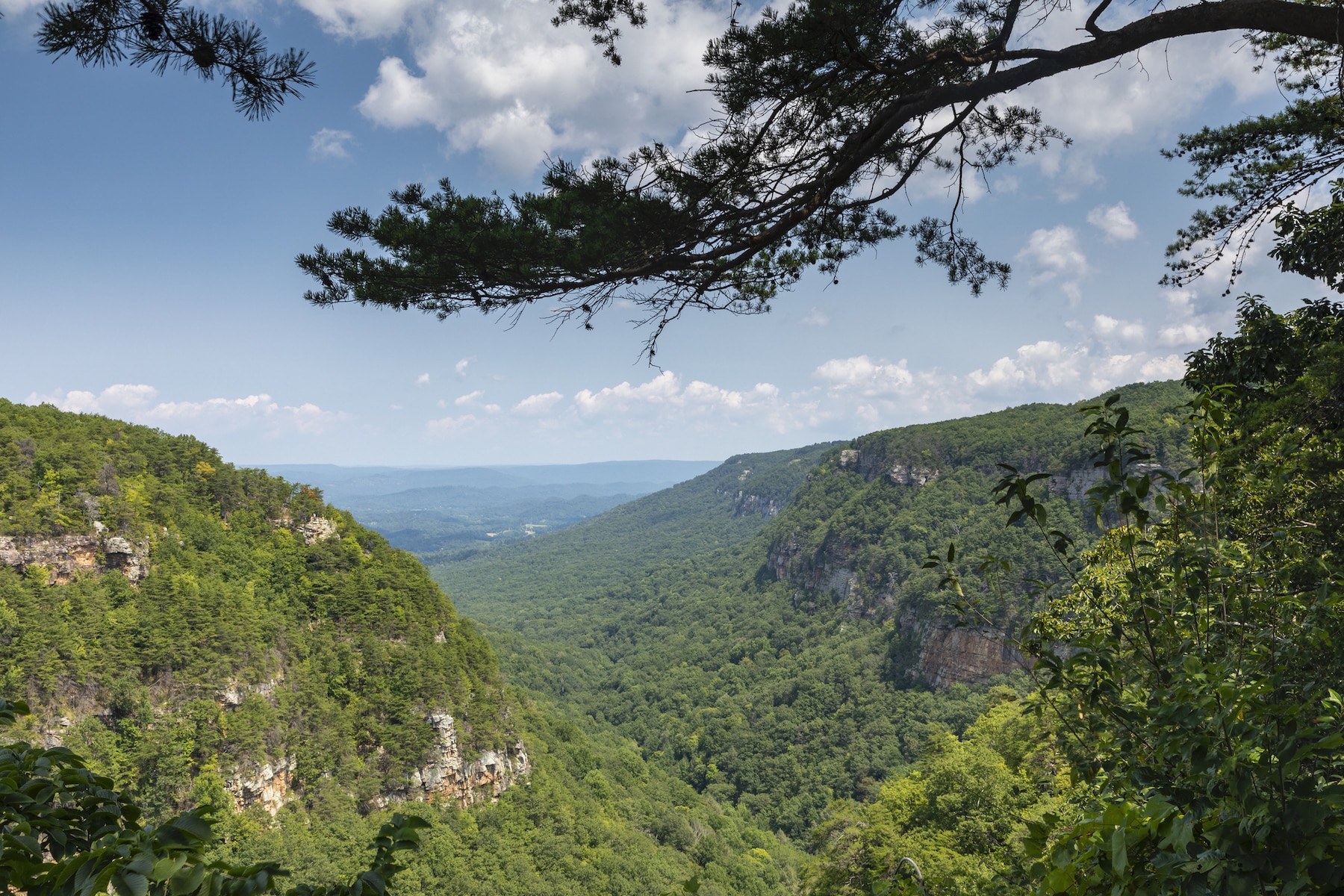
    Cloudland Canyon is a nature lover’s dream. The park’s 3,538 acres offers tons of outdoor activities, including multiple caves to be explored, alongside two gorgeous waterfalls. There are 64 miles of hiking trails, 16 miles of horseback riding trails, and 30 miles of biking trails. An 18-hole disc golf course is one of many other attractions available at this family-friendly park.

    The park’s two waterfalls are situated in the canyon and can be accessed by hiking down 600 steps and back: no small feat for little ones, but a worthwhile trek regardless. Caving is offered (with permits and reservations) for experienced spelunkers in the months of April, June-July, and September-October. Geocaching is sure to attract the attention of the tech-addicts in your family, who will enjoy the treasure hunt-style excursions connecting them to nature.

    The Canyon Climbers Club membership ($20) offers more access to trails and provides checklists and a t-shirt for its members while fundraising for Georgia’s state parks. 

    Many genres of camping and rentals are available at Cloudland! Sixteen cottages, ten yurts, one group lodge (sleeps 40), and one group shelter (sleeps 175) are offered year-round here. 30 walk-in campsites are also available, alongside 72 full-access tent, camper, and RV sites. Thirteen backcountry and four pioneer campsites are available for campers who want to rough it. However you choose to camp here, you’re going to love the sites and attractions of Cloudland. 

    5. Fort Yargo State Park

    Photo by Brad Huchteman

    Fort Yargo is an awesome lake excursion-style site. It’s 260-acre lake hosts boating, fishing, and swimming activities, and it has a nicely-maintained sand beach for picnics, sunning, and more. Adventure cabins, cottages, yurts, and over 50 full-access campsites are available for rental here. Located between Athens and Atlanta, this park could even be a fun stop between adventures or could act as a home-base while you explore the greater area.

    Twenty and a half miles of hiking and biking trails wind around Fort Yargo. Private boating is allowed here with permits, making fishing and swimming a little more exciting. If you’re into Glamping, Fort Yargo’s six yurts, thirteen adventure cabins, and three cottages are highly desired! Book in advance to ensure your glamping experience awaits. 

    Nearby attractions include the State Botanical Gardens (a must-see), the Watson Mill Bridge, Chateau Elan Winery and Resort, the Fort Yargo Historical Society, and some of the state parks included in this article. Overall, this is an excellent park for a day trip, glamping, and more lengthy explorations of the area.


    Which of these parks is your favorite, and why? Add your comments below and fill us in. We’d love to gather more firsthand accounts of your experiences within Georgia’s State Parks.


    Source link