Blog

  • Why We RV: Ben and Rebecca Pazdernik of His & Hers Vlogs

    Why We RV: Ben and Rebecca Pazdernik of His & Hers Vlogs


    Few places are as full of adventure and opportunity for life-altering experiences as Alaska. Ben and Rebecca are two people who have experienced this first hand. They came to Seward, Alaska, from California in 2008 seeking “a life less ordinary.”

    The two of them were nice enough to get on the phone with me to discuss their lifestyle and how their RV fits into it.

    The lives they built for themselves in Alaska, America’s last true frontier, were definitely less ordinary. Ben became a Fishing Guide and Rebecca worked with the native population as a Physician Assistant.

    His and Hers Vlogs

    To be fair, the couple was far from ordinary to begin with. Before their marriage, Rebecca traveled extensively abroad and Ben was busy with engine driven action sports. Their love for new, exciting experiences only further blossomed once they got married.

    The couple’s choice to move to Alaska was the beginning of a long list of adventures they would have over the next several years and continue to have today.

    Their First RV

    His and Hers Vlogs

    After being in Alaska for some time, Ben and Rebecca ended up going to Anchorage on a regular basis for business trade shows and other needs. Seward, the town they moved to, is small and secluded.

    “Our town is not city Alaska,” Ben said. “We’re 125 miles away from city Alaska up one of the most beautiful and dangerous highways in the nation.”

    During the winter months, going to Anchorage and getting a hotel wasn’t such a big issue because rooms were affordable. Once the weather warms, though, Anchorage hotel prices jump considerably. With prices being so high in the summer months, Ben and Rebecca decided to buy an RV.

    “For 12 nights in a hotel during the summertime, we could pay for an RV for the year,” Rebecca said.

    The couple bought their 1999 32-foot Tiffin Allegro RV in 2010. They named it Nellie, after Nellie Lawing (a famous Alaska frontierswoman). Not long after purchasing it, Ben and Rebecca started to use the RV for more than just Anchorage trips. They explored Alaska and focused on discovering new locations and having new experiences.

    “There’s really not a road left unturned in Alaska that we haven’t driven down,” Rebecca said.

    During all this, Ben and Rebecca were filming and posting videos to their YouTube channel His & Hers Vlogs. Their travel-focused channel is an honest look at their adventures. It covers the highs, the lows, and everything in between. Ben and Rebecca seek to give people accurate, practical advice and present everything in a genuine way. Their channel garnered them quite a following.

    Ben and Rebecca didn’t stop with Alaska. They visited the lower 48, too. In the fall of 2015, they drove all the way across the country to Maine. Then they chased the leaves all the way down the East Coast and spent Thanksgiving in Florida. They had to be in Arizona for a wedding in January, so that was their only real location commitment. The rest of the trip, they explored whatever they wanted.

    “It was more of a bucket list trip,” Ben said.

    During the trip, they visited the Rock and Roll Hall of Fame, got lobsters in Maine, went scuba diving at the Blue Hole in Santa Rosa, New Mexico, and so much more. Ben said they tried to check off as many things as they could along the way.

    Eventually, they took their rig down to Mexico after checking off many of their bucket list items in the States.

    The couple spent time in San Felipe, Mexico, and their videos inspired other RVers to visit the location. There’s now an Xscapers Convergence (run by the Escapees RV Club) to the same area. The organizers of the Xscapers Convergence know Ben and Rebecca and saw their videos of the location.

    “Our ultimate goal is to make the world a better place,” said Ben. “I think that’s an example of a time we have because we inspired people to visit a new place and experience a different culture.”

    After Mexico, the couple spent the spring going up the West Coast and back to their home base in Alaska.

    The next year, they toured the western U.S and a few other places to see friends and family. The year after that, they stayed mostly in California and made their way down to Mexico again.

    Their adventurous spirits still going strong. Ben and Rebecca decided to sell Nelly and move on to a different kind of vehicle, a Mitsubishi FUSO 4X4 Expedition Vehicle.

    Goodbye to Nellie, Upping the Ante

    His and Hers Vlogs

    The Mitsubishi FUSO is smaller than Nellie and provides an opportunity for overlanding (self-reliant adventure travel to remote destinations). Their FUSO is still a camper. It allows Ben and Rebecca to stay on the road and camp basically wherever they want.

    Their rig is equipped with a kitchen, bathroom, and a dining and sleeping area, though they obviously have far less space than they did in Nelly.

    They have taken advantage of the features of the FUSO, too. They traveled around Montana, Wyoming, and Colorado, back up through the states to Maine, and then up to the Canadian maritime for a month before heading back down the U.S. East Coast.

    Ben talked about the need for them both to keep having new experiences as they continue on.

    “It wasn’t until we got this rig that I realized there’s a distinct pattern of having to up the ante in our lives,” Ben said. “First, we moved to Alaska, then we had the desire to travel around in the RV, and then that got to be old hat. Then we spent winters touring America in the RV. Now, we have the EV so we can explore more places. Next, we’re going to up the ante and go to Europe. Then African, Asia, and Australia.”

    Ben said the FUSO allows Rebecca and he to live the lifestyle they want. Rebecca said she loves being able to take their home with them.

    “It’s a place where we know we can go and be comfortable and get solitude when we need it,” she said.

    That said, the FUSO isn’t necessarily like living in a Class A like they were before. The size alone is a big difference.

    “It’s a significant adjustment for us,” Rebecca said.

    Both Ben and Rebecca talked about how small the rig actually is and how only one of them can really move around it at any single time. That said, neither of them seemed to be unhappy with the FUSO. It works well for their needs.

    A Home Away From Home

    His and Hers Vlogs

    Ben and Rebecca said the thing that keeps them going is experiences they have traveling and the lifestyle itself. They enjoy meeting new people and making friends on the road.

    “You meet kindred spirit-type people out here,” Rebecca said. “With a lifestyle like this you don’t always fit into the normal tracks anymore, and the people you meet out on the road are amazing.”

    Ben said he doesn’t think they could ever go back to what most people would think of as a normal lifestyle.

    “I just don’t know if we could do it,” he told me.

    Just because Ben and Rebecca have the RV as their home doesn’t mean they’ll give up their place in Alaska.

    “I think it’s good to ground ourselves every once in a while,” said Ben. “You do get exhausted if you’re traveling hard enough.”

    This year, Ben and Rebecca’s focus isn’t on hitting as many spots as possible. It’s more about taking their time and enjoying the places they visit.

    They will continue on with their YouTube channel, and share more of their travels and travel tips and experiences while on the road. You can expect to see videos from a faraway country and culture soon.

    Ben and Rebecca’s lifestyle is a unique blend. One that provides the ability for full-time RVing while still allowing the couple to have a home base to go back to.

    It’s stories like theirs that remind me of the true value of RV ownership. The possibilities are endless, and you can build the life you truly want no matter what that looks like. Full-time, part-time, weekend warrior—it’s up to you.


    What do you think of Ben and Rebecca’s story? Leave a comment below. 


    Source link

  • Robert and Jessica from Exploring the Local Life // 🎧 Podcast

    Robert and Jessica from Exploring the Local Life // 🎧 Podcast


    Exploring the Local Life is a Latino RVing family of four (Robert, Jessica, Daniel, and Nadia) that learns and travels together in their 2016 Forest River Grey Wolf 26DBH Travel Trailer.

    They are balancing life, fun, and roadschooling while handling unexpected RV and truck repairs and rainy days. Keeping a positive attitude is key and they are reminded every day why they are doing things differently.

    You can follow their journey at exploringthelocallife.com.

    ** Subscribe to Stories from the Road on iTunesSpotify, or Google Play **

    Some topics we covered:

    • 1:34 – Shifting lifestyles
    • 4:24 – Exploring the Local Life’s RV
    • 6:54 – The impact of RV life
    • 9:20 – Roadschooling
    • 15:50 – Learning to RV (the ups and downs).
    • 19:15 – Going nomad
    • 25:30 – RV community experiences
    • 30:25 – What’s next for Exploring the Local Life?


    Source link

  • RV Tire Basics You Should Know

    RV Tire Basics You Should Know


    When planning an RV trip, whether you know it or not, the trip’s success depends upon your vehicle’s tires. Tires are important for safety reasons, but they can also be the difference between a stress-free trip and not making it to your destination at all.

    Some knowledge and planning can help ensure you find the right tire for your vehicle. Here’s a look at the basic RV tire information you need to know:

    Tire Types

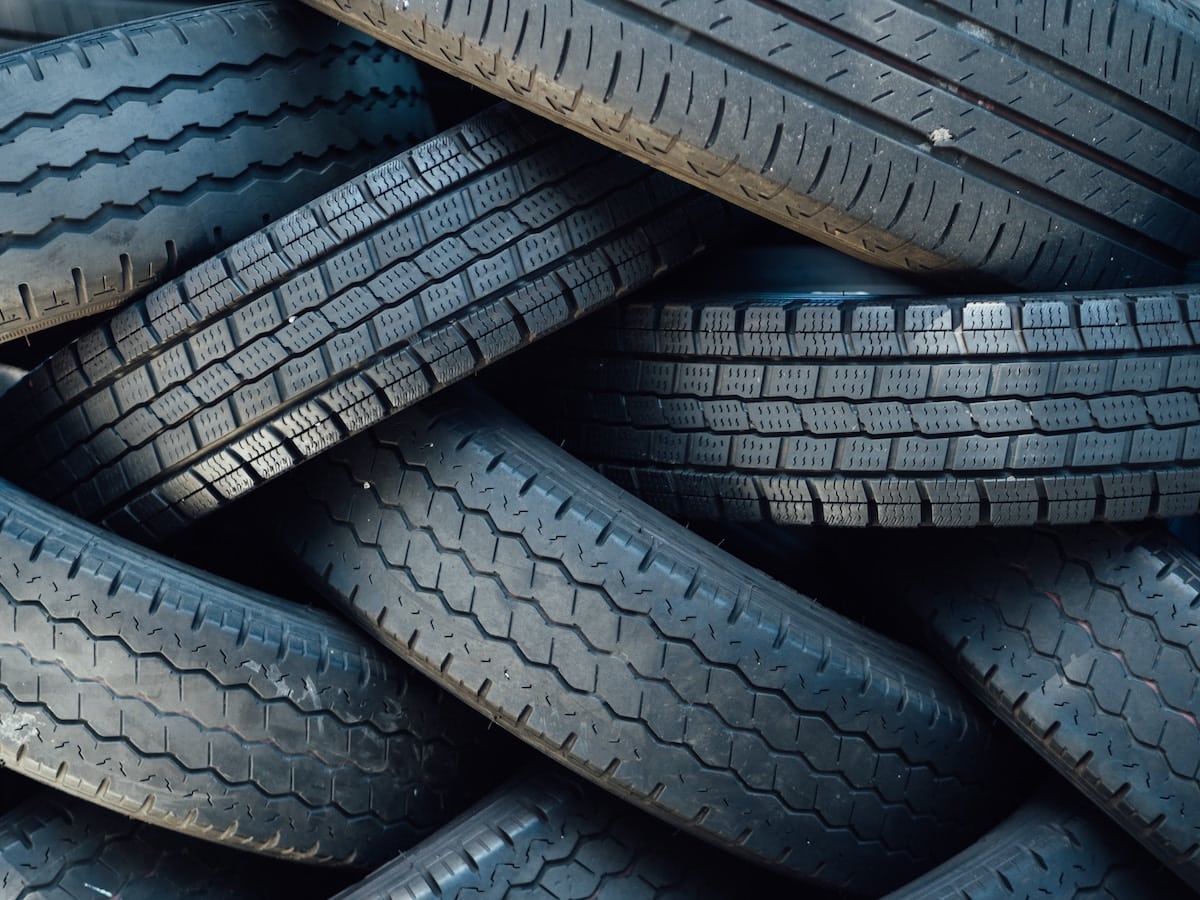
    RV tires in a pile

    You wouldn’t use the same tires from your car or SUV on a huge motorhome. Knowing that you have the proper tire for your RV is a priority. If you use the wrong tire on your rig, you’re going to be facing some serious issues, and likely before you get very far down the road.

    A blowout can ruin your trip fast, and getting the right tire can help reduce that risk. Check your owners manual for the proper tire type to use on your rig. Never make an assumption and only use what the manual recommends or a certified tire professional suggests. With that said, here are the tire types out there:

    Passenger Vehicle Tires

    These tires are designed for a comfortable ride and good grip on the road for a variety of weather conditions and road surfaces. The weight limit on these tires is considerably lower other types of tires, and generally, you should not use them on your RV. 

    Light Truck (LT) Tires

    These tires accommodate heavier loads with reinforced sidewalls. The design supports good traction on the road and the tires can handle heavy loads. This type of tire is a lot tougher than regular passenger tires, but they usually aren’t the best option for trailers.

    LT tires are suitable for a variety of RV applications, but you need to be sure that the LT tires that fit on your vehicle are rated properly when it comes to load capacity. If the tires you choose can’t handle the weight, you will have serious issues.

    Also, most LT tires are rated for a maximum speed of 75 mph. If the tire can handle speeds higher than that, it will be expressed. 

    Special Trailer (ST) Tires

    The characteristics for these tires differentiate them from other tire types as they are designed to offer a durability level that accommodates seriously heavy loads and the rigors of tires attached to a trailer axle. They’re designed specifically for trailers and should only be used that way.

    Also, most ST tires are only rated for 65 mph top speed. Some are rated for higher speeds, but that rating will be expressed. If there’s no speed rating listed, assume 65 mph is the fastest you should go. If you do exceed the recommended speed, you will hurt the longevity of the tire and could experience a blowout. 

    Load Capacity

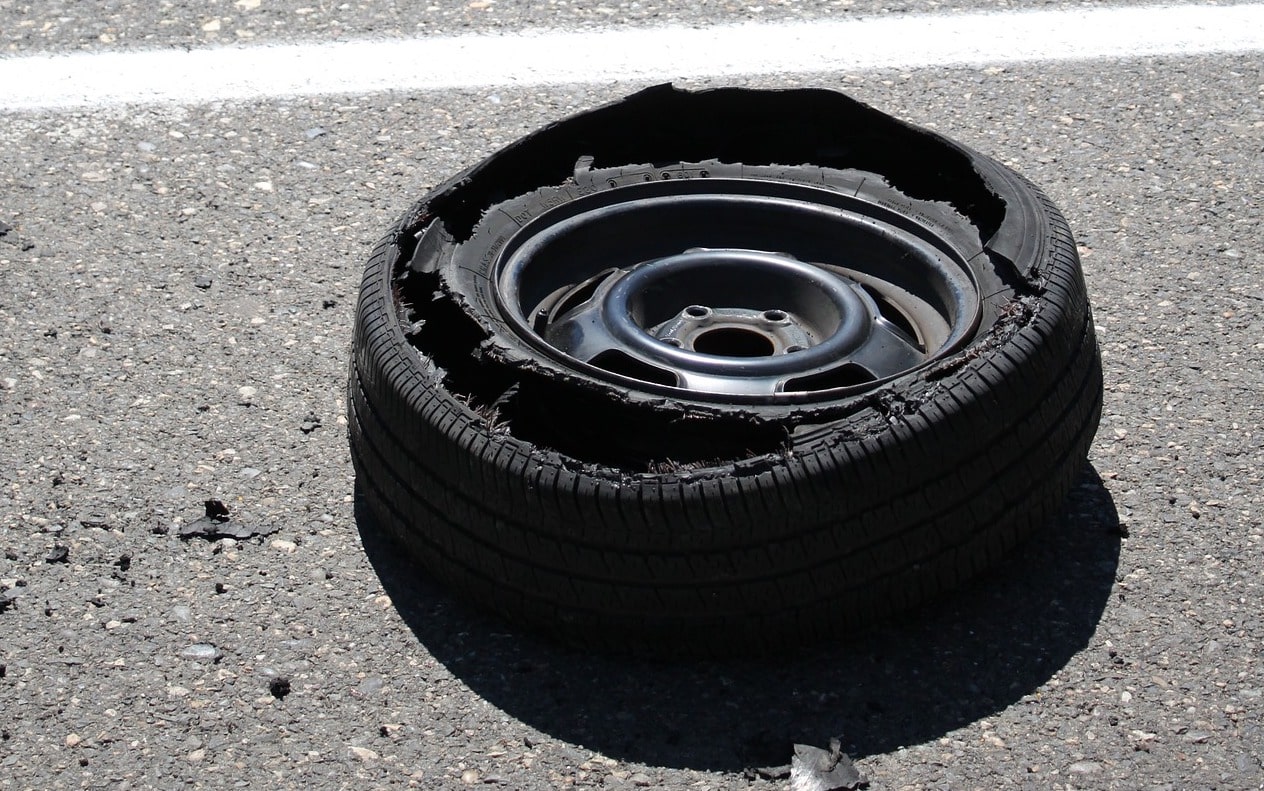
    tire blowout on the side of the road

    On every tire, you will see a numeric code that reflects the maximum load capacity recommended for the tire. Always know what tire load capacity is recommended for your RV and do not exceed it. If you do exceed that capacity, you could experience a blowout. Where’s the best place to find the rating suitable for your RV? Your owner’s manual. 

    Your RV’s owner’s manual should have the proper load capacity per tire listed. This makes it easy when shopping for new tires. You either meet or exceed the load capacity listed in the manual.

    It’s important to note that this number should be related to your Gross Vehicle Weight Rating (GVWR). The GVWR is the most weight the RV can carry at any time. This includes the water in your tanks and all the clothing and gear you bring with you.

    If, for example, your owner’s manual lists a 3,500-pound GVWR, then your tires need to be able to meet or exceed that weight (you should try to exceed that weight to be on the safe side).

    If you have a travel trailer with a single axle and a single tire on either side of that axle and it has the 3,500-pound figure used above, you should buy a tire that has a load capacity of at least 1,800 pounds. That’s 1,800 pounds per tire. That means, combined the two tires could support up to 3,600 pounds. (Just to be clear, these numbers are based on nothing real and are only for the sake of simple math.)

    Tire Sizes

    The tire size is also something you need to pay attention to. Proper RV tire sizes will be printed in your owner’s manual and will also be included on the side of your current tires. The proper size is listed as something like ST225/75D16.

    In this example, the ST is the tire type and stands for Special Trailer. The 225/75 means the tire is 225 millimeters wide and has a height ratio of 75 percent. The D means it has a bias ply construction, and the 16 is the interior diameter (the part of the tire that the wheel fits into).

    Your owners manual may have a couple different acceptable sizes listed. Any size listed in the manual should work fine. However, just because a tire fits on your rig, doesn’t mean it’s properly rated for the weight of your RV. Double check that a tire you’re considering has the proper size and proper load capacity before trying to use it on your RV.

    Tire Inflation

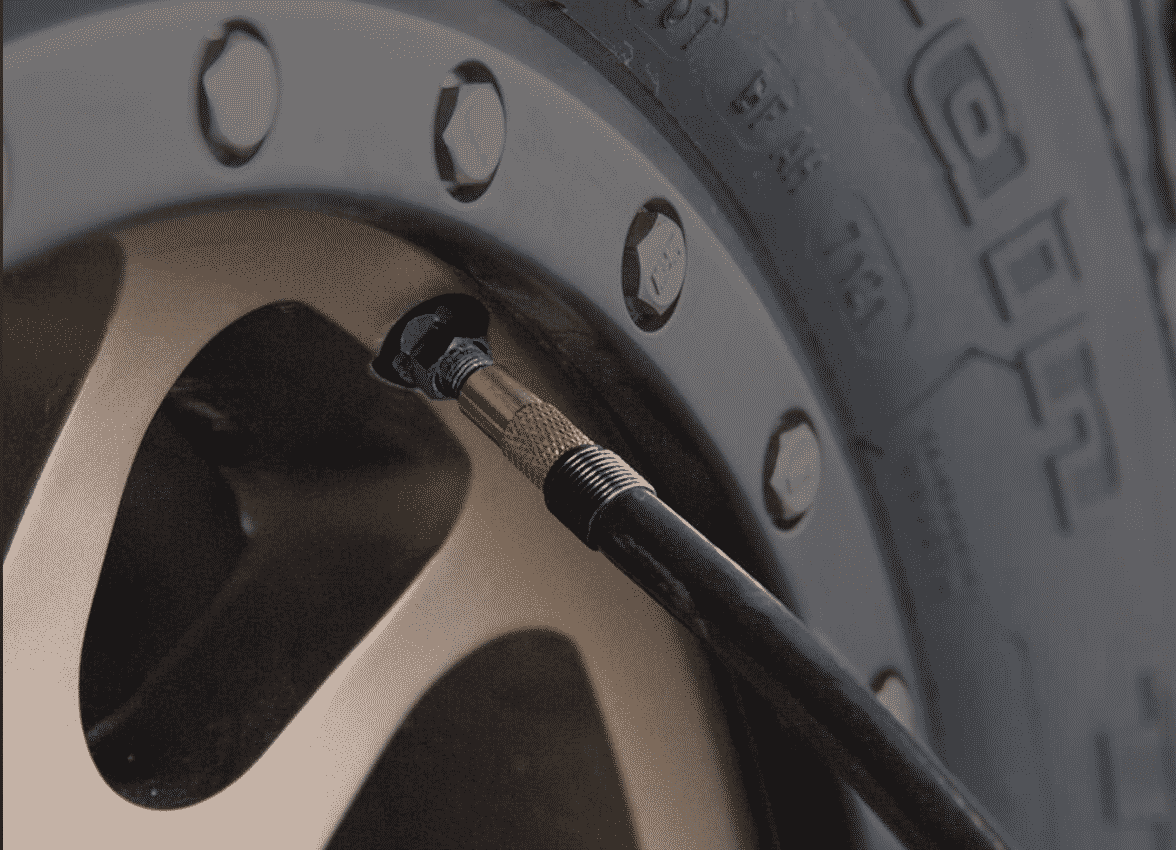
    Adding air to a tire

    Proper inflation is key to getting the most out of your tires. An improperly inflated tire can’t carry its maximum load capacity, could hurt your rig’s efficiency going down the road, or even cause a blowout. Overinflating or underinflating your tire is never a good idea, and either condition could spell disaster for your rig.

    Check your tire pressure before every trip and keep in mind that temperature changes and changes in elevation can impact your tire pressure. A good rule of thumb is to add a tire pressure check to the pre-drive checklist that you go over before you leave on a trip and before you depart from a campsite.

    Go to a Professional

    With the wide variety of tires out there and the weight and size concerns, we highly recommend going to a professional tire expert for your RV tire needs. They will be able to ensure you receive good service and get you the tires you need.

    You should also make sure you know some of the basic specifications recommended in your owner’s manual. That way if the tire specialist suggests a different tire, you can ask why. Understanding the reasons behind certain tire choices can help you better understand your rig and how it operates.

    Camping World’s service department is happy to provide you with the help you need when it comes to your RV and its tires. Stop in and let one of our service technicians help you.


    What tires do you use on your RV? How did you come to use them? Leave a comment below.


    Source link

  • Life on the Road // Crazy Family Adventure Episode 7

    Life on the Road // Crazy Family Adventure Episode 7


    In this episode of Life on the Road, Crazy Family Adventure checks out Lake Tahoe, Russian River, and Fort Bragg. The family takes advantage of all the cool trails, adventure activities and watersports opportunities to be had while visiting these beautiful locations.

    You can watch the rest of Crazy Family Adventure’s Life on the Road series by clicking here.


    Source link

  • Exploring Alaska in an RV – Denali National Park

    Exploring Alaska in an RV – Denali National Park


    Many RVers dream of traveling to Alaska, considering it the ultimate destination on their bucket lists. So we’ve created a series of articles to help you navigate the Last Frontier in a motorhome or travel trailer, in hopes that you can enjoy exploring the 49th state, as well!

    Photo Tripping America - Camping World

    Denali National Park

    The tallest mountain in North America is the flagship of Denali National Park. At 20,310 feet, Denali (“the high one” in Athabaskan) dominates the landscape, as surrounding mountains are no taller than 11,000 to 14,000 feet. The 6 million acres surrounding the peak was designated a national park in 1917 to protect the area from the reckless abandon of gold rush miners and big game hunters in the early 1900s.

    Photo Tripping America - Denali - Camping World

    Getting There

    Getting to this most unique park is easy. You can actually see the peak from Anchorage, but take the Glenn Highway (Alaska #1) north and east from the city 30 miles to the Parks Highway (Alaska #3). Then follow it about 200 miles north to the park entrance. Or, if you’d like to enjoy all of the scenery along the way, take a trip on the Alaska Railroad from Anchorage. The video below will give you a good idea of what you can see from the rail car.

    Today the national park has one road venturing 90 miles into the wilderness, which is closed to private vehicles at mile marker 15. So you can park your RV and let someone else do the driving!  Visitors ride park shuttles to experience the prolific wildlife and spectacular beauty of the region. There are 37 species of mammals in the park, but most visitors are anxious to see the five big ones: grizzly bears, Dall sheep, moose, caribou, and wolves (they call this the “Denali Slam”).

    Photo Tripping America - Denali - Camping World

    Outdoor Activities Abound

    As with most destinations in Alaska, there are any number of outdoor activities within the park. Bus tours (both transit and narrated) are a great way to see the park and its ‘residents.’ Many visitors opt for an overview of the area as flightseers. A large number of commercial flight operators abound around Denali and in the small town of Talkeetna, so you should have no problems booking a reservation to see the park from the air.

    Camping

    Backcountry camping permits are free and required for backpacking. There are six campgrounds in the park, but only two are available to RVs. If those fill up remember that Alaska is full of national forest land, where dispersed camping is allowed.

    In summer many park visitors enjoy whitewater rafting on the Denali River to Healy. Fishing is practically an Olympic sport in this state, with salmon, halibut and trout as the main draws. Obviously, if you are an experienced mountain climber, Denali will offer a robust challenge!

    Photo Tripping America - Denali - Camping World

    But for those of us who are a little less driven, the months of June, July and August also provide the perfect weather for day hiking in this immense wilderness, and Autumn is not to be missed, as the golden hues of quaking aspen sparkle on the backdrop of spruce and pine trees.

    Winter Fun

    Denali National Park and Preserve is open year round, and those who partake of its pleasures in winter find the perfect setting for dog sledding, cross-country skiing and snowshoeing. In fact, the winter visitors center offers free snowshoe rentals for those wanting to get into the backcountry. Winter biking has also become a popular pastime, and even though most of the park is closed to snow machines, there are some exceptions for their use when snow cover is good.

    Photo Tripping America - Denali - Camping World

    Night Lights

    One of the most amazing benefits of visiting during fall or winter is the opportunity to see the Aurora Borealis while in the park. Because full darkness doesn’t return to this part of the world until September, this phenomenon isn’t easy to see at night during the summer tourist season. If you can possibly schedule a fall or winter trip to Denali, you might be overwhelmed with a visit from the Northern Lights while there!  For me, that was the icing on my “Visit Alaska” cake!

    Photo Tripping America - Denali - Camping World

    It is easy in either season to spend several days in this remote wilderness, exploring the varying landscapes and watching such an amazing array of wildlife at your doorstep. At some point, you may feel as if you are the animal on display in a zoo, with grizzlies, moose, and caribou ogling your every move. You definitely won’t find an experience of this magnitude in the lower 48.

    Photo Tripping America - Denali - Camping World

    With any visit to Denali, we must remember the star of the show. Many times the biggest hurdle in actually viewing the mountain is the weather. The peak is so large that it creates its own weather system. So plan to stick around for several days, just in case the clouds envelope this stunning mountaintop for part of your visit. Like any great stage performer, Denali sometimes enjoys making a dramatic appearance!

    Photo Tripping America - Denali - Camping World

    Visiting Denali National Park is like adding a crown jewel to your itinerary. Be sure to pencil it in on your trip list, then check out several other destinations to the Last Frontier as we post them here on the Camping World blog in the coming weeks!

    Author’s Note: If you will be driving through Alaska and/or Canada please consider purchasing a current copy of “The Milepost.” It is a travel guide that will list necessities (like gas stations) and amenities (like lodging) throughout Alaska and the western Canadian provinces by milepost marker. This is a prerequisite for traveling in the area, as distances between service stations and grocery stores can be hundreds of miles in many cases. Another piece of knowledge gleaned from “The Milepost” are the hours (and seasons) of operation of businesses along the route, as many close down during fall and winter.


    What are your thoughts of Denali National Park? Have you ever been? Leave a comment below!


    Source link

  • Buying a Pre-Owned RV

    Buying a Pre-Owned RV


    Walking into an RV dealership can be intimidating. There are literally hundreds of makes and models. Every detail seems to matter: kitchen layout, bathroom details, front living vs. rear living, and then there’s the age-old debate of new vs. used.

    If you’re leaning towards buying a pre-owned RV, you’re in good company. So did I. Here are some major reasons my family decided to buy a pre-owned RV.  And some tips on how to get the most bang for your buck.

    You Can Save a Significant Amount of Money

    piggy bank

    This is the most obvious reason to buy used.

    A lot of people save up the money to buy a used RV outright and never have a payment. Others just don’t like the idea of financing such a large amount of money and opt for something slightly older to make their payment low. I fall into the latter category.

    With my family’s first RV purchase, we were completely new to RVing. We didn’t want to spend a lot of money only to find out we didn’t like it. We decided to buy used because if we changed our mind about the rig, we would not be in a large amount of debt.

    We also decided to buy something with a price tag so low we could pay the RV off within a few years on a mildly-aggressive plan. The idea of paying the debt off quickly was appealing to us.

    Of course, there are other things to consider when thinking about an RV purchase and saving money.

    RVs depreciate. Just like cars, it’s an unavoidable fact. Buying a used RV helps combat this issue. Our first RV was 10 years old and we got it for $15,000. When we sold it the next year, it was worth the exact same amount and we were able to trade it in for more than we owed. 

    You Can Renovate, Restore, and Rebuild to Your Liking

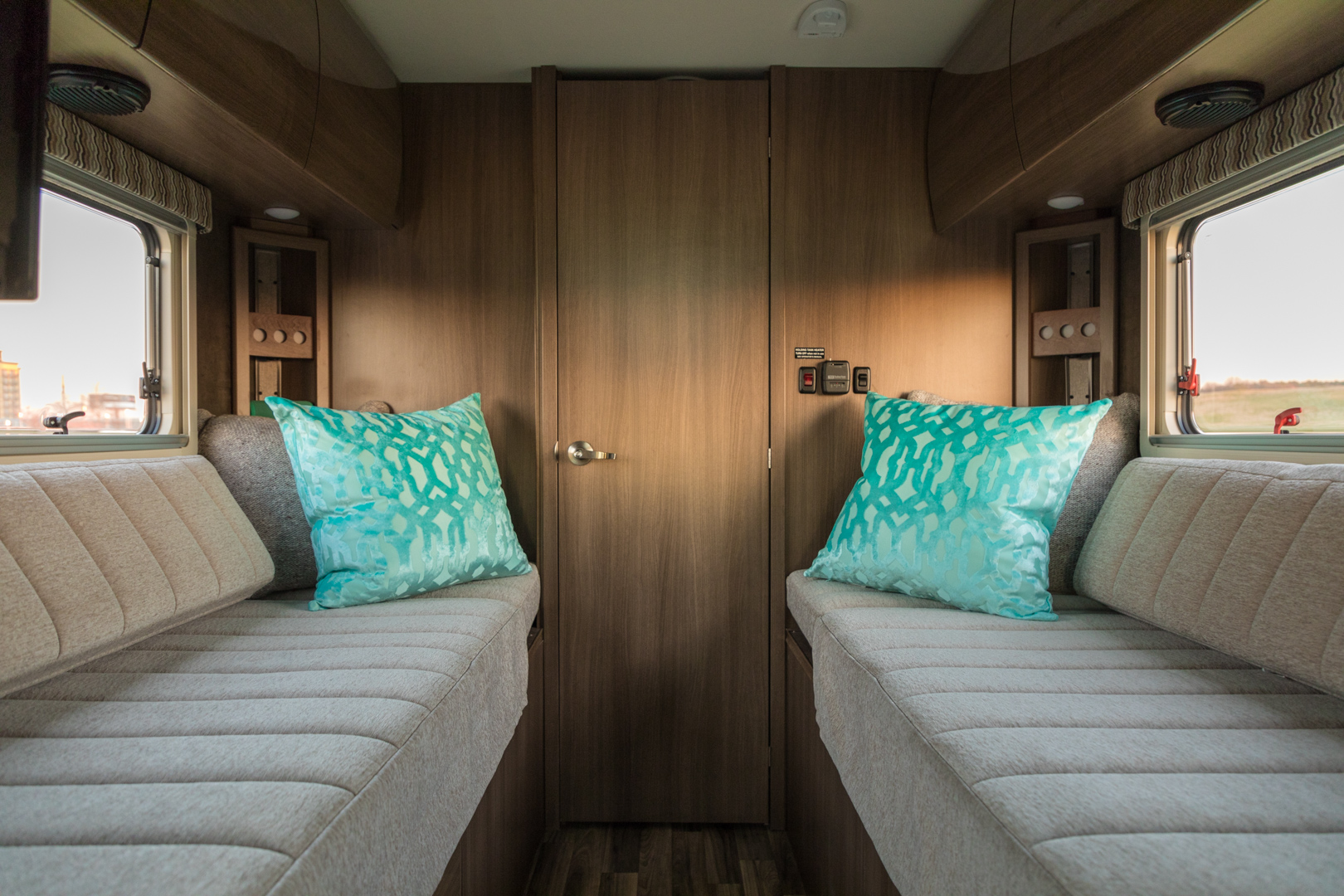
    Trend interior twin beds

    If you’ve spent any time on Instagram looking at other people’s RV adventures, you know that renovating campers is a very popular and fun activity among the RVing community.

    While a used rig may not initially look attractive, there are lots of ways to transform the space into a true “home away from home.”

    Here are some reasons for transforming your camper is a great advantage to buying used:

    It’s a Family Friendly Activity

    The kids will love to help pick out paint colors, put together the new floor, and transform the closet into a bunkhouse.

    Imagine how much more fun you’ll have at the campground with your spouse, partner, or family knowing you worked on your RV together.

    You Make It How You Want It

    No camper is ever perfect. There’s always one little thing you’d tweak, one color you’d switch out. This is a process that usually happens over time, and it’s one of the best things about owning a used RV, because you don’t have to worry too much about how making changes will impact the price. If you choose to buy used and renovate, you can build it exactly how you want.

    You can completely gut it and make a new floor plan like my friend did with her Airstream Arogsy. You can also take a simpler approach by just adding some color with pillows, a rug, and new curtains. It’s all up to you.

    When we bought our 5th wheel, we changed up the entire galley. We replaced the carpet with a dark brown laminate, painted the walls and cabinets, and even built a loft for our daughter. We loved our little space.

    Your Camper will be Truly Unique

    It’s not a secret that RVs are mass produced. If you want something that is “just you,” buying pre-owned and renovating is definitely the way to go.

    When you renovate, you’re making something truly unique to your personality or family’s style. And it’s always fun to show off your hard work at the campground and online.

    If you’re interested in learning more about how to renovate your used RV, get my free book 101 RV Renovation Ideas to Go From Camper to Glamper.

    Insurance is Cheaper

    If you’re considering buying a pre-owned RV, chances are keeping costs low is a priority. Lucky for you, getting insurance on an older RV can be a significant way to save on your monthly RV costs.

    Typically, a Class A motorhome is the most expensive RV to insure. Afterall, it’s usually rather large and has a powerful engine in it. You can expect to pay around $1000-1500/year depending on the year and features. Travel trailers and 5th wheel incur the lowest RV insurance costs, which can go as low as only $500/year.

    Personally, we have a full-timers package for our 2007 Class C. This is a very comprehensive plan that covers the RV and the tow vehicle (when towed) 365 days a year. We pay only $800/year.

    You Can Get Quality and a Good Price

    airstream

    The truth is the best RVs are the most expensive, but that doesn’t mean you should go in search of the highest price tag. There is a way to get quality and a deal when you buy an RV. 

    I honestly believe buying an older luxury RV is the best deal you could ever get. 

    I know a lot of RVers that have bought a 10 to 20-year-old very high-end RV and could not be happier. The rig is still in great shape as well as their bank balance. These older luxury models are often roomy, too. This means you aren’t sacrificing space to save a few bucks either.

    Some examples of luxury manufacturers that are built to last

    • Prevost
    • Tiffin
    • Wanderlodge
    • Newmar
    • Foretravel

    If you’re thinking of buying a used RV, I hope this article helped you in your decision. See you on the road.


    What kind of used RV are you thinking of buying? Leave a comment below. 


    Source link