Blog

  • 5 Ways to Make an Old RV Feel Like New

    5 Ways to Make an Old RV Feel Like New


    RV interior design and technology have made plenty of advances over the years, but just because you have an aging RV doesn’t necessarily mean you need to trade it in for a new model. There’s plenty of steps you can take to modernize your rig and make it feel like new.

    Here are five ways you can spruce up your current RV and make it look and feel showroom-ready.

    Get New Furniture
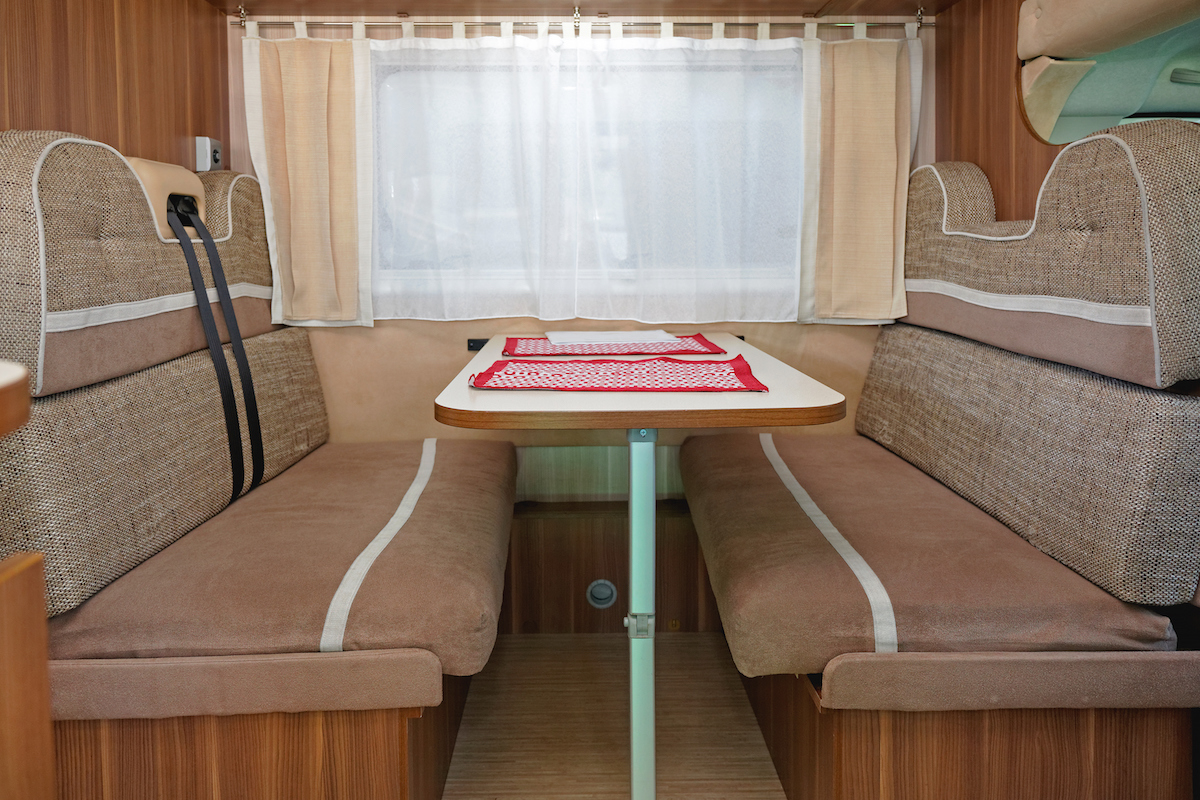
    Dining Room Camper

    Furniture is one of the key items that you should look at when thinking of updating your rig’s interior. If it looks something like the picture above, you should be able to do some updating or altering to give your RV a more modern, brightly colored, and homier feel.

    The couch, chairs, and table are the first things you may want to turn to. Adding in more modern furniture is a surefire way to change the way you feel about your old rig.

    Even if your RV isn’t too old, changing up the furniture to better fit your needs can make the whole space feel new. If you have a single large couch, consider replacing it with a couple of comfy recliners. Try updating the seating around the kitchen table or even replacing the table with something more functional or better looking.

    You don’t have to replace every piece of furniture either. Try going one piece at a time. That way you can build the modern-feeling living space you want.

    Replace the Flooring

    The floor of your RV takes a true beating. It’s designed to, but eventually, you’ll need to replace it. A new carpet in your living area or some more modern tile or vinyl flooring in the bathroom and kitchen can completely transform the look and feel of your RV.

    Take a critical look at your floor. Is the carpet showing signs of wear beyond just dirt and grime you and your visitors track in? If so, it’s probably time to remove it and replace it.

    With your RV being such a small space when compared to a typical home, the cost to replace the flooring is often pretty reasonable. If you’re handy, you can even do the install yourself.

    Redecorate and Update
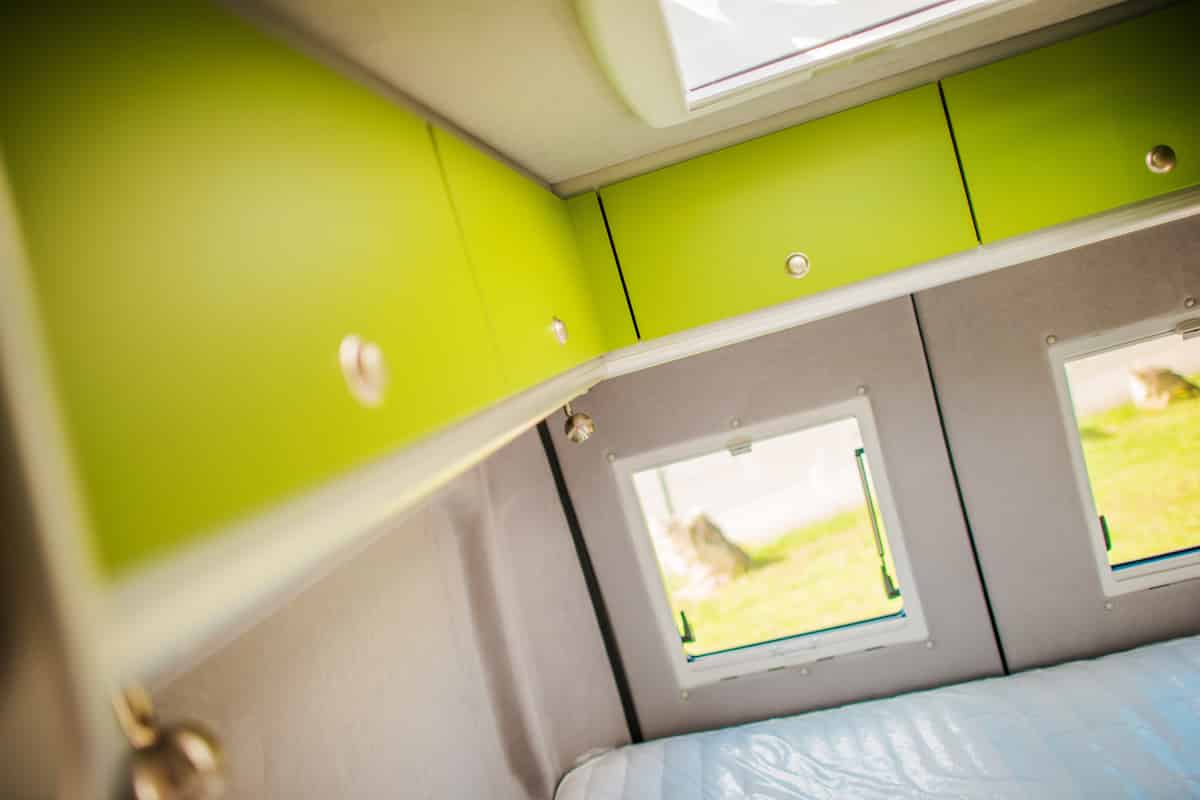
    RV Storage Compartments. Modern Camper Van Cabinets.

    It can be easy to set your decorations and forget about them, but everything ages. That trendy wall art you put up five years ago might not look so cool now. It’s easy to gloss over these items, but redecorating your RV’s interior can completely change the look and feel of the space.

    Don’t just stop with wall art. Think about all-new décor. You can replace curtains with something new, consider reupholstering couches and chairs if you don’t want to replace them, and even paint walls or cabinets if needed.

    If you don’t want to do anything that extensive, just go with small things. Try some flameless candles, new throw pillows or a small accent rug. It’s amazing how small changes can make a big difference.

    Update the Tech

    It’s not 1985, and your RV should reflect that. Unless you want to live in a time capsule, you should update the multimedia system or add one if your RV is without one. Add in all the necessary connections for a modern TV and gaming console if you’re into that sort of thing.

    Even if you don’t want to update your RV’s entertainment features, you can always update other aspects. Consider adding in a smart thermostat, new lighting, or switching your old manual awning to a powered one. Taking steps to modernize the electronics in your RV can do wonders to make it feel newer.

    Get New Appliances
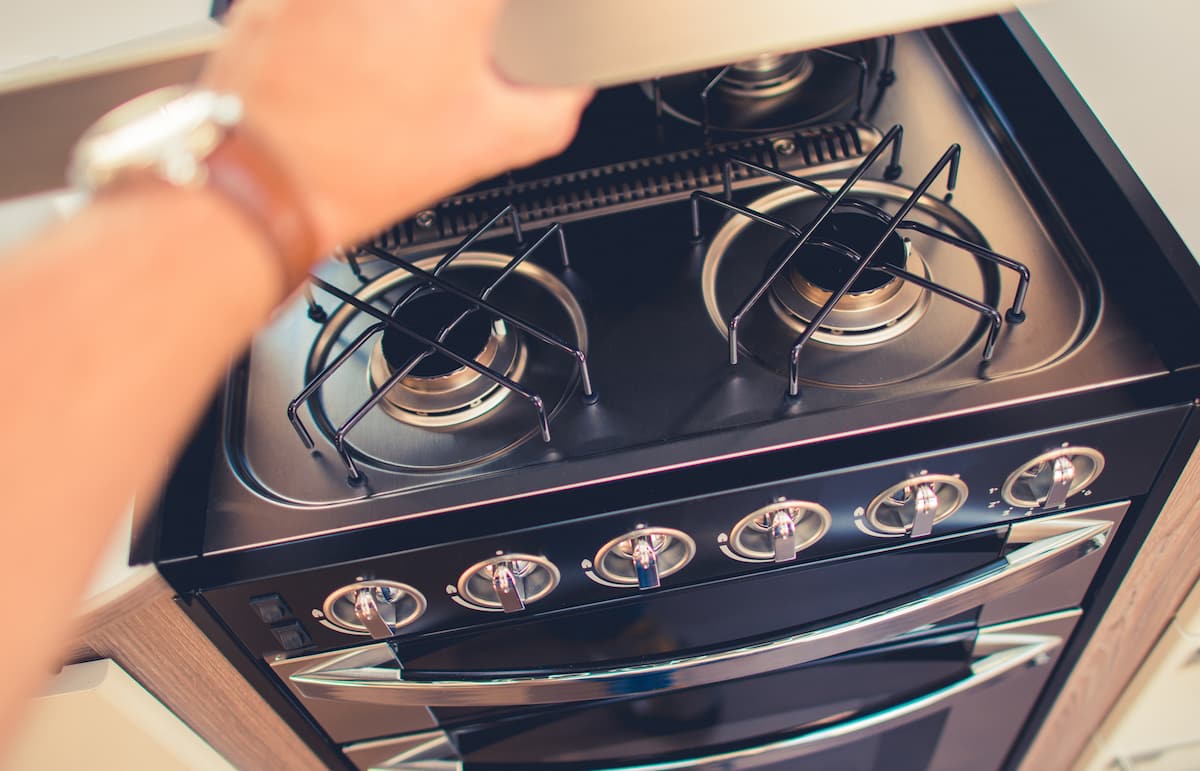
    Checking on Camper RV Propane Stove. Cooking While Travel Theme.

    How old is your stove, HVAC system, or refrigerator? Do any of your appliances look like they belong in a museum? If so, it’s probably time to get something new.

    Even if your old appliances work well, age can take its toll on how efficiently they run. Upgrading could reduce your energy consumption, save you money in the long run, and let you stay out at certain faraway locations longer.

    Also, new appliances can go a long way to modernize and improve the look of your RV’s interior. Many older RVs have off-white appliances that don’t age well. A newer appliance with a stainless steel or black exterior can do wonders to spruce up your RV’s galley and add some much-needed visual style to the interior overall.


    How do you keep your RV looking great? Leave a comment below.


    Source link

  • Life on the Road // Crazy Family Adventure Episode 2

    Life on the Road // Crazy Family Adventure Episode 2


    On the first leg of the trip, Crazy Family Adventure stops in Disneyland, Los Angeles, and Morro Bay, making memories while hitting some of the most iconic spots in California’s Southern and Central Coast regions. Watch as they discover these fantastic locations.

    You can learn more about the whole family on their blog.


    Source link

  • 3 Types of Boondocking Every RVer Should Know About

    3 Types of Boondocking Every RVer Should Know About


    Boondocking, free camping, wild camping. No matter what you call it, boondocking is a fact of RV travel. Many people associate boondocking with camping out in the wild on Bureau of Land Management (BLM) land. Some might even think of it as more of a vanlifer thing to do.

    Actually, there are different types of boondocking. If you plan on buying an RV or traveling by RV, you’ll most certainly find yourself boondocking at some point.

    What is Boondocking?

    Boondocking means RVing without water, electric, or sewer hook-ups.

    Before we jump into the types of boondocking, let’s take one step back and take a look at what boondocking is.

    Boondocking is a term used by RVers to describe RVing without being connected to water, electric, or sewer. Because you’re not connected to any services it’s also called dry camping. Other terms you might see that all refer to boondocking are free camping and wild camping.

    One thing that doesn’t form any part of the definition of boondocking is the location of your RV. This is where we get the different types of boondocking.

    Boondocking Type 1: The Overnight Stay

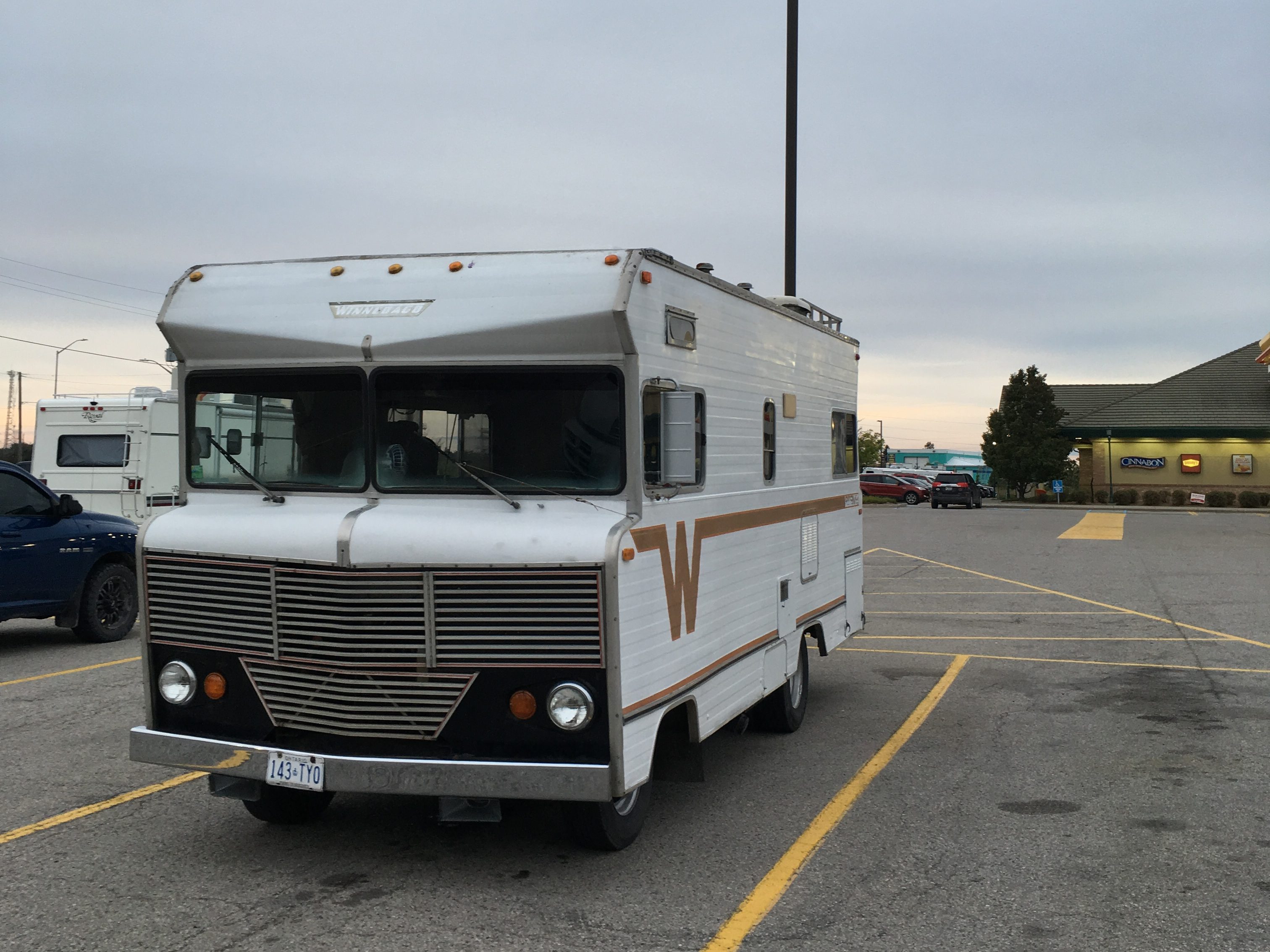
    An overnight stay at Walmart isn't a very glamorous type of boondocking stay, but it's still boondocking.

    This type of boondocking is boondocking at it’s simplest. Some people dislike the idea of camping at RV parks and swear by boondocking somewhere off the beaten path. Some people much rather camp at RV parks with the convenience of water, electric and sewer hookups.

    Whether you fall into either category or somewhere in between, you’ll likely run into an instance where you’ll boondock at least for one night.

    Wallydocking

    One of the most common examples of the overnight boondock stay is a night spent at a Walmart parking lot while on your way to your campsite. It’s important to know how to boondock because there will almost certainly come a time, as an RVer, when you’ll stay at a Walmart.

    Some RVers plan overnight Walmart stays along a route, but even those that don’t may find themselves needing to stay at a Walmart at some point. It’s best to be comfortable boondocking even if it’s not you’re RV travel preference. Wallydocking, as many avid RVers call boondocking at Walmart, can become necessary due to unforeseen circumstances.

    The most common of these is the weather. Windy, stormy, or snowy conditions can all wreak havoc on even the best-laid RV plans. You may need to stop and wait out bad weather at a Walmart, even if you have campground reservations waiting for you at your destination.

    Moochdocking

    Another common example of the overnight boondock stay is a quick visit to a friend or relative along your travel route. You meet up, spend the day reminiscing, and before you know it, it’s gotten pretty late.

    At that point, it’s not uncommon to spend the night in your RV in your friend’s driveway. As an RVer, you might hear this referred to as moochdocking.

    Boondocking Type 2: Developed Campground, No Hook-Ups

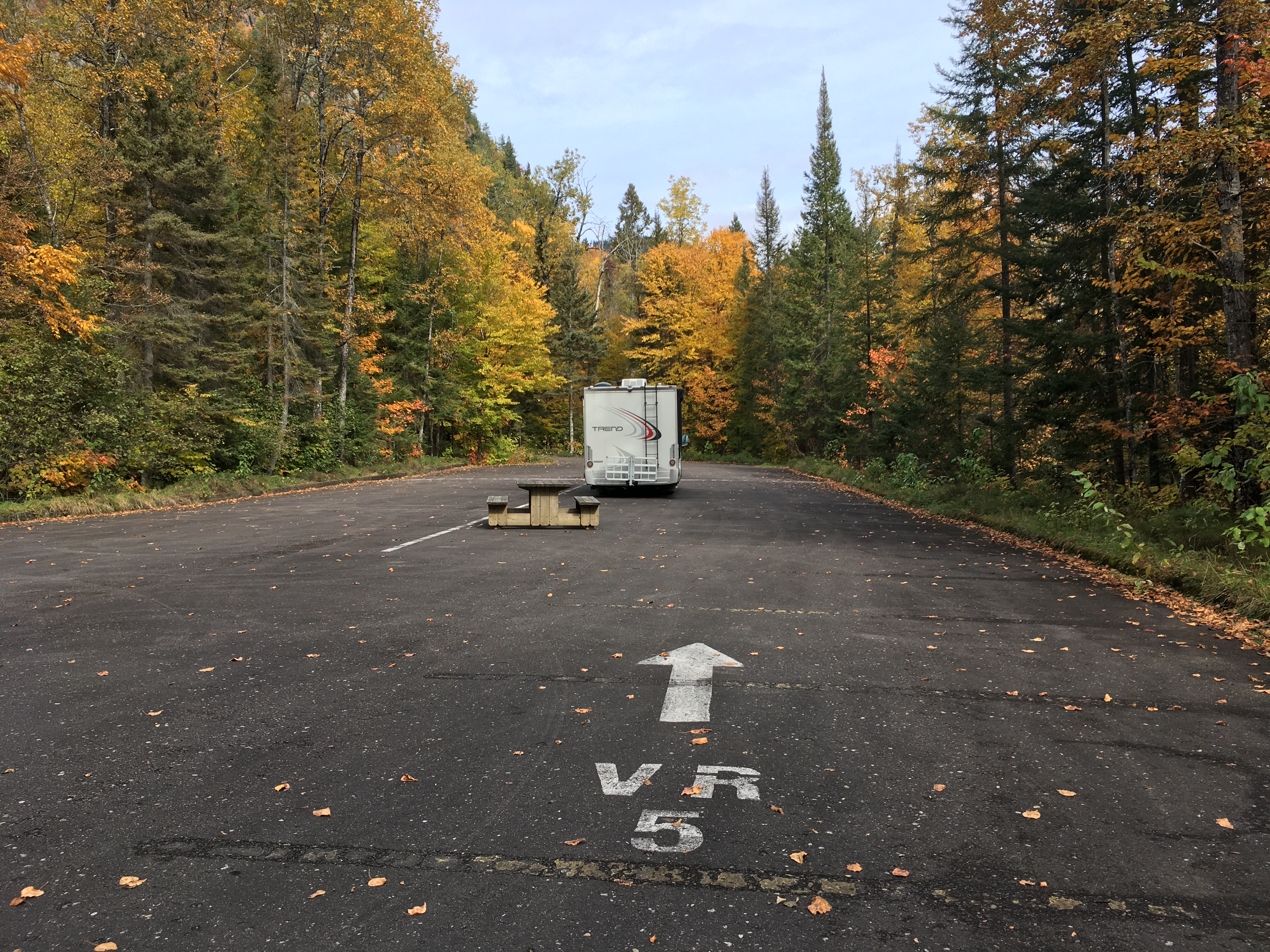
    This campsite in one of Quebec's national parks is in a developed campground, but has no hook-ups, so you're boondocking.

    It’s actually possible to be boondocking with reservations and while paying a fee for your stay. Not all boondocking is free of charge.

    RVing at developed campgrounds can still be boondocking. It’s not uncommon to find campgrounds, even private campgrounds, offering RV campsites without any hook-ups.

    You can usually reserve these for a reduced nightly fee, but you’re just paying for the spot (and use of any amenities the campground may have, like a pool) because you won’t have electric, water, or sewer hook-ups.

    Since you’ll likely stay longer than just overnight at a developed campground, you’ll need to plan ahead a little more than for an overnight stay. Make sure your house batteries are charged and your fresh water tank is full.

    In a developed campground you’ll probably have access to a water spigot, but it’s still a good idea to go with a full fresh water tank. You’ll also be able to run your generator. But, to account for later check-in times, quiet hours, and generator restrictions, it’s a good idea to arrive with your house batteries charged.

    When boondocking, you usually make sure your grey and black tanks have been emptied, but developed campgrounds often have dump stations so you might be okay either way.

    You’ll also find developed campgrounds with no hook-ups at national and state parks. These campgrounds can do a better job of providing privacy and immersion in nature. Out of the different types of boondocking, this type gives you a little more nature without missing out on some of the comforts of developed campgrounds.

    Boondocking Type 3: Undeveloped Campsite

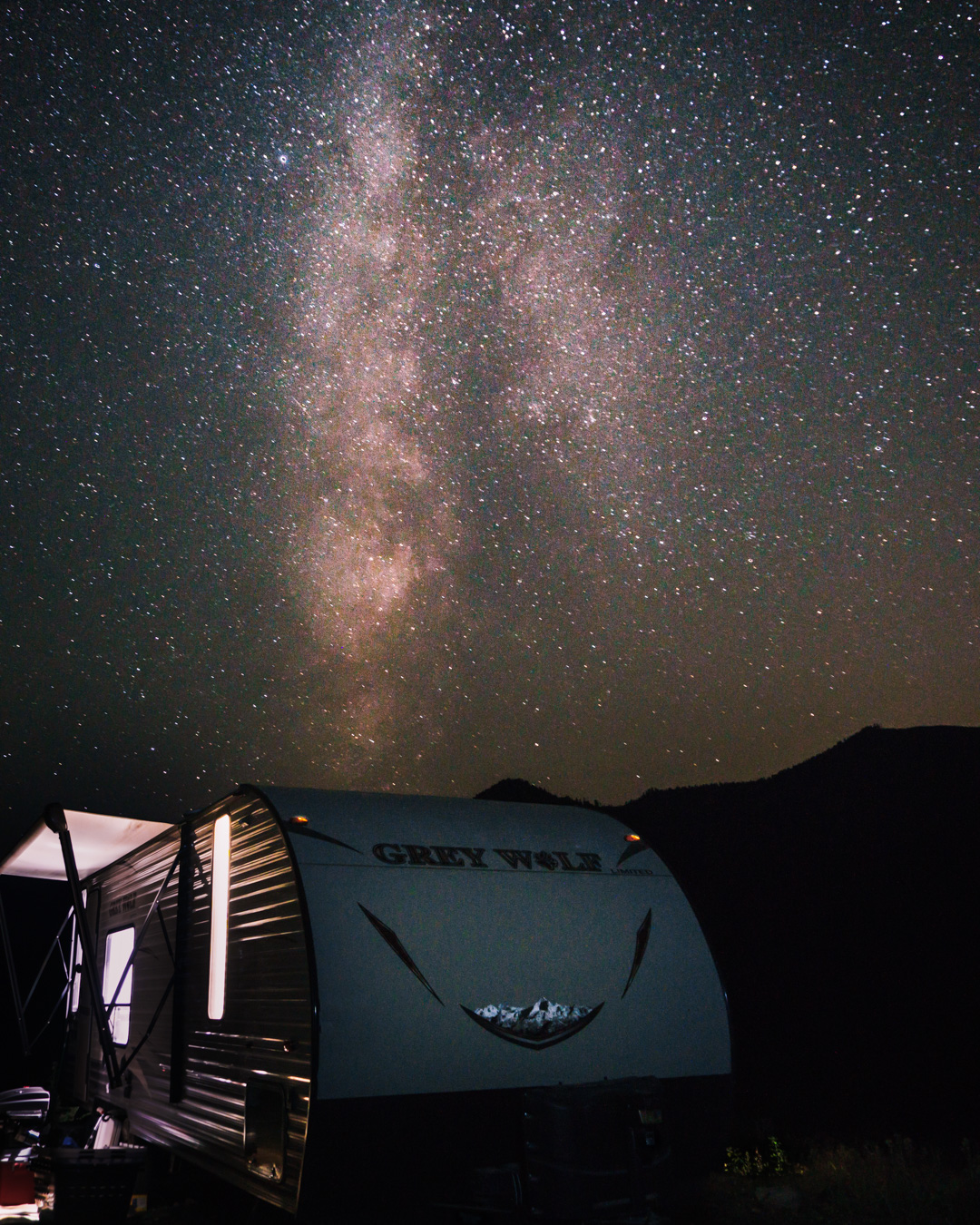
    Boondocking at an undeveloped campsite requires the most planning, but can completely immerse you in nature.

    Boondocking in an undeveloped campsite, or primitive campsite, is what comes to mind for most people when they think of boondocking.

    It’s also the kind of boondocking that beginner RVers are most nervous about because there are no services of any kind. You won’t find any hook-ups, camp hosts, or dump stations. With this type of boondocking, you’re completely off-grid and you need to be entirely self-reliant.

    You’ll usually find undeveloped campsites on United States Forest Service (USFS) property or BLM land. Often only a marker or an old fire ring are your indicators for a spot to camp in.

    Although this type of boondocking requires the most planning and a high level of comfort using your RV without hook-ups, it can be the most rewarding. Sometimes, these type of sites place you beneath the milky way surrounded by mountains. If you’re lucky, you might even have the whole place to yourself.


    There are different types of boondocking, even though the kind that comes to mind for most people is off-grid in an undeveloped campsite. What are your thoughts and experiences boondocking? Leave a comment below!


    Source link

  • Get Your Pics on Route 66 – Southern Illinois

    Get Your Pics on Route 66 – Southern Illinois


    Route 66, the iconic “Mother Road,” winds its way from Chicago, Illinois to Santa Monica, California.  If you don’t have the time to drive the entire route, why not take on this icon of American transportation history in bite-sized pieces?  We’re going to help you do just that with a series called Get Your Pics on Route 66 in hopes that you’ll capture some great memories and images as you explore this little slice of Americana.  Here’s the Route 66 Southern Illinois installment:

    Route 66 runs about 300 miles across Illinois from Chicago to East St. Louis and was formerly a Native American Indian trail and stagecoach road called the Pontiac Trail. Because Illinois has so many remaining attractions from the highway, we’ll be covering the southern half of the state in this report.  You can read about the northern section here.Photo Tripping America - Route 66 Southern Illinois

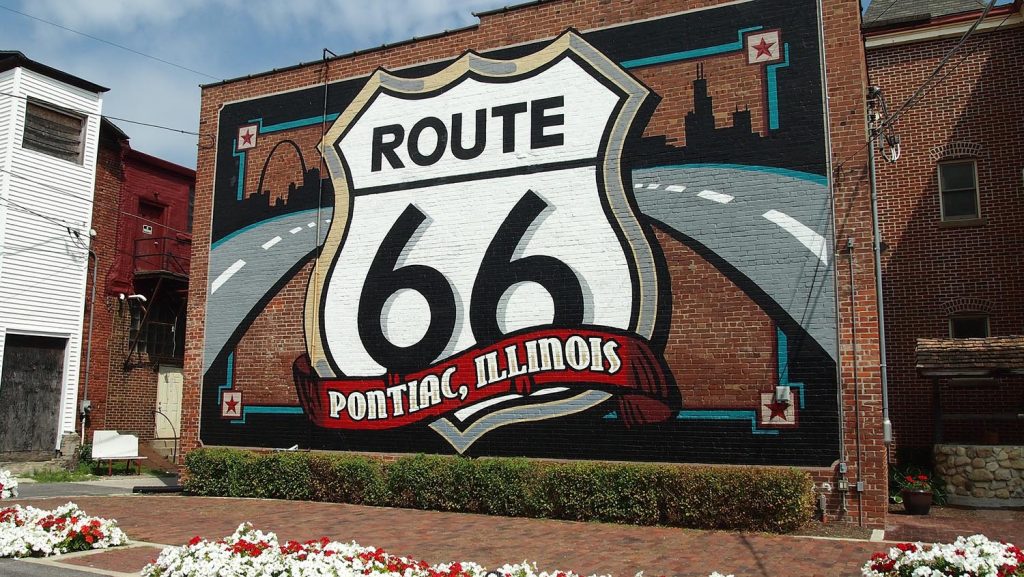
    Pontiac

    What better place to have a museum dedicated to Pontiacs (and Oakland) automobiles than in the town of Pontiac, Illinois? The Route 66 Hall of Fame and Museum also happens to be in town, located in a historic firehouse. It tells the story of the unique people and places along The Route that have been inducted into the Hall of Fame.Photo Tripping America - Route 66 Southern Illinois

    And how’s this for unique: the old Illinois State Police district headquarters in Pontiac, erected in 1941, is built in the shape of a pistol! I can’t make this stuff up, folks!

    Here’s another little tidbit, making Pontiac one of my favorite quirky towns on Route 66: The Old Log Cabin Restaurant was built on an intersection the same year The Mother Road was christened. When Route 66 was realigned a few years later, the entire building was lifted and turned 180 degrees to face the new alignment. Proof of the economic importance of the highway we affectionately call America’s Main Street.

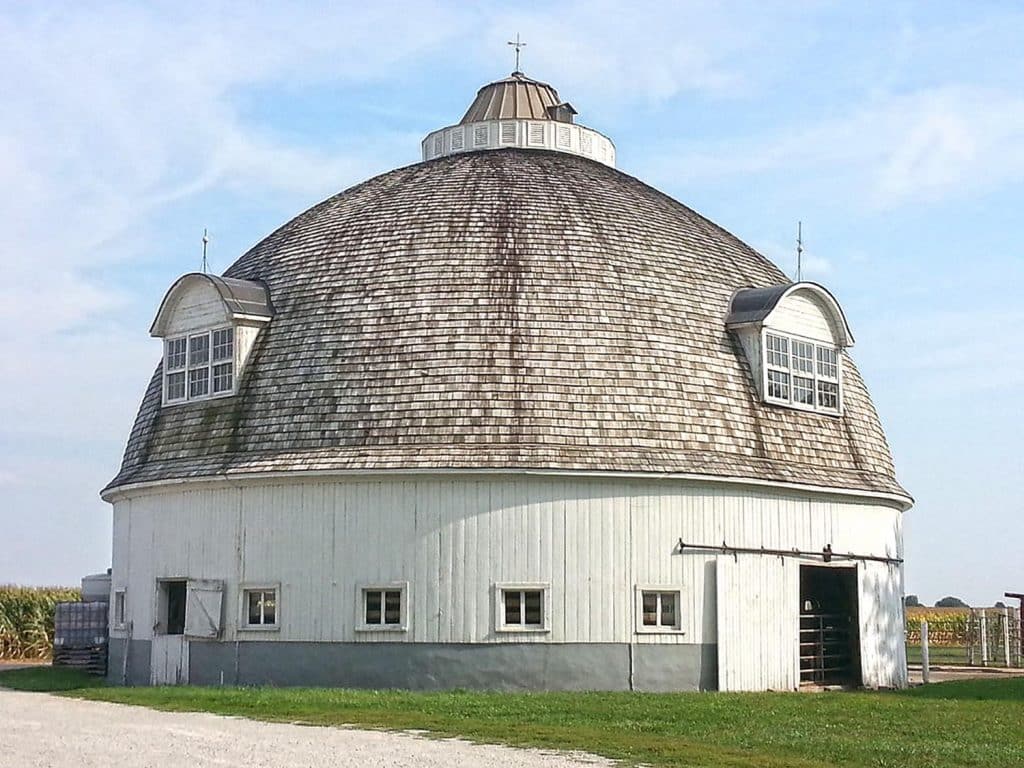
    One other historical building to see before you leave town is Raymond Schulz Round Barn at 15221 N. 1500 E Road. It’s only a mile off The Route and well worth a visit to see a 1918 architectural wonder.Photo Tripping America - Route 66 Southern Illinois

    Normal

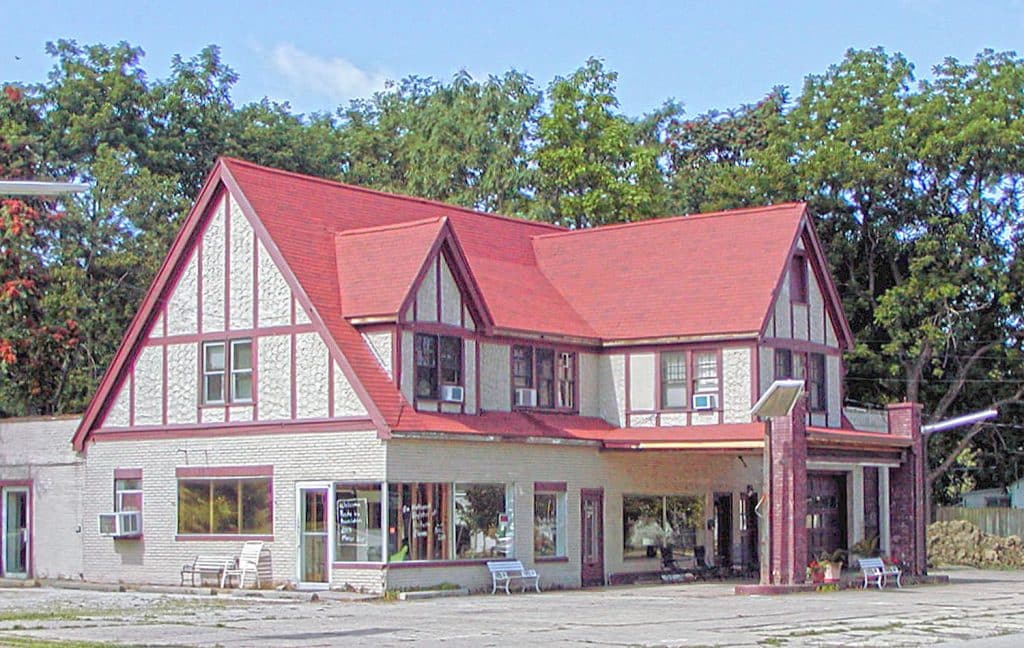
    The larger town of Normal had need of a more substantial service station, with not only gas pumps, but service bays and a restaurant, especially as Route 66 became more popular. William Sprague built such an establishment in 1931, creating a Tudor style building in which to provide transportation-related services to the travelers along the new highway.Photo Tripping America - Route 66 Southern Illinois

    Over the years, when the highway was realigned and bypassed Sprague’s Super Service, the building housed several other businesses. Today it is listed on the National Register of Historic Places and is preserved for this generation to get a glimpse of days gone by on the Mother Road.

    Atlanta

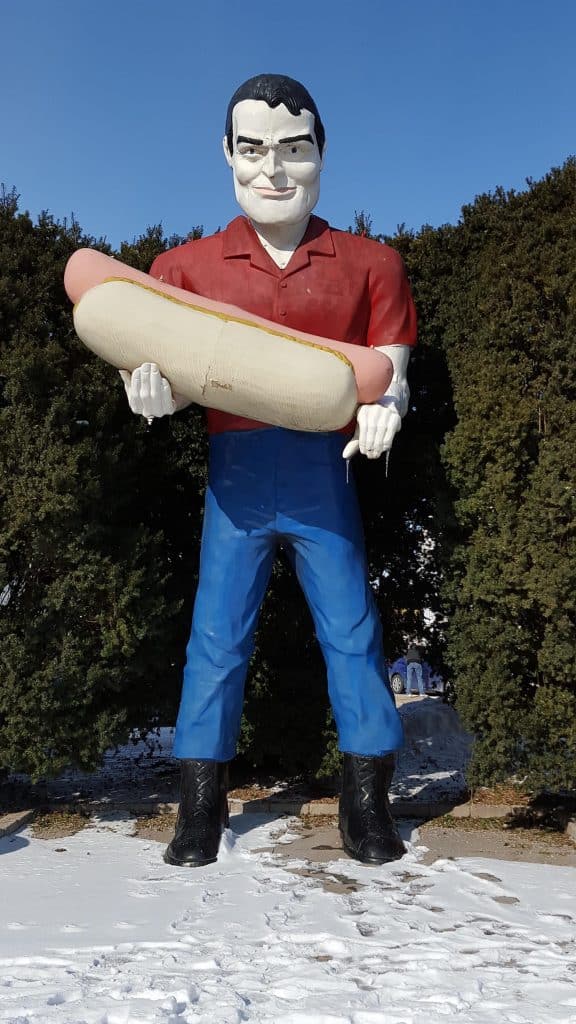
    Follow Interstate 55 southwest to Atlanta, Illinois, where you can enjoy the menu at a Route 66 staple – Palms Grill Café at 110 SW Arch Street. You won’t have any problems finding the restaurant – another “muffler man” stands just outside, holding an enormous hot dog. Don’t worry – you’ll be eating more enticing culinary delights inside.Photo Tripping America - Route 66 Southern Illinois - Camping World

    Lincoln

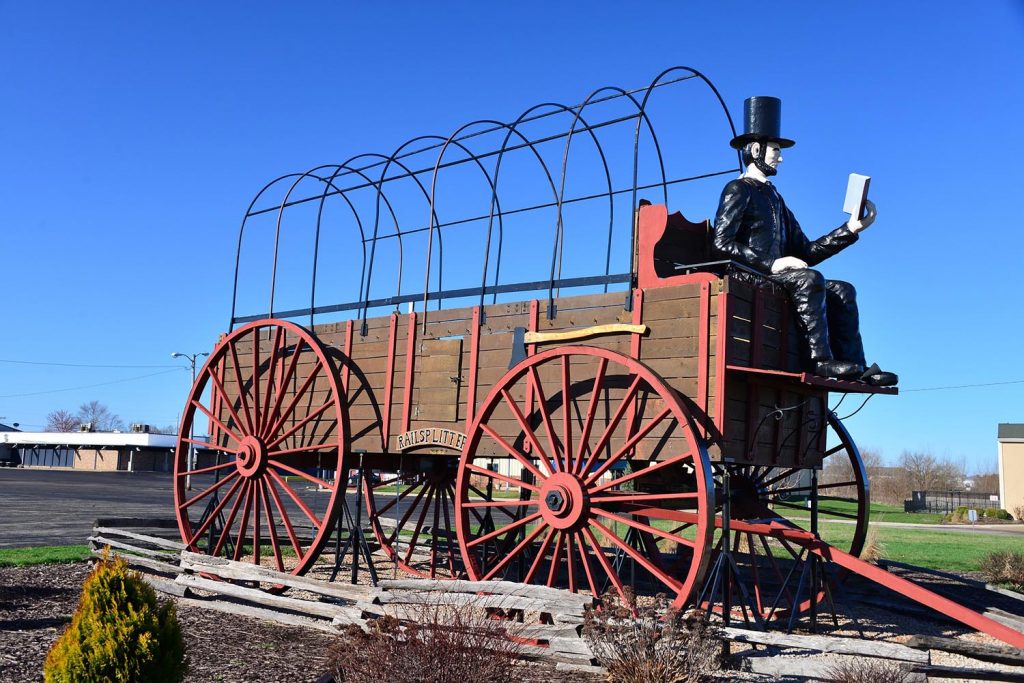
    Well, Illinois is The Land of Lincoln, so I guess it’s only fitting that a town called Lincoln in this state should have the world’s largest covered wagon with Lincoln sitting front and center. This is definitely a kitschy photo opportunity, but what the heck! And it really is a HUGE covered wagon…located just a few miles south Atlanta, Illinois.Photo Tripping America - Route 66 Southern Illinois - Camping World

    Springfield

    As the capital city of Illinois, Springfield is known for many things, most of them having to do with our 16th president. But, remember that “muffler man” holding a hot dog back in Atlanta, Illinois? Well, Cozy Dogs in Springfield must be his ancestral home. It was here along Route 66 that the original corn dog was put on a stick back in 1949, and state fair food has never been the same.

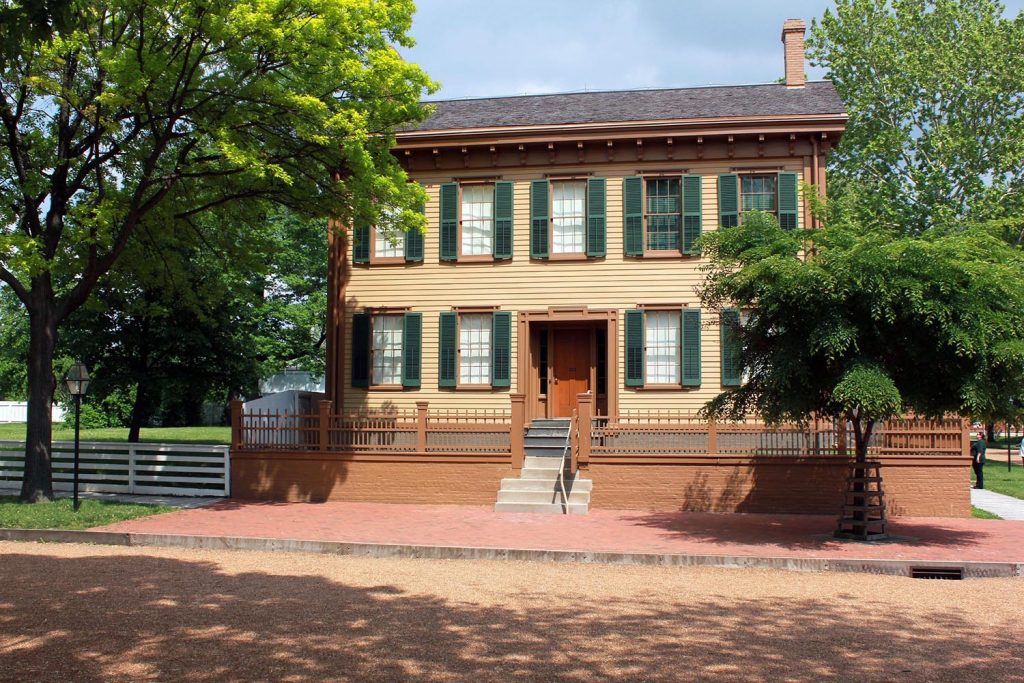
    While you’re in Springfield, definitely stop at the Lincoln Home National Historic Site and Lincoln’s Tomb.  You will get a sense of Honest Abe’s drive to keep our country together, and his love of the land and the law. The sites are not to be missed.Photo Tripping America - Route 66 Southern Illinois - Camping World

    Litchfield

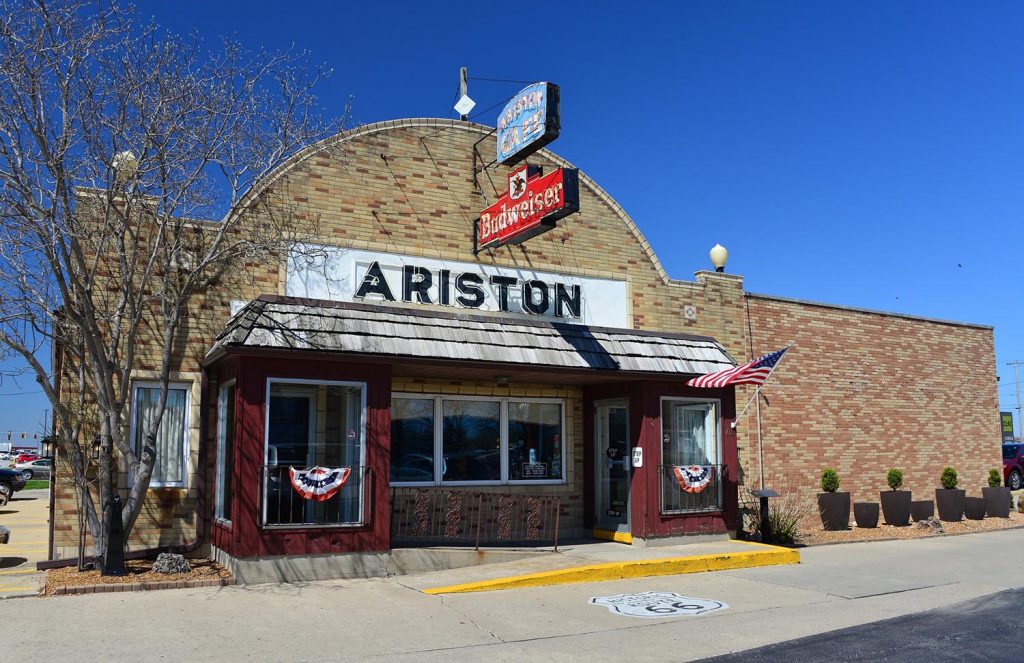
    We’re headed south out of Springfield to the small town of Litchfield. It’s home to one of the older restaurants along Route 66, the Ariston Café. Originally located in Carlinville, when the highway was realigned through Litchfield, the restaurant’s owner immediately moved his business to coincide with traffic from The Route. The café has remained open since 1935 at this location and is still run by the same family.Photo Tripping America - Route 66 Southern Illinois - Camping World

    The Belvedere Café and Motel was a flourishing business along Route 66 in Litchfield until the 1970s. It boasted a dance floor, music, and great food, along with a full-service station and several motel rooms. But with the addition of the interstate and the demise of The Route, the business dried up. Today the buildings are used for storage but are worth a stop on your road trip.

    Mount Olive

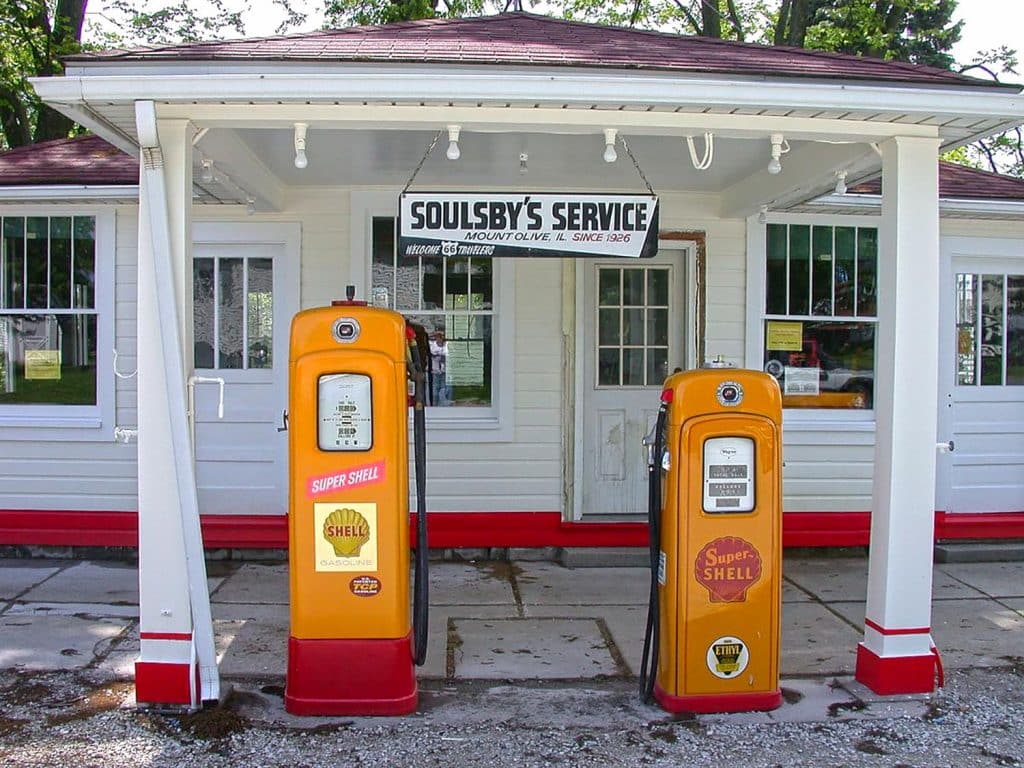
    Our last stop along Route 66 in Illinois is at a marvelous service station that has been meticulously preserved in Mount Olive. The Soulsby Station was built by Henry Soulsby to blend in with its surroundings. He sunk most of his savings into purchasing the plot of land along what was to become the Mother Road, realizing that his initial investment could become the breadwinner for years to come.  He was right.Photo Tripping America - Route 66 Southern Illinois - Camping World

    Built in 1926, the Soulsby family kept the station in tip-top running shape until the last family member died in 1996. I’d say a seventy-year run was a pretty good return on Henry’s investment. Today the station looks as it did in the first days following World War II when Route 66 became an escape for many to follow jobs to California or experience the allure of the open road.

    This Is Just The Beginning

    You’ve completed traveling the first of eight states that make up an endearing piece of Americana.  Route 66 seems to carry our dreams along its pavement, and you can continue to follow its every curve and straightaway below. Just pick another state and start planning your escape. In the meantime, why not find your own adventure along the Mother Road in a motorhome or travel trailer from Camping World?


    You can drive the rest of Route 66 with our other “Get Your Pics on Route 66” articles. Read the entire series.


    Source link