In the second episode of Stories from the Road season 2 Sam talks with Chris Young who is the spokesperson for Gander RV and Outdoors. Chris recently took a Class A RV down to Florida for the Daytona 500. He camped at the racetrack with all of the other race fans.
Chris discusses how he ended up where he is today, blowing up RVs for a Gander promo video, what the Daytona 500 camping experience was like, and much more.
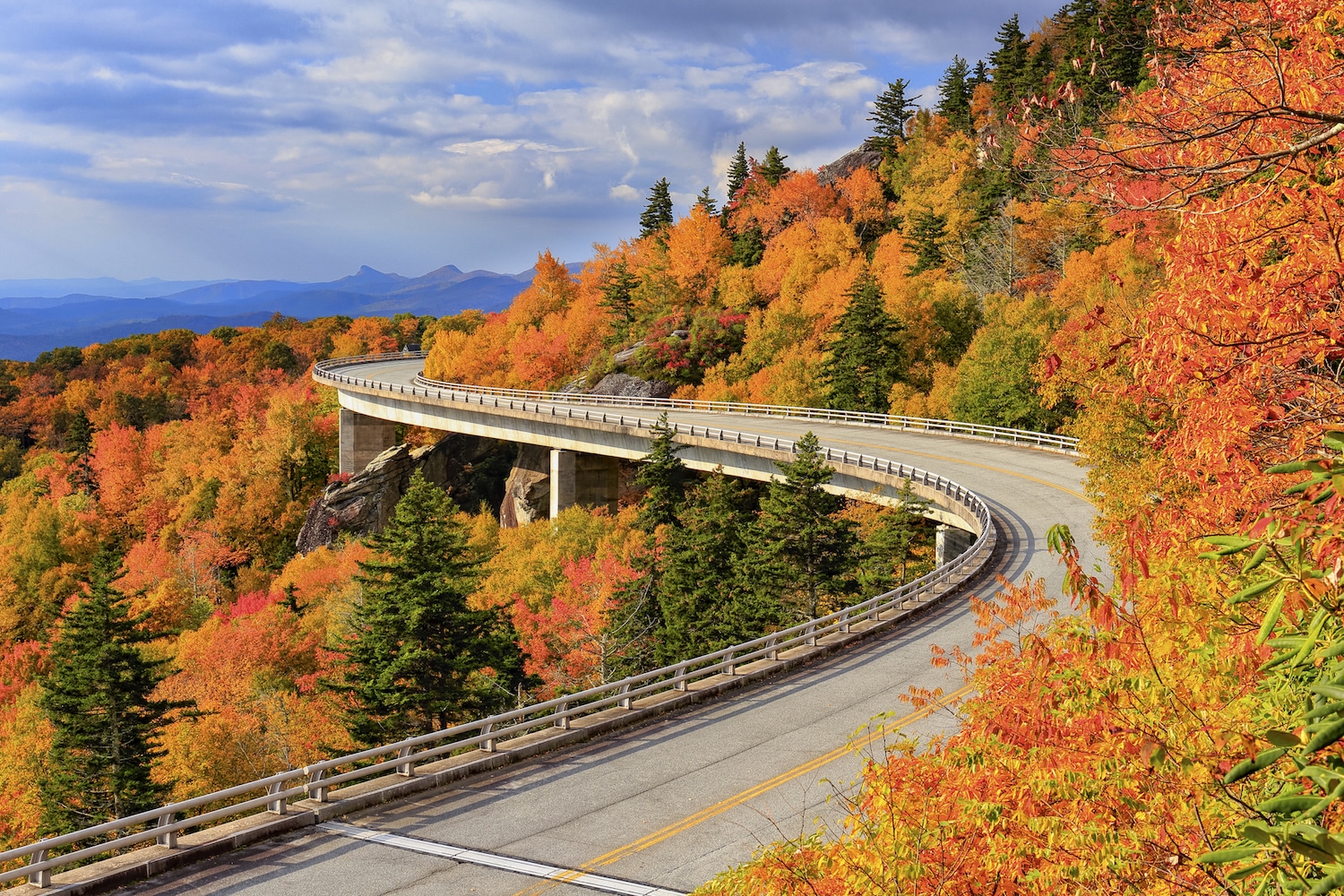
The Blue Ridge Mountains are one of the countries greatest mountain ranges. They’re are a part of the Appalachian Mountains and stretch from Georgia to Pennsylvania. The range is home to some of the most beautiful sights you’ll see east of the Mississippi River, and because of this they’re a common place for RVers, campers, and other adventurers to visit
The Blue Ridge Parkway is one of the best ways to see this area. It’s the scenic ribbon of road winds its way along the nearly 470 miles the mountain range covers. It’s a fun and beautiful drive, and one that every American should do at least once in their life. The road is often called America’s favorite drive. It’s one of those must-do road trips for any RVer and rivals anything you’ll see on the coasts or in the Western United States.
Image from Getty
Taking an RV along this iconic route is easy. While you can certainly do the route in your car if you’re tent camping or staying in hotels, ask anyone who has done the route before, and they’ll tell you it’s perfect for RV travel. I took this route a few years back and saw several RVs. And I have to note there are tons of parks and campgrounds that will accommodate RVs.
Here are five great choices for when you need a place to stop.
1. Mount Pisgah Campground
Mount Pisgah Campground, located in Canton, North Carolina, is one of the most common stops along the Blue Ridge Parkway. It offers 70 RV sites with showers, bathrooms, and laundry facilities. That’s plenty of campsites, but with the campgrounds ideal placement in Flat Laurel Gap it is quite popular, and you should think about making a reservation before you go.
Right at the campground, there’s plenty to see and do, including checking out the nearby trails with amazing views, dining at the Pisgah Inn restaurant, stopping in the gift shop and camp store, and just truly enjoying the beautiful natural landscape around you.
2. Julian Price Park Campground
Julian Price Park Campground is in Laurel Springs, North Carolina. It’s the perfect haven for relaxing in one of the most beautiful locations along the Blue Ridge Parkway. The campground features 68 RV campsites, though amenities aren’t plentiful. There are no hookups at the campground, but there are bathroom facilities and a dump station.
As long as you don’t mind dry camping for a couple of days, the Julian Price Park Campground has plenty to offer. You can rent a boat to go out on the lake, check out the trails and nature walks, and visit one of the performances at the 300-seat amphitheater.
3. Bear Creek RV Park
If you want a campground right in the bustling mountain city of Asheville, North Carolina, then you should hit up Bear Creek RV Park. The campground features plenty of paved, full hookup sites for RVers, though it’s always smart to call ahead and reserve your spot. The campground features three bathhouses, two laundry rooms, complimentary Wi-Fi and cable, and a heated swimming pool.
If you’re going to spend any time in Asheville, this is the perfect place to call your home base. You can get a discount on Biltmore Mansion tickets and all of the city’s fun attractions are just a short trip down the road. Also, the mountains and all the hiking trails you could want aren’t far either.
4. Bear Glenn Mountain Resort and Campground
Bear Glenn Mountain Resort and Campground, located in Spruce Pine, North Carolina, offers a wide variety of sites for RVers. You can get full hookup sites or not, and the amenities at the campground are extensive, too. There’s also high-quality bathroom and showering facilities, a game room, and playground.
Right at the campground, there’s over 13 miles of trails to be hiked, fishing and swimming opportunities, as well as courts and fields designed for all kinds of sports. If you need something less juvenile, the Linville Falls Winery is just a short drive away and so are kayaking and rafting experiences should you choose to do them.
5. Rocky Knob Campground
Rocky Knob Campground isn’t quite as large as some of the others on this list, but that’s a good thing if you can secure one of the 28 campsite RV spots. It’s secluded and offers a nice quiet place to be. There are bathroom facilities on site as well as a dump station and a large campfire circle designed to accommodate 150 campers.
The 3,500-acre Rock Castle Gorge is within the area of Rocky Knob where the campground is located. The Mabry Mill is also located nearby and offers hiking and sight-seeing opportunities you won’t find elsewhere. If you’re an avid hiker, you must try the Rock Castle Gorge Trail, which is a 10.8-mile loop trail that goes over 3,500 feet above sea level. If you’re not into hiking that much and would like a guide, there are several tours you can schedule in the area.
No matter where you camp in the Blue Ridge Mountains you’re bound to have a good time. This is one of the must-see areas of the country, and if you can’t get into any of these campgrounds, there are plenty more campgrounds to visit that are still quite nice.
Have you visited the Blue Ridge Mountains? What did you think? Where did you stay? Leave a comment below!
Class C motorhomes can come in a wide variety of lengths from 20 to over 30 feet. While a longer Class C motorhome might be right for you and your family, many RVers find that a shorter model works extremely well for them and is easier to maneuver on the road and around campsites and parking lots.
These smaller Class C motorhomes are also more versatile as far as where they can travel. A really long Class C will be limited, and that can mean you’ll miss out on certain opportunities. So, if you think a shorter Class C motorhome might be for you, then you should check out the options I have presented below. These are excellent Class C motorhomes that might have just what you’re looking for.
Thor Gemini 23TW
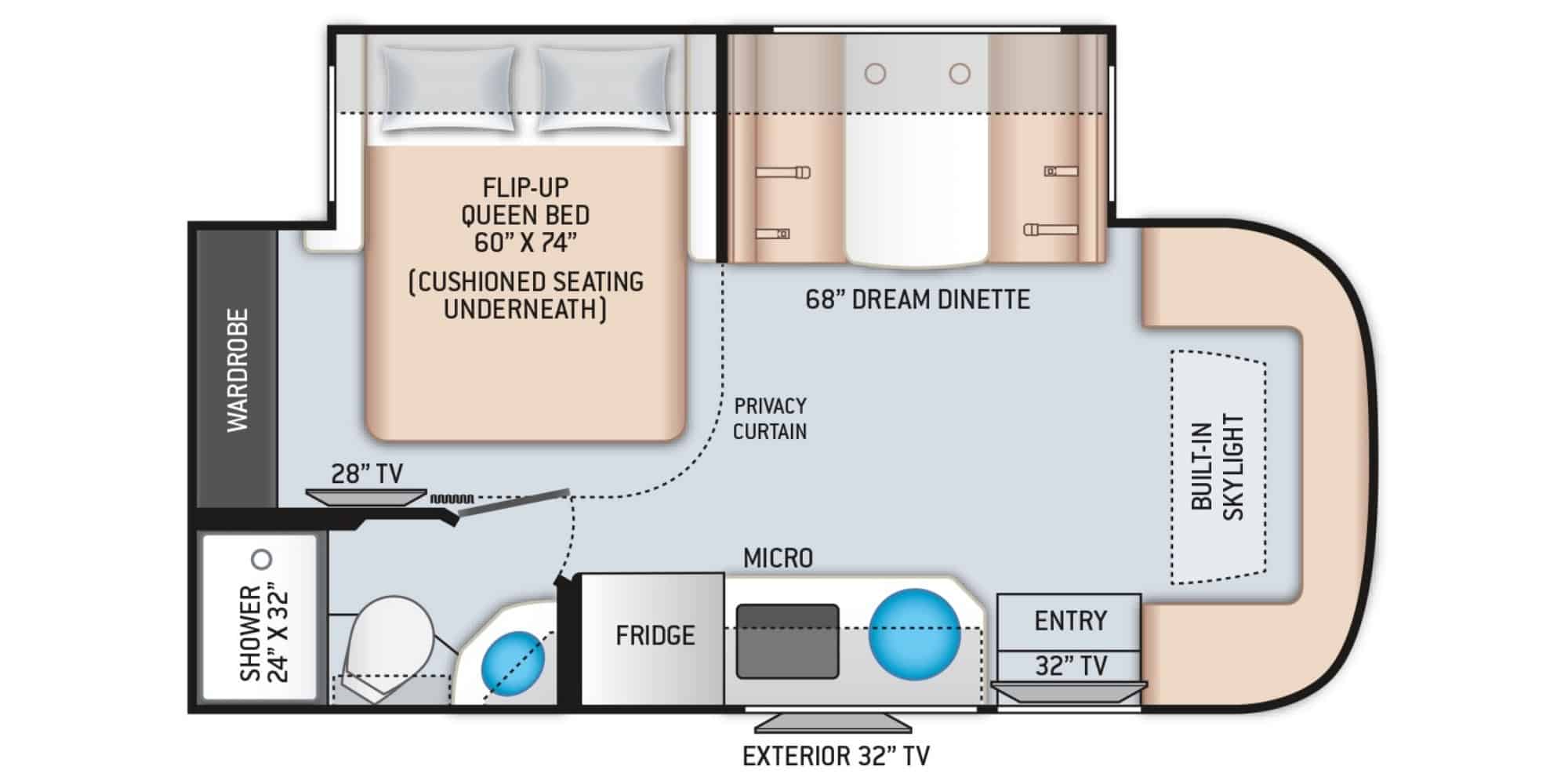
Image from Camping World
If you’re looking for an RV with plenty of interior room and like the idea of a skylight above the cab of the RV, then the Thor Gemini 23TW could be for you. This model features a camp-side kitchen, a full bath in the rear passenger side of the RV, and a queen bed and Dream dinette on a slide on the driver’s side of the RV.
The unit features a Ford Transit chassis with a diesel engine that puts out 185 hp and 350 lb-ft of torque. This engine is great on fuel and provides plenty of power to get the RV around. The length overall is 23.5 feet. The model sleeps up to five people between the bed and the dinette and cab-over bunk.
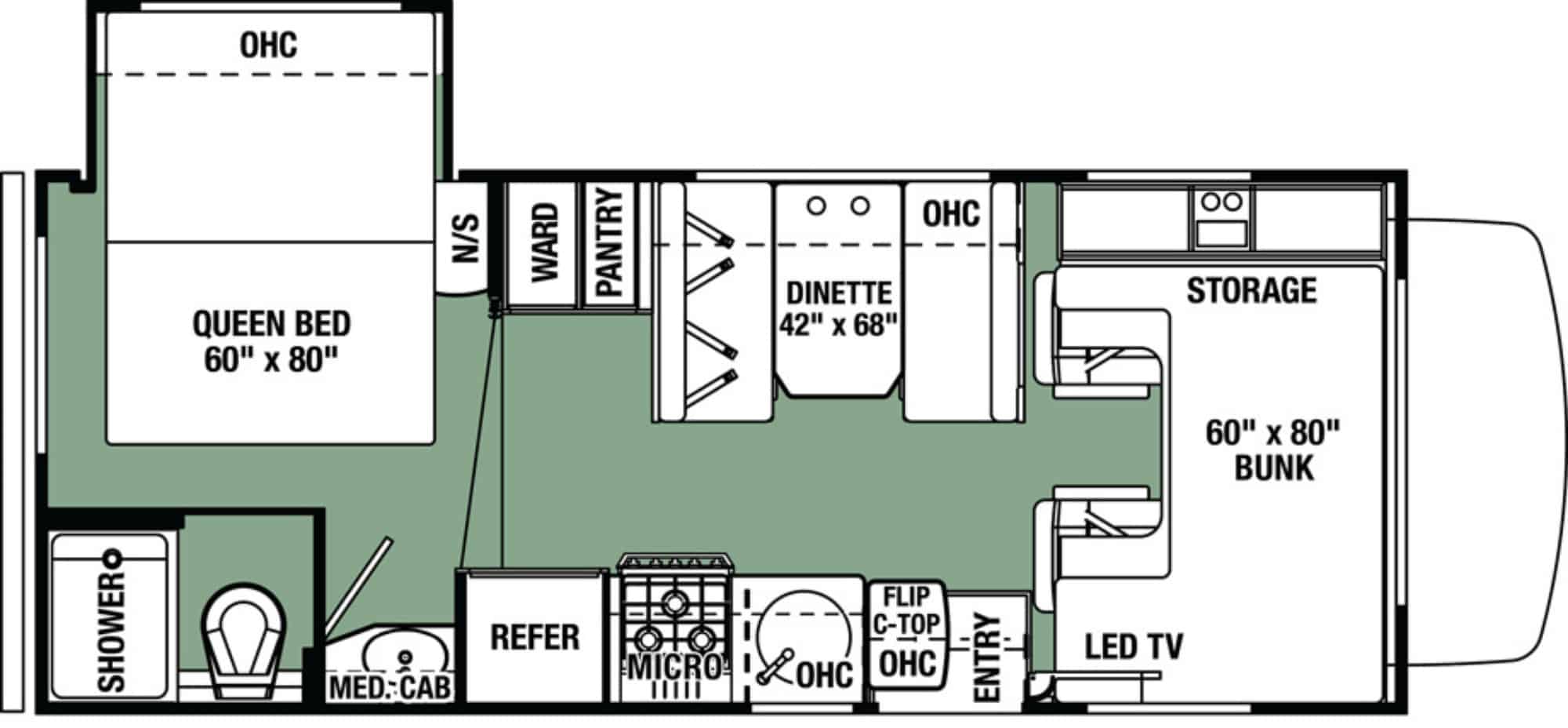
Maybe the floorplan above isn’t for you. If that’s the case, that’s fine! Not everyone is going to want a Class C with a large slide-out on it. Maybe you just want a small slide. If that’s the case, then the Forester LE 2251SC shown here is what you’re looking for. The bed is on a slide-out but that’s it. The kitchen is on the passenger side of the RV, and so is the bathroom. On the opposite side is the dinette, wardrobe, pantry, and queen bed.
This Class C motorhome is built on the Chevrolet Express 4500 chassis that has a gasoline engine that produces 341 hp and 373 lb-ft of torque. The Forester LE 2251SC is 23.83 feet in length. The unit sleeps up to five people and across the bed, dinette, and cab-over bunk.
If you’re looking for something with a different layout that has no slide, then the Thor Freedom Elite 22HEC is a good choice for you. The model features a large Dream dinette, a kitchen on the passenger side of the RV, a queen bed in the rear of the RV next to the bathroom. The closet is next to the bathroom.
The RV is built on the Chevrolet Express 4500 chassis. It features a gasoline engine that makes 341 hp 373 lb-ft of torque. The Freedom Elite 22HEC measures 24 feet in length and it will sleep up to five people between the bed, dinette, and cab-over bunk.
It’s important to note that there are other floorplans of each of these Class C models. This means if you’re interested in the chassis or model in general but would like to see other layouts that there are other options out there for you to choose from.
Are you interested in seeing the other Class C models? Didn’t see something you’re interested in here? Check out all of the Class C motorhomes available at Camping World.
Water is an important part of doing pretty much anything, RVing included. You need water for your RV and that often means connecting up to a city water connection. Recently, we posted a podcast episode that was about the importance of filtering water from these connections, but you should also be worried about the water pressure.
Having too much water pressure is not a good thing. Luckily there’s something you can do: add a water pressure regulator. Let’s take a closer look at why and what a water pressure regulator can do for you.
Reasons to Use a Water Pressure Regulator
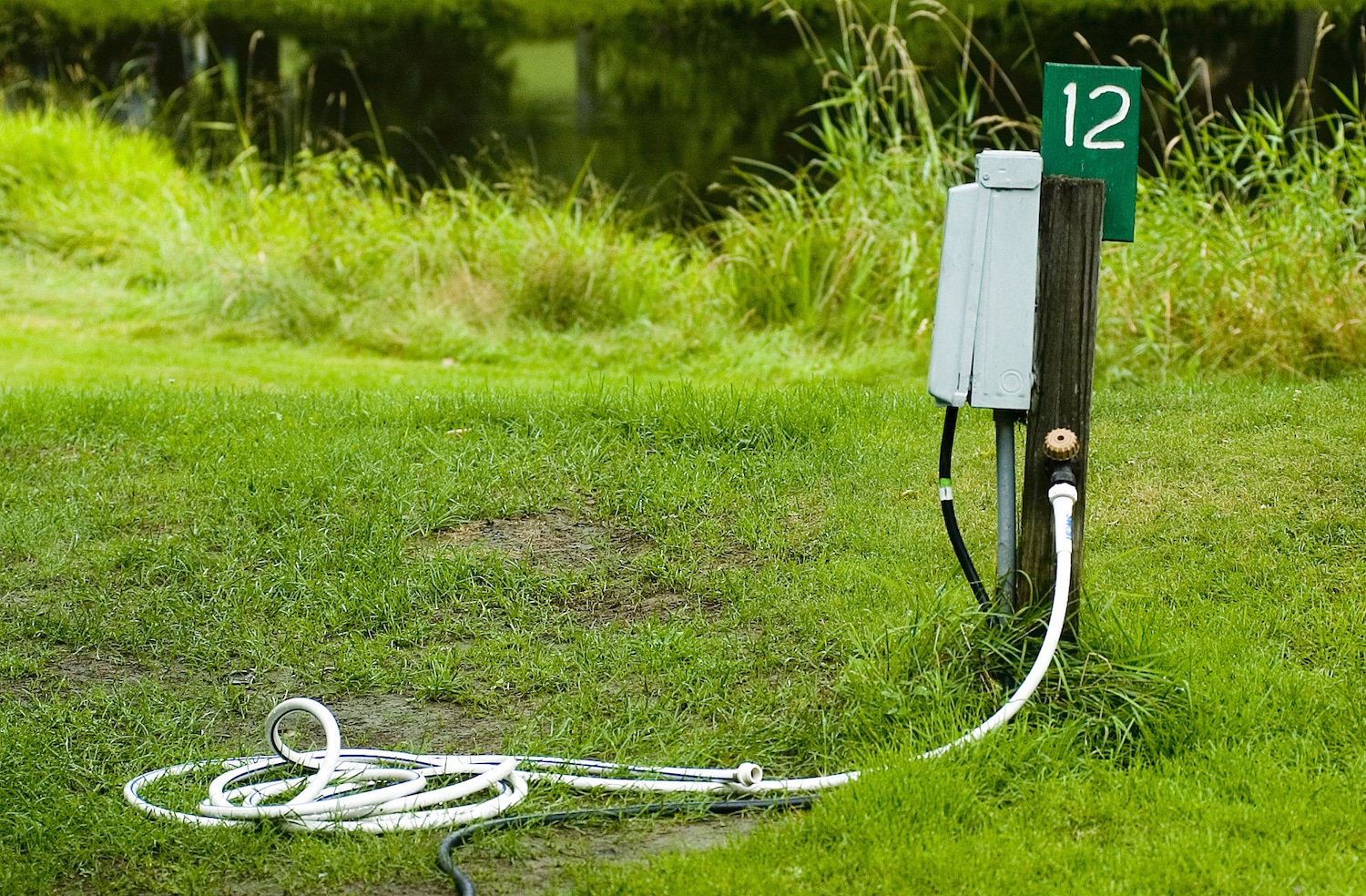
Image from Getty
The water coming out of a city water connection at a campground isn’t likely to be monitored. This means the water pressure at different campgrounds can vary. It can be very high pressure water coming out or very low pressure. Either one can lead to issues.
If the water pressure is too low, you’ll not have good flow of water into your RV, which isn’t the end of the world but rather a minor annoyance. However, if the water pressure is too high, it can actually cause damage to your RV. This could lead to leaks and water damage, something you really need to avoid at all costs.
How a Water Pressure Regulator Works
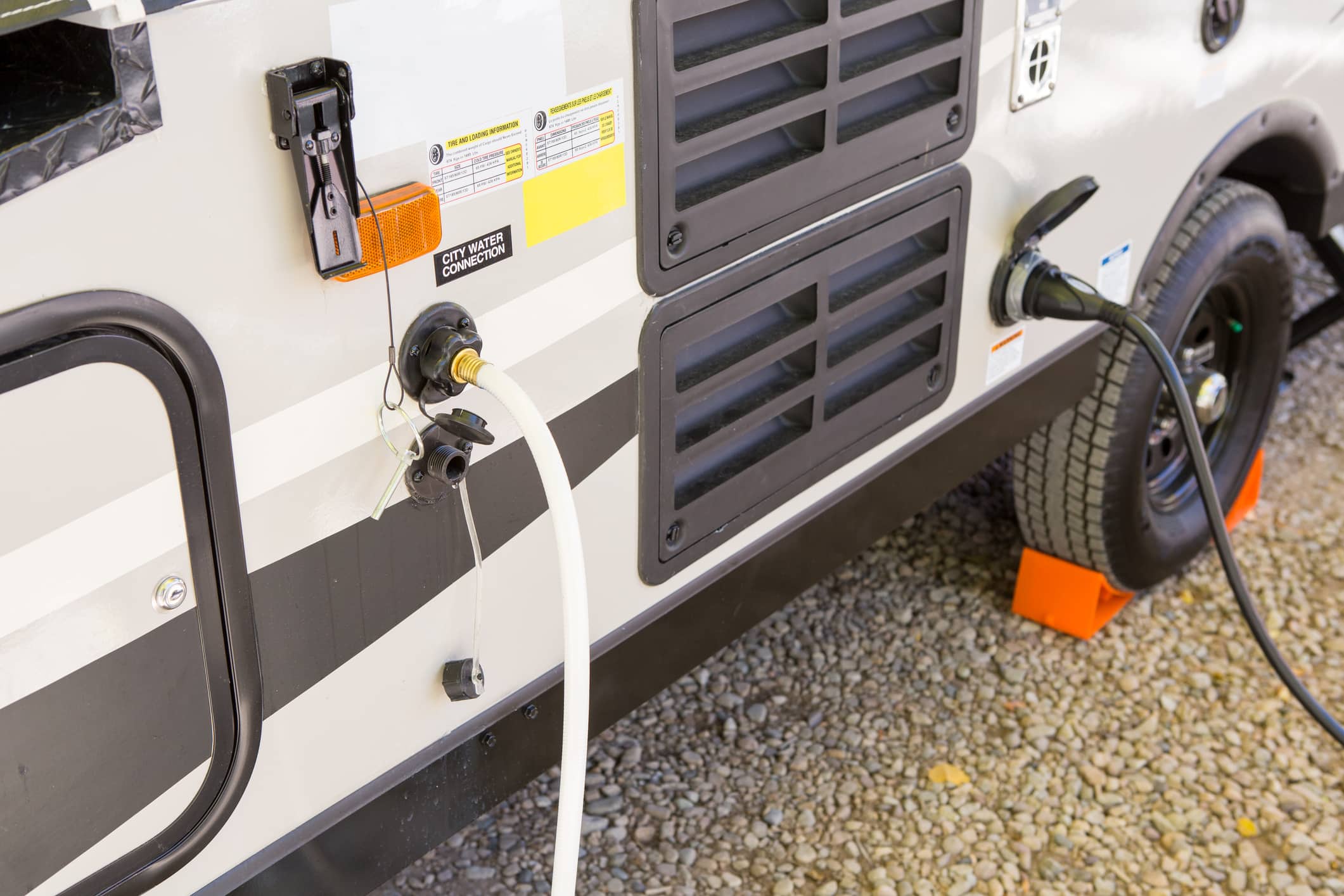
A water pressure regulator is quite simply a valve that reduces the water pressure coming from your water source. If the water coming from your water source comes to your RV with too much pressure it will damage your RV, as we’ve mentioned above. The water pressure regulator stops that from happening by lowering the water pressure before it reaches your hose.
You attach the water pressure regulator to the water spigot where you’ll recieve your water. This ensures that the high water pressure stops right at the spigot and doesn’t enter your water hose or your RV’s plumbing.
What Is the Right Water Pressure for an RV?
The correct water pressure for an RV can vary depending on the model and the condition of your RV’s plumbing system. Modern RVs can handle up to 100 psi of water pressure. However, most RV experts recommend you never let the water pressure exceed 60 psi. Somewhere around 40 to 50 psi is ideal for many RVs.
Of course, you should consult your RV’s owner’s manual before just blindly following some general guidelines. Some RVs will perform best with specific water pressure. Your RV’s owner’s manual may also recommend a specific type of water pressure regulator. Always go with what your owner’s manual recommends.
Types of Water Pressure Regulators
There are a couple of different kinds of RV water pressure regulators out there for you to choose from. As I said above, you should go with the one that works best for your RV, that should be discussed in your owner’s manual. If not, I suggest you get an adjustable water pressure regulator with a gauge.
Generally, there are adjustable water pressure regulators and non-adjustable ones. The non adjustable ones come in either low flow or high flow. Choose the option that is right for your RV and you should be good to go. I prefer the adjustable water pressure regulator with a gauge. These regulators allow you to really dial in the appropriate water pressure and the gauge lets you see what the psi is. It’s just generally a better option. However, these do tend to be a little more expensive.
If you need a water pressure regulator, check out all of the water pressure regulators available at Camping World.
Do you use a water pressure regulator? If so, what do you use? Leave a comment below!
Dry Tortugas National Park is one of the nation’s most unique national parks. Although only 70 miles from Key West, FL, Dry Tortugas is the nation’s most remote national park, only accessible by boat or seaplane. The list of amenities is few. There’s no cell phone service, no internet, no fuel, no public bathrooms, and there’s not even food or water. You need to bring what you want and need along with you.
What Dry Tortugas does have is 100-square miles of tropical waters and seven small islands where visitors can step back in time and step into nature the way that it was intended—wild and untouched.
Photo: Key West Seaplane Adventures
Why Visit Dry Tortugas National Park?
Visitors come from all over the world to enjoy the picturesque blue waters, vibrant coral reefs, and abundant marine life. If you’re into world-class snorkeling and diving, fishing or soaking up the sun on soft white sand beaches as the day passes, Dry Tortugas National Park is the place for you.
Additionally, Dry Tortugas offers visitors a fascinating history and cultural treasures such as Fort Jefferson, the lighthouse on Loggerhead Key, and the Windjammer Shipwreck.
Things to Do at Dry Tortugas Naitonal Park
This unique place may be one of the most remote and wild national parks, but there’s still plenty to do. Here are some of your options.
Snorkel, Swim, or Scuba Dive
Dry Tortugas is well regarded as one of the premier places in America to snorkel and dive. In addition to being situated on the Florida Keys reef system, which is the 3rd largest in the world, the area has been the site of numerous shipwrecks resulting in spectacular artificial environments for marine life. The Windjammer Wreck is one of the best and most easily accessed sites for snorkeling in the park, but there are many other excellent spots.
Relive History at Fort Jefferson
Photo: NPS.gov
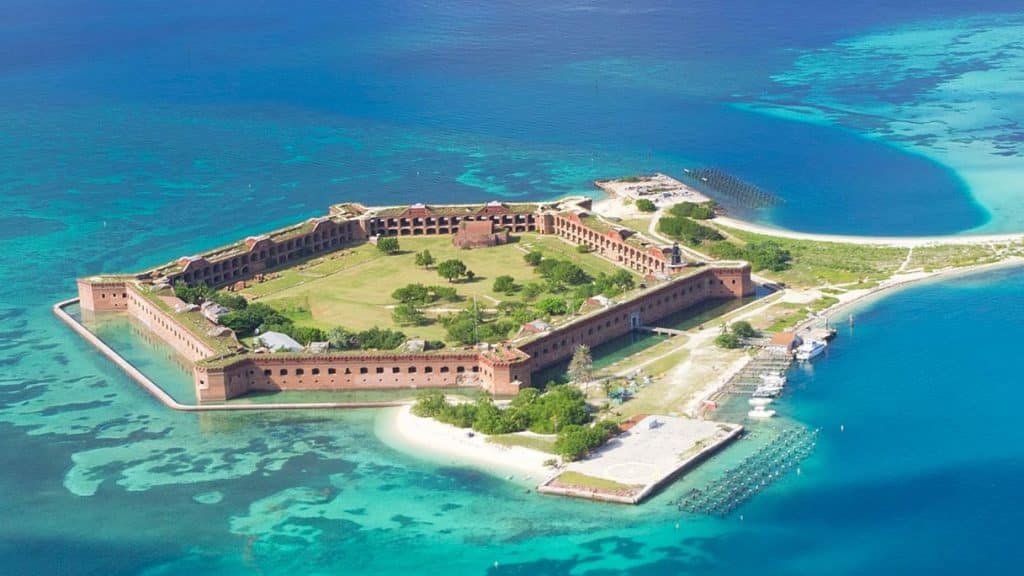
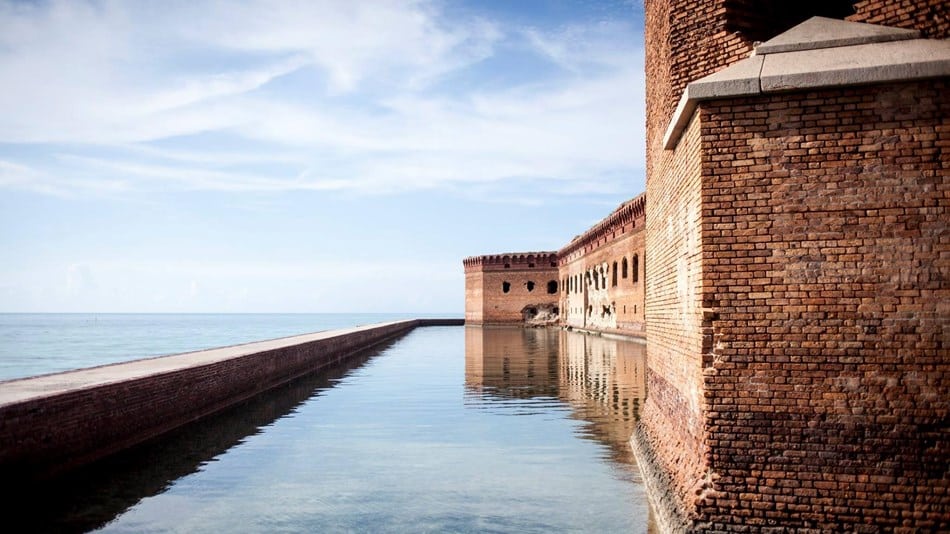
Fort Jefferson, located on Garden Key, is one of the nation’s largest 19th-century forts. It is the country’s largest all-masonry fort and the largest brick building in the Western Hemisphere. It was constructed between 1846 and 1875 with the purpose of protecting the country’s gateway to the Gulf of Mexico.
The location of Dry Tortugas along one of the world’s busiest shipping lanes presented a strategic military need for Fort Jefferson, and planning for the fort began as soon as Florida became a state in 1822. Although never completed or attacked, Fort Jefferson stands as an important reminder and symbol of the development of the United States.
Relax on Tropical, Secluded Beaches
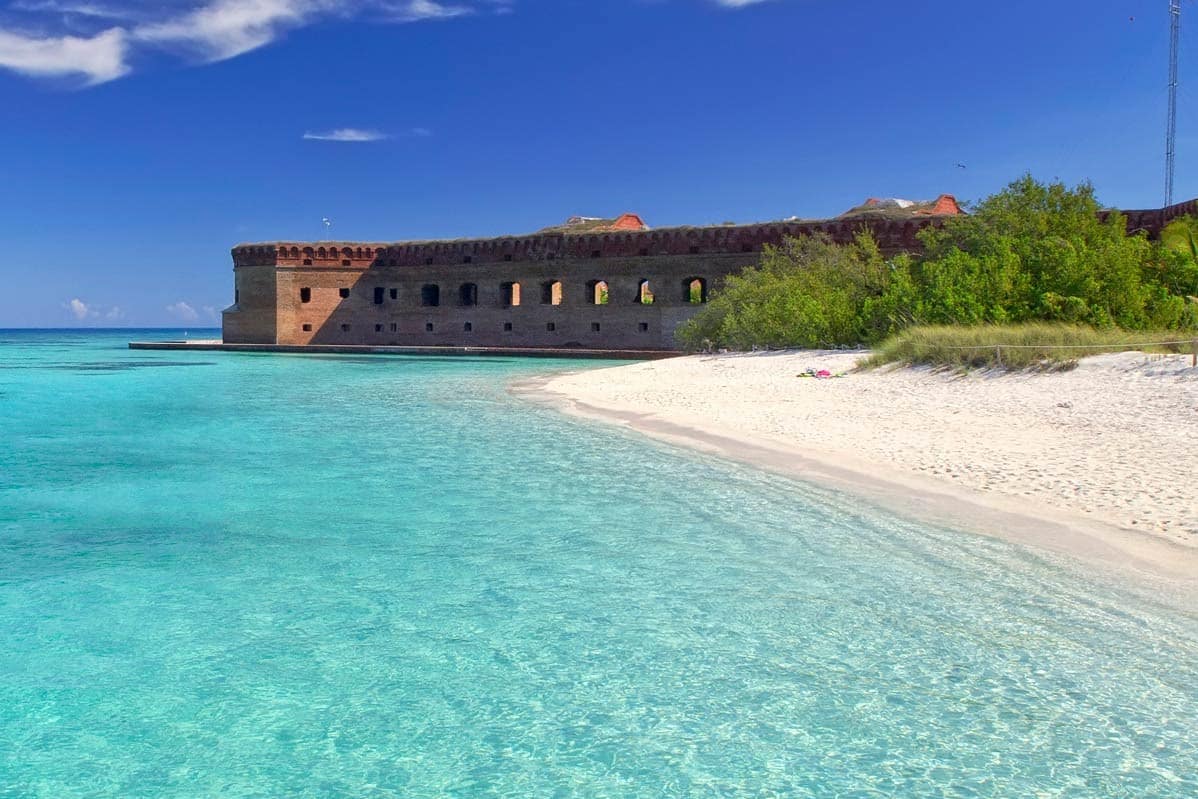
Key West is an island paradise that has so much to offer visitors. While the beaches in Key West are nice, Dry Tortugas’s beaches are amazing. The fine white sand and the turquoise blue waters might have you thinking you’re in a beer commercial or something!
While visiting, make sure to take time away from snorkeling and exploring the fort so that you can relax, unwind, and catch some rays while sitting on your own slice of beach paradise.
When to Visit Dry Tortugas National Park
The best time to visit Dry Tortugas depends on your own personal preference and what your goal is for visiting the park. The park experiences two distinct seasons, the summer/wet season and the winter/dry season.
Summer/Wet Season in Dry Tortugas
The summer/wet season is from May through November and is characterized by high temperatures (avg. 90℉), humidity, and afternoon precipitation. This period roughly corresponds to the Atlantic hurricane season so severe weather is always a possibility.
Although the temps are high and the summer/wet season accounts for the majority of annual rainfall, the summer/wet season provides the best conditions for snorkeling and viewing marine life. With little to no wind, the calm waters maintain excellent visibility, which is conducive to Tortuga’s most popular activities.
Winter/Dry Season in Dry Tortugas
If milder temperatures are more your cup of tea, then visiting during the winter/dry season is for you. The winter season extends from November to mid-May. The temperature is extremely pleasant and average temps range between 60℉ – 70℉.
When compared to the rest of the country’s average winter temperatures, winter at Dry Tortugas sounds pretty nice. There is a small sacrifice for visiting during the winter months, though. Winter brings windier conditions which affect the calmness of the seas. Choppy seas lead to decreased visibility and less enjoyable snorkeling conditions. Don’t be too alarmed, however, February sees the most visitors each year to Dry Tortugas.
Where to Stay in Dry Tortugas National Park
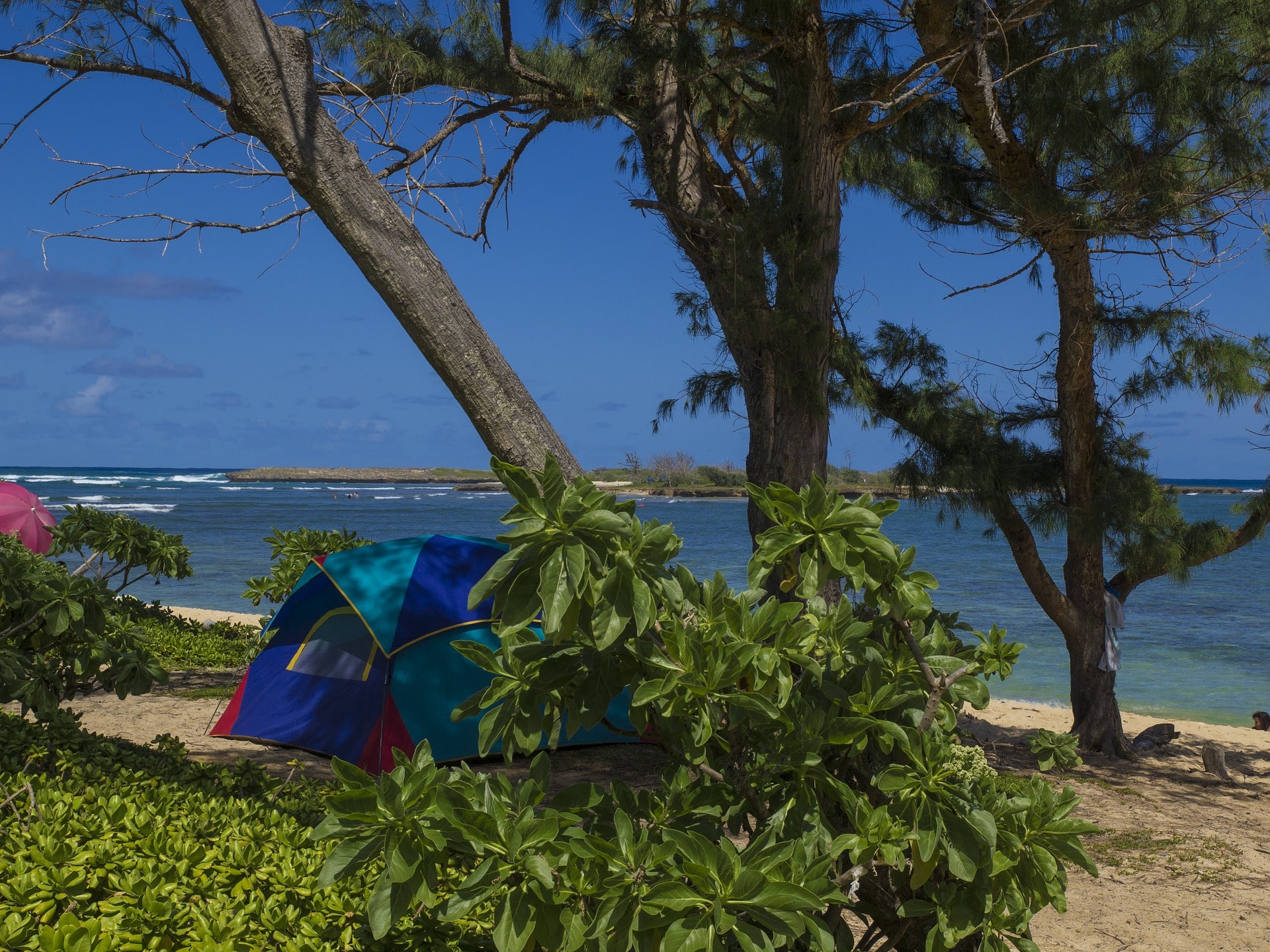
Most visitors enjoy a day trip to Dry Tortugas. For those looking for a unique camping experience, however, primitive camping is available. Camping on the remote island offers campers spectacular sunsets and sunrises as well as a chance to experience incredible stargazing.
Individual sites can fit up to six people and reservations are not required although reservations are required for public transportation options. There is an additional fee for overnight camping. Please remember, there are no services or amenities on the island so you must pack in (and out) everything that is needed, including water. There are composting toilets available in the campground. Click here for more information on camping in the park.
Getting to and Around Dry Tortugas National Park
Dry Tortugas National Park is only accessible by boat or by seaplane. There is a ferry that operates daily from Key West to Dry Tortugas departing Key West at 8:00 AM and returning at 3:00 pm.
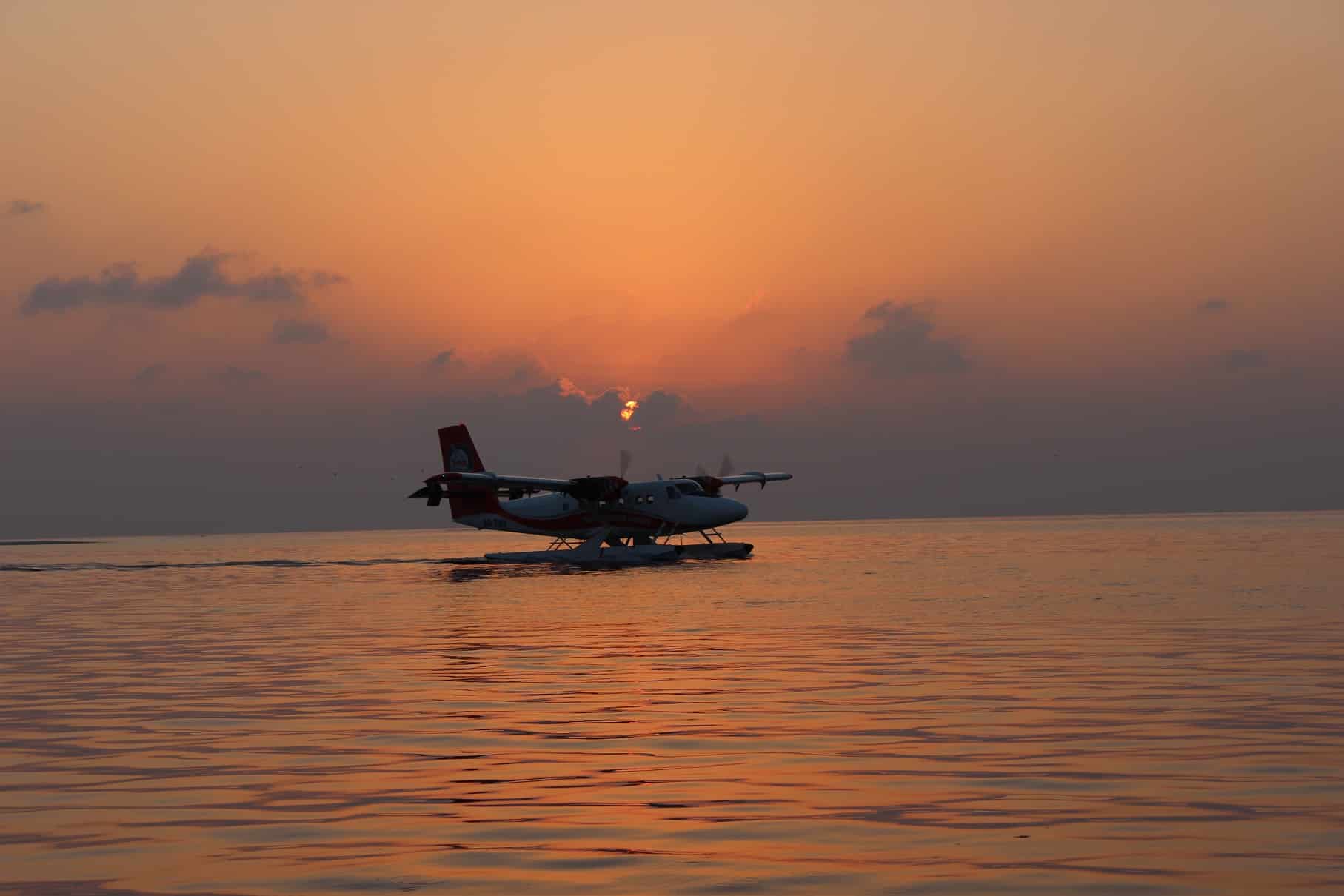
Key West Seaplane Adventures offers the only seaplane service to Dry Tortugas and is a great option if you’re prone to seasickness or simply want to experience the incredible views from above. Both the seaplane and the ferry will bring you to Garden Key, the main key where Fort Jefferson is located.
If you’d like to visit other areas of the park, you’ll need a boat. Private boats are welcome at the park, just remember to get your permit at the ranger station at Garden Key. There are boat slips for visitors available for short term use. Another transportation option is to charter a fishing or dive trip from Key West to bring you to the park.
Tips and Tricks Specific to Dry Tortugas National Park
I’m going to be frank, visiting Dry Tortugas National Park is a commitment. First, getting to the park is more complicated than other national parks, and secondly, it’s pretty expensive to visit, especially when compared to other parks. That being said, many vacationers in Key West will be looking for fun outings and adventures i.e. snorkeling, deep-sea fishing, sky diving, etc. This park often goes overlooked.
If you think about a visit to Dry Tortugas more like an excursion and less like a visit to a national park, you may find yourself really excited to go! The snorkeling will be better than almost anywhere else in the Keys and the secluded, white sand beaches are far superior to any beach in Key West. Add Fort Jefferson to the mix and Dry Tortugas has a lot to offer. Just remember to bring lots of water!
For the latest info on visiting Dry Tortugas National Park, visit the park’s website.
Have you been to Dry Tortugas National Park? What tips can you share?
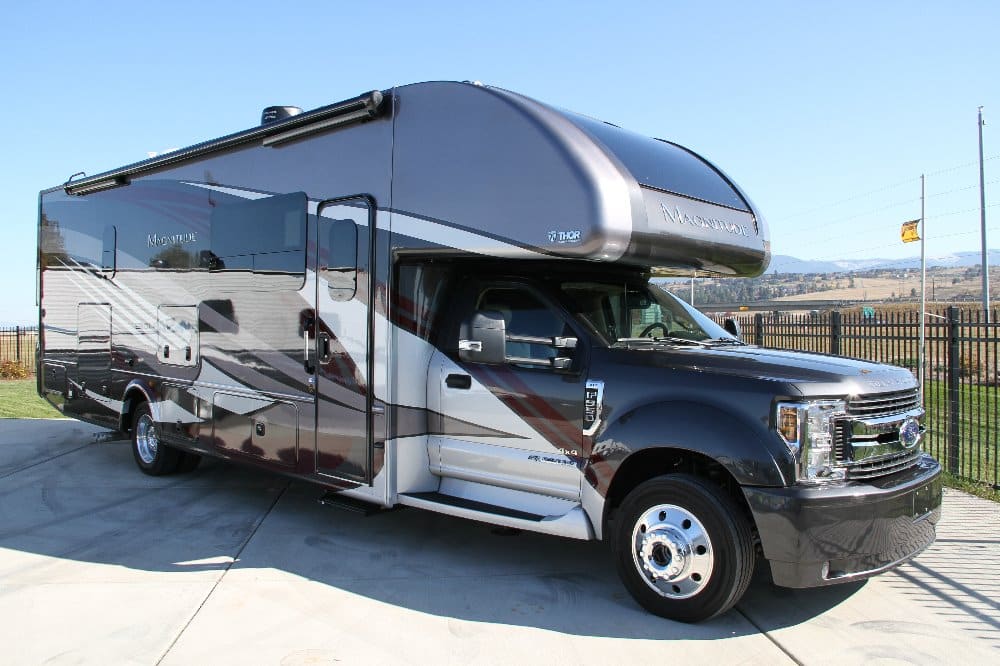
If you know the types and classes of RVs, then you probably also know that there’s what’s called a Super C RV. This is a Class C RV that’s built larger and more on a scale with a Class A motorhome. However, the Super C RV is still not built on a bus chassis. It still has a large commercial truck chassis.
This enables some advantages that make the Super C special. Personally, I think these RVs are awesome and a good alternative to a Class A motorhome. Let’s take a closer look.
What Is a Super C RV Exactly?
Super C RVs are motorhomes that offer a design similar to a Class C coach, but with a larger chassis and powerplant. The super-large frame and extra-powerful engine open up a lot of possibilities when it comes to the details of the motorhome.
So the chassis on Super C’s are a lot bigger, but how much? Class C motorhomes will typically use the Ford E-450 chassis or a comparable chassis from Chevrolet or another manufacturer, Super C RVs get the larger truck chassis. For example, the 2020 Thor Motor Coach Omi Motorhome features the F-550 chassis. This is a considerably larger option.
What are the Advantages of a Super C RV?
A look at the Thor Magnitude Super C floorplan.
So, it’s bigger. Is bigger better? In some cases, no. In other cases, yes. It really depends on how you plan to use the RV. However, I will say that there are many advantages to a Super C motorhome. Let’s take a look at what these advantages are.
Wider Wheel-Base
Typically, a Super C RV will have a wider wheelbase than a standard Class C. These types of RVs can even have a wider wheelbase than some Class A RVs. This means you’ll feel more safe and secure on the road. The Super C RV is one that is well-planted and ready for any road.
Plenty of Exterior Storage
Regular Class C motorhomes have limited basement or exterior storage space. Super C motorhomes have a basement storage area much more like a Class A motorhome. This means you can easily store a grill, camp chairs, an extra tent or canopy, or anything else that you’d like to take along.
Spacious Floorplans
As you might imagine, a larger chassis means more room to work with in terms of the floorplan. A Super C will have plenty of space for you and your family to enjoy the interior of the RV. While not every family needs a huge floorplan, most will be happier with a little more space.
High Towing Capacity
Want to bring a toad or tow a boat with you on your next camping trip? Get yourself a Super C RV and you’ll have plenty of towing capacity for whatever you want to tow. Typical Class C motorhomes usually have a pretty good towing capacity, but they pale in comparison to a Super C. Some can tow up to 25,000 pounds or more.
High Durability and Numerous Service Stations
The last advantage of the Super C motorhome is the fact that it uses a typical large truck chassis. These chassis were designed for hundreds of thousands of miles of heavy use. They’re built like tanks and can truly take a beating.
Additionally, these large truck chassis can be serviced by a larger number of service stations than a Class A motorhome can. Many service stations won’t touch a Class A whereas they’ll be less apprehensive about working on a Super C. You can also always bring your Super C motorhome to your local Camping World service center.