Blog

  • Camping World’s Guide Cuyahoga Valley National Park

    Camping World’s Guide Cuyahoga Valley National Park


    Cuyahoga Valley National Park in Ohio is truly a unique mixture of city attractions and rural life, where history is preserved in the midst of today’s hectic existence. It’s a fantastic place to go if you want to camp, and even if you have an RV and can’t camp right in the park, there are plenty of places nearby that offer camping accomodations.

    In Cuyahoga Valley National Park, you can take a scenic train ride through the valley to discover a river tamed almost 200 years ago, with locks and canal boats moving precious cargo to Lake Erie and on to the East Coast long before semis and airplanes came on the scene. You can kayak the now clean waters that burned, not once but twice, from pollution years ago and wonder at the great blue heron who raise their young in this piece of paradise caught between two cities.

    You can also see and do all sorts of other things. With all that in mind, let’s dig into what makes this park so special.

    History of Cuyahoga Valley National Park

    Photo Tripping America - Cuyahoga Valley - Camping World

    The early habitation of the Cuyahoga Valley included several Native American tribes, who moved in and out of the region. By the mid-1700s European explorers began to build trading posts in the area, eventually enticing New England settlers to spread throughout Ohio.

    The settlements grew into productive cities, looking for a way to get their products to the markets back east. So, in the 1830s, the Ohio & Erie Canal was built, connecting Akron, Ohio with Lake Erie via the Cuyahoga River.

    Within 50 years, as the industry grew in urban centers, city dwellers looked to escape to rural regions for their recreation. The land along the Cuyahoga River was just such a place. By 1880 the Valley Railway began bringing these “tourists” to the area for boat trips on the canal and carriage rides.

    When Cleveland and Akron established their own parks districts, locals began to think about preserving the area between the two cities, limiting development there. In 1929, Hayward Kendall left 430 acres to be perpetually used for park purposes in the area, essentially beginning the formation of Cuyahoga Valley National Park.

    It took 45 years and a great deal of cooperation among cities, private attractions and the park service, but this unique national park gained official status in 1974. Today it combines metropolitan regions with historic waterways, forestlands, and wildlife, giving visitors an example of yesteryear in the midst of progress.

    Why Visit Cuyahoga Valley National Park in Your RV?

    Photo Tripping America - Cuyahoga Valley - Camping World
    Photo Credit: NPS by Jim Schmidt

    Cuyahoga Valley is unusual in that it lies between two urban areas and is crisscrossed by metropolitan attractions and amenities. RVs make a perfect home when parked in any of the nearby campgrounds. Then access the region by walking, biking or even riding the train through this unique national park. There’s plent to do and see here, and you should really take the time to make the most of it.

    It’s the park’s unique location that makes it such a wonderful Midwestern destination to visit. Are there other fantastic places to camp in the Midwest? Yes, of course, but there’s really no other place out ther like this unique national park. Ohio has a real gem in this park, and it’s one that will often be overloooked in favor of the other more-famous national parks. You should spend some time at Cuyahoga Valley National Park. You won’t regret it.

    Places to Go in Cuyahoga Valley National Park

    The park is large, at well over 50 square miles. With that in mind, you’re bound to find plenty of unqiue places within the park’s boundaries. However, there are some places you should definitely visit if you go. Don’t miss out on any of these opportunities in the park:

    Cuyahoga Valley Scenic Railroad

    Photo Tripping America - Cuyahoga Valley - Camping World

    Let the engineer do all the driving while viewing the national park from the seat of the Cuyahoga Valley Scenic Railroad. A 2-1/2 hour trip will take riders past many of the highlights of the area while following the Cuyahoga River. Passengers can board and deboard at three different stops to do further exploring.

    This is one of the best ways to see as much of the park as possible. As you can image, this large of a park can take some time to really get a feel for and the scenic railroad is a good way to really take everything in.

    Ohio & Erie Canal Towpath Trail

    Is a train ride not your thing? Another smart thing to do is hike, bike, or run on the packed gravel Towpath Trail, which follows the old Ohio & Erie Canal. The 85-mile long trail runs from Cleveland, and when finished at 101 miles, will end in North Philadelphia.

    You certainly don’t need to do the whole thing, but it’s another great way to really take in all that this park has to offer. It’s also a great way to get a good workout in and stay active while there!

    Brandywine Falls
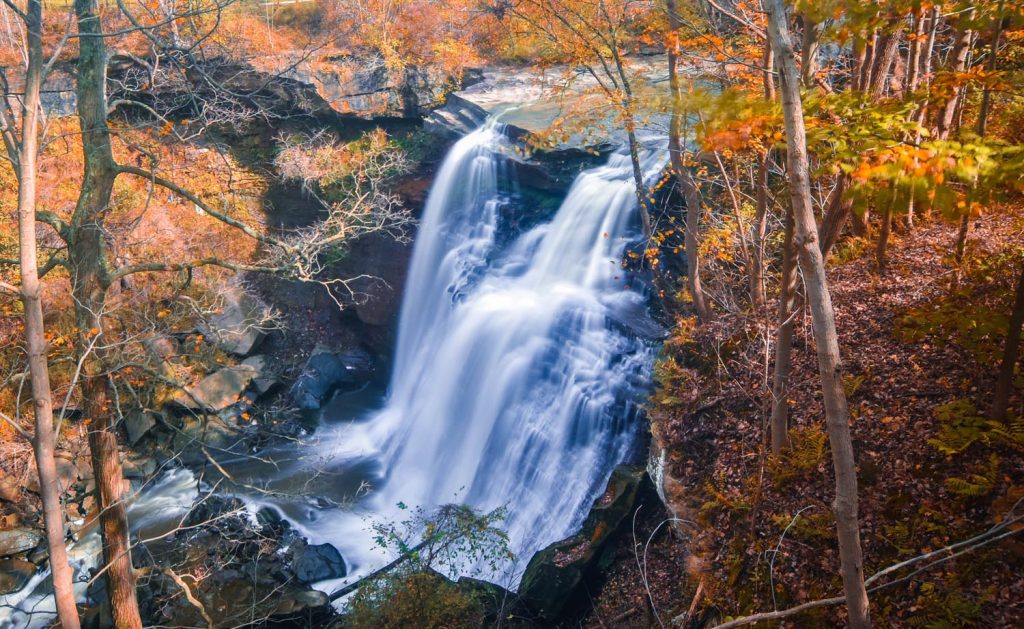
    Photo Tripping America - Cuyahoga Valley - Camping World
    Photo Credit: Erik Drost (CC BY-SA 2.0)

    One of the most popular attractions at Cuyahoga Valley National Park is this 65-foot tall waterfall. When the area was first settled a sawmill was built at the top of Brandywine, and later grist and woolen mills utilized the falls’ power.

    There’s something amazing about these falls. They’re an absolute must-see and one of the best photo opportunities in all of Ohio and much of the Midwest. If you’re with your family, make some time to go here to take in the falls in all their glory.

    Boston Store Visitor Center

    As the park’s main visitor center, Boston Store has a gift shop, restrooms and exhibits showcasing canal boat building in the valley. Ranger-led tours leave from this location, as well. The place iteself isn’t wildly impressive, but it’s somewhere worth stopping.

    It can also make a smart location to kind of base all of your park activities out of. This is especially true if you plan on taking part in any of the ranger-led tours, which come highly recommended.

    Canal Exploration Center

    Purchase goods from the Canal Era here, and try your hand at guiding a canal boat through a lock with interactive touch screens. There’s all sorts of information here, and if you want to bring an educational aspect to your trip, which can make for a more memorable trip overall, then you should stop in.

    The interactive site will go into why canals are and were important and what function the site itself served. You can check out the park’s website page on the center for more information.

    Hunt House
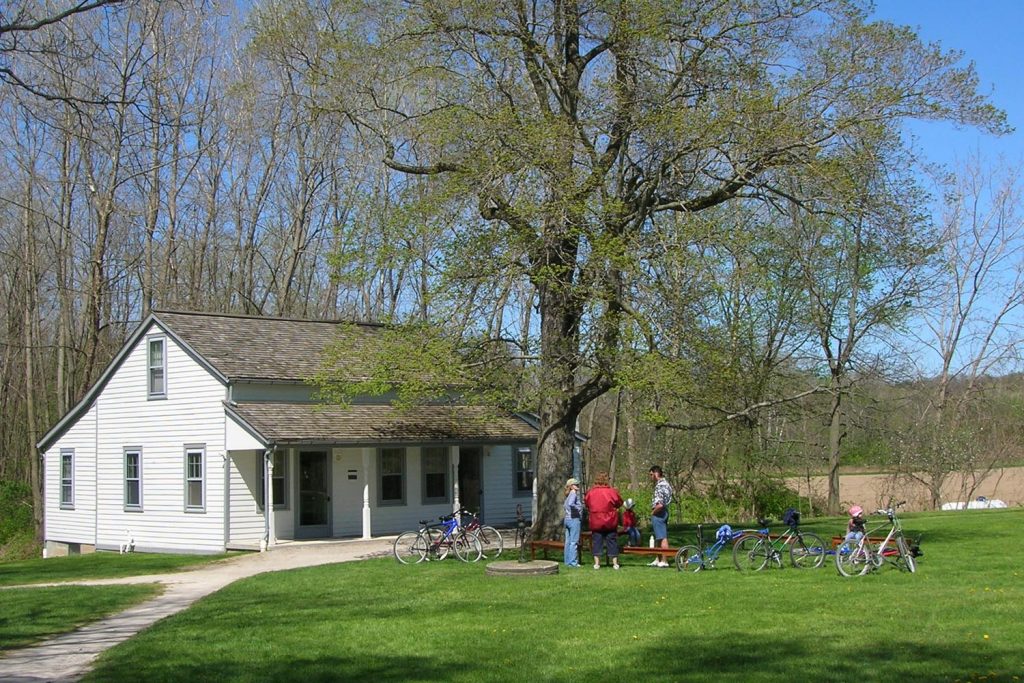
    Photo Tripping America - Cuyahoga Valley - Camping World

    Kids will love the nature exhibits at Hunt House, and adults will be grateful for a rest break here. It’s a wonderful place to sit back and relax for a few moments before moving on to the next location.

    The Hunt House is along the canal towpath trail, so you may want to take some time and relax here after hiking, running, or biking. It operates seasonally, so make sure to check the schedule before going there.

    Things to Do at Cuyahoga Valley National Park

    There are several ways to enjoy the park. I’ve already discussed many of them in the text above, but it’s important to call them out specifically, so you know exactly what you can do while you’re here. Here are just a few:

    Hiking

    There are over 125 miles of hiking trails throughout Cuyahoga Valley. Many are accessible to all visitors, and several regional trails run through the park, as well, like the Ohio Buckeye Trail. Here are the different sections of the park, with links to maps for the trails within them:

    I would suggest taking some time to look over the trails before you go and selecting a few areas you’d like to hike. Have a plan before you show up to the park. This will not only help you hike the trails you want, but it will help you decide what to bring with you in terms of snacks, water, etc.

    Biking

    Ride along the Towpath Trail in either direction. If you get tired, you can catch the Cuyahoga Train at any stop. This helps make things easy and allows you to bike as far as you want and then be able to take some time to relax on the train when you need it.

    Mountain biking is also popular on the East Rim Trail System. If you’re interested in more than just riding along the Towpath Trail, then this is the place to go. The trail system is a little more advanced and extreme.

    Fishing

    Photo Tripping America - Cuyahoga Valley - Camping World

    The Cuyahoga River is home to numerous steelhead, trout, and bullhead. Catch-and-release is suggested to keep the fish population healthy. There are also many lakes and ponds throughout the area that offer bluegill, bass, and crappy wherever you cast a line.

    Fishing is allowed in the park, but make sure you have an Ohio fishing liscense on-hand. You don’t want to get a ticket for fishing without a license. Also licenses are inexpensive and the money goes back into the parks system in most cases.

    Canoeing and Kayaking

    The national park does not maintain the river for recreational use, but it is open to anyone bringing their own kayak or canoe. There are five different access points throughout the park.

    Make sure to read up on the canoeing and kayaing rules for the park. These change from time to time, so check it before you go. You can do that by clicking here.

    The link above is also a great place to find out about any warnings the Park’s Department puts out about the park. Don’t just blindly jump on the river with your kayak or canoe. Make sure to check with the website and see if there are any warnings or issues you need to be aware of.

    Another way to enjoy the river is through companies that offer river experiences. There are several that will rent you a canoe or kayak. These companies take care of everything from dropping you off to picking you up. There are various trips you can take and they vary in length and duration. Paddle the River is one that offers a few different options.

    Horseback Riding

    Cuyahoga Valley has many different bridle trails within the park boundaries. Bring your own horse, as there is ample trailer parking at the Station Road parking lot.

    BRIDLE TRAIL NAMES DETAILS & LOCATIONS
    Wetmore Trail

    (See Wetmore Trail Map.)

    Length: 4 miles
    Riding Time:1.5 hours
    Elevation Change: 250 feet
    Rating: Moderate
    Trailhead Location: On Wetmore Road .6 miles east of Akron Peninsula Road, 1.75 miles south of Peninsula, Ohio. Trail is north of Wetmore Road.
    Tabletop Trail

    (See Wetmore Trail Map.)

    Length: 0.75 miles after access from Wetmore Trail
    Riding Time: 20 minutes
    Elevation Change: 100 feet
    Rating: Easy to moderate
    Trailhead Location: Wetmore Trailhead. On Wetmore Road .6 miles east of Akron Peninsula Road, 1.75 miles south of Peninsula, Ohio. Trail is north of Wetmore Road.
    Langes Run Trail

    (See Wetmore Trail Map.)

    Length: 4.5 miles
    Riding Time: 2 hours
    Elevation Change: 190 feet
    Rating: Moderate to difficult
    Trailhead Location:Wetmore Trailhead. On Wetmore Road .6 miles east of Akron Peninsula Road, 1.75 miles south of Peninsula, Ohio. Trail is mostly south of Wetmore Road.
    Butler’s Trail

    (See Wetmore Trail Map.)

    Length: 0.75 miles
    Riding Time: 20 minutes
    Elevation Change:150 feet
    Rating: Easy
    Trailhead Location: Wetmore Trailhead. On Wetmore Road .6 miles east of Akron Peninsula Road, 1.75 miles south of Peninsula, Ohio. Trail is south of Wetmore Road.
    Valley Trail

    (See Buckeye and Valley Trails: Station Road to Boston Trail Map.)

    (See Buckeye and Valley Trails: Boston to Everett Trail Map.)

    Length: Brecksville Stables to Wetmore is 11.4 miles
    Wetmore to Riding Run is 3.1 miles
    (Wetmore and Langes Run connect the north and south segments)
    Riding Time: 4-5 hours
    Elevation Change: 360 feet
    Rating: Moderate to difficult
    Trailhead Location: Trailhead is on the Langes Run Bridle Trail accessible via the Wetmore Trailhead. On Wetmore Road .6 miles east of Akron Peninsula Road, 1.75 miles south of Peninsula, Ohio.
    Riding Run Trail

    (See Riding Run and Perkins Trails Map.)

    Length: 3.25 miles
    Riding Time: 1.5 hours
    Elevation Change: 260 feet
    Rating: Moderate to difficult
    Trailhead Location: Everett Road Covered Bridge Trailhead. On Everett Road .5 miles west of Riverview Road in Everett, Ohio.
    Perkins Trail

    (See Riding Run and Perkins Trails Map.)

    Length: 3.75 miles
    Riding Time: 2 hours
    Elevation Change: 260 feet
    Rating: Difficult
    Trailhead Location: Everett Road Covered Bridge Trailhead. On Everett Road .5 miles west of Riverview Road in Everett, Ohio.
    Cleveland MetroParks Bridle Trails w/in CVNP
    Bedford Reservation Length: 6 miles
    Riding Time: 2.5 hours
    Elevation Change: 270 feet
    Rating: Moderate to difficult
    Trailhead Location: Hemlock Creek Trailhead. On Dunham Road immediately across from Tinker’s Creek Road, 1.4 miles north of Alexander Road in Bedford Reservation.
    Bedford Reservation Length: 3 miles
    Riding Time: 1 hour
    Elevation Change: 8 feet
    Rating: Easy
    Trailhead Location: Station Road Bridge Trailhead. On Riverview Road, 0.2 miles south of State Route 82 in Brecksville, Ohio.
    Brecksville Reservation Length: 9 miles
    Riding Time: 3 hours
    Elevation Change: 260 feet
    Rating: Moderate to difficult
    Trailhead Location: Stables Parking Area Trailhead. On Meadows Drive, 0.4 miles south of Valley Parkway on on Meadows Drive in Brecksville, Ohio.

    If you’d like to get more information about horseback riding in the park, make sure to check out the park’s website page on the subject by clicking here.

    Questing

    Follow a map and clues to discover natural and historical gems throughout the park. No GPS is needed! This is something you’ll have to do of your own volition. It’s well worth it, though. Set various goals for yourself throughout the park and see if you can get to all of the places on your list.

    You can also think about Geocaching. There are geocaches within the park. Read more about the caches in the park by clicking here.

    Snowshoeing

    Photo Tripping America - Cuyahoga Valley - Camping World

    Yes, the park is open during the cold winter months. And yes, it’s still a great time to visit the park. There’s still plenty to do and see and certain areas of the park are even more enjoyable and beautiful in the winter.

    Grab some snowshoes at the Winter Sports Center at M.D. Garage, and wander the trails after a good storm has deposited at least six inches or so of snow. Any less and your regular snow boots will get the job done.

    When To Visit Cuyahoga Valley National Park

    The park is open year-round, some places close at dusk, but everything else is open 24 hours a day. Autumn is a popular season for leaf peepers to watch the changing colors, and summer brings tourists and locals alike, anxious to explore the attractions throughout the park and enjoy hiking and biking the many trails.

    The winter months are also great, but generally, a day trip is what you’ll need. If you want to spend more time there, I suggest staying in an RV park that’s winter-ready or getting a hotel in a nearby town.

    Where RVers Can Stay

    Unfortunately, you can no longer camp within the park. However, there are four metro and state parks within the area that offer RV sites. They are:

    If you really want to stay within the park, there are some lodging options. You can either stay at the Stanford House or the The Inn at Brandywine Falls. Both offer top-notch accomodations, though it’s nothing like the camping we all know and love.

    Getting To and Around Cuyahoga Valley National Park
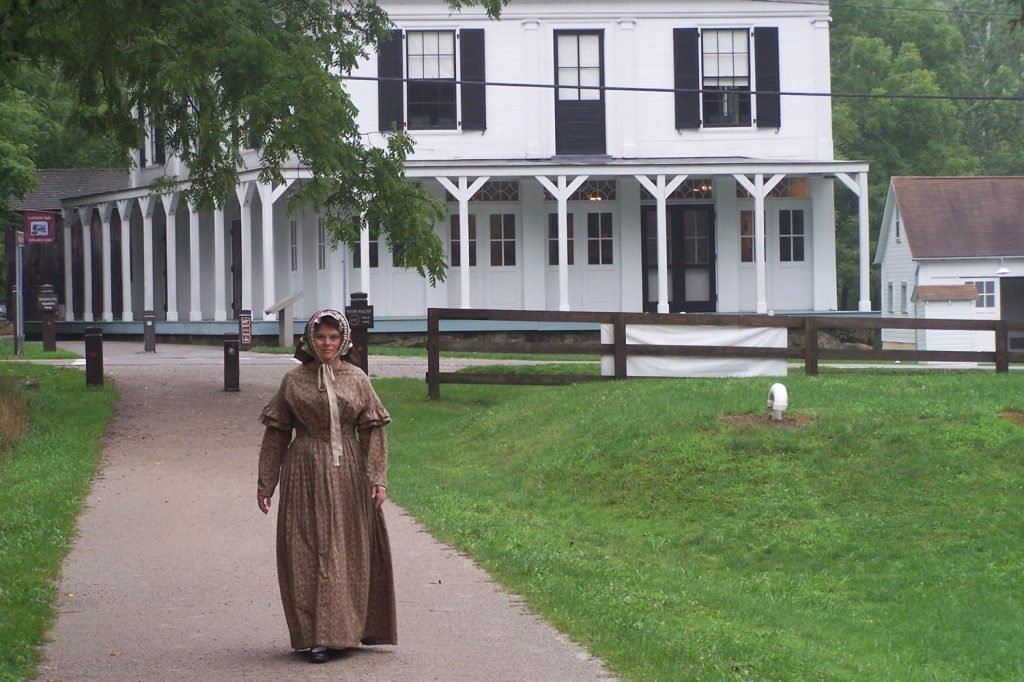
    Photo Tripping America - Cuyahoga Valley - Camping World

    From the south, the park is accessible 18 miles from Akron via I-77 and Highway 8, and from the north, travelers from Cleveland can travel I-77 south to Highway 21. The Boston Store Visitor Center marks the entrance to Cuyahoga Valley National Park and is located in the center of the park.

    Once inside, there are numerous roads, as this park sits in the midst of several outlying towns and districts. There are many forms of transportation to see the public and private attractions within the park, such as bicycling, walking or riding the Cuyahoga Valley Scenic Railroad.

    From Past to Future
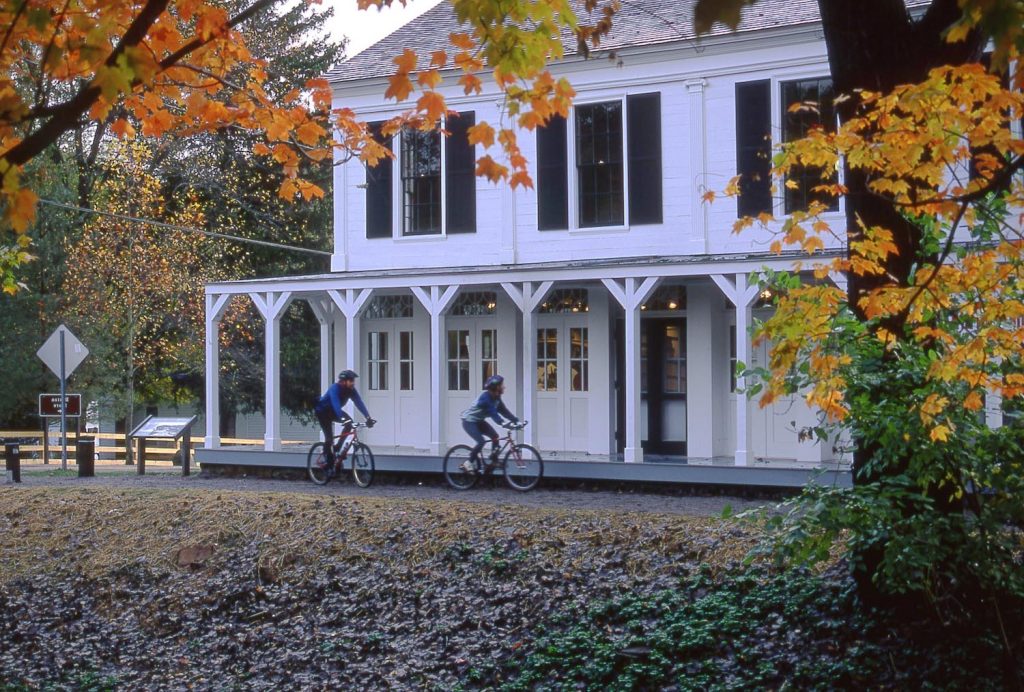
    Photo Tripping America - Cuyahoga Valley - Camping World

    Cuyahoga Valley National Park is an anomaly. It is a collection of wilderness locales and historical locations protected from the encroachment of progress. One only has to trek a few miles from the city to travel back in time, viewing life as it was here 150 years ago. And yet, this park is looking far into the future, recognizing the need to preserve its heritage and natural habitat for the generations to come.


    Have you been to Cuyahoga Valley National Park? If so, what’d you think? Leave a comment below. 

    Camping World's guide to Cuyahoga Valley National Park


    Source link

  • Talking About Full-Time RV Life With Non-RVers

    Talking About Full-Time RV Life With Non-RVers


    I hear it all the time. When it comes to full-timing RV living, people say things like, “People actually do that?!” The answer, yep, and they love it. Thousands of people live full-time in their RV, but when I discuss full-time RVing with people who don’t RV at all, it comes off as something that’s weird or often somehow unacceptable.

    It’s just a different mindset. Many of these people have no idea what modern RV life can be like or how homey modern RVs actually are.

    What’s funny to me is that many people would actually be happier if they lived in an RV, or at least it seems that way. I know a lot of people who want to simplify their life and see the country and full-timing is a great way to do that. However, if I were to bring up full-time RV living to them, they would scoff and write off my suggestion as silly or absurd.

    So, I’ve found that you need to approach these conversations in a certain way. Here’s some advice on talking to non-RVers about full-timing.

    Make It Clear That Full-Timing Is a Choice

    luxury rv resorts

    In my experience, the people who don’t understand full-timing often think people live in their RV because they have no choice. They assume there’s a financial reason that’s put them in an RV.

    There are some people who do cite affordability as the main reason for living in their RV, but I have yet to meet or talk with someone who has that as their only reason.

    So, when discussing full-timing with a non-RVer, you should make it clear that full-time RVing is a choice. It’s a decision you’ve made to help you live your life to the fullest.

    Tell them your reasons for full-time RVing. The number one that I hear is that people want to see the country. They want to explore and chase experiences instead of possessions. Yes, a more affordable lifestyle can be had RVing, but you can also live lavishly if you want to. Honestly, it’s pretty easy to spend more money living in an RV that you would in a house, so the idea that it’s automatically cheaper is deeply flawed.

    Full-timing is about having ultimate freedom and complete control over your life. It’s a choice you make to not be tied down to a specific place. If you can get them to understand that, then you’ve made the first step towards getting them to understand the full-time RV lifestyle.

    Tell and Show Them How Awesome Modern RVs are

    RV interior

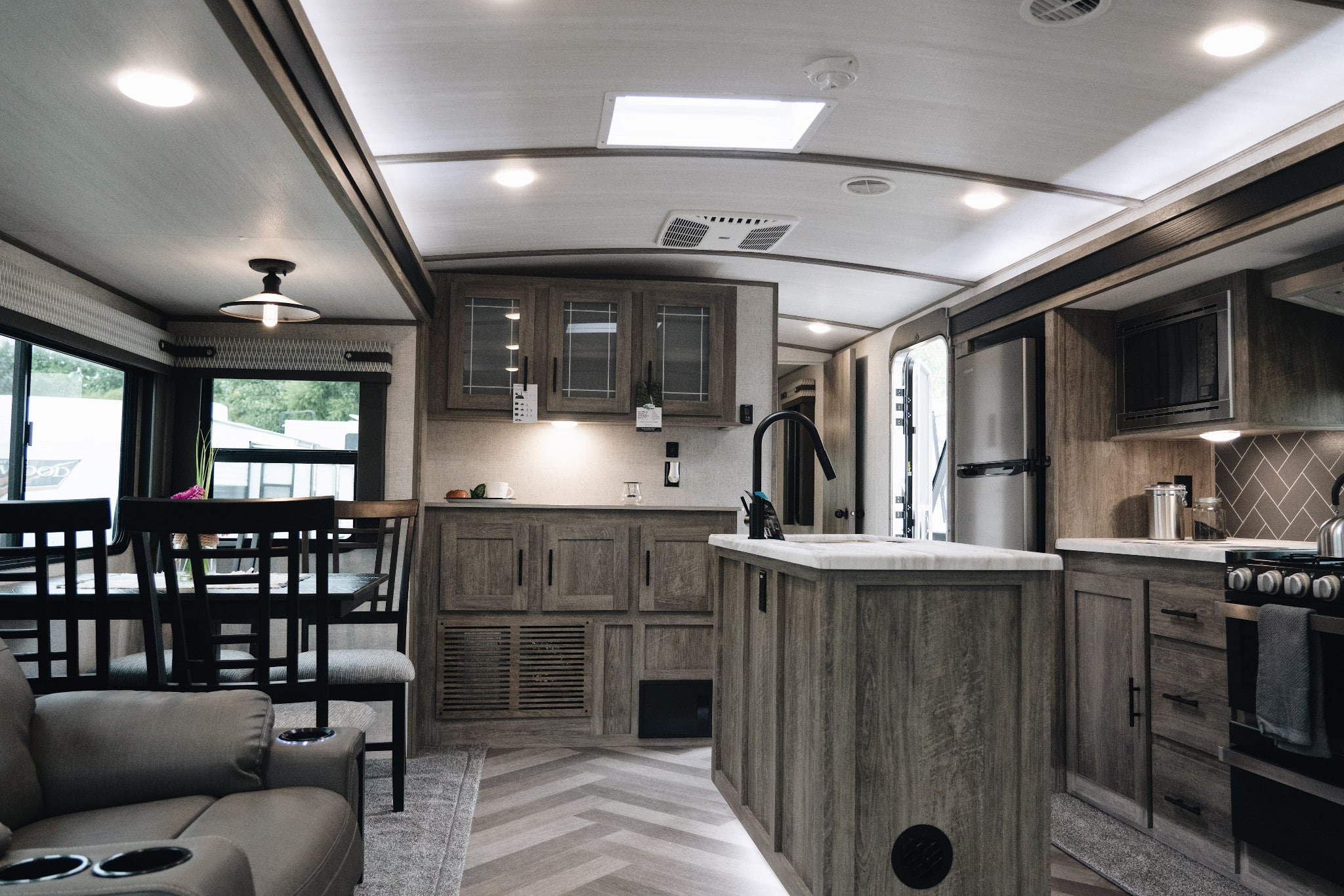
    A lot of people who don’t RV have an outdated idea of what the inside of an RV is like. They often assume RV interiors are cheap, cramped, and uncomfortable. I’ll admit that there are still some RVs out there that fit this description, but for the most part, modern RVs are very home-like.

    With modern materials, residential-style furniture, slide-outs, and modern appliances come RVs that are as comfortable and convenient as a typical home. 

    Tell skeptics that. Even if they believe you, take things a little further. Whip out your smartphone and show them pictures of your home on wheels. If you don’t have pictures of your own RV, pull up the manufacturer’s website and show the person or people you’re talking to what they can expect from a modern RV. You’ll often surprise some folks.

    Discuss The Advantages of Full-Time RVing

    Similar to talking about the fact that full-time RVing is a choice, I would also urge you to discuss the advantages of full-time RVing. First and foremost is the freedom. So many people want to travel but can’t because of the fact that they have to stay close to the house they purchased.

    With an RV, you take your home with you. While this isn’t for everyone, in the right context, it can make life thoroughly enjoyable. You can travel almost all of the U.S. and go out of the country if you want in your RV. Traveling and having new experiences is the number one advantage I can think of.

    It’s also a simpler life. Many people end up with tons of stuff when they have a house. Not all those possessions will make them happy. Some things might, but I’ve found that too much stuff in your house is often just a source of a lot of stress. The smaller living space of an RV means you get to downsize your life and live simpler. Living this way doesn’t mean you go without things. It just means you better manage your life and the things in it.

    You can also discuss the financial benefits if you want. However, make it clear that it’s all about how you manage your money. You can easily spend more money living in an RV than you would if you just owned a home. Affordable RV living is certainly possible and most full-times do save money, but it’s not necessarily like you’ll be socking away cash all the time.

    Also, don’t let them think money is the only or main reason for choosing the RV lifestyle as already discussed above. It is a notable advantage over a typical home, but not the sole reason. You can point out all of the differences between living in and paying for a house and living in and paying for an RV.

    First and foremost talk about the fact that it’s often easier to pay off an RV than it is a house. RVs simply cost less. Also, insurance is very affordable. Maintenance fees and the cost to upgrade are often less than you’ll spend on a home. You do have fuel and sewer fees, but homes have to pay for electricity, natural gas, and sewer service, too. RV’s win the war here, too. If you live smart RV living is very affordable.

    Sure, you’ll have to pay for campgrounds, but there are also plenty of ways to find free or reduced-cost campgrounds or camping areas. For example, a Good Sam membership will get you camping discounts on campgrounds across the country. Also, BLM land is available for free camping and is in some of the most beautiful areas of the country.

    By talking about the advantages, you should help them understand why full-time RVing is a smart way to go for many people.

    Address the Misconceptions

    Caravan in a park

    There are a lot of misconceptions out there about full-time RVers. One is that they’re vagrants without jobs. I’ve heard this often, and it simply isn’t true. Many full-time RVers have full-time jobs they can do remotely. Many others are business owners. Others get jobs wherever they go. It depends on how a person wants to live their life.

    Other times I’ve heard people say things like full-time RVers are just always on vacation. That’s definitely not the case for most. If you’re independently wealthy or retired, you may have a life closer to this, but the fact of the matter is that living in an RV isn’t all that different than living anywhere else. You still have to do laundry, clean your home, and the kids (if you have them) still have school work to do.

    Non-RVers often also assume that full-timers are loaners and don’t have many friends. This is 100 percent not true. In my experience, it’s the opposite. Most of the RVers I know or have talked with have more friends than people who live in a typical house. Why? They travel around and meet people and make friends. This can make for a very rich social life.

    The bottom line is that many people have an idea of what living in an RV will be like. Most of those initial thoughts are wrong. Be ready to explain why those thoughts are and show the person what it’s really like.

    Be Respectful of Their Opinions

    Full-time RVing isn’t for everyone. It’s an alternative lifestyle and one that will not work for everyone. Some people get attached to a specific place or have no interest in traveling the country. While that might not be your ideal lifestyle, it certainly is a valid one.

    Some people will still think full-timing is crazy even after you explain the benefits to them. That’s okay. It’s not for them. That’s no worry of yours. Respect the choices they’ve made and the way they decide to live their life. You want the same from them right?

    If you respect their opinions and make it clear that you understand where they’re coming from but that conventional house isn’t for you, you’re bound to find people will treat you with the same level of respect you would like.


    How have similar conversations gone for you? Leave a comment below and share your experiences!


    Source link

  • The Ins and Outs of Every 2020 Keystone Cougar Fifth-Wheel

    The Ins and Outs of Every 2020 Keystone Cougar Fifth-Wheel


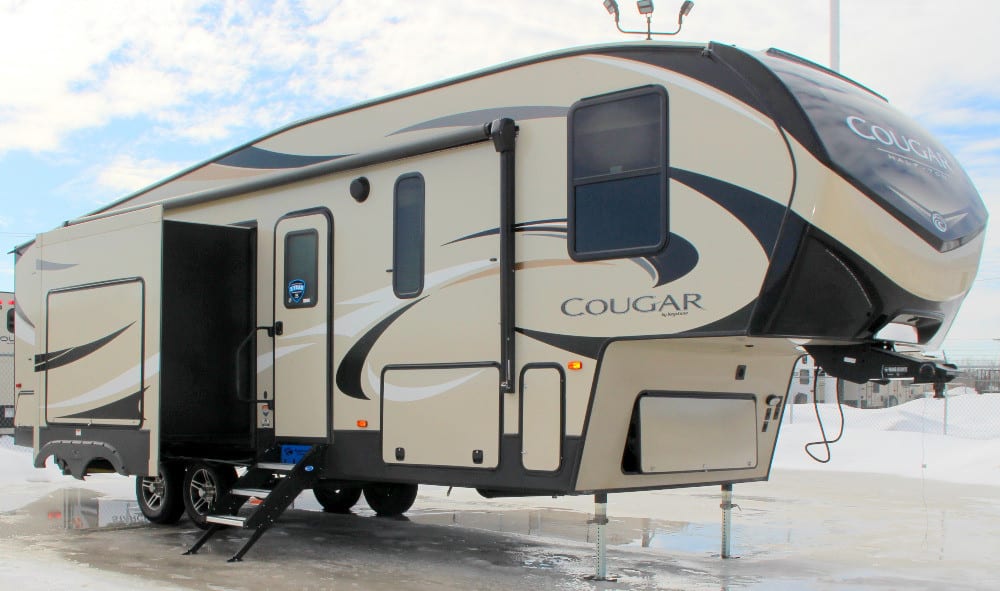
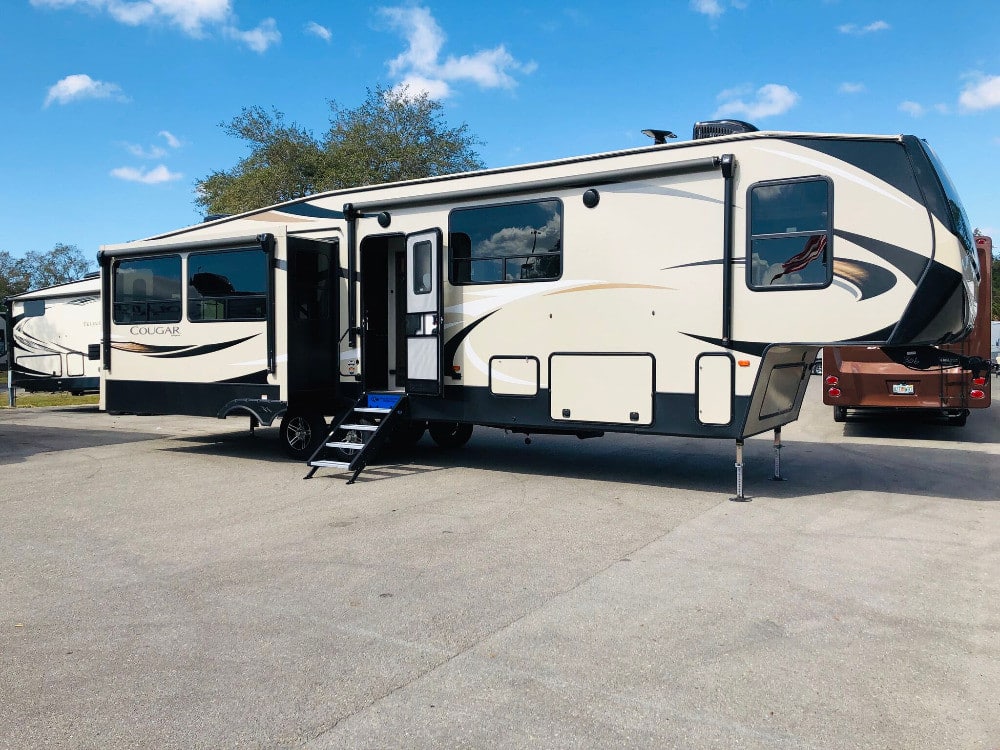
    Keystone Cougars are the most popular fifth-wheels made today. Aside from their reliability, there are a ton of Cougar fifth-wheel floorplans. As such, for this article, I will be splitting them up by Cougar Half-Tons and Cougar Mid-Profiles. I’ll provide you a campground full of useful information, but I recommend you go grab a snack.

    Don’t worry, I’ll wait. Got it? Okay, let’s dive in.

    Cougar Half-Ton Fifth-Wheels

    keystone cougar half-ton
    Image from Camping World

    Ready? Good. First, I’m going to hit the Cougar Half-Ton fifth-wheels, separating them by floorplan. The Cougar Half-Tons are lightweight fifth-wheels designed to be towed by a half-ton truck, but we always advise you make sure what your truck’s towing capacity is before venturing into buying any RV—travel trailer or fifth-wheel.

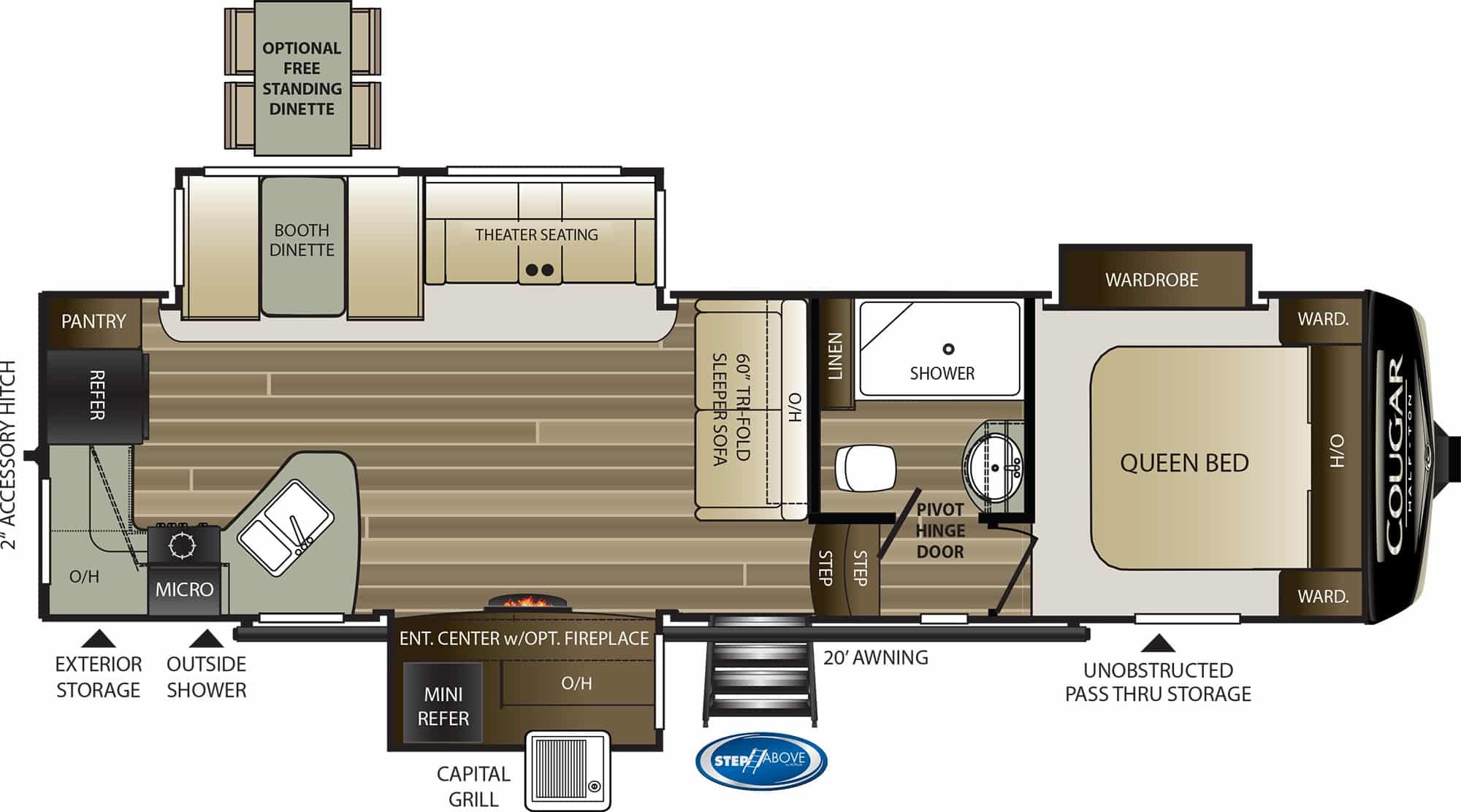
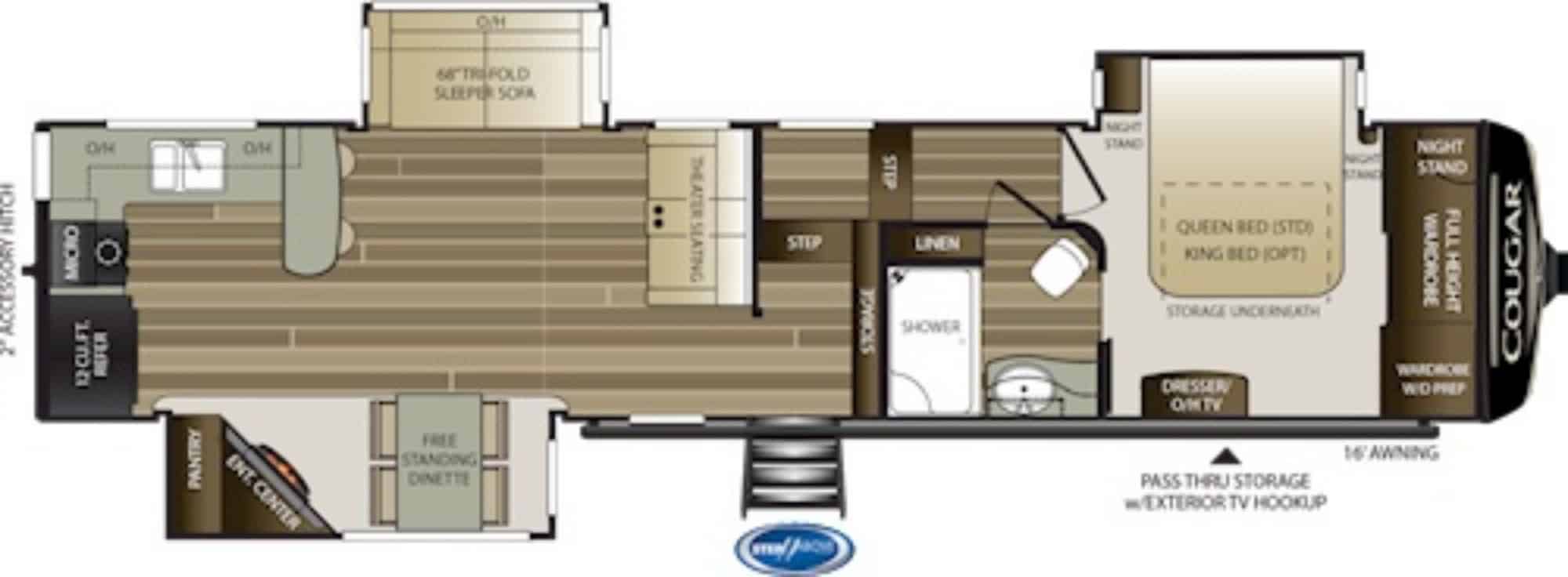
    What do Cougar Half-Tons all have in common? They all have a walkaround queen bed in the front cap with a wardrobe slide-out. Aside from the 32BHS, all of them also have a bathroom with a full-size shower, linen closet and single vanity sink. The majority of them also have an electric fireplace as an option. Plus, Cougar Half-Tons are easily identifiable as they all have a two digital numerical code in the front of their name.

    Currently, there are eleven Half-Ton floorplans available with four of them family-friendly bunkhouse floorplans. Let’s hit those bunkhouse floorplans up first and run through them by length.

    Cougar 29RDB

    keystone cougar 29RDB

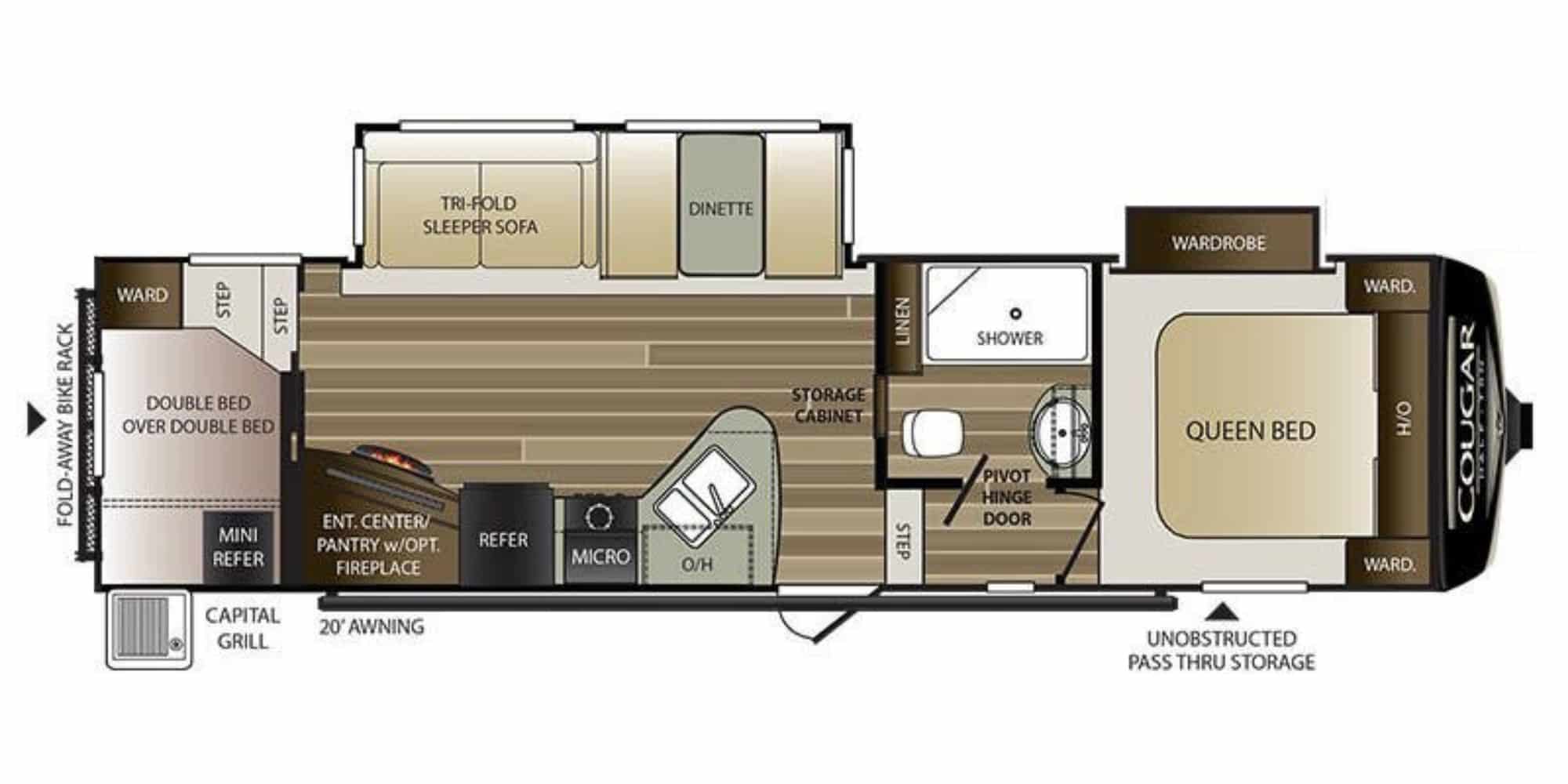
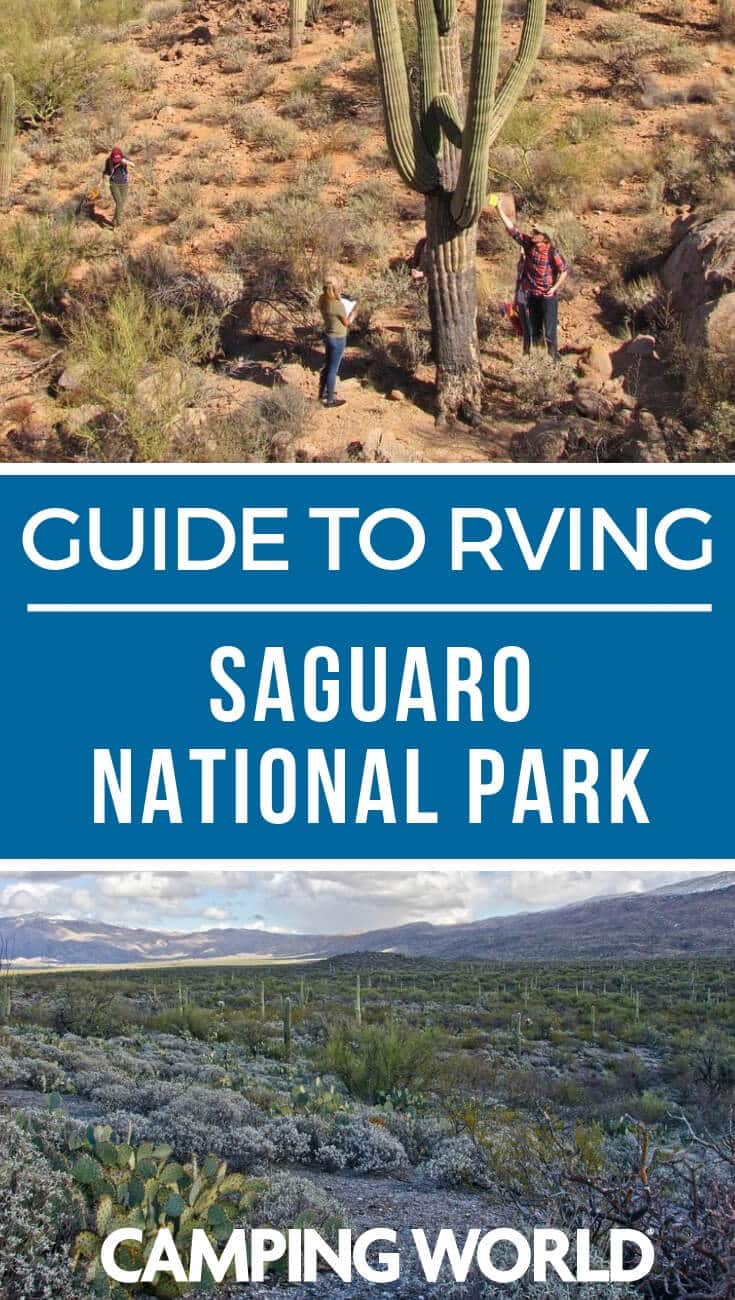
    The 29RDB has double-over-double bunks on the rear wall, plus a large living area slide containing a tri-fold sleeper sofa and a booth dinette. You’ll find a large angled entertainment center, a wide L-shaped kitchen, plus an outside kitchen. You’ll still find a select few of this unique floorplan.

    Check it out at Camping World

    Cougar 29MBS

    keystone cougar 29MBS

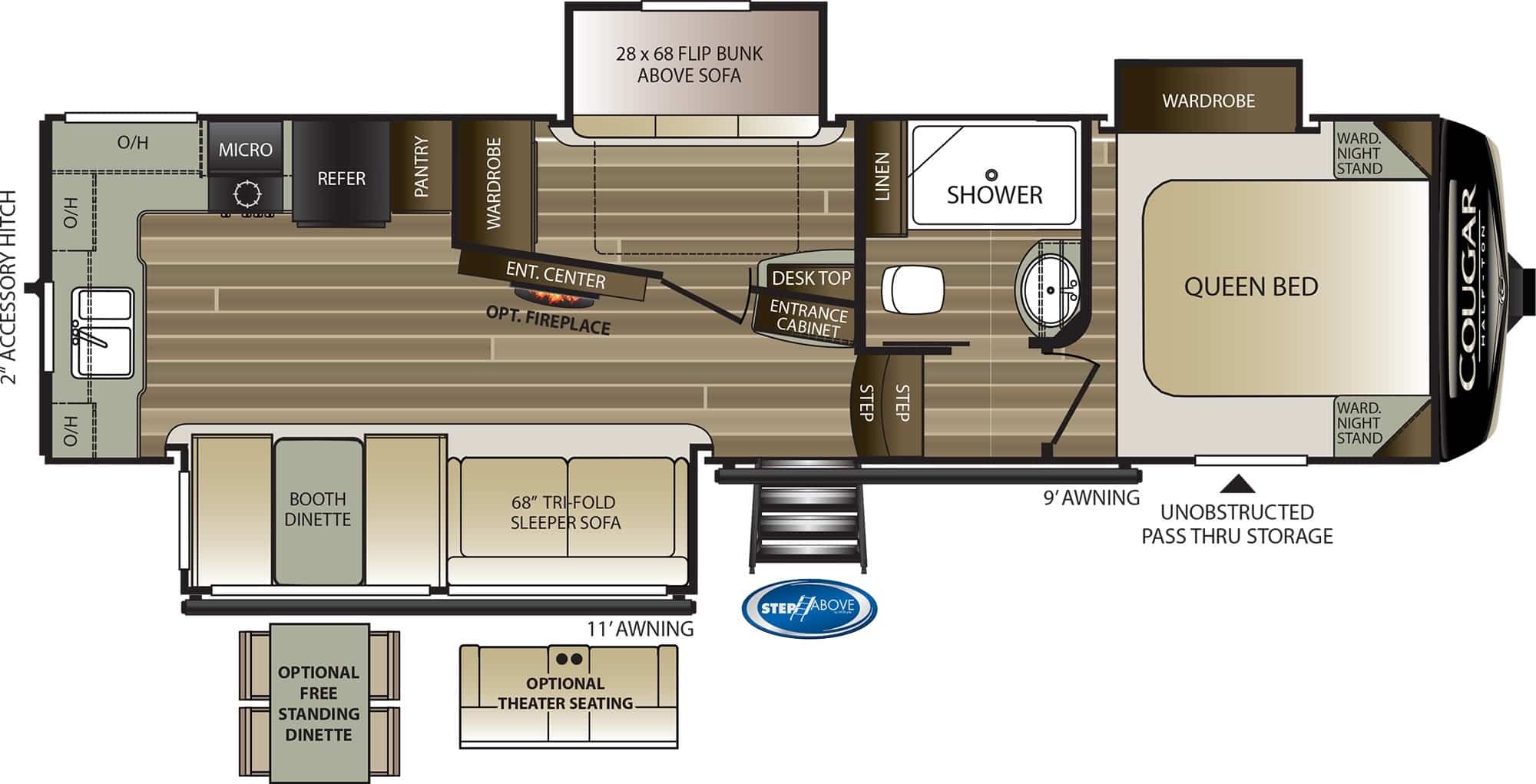
    This brand-new floorplan has a rear kitchen covering its back wall with a large countertop extending across the off-camp side wall ending at the fridge and full-length pantry. But what makes it really unique is the true bunkroom in the middle containing a flip bunk above a tri-fold sofa embedded in a slide-out. You’ll also find a large living area slide-out with an additional tri-fold sleeper sofa and booth dinette.

    Check it out at Camping World

    Cougar 32BHS

    keystone cougar 32BHS

    This is the only Cougar Half-Ton bunkhouse model having a bath-and-a-half. The half bath sits adjacent to the master bedroom while the full bath is next to the bunkroom plus has an entry door directly from the exterior. The bunkroom has a flip-up bunk above a jackknife sofa embedded into a slide-out with double bunks across from it. The 32BHS also has a large living area slide plus an outside kitchen.

    Check it out at Camping World

    Cougar 32DBH

    keystone cougar 32DBH

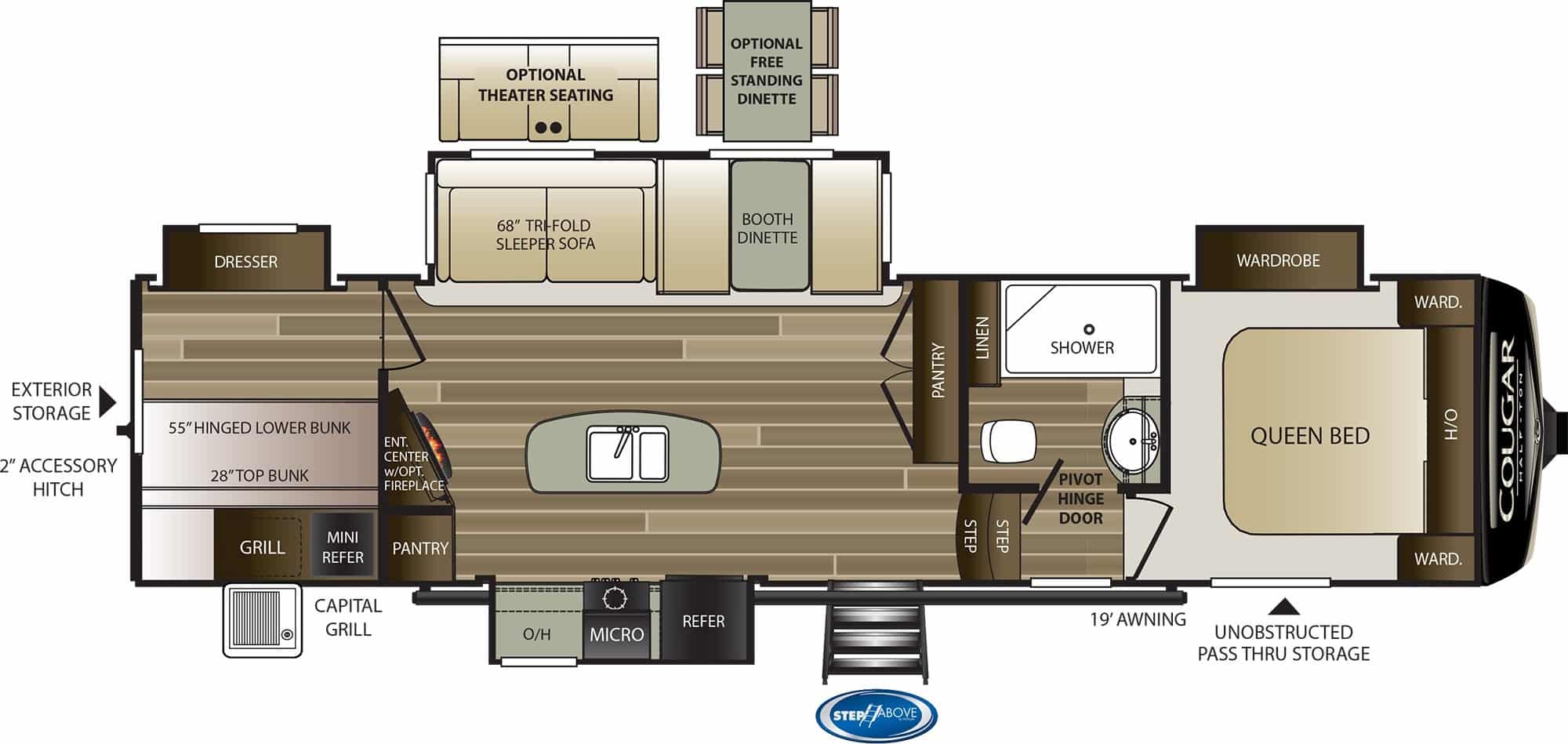
    The 32DBH has opposing slides in the living area with the standard large living area slide-out sitting across from a kitchen slide. The slides allow room for a good-size kitchen island. The bunkroom has a dresser in a slide-out across from a twin-over-double bunk system. The 32DBH also has a large pantry and an outside kitchen. This bunkhouse is in limited supply.

    Check it out at Camping World

    The rest of the Cougar Half-Tons, designed for the camping couple, will be gone over by length.

    Cougar 23MLS

    keystone cougar 23mls

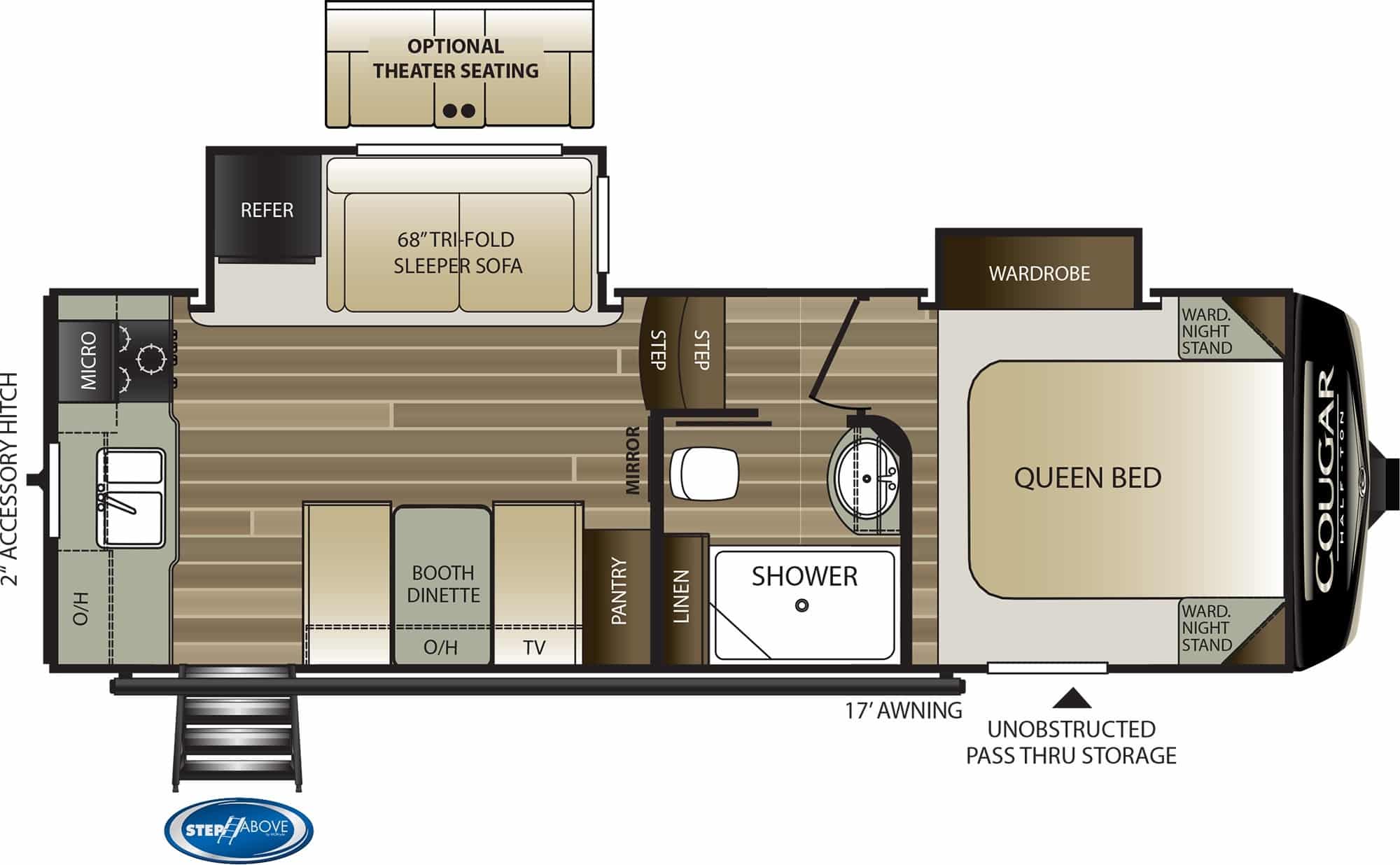
    This newer floorplan has its kitchen against the rear wall with the fridge sharing a slide-out with the tri-fold sofa. You’ll also find a full-length pantry.

    Check it out at Camping World

    Cougar 24RDS

    keystone cougar 24RDS

    Effectively, this newer floorplan is just like the 23MLS only the kitchen has been shifted to the camp-side wall and a large U-shaped dinette has been placed against the rear wall.

    Check it out at Camping World

    Cougar 25RES

    keystone cougar 25res

    One of the most popular Cougars, the 25RES has a large entertainment center angled toward the living area slide-out. The kitchen has a wide countertop stretching into the center area. The 25RES also has an outside kitchen.

    Check it out at Camping World

    Cougar 27SGS

    keystone cougar 27SGS

    Another popular model, the 27SGS creates a true rear living atmosphere with opposing slide-outs pulling out the booth dinette and angled entertainment center across from a slide containing the tri-fold sofa and kitchen appliances. On the back wall sits a pair of recliners, and the kitchen has a large L-shaped counter.

    Check it out at Camping World

    Cougar 29RES

    keystone cougar 29RES

    With a pop-up TV on the back wall and an L-shaped sofa and kitchen counter extending from a large slide-out, the 29RES is the ultimate in a rear entertainment floorplan. Sitting across from this is an additional slide-out holding a pair of recliners and the booth dinette. This floorplan is in limited supply.

    Check it out at Camping World

    Cougar 29RKS

    Keystone cougar 29RKS

    The 29RKS has a large L-shaped kitchen spanning the rear wall, ending camp-side by a huge entertainment center embedded in a slide. Across from this, you’ll find the Cougar standard large living area slide-out only the tri-fold sofa has been moved to an interior wall and a pair of theater seats are in the slide-out. The 29RKS also has an outside kitchen.

    Check it out at Camping World

    Cougar 30RLS

    Keystone Cougar 30RLS

    In this floorplan, you’ll find the tri-fold sofa sitting against the rear wall, opposing slide-outs pulling out the theater seats and booth dinette camp-side across from a large slide-out containing the major kitchen appliances, pantry, and entertainment center.

    Check it out at Camping World

    Cougar Mid-Profile Fifth-Wheels

    keystone cougar mid profile

    The difference between the Cougar Half-Tons and the Mid-Profiles is the weight. Yes, you’re going to need a bigger truck.

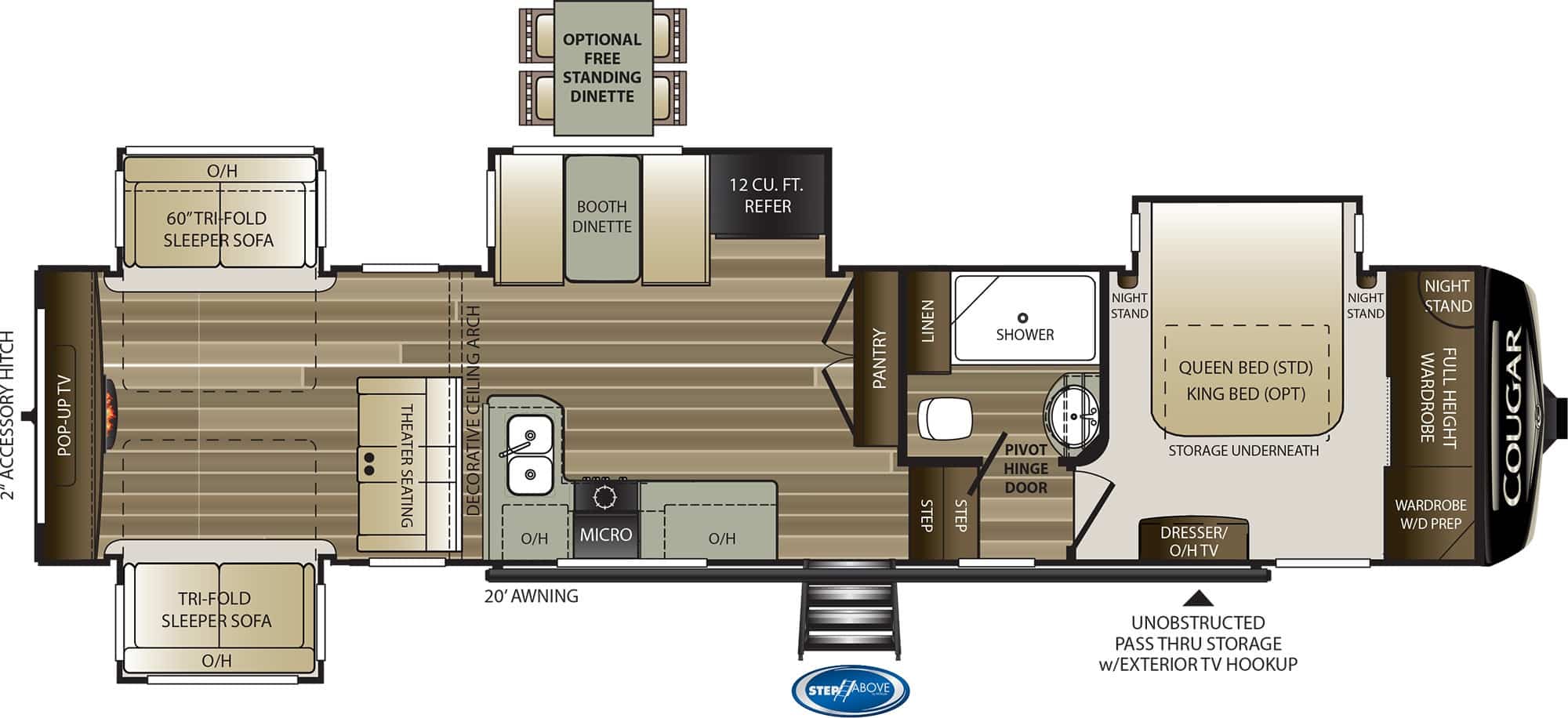
    As far as floorplans, there are eleven Cougar Mid-Profiles with a few in limited supply. What do they have in common besides each one having a three numerical code in their name? Most will have an electric fireplace as well as a washer-dryer prep.

    Eight of them have their walkaround residential queen bed embedded in a slide-out, with the other four having the traditional walkaround queen centered in the front cap and a wardrobe slide-out.

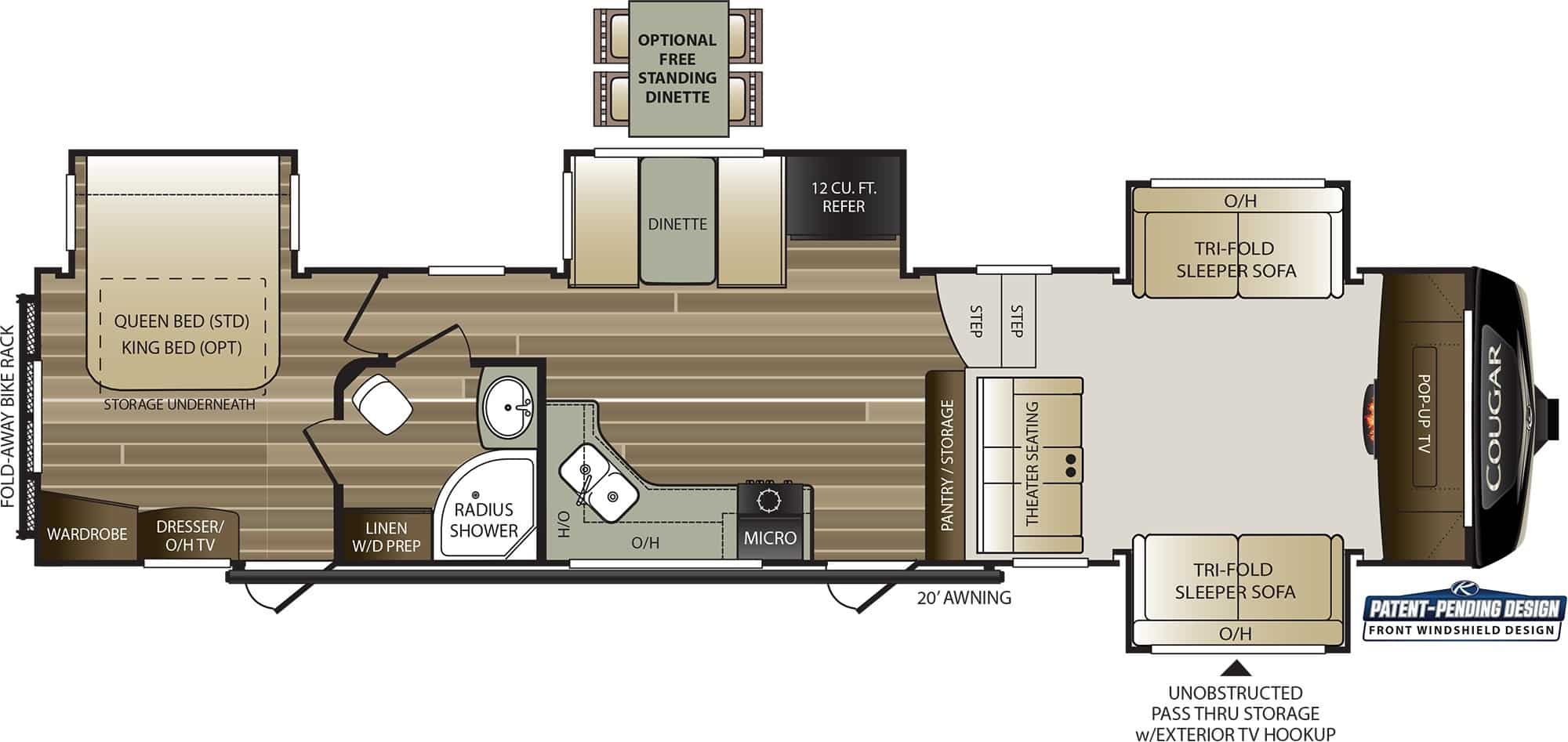
    These latter traditional four models have a walkthrough bathroom with a neo-angle shower and private access via the bedroom. The other eight have a bathroom adjacent to the bedroom as well, but with a full-size residential shower. Three of these have walkthrough bathrooms.

    Of the floorplans, there are two that fit into the family-friendly bunkhouse arena. I’ll walk you through those first.

    Cougar 364BHL

    keystone 364bhl

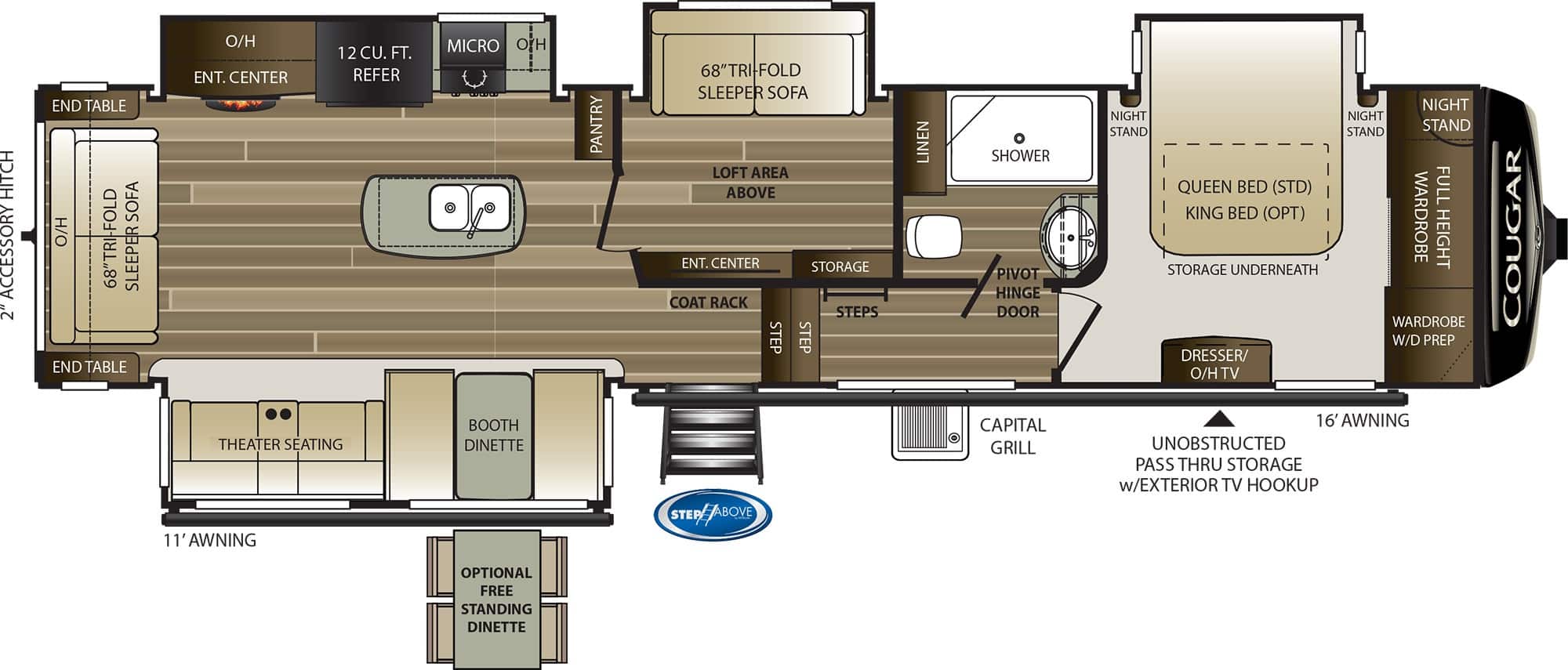
    The 364BHL has a true bunkroom in the back with a double bed plus a double bed-size loft. The bunk room also has its own half bath with direct access to it from the exterior. The living area has opposing slide-outs: a kitchen slide-out across from a larger slide containing the tri-fold sofa and booth dinette. The 364BHL also has a large angled entertainment center, kitchen island, and an outside kitchen.

    Check it out at Camping World

    Cougar 368MBI

    keystone cougar 368MBI

    While it has a bunk feel, this is mostly a rear living floorplan. In the layout’s center, you’ll discover a room with a tri-fold sofa with a loft area above the room. On the rear wall sits another tri-fold sofa, this one facing a kitchen island. The living area has opposing slide-outs: one contains theater seats and the dinette; the other the entertainment center and kitchen appliances.

    Check it out at Camping World

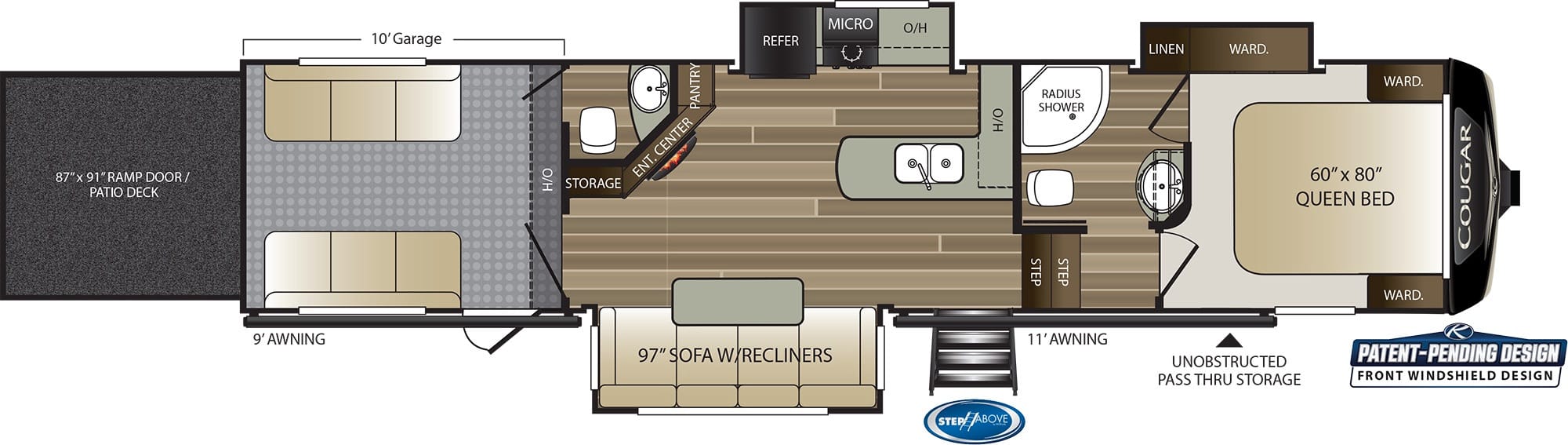
    For all of us who love to bring our toys to the campground, now we’ll dig into the all-new, and sole toy hauler, the Cougar 353SRX.

    Cougar 353SRX

    keystone cougar 353SRX

    The garage space spans 10 feet in depth, has its own half-bath and is enclosed, sealed off from the living area by a solid door. The living area has opposing slide-outs: a kitchen slide-out across from a slide-out containing a massive 105-inch sofa. An entertainment center angles toward the sofa and the kitchen has a massive L-shaped counter.

    Check it out at Camping World

    The rest of the Cougar full-profile fifth-wheels are rear living of some sort or another with one notable exception. I’ll be taking you through the rest of the Cougar floorplans by length.

    Cougar 302RLS

    keystone cougar 302RLS

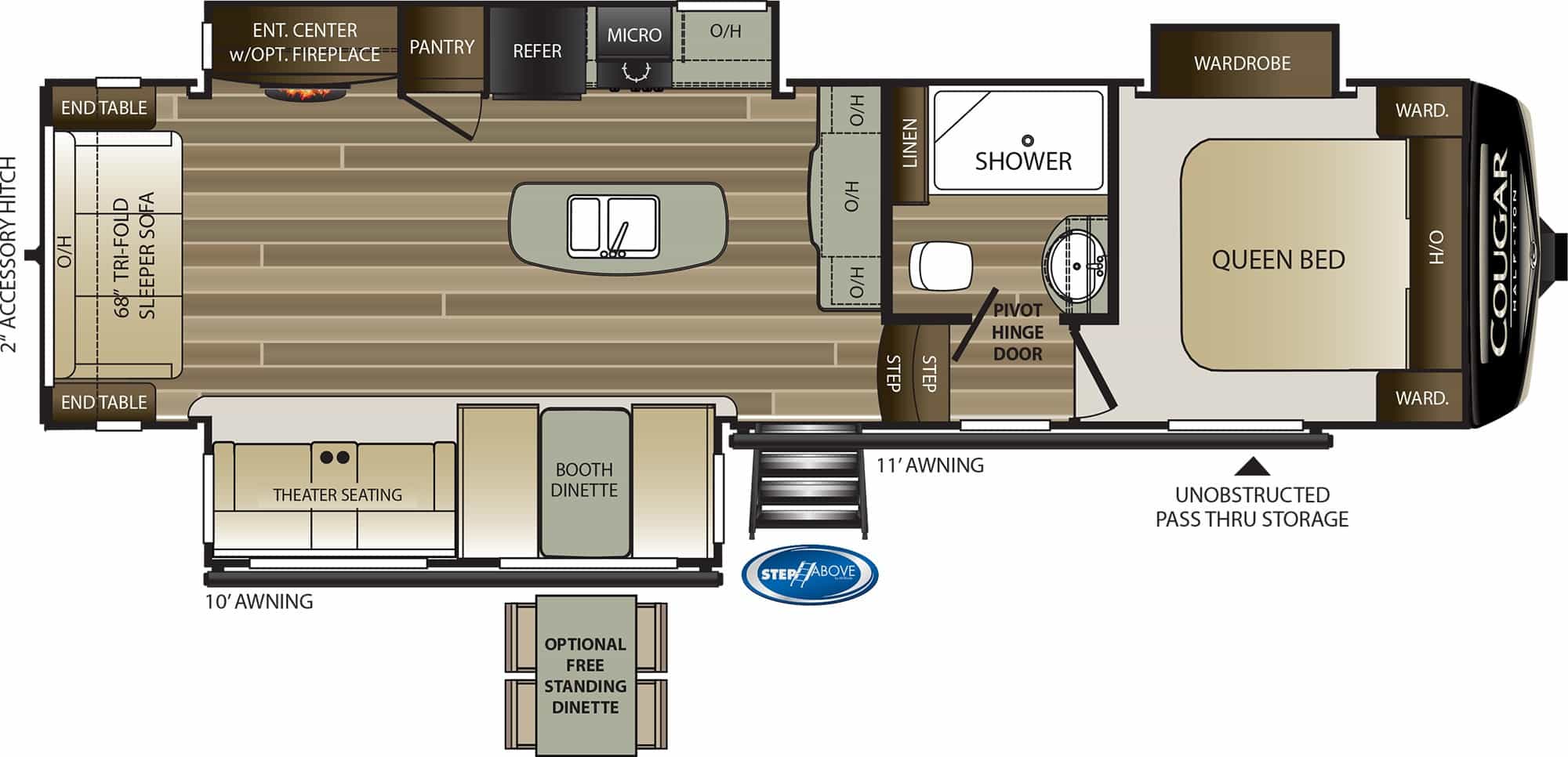
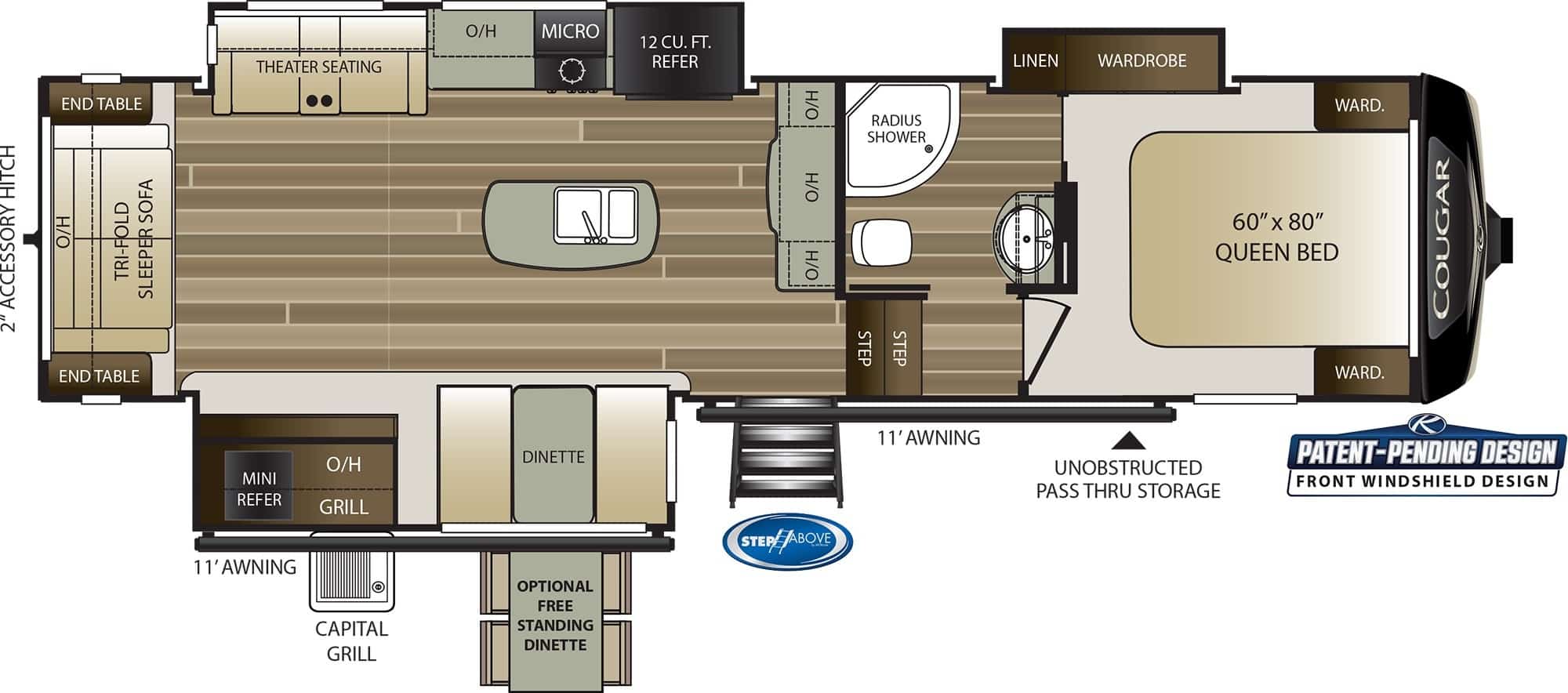
    Traditional in terms of layout, the 302RLS has a tri-fold sofa on its back wall facing a kitchen island. Room for the island is created by opposing slide-outs, with one slide-out containing the entertainment center and dinette; the other containing theater seats and the major kitchen appliances.

    Check it out at Camping World

    Cougar 307RES

    Keystone cougar 307RES

    A traditional rear living floorplan with a unique twist in the kitchen, the 307RES is ideal for couples who love to entertain. On the back wall, you’ll find a tri-fold sleeper sofa for guests and in the living area two opposed slide-outs. One slide-out has theater seats and the booth dinette. Across from it, the slide pulls out the entertainment center and kitchen appliances. This slide helps to create a large, unique J-shaped kitchen with plenty of counter space.

    Check it out at Camping World

    Cougar 315RLS

    Keystone cougar 315RLS

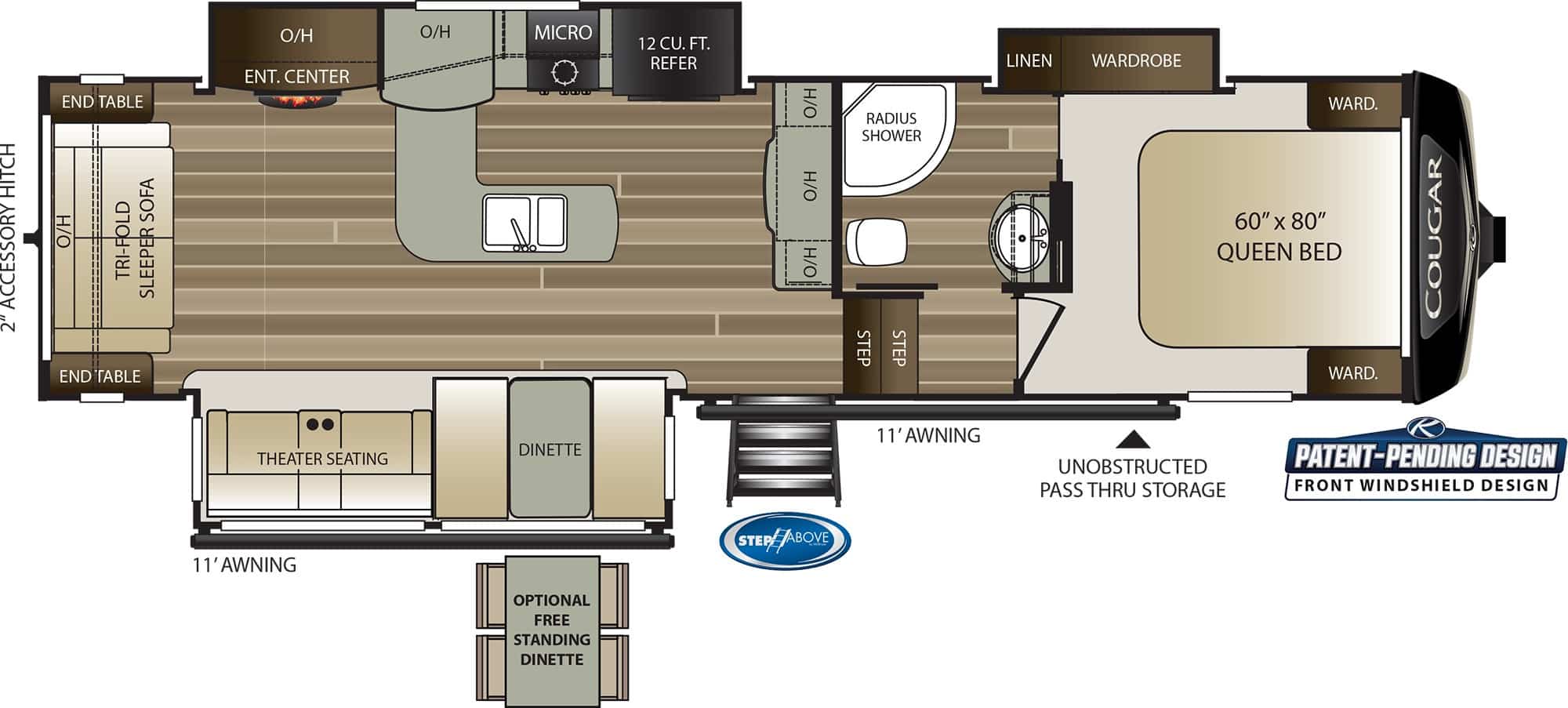
    One of the most popular Cougar Mid-Profiles, the 315RLS has virtually the same layout as the 307RES with a few notable exceptions. The J-shaped kitchen makes way for a large kitchen island and also provides space for a large full-length pantry. Upfront, the master bedroom has its bed in a slide-out, which creates more space for a larger wardrobe closet in the front cap.

    Check it out at Camping World

    Cougar 338RLK

    Keystone Cougar 338RLK

    Keystone must have thought, “Let’s take the 315RLS, flip the theater seats and the entertainment center, move the full-length pantry perpendicular to the kitchen island, add an outdoor kitchen, and call it the 338RLK.” Great idea! Done! There are a few of these still new, patiently waiting for a fifth-wheel camp lover to own them.

    Check it out at Camping World

    Cougar 361RLW

    Keystone Couger 361RLW

    The 361RLW takes the 315RLS back end with its opposing slide-outs and kitchen island and drops it onto a newer set-up from the bathroom forward. The bathroom is moved camp-side and turned into a walkthrough bathroom with private pocket door access from the master bedroom. The bed is still in a slide-out, but the front cap is now a massive dresser with flanking wardrobe closets. Unique, the washer/dryer prep has been moved to the living area right next to the entrance.

    Check it out at Camping World

    Cougar 362RKS

    Keystone cougar 362RKS

    Kitchen-focused, the 362RKS has its back wall covered with the kitchen … and then some, as the kitchen extends up the side and adds additional counter space along with a pair of barstools. A tri-fold sleeper sofa is in its own slide-out while across from it you’ll find another slide-out with the booth dinette and the entertainment center/fireplace at an angle for those in the theater seats to enjoy. Fair warning, this 2020 model is being phased out, but you can still find a few of them across the country.

    Check it out at Camping World

    Cougar 366RDS

    keystone cougar 366rds

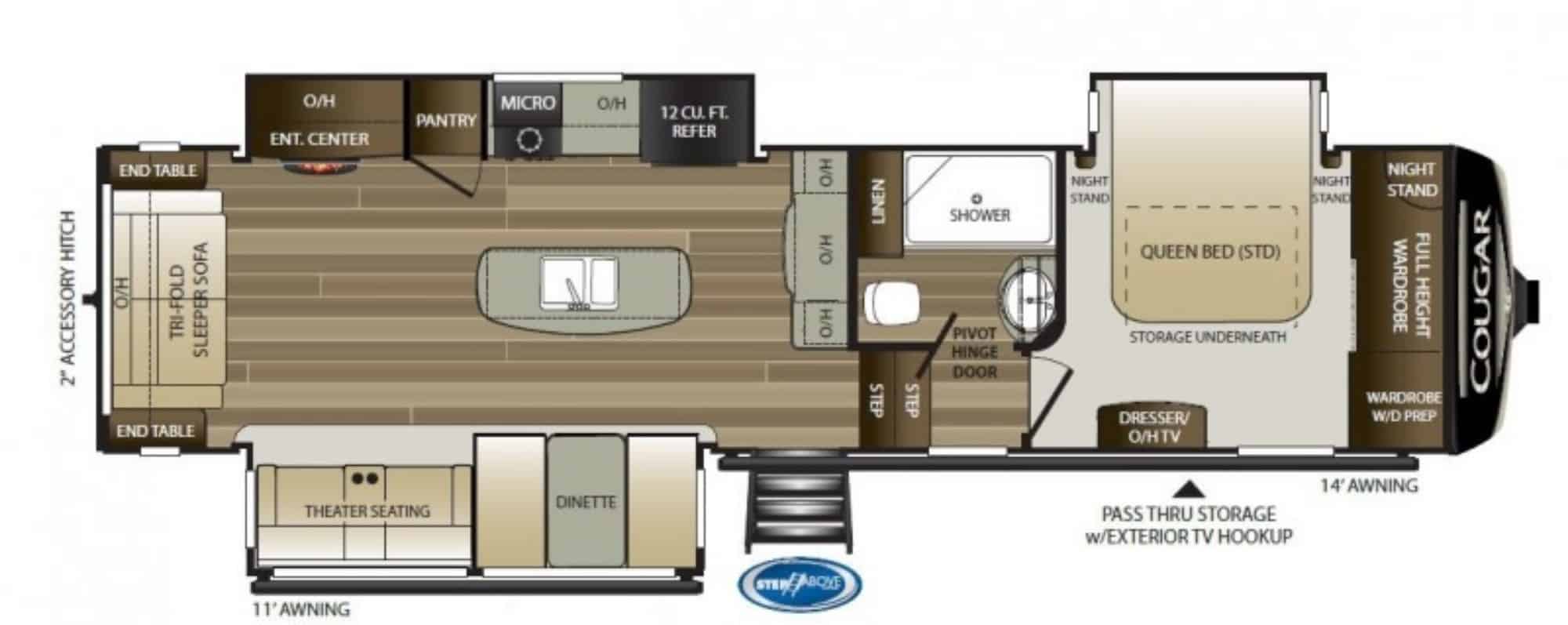
    Are you a camper who loves the quiet solitude a den can bring? Then check out the 366RDS. This Mid-Profile has a rear den complete with a pair of tri-fold sleeper sofas in opposing slide-outs and theater seats that face a massive entertainment center complete with a fireplace and a pop-up TV. In the middle, we have the L-shaped kitchen abutting the theater seats and a booth dinette with a fridge in a slide-out. A full-length double-door pantry finishes off the living area and the front end is just like the 315RLS.

    Check it out at Camping World

    Cougar 367FLS

    keystone cougar 367FLS

    Here, Keystone must have said, “OK, let’s take the 366RDS and flip it on its ear. We’ll move the den to the front cap, keep the tri-fold sleeper sofas and what-all, move the pantry camp-side in the living area, put the master bedroom in the back, keep the bed in a slide-out, but make the bathroom a walkthrough.”

    “Great idea, boss! Maybe we should add a private entry from the exterior into the master bedroom?”

    “Perfect. Glad I thought of it!” And thus, the Cougar 367RLS was created to give you and your guests total privacy.

    Check it out at Camping World


    Yes camping fans, that’s a lot of Cougar fifth-wheels to ponder. But the good news is, no matter what you desire, odds are great you will find a Cougar fifth-wheel to fit your camping needs and adventures.

    If the Keystone Cougar seems to be the right RV for you, see what’s for sale at Camping World.


    Source link

  • Camping World’s Guide to Saguaro National Park

    Camping World’s Guide to Saguaro National Park


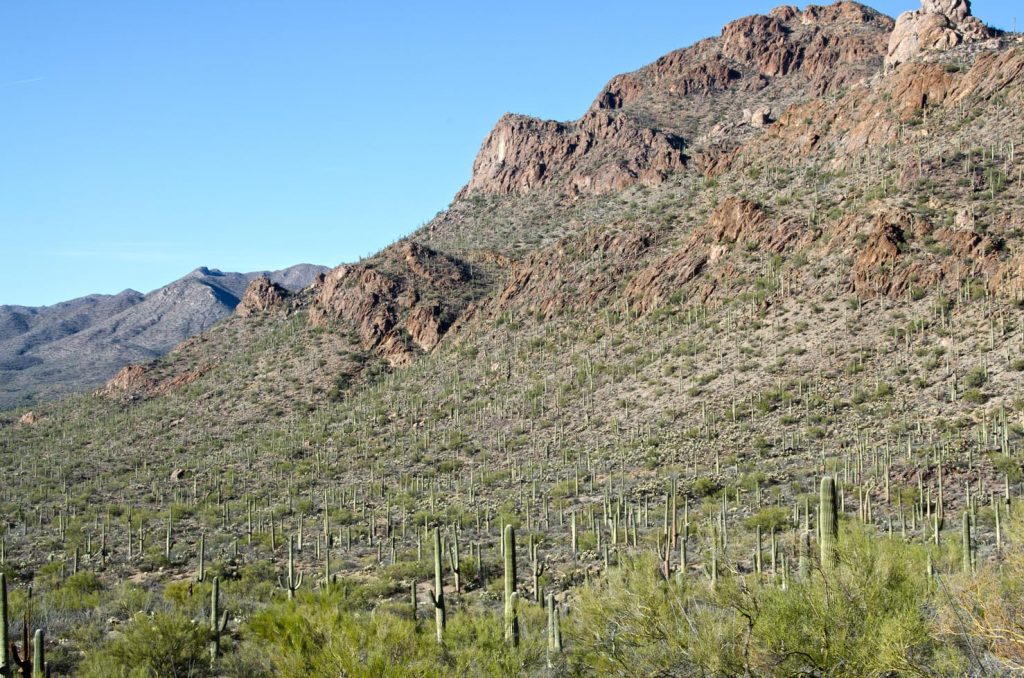
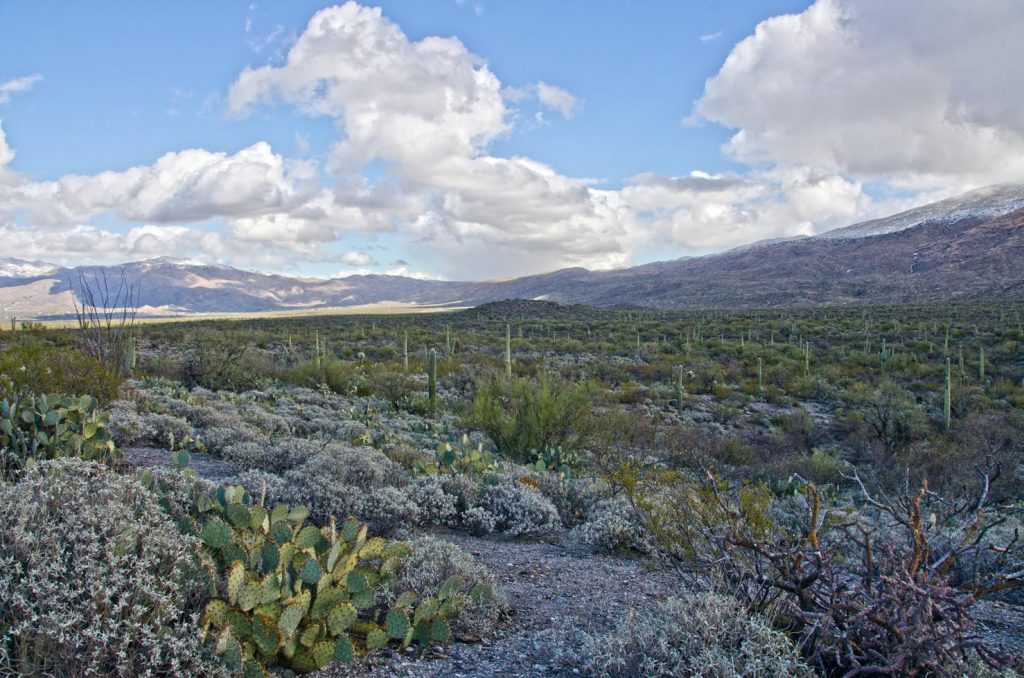
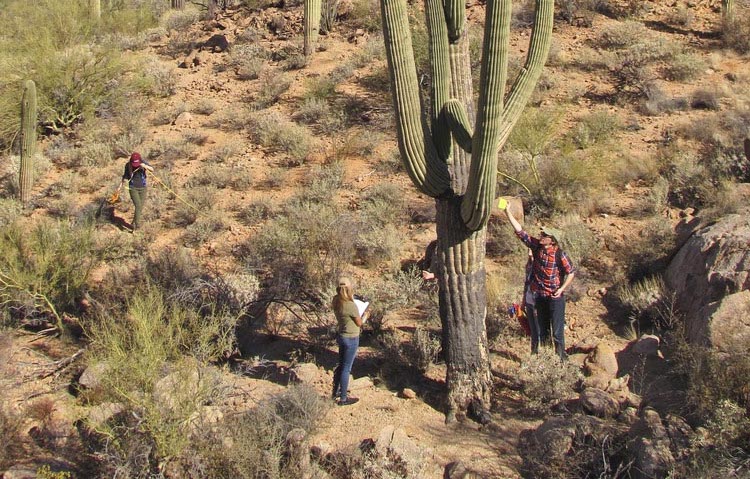
    An out-of-this-world scene envelopes visitors at Saguaro National Park near Tucson, Arizona, when they find themselves surrounded by giant cacti for miles and miles. A forest of 60-foot tall saguaro cactus act as sentries across the Sonoran Desert like soldiers in an army of colossal succulents that take hundreds of years to mature and only grow in southwestern Arizona and a small part of southern California.

    Photo Tripping America - Saguaro - Camping World
    Photo Credit: Shelley Dennis

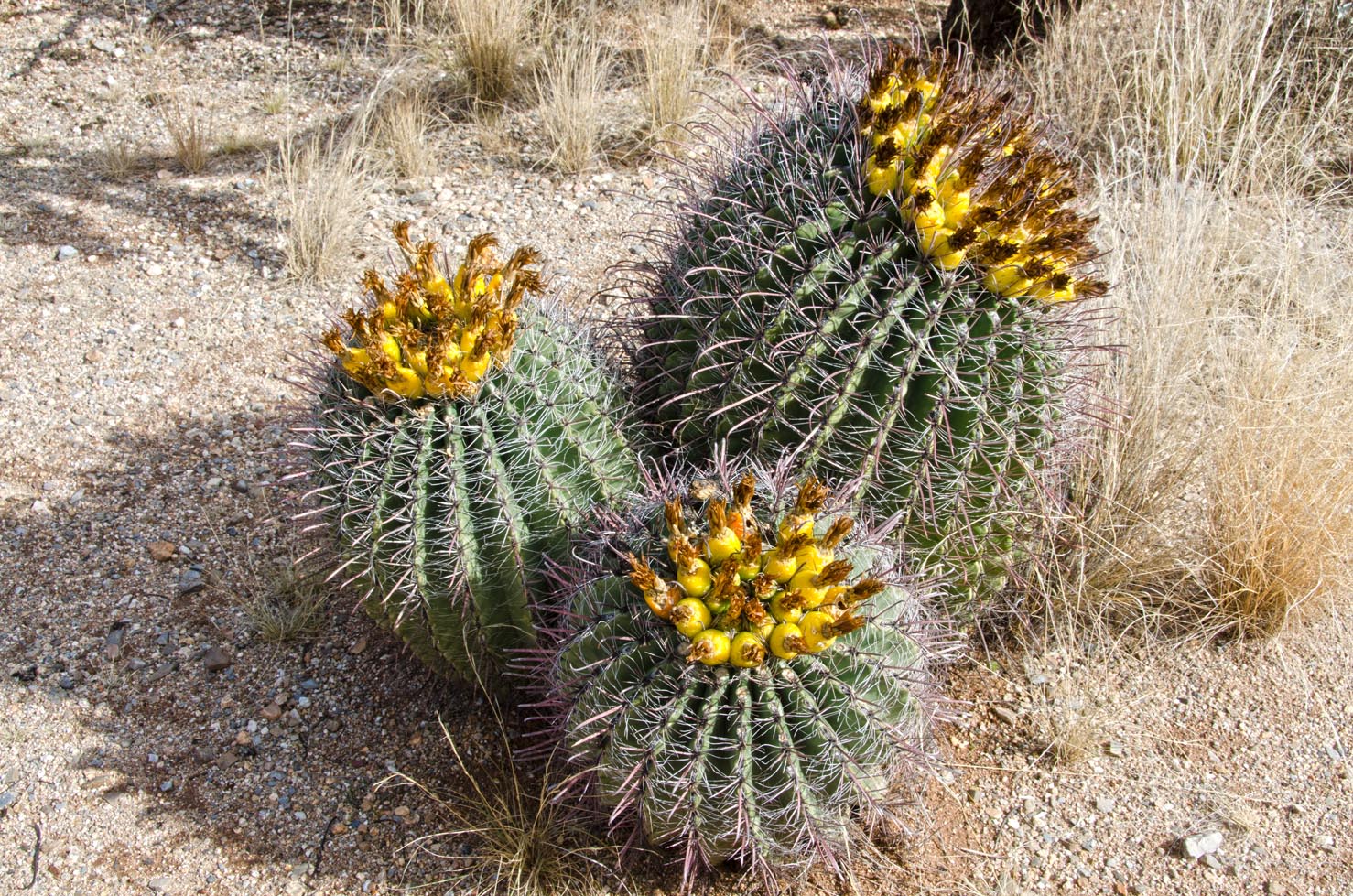
    The park is split in half by the town of Tucson. The eastern portion exists within the Rincon Mountain district and is the recipient of more moisture than its western counterpart in the Tucson Mountains. Both areas are protectors of an amazing desert environment that includes prickly pear, cholla, ocotillo, and barrel cactus plants, which become home for an astounding variety of wildlife. Roadrunners and rattlesnakes are common here, but so are bobcats, deer, black bear, and mountain lions.

    Saguaro National Park is an unusual landscape of living wonder, full of spine-covered vegetation in a harsh setting, but in need of preservation for the generations still to come.

    History of Saguaro National Park

    Photo Tripping America - Saguaro - Camping World
    Photo Credit: Shelley Dennis

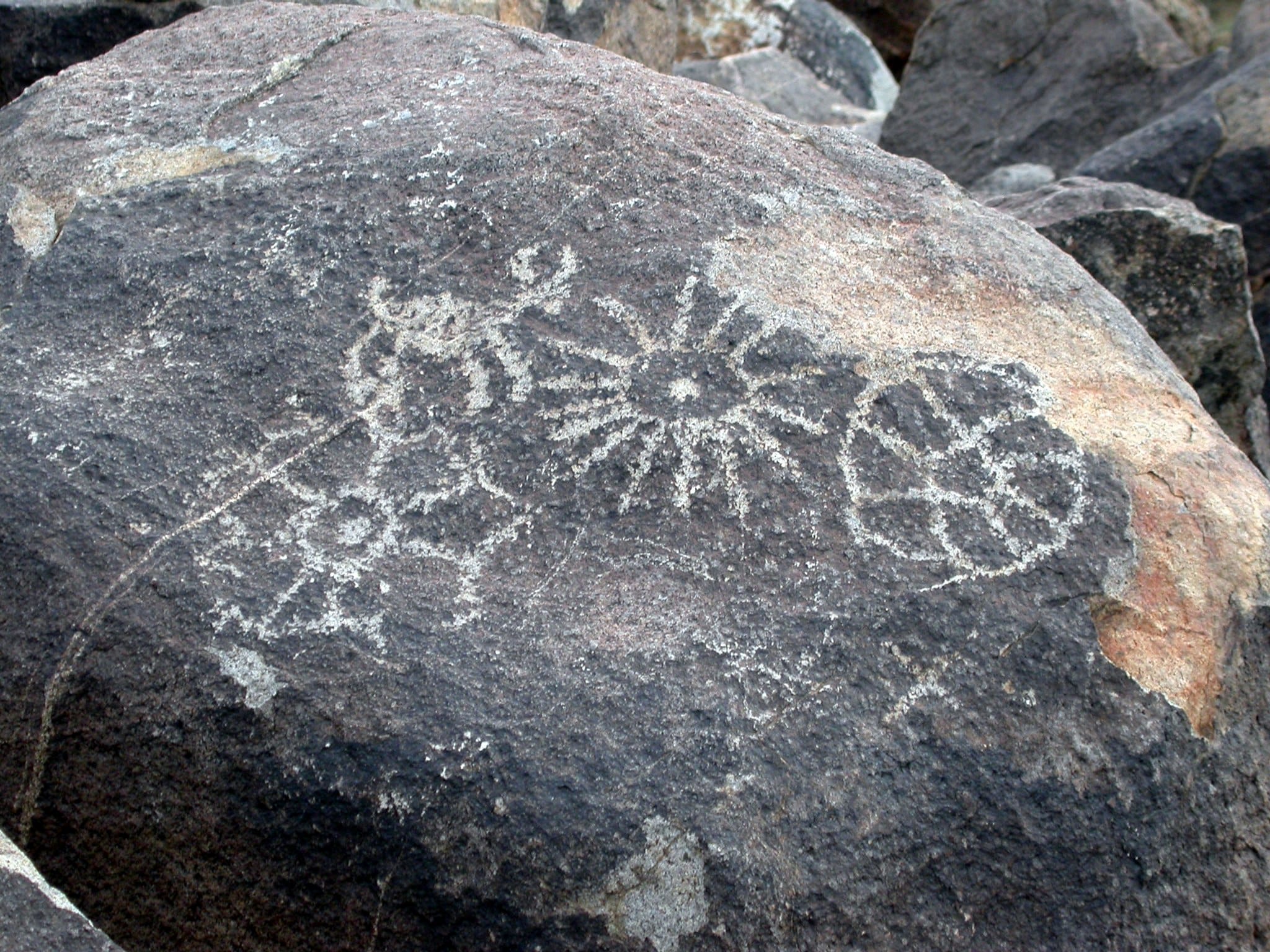
    The first residents of this region were the Hohokam tribe, who lived on the land between 200 and 1450 AD. They left petroglyphs on the west side of what would later become Saguaro National Park, and they subsisted on deer, cactus buds and squash and corn that they grew in the sandy soil.

    Spanish explorers arrived along the Santa Cruz River in 1539, where San Xavier del Bac Mission was built, just south of the western portion of the park.

    Photo Tripping America - Saguaro - Camping World
    Photo Credit: Shelley Dennis

    The area was relatively free of development until the late 1800s, as the Apache Wars came to an end. Settlers and miners filtered into Tucson and the surrounding desert, but it wasn’t until 1920 that members of the Natural History Society at the University of Arizona called attention to the need to protect the saguaro cacti in the region.

    By 1933 President Hoover proclaimed the Rincon Mountains to the east of Tucson “Saguaro National Monument.” By 1961 the western section, consisting of 16,000 acres was added to the monument. Finally, in 1994, the entire area was upgraded to national park status.

    Why Visit Saguaro National Park for RVing and Camping?

    Tucson is very RV and camper-friendly. In fact, many snowbirds spend their winters in this flavorful town, so the city rolls out the red carpet for road warriors in motorhomes and travel trailers.

    Travelers will have no problem finding campgrounds with not only hookups but all kinds of activities and options, including shuttles in some places. The roads through both park districts are rather narrow and winding so it would be a good idea to leave your RV at the campground and take your toad, a shuttle, or even an Uber to the park.

    Places to Go in Saguaro National Park

    When Visiting the Saguaro National Park there is plenty to see. Here are a few of the places you’ll definitely want to visit

    Sonoran Desert Museum

    Located one mile from the entrance to Saguaro National Park’s western district, the museum is actually a combination zoo, art gallery, botanical garden, aquarium, and natural history museum, with 230 animal species and 1,200 plants.

    If you’re traveling with kids, this place is a must-see. It’s a great way to bring some educational content to your trip. Even if you don’t have kids, it comes highly recommended and should be a great way for you to learn a little bit about the land you’re traveling through and experiencing.

    Cactus Garden

    Photo Tripping America - Saguaro - Camping World
    Photo Credit: Shelley Dennis

    There is a cactus garden at each of the two visitor centers with interpretive signs and ranger-led tours.

    Holiday Cactus Caravan

    A 1-3/4 hour drive around the loop during the Christmas holidays is led by guides with candlelight. Reservations are required, and you can check out more information here.

    This is a fun idea for couples but it’s also great for families of all sizes. Let the guides show you what this amazing bit of land is all about.

    Signal Hill Petroglyph Area

    Signal Hill Petroglyph Area Sagauro National Park
    Photo Credit: NPS

    Over 200 petroglyphs near Signal Hill on the west side of the park were created between 500 and 1500 years ago. It’s a very interesting place and shows just how long people have roamed and lived in these lands. It’s a great way for you to teach something about history to your kids if you’re camping with them.

    Things to Do

    Saguro National Park is about experiencing all that this unique place has to offer. Here’s a look at all of the things you can do in the park.

    Hiking

    hiking Saguaro national park
    Photo Credit: NPS

    With over 165 miles of trails, hiking is by far the best way to see Saguaro National Park. Trails can take you from 3,000 feet in elevation to over 8,000 feet. Be prepared for desert climates. Here are just a few trails within either side of the park:

    • Loma Verde Loop – 3.8 miles
    • Wild Dog Trail – 1.8 miles
    • King Canyon/Gould Mine Loop – 2.4 miles
    • Freeman Homestead Trail – 1 mile
    • Hope Camp and Ridgeview Trail – 2 miles
    • Garwood Dam and Wildhorse Tank – 6.4 miles
    • Tanque Verde Ridge Trail – 8.7 miles
    • Sendero Esperanza Trail – 8 miles

    Hiking is a must for Saguaro National Park. If you plan to visit, plan to go on at least one good hike. This will help you see parts of the park that you cant reach in your RV or vehicle. Here’s some more information on hiking this wonderful national park.

    Backpacking

    Backpacking is one of the best ways to see the park. Permits are required for backcountry camping, though, so keep that in mind when planning your trip. Here’s some more information on backpacking the park.

    Backpacking in Saguaro National Park can be quite the undertaking, so make sure you have all the right gear you need. Camping World sells all sorts of gear, so if you need to get well-equipped, you should have no issues finding what you need.

    Camping

    There are six campgrounds within park boundaries. All are on hiking trails and none have any amenities. Plan carrying plenty of water with you, as none is available along the way. Some of the campgrounds will have water at them, but sometimes this is seasonal.

    Here’s more information about the campgrounds in the park:

    • Manning Camp
      Six campsites exist and a Ranger is usually posted up here between April and September.
    • Spud Rock Spring
      This is the most remote campground in the park. There are only three campsites here.
    • Happy Valley
      This campground is accessible via a dirt road that’s not regularly maintained. You’d need a jeep or a lifted truck to get there. There are three sites here.
    • Juniper Basin
      There are thee sites at Juniper Basin. The camping area has water seasonally, and fires are allowed.
    • Grass Shack
      This campground offers three campsites and is one of the best places to camp in the park. There’s shade and water most of the year. Fires are not allowed here, though.
    • Douglas Spring
      Cottonwood trees provide plenty of shade here. There are three campsites to choose from.

    The National Parks Department has more information on these parks and how to get to them. Check it out by clicking here.

    When to Visit Saguaro National Park

    Photo Tripping America - Saguaro - Camping World
    Photo Credit: Shelley Dennis

    Most visitors to the national park choose to come during the winter/cool season, avoiding the desert heat of summer. January, February, and March are the most popular.

    Coming in a close second would be November or December. If you want to see the desert in bloom, many of the cacti perform in March and April, and for a truly magical scene, every once in awhile Saguaro West gets covered in snow

    Where RVers and Campers Can Stay

    There are no campgrounds within the park regions that are suitable for vehicular camping, including RV campsites. However, there are a number of private campgrounds and RV resorts within a few miles of both Saguaro West and East. Here are just a few:

    If you’re interested in tent camping within the park, the only options are the primitive campgrounds profiled in the camping section above. If you want to tent camp outside of the park, many of the resorts listed above can accommodate tent campers.

    Getting to and Around Saguaro National Park

    Photo Tripping America - Saguaro - Camping World
    Photo Credit: NPS

    Getting to Saguaro National Park is pretty straight forward, whether it’s the West District or the East. One thing to keep in mind, however, is the road to Saguaro West is limited to vehicles less than 25 feet long and weighing no more than 12,000 lbs. If your vehicle doesn’t fit those restrictions, then look here for an alternate route.

    To get to Saguaro West, follow Speedway Boulevard west over Gates Pass to Kinney Road. Turn right and travel four miles on Kinney Road to Mile Wide Roads, turning right into the park. The visitor center is one mile past the entrance.

    Arriving at Saguaro East is done by exiting Interstate 10 at Exit 275 (Houghton Road), going north for eight miles. Turn right on Escalante, traveling for two miles, then turn left on Old Spanish Trail.

    Traveling through both sides of the park is best by automobile, as the roads are narrow and twist through the landscape.

    The Victorious Landscape of Saguaro National Park

    Photo Tripping America - Saguaro - Camping World
    Photo Credit: Shelley Dennis

    Saguaro National Park is an enigma to the adventurer. Its appearance is that of a severe and challenging landscape, but upon closer inspection, one finds an admiration for the towering troopers that somehow thrive here.

    It is as if an army of war-weary generals stand watch over their admirers, their arms raised not in battle, but in victory over their circumstances.


    Have you ever been to Saguaro National Park? Leave a comment below.
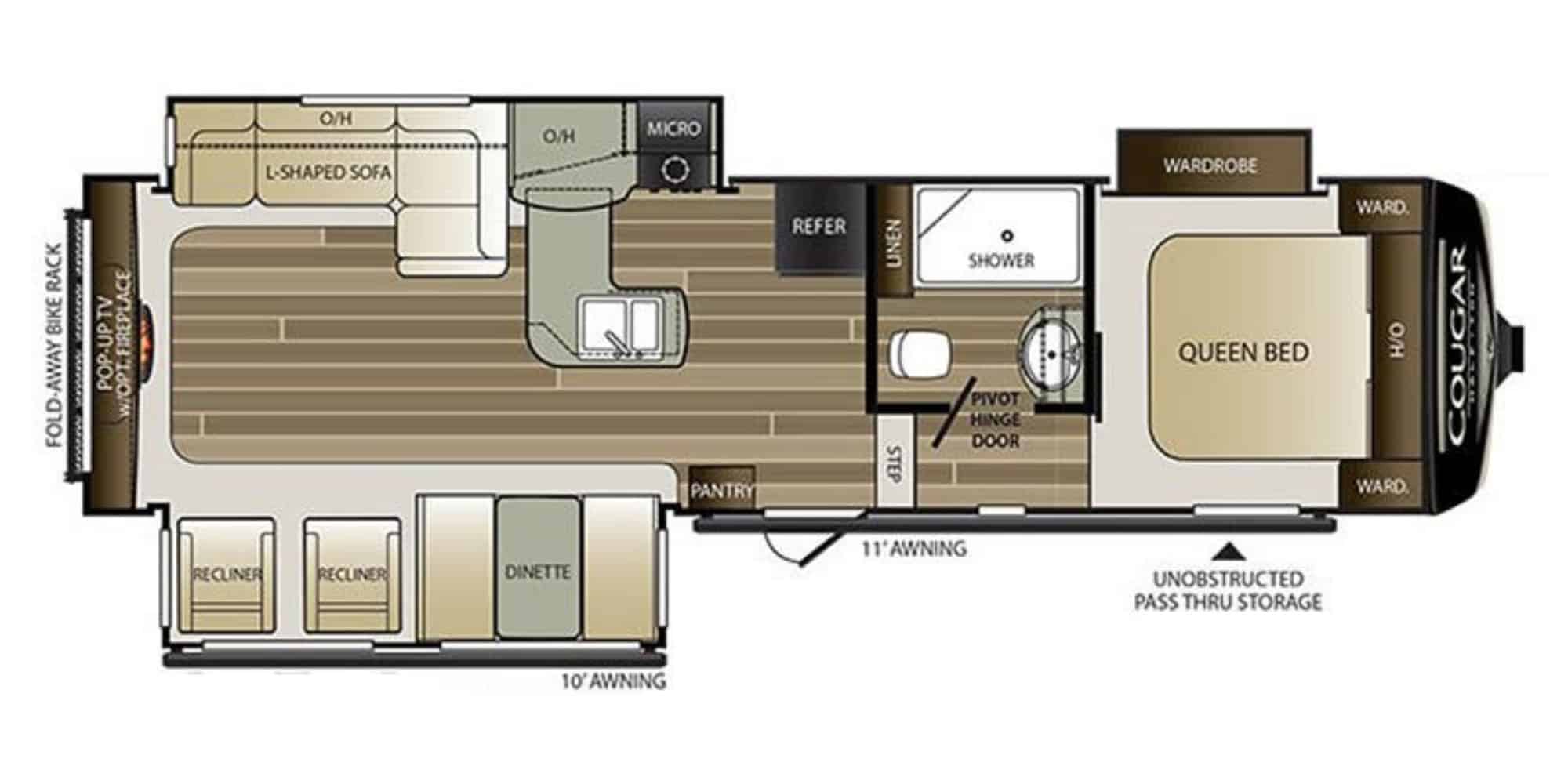
    Camping World's Guide to Saguaro National Park


    Source link

  • Tips for Adjusting Your RV Budget in the New Year

    Tips for Adjusting Your RV Budget in the New Year


    Now that 2020 has begun, it’s smart for you to take a look back over the past year and think critically about how you can make your RVing life, whether its full-time or part-time, even better this year.
    One of the big things you can do is focus on your budget. Adjusting your budget isn’t always fun, but living with a financial plan will reduce stress and make your life easier and more enjoyable. Here are some tips for adjusting your budget in the new year.

    Get Ahead of Any Problems

    One of the easiest and most impactful steps any RV owner can take is to have a full RV inspection prior to heading out for the season. In doing so, you will learn of things currently needing repair, and ensure there are no unexpected hardware issues.

    Having an informed outlook on your RV and its current state can help you avoid costly repairs in the future, and keep you on the road longer. Schedule an inspection today at any Camping World Service Center.

    Evaluate Your Power

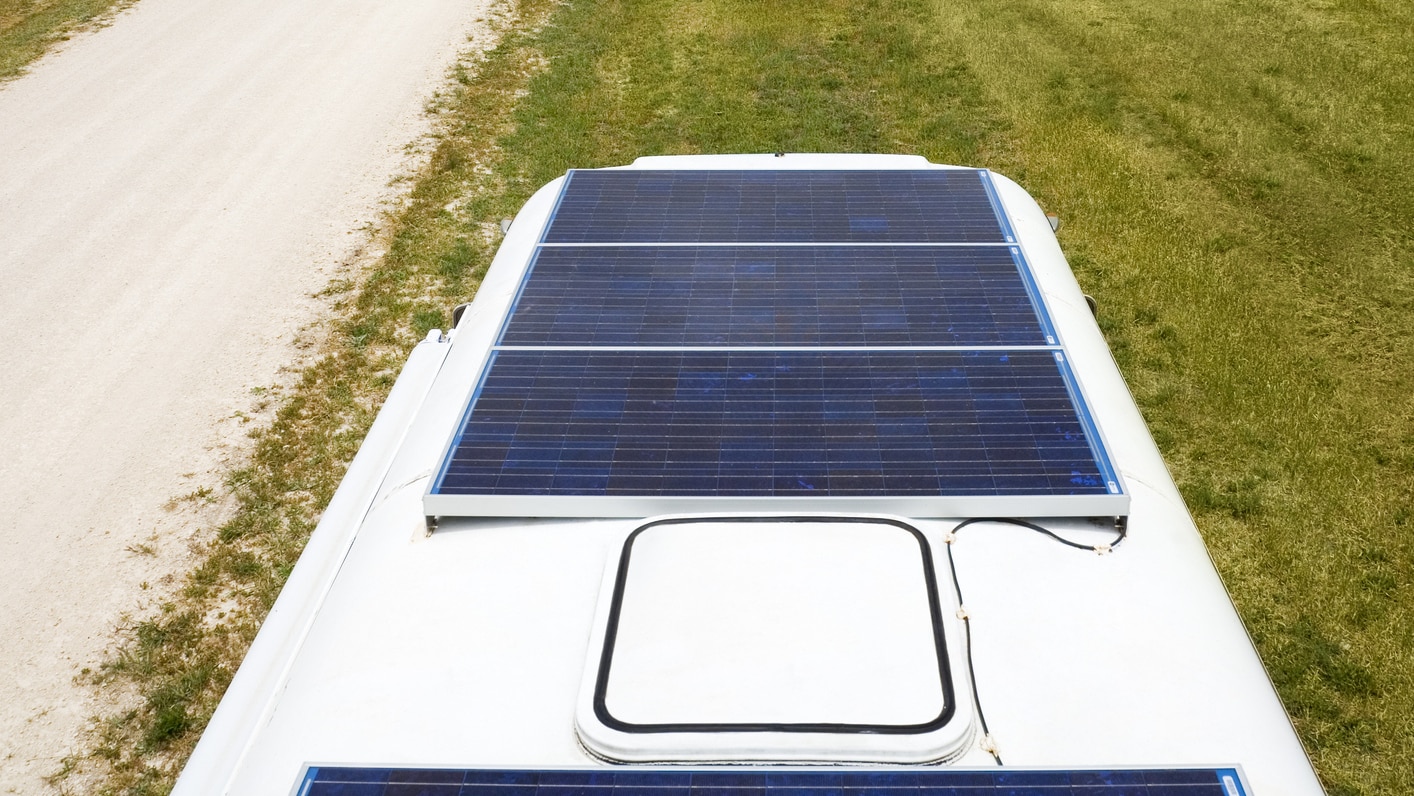
    Solar panels on top of a motor home under bright overcast sky. A sky such as this will give about 25% of peak capacity. Photographed in South Australia. (Solar panels on top of a motor home under bright overcast sky. A sky such as this will give about

    One way to improve your RV experience, as well as save you some money in the budget, is to evaluate your power sources and usage. Take a good look specifically at where your power goes, and how much you actually use.

    Removing unused and unwanted power drains can have a significant impact on your energy needs. Additionally, installing items like solar panels can be a great way to navigate around fuel storage, and can often cut your energy needs considerably.

    RV & Outdoor Show Season

    If this year’s project is to upgrade or outfit your RV, there will be no better time than RV & Outdoor show season. Not only are you able to see all of the latest gadgets and gear on display, you will also find the best pricing of the year, on almost all items.

    During show season, explore with the family at your nearest convention, visit a Camping World RV & Outdoors retail store near you for exclusive pricing, or shop online and save instantly on over 20,000 RV models. And, look out for installation specials, which can save you even more on your upgrade.

    Route it Out

    The freedom of the road is a strong pull. And, let’s admit, exploring the unknown is the best part of the RV lifestyle. Though true, wandering in your RV can sometimes add unexpected fees and costs to your trip, and may steer you away from your initial path.

    Making the effort to outline your route ahead of time can have a huge impact, and ensure you hit all the hotspots. Removing these decisions from the day-to-day of RVing can reduce stress, save you money in the form of fuel and time, and allow you to simply soak in the RV lifestyle during your time on the road. For help starting this process, visit the Online Trip Planning Tool provided by Good Sam.

    Group Think

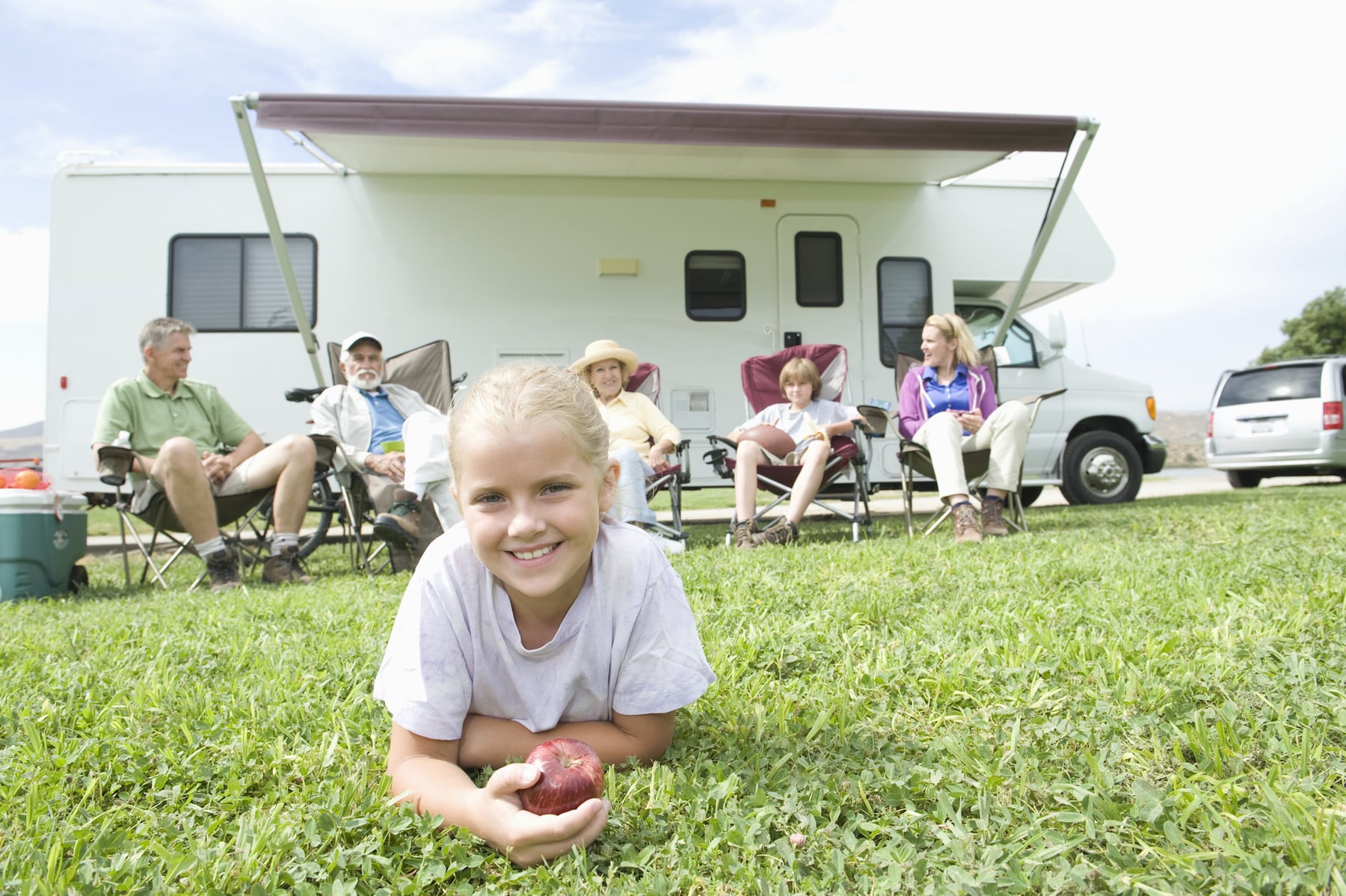
    Portrait of a cute little girl lying on grass with family sitting outside RV home

    Traveling with a group? Check-in with your chosen destination to see if there are any special rates available. One of the best ways to save in the new year is to look for offers you already qualify for.

    When purchasing event tickets, activity passes, or attraction fees, always ask about any available group discounts. You’ll be surprised how often they are offered! Keep in mind: groups don’t have to mean 15 or more people. Often, group rates will start with a total of only five guests.

    Join the Good Sam Family

    Nothing improves your RV life more than when you subscribe as a Good Sam member. Good Sam Memberships include access to campground discounts, fuel and propane savings, savings at retailers, and more.

    When looking at how to improve your RV spending in the next year, there are a few you can take. Your membership helps you save on all areas of the RV lifestyle.


    Have any questions or concerns? Leave a comment below!


    Source link

  • A Closer Look at 3 Thor Class C Motorhomes for 2020

    A Closer Look at 3 Thor Class C Motorhomes for 2020


    Thor Motor Coach makes some of the best motorhomes out there. While many people prefer the company’s Class A motorhomes or the company’s Class B, Super C, or RUVmotorhomes, the standard Class C motorhomes are some of the best models out there for couples and families.

    With all this in mind, I wanted to dig into the Class C motorhome offerings from Thor so that you can make a decision about whether or not they’re right for you and your family. Here are the five models on sale and their highlights.

    Chateau

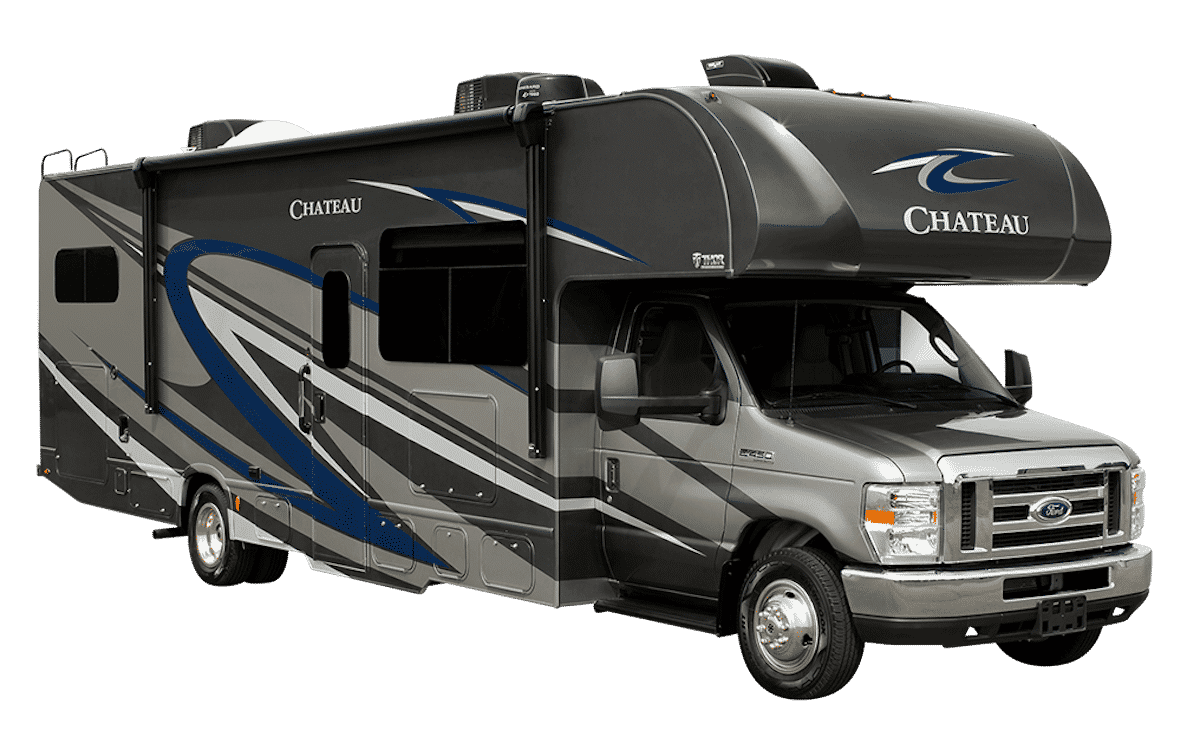
    2020 thor chateau class c motorhome

    First up, we have the Chateau. This Class C motorhome is built on either the Ford E-350 chassis, comparable Chevrolet chassis or the Ford E-450 chassis. This means you get a 6.8-liter Triton V10 engine if you get the Ford chassis or the Vortec 6.0-liter V8 if you get the Chevy chassis. Either one is a fantastic base for the rest of the RV.

    There are 12 different floorplans out there for the Chateau. These floorplans range in length from 24 feet long to over 31 feet. There are also many different choices when it comes to the number of slides and the overall layout. If it’s just you and a significant other, then there are plenty of options, but if you need some bunks or additional sleeping space, some of the longer floorplans like the 30D, 31E, offer additional bunks for sleeping larger numbers of people. The most any Chateau can sleep is seven.

    The Chateau is characterized by upscale interior materials with one of three interior color schemes. There’s Imperial, Ocean Pearl, or Saddleback. The cabinetry comes in either Brazilian Cherry or Malibu Maple. The exterior visual graphics offer five different options, from a standard graphics package to your choice of Brilliant Blue, Tranquil Beige, Bonita Bay, or Daytona Beach. Exterior color options will depend on the floorplan you choose.

    Take a Closer Look at Camping World

    Four Winds

    2020 thor motor coach four winds class c motorhome

    Next, we have the Four Winds, one of my personal favorites in terms of layouts and offerings. The Four Winds models are built on the Ford E-350 chassis or comparable Chevy chassis or the Ford E-450 chassis. You’ll see the same engines listed. It’s either the 6.8-liter Triton V10 or the Vortec 6.0-liter V8.

    Like with the Chateau, there are 12 different Four Winds floorplans. Again, the floorplans range from 24 feet event to a little over 31 feet in length. These floorplan layouts don’t differ much at all from the Chateau, but names are different. Again, longer options will have more sleeping space, and the max sleeping capacity is seven people.

    When it comes to color options, the Four Winds has some attractive choices. Inside, you can get the interior in three choices: Gemstone, Nautical Blue, or Summit Grey. The cabinets come in either Brazilian Cherry or Malibu Maple Flat Panel. When it comes to the exterior of the RV, you have the option of one of the following: Standard Graphics, Cosmopolitan, Vanilla Swirl, Castle Rock, or Whistling Straits.

    Take a closer look at Camping World

    Quantum

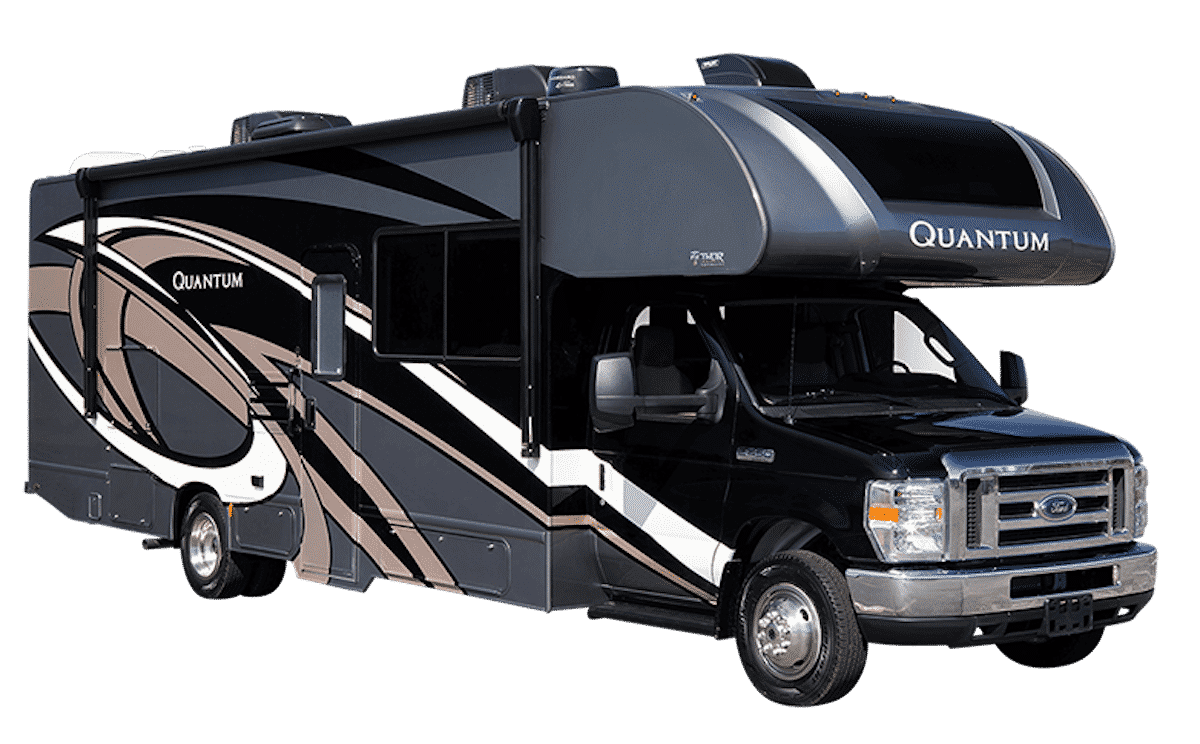
    2020 thor quantum class c motorhome

    The Quantum is the last of the standard Class C options from Thor. Again, the Quantum is built on Ford E-350 or a comparable Chevrolet chassis. The larger floorplans are built on Ford E-450 chassis. This means you get either the 6.8-liter V10 engine or the Vortex 6.0-liter V8.

    Floorplan options are a little different for this one. There’s really only eight of them available. Still, there’s plenty of variety to choose from. The floorplans vary in length from 24 feet to over 32 feet. The options you have also offer different sleeping capacities from four to seven people.

    The color options for this RV are different, too. The interior can be had in Artic Frost II, Cloud Nine II, or Midtown Taupe II. The cabinets come in Artisan Cherry or Prestige Maple. When you get to the exterior of the RV, you’re looking at six options: Hot Streak, Let It Ride, Double Down Partial, Jokers Wild, Black Onyx, and Topaz blue. Black Onyx is my favorite, and it’s important to note some colors are only available with certain floorplans.

    Take a closer look at Camping World


    Which Class C motorhome do you think is right for you? Leave a comment below!

    Looking for a different Class C motorhome? Check out all of the offerings from Camping World. 


    Source link