Matt and Diana, both European immigrants, took their first trip together in Yosemite where they fell in love with each other and the National Parks. After two years of planning, they quit their Silicon Valley tech jobs in July of 2018 and moved into an RV to hit the road full time. They are on a quest to visit all 419 National Parks!
Their goal is to inspire you to explore the outdoors and give you the information you need to do it. They share their journey and tips on their Adventurous Way blog and YouTube channel. Having engineering backgrounds, they also write detailed guides to electrical upgrades and other mods that they have done to their 25ft Outdoors RV travel trailer.
In this episode, Sam chats with Matt and Diana about their quest to visit all of the National Park units, stories from the road, and advice for planning a National Park tour.
What we cover in this episode:
2:00 – From road trips to a national park adventure
9:00 – Highlights of this new lifestyle
17:00 – What destinations are next on the list?
21:00 – Off-roading in Great Sand Dunes National Park
32:00 – Advice for planning a National Park tour
Advice on planning a National Park tour
Do research ahead of time. The more you research, the more you’ll get out of it.
Check the national park websites and look for information online through blogs and videos.
Talk to the rangers and staff. They will tell you what to do and where to go in each location.
Get up early! If you get out into the parks before everyone else, you’ll be able to see more and enjoy the experience with fewer tourists.
Horses were in North America before the Spanish explorers arrived but went extinct about 10,000 years before the conquistadors starting hitting the beaches. Columbus brought the ‘modern era’ of the equine to North America first.The explorer decided horses were necessary on his second voyage when he returned to North America in 1493and left a herd on the Virgin Islands.
As for the mainland, we can place that responsibility on Cortez. In 1519, he brought a herd over to Mexico. These horses broke free and took it upon themselves to head north and swam (or walked, depending upon the spot and season) across the Rio Grande to come into modern day America. SinceCortez lost these horseshe brought over more. These horses broke free, too, and so on and so on.
The number varies from source to source, but currently there are approximately 35,000 wild horses under the supervision of the BLM (Bureau of Land Management) and up to another 20,000 running wild on public lands.
In general, the best time to see wild horses is summer, which is foaling season for horses.We’ve selected not the only places, but the best places to get a chance to see wild horses. Wild horses roam in everywestern state from Oregon to North Dakota to Texas. Nevada is particularly notable as it may hold up to half of America’s wild horse population.Here’s the breakdown:
Colorado
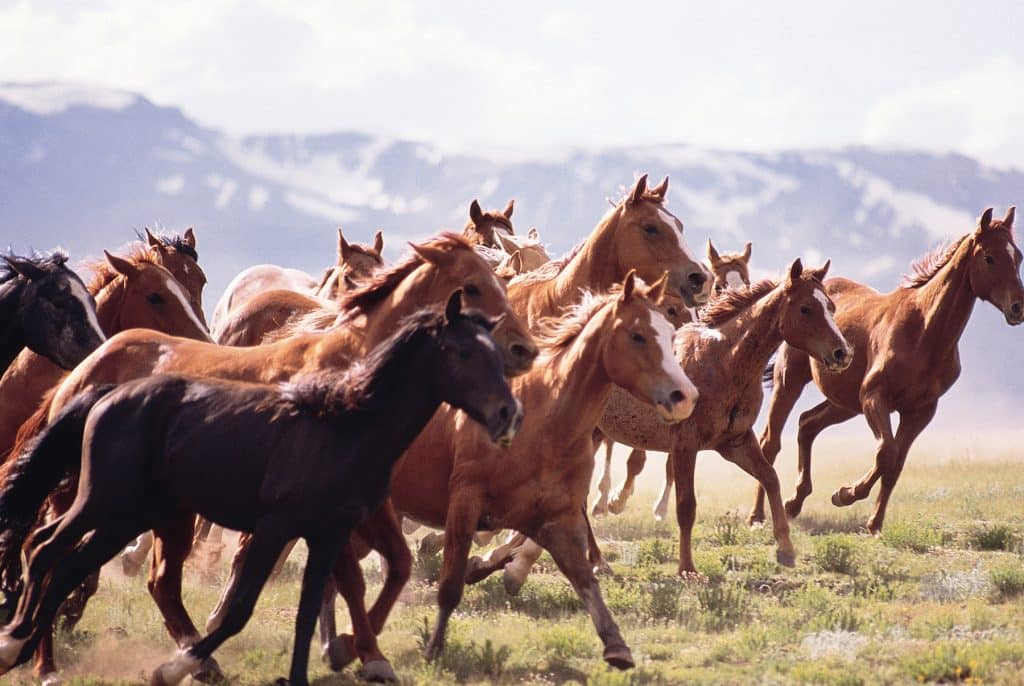
Image by Comstock from Getty
Wild horses in Colorado are located mostly on Colorado’s western slope as you near the Utah border. Common locations to find wild horses are Sandwash Basin in the northwestern part of the state and Spring Creek, which is southwest of Montrose as you head toward Ridgway. The Ridgway area, FYI,is whereboth the John Wayne andthe Jeff Bridge’sTrue Grit films were shot.
Nevada
You may recall the film The Misfits. The final completed film for both Clark Gable and Marilyn Monroe written by the famous playwright Arthur Miller, The Misfits revolves around the wild west of Nevada and includescapturing wild mustangs. To this day, mustangs still roam a lot of Nevada, most notably on the Virginia Range, which is accessible by trails just east of Reno in northern Nevada.
North Dakota’s wild horses are mostly situated in Theodore Roosevelt National Park where a herd of approximately 200 roam North Dakota’s badlands.
Utah
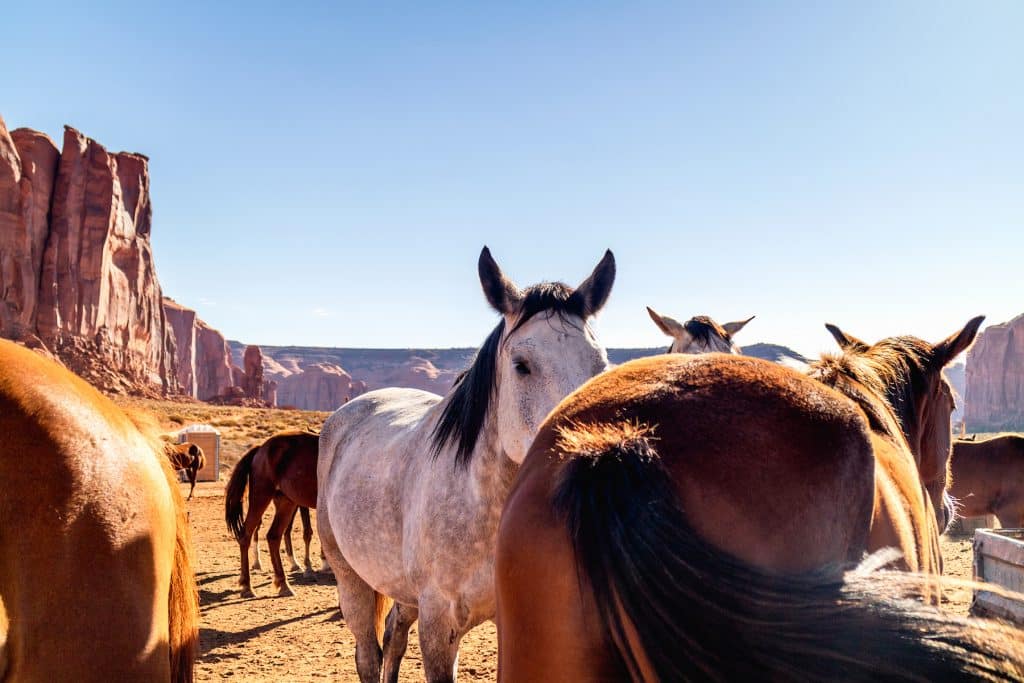
Image by Nature, food, landscape, travel from Getty
The Onaqui Herd Management Areahas one of the biggest herds of wild horses in Utah. Their area extends from Johnsons Pass south to Look Out Pass. Wild horses can be seen on the flat areas along the east and west sides of the mountain range.
The Pryor Mountains
The Pryor Mountain Range runs from Montana into Wyoming, as does the herd of approximately 200 wild horses. They are generally found in the northeast region of the Bighorn Mountains. The Pryor Mountains also have a center, the aptly named Pryor Mountain Wild Mustang Center.
Wyoming
Wyoming has about 6,000 horses roaming the state from the badlands north to the Montana border. If you want the chance to see a good chunk of them, take the Pilot Butte Wild Horse Scenic Loop.It‘s 23 miles long, mostly on gravel roads, and near Rock Springs.Contact the Rock Springs BLM office for information.
North Carolina
Yes, it’s true. Not all wild horses are in the Great American West. One special breedis located on the Outer Banks. These, wild Colonial Spanish Mustangs,run on northernmost Currituck close to the Currituck National Wildlife Refuge. These horses are relatively easy to see since they are on an island and generally near the lighthouse.
But wait, there’s more. North Carolina’s islands have quite a few herds. Head further south from Currituck to check out the Shackleford Mustangs. You’ll have to exit your RV for these as they are only accessible by boat. This herd is located on the nine-mile stretch between Beaufort Inlet and Cape Lookout. Also, take a look at the Beaufort wild horsesthat are part of the NC Coastal Reserve and National Estuarine Research Reserve.
Assateague Islands
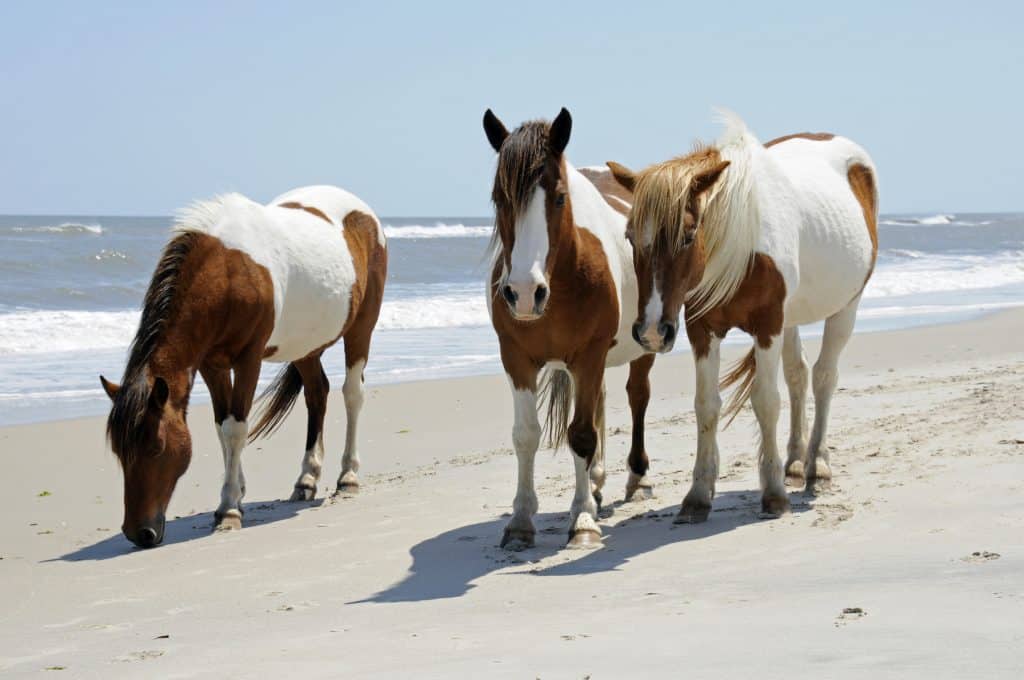
Image by JeninVA from Getty
East we remain for our final herds. There are two states in this mix for this locationsince the Assateague Islands are part of both Virginia and Maryland. Some of you literary types may recognize this location as the basis behind the 1947 Newberry Medal-winning novel, Misty of Chincoteague. These islands are home to approximately 300 wild horses. It’s a lot, but that combines both the Virginia herd and the Maryland herd.The Maryland herd has a watchful eye kept on them by the National Park Service as these horses roam the Assateague Island National Seashore.
The Virginia horses are looked over by the Chincoteague Volunteer Fire Company. This herd resides in the Chincoteague National Wildlife Refuge. A strict number of 150 horses are kept here. Every July the CVFC holds the annual Chincoteague Pony Swim. During the event, the horses are led to swim from Assateague Island to Chincoteague Island. Once they get there, the foals are auctioned off to keep the herd at 150.
Any place you’ve seen wild horses that you’d love to share? Please drop us a line!
RVs provide the adventure of camping with the comforts of home. Towable RVs can be one of the least expensive ways to enjoy RV camping. While that’s true, you might be under the impression you need a larger budget for a motorhome or a heavy-duty truck to pull a towable RV.
However, did you know there are RVs small enough you won’t need to buy a new truck to pull it, and small enough not to need to pay for RV storage?
We’ve got you covered with five RVs you can pull with your SUV. Keep your car, save on storage, and camp in the comfort of an RV.
Key Things To Know About Towable RVs
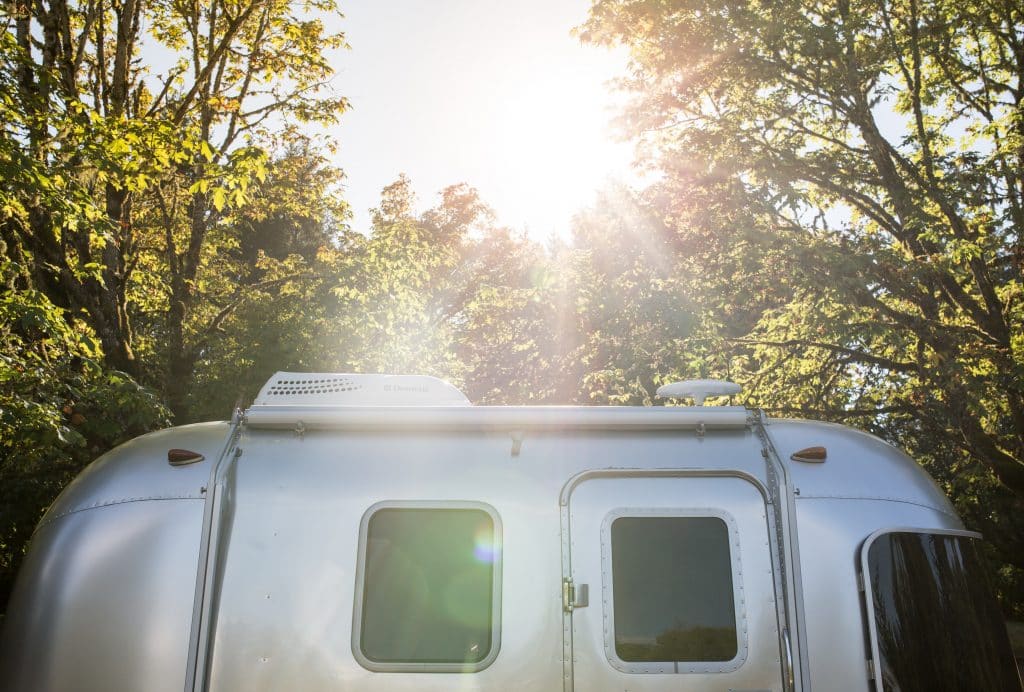
Image by Airstream, Inc. from Unsplash
When shopping for a towable RV, you will need to know a few terms. Knowing what these terms mean will help you figure out if your current vehicle can tow a specific RV you’re looking at.
Your Tow Vehicle
In your vehicle’s owner’s manual, you’ll want to look for your vehicle’s towing capacity. Most SUVs will be rated to tow somewhere between 1,500 pounds and 5,000 pounds. Each one is different, and of course, there are exceptions. Some SUVs can tow more than 5,000 pounds.
Equally as important is your vehicle’s payload, curb weight and gross vehicle weight rating. Curb weight means how much your vehicle weighs without anyone in it. Payload is what it can carry. Your GVWR is the dry weight of your vehicle and the maximum payload. If you don’t know your vehicles payload, find the GVWR and subtract the curb weight from that number.
The RV You Tow
As you look at RVs, you will see terms like dry weight AKA unloaded vehicle weight (UVW) and CCC. An RV’s dry weight is its weight straight out of the factory with no potable water, waste, or anything else in it.
Cargo Carrying Capacity is CCC. This is the weight your RV will be capable of carrying on board. This is important because you won’t be pulling an empty travel trailer to go camping. You’ll load up your camper with gear, potable water, accesories, and other supplies. On the way back, you’ll also have liquids in your grey and black tanks (if your RV has these, which most do).
Adding an RV’s CCC and dry weight will give you its gross vehicle weight rating (GVWR). This is the number that needs to be within your vehice’s tow rating.
GCWR and Tongue Weight
There’s also gross combined weight rating (GCWR). This is the rating that includes your SUV and your trailer and any passengers and cargo. Just because you pull a camper within your towing capacity doesn’t necessarily mean you’re all set. You also need to stay below the vehicle’s GCWR. If you stay under the GCWR with all of the things discussed above, you’re headed in the right direction.
Don’t forget to take into account the RV’s tongue weight. Every vehicle will have its hitch rated for a certain weight. Even if you’re within the towing rating and under a GCWR, if your over the rating for your vehicle’s hitch, you can experience problems. It’s also important to note that the tongue weight of the RV factors into the vehicle’s GVWR. If the tongue weight of the RV puts you over on GVWR it’s too much trailer for your vehicle.
With all that said, lets dive into some good RVs for your SUV.
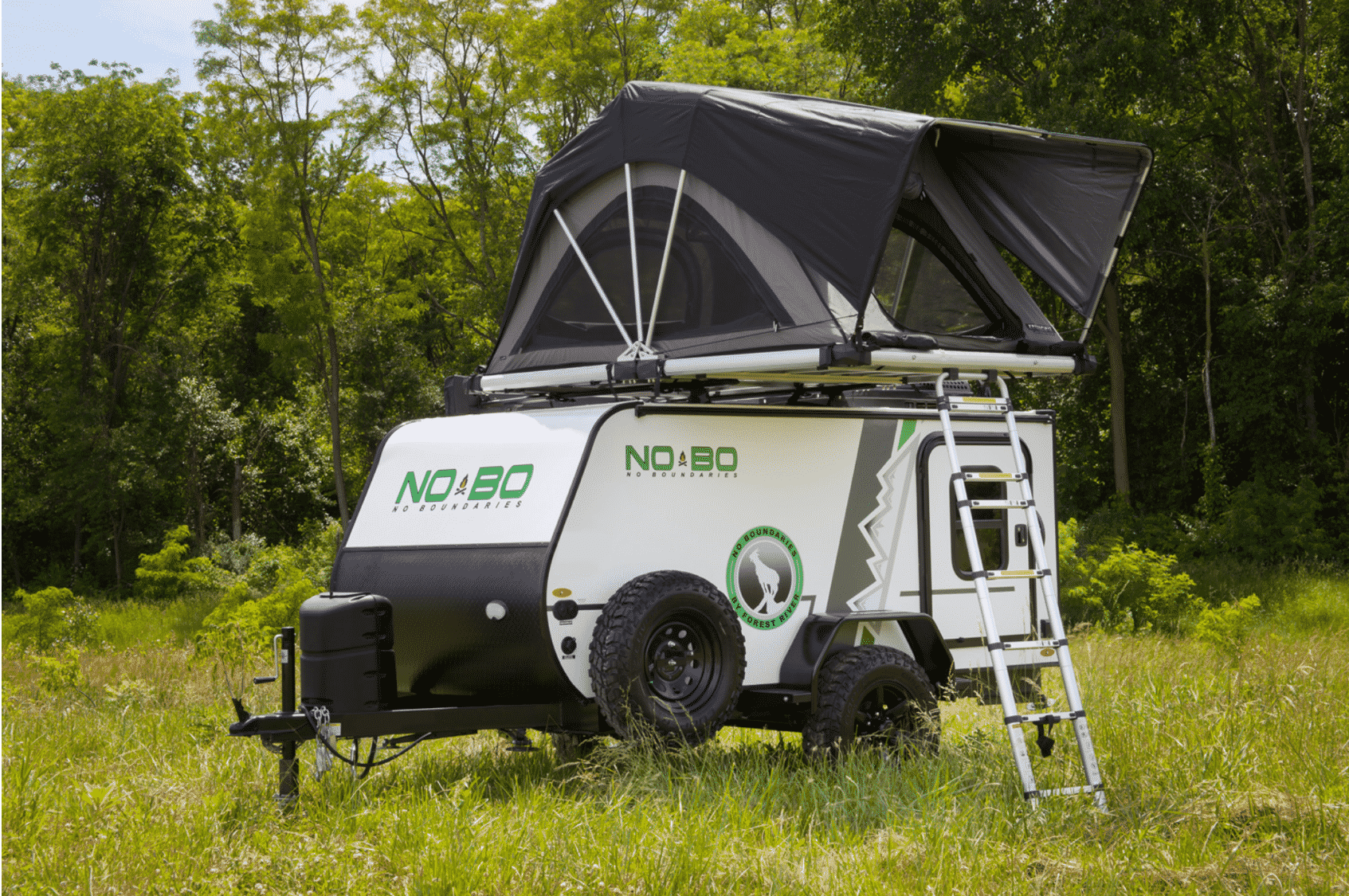
Forest River NoBo
Image by Forest River
Starting off our list is Forest River’s No Boundaries line of travel trailers. These fun little trailers pack quite the punch, yet are small and light enough to be pulled by many SUVs.
The NoBo line of campers range in length from 13 to 25 feet. The 10 series is the smallest in the line. Both 10 series NoBo travel trailers have a UVW under 2,000 pounds. Their CCC ranges from just under 2,000 pounds to just over 2,000 pounds.
The NoBo line is not only small and light, but rugged and highly customizable. They’re designed to go off-road, featuring higher clearance and chunky tires. Awning systems and storage systems are available to fully outfit your NoBo whether you like to fish, kayak, ski, or bike on your adventures.
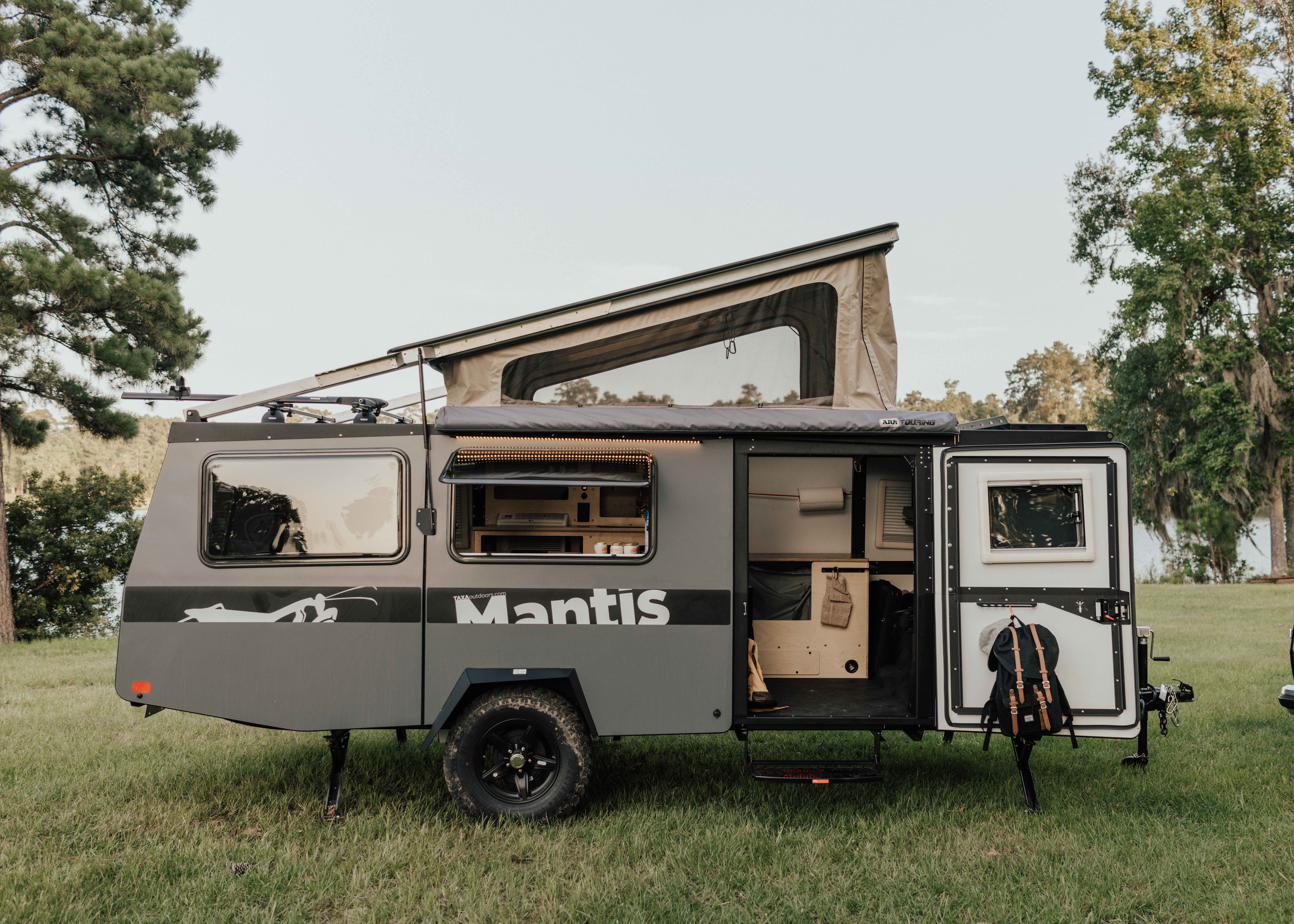
Both the TAXA Cricket and Mantis are lightweight and garageable. Because they have a pop-up roof, they are small enough, when closed, to fit in most garages.
The Cricket is 15 feet in length and comes in at a dry weight of 1,732 pounds, and GVWR of 2,500 pounds. When closed, the total height is just six feet 11 inches. The Mantis is a bit larger at 19 feet in length and 3,020 pounds of dry weight. The Mantis has a GVWR of 4,000 pounds.
Both the TAXA Cricket and Mantis are designed to take you both on and off the road. They’re very innovative, as TAXA’s founder spent some time designing for NASA!
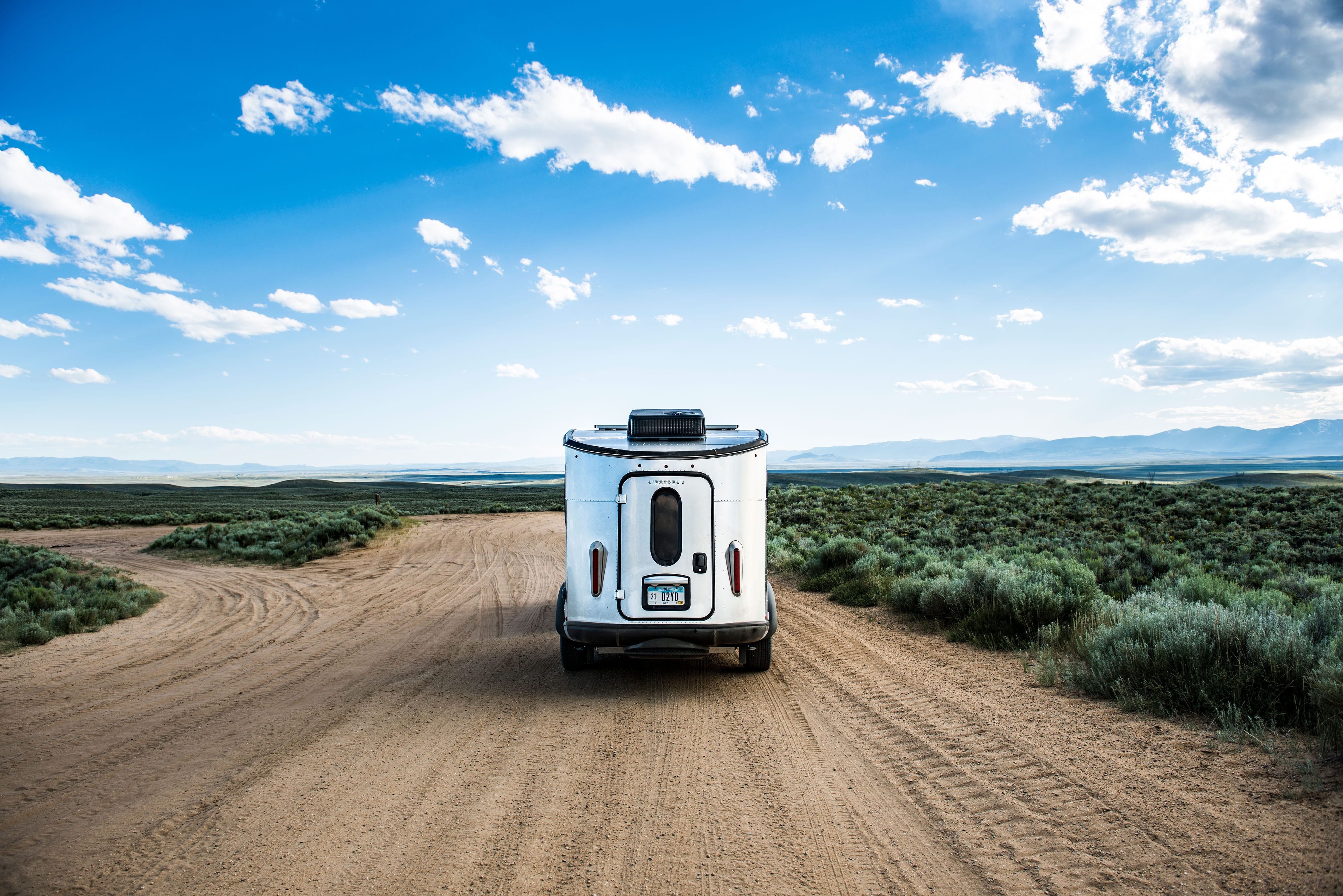
Airstream’s smallest offering is the Basecamp. Though smaller than other Airstreams it’s able to fit a kayak or any other gear you might want to take. The Basecamp comes in at 16 feet three inches in length and has a weight of 3,500 pounds.
It’s footprint can also be extended with side and rear tents. Another option is the Basecamp X option which makes it even better equipped to go off the asphalt with a three-inch lift kit and other off-road friendly features.
The Forest River r-pod has been a favorite among RVers looking for a small rig. The r-pod line of campers range in length from 18 feet four inches to 22 feet two inches. The UVW ranges from 2,342 pounds up to 3,578 pounds. CCC ranges from 900 pounds to 1,390 pounds.
An r-pod is ready to take you anywhere, and at it’s compact size is a breeze to fit into national park campsites.
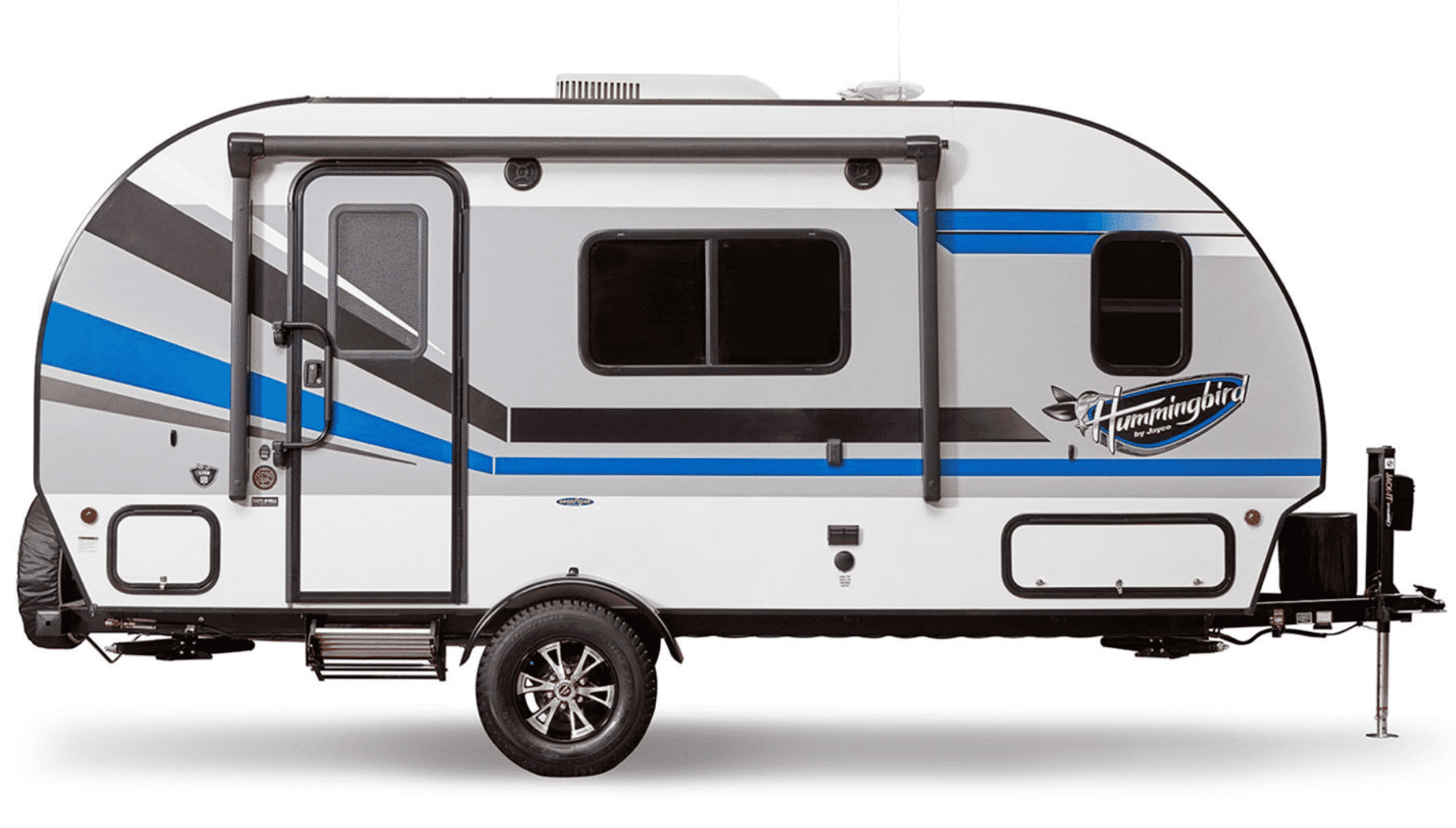
The Hummingbird is a lightweight offering from popular RV manufacturer, Jayco. You get the traditional RV comforts and features in a fun-size format.
Hummingbird travel trailers range in length from 13 to 20 feet. The weight of Hummingbirds ranges from 2,000 pounds to 3,950 pounds.
The hummingbird’s small size makes it great for touring and trips to the lake. And, like many of these travel trailers, you can fit into almost any size campsite.
You’ve heard Kelsey Henry talk about growing up roadschooled in an RV. Now, we’re bringing Kelsey back on the podcast, plus another special guest… her mom! Sam chats with Kelsey and Christy Henry about mother-daughter bonds and road trips as they travel in Kelsey’s Honda CR-V for a month! They’ve been from Texas to Florida to Washington, D.C. to Niagra Falls to Toronto to Mackinac Island!
A few things we cover in this episode:
1:30 – Hitting the road back in 2005
4:30 – Mother-Daughter road trips today
8:00 – Highlights of the epic month-long road trip
15:30 – Meeting people and making memories on the road
21:00 – Advice for mother-daughter travel
24:00 – Being considerate to each other on the road
Mother-Daughter Bonds
Kelsey and Christy have always been close, but living in an RV for 6 years gave them a special bond that has lasted through the years. They both love to travel and have been on many adventures, from traveling through Europe to van life-ing around the country (wayyy before it was cool!).
Today, they still go on many adventures, including this month-long road trip. Back in the day, Kelsey would tag along when her dad went to conferences. Now, Christy tags along to conferences with Kelsey!
Advice for a Mother-Daughter Road Trip
Communicate quickly to solve problems and diffuse tension.
Be considerate of each other’s needs.
Give space or quiet time when needed.
Keep plenty of snacks on hand in case anyone gets cranky.
Discuss what “must-see” places and “must-do” activities you both have on your trip. Make time to do a mixture of both to make everyone happy.
Be present in the moment. This time together is very special.
Rent Local RVs For Less With $1M Insurance Included. Plan Your Adventure Now! The Largest & Most Trusted RV Marketplace. Find Your Perfect RV Rental Today! Huge Variety. More Travel Flexibility. DMV Verified Renters. Instant Booking. Unique Vehicles.
Many times camping trips involve exploring new territory and discovering enticing attractions along the way. Passenger tour trains have that magnetic appeal for many RVers, providing a novel way to see hidden countryside not normally viewed from the road. Railroad passengers learn about local history, culture and the many colorful characters from the communities visited. Camping World wants to make sure you don’t miss the departing whistle, so we have created a series entitled RVing the Rails. You will find the most popular excursion trains to ride in each state, complete with any specialty trains they might offer.
Photo Credit: Skeeze on Unsplash
Today we will explore the most popular trains in Texas:
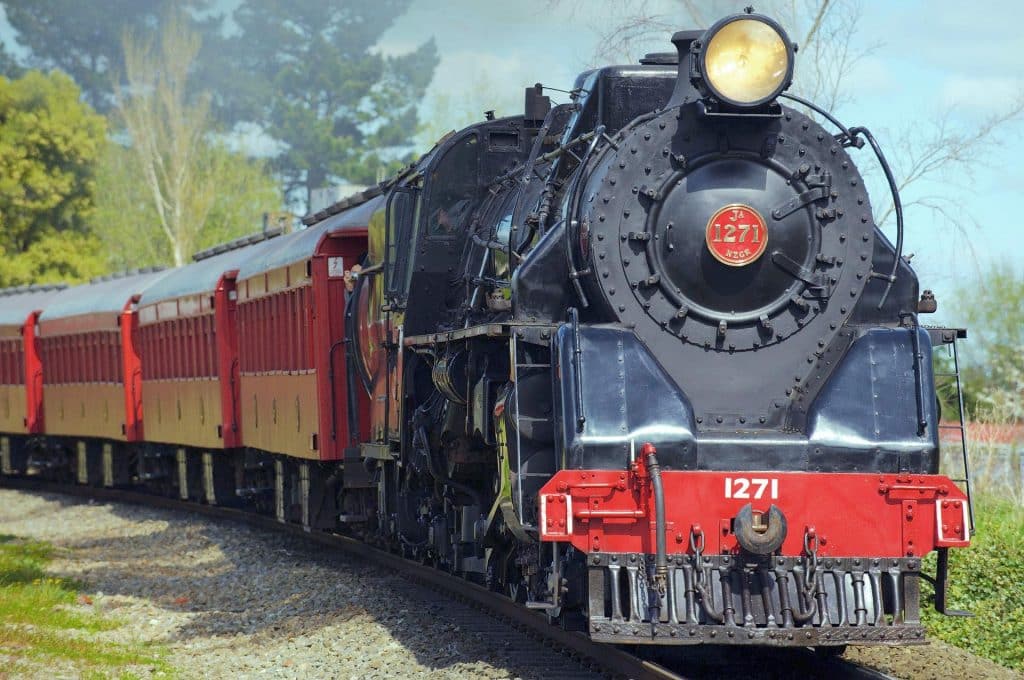
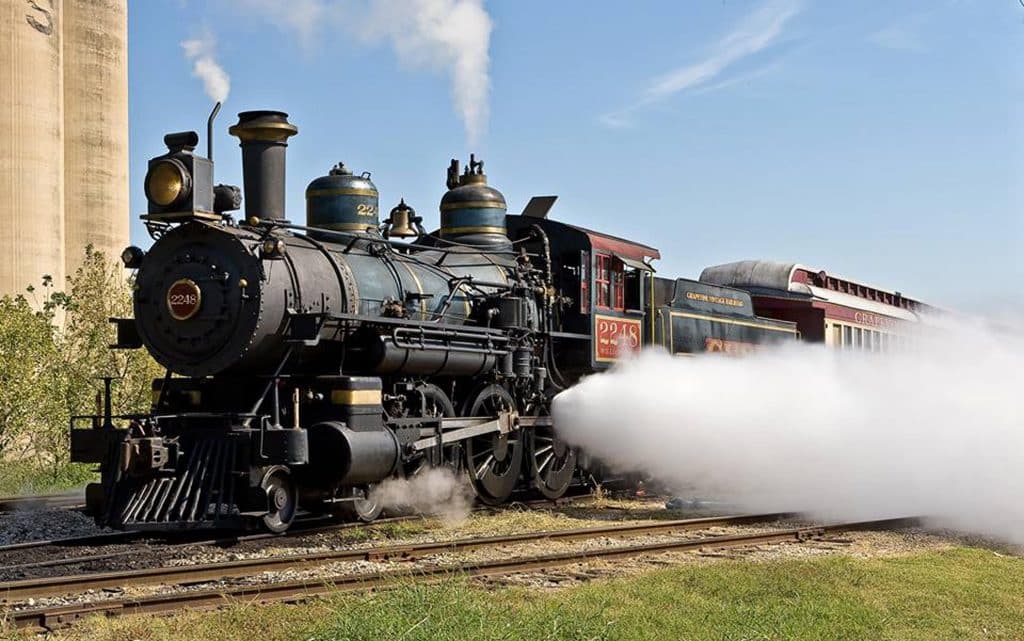
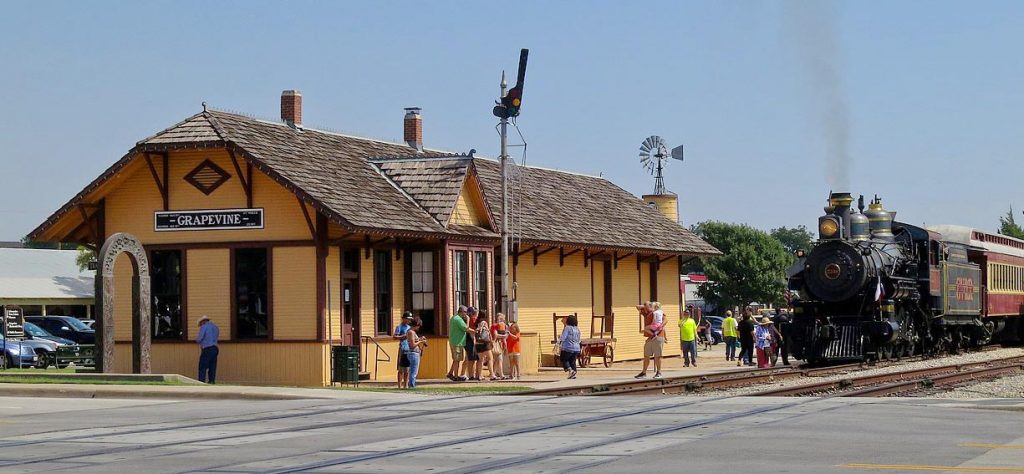
Grapevine Vintage Railroad
Photo Credit: Grapevine Vintage Railroad
Running on a track that used to be known as “The Cotton Belt Route,” the Grapevine Vintage Railroad now makes its trek from downtown Grapevine to the Fort Worth Stock Yards.
Their passengers have the opportunity to explore the restaurants and shops and watch cowboys herd Texas longhorn cattle into stockyard pens before returning to Grapevine on the train. It is a unique look back at Texas history, transportation and ranching.
Railway and Locomotive Types
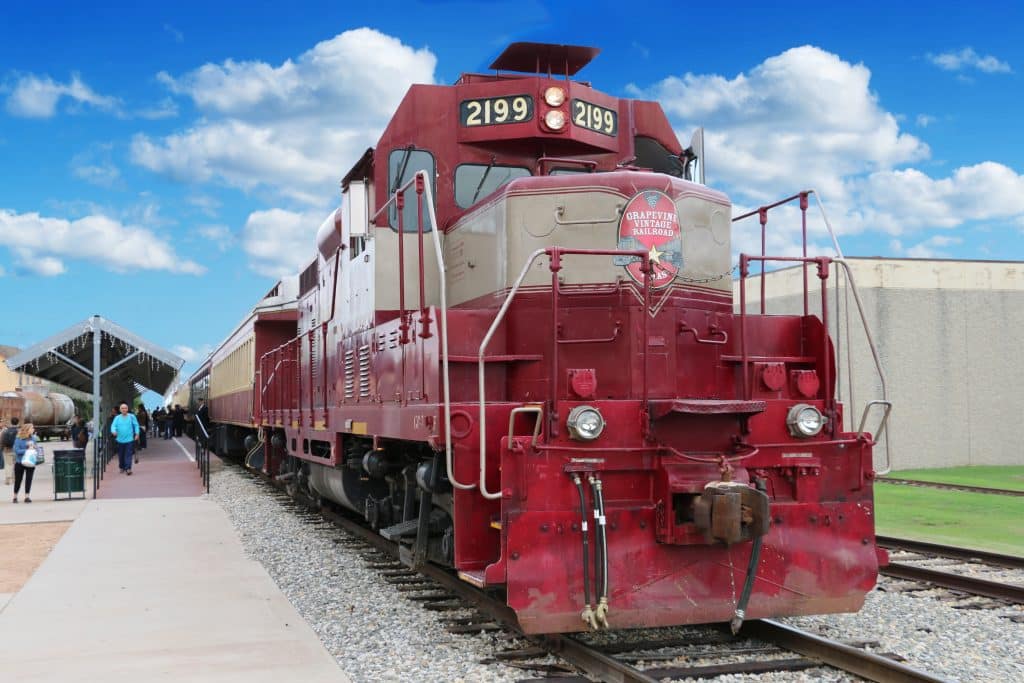
The railroad runs both steam locomotives and diesel engines on its standard gauge tracks. The rolling stock is comprised of restored 1920s enclosed coach cars and open cars.
Seating Options
Photo Credit: Alex Butterfield (CC BY-SA 2.0)
All seating is assigned on the train, with two classes of ticketing:
First Class – Passengers with first class tickets ride in climate-controlled enclosed coach cars with large cushioned seating.
Touring Class – Passengers with touring class tickets ride in open coach cars with wooden backed bench seating.
There are restrooms and snacks available for purchase on the train.
Riding Options
Travelers on the train have the option of round trip or one-way tickets on their Cotton Belt Route trains. They also offer two different side trips:
Grapevine One Hour Excursion – This train is a shortened version along the Cotton Belt Route, perfect for families with small children. Passengers leave the Grapevine depot and travel for 30 minutes, then return. Departures are on Saturdays throughout the season.
Trinity River Excursion – This short trip departs from the Fort Worth Stockyards for a trip along the Trinity River. Because the line is shared with freight trains, this trip operates on a day-to-day basis, with tickets sold to walk-up customers. Announcements about train availability will be made on the train’s Facebook page.
Specialty Trains
Photo Credit: Grapevine Vintage Railroad
Reservations are suggested for all specialty trains, as they tend to sell out.
Swashbuckler Express – Traveling twice a day on Fridays in July and August, the Swashbuckler Express is a pirate-themed activity train for young mateys. Dress up as Captain Kid and take home a trinket after this one hour ride.
Jazz Wine Train – Enjoy tastings from eight local vineyards, along with live jazz performances on each coach. Dinner and dessert are included with this excursion.
Kiss Me I’m Irish Express – Bottoms up on this St. Patrick’s Day train, where passengers toast with craft brews, Irish hors d’oeuvres and dessert.
North Pole Express – Ride to the North Pole in decorated train cars while enjoying Santa’s special Frosty Chocolate Snow Milk and cookies. Walk through Santa’s workshop, where the elves and Mr. and Mrs. Claus will entertain you, then get a pic with old St. Nick before boarding the train back to Grapevine.
Length of Season
The Grapevine Vintage Railroad runs from March through December, with specialty trains scheduled on specific dates of travel. Take a look at the train schedule for your planning needs.
Texas State Railroad
Photo Credit: TexasStateRailroad.net
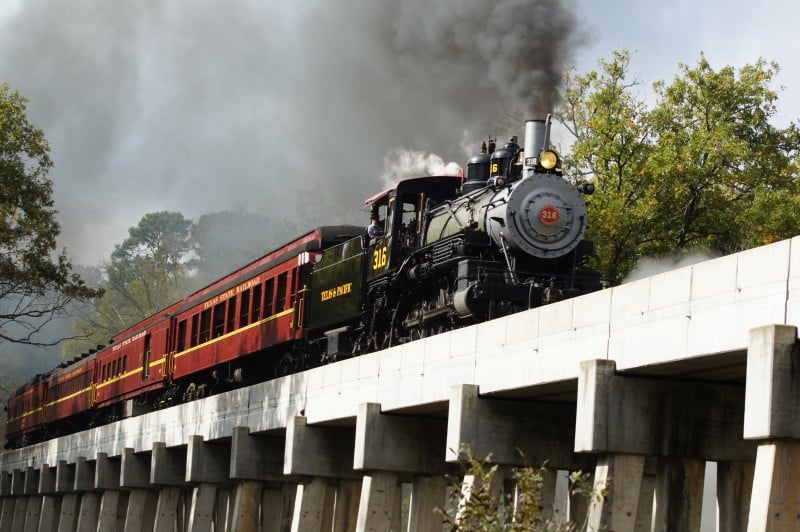
Originally built by prison inmates in 1883, the Texas State Railroad hauled freight between Palestine and Rusk through the Piney Woods of East Texas until 1921.
The tracks were then leased to private companies, but by 2007 the Texas State Railroad Authority began operating the line as a scenic railroad. Today passengers enjoy luxurious travel in restored lounge, club and coach cars on a four-hour tour through forested land.
Railway and Locomotive Types
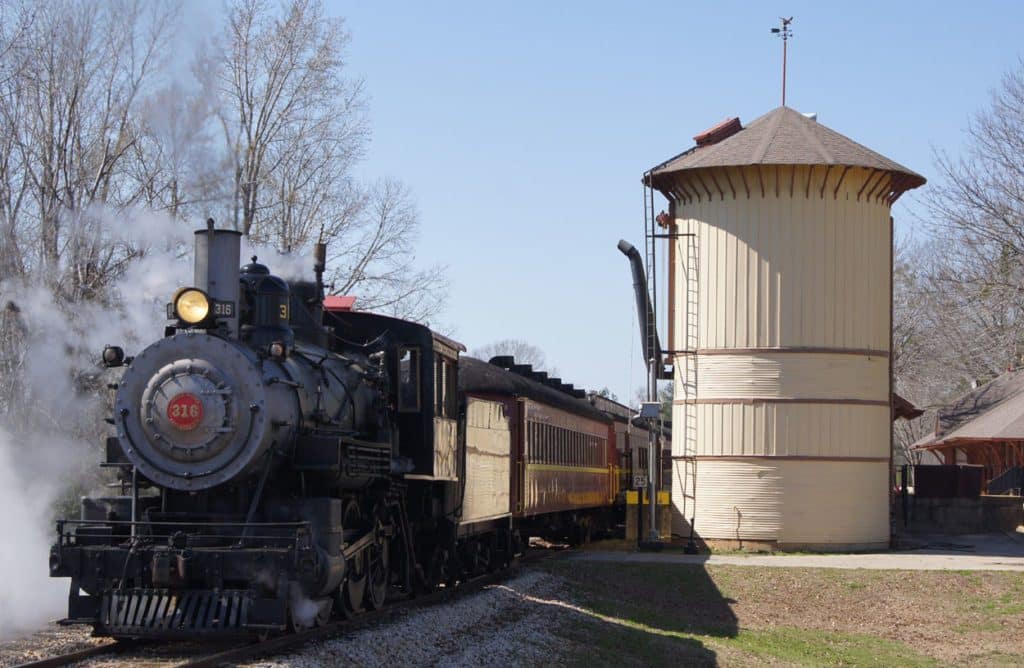
The railroad has a number of both diesel engines and steam locomotives running on standard gauge tracks. The rolling stock includes dome cars, renovated passenger cars and open gondola cars.
Seating Options
Photo Credit: TexasStateRailroad.net
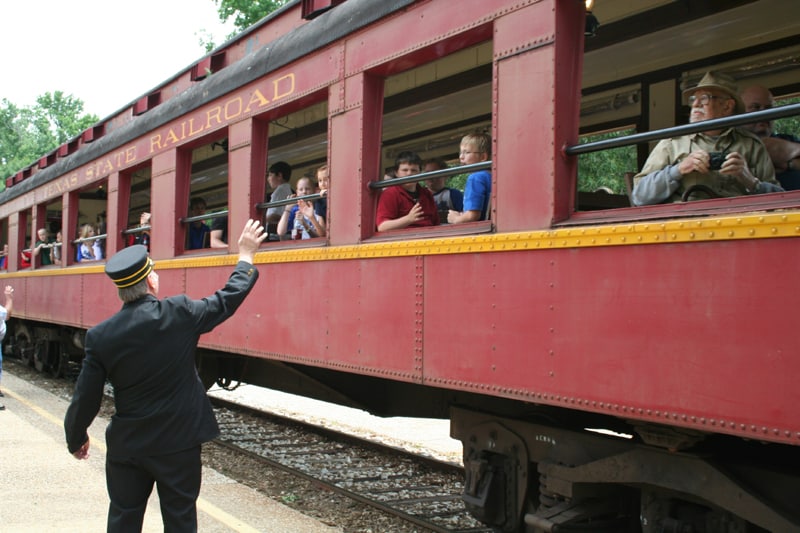
There are no assigned seats on the Texas State Railroad. However, general seating is designate within six classes of service:
Presidential Service – Sit in comfortable lounge seats with attentive service from a porter, who will provide a complementary boarding toast with appetizers as you travel.
Sky High Observation Dome Service – Get a bird’s eye view from the glass observation dome, sitting in leather seats with tables. Service from a valet will include a champagne toast and appetizers along the route.
First Class Lower Dome Service – An intimate area with tables and seating perfect for families is available for up to 20 passengers. Snacks and beverages are served during the ride.
First Class Service – An enclosed car with couches and tables provides a comfortable place to enjoy snacks and beverages as the scenery passes by outside.
Deluxe Coach Service – Enjoy upholstered benches and tables in an enclosed passenger car with beverage service available.
Coach Service – Ride in an open air gondola car with vintage wooden bench seats for an up close and personal view of the Piney Woods.
Restrooms and a concessions car are accessible to all classes during the train ride.
Riding Options
The railroad offers two upgraded riding options with very limited seating:
Caboose Ride – Limited to 8 passengers, a ride in the caboose includes plush over-sized seating with your own personal valet serving beverages and appetizers.
Engine Ride – Limited to one passenger per train, a ride with the engineer and conductor in either a diesel or steam engine will be a treat that will not soon be forgotten!
Specialty Trains
Photo Credit: TexasStateRailroad.net
Pints in the Pines – Enjoy an evening train ride, tasting Texas brews as you roll through the Piney Woods, then partake in a BBQ dinner spread when the train reaches the Rusk Depot.
Wines in the Pines – An evening filled with wine, chocolate and a romantic train excursion is a package that most can’t resist. Top it off with a BBQ dinner as the train pulls into the Rusk Depot, and you’ve got yourself a great date night activity!
Pumpkin Patch Express – Put the kids in their Halloween costumes and hop on the Texas State Railroad to the Pumpkin Patch. That’s where you’ll find hayrides, trick-or-treating and games. Take home your own pumpkin to carve, as well.
Polar Express – Participate in a holiday classic as the whole family becomes part of the Polar Express. Ride to the North Pole as chefs serve cocoa and cookies and read from the much-loved children’s book. Then tell Santa exactly what you wish for Christmas. Everyone who “believes” will receive their first gift of the season, a silver bell.
Length of Season
The Texas State Railroad’s season extends from March through December, with specific dates for specialty trains scattered throughout. Check the train schedule to find the excursion that’s right for you.
Jefferson & Cypress Bayou Railway
Photo Credit: Historic Jefferson Railway
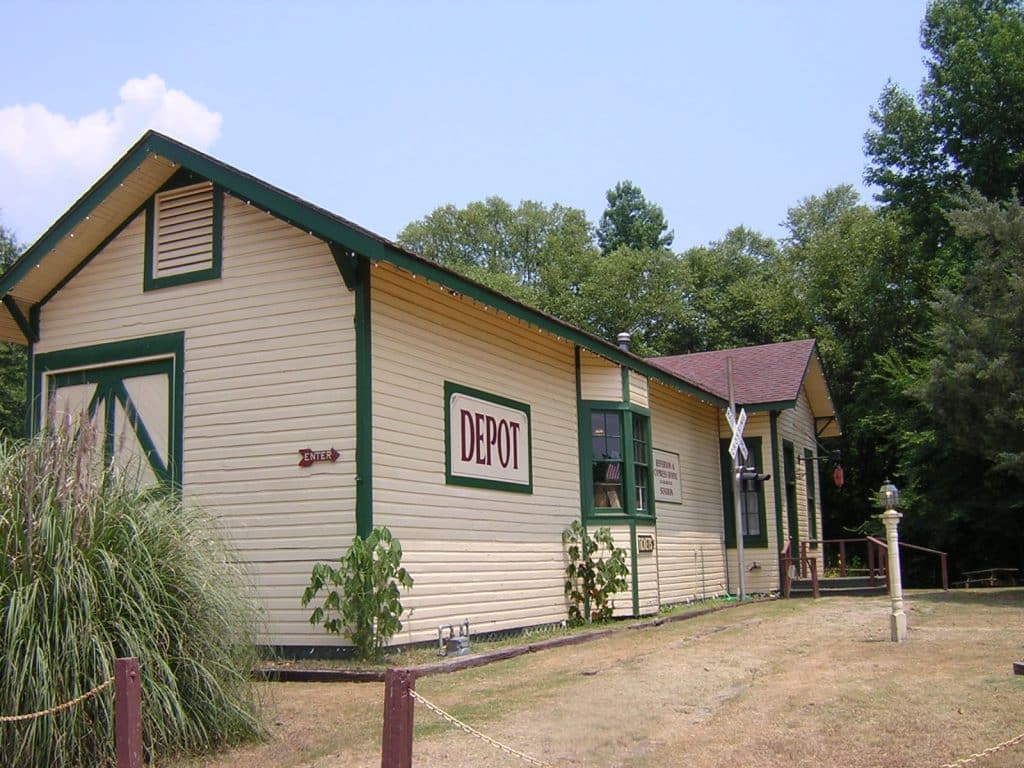
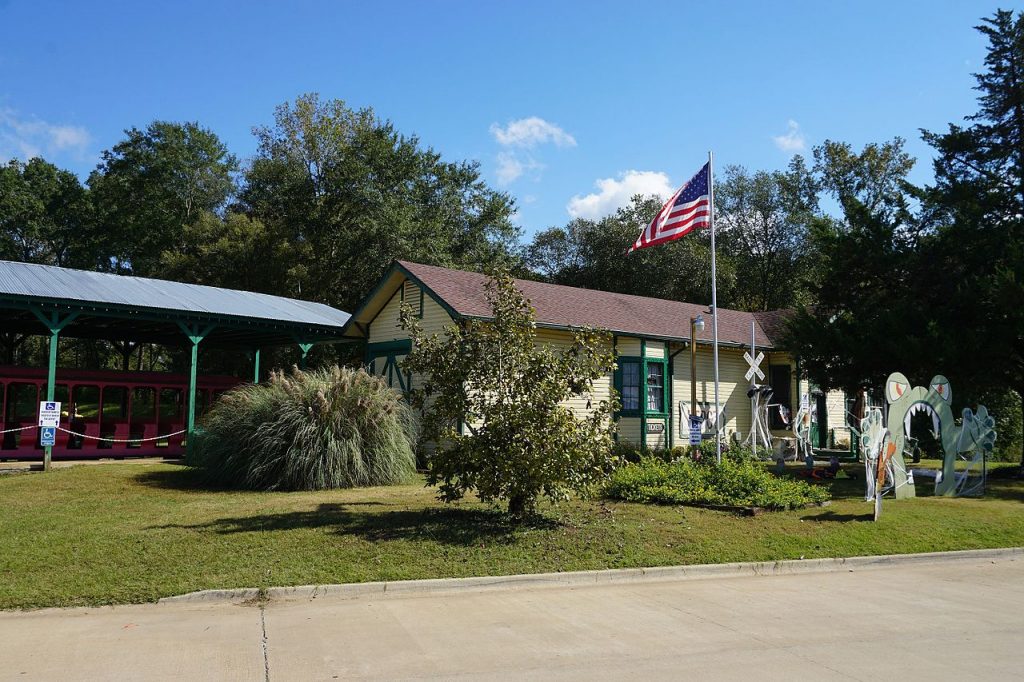
The Historic Jefferson Railway, more commonly known as the Jefferson & Cypress Bayou Railway, is an unusual railroad in that it wasn’t built as a train line to haul freight and passengers. Unlike most excursion trains, it has no history as a public transportation line.
Instead, the tracks were purchased and moved from an amusement park in Florida, with the intent of creating an attraction along Big Cypress Bayou. By 2002 today’s existing train ride was showcasing the dense Piney Woods and shoreline of the bayou to visitors far and wide.
Railway and Locomotive Types
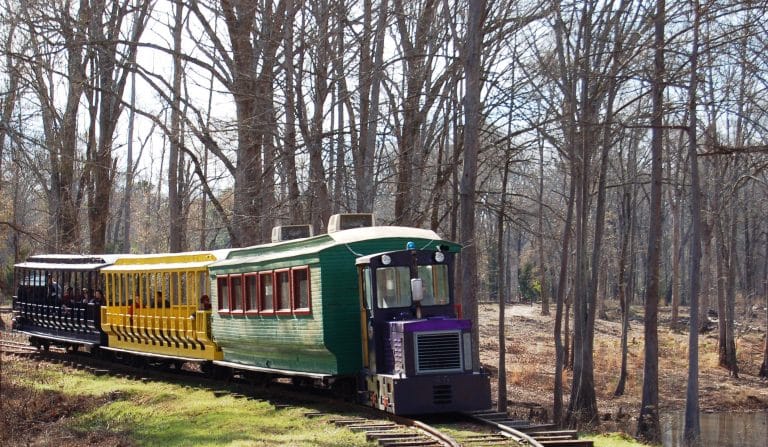
The Jefferson Railway utilizes both steam and gas-powered locomotives on its narrow gauge tracks. The cars are open air covered gondola cars.
Seating Options
Photo Credit: Historic Jefferson Railway
All seating is open with no assigned seats. Passengers travel in open air cars, which are covered for protection against the elements.
Riding Options
The 40-minute train ride leaves the depot in Jefferson and follows the shoreline of Big Cypress Bayou through the Piney Woods, with one stop at the Diamond Don Gator Pit. Watch the feeding of the live alligators that live there, before returning to the depot. There are no one-way tickets.
Specialty Trains
Photo Credit: Michael Barera (CC BY-SA 4.0)
Terror on the Bayou Runaway Fright Train – What’s more spooky than riding a train through the bayou at night? Riding it there during the season of ghosts and goblins!
Rail of Lights Christmas and New Year’s Train – Celebrate the holidays Texas style, with lighted evening trains in the Piney Woods.
Length of Season
The Jefferson & Cypress Bayou Railway runs trains on Saturdays during the months of June, July and August. Specialty trains are scheduled on specific dates throughout the year, so check the train calendar for more information.
Join the thousands of RVers that have a love affair with trains and ride the rails on your next camping trip. Check out the other excursion trains available on a state-by-state basis in our series, RVing the Rails.