Blog

  • 6 Kid-Friendly RV Activities

    6 Kid-Friendly RV Activities


    RVing is an adventure. RVing with kids can take things to a whole other level. Whether you’re a parent taking your kids on their first adventure, or grandparents with camping grandbabies, children can be unpredictable. You never know how much entertaining you’ll have to do at the campsite.

    Here’s a list of kid-friendly RV and camping activities sure to please every kid out there.

    Traditional Kid-Friendly Activities

    Luckily for you, RVing is naturally kid-friendly. Children love being out in nature. And are usually happy to just explore their surroundings. This means you can keep everyone engaged and entertained by doing the kinds of things you would do anyway.

    Fishing
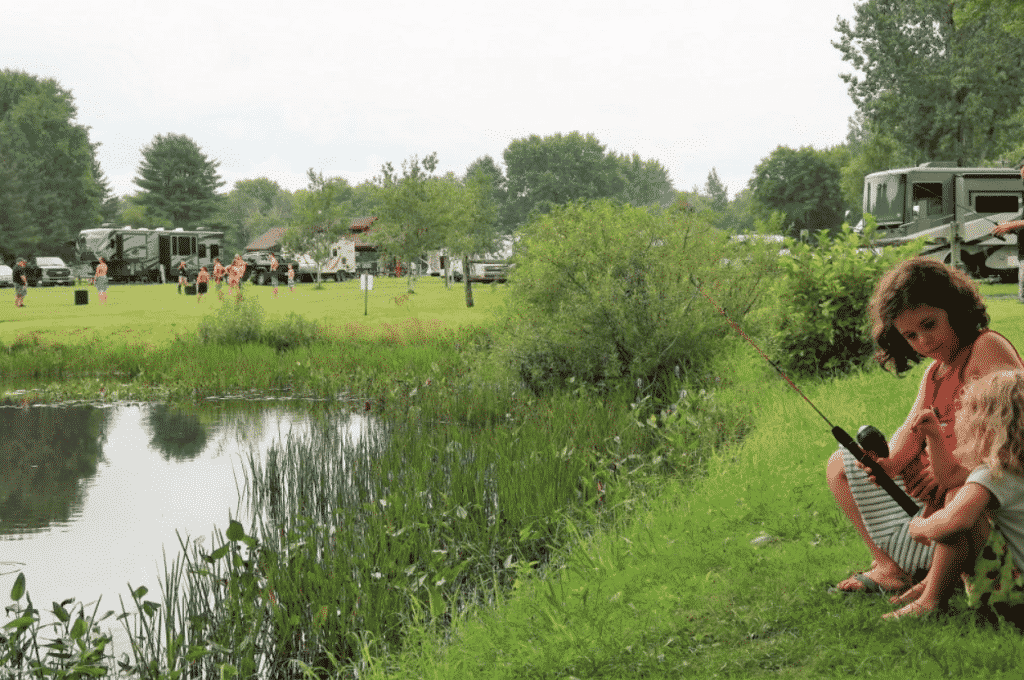
    As an avid RVer myself, I’ve found a lot of RV parks and campgrounds have some sort of fishing hole. My daughter loves grabbing her fishing rod and heading to the water when we arrive at a new campsite.

    When you think about it camping and fishing really go well together, don’t they? They’re both peaceful, outdoor activities, and fishing can be an exciting learning experience for your child.

    Hiking

    You really can’t go wrong with a hike. Especially in mild weather, your kids will love hitting the trail. I know mine does. While researching RV parks and campgrounds, you should look for a trail system. This can be in the campground, or nearby.

    State parks are wonderful places to set up the RV for a few days and enjoy hours of hiking as a family. You can also stay in nearby campgrounds that bring you close to the state park.

    Many RV parks will have their own walking trails as well. I’ve been to KOAs and Jellystone Parks that have their own small trails. They are usually very easy hikes and short. These trails work for anyone traveling with young children.

    With that said, don’t worry if the RV park you want to stay at doesn’t have any. Just going for a walk around the park can be a really fun kid-friendly RV activity. Our family loves to walk around when we arrive at a new park. It’s really fun to look at everyone’s setups and chat with other RVers.

    Wherever you decide to hike, your kids will enjoy the fresh air and spotting wildlife. Just be sure to carry some snacks with your so they keep from getting hungry.

    Build a Campfire
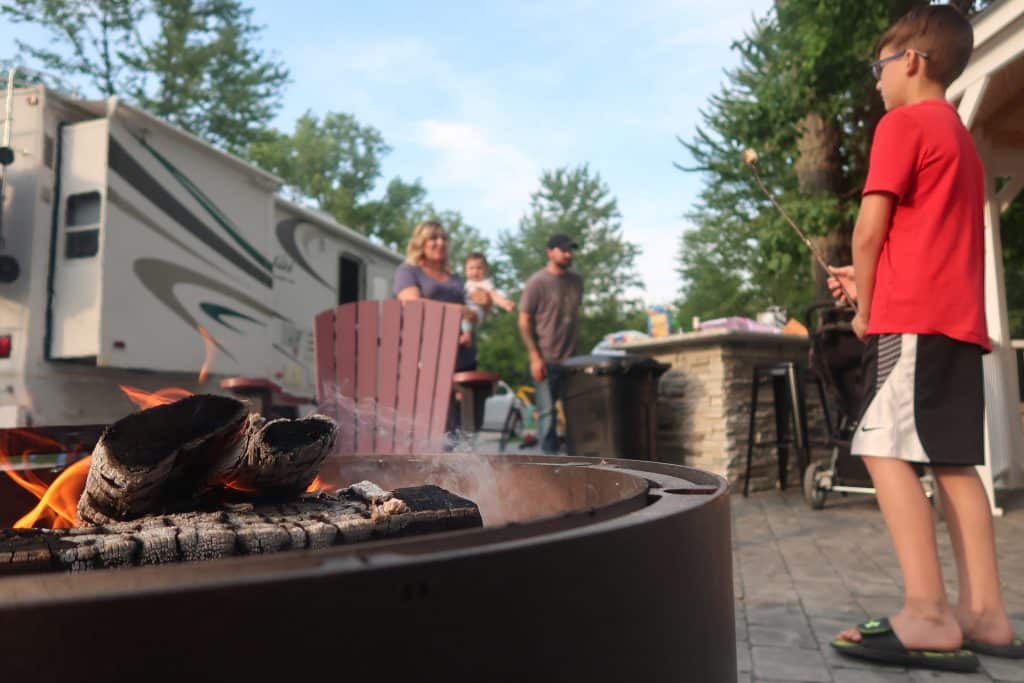
    The campfire is quite possibly the most anticipated and exciting event while RVing. Everyone, young and old, looks forward to gathering around the fire, telling stories, and roasting marshmallows.

    Also, creating the fire can be just as much fun! Have the kids gather the kindling on their hike. Or bring newspaper for them to crinkle up before nightfall. Take them to the campground store and have them purchase the firewood. Then show them how to put it all together to start the fire.

    If you’re like me and don’t know how to start the fire, let them help you learn. Get out a tablet, computer, or smartphone and let them do some research for you on YouTube. Getting them to help build the campfire is going to make those s’mores so much sweeter, and it’s a great learning experience.

    DIY Kid-Friendly RV Activities

    While traditional kid-friendly RV activities can provide hours of fun and exploration, sometimes it’s just not enough. Here are some activities that require a little more prep on your part, but are guaranteed fun on your next camping trip.

    Cornhole

    This is a timeless RV tradition, and your kids will love it. You can make your own set of toss boards or buy the game at your local big box store or Camping World.

    I recommend cornhole as a kid-friendly RV activity for three main reasons:

    1. It doesn’t require a lot of supervision. You can set it up and allow the kids to play to their hearts’ content.
    2. It doesn’t require a lot of skill. For older kids, they can truly play for the sport of it. And for younger kids, they can just as easily enjoy by playing close-up and gathering the bean bags for other players.
    3. You can play as a family. This is a game that everyone loves and will want to play. Kids won’t get bored before parents, and vice versa. You can truly bond over a game of cornhole.

    I also love this game because it gets the kids outside and moving. Which is the whole point of RVing with them anyway, right?

    Water Balloon Batting Practice
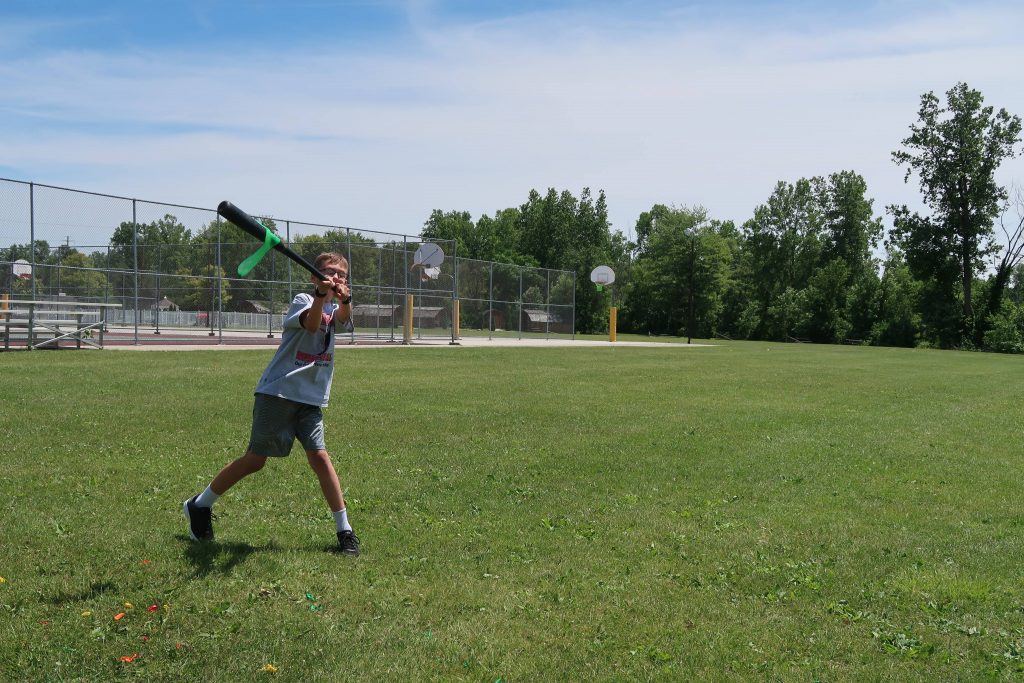
    This is my absolute favorite camping game, and it really is fun for kids of all ages. Just pack a baseball bat or two and some water balloons on your next RV trip. Fill the balloons, line up the kids, and start having a good time.Have the kids take turns between pitching and batting. Both are really fun.

    I like this game the most not only because it involves water, but because you can play for a long time. It can take a few tries for your kids to actually break the water balloons. The pitcher has to learn how to throw the balloon properly, too.

    With both the batter and the pitcher learning the specifics of the game, it lasts a long time. It also provides a lot of laughs for the players as well as the spectators.

    Laundry basket frisbee golf

    Frisbee golf has exploded in popularity over the last decade. Let your kids in on the fun with this simple version you can make yourself.

    First, remember how to play:

    Toss a frisbee into the target. The player with the lowest amount of throws wins! 

    While I’ve been to some campgrounds that have frisbee golf courses, most don’t. Fortunately, it’s a very easy game to replicate. Before you head to the campground, make a trip to the dollar store and buy 4-6 small laundry baskets and some frisbees. Label each basket with a number.

    When you get to the campground, set up the baskets in various places around your site, in an open field, etc. Now let your kids have the frisbees. They’ll take care of the rest. You can keep score easily on a piece of paper, or let them do it to add to the fun.

    While there are hundreds of things for your kids to do at the RV park, these are some of the most fun for my family.


    What activities will you try out on your next camping trip? Leave a comment below!


    Source link

  • Exploring Alaska in an RV – Whittier

    Exploring Alaska in an RV – Whittier


    Many RVers dream of traveling to Alaska, considering it the ultimate destination on their bucket lists. So we’ve created a series of articles to help you navigate the Last Frontier in a motorhome or travel trailer, in hopes that you can enjoy exploring the 49th state, as well!

    Photo Tripping America - Whittier - Camping World

    Today we’ll follow Seward Highway (Alaska 1) out of Anchorage south and east to:

    Whittier

    Here’s your chance to visit an entire town that lives under one roof—an unusual place, even by Alaska standards! Whittier is a port city approximately an hour from Anchorage, but a lifetime away from “average” in any vernacular.

    Photo Tripping America - Whittier - Camping World

    Let’s start with the fact that the only land access to the town is through a 2 ½ mile, single-lane tunnel through the mountains that closes every night at 10:30pm. Then add to that the fact that Whittier gets more moisture than any other town in Alaska and all of America at 198 inches a year. Couple that with consistent wind speeds in the area of about 60 mph, and it might explain why almost all of its 217 residents live in one building, with all city services located there as well. Who wants to walk to the post office or grocery store in frigid temperatures with high-velocity winds, when you can move the city hall, police station, library, supermarket, and health clinic into the bottom floor of your apartment building?

    History

    During World War II the US Army established a military base near Whittier Glacier, and with that construction came a railroad and port facility to bring soldiers into Alaska. The Anton Anderson Memorial Tunnel was blasted in quick fashion, as the Japanese bombing of Pearl Harbor made defense of the 49th state increasingly important, and shipping of supplies and troops by rail was a major priority.

    Photo Tripping America - Whittier - Camping World

    Until 2000, the only way to travel to the town of Whittier was by rail—either as a foot passenger or by loading automobiles onto flatbed cars—or by boat. By the 1960s, the military had pulled out of the area, and the Port of Whittier became a destination for cruise lines and commercial boat traffic.

    Photo Tripping America - Whittier - Camping World

    Today the town is still the terminus for the Alaska Railroad and several cruise ships dock in Prince William Sound, along with ferries traveling the Alaska Maritime Highway, but the expansion of the train tunnel to allow cars passage provided more access to a town surrounded by intense beauty and abundant wildlife. That’s when tourists discovered this secret gem.

    Photo Tripping America - Whittier - Camping World

    Outdoor Activities

    Whittier sits in the midst of mountainous terrain covered year-round with ice. These glaciers attach their tentacles in numerous valleys, terminating at water’s edge.  Known as tidewater glaciers, they offer great hiking and ice climbing opportunities, as well as paddleboarding and kayaking in calm water along their boundaries. Follow the Portage Pass Trail to enjoy fantastic views and outdoor adventures like these all summer long.

    Photo Tripping America - Whittier - Camping World

    Three species of salmon are prevalent in areas rivers, so fishing is a pretty big deal here, and the town also has its own campground within walking distance of the marina. The sites are level and large enough to handle virtually any size RV, and tenting is allowed as well. Don’t discount dispersed camping. You’ll have a beautiful backdrop wherever you set up camp.

    Photo Tripping America - Whittier - Camping World

    Restaurant selection in a town this small is pretty limited, with four choices during the summer season, so be prepared for a bit of time spent in line, or brown bag it in a scenic spot along the bay. You can also catch your own dinner, and fry it up at your campsite for an authentic Alaskan meal.

    Where Are All the People?

    Of course, the most curious thing about Whittier is the location of its population. Almost all live in the colorful Cold War era building known as Begich Towers. Wander into its lobby to see just how an entire town can function from within its walls.  The church is in the basement, school is next door and accessible through a tunnel, and you’ll probably run into half of the town’s residents in the post office or laundromat down the hall.

    Photo Tripping America - Whittier - Camping World

    I wondered how many of them ended up here—at the virtual end of the road—and found that many residents were mobile, coming to Whittier for a year or two, then moving on. However, there are quite a few who have raised generations in this isolated valley. Some came years ago to work at the canneries for a summer but stayed for 35 years. Others relish the tight community they have built, and most cherish the rugged outdoor environment surrounding them.

    Room with a View

    If you’d prefer a little pampering while you’re in Whittier, rent a room at Glacier View Condo Suites, a B&B on the top two floors of Begich Towers. It’s a great way to experience daily life “in” Whittier and take in the amazing views of whales breaching in the harbor or mountain goats clinging to the side of nearby peaks. Each room comes with a pair of binoculars and outstanding scenery.

    Photo Tripping America - Whittier - Camping World

    Wildlife in the Wild

    When you are ready to say goodbye to this most unique community, there’s only one direction to go. Head back through the Whittier Tunnel, but save at least an afternoon for one final adventure on this particular trek. The Alaska Wildlife Conservation Center is about 20 minutes away, located close to Girdwood on Seward Highway.

    Photo Tripping America - Whittier - Camping World

    Wildlife that has been injured is rehabilitated there, and those that can’t return to the wild live out their days in their own environments: moose have acreage with their own riverfront property, and bears enjoy the comfort of cozy dens when hibernation sets in. You can walk through this huge outdoor park, viewing virtually every wild animal Alaska has to offer. Grizzly to black bears, bison, caribou, musk ox, and elk, all call this home. You’ll get an up close and personal experience with these animals unlike any other. So, if you haven’t seen enough wildlife in your explorations across the state thus far, this visit should fill in the gaps for you.

    Photo Tripping America - Whittier - Camping World

    Explore More of Alaska

    Be sure to join us for more adventures across The Last Frontier in the coming weeks!

    Author’s Note: If you will be driving through Alaska and/or Canada please consider purchasing a current copy of “The Milepost.” It is a travel guide that will list necessities (like gas stations) and amenities (like lodging) throughout Alaska and the western Canadian provinces by milepost marker. This is a prerequisite for traveling in the area, as distances between service stations and grocery stores can be hundreds of miles in many cases. Another piece of knowledge gleaned from “The Milepost” are the hours (and seasons) of operation of businesses along the route, as many close down during fall and winter.


    What do you think of Whittier, Alaska? Leave a comment below!


    Source link

  • 10 Best Entertaining and Educational RV Podcasts

    10 Best Entertaining and Educational RV Podcasts


    When you’re on the road, you need something to listen to. While music is perfect for a long road trip, eventually, you may want something else. That’s where a good podcast comes in. There are thousands of podcasts out there, but if you’re RVing, an RV podcast is always an excellent show to listen to.

    professional microphone for podcasts

    Here are 10 of the best RV podcasts that will educate and entertain you on your next road trip.

    1. The RV Miles Podcast

    The RV Miles Podcast is a show designed for RV enthusiasts. It’s run by Jason and Abby Epperson, who are full-timers traveling around the U.S. The couple lives in a converted school bus with their three sons. The podcast consists of tips and tricks, gear recommendations, RV news, and tons of other RV-related topics. It’s education, fun, and perfect for your life on the road.

    Check out the latest episodes by clicking here.

    2. The RV Family Travel Atlas (RVFTA)

    Oddly enough, The RV Family Travel Atlas is also run by a couple who RVs with their three kids. However, Stephanie and Jeremy aren’t full-timing. They’re avid part-timers who are very knowledgeable about a wide variety of RV topics. While any RVer will benefit from the episodes, much of RVFTA’s content focuses on RVing part-time. It’s a great resource for any weekend warrior.

    Check out the latest episodes by clicking here.

    3. The RV Entrepreneur

    Focused on one of the most important aspects of full-timing, Heath and Alyssa Padgett’s podcast called The RV Entrepreneur is all about helping nomadic entrepreneurs live their best professional and personal lives. This podcast is a must for anyone living and working on the road. It’s also an informative show for any entrepreneur with an adventurous spirit, one who RVs or not.

    Check out the latest episodes by clicking here.

    4. Roadtreking: The RV Podcast

    This RV podcast is all about small living and traveling around in a Class B RV. Award-winning journalist Mike Wendland runs the show with his wife Jennifer, and they discuss a variety of topics as they travel around in their Roadtrek Class B motorhome. The couple also runs a website with all sorts of helpful tips and tricks for RVers.

    Check out the latest episodes by clicking here.

    5. Girl Camper Podcast

    Looking for an RV podcast with a female touch? Check out the Girl Camper Podcast created by Janine Petit. Janine is an advocate for girl and women campers everywhere and focuses on giving advice to other females in a male-dominated industry. With that said, her episodes can be a valuable resource for people of all genders. She covers everything from hitches to basic camping tips.

    Check out the latest episodes by clicking here.

    6. Living the RV Dream with Traveling Robert

    This podcast is run by Robert Morales and his wife Ileana. They travel the U.S. and bring you with them on their journey through their podcast, YouTube channel, and website. The topics change as the couple moves around, but they’re always entertaining and informative. Robert has been doing interviews as of late with other avid RVers, which makes for some fantastic content to listen to.

    Check out the latest episodes by clicking here.

    7. Happy Camper Radio

    Skip Huber is an outdoorsman and camper who has spent years enjoying the great outdoors. His Happy Camper Radio is an excellent resource for a variety of RV-related topics and can be a wonderful source of entertainment and valuable information. Skip’s focus isn’t only on RVs he tries to get all manner of people out enjoying camping, whether they’re in an RV or a tent. He covers, tips and tricks, gear, and so much more.

    Check out the latest episodes by clicking here.

    8. Roadschool Moms

    If you’re RVing with kids and you need to know how to make sure they’re getting the education they need as the days go, this is the best podcast out there. Kimberly Travaglino and Mary Beth Goff, get together for hour-long episodes to talk about everything there is to discuss when it comes to roadschooling, or homeschooling from the road. These episodes are for the parents of roadshcoolers, not educational posts for the kids, so keep that in mind.

    Check out the latest episodes by clicking here.

    9. Vintage Airstream Podcast

    If you’re looking for an RV show that has been running a long time, consider the Vintage Airstream Podcast. This show started in 2005. Today, it’s still going strong with over 300 episodes you can listen to. While the podcast is obviously about vintage Airstream campers and other Airstream camper topics, there’s a lot of good information here that any RVer would easily find useful.

    Check out the latest episodes by clicking here.

    10. Stories from the Road

    You know we couldn’t leave our own podcast off this list. In Stories from the Road, our host Sam Nuerminger chats with all sorts of avid RVers to learn more about their lives and hear about their most memorable stories, both good and bad, while they’ve traveled. It’s inspirational to hear so many stories from so many unique voices all across the country.

    Check out the latest episodes by clicking here.


    Source link

  • Life on the Road // Crazy Family Adventure Episode 11

    Life on the Road // Crazy Family Adventure Episode 11


    Follow Crazy Family Adventure in this episode of Life on the Road as they take in all that Bend, Oregon, and the surrounding area has to offer. The family visits the Newberry Volcanic National Monument, Paulina Lake, and Paulina Falls. The episode ends with some river tubing the family does right in Bend, Oregon.

    You can watch the rest of Crazy Family Adventure’s Life on the Road series by clicking here.


    Source link

  • An RVer’s Guide to Camping at Disney’s Fort Wilderness

    An RVer’s Guide to Camping at Disney’s Fort Wilderness


    Walt Disney World’s Fort Wilderness Resort and Campground is undeniably popular with RVers. Ask brand new RV owners at the Florida RV SuperShow where they’ll first take their shiny new rig, and you’re likely to hear Fort Wilderness. An RV stay at Fort Wilderness isn’t your usual RV experience, however.

    If you’ve never camped at Fort Wilderness, a few things will surprise you. The guide below will help you plan ahead for your stay at the “Happiest Place on Earth.”

    The Campground

    Fort Wilderness is an onsite property at Orlando's Walt Disney World Resort.

    Disney’s Fort Wilderness Campground is truly a resort. At 750 acres, it’s sure to be larger than many places you’ve camped. Amenities go far beyond pools and laundry facilities. The resort has dining, archery, nightly campfire songs, movies, and much more.

    Layout

    Fort Wilderness contains roughly 800 campsites plus cabins. The campsites and cabins are all arranged in loops. As an RVer, you would be staying in one of 21 loops. More specifically loops numbered from 100 to 2100.

    Loop 100 is close to the marina which has boat transportation to the Magic Kingdom and Disney’s Wilderness Lodge and Contemporary resorts. Pioneer Hall is also up in that area which has dining, an arcade, and a nightly dinner show. Pony Rides are also available in the northernmost area of the campground.

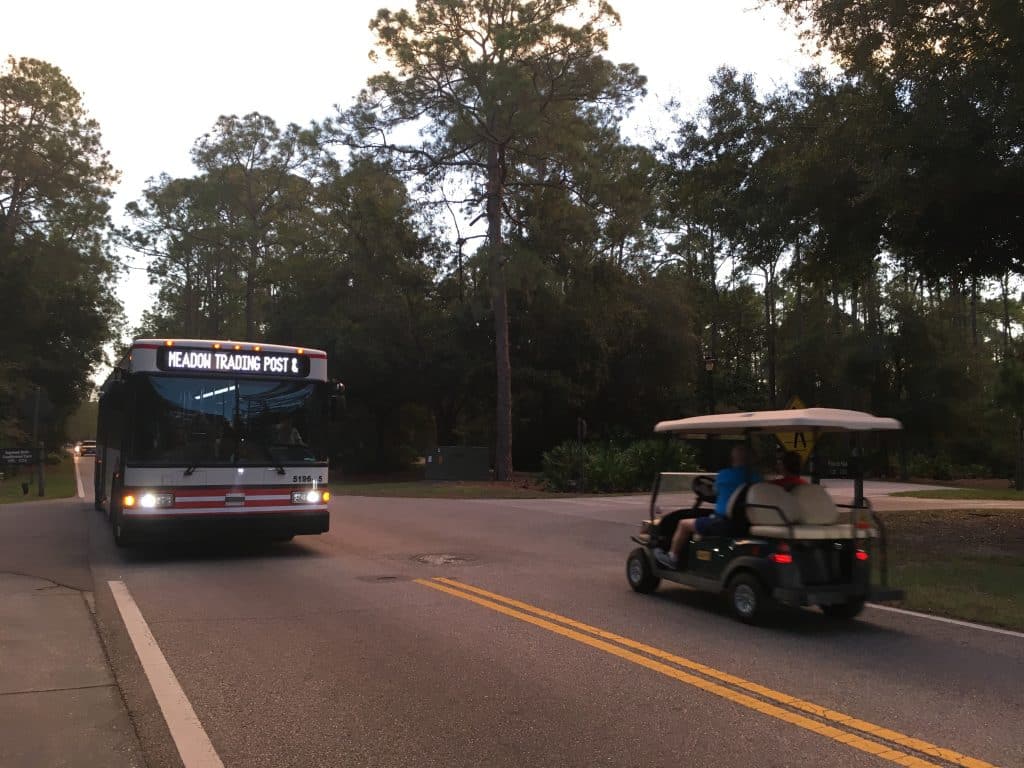
    Middle loops are close to the pool, archery, Meadow Trading Post, and Meadow Snack Bar.

    Reception, lobby, golf cart rentals, and bus transportation to all of the Disney parks are at the southernmost end of the campground. As loop numbers go up, you’re closer to these areas, but the cabins are actually the closest.

    Transportation

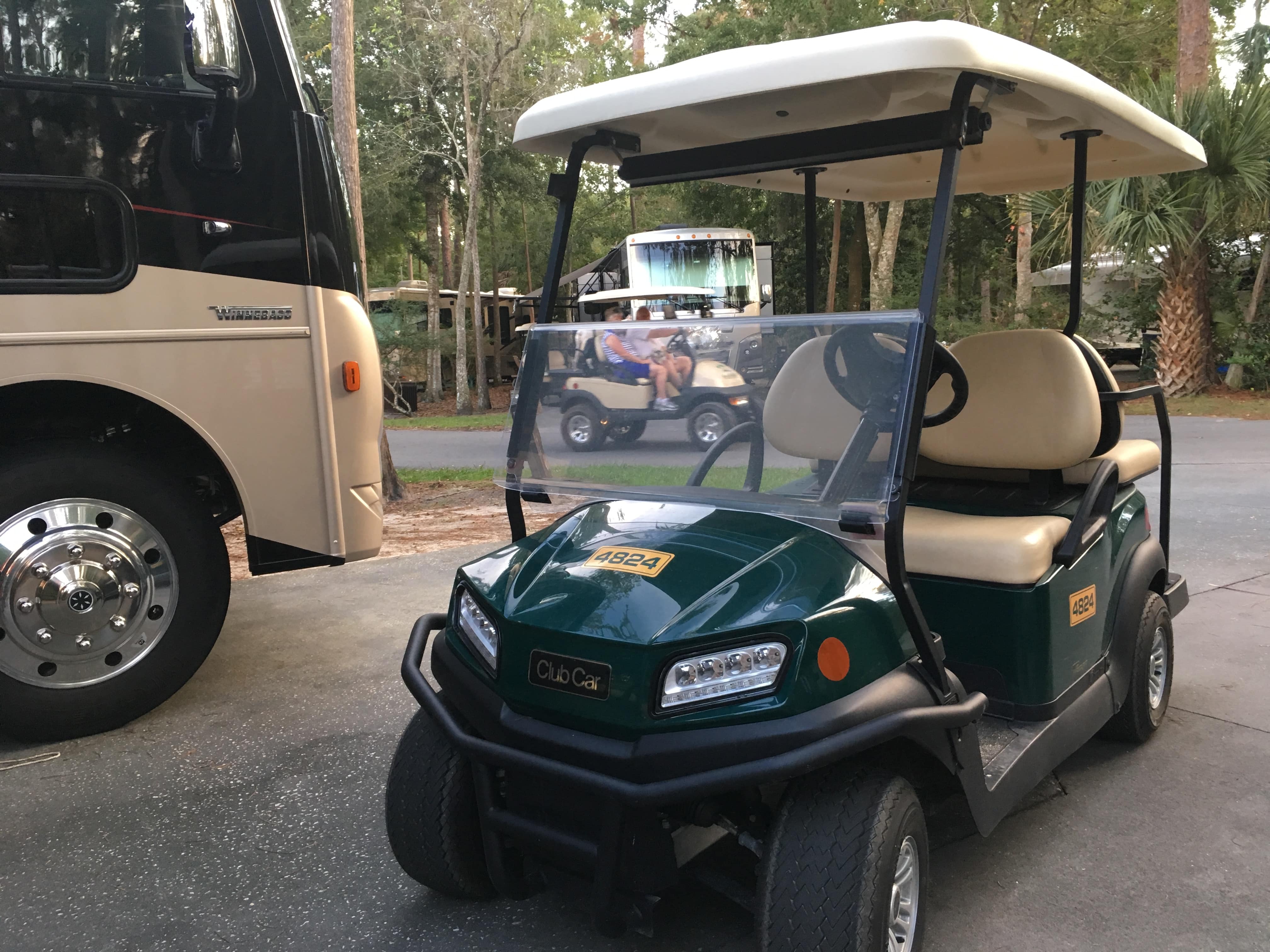
    Given Fort Wilderness’s size, you’ll probably want to rent a bike or a golf cart even if you don’t normally use either at campgrounds. If you own a golf cart, this is a great place to bring it. Don’t plan on walking over to a friend or family’s site unless you’re in the same loop (more about this below).

    Many amenities will end up being too far to walk to for most people. Although golf cart rentals are available, they tend to be reserved quickly and far in advance. Luckily, Fort Wilderness has three—yes, three!—internal bus lines that connect the sites, amenities, and Disney park transportation at Fort Wilderness.

    The Orange Bus line runs up the center of all of Fort Wilderness, with all lines connecting to both the bus depots at the Southern end of the campground (the Outpost) and the northern end (the Settlement Depot).

    The main thing to keep in mind is that you won’t be able to use your tow car to drive to many of your destinations within the campground as the only parking available is designated golf cart parking and bike racks.

    You'll need a bike, golf cart, or ride on 1 of 3 internal bus lines to get to the different sites and amenities within the Fort Wilderness campground.

    Bath Houses and Laundry

    Although it’s not practical to walk to all available amenities from your campsite, each loop does have a Comfort Station within walking distance.

    Each Comfort Station has restrooms, showers, and laundry. The laundry machines are conveniently operated by credit card.

    This is a convenient bonus compared to many campgrounds. Comfort Stations are locked, and can only be opened with a Magic Band (more on these below) after hours.

    The Campsites

    Fort Wilderness Tent and Pop-Up sites are large enough to accommodate Class Bs and small Class Cs.

    There are a few different types of campsites avaliable inside the park. Different campsites are designed for different needs, so be sure to get the one right for you.

    Types

    Fort Wilderness offers four different types of campsites. The smallest of the campsites are the Tent or Pop-Up sites. These are 10′ x 25′ in size. Despite their name, most Class B RVs and small Class C RVs fit on these sites. These sites are found in the 1500 and 2000 loops.

    Generally speaking, these aren’t pet-friendly sites as pets can’t stay behind in soft-sided pop-ups trailer RVs or tents. When it comes to hard-sided RVs, a little over half of all campsites are pet-friendly, though.

    All other campsites are full hook-up meaning they have sewer hook-ups. If you’d like this make sure to get a site that’s called Full Hook-Up. These measure 10′ x 50′ in size and can accommodate Class C, Class A, and Class B RVs.

    Following those are sites known as Preferred which come in at 10′ x 45′. Preferred sites are designated as such based on location in the campground. These tend to be in close proximity to amenities such as the Marina at the north end of the campground where you can catch a boat to the Magic Kingdom.

    The top tier campsites at Fort Wilderness are the Premium campsites, which larger at 18′ x 60′. These are ideal for RVs in the 40 ft range or with many slides. The size of these sites is what makes them premium sites.

    Full Hook-Up, Preferred, and Premium, sites all have water, electric, and sewer hook-ups. All sites, including the Tent or Pop-Up sites, have 20, 30, and 50 amp electric hookups.

    Privacy

    Fort Wilderness is often at full capacity, yet you enjoy a great deal of privacy at any campsite. Beautiful Florida foliage and landscaping provides privacy between sites. Additionally, the sites are staggered in such a way where RVs aren’t directly next to each other.

    So, even if it was possible to see through the foliage, your window wouldn’t be lining up with the RV next door’s window.

    The quietest sites are in loops 1700 to 2100. They’re quietest because they are farthest from the amenities to the north and the amenities in the middle of the campground where the pool is.

    Heat & Mosquitoes

    In Florida heat and mosquitoes are always a concern. Just about each campsite is shady, but heat can still be a concern. You’ll want to be sure that your air conditioning is in good working order before your stay so you can stal cool and comfortable.

    You’ll also want to have screens for your RV and make any necessary repairs to those before arrival. Fort Wilderness does an excellent job managing mosquitoes and they greet you with a complimentary pack of mosquito repellant wipes. However, it’s still Florida, and you’ll want to be prepared.

    Booking Your Stay

    Don't forget to reserve your golf cart rental when booking your Fort Wilderness reservations.

    Calling In

    Booking your stay will be easiest by phone. Online it’s common to find zero availability. When calling, you’ll likely find that sites have opened up, or there have been cancellations.

    Booking will be the most difficult part of your stay. RVers book their Fort Wilderness sites as far as a year in advance.

    You’ll also want to keep in mind that you’ll likely be more knowledgeable, as far as RVs go, than the person you’re speaking to. There’s a chance that they won’t know if your rig will fit on the campsite. Be sure to know the size of your RV and ask for what you need.

    You may also want to know what your RV measures with the slides out. If you have a Class B or small Class C, you will make yourself clearer by using the term camper van. This is important if you’d like to stay in a Tent or Pop-Up site.

    Reservations

    If you’re an experienced RVer, you might be used to having a campground map available to see online. You also tend to expect to be assigned a site or a particular section. Fort Wilderness does not have a map with labeled sites on their official site.

    Once you have reservations you won’t actually be assigned a campsite or a loop either. You won’t find out where you’ll be specifically until you arrive. You’ll know what type of site you’ll have, but that’s it. You can request a site or a loop, and they’ll make a note of it, but there are no guarantees.

    Magic Bands

    One thing you certainly won’t receive anywhere else you RV is a Disney Magic Band. Once you make your reservation, you’ll want to go online and set up your Magic Band.

    Staying at Fort Wilderness gives you access to all the benefits that come with staying onsite at a Disney Resort. Your Magic Band (an adjustable wristband that works using Radio Frequency technology) unlocks the Comfort Stations after hours, connects to your park tickets, contains your Fast Passes (to skip lines at attractions), and can be used to charge purchases anywhere at the Walt DisneyWorld Resort to your campsite.

    If you’re a full-time RVer, just be aware that these are mailed out. So, be sure to tell the person helping you make your reservation if you need your Magic Bands to be waiting for you onsite rather than mailed out to your mailing address. The process will be easiest if you tell them from the start.


    Have you stayed at Disney’s Fort Wilderness? Do you want to? Leave a comment below.


    Source link

  • Top 5 Ways to Find Boondocking Spots

    Top 5 Ways to Find Boondocking Spots


    Boondocking carries an allure for many RVers. Just imagine camping under a tree canopy with no sounds other than chirping birds or a babbling brook.

    Aside from providing a nature getaway, boondocking is also low cost. At other times boondocking is necessary as a matter of practicality for RVers trying to get from point A to point B. In these instances, a parking lot or rest stop might do the trick.

    A frequently asked question among RVers is, “How do you find boondocking spots?” There isn’t just one way to find a good spot for your RV. Whether you’re looking for a beautiful, secluded spot, or the more practical overnight spot, you’ll likely use a few different methods. Here are five great ways to find your next boondocking spot.

    USFS Website

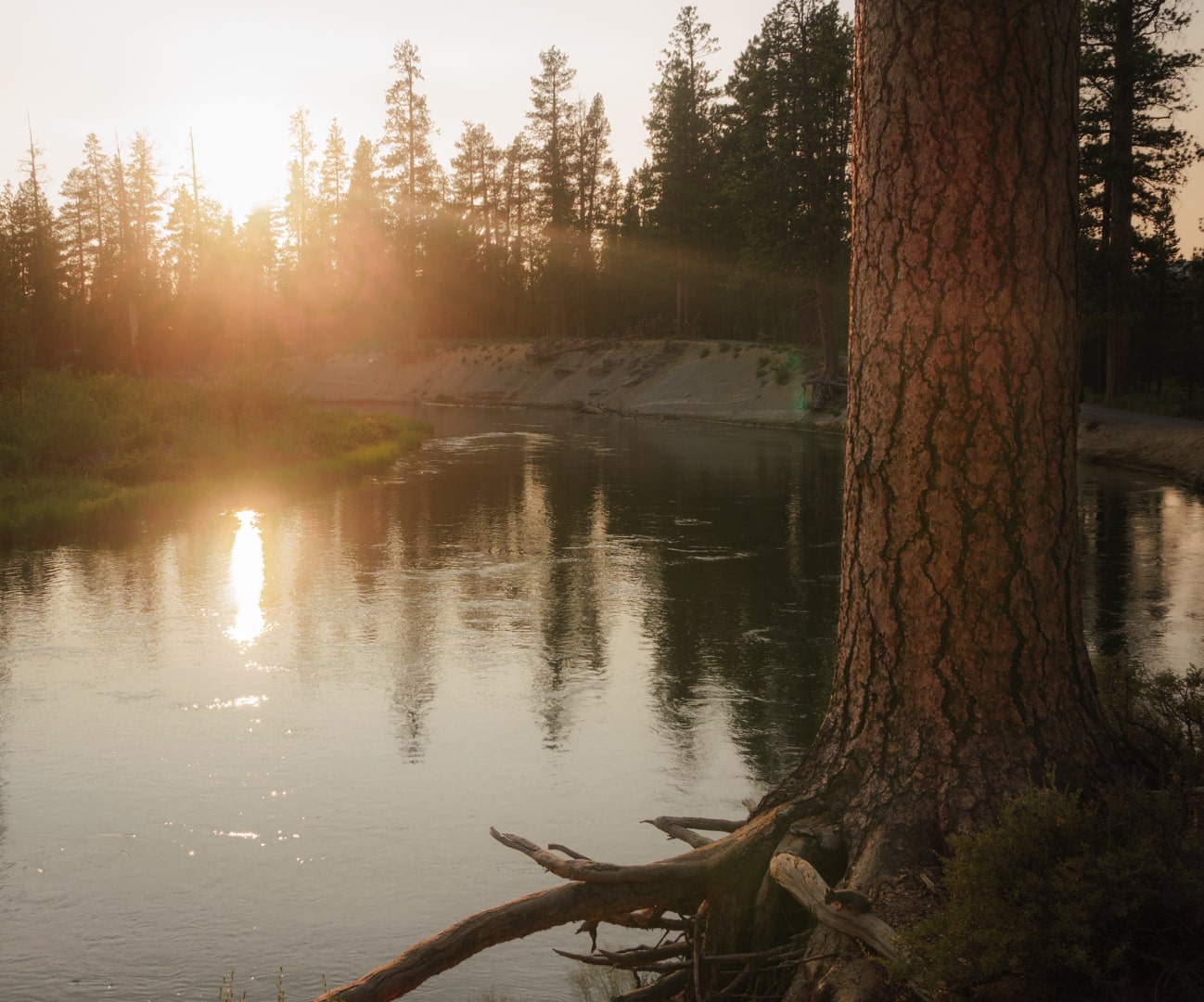
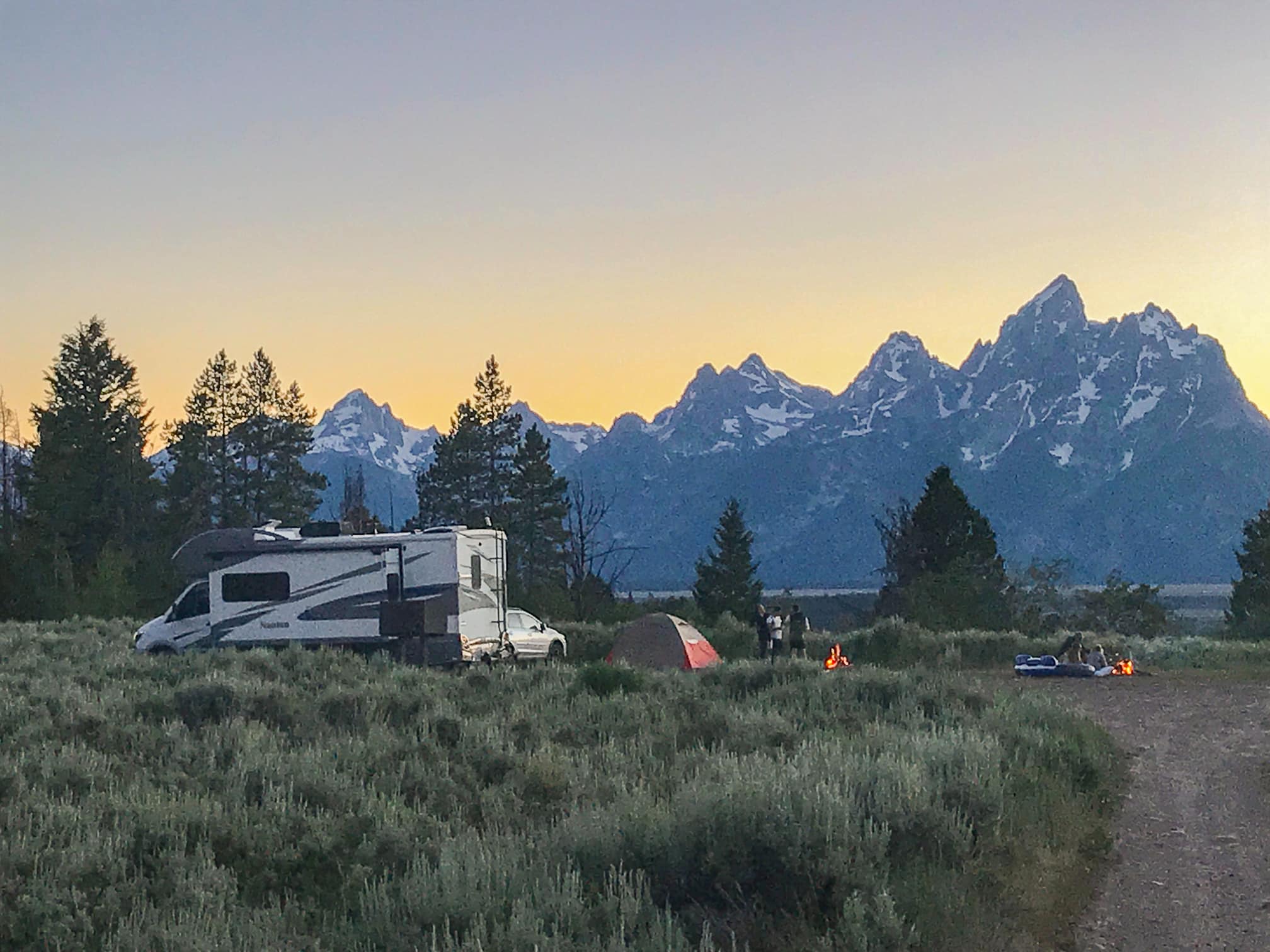
    Sunset view from a USFS boondocking spot.

    The U.S. Forest website is a great place to find both paid and free boondocking spots. As you begin your search, you want to look for the “dispersed camping” or “wild camping.” These are the terms you’ll most likely see used.

    As far as natural spots go, in the U.S., most boondocking can be found on our public lands, which include BLM land as well as our national forests. When you head into the USFS website you’ll find a big green box on the right-hand side that says “Find a Forest or Grassland.”

    Select the state you’re in or are headed to from the first drop-down. That will narrow down the options in the second drop down. If you’re looking for a specific area, select the forest nearest that area. Otherwise, you can explore each option.

    Navigating the Site

    Once you’ve selected a forest, the site will take you over to that forest’s homepage. You’ll be prompted to select your adventure, so be sure to click on the “Go Camping” button. Under your next set of options click on either “campground camping” or “RV camping.”

    Note that sometimes a spot that accommodates RVs may be missed by jumping immediately to the RV camping section.

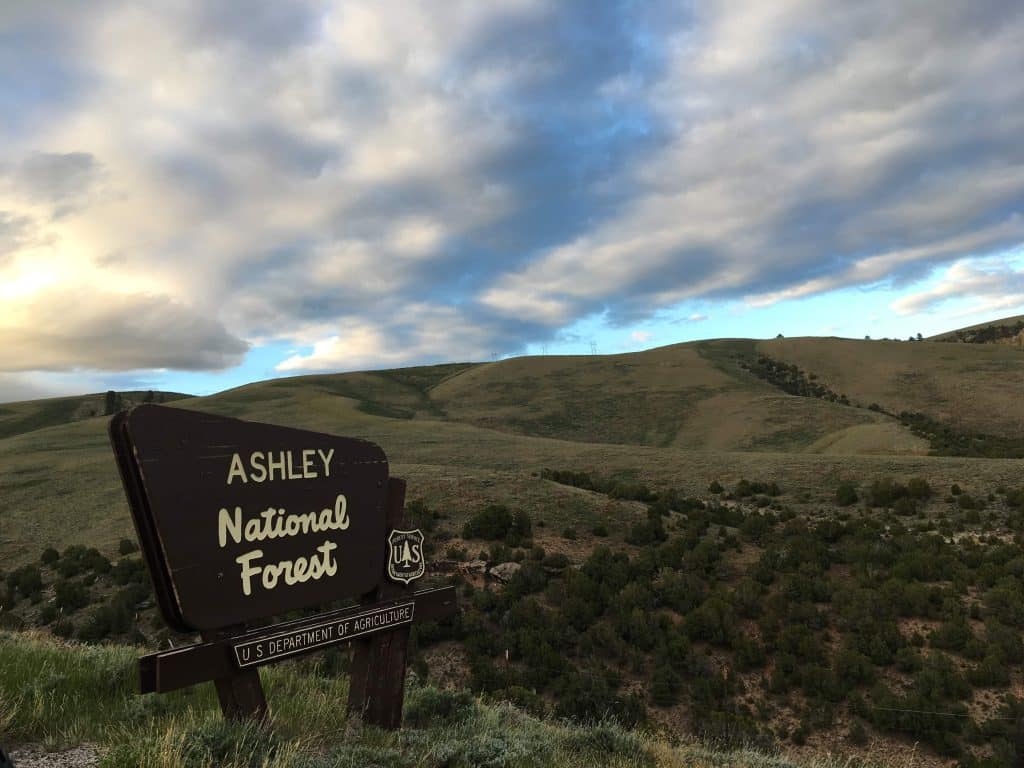
    You know you've reached a National Forest when you see its telltale brown sign.

    Some national forest homepages won’t have the option to choose your adventure. In those cases, go ahead and click “recreation” from the menu running down the left-hand side of the page.

    That will open a sub-menu where you want to click “camping and cabins.” Then if you’re looking for a free spot, click on “dispersed camping.” If you don’t see that option, there’s still boondocking available, but you may have to pay a fee. In this instance, you’ll be clicking on “campground camping.”

    You’ll find descriptions of the sites available, how many there are, and any limits on how long you can stay. The site might also provide info like the nearest town, nearest bathrooms, and other useful things to know.

    Do read through the details because some areas have designated campsites within a dispersed camping area. This is often the case when there are efforts to mitigate human impact on the area. When these efforts are in place you’ll see brown posts calling out designated camping sites.

    2. Campendium

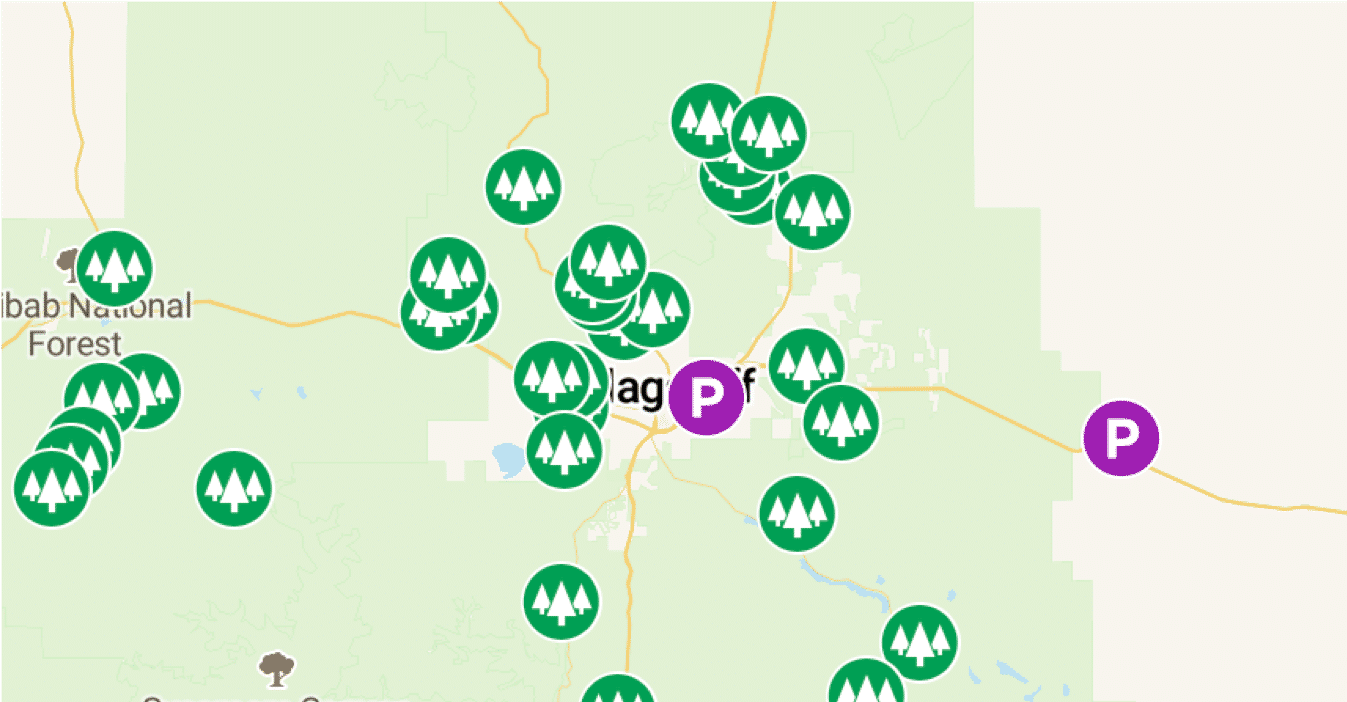
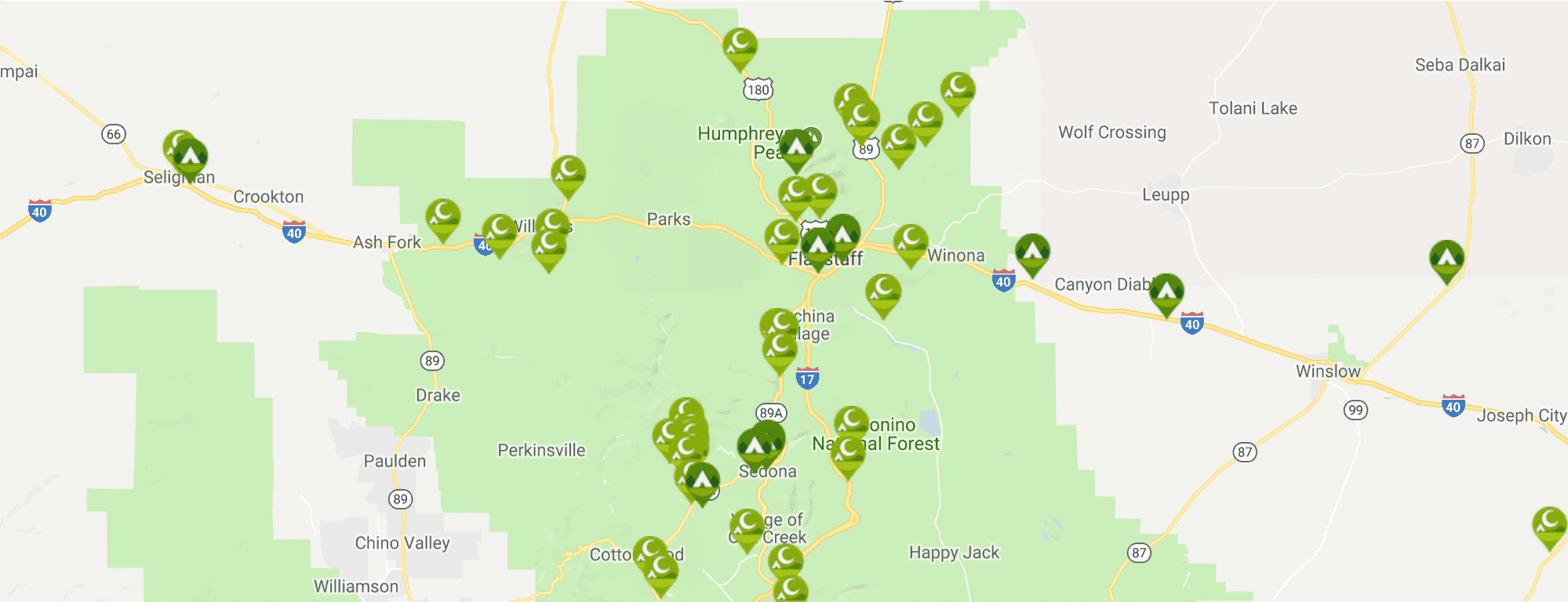
    Campendium designates public lands with green pins. Purple pins denote spots that are great for quick overnight parking.

    Campendium is both a website and app that’s great for finding boondocking spots and campgrounds (paid ones, privately owned, etc.). Campendium helps you find those practical overnight spots as well as serene locations in nature for longer camping.

    Campendium is arguably a bit more intuitive to use than the USFS website and can find more than just Forest Service land. This is a good option if you’d like a wider range of options.

    Your first step on the site or app is to begin your search. Just simply type in a nearby landmark (like a mountain range) or location. As an alternative, you can use the “use my current location” function which is pretty convenient.

    Next, you’ll want to filter your results. At first, all options, including paid and developed campgrounds will come up on a map. For boondocking, you’re generally going to want anything represented by a green pin. You have many options for sorting, but for boondocking, click “all public lands” and you may also want to click “free.”

    If you see purple pins, these are free spots that would be good for a quick overnight boondocking spot, but not a nice weekend camping trip. These are rest stops and parking lots.

    Another advantage to Campendium is the user reviews. Once you’ve filtered and sorted your results, you can go ahead and read through the reviews to determine which sites are a good match for your needs.

    Reviews will include the exact location, noise level, cell coverage, pricing, site quality, and cleanliness. Always keep in mind that conditions at these kinds of campsites are subject to weather and varying levels of human activity. A site that was peaceful and clean during one person’s stay could be miserably windy or have litter on it on a different day.

    3. iOverlander

    iOverlander is another great app for finding boondocking sites. Their search also provides a map with color-coded pins.

    For those of you that enjoy apps and sites with user reviews, you’ll also love iOverlander. It does a great job of reducing clutter and including multiple search filters. It also has a modern feel to it which means it’s user-friendly.

    Like Campendium, iOverlander can be used beyond just RV boondocking. While Campendium is a source for all types of campgrounds, iOverlander serves the overlanding community which sometimes needs hostels and locations in other parts of the world.

    For U.S. based boondocking, you can type in an area like a state in the search box. Under the “place types” filter, you’ll want to select “wild camping.”

    One very useful filter for RVers under “required amenities” is “big rig friendly.” If you’d like to look at places where someone has recently camped you do have the option to filter out places that haven’t been visited within a certain amount of time.

    You can click on the green pins for a quick overview. For pictures and complete information, just click “more details.” You can view the latest user reviews under “latest check-ins.”

    Google Maps Satellite View

    Sites and apps with user reviews are fantastic, but should you be in an area where there are few reviews or your internet connectivity is struggling a bit, google maps satellite view is great.

    If you’re in a bit of a pinch or are using Google Maps as a supplement to other websites and apps, look at the area immediately surrounding you.

    Forest service land is always a safe bet for some sort of boondocking. It’s not the only option but a great place to start a search once you’re already driving. Zoom into any light green patches on google maps.

    Turn on satellite view and begin following the nearest forest service roads on your screen. What you’re looking for are brown patches. These brown patches are often clearings. These clearings among the trees usually denote a campsite.

    Ask a Ranger

    The last way to find a boondocking spot is a little bit more traditional. Simply ask a forest or park ranger. Ranger service stations can be very helpful and certainly have the latest information.

    If there have been wildlife sightings, or a forest fire is spreading, they’re able to help you avoid these areas. They’re also extremely knowledgeable when it comes to which area you’re allowed to park or not park your RV at. Road closures, improvements, and weather may affect the information you find through the internet and apps.

    Most rangers are incredibly friendly and really enjoy helping you find an amazing spot to camp. Some of your best boondocking spots may come as an insider’s tip from a ranger.


    How do you find good boondocking spots? Leave a comment below!


    Source link