Price: $44.97 – $44.95

Each Ozark Trail Sutton Bluff Camp Lite Chair – Collapsible and compact chair – Carry Weight: Less than 2 lbs. – Durable 600D polyester fabric with PVC coating – 13mm lightweight 7075 aluminum shock-corded frame legs connect easily together – Padded back for added comfort – Breathable mesh seat helps keep you cool and comfortable while it drains and dries quickly – Mesh utility pouch hanging from the front stows a map, book, flashlight or phone – Collapses easily to store into the zippered carry bag – Zippered carry bag with mollie system – Weight Capacity: 250 lbs. – Assembled Product Dimensions: (H x W x D inch) 26in x 20.5in x 20.5in (H x W x D cm) 66cm x 52cm x 52cm – Collapsed Dimensions: (H x W x D inch) 4.5in x 13.5in x 4in (H x W x D cm) 11.4cm x 34.2cm x 10.1cm
Search results for: “feed”
-

Ozark Trail Himont Compact Camp Lite Chair Set for Camping- 2 Pack, Green
-
Ultimate Dog Lover Guide to RVing
Looking to take your four-legged friend along on your next RV Trip? Being prepared is essential to making travel enjoyable for you both. RVing wouldn’t be near as fun if we couldn’t share the adventure with our furry friends. Consider these 10 items when planning for your next adventure:
1. Pet Bowl

Worried about messes? Avoid spills in your RV by getting a dog bowl that comes with a containment area. This product also comes with 2 stainless steel bowls that are easy to disassemble for cleaning and refilling. Bonus – this style of pet bowl is elevated to alleviate neck strain and promote better digestion.
2. Pet Bed

Comfort when traveling with your best friend should be a top priority. Both comfortable and sturdy, this foldable pet bed will make your dog feel right at home. It’s compact and convenient to store away when not using it.
3. Retractable Cable Tie Out

Let your dog roam free for up to 15 feet with a retractable cable tie-out. It stakes into the ground and rotates 360° to keep your pet secure at the campsite. There is also a reflective strip on the reel that allows you to easily see it at night, so you can avoid tripping over ropes or cables.
4. Pet Fence

If you prefer to keep your dog safe and contained with a fence this one’s for you! It stands 36” tall and you can even buy extensions to expand the fence depending on how big your campsite is. The pet fence folds flat for convenient storage and transport. There’s no better way to let them enjoy the outdoors safely when you are occupied.
5. Retractable Leash

Hiking or simply walking around the campsite and want your dog at your side? This leash gives you control and security over your pet. Walk your dog with confidence and style!
6. Waste Bag

Make cleaning up after your pup a breeze with these waste bags. It has a zip-close dispenser for the bags that can be attached to a belt loop, backpack, or leash for easy, quick access while walking your dog.
7. Pet Tee

Nothing says happy camper like a camping boss tee! Style your pup up with some festive apparel this season. More dog clothes are available online or in stores.
8. Rug

Spice up your décor with a dog-themed rug. This works both indoors and outdoors. Its durability makes it ideal for kitchens, bathrooms, and porches. And not to mention – it’s adorable!
9. Collapsible Dog Swimming Pool

The Collapsible Dog Swimming Pool creates a personal fun splash zone for your dog. Made with a durable vinyl shell, this portable dog pool sets up easily on any outdoor flat surface. Simply unfold and fill with water. No inflation needed. When finished just unscrew the drain cap to let the water out and fold it flat for storage. Makes a great place for your dog to cool off after playing. Can also serve as a handy pet bathtub to take with you on the road.
10. Coaster
 A reminder to all dog lover’s that you never have to camp alone. Making memories with our four-legged friend is what RVing is all about! These coasters are soft, won’t harm any source, and dishwasher safe. Makes for a great gift to your RV friends who, just like you, travel with their pup.
Be sure to check out other pet products, including pet furniture, toys, grooming supplies, waste management, and more to ensure your pup has everything when hitting the road. Tell us below what else you would add to our Dog Lover Guide. Happy travels!
-
RV Owners Are Swappers – Not Swingers
Well some RV owners may in actual fact also be swingers, but that would be a different story altogether.
Welcome to the world of RV swapping or RV exchange. No leather or handcuffs here folks, just your RV (motorhome, campervan, fifth wheel, Betty the Bus, whatever you call that thing), your air tickets and your adventurous spirit required. Much like traditional home exchange, you can now exchange RV’s all over the world.
One emerging website – Holitrade – actually specializes in this type of exchange program, and it’s completely free. RV owners throughout the world can place a free ad on the site, get in touch with each other via email, and work out the finer details of an exchange. The site currently has users wanting to exchange from the United States, the UK including Ireland, Australia, Canada, France, New Zealand and many other parts of the world.
While there are several opportunities to swap RV’s on the site, there are added opportunities. For instance there are also homes, yachts, canal boats and cruisers. So you may want to do a package deal. You could exchange homes and RV’s, as well as the family car. So there really are opportunities to stay in total comfort in a home in a city somewhere, before hitting the road. There are also many vacation homes for exchange near beaches and ski resorts.
Organizing any type of exchange requires a fair deal of communication prior to handing over the keys. Emails back and forward about travel dates, expectations and any special needs, “Can you feed my Rottweiler?” are the norm. Quite often you may have a relative or friend hand over your keys if you have already departed for your holiday. Having a local contact to assist each other with any enquiries is a good idea.
It is also a good idea to put your agreement in writing. Holitrade has a standard agreement both parties can fill out. Just remember to put in any special requirements.
If you would like to scan some of the ads you can just click on the link below. The latest ads are at the bottom of the page.
Compared to hiring a campervan exchanging makes great sense and can save you a fortune. Currently it’s around $200 per day Australian to hire a decent sized motorhome. Most people doing this type of traveling quite often do so for weeks and months on end, so the bills quickly pile up.
To sum up what makes a good exchange. Lots of clear communication prior, put your agreement in writing, and respect each other’s property. Happy and Cheap travels!
Now, better get started on the swingers article… It’s all about the research. -
Gas One Propane Single Burner 200,000BTU Heavey Duty – 0-20 PSI Adjustable Regulator and Hose Camp Stove
Price: $99.99
PORTABILITY – Portable cast iron one burner camp stove, Sturdy and durable design, Made of cast iron long lasting and good for projectsHIGH HEAT OUTPUT- 200,000 BTU; Fully adjustable heat-control regulator knob (Paint Chipping after use is perfectly normal, There is no paint that will withstand 200,000btu at the moment), Power with controlHEAVY-DUTY- Perfect for Brewing, camping, fishing, outdoor cooking, emergency preparedness, etc., Strong and long lastingSAFETY- Heat Adjustable regulator included for use with propane tank, Hose included for attaching to propane tank, O-ring installed on regulator to ensure that there is no gas leakage (it is possible to tighten by hand, but is advisable to use tools in order to tighten)STEEL BRAIDED HOSE -0-20 PSI adjustable regulator with Steel Braided hose included to use with propane tank -
3 Things Every RV Tailgater Needs
Football season is in full-swing and tailgating is still an important part of game day. For many, this means getting their RV out to the stadium for some fun.
While having a heck of a time at the game is really more about the game itself and the people who are there with you, having the right gear and accessories for your rig will help you make the most of ever second at the game. Here are some things you need to have for tailgating success.
An Exterior TV
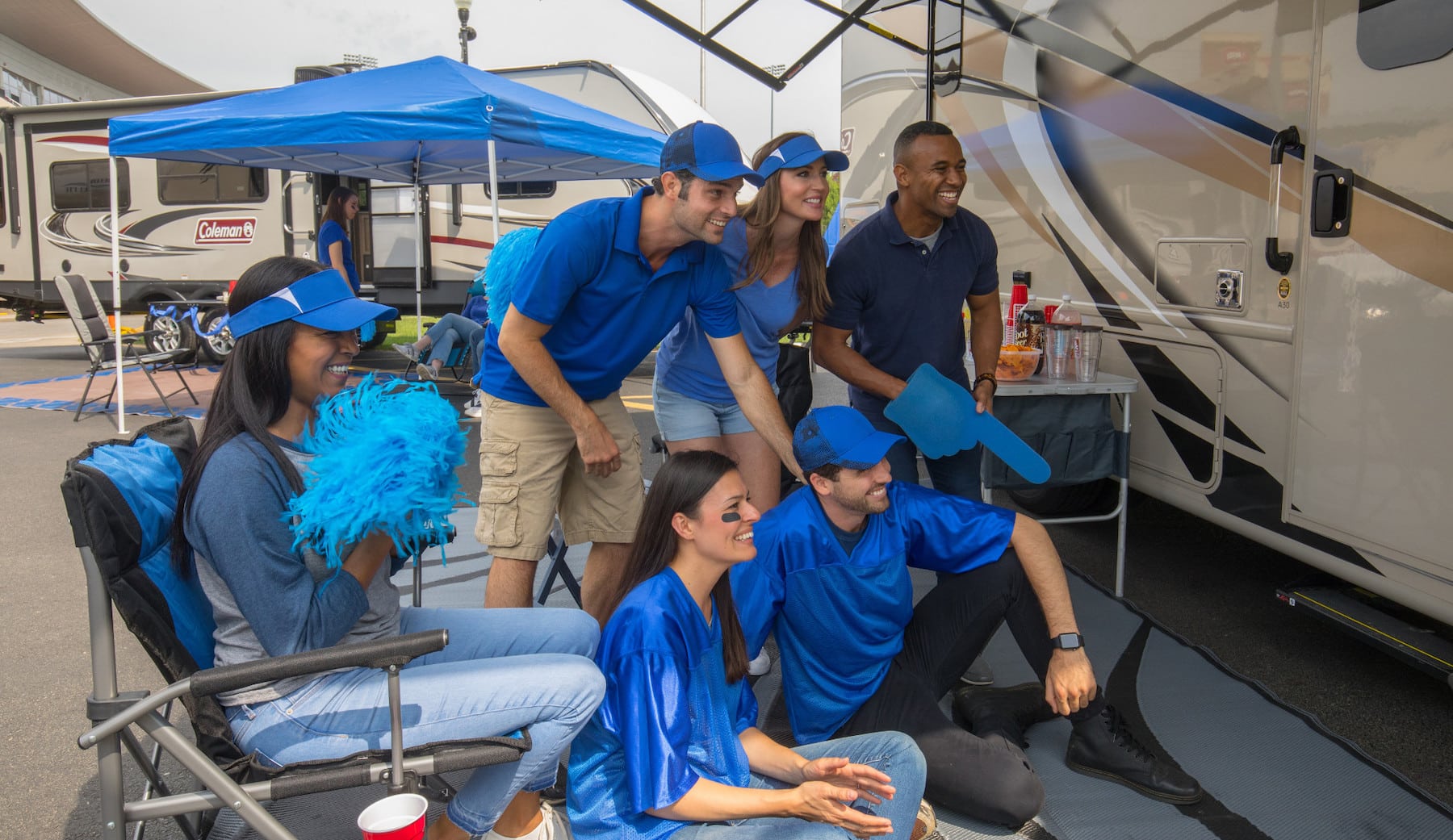
The TV inside your RV is important, but let’s face it, a lot of us want to spend time outdoors. That’s where an external TV comes in. Some RVs come equipped with this exterior TV already. If you have one of these, then more power to you. Get the game on!
If, however, your RV lacks the exterior TV, consider getting one. TVs for RVs are realatively affordable, and even if you don’t have an exterior outlet on your RV, you can always run an extension cord or attach a mount.
Then all you need are some good seats and the rest of the items on this list and you’ll be ready for tailgating bliss.
A Tailgating Grill
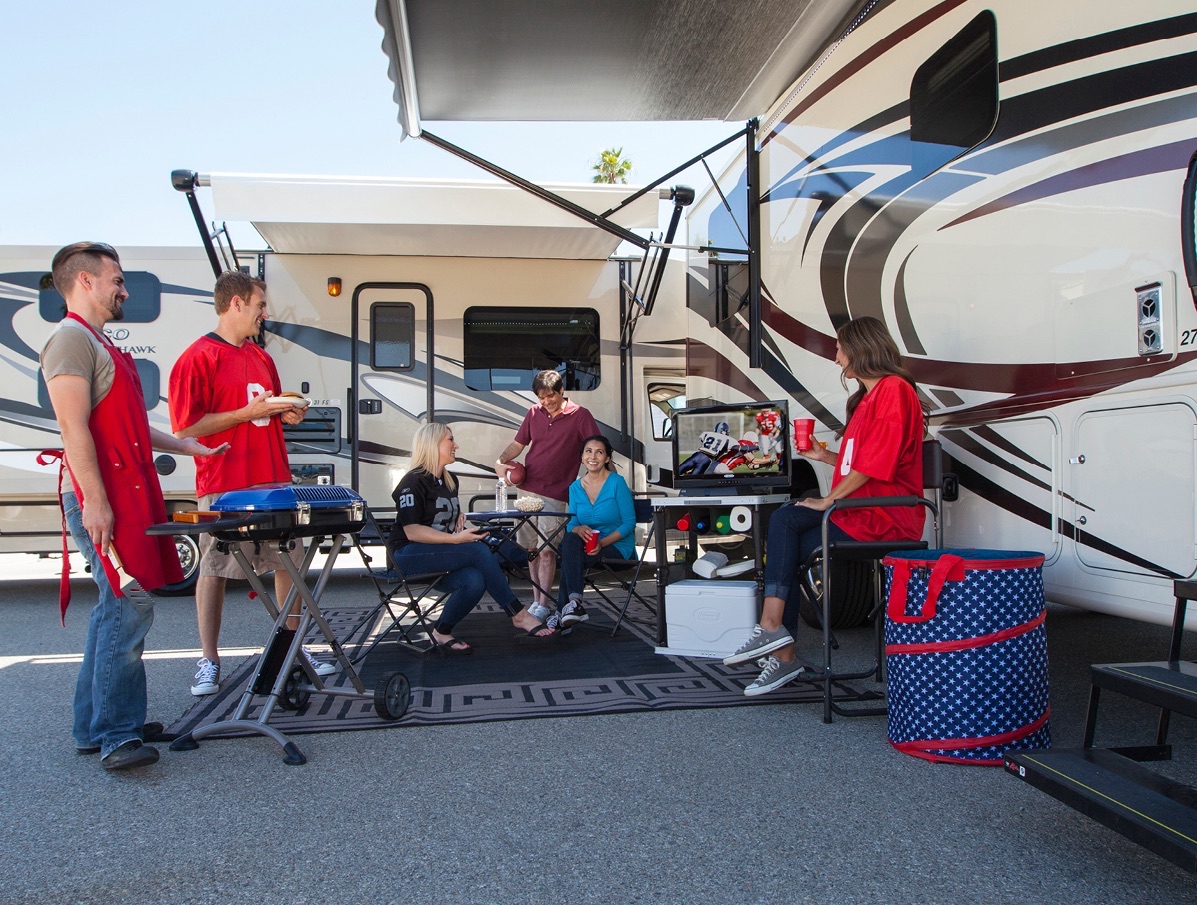
Get the grill that is suited to handle your tailgating needs. When people watch the game, they want to eat and you need a grill that’s ready to handle the job. Sometimes this means a small grill. Other times, you’ll need something a lot bigger.
I like the Coleman RoadTrip X-Cursion Portable Propane Grill for smaller parties. It folds up small and is easy to use. It’s perfect for a few friends who want to tailgate together. If you want something larger, then you should go with something like the the Portable RV Barbeque Grill that mounts to the side of your RV or sits on a table. It’s a little more to handle, but if you have a lot of mouths to feed, it’s the better option.
An Awning or Canopy
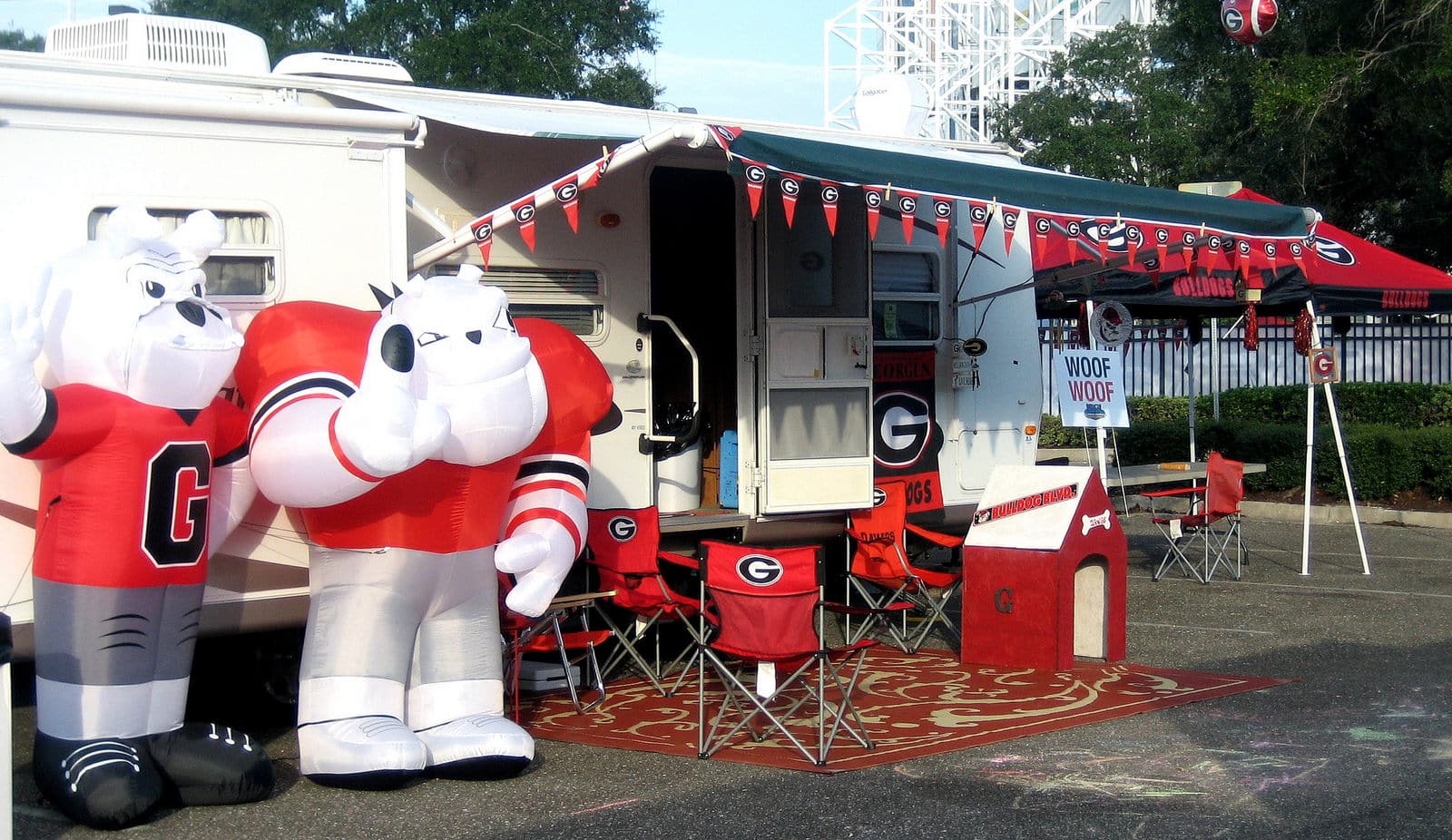
Photo by ajax15 via Flickr An awning is a must have for any tailgate. It keeps the sun out of your eyes, keeps you from getting sunburnt and will even keep the rain or other precipitation off of you if needed. I know you’ll probably be in the RV if the weather gets too bad, but the awning can help keep you outside a little longer. If you don’t have an awning, you should consider getting one.
If an awning doesn’t really seem right for you, consider a canopy or a outdoor screen room. These are affordable alternatives and can be a fantastic addition. They provide protection from the sun and give many of the same benefits of an awning. If you want to go all-out, you can set up both.
What else do you like to have at the game? Leave a comment below! Also, do you have a tailgater in your life? Check out our tailgating holiday gift guide.
-
Camping World’s Guide to Lake Clark National Park
In southwest Alaska where the Alaska Mountains meet the Aluetians lies one of the world’s most diverse regions. Lake Clark National Park and Preserve gathers active volcanoes, rushing salmon-filled rivers, glaciated valleys, and nutrient-rich tundra together to support massive numbers of brown bears, caribou, bald eagles, moose and Dall sheep.
It is here that nature envelopes the visitor in overwhelming landscapes and unbelievable wildlife viewing.
History of Lake Clark National Park
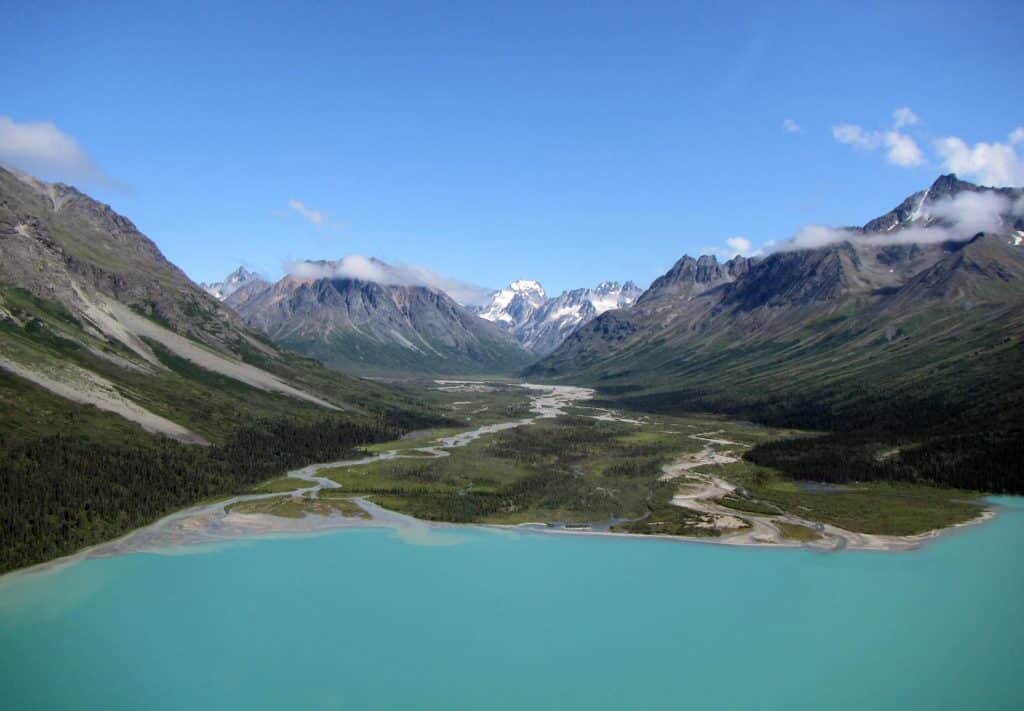
Photo Credit: NPS – E.Booher Ancestors of today’s northern Athabaskan Dena’ina peoples have lived in the area for more than 9,000 years, mainly around Bristol Bay and to a lesser extent, Chinitna Bay. It wasn’t until 1778 that British explorer James Cook navigated the bay that would take his name. Russian traders, then American ones entered the region in the 1800s, but settlements were still sparsely populated.
By 1930, the first float plane landed on Lake Clark, and eventually those looking for quiet solitude ventured into the area, including Richard Proenneke. He was a writer who built his own cabin and lived on the shore of Twin Lakes for almost 30 years, filming his building projects and subsistence living off the land.
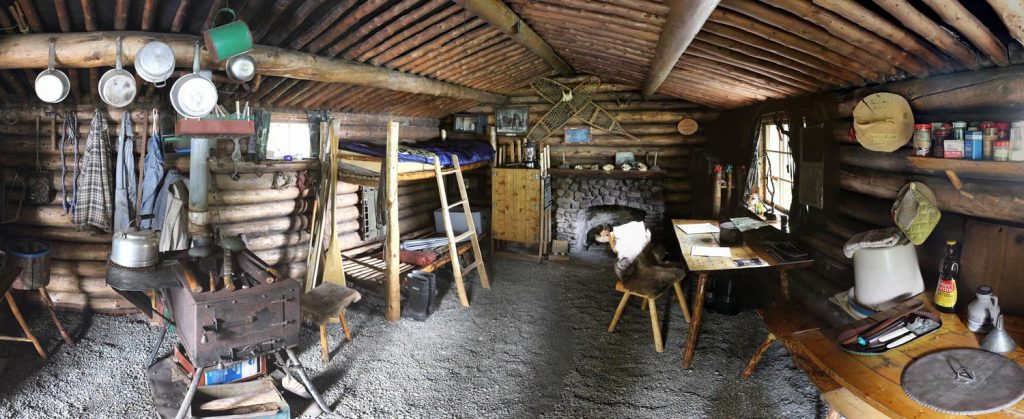
Photo Credit: NPS by C. Lindsay By 1978, President Carter named the region the Lake Clark National Monument under the Antiquities Act, as he did with several other national monuments that year. By 1980 the monument was designated a national park and preserve when Congress passed the Alaska National Interest Lands Conservation Act.
Just 9 short years after being named a national park, Redoubt Volcano called attention to the region with year-long eruptions within the park’s boundaries. In 2009 she did it again, proving that Lake Clark National Park and Preserve lies not so quietly within the infamous Ring of Fire, a landscape of volcanoes, glaciers, lakes and mountains worth watching.
Why Visit in Your RV?
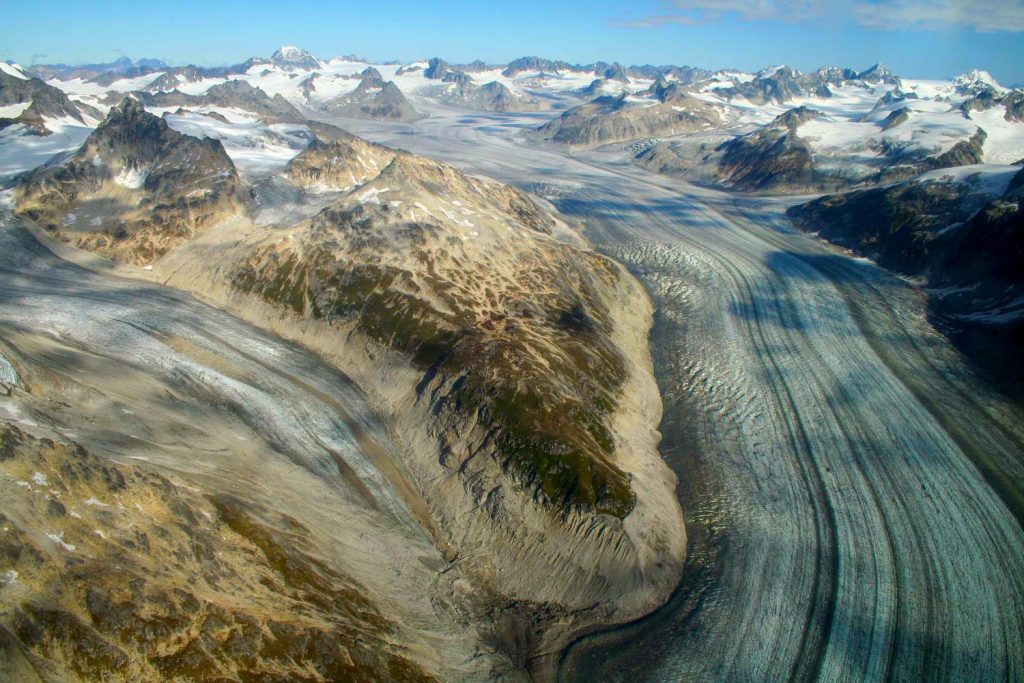
Photo Credit: NPS by C. Lindsay Your RV is going to have to sit this one out, as Lake Clark has no road accessibility. Park it in a town where bush flights into the park are available, like Anchorage, Kenai or Homer. Plan to spend several days exploring the immense landscapes of the park, and watching brown bears devour their dinner sedges, clams and salmon. There are several lodges that can be booked for summer visits.
Places to Go

Here’s a look at some of the best places inside the park that you can visit. There are many of them, but these are some of the best to spots to go.
Chinitna Bay
Brown bear viewing is the number one activity for visitors to Lake Clark and Chinitna Bay is one of the best locations in the world to see up to 20 bears at a time feeding on the sedges there. Arrival to the bay is by bush plane and visitors can walk along the beach to two viewing areas, where the brown bears abound in summer.
Crescent Lake
The most visited destination within the park, Crescent Lake attracts brown bears with its abundance of sockeye and silver salmon. The bears hunt the shoreline and Crescent River looking for these tasty morsels, and anglers flock here to catch trout, dolly varden and king salmon, so expect to see other Homo sapiens along with Ursus arctos!
Port Alsworth
Check out the park visitor center here in the summer months to solicit help from a ranger or get more information on Lake Clark National Park. Fish at Tanalian Falls or spend the night in a rustic cabin here.
Richard Proenneke Cabin
Explore the handbuilt cabin of an Iowa native who spent 30 years living at Twin Lakes. The cabin is only open in summer, and has numerous campsites surrounding it for those who wish to explore the area further.
Things to Do
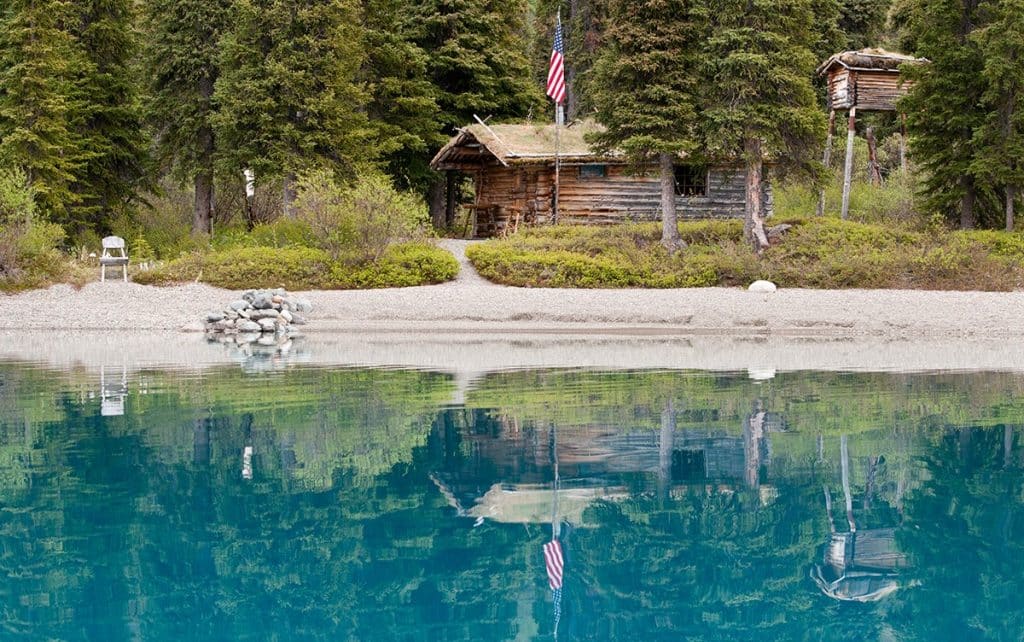
Photo Credit: NPS by Kent Miller Ther are also plenty of fun and interesting activities to do at Lake Clark that are unique to the area. Here are some of them.
Bear Viewing
By far, the most popular activity in Lake Clark is watching so many brown bears in their natural habitat. Crescent Lake is a popular viewing spot, as is Chinitna Bay, where the bears feed on sedges and dig up clams.
Because Chinitna Bay’s salt water marshes green up with early summer, the bears can be found there more readily in June and July. The months of August and September bring the salmon run, so brown and black bears gravitate to Silver Salmon Creek and Crescent River and Lake, where the fish are prevalent.
Day Hiking
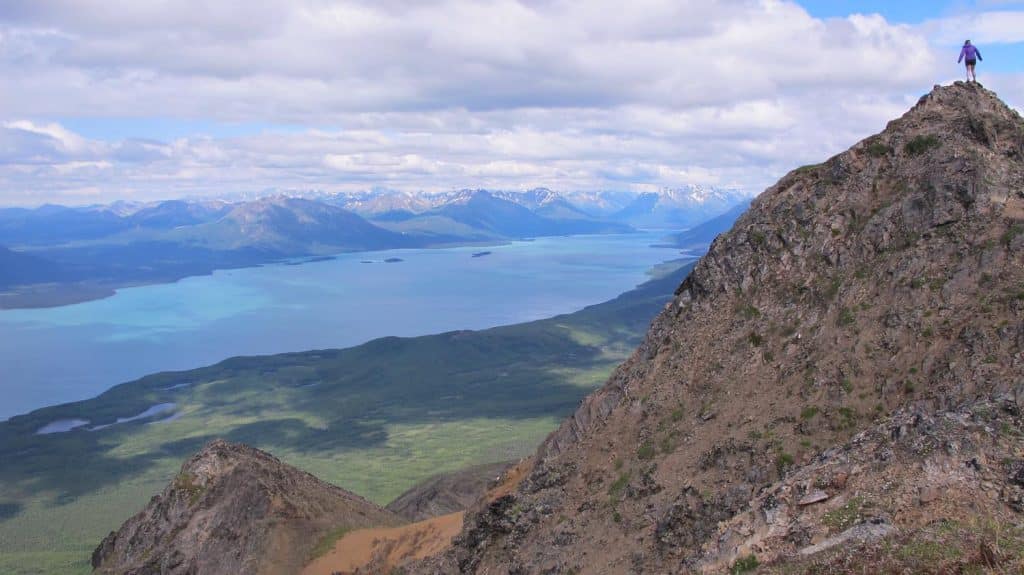
Photo Credit: NPS by K. Martin There are numerous opportunities to cut your own trail in the back country at Lake Clark National Park. However, there is only one designated trail system here. The Tanalian Trails are maintained and easy to follow, with several hikes of varying degrees of difficulty. You can find the trail system at Port Alsworth and here is a map.
Birdwatching
There is such a wide variety of habitats in the park that visitors can observe more than 180 species of birds here. Raptors, songbirds and waterfowl all make this region home. In fact, it is a common occurrence to see bald eagles, peregrine falcons, trumpeter swans, owls and puffins in the same day!
Camping and Backpacking
The entire park is open for trail-less backpacking! Camping is primitive and the only designated trails are part of the Tanalian Trails, so a map and compass are your best friends here. Be prepared to ford streams, deal with bad weather and encounter a random bear here and there. Follow these guidelines for bear safety.
When to Visit Lake Clark National Park
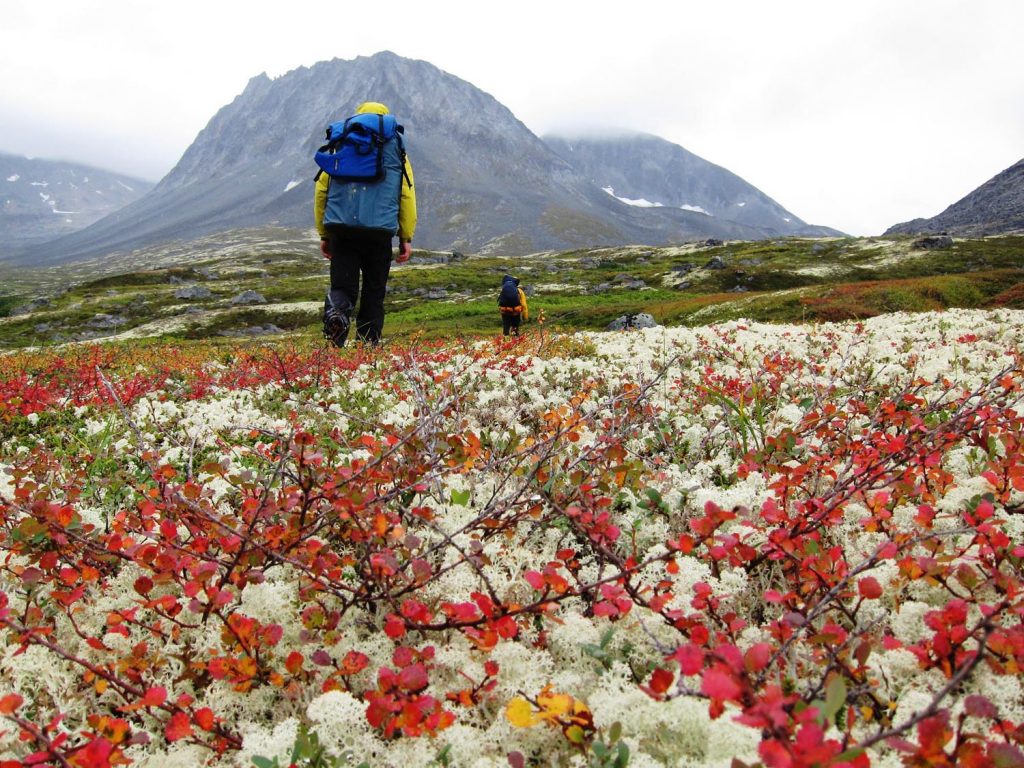
Photo Credit: NPS by B. Bracken Lake Clark is open year-round and your visit will be dependent upon what season you’d like to explore and what kind of wildlife you wish to see. Brown bears hibernate from December to April, but are most active during the salmon run in August and September.
Caribou and moose can be seen any time of year, and birds will follow the migrating season. If fishing is high on your list of To Dos, summer will be your best bet, but hiking and camping can be enjoyed during any season if you are prepared. Just remember that Lake Clark National Park is remote and very isolated, so be thoroughly equipped for all of your activities.
Where RVers Can Stay
RVs must be left in the mainland communities of Homer, Kenai or even Anchorage, as the only way into the park is by bush plane. Once on land there are several private lodges for overnight stays or weekly visits and those are all accessed by plane, as well. If parking your trailer or motorhome, here are a few RV parks available:
- Beluga Lookout RV Park – Kenai, Alaska
- Driftwood Inn and RV Park – Homer, Alaska
- Eagle River Campgrounds – Eagle River, Alaska
If you want to camp inside the park, you’d better be ready to tent camp and happy with primitive camp sites. Check out the park’s website and their informaiton about backpacking and camping in the park before you go.
Getting To and Around This National Park
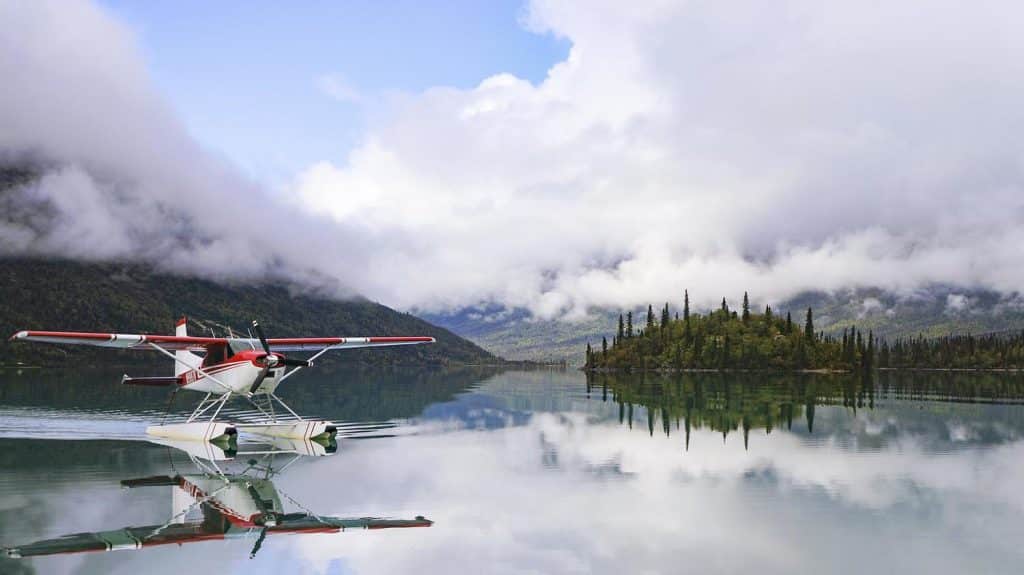
Photo Credit: NPS by W. Hill Lake Clark National Park is immense in size and grandeur, but it has no roads in or out. So bush planes equipped with floats, skis or wheels depending on the season and the landing spot, are the only way into and around the park.
Private guide services and chartered planes are available from Homer, Kenai, Soldotna and Anchorage. Keep in mind that weather plays a big factor in accessibility, so plan some extra time into your excursions for flight delays.
Sensory Overload
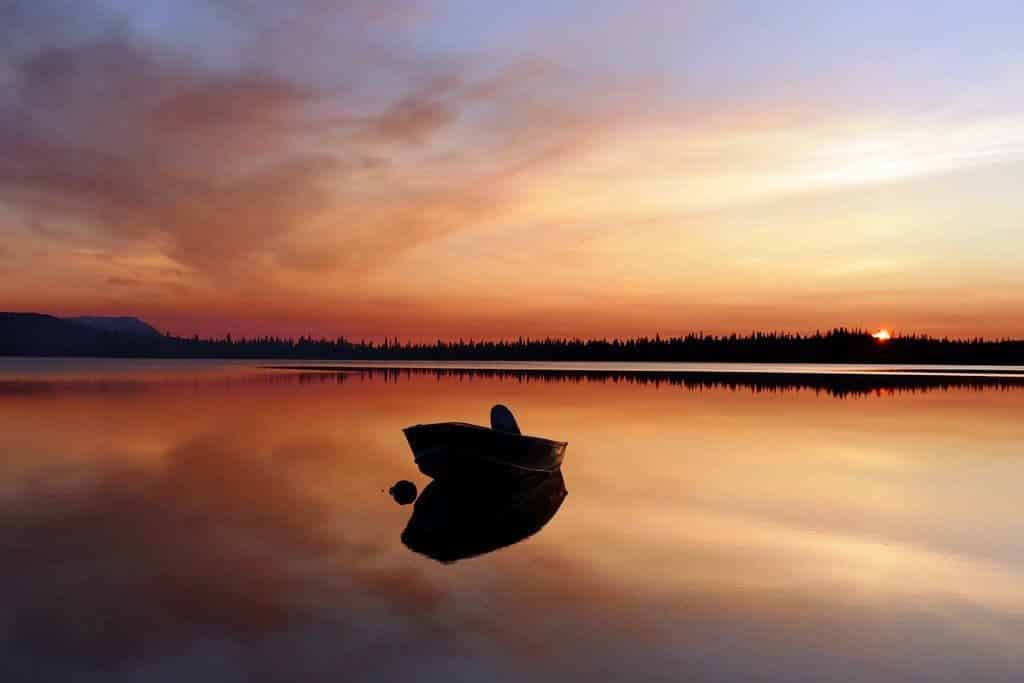
Photo Credit: NPS by J. Mills Lake Clark National Park and Preserve is one of the last truly wild places on the planet. Travel here is reserved for the adventurous, those looking for experiences bigger that life itself.
Sensory perception is overloaded in this corner of the world, where glacier-capped mountains erupt, fish too numerous to count color the water bright red, and the landscapes are so vast that you will think you are the only person left on earth to exult in them. With 4 million acres of space, you might be!
Have you ever been to the Lake Clark National Park? What were your experiences there?
