Water is an important part of doing pretty much anything, RVing included. You need water for your RV and that often means connecting up to a city water connection. Recently, we posted a podcast episode that was about the importance of filtering water from these connections, but you should also be worried about the water pressure.
Having too much water pressure is not a good thing. Luckily there’s something you can do: add a water pressure regulator. Let’s take a closer look at why and what a water pressure regulator can do for you.
Reasons to Use a Water Pressure Regulator
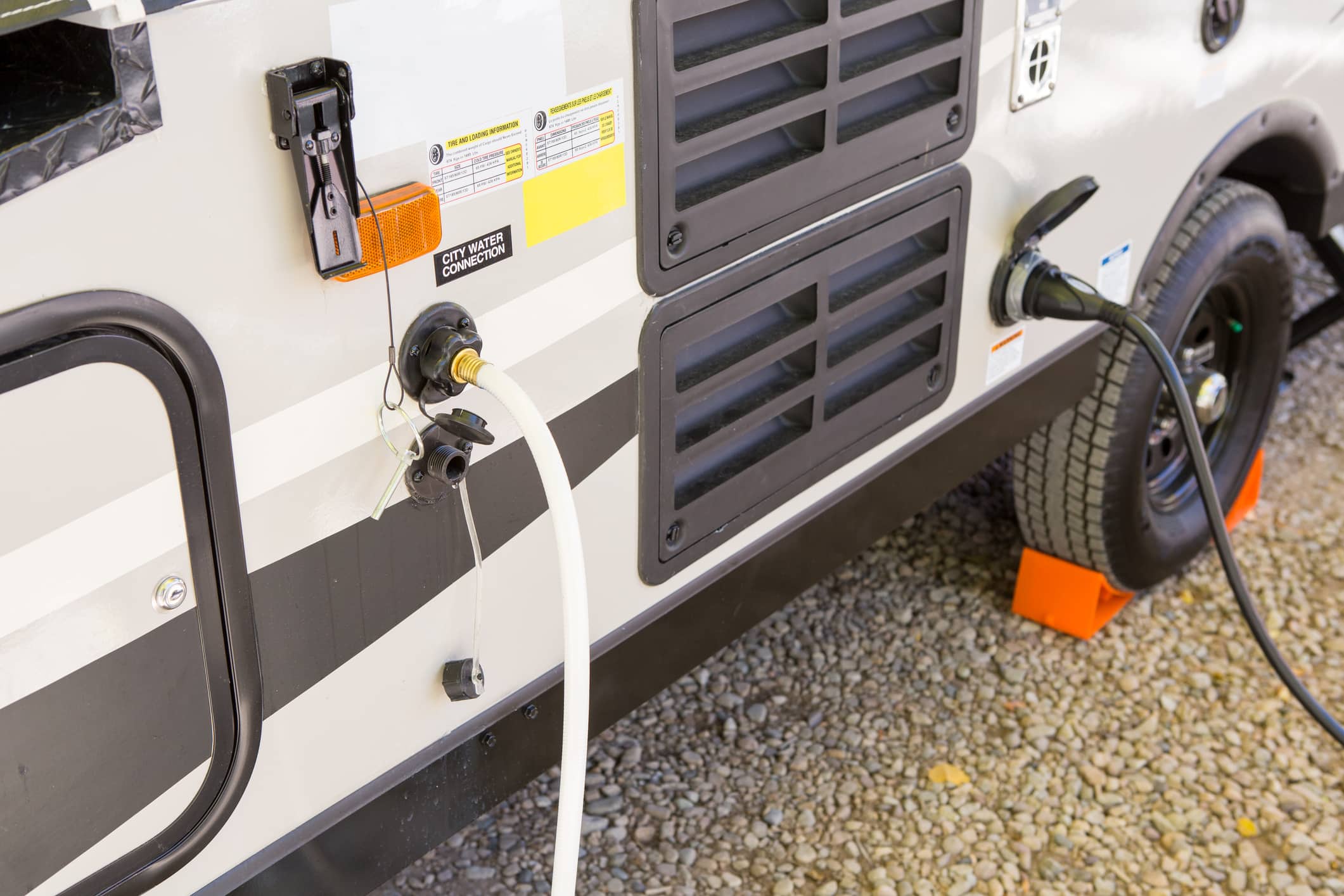
Image from Getty
The water coming out of a city water connection at a campground isn’t likely to be monitored. This means the water pressure at different campgrounds can vary. It can be very high pressure water coming out or very low pressure. Either one can lead to issues.
If the water pressure is too low, you’ll not have good flow of water into your RV, which isn’t the end of the world but rather a minor annoyance. However, if the water pressure is too high, it can actually cause damage to your RV. This could lead to leaks and water damage, something you really need to avoid at all costs.
How a Water Pressure Regulator Works
A water pressure regulator is quite simply a valve that reduces the water pressure coming from your water source. If the water coming from your water source comes to your RV with too much pressure it will damage your RV, as we’ve mentioned above. The water pressure regulator stops that from happening by lowering the water pressure before it reaches your hose.
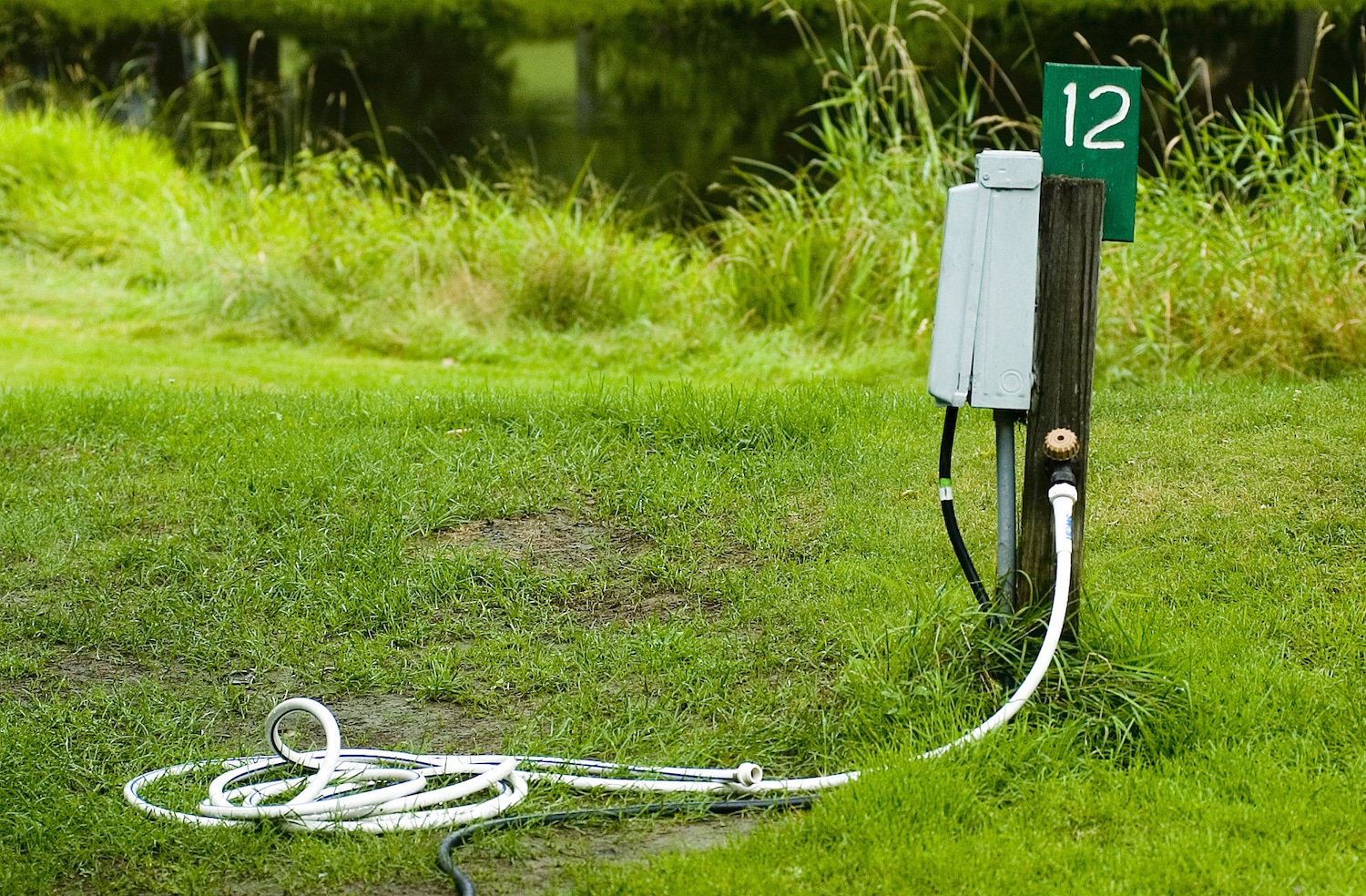
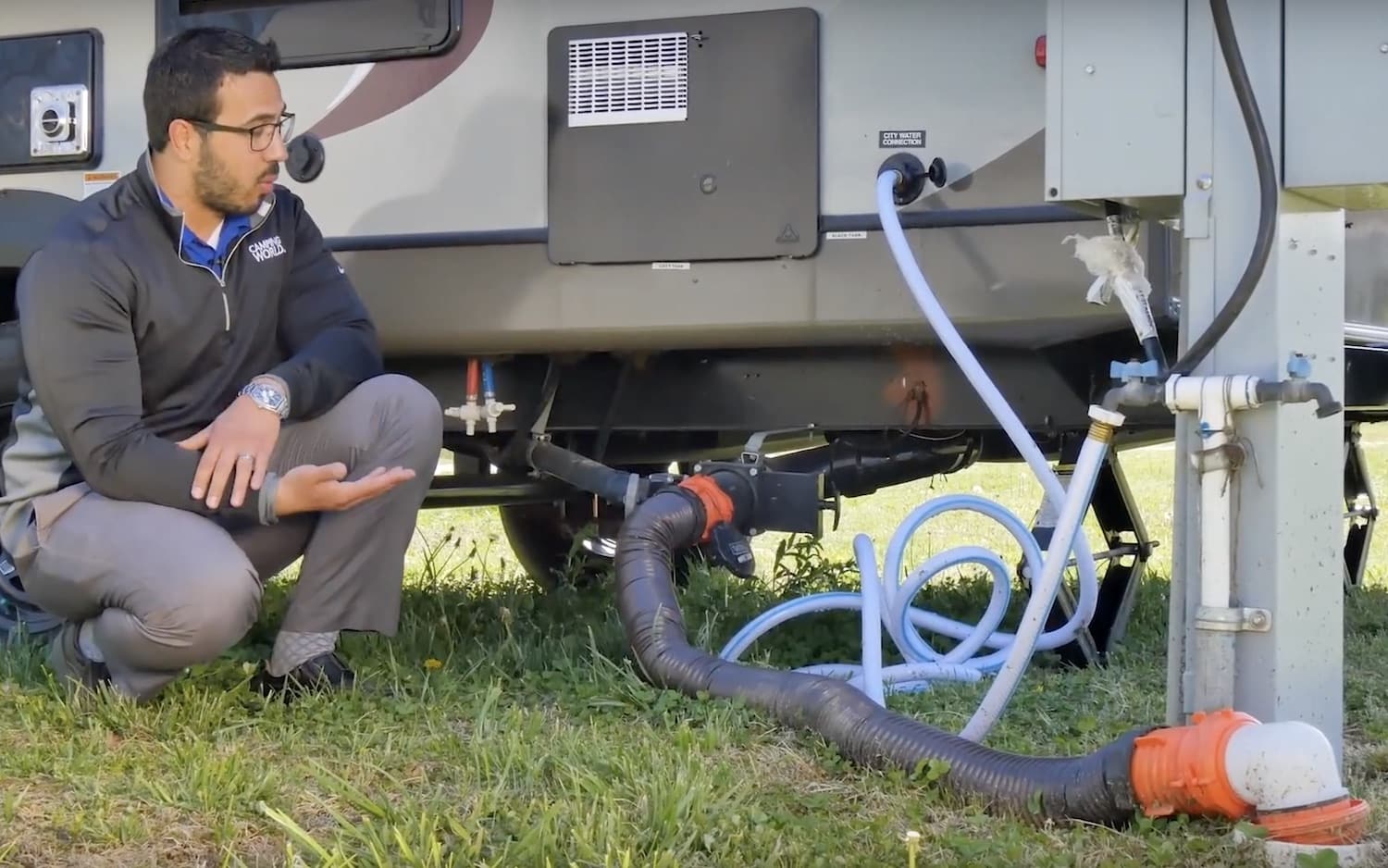
You attach the water pressure regulator to the water spigot where you’ll recieve your water. This ensures that the high water pressure stops right at the spigot and doesn’t enter your water hose or your RV’s plumbing.
What Is the Right Water Pressure for an RV?
The correct water pressure for an RV can vary depending on the model and the condition of your RV’s plumbing system. Modern RVs can handle up to 100 psi of water pressure. However, most RV experts recommend you never let the water pressure exceed 60 psi. Somewhere around 40 to 50 psi is ideal for many RVs.
Of course, you should consult your RV’s owner’s manual before just blindly following some general guidelines. Some RVs will perform best with specific water pressure. Your RV’s owner’s manual may also recommend a specific type of water pressure regulator. Always go with what your owner’s manual recommends.
Types of Water Pressure Regulators
There are a couple of different kinds of RV water pressure regulators out there for you to choose from. As I said above, you should go with the one that works best for your RV, that should be discussed in your owner’s manual. If not, I suggest you get an adjustable water pressure regulator with a gauge.
Generally, there are adjustable water pressure regulators and non-adjustable ones. The non adjustable ones come in either low flow or high flow. Choose the option that is right for your RV and you should be good to go. I prefer the adjustable water pressure regulator with a gauge. These regulators allow you to really dial in the appropriate water pressure and the gauge lets you see what the psi is. It’s just generally a better option. However, these do tend to be a little more expensive.
If you need a water pressure regulator, check out all of the water pressure regulators available at Camping World.
Do you use a water pressure regulator? If so, what do you use? Leave a comment below!
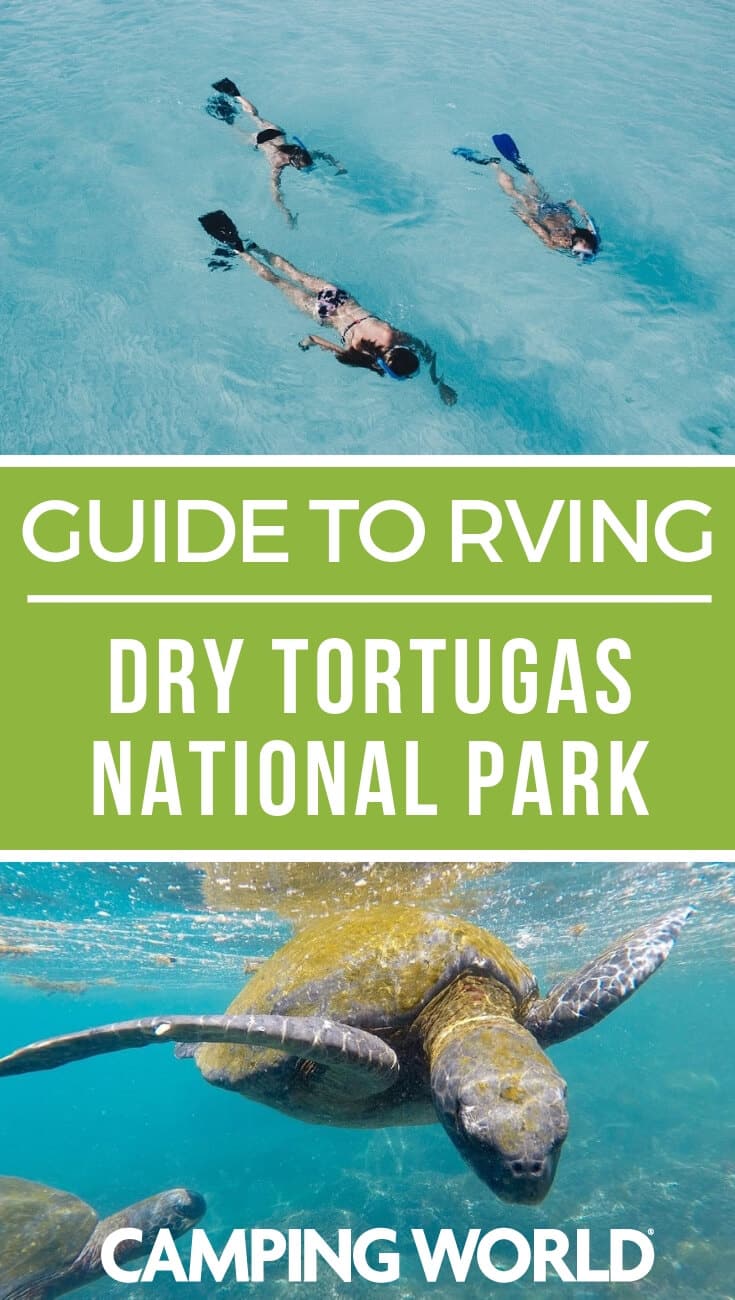
Dry Tortugas National Park is one of the nation’s most unique national parks. Although only 70 miles from Key West, FL, Dry Tortugas is the nation’s most remote national park, only accessible by boat or seaplane. The list of amenities is few. There’s no cell phone service, no internet, no fuel, no public bathrooms, and there’s not even food or water. You need to bring what you want and need along with you.
What Dry Tortugas does have is 100-square miles of tropical waters and seven small islands where visitors can step back in time and step into nature the way that it was intended—wild and untouched.
Photo: Key West Seaplane Adventures
Why Visit Dry Tortugas National Park?
Visitors come from all over the world to enjoy the picturesque blue waters, vibrant coral reefs, and abundant marine life. If you’re into world-class snorkeling and diving, fishing or soaking up the sun on soft white sand beaches as the day passes, Dry Tortugas National Park is the place for you.
Additionally, Dry Tortugas offers visitors a fascinating history and cultural treasures such as Fort Jefferson, the lighthouse on Loggerhead Key, and the Windjammer Shipwreck.
Things to Do at Dry Tortugas Naitonal Park
This unique place may be one of the most remote and wild national parks, but there’s still plenty to do. Here are some of your options.
Snorkel, Swim, or Scuba Dive
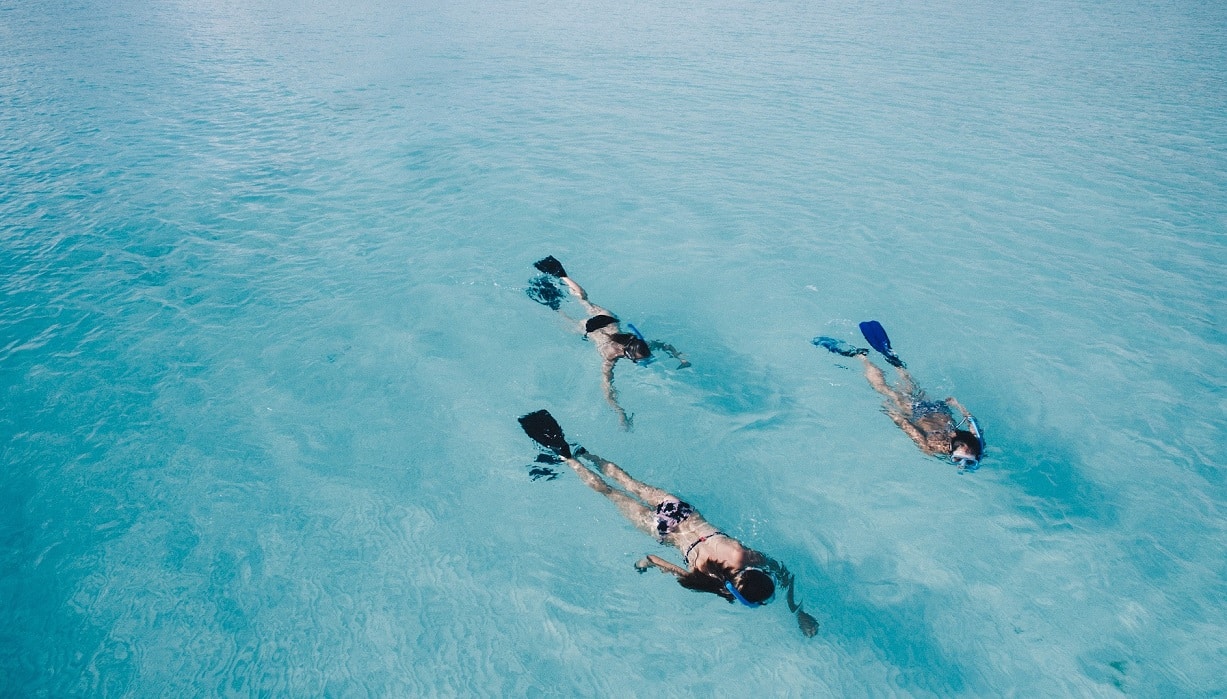
Dry Tortugas is well regarded as one of the premier places in America to snorkel and dive. In addition to being situated on the Florida Keys reef system, which is the 3rd largest in the world, the area has been the site of numerous shipwrecks resulting in spectacular artificial environments for marine life. The Windjammer Wreck is one of the best and most easily accessed sites for snorkeling in the park, but there are many other excellent spots.
Relive History at Fort Jefferson
Photo: NPS.gov
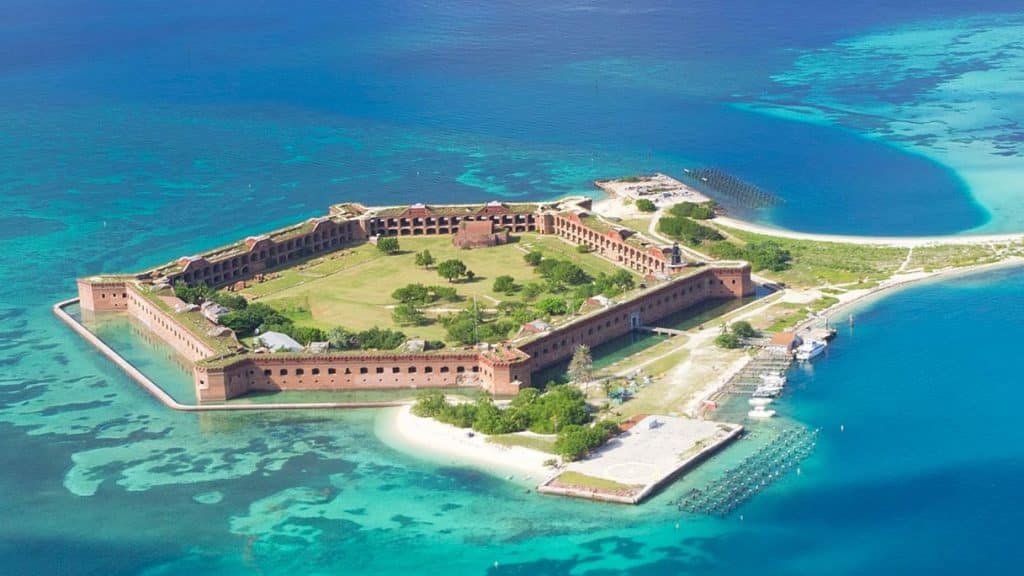
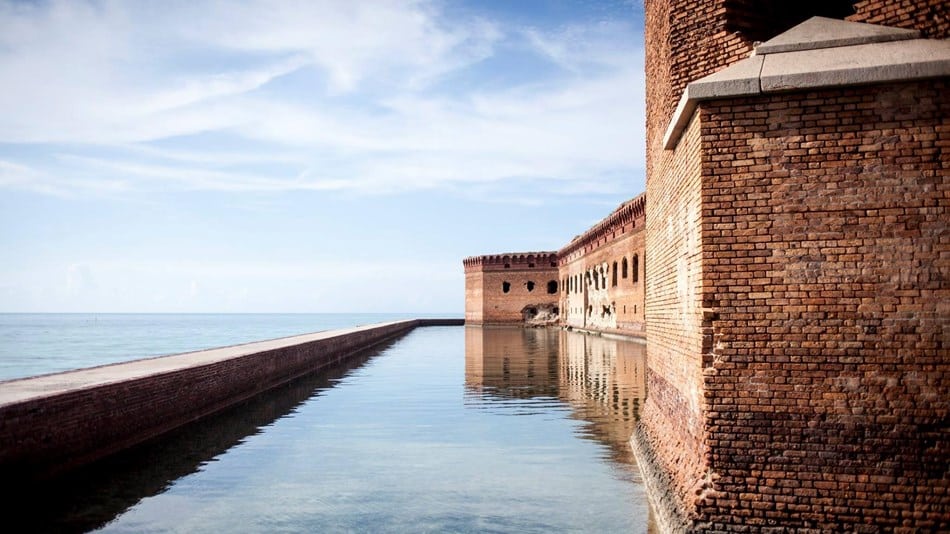
Fort Jefferson, located on Garden Key, is one of the nation’s largest 19th-century forts. It is the country’s largest all-masonry fort and the largest brick building in the Western Hemisphere. It was constructed between 1846 and 1875 with the purpose of protecting the country’s gateway to the Gulf of Mexico.
The location of Dry Tortugas along one of the world’s busiest shipping lanes presented a strategic military need for Fort Jefferson, and planning for the fort began as soon as Florida became a state in 1822. Although never completed or attacked, Fort Jefferson stands as an important reminder and symbol of the development of the United States.
Relax on Tropical, Secluded Beaches
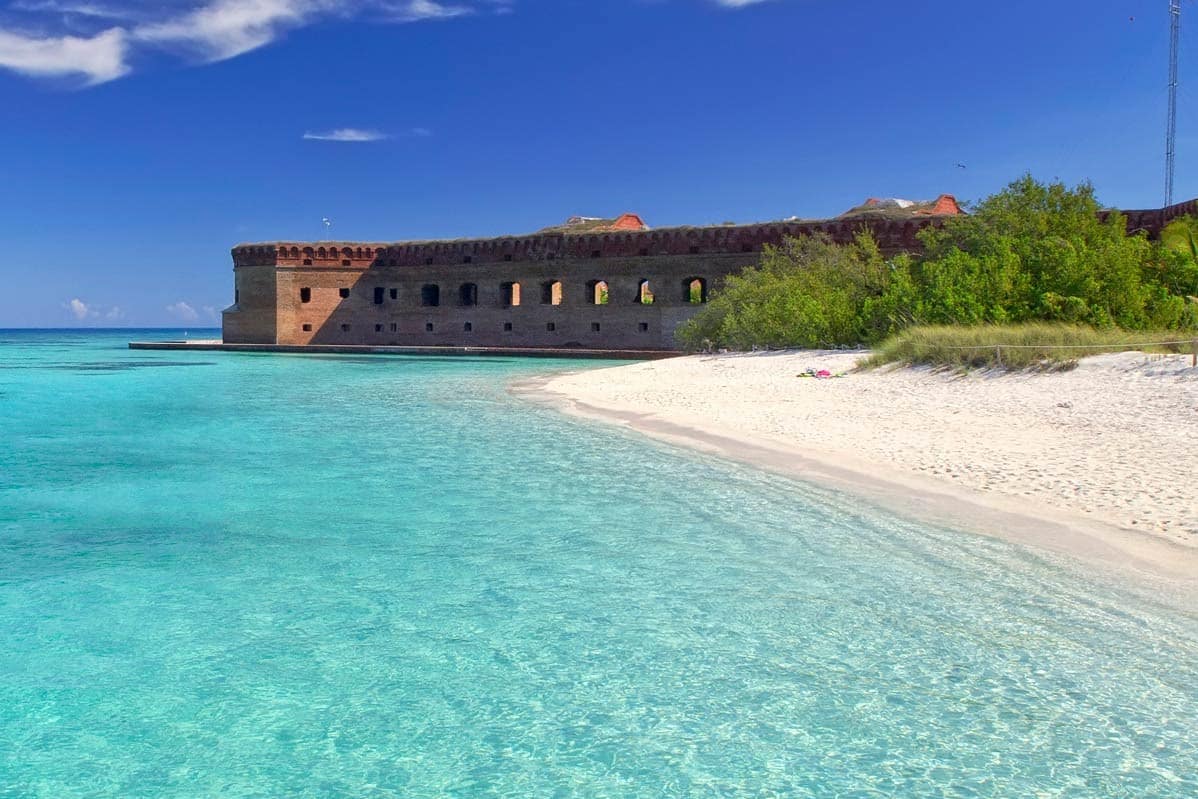
Key West is an island paradise that has so much to offer visitors. While the beaches in Key West are nice, Dry Tortugas’s beaches are amazing. The fine white sand and the turquoise blue waters might have you thinking you’re in a beer commercial or something!
While visiting, make sure to take time away from snorkeling and exploring the fort so that you can relax, unwind, and catch some rays while sitting on your own slice of beach paradise.
When to Visit Dry Tortugas National Park
The best time to visit Dry Tortugas depends on your own personal preference and what your goal is for visiting the park. The park experiences two distinct seasons, the summer/wet season and the winter/dry season.
Summer/Wet Season in Dry Tortugas
The summer/wet season is from May through November and is characterized by high temperatures (avg. 90℉), humidity, and afternoon precipitation. This period roughly corresponds to the Atlantic hurricane season so severe weather is always a possibility.
Although the temps are high and the summer/wet season accounts for the majority of annual rainfall, the summer/wet season provides the best conditions for snorkeling and viewing marine life. With little to no wind, the calm waters maintain excellent visibility, which is conducive to Tortuga’s most popular activities.
Winter/Dry Season in Dry Tortugas
If milder temperatures are more your cup of tea, then visiting during the winter/dry season is for you. The winter season extends from November to mid-May. The temperature is extremely pleasant and average temps range between 60℉ – 70℉.
When compared to the rest of the country’s average winter temperatures, winter at Dry Tortugas sounds pretty nice. There is a small sacrifice for visiting during the winter months, though. Winter brings windier conditions which affect the calmness of the seas. Choppy seas lead to decreased visibility and less enjoyable snorkeling conditions. Don’t be too alarmed, however, February sees the most visitors each year to Dry Tortugas.
Where to Stay in Dry Tortugas National Park
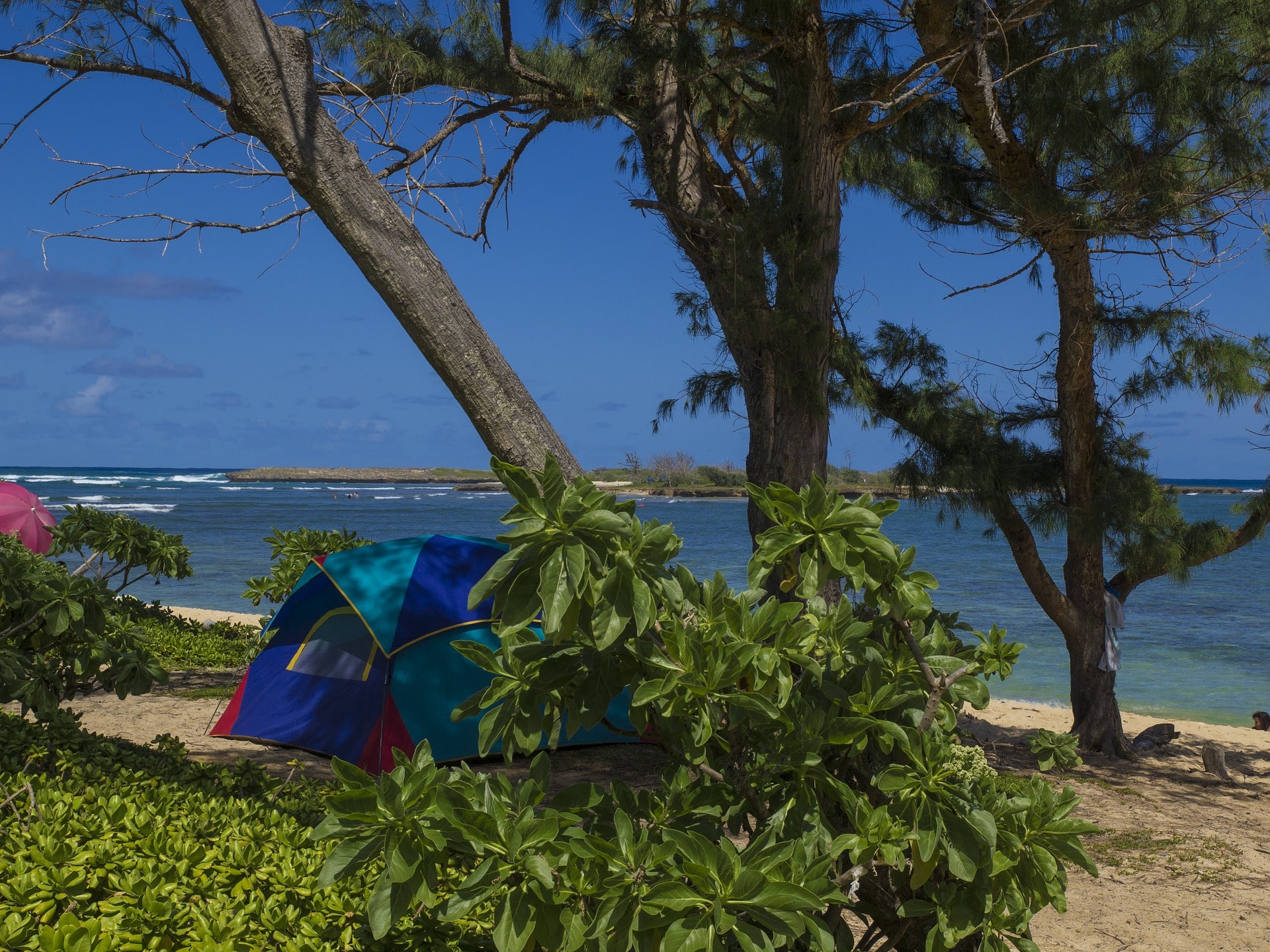
Most visitors enjoy a day trip to Dry Tortugas. For those looking for a unique camping experience, however, primitive camping is available. Camping on the remote island offers campers spectacular sunsets and sunrises as well as a chance to experience incredible stargazing.
Individual sites can fit up to six people and reservations are not required although reservations are required for public transportation options. There is an additional fee for overnight camping. Please remember, there are no services or amenities on the island so you must pack in (and out) everything that is needed, including water. There are composting toilets available in the campground. Click here for more information on camping in the park.
Getting to and Around Dry Tortugas National Park
Dry Tortugas National Park is only accessible by boat or by seaplane. There is a ferry that operates daily from Key West to Dry Tortugas departing Key West at 8:00 AM and returning at 3:00 pm.
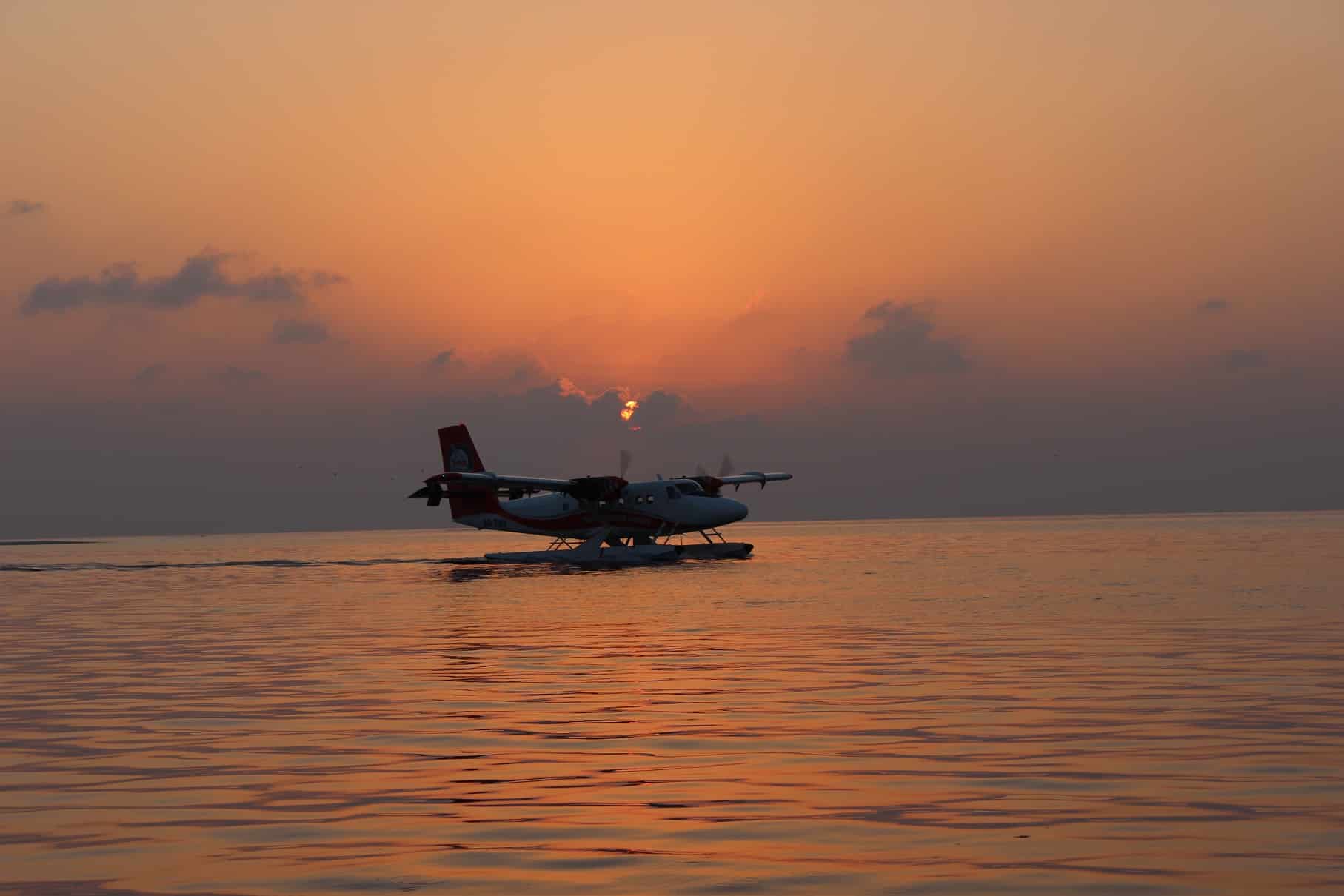
Key West Seaplane Adventures offers the only seaplane service to Dry Tortugas and is a great option if you’re prone to seasickness or simply want to experience the incredible views from above. Both the seaplane and the ferry will bring you to Garden Key, the main key where Fort Jefferson is located.
If you’d like to visit other areas of the park, you’ll need a boat. Private boats are welcome at the park, just remember to get your permit at the ranger station at Garden Key. There are boat slips for visitors available for short term use. Another transportation option is to charter a fishing or dive trip from Key West to bring you to the park.
Tips and Tricks Specific to Dry Tortugas National Park
I’m going to be frank, visiting Dry Tortugas National Park is a commitment. First, getting to the park is more complicated than other national parks, and secondly, it’s pretty expensive to visit, especially when compared to other parks. That being said, many vacationers in Key West will be looking for fun outings and adventures i.e. snorkeling, deep-sea fishing, sky diving, etc. This park often goes overlooked.
If you think about a visit to Dry Tortugas more like an excursion and less like a visit to a national park, you may find yourself really excited to go! The snorkeling will be better than almost anywhere else in the Keys and the secluded, white sand beaches are far superior to any beach in Key West. Add Fort Jefferson to the mix and Dry Tortugas has a lot to offer. Just remember to bring lots of water!
For the latest info on visiting Dry Tortugas National Park, visit the park’s website.
Have you been to Dry Tortugas National Park? What tips can you share?
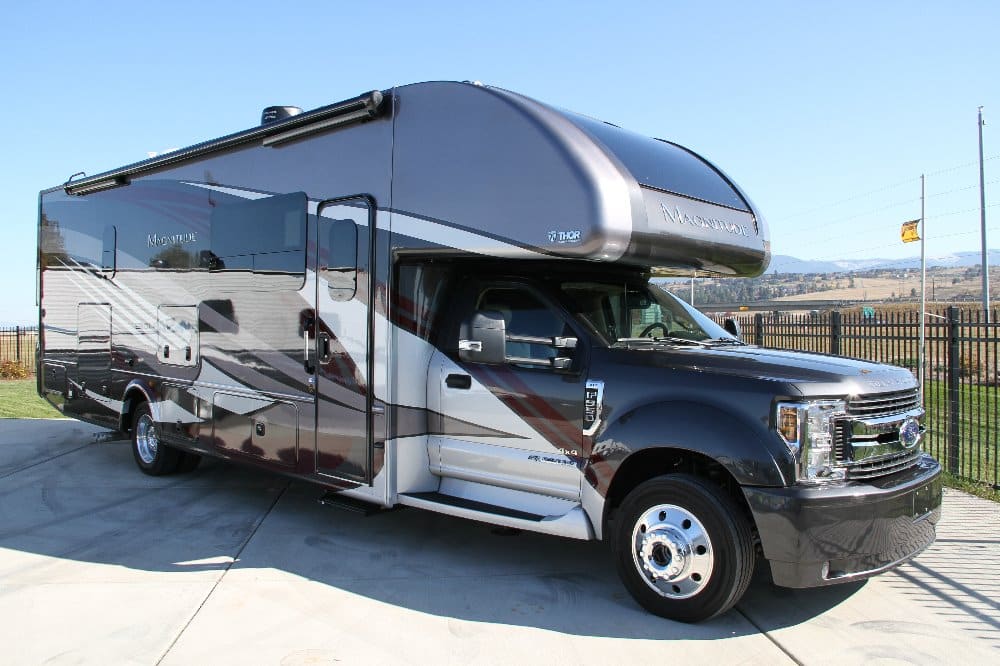
If you know the types and classes of RVs, then you probably also know that there’s what’s called a Super C RV. This is a Class C RV that’s built larger and more on a scale with a Class A motorhome. However, the Super C RV is still not built on a bus chassis. It still has a large commercial truck chassis.
This enables some advantages that make the Super C special. Personally, I think these RVs are awesome and a good alternative to a Class A motorhome. Let’s take a closer look.
What Is a Super C RV Exactly?
Super C RVs are motorhomes that offer a design similar to a Class C coach, but with a larger chassis and powerplant. The super-large frame and extra-powerful engine open up a lot of possibilities when it comes to the details of the motorhome.
So the chassis on Super C’s are a lot bigger, but how much? Class C motorhomes will typically use the Ford E-450 chassis or a comparable chassis from Chevrolet or another manufacturer, Super C RVs get the larger truck chassis. For example, the 2020 Thor Motor Coach Omi Motorhome features the F-550 chassis. This is a considerably larger option.
What are the Advantages of a Super C RV?
A look at the Thor Magnitude Super C floorplan.
So, it’s bigger. Is bigger better? In some cases, no. In other cases, yes. It really depends on how you plan to use the RV. However, I will say that there are many advantages to a Super C motorhome. Let’s take a look at what these advantages are.
Wider Wheel-Base
Typically, a Super C RV will have a wider wheelbase than a standard Class C. These types of RVs can even have a wider wheelbase than some Class A RVs. This means you’ll feel more safe and secure on the road. The Super C RV is one that is well-planted and ready for any road.
Plenty of Exterior Storage
Regular Class C motorhomes have limited basement or exterior storage space. Super C motorhomes have a basement storage area much more like a Class A motorhome. This means you can easily store a grill, camp chairs, an extra tent or canopy, or anything else that you’d like to take along.
Spacious Floorplans
As you might imagine, a larger chassis means more room to work with in terms of the floorplan. A Super C will have plenty of space for you and your family to enjoy the interior of the RV. While not every family needs a huge floorplan, most will be happier with a little more space.
High Towing Capacity
Want to bring a toad or tow a boat with you on your next camping trip? Get yourself a Super C RV and you’ll have plenty of towing capacity for whatever you want to tow. Typical Class C motorhomes usually have a pretty good towing capacity, but they pale in comparison to a Super C. Some can tow up to 25,000 pounds or more.
High Durability and Numerous Service Stations
The last advantage of the Super C motorhome is the fact that it uses a typical large truck chassis. These chassis were designed for hundreds of thousands of miles of heavy use. They’re built like tanks and can truly take a beating.
Additionally, these large truck chassis can be serviced by a larger number of service stations than a Class A motorhome can. Many service stations won’t touch a Class A whereas they’ll be less apprehensive about working on a Super C. You can also always bring your Super C motorhome to your local Camping World service center.
I know this isn’t the sexiest topic, and it’s going up on Valentine’s Day, but it’s one of those things that’s pretty darn important. A black tank that isn’t well taken care of is a horrible thing. It can cause unfortunate smells, leaks, and more. In order to ensure that your black take is functioning as it should be, it’s important to do all of the right things.
What Your Black Tank Does
Most RVs come with two wastewater tanks. There’s a gray water tank for your used sink and shower water and then there’s another tank known as the black tank for everything that goes down the toilet.
The black tank holds all the waste and wastewater so that you don’t constantly have to be hooked up to a sewer connection. It lets you essentially store your waste until you’re ready to empty the tank into the proper sewer dumping system.
How You Can Keep It Functioning Well
As you can imagine, the last thing you want is for your black tank to not operate as it is designed to. The best way to ensure it does what it’s supposed to do is to keep your black tank in good condition. Here’s how:
Be Careful of What You Flush
The best steps you can take to ensure the plumbing to and from your black tank doesn’t get clogged is to watch what you put down your toilet. Use RV toilet paper or toilet paper you know to be safe for RV use.
Also, never flush feminine hygiene products or the various types of self-cleansing wipes down the toilet. These types of things do not degrade in the black tank and can cause a blockage that can be difficult or at the very least not fun to clear. The only things that should be going down your RV’s toilet are human waste, water, and toilet paper.
Use Proper Chemical Treatments
Using a designated black tank treatment will help keep odors under control and it will also help ensure solid waste is broken up properly so that it will exit the tank when you drail the tank.
There are a variety of black tank chemicals out there to try. I’d suggest trying a couple before settling on any particular one. This way you can find the one that works the best for you and your rig.
Clean Your Black Tank
The next thing you can do to ensure your black tank functions as it should is to clean it from time to time. Some RVs have black tank flushing systems installed on them already. Others you’ll have to do the flushing yourself. The most basic procedure for cleaning your black tank goes like this.
Drain your tank.
Remove any buildup in the system thoroughly.
Add some water to the tank.
Add a good black water treatment.
Obviously, the key step here is step two. This can be done by purchasing a tank sprayer that you insert into the toilet to spray out the inside of the tank, use the RV’s already installed tank flushing or spraying system (not all RVs have this), or install a flush valve or a macerator to your RV. These all do the same job. They spray the inside of the tank in the hopes of removing any buildup. From there, it’s a matter of using the right black tank treatments.
Lastly, a note on dumping. Don’t dump your black tank unless it is at least mostly full or all the way full. When I say partway, I mean like two-thirds of the way full. The reason for this is because if you drain the system when it’s not full or at least close to it, you may not wash away all of the solid waste inside the tank. This can lead to odor issues or future blockages.
Kicking off Stories from the Road Season 2, Sam chats with Keith Bernard, CEO of Clear2O. Keith is taking water filtration seriously in his RV adventures. As a water filtration specialist and an avid RVer he wants to see more folks take charge of the quality of their water whether they use Clear2O’s products or another water filter.
Keith goes into detail about some of the issues with water on the road and what you can do to ensure you’re getting clean water in your rig.
What we cover in this episode:
0:10 – Intro to season 2
4:00 – Keith introduction
5:00 – Keith’s introduction to RVing
6:30 – Keith’s best experiences
8:30 – The Importance of Clean Water in RVs
10:30 – What sets Clear2O’s filters apart
12:00 – The effects of poor water quality
12:30 – Different types of water filters
14:00 – Types of water filters depending on the type or RVing
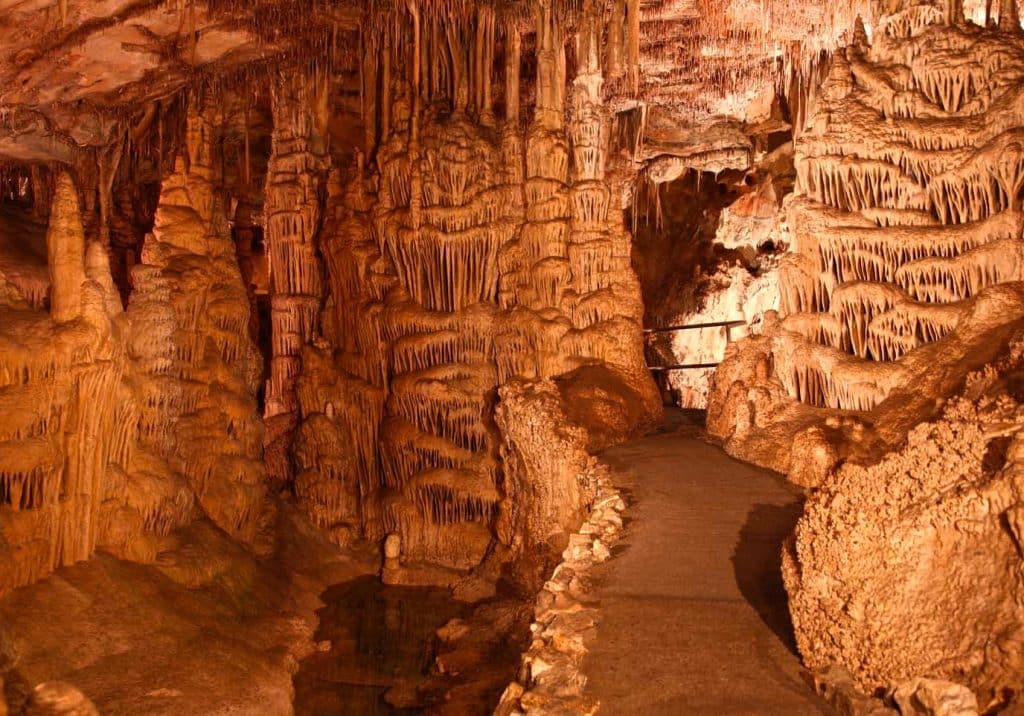
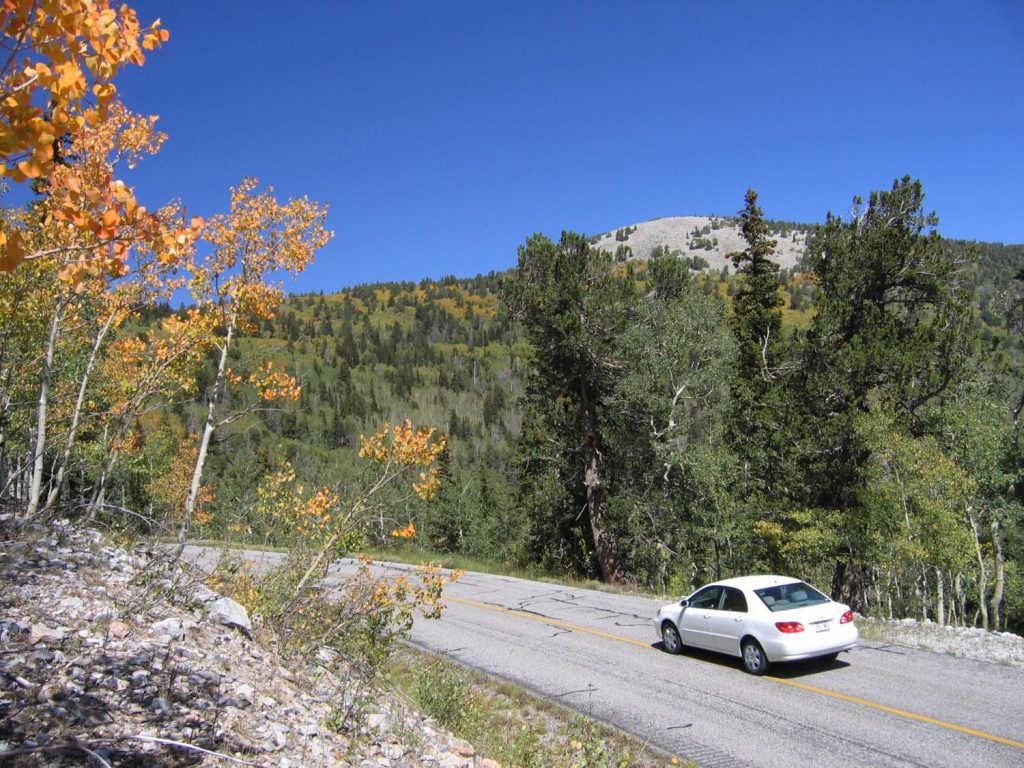
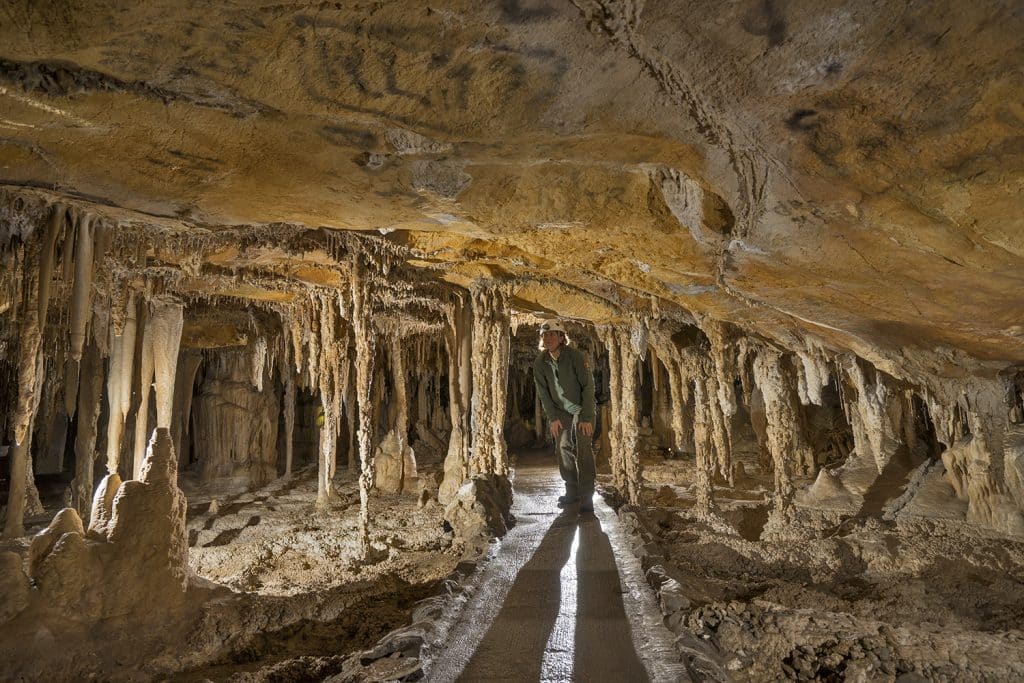
One national park holds within its boundaries some of the oldest tree species in the world, over 40 caves, and a 13,000 ft. mountain peak that contains a glacier in the midst of Nevada’s arid region.
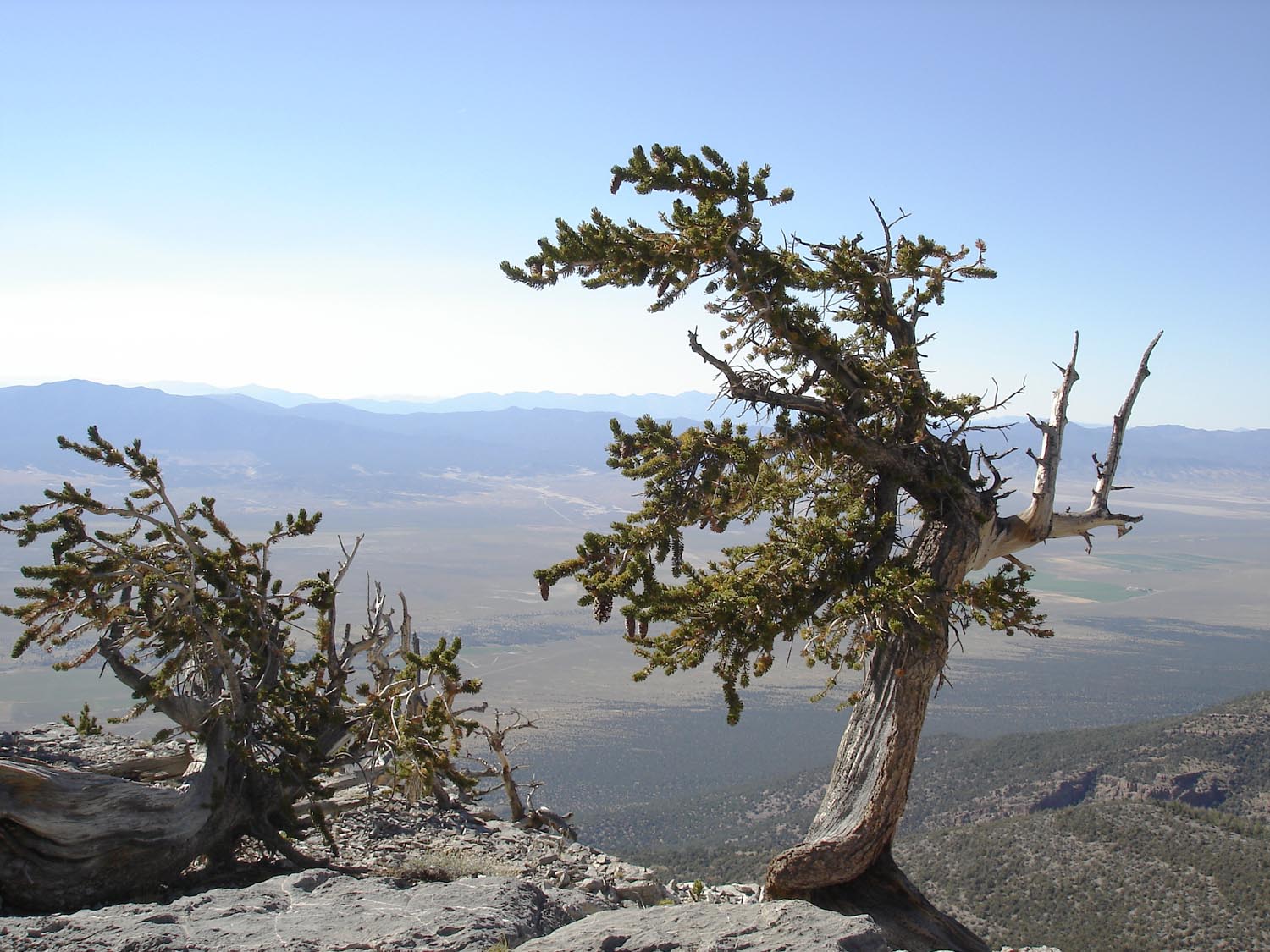
The Great Basin National Park is home to 5,000-year-old twisted bristlecone pines, Lehman and Pictograph Caves, and Wheeler Peak with its accompanying glacier, but it is still a well-kept secret along the Nevada-Utah border.
It’s no wonder that travelers haven’t discovered this dramatic region, as it lies along the “Loneliest Road in America.” Those who venture down this quieter path will be rewarded with stunning views and a plethora of outdoor enjoyment.
History of Great Basin National Park
The first inhabitants of this region where the ancestors of recent Native American tribes that still reside here: the Shoshone, Ute, and Washoe, among others. More recently the Fremont people lived in Great Basin in organized sedentary communities, where they grew many crops and fashioned irrigation systems.
By 1869, Absalom Lehman set up a ranch along Lehman Creek, and soon a small community arose, comprised mainly of his family members. He was successful at creating an orchard and large garden, to the point that eventually required outside help to maintain. Today, visitors can see remnants of Ab’s irrigation aqueduct and orchard on what was his 600-acre ranch.
By 1883, Mr. Lehman had stumbled upon the caverns that bear his name, and built a new cabin just outside its entrance, with the intent to develop the caves. With his death in 1891, the caves were only frequented by locals until well into the new century.
By 1922 President Harding designated the area as Lehman Caves National Monument, seemingly to protect the caverns and open them to the general public.
However, the national government did not actively participate in administration duties at the caves, leaving local residents to their own devices. What followed were 11 years of weddings performed inside the caverns, musical concerts utilizing stalactites as instruments and large meetings held in the vast rooms of the caves.
By 1933, the abuse of this natural resource ended when the control of national monuments was transferred to the National Park Service and clean-up of the caves began.
The next several decades involved improvements and more exploration into the network of rooms, creating a safer and more enjoyable attraction for visitors. By 1986, Lehman Caves National Monument and the surrounding forestland and mountains formally became Great Basin National Park.
Why Visit Great Basin National Park?
This park is located in a rather remote, unpopulated area of Nevada. What better place to have your own home with you in the form of your RV? Sure, you can tent camp here, but RVing is definitely the way to go.
There are five developed campgrounds within the park, including several primitive sites and several RV parks within 20 minutes of Great Basin from which to choose. To get more information about these campgrounds, check out the Park Services page on these campgrounds for more information. Each costs $15 a night and has its own unique attributes.
Enjoy the miles and miles of mountains and forests, hike to see the oldest species of trees on the planet, and take in the variety of topography, wildlife and geology in this under-visited park at your leisure.
Places to Go In Great Basin National Park
As you can imagine, there’s tons of land to roam in Great Basic National Park and that means there are many places within the park that you should visit. Be sure to see everything this park has to offer, including:
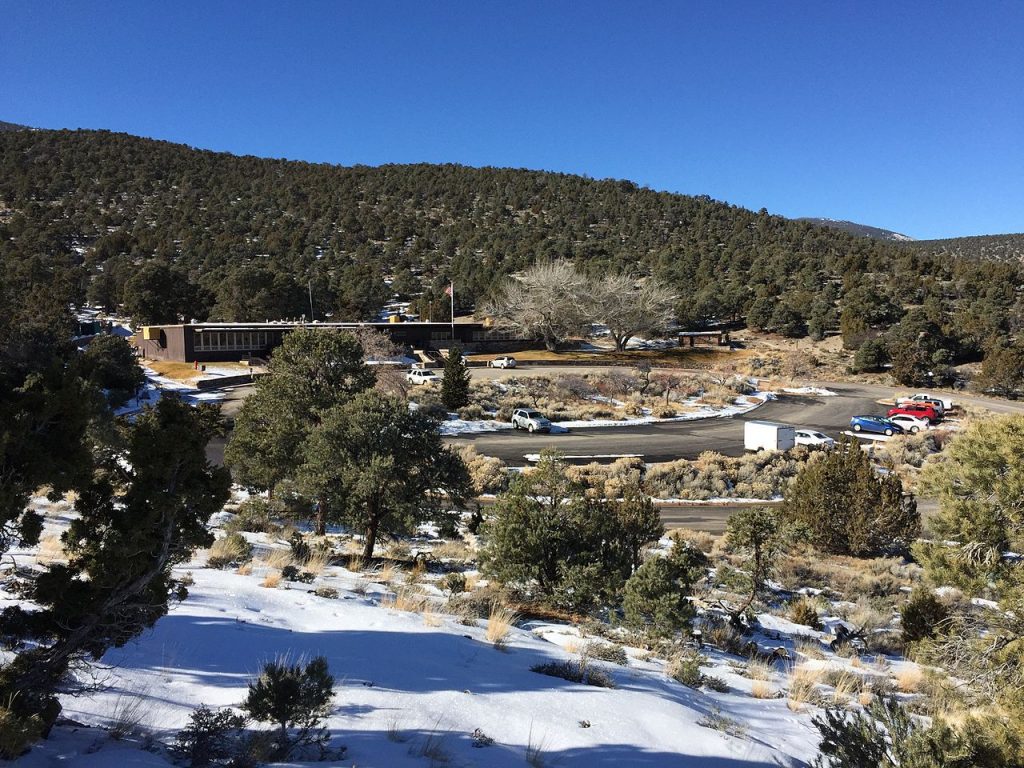
Great Basin Visitor Center
Located in the town of Baker, just outside the park, this center has information on the geology, culture and natural history of Great Basin, along with a film. It is open throughout the year, but it has some fantastic exhibits and can be a good place to start your journey through the park. Click here to learn more.
Lehman Caves Visitor Center
Photo Credit: famartin
Open year-round usually, this visitor center is located half a mile inside the park boundary. The Lehman Caves Visitor Center is the place to go for information on the park, special exhibits, and more. Click here to learn more information.
Tickets for Lehman Caves Tours are sold here, rangers are available for questions, and sign-up for ranger-led tours and permits are handled here.
Lehman Caves
Once “protected” as Lehman Caves National Monument, these caverns were used by the general public for weddings, concerts, and meetings. Visitors even left trinkets at “The Wishing Well,” which, along with a good deal of trash, was cleaned up when the caves fell under the jurisdiction of Great Basin National Park.
Today the caves have been returned to their natural appearance, with two daily tours led by rangers. You can purchase tickets at the Lehman Visitor Center. Prices are affordable and it’s well worth the money spent. To learn more about the caves and the cave tours, click here.
Things to Do
With so much of the park to see, you have plenty of stuff you can go and do, too. Great Basin is a wonderful park for outdoor activities. Here are just a few that you can participate in:
Hiking
There are over 60 miles of developed hiking trails throughout Great Basin National Park. Most of these are limited to June through September usage because Wheeler Peak Scenic Drive, which leads to several trailheads, is not plowed. Here is just a sampling of the many trails available:
Mountain View Nature Trail – .3 miles
Baker Lake Trail – 12 miles
Bristlecone Trail – 2.8 miles
Lehman Creek Trail – 6.8 miles
Alpine Loop Trail – 2.7 miles
Wheeler Peak Summit Trail – 8.6 miles
Osceola Ditch Trail – .3 miles
Lexington Arch Trail – 3.4 miles
Day hikers are asked to sign in at trailhead registers. Permits are not required. To learn more about hiking in Great Basin National Park, click here.
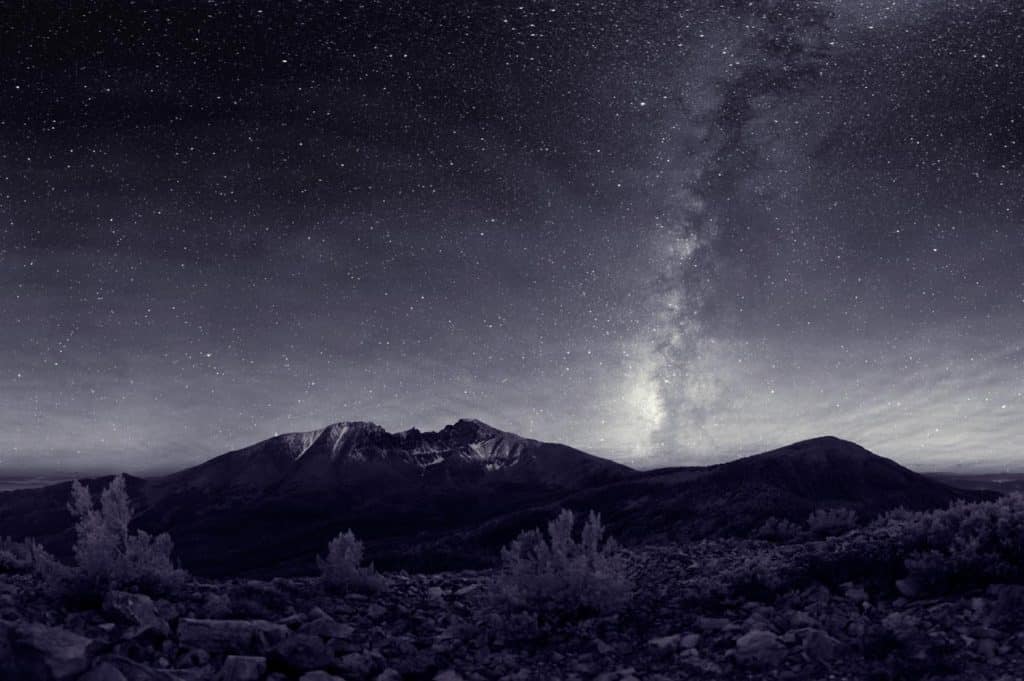
Star Gazing
Designated as an International Dark Sky Park in 2016, Great Basin offers organized stargazing events, a festival, and weekly astronomy programs. There is even a Star Train that leaves from Ely, Nevada with dark rangers aboard to narrate.
Arrival at the park gives riders the opportunity to view the night skies through the park’s high-powered telescopes. The trip occurs once a month from May through September and tickets sell out quickly at Nevada Northern Railway.
Biking
Bike around Wheeler Peak Scenic Drive for some incredible views and great exercise. For mountain bikers, there are several unimproved roads for challenging terrain, but bicycles are not allowed off-road. All cyclists are asked to stay on roads and paths designated for bicycle use. Click here to find out more about riding a bike at Great Basin.
Camping
As we said above, there are five developed campgrounds within the park. All have vault toilets, tent pads, picnic tables, and grills, but no hookups. There are also primitive campsites along Snake Creek Road. If you have your RV and you want to find a good place to camp in your RV close to Great Basin National Park. We list a few of the parks below if you’re looking for a good place to camp in your RV.
There are also various Bureau of Land Management (BLM) campsites close by. Check out the BLM website for more information.
Caving
Lehman Caves has two ranger-led tours, but there are 40 other caves within the park. Little Muddy Cave is open October 1 to April 1 to those with a “wild caving permit.”
Permits for caving are issued to cavers who demonstrate they have the proper equipment, caving techniques, and experience needed. If you’re new to caving talk to park rangers about how you can become more experienced and get into the lifestyle. It’s a fantastic way to explore some of the most interesting places on earth.
When to Visit Great Basin National Park
Great Basin is an arid land, but extremes in temperatures are not as widespread as one would think. June through September is a wonderful time to visit if hiking and camping are high on the list of activities. Roads into the park are usually cleared of snow by then, so access to trailheads and campgrounds is not a concern.
Summer temperatures average around 80 to 85 degrees but hiking on Wheeler Peak and at some higher altitudes should always be completed by 1 pm to avoid lightning or wind storms.
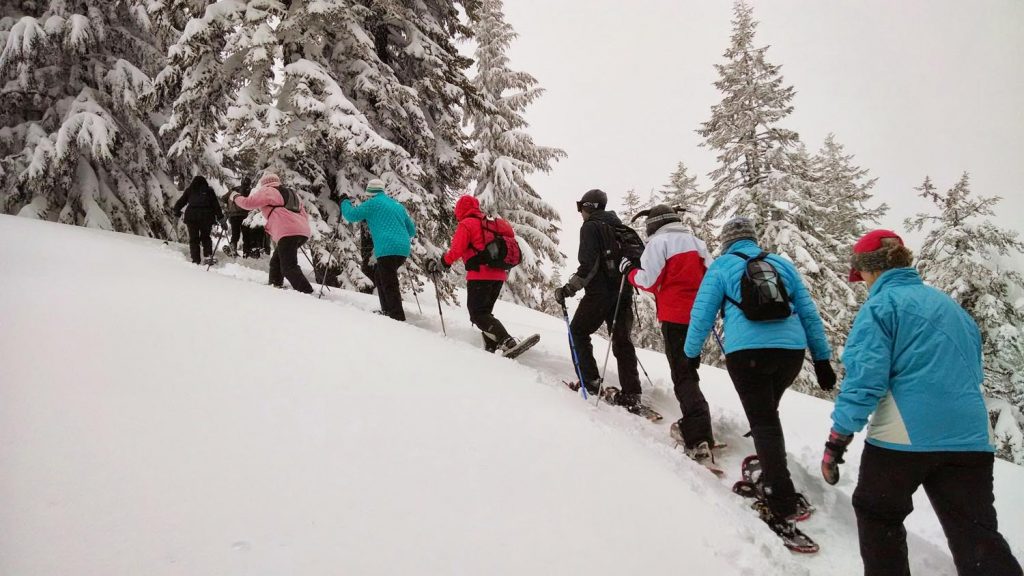
Winter can be an exceptional time to visit Great Basin National Park, with the anticipation of snowshoeing and cross-country skiing activities. Many hiking trails offer great terrain for these sports, and although Wheeler Peak Scenic Drive is closed to vehicular traffic, skiers will find it perfect for laying tracks. Lehman Caves tours are also available year-round.
Where You Can Stay in Great Basin National Park
Great Basin National Park has five developed campgrounds within the park and several primitive sites along Snake Creek Road. None of the sites has hookups and most campsites are first-come, first-serve. If there are none left when you arrive, here are a few options for camping outside the park boundaries:
The Border Inn
Located 13 miles from Baker, this campground offers full-service RV sites and pull-throughs.
Hidden Canyon Guest Ranch
Just 15 miles from Baker, RVers will find campsites and showers available.
As noted above, there are BLM campsites close to the park as well. These are primitive spots, though so keep that in mind.
Getting to and Around Great Basin National Park
Located just south of Highway 50, commonly known as the “Loneliest Road in America,” Great Basin is accessed from Highway 487 to Baker, then Highway 488 into the park.
Once inside Great Basin, visitors can traverse Wheeler Peak Scenic Drive throughout the northern region. Any vehicles or trailers longer than 24 feet cannot travel past Upper Lehman Campground. Also, please consider that during winter months, the road is not plowed, so access is limited by the weather.
There are several unimproved roads throughout the park leading to many trailheads for exploring more of the backcountry but many require the use of a four-wheel-drive vehicle.
Don’t Pass It By
Photo Credit: Dave Bunnell
There is no argument that Great Basin National Park is one of Mother Nature’s great amusement venues, with caves to explore, mountains to climb and outdoor adventures to pursue in any season. The real question is why haven’t more travelers discovered this understated gem in the national park system?
We urge you to check it out and once you do, we’d love for you to tell others about it. Great Basin deserves to be visited and it’s a park unlike any other in the U.S. or really the world. While we’d love to see you make the trip in an RV, there are plenty of other great ways to go and see the national park, whether you camp in a tent or stay in one of the resorts or hotels nearby. We want to see you get out there and go for it.
Have you ever been to Great Basin National Park? Leave a comment below.