Blog

  • RVing the Rails – Excursion Trains in California

    RVing the Rails – Excursion Trains in California


    Many times camping trips involve exploring new territory and discovering enticing attractions along the way. Passenger tour trains have that magnetic appeal for many RVers, providing a novel way to see hidden countryside not normally viewed from the road. Railroad passengers learn about local history, culture and the many colorful characters from the communities visited. And Camping World wants to make sure you don’t miss the departing whistle, so we have created a series entitled RVing the Rails. You will find the most popular excursion trains to ride in each state, complete with any specialty trains they might offer.

    Excursion Trains in California - Camping World

    Today we will explore the most popular trains in California:

    Napa Valley Wine Train
    Excursion Trains in California - Camping World
    Photo Credit: Jim G (CC BY-SA 2.0)

    Built as transportation to the spa resort of Calistoga in 1864, the Napa Valley Wine Train has always had an air of distinction. Today’s journey leaves the town of Napa, traveling through some of the most acclaimed landscapes in the world as the train arrives in St. Helena. With half and full day winery tours, lunch and dinner trains, and specialty tours, the Wine Train offers a wide variety of ways to enjoy the stunning Napa Valley.

    Railway and Locomotive Types

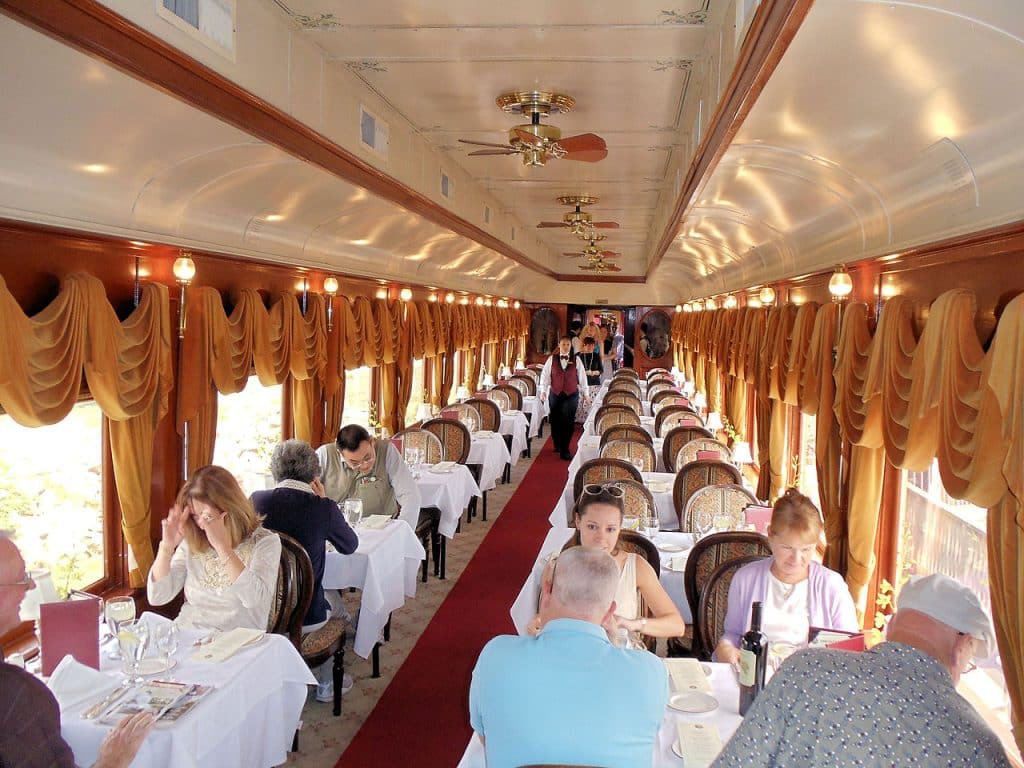
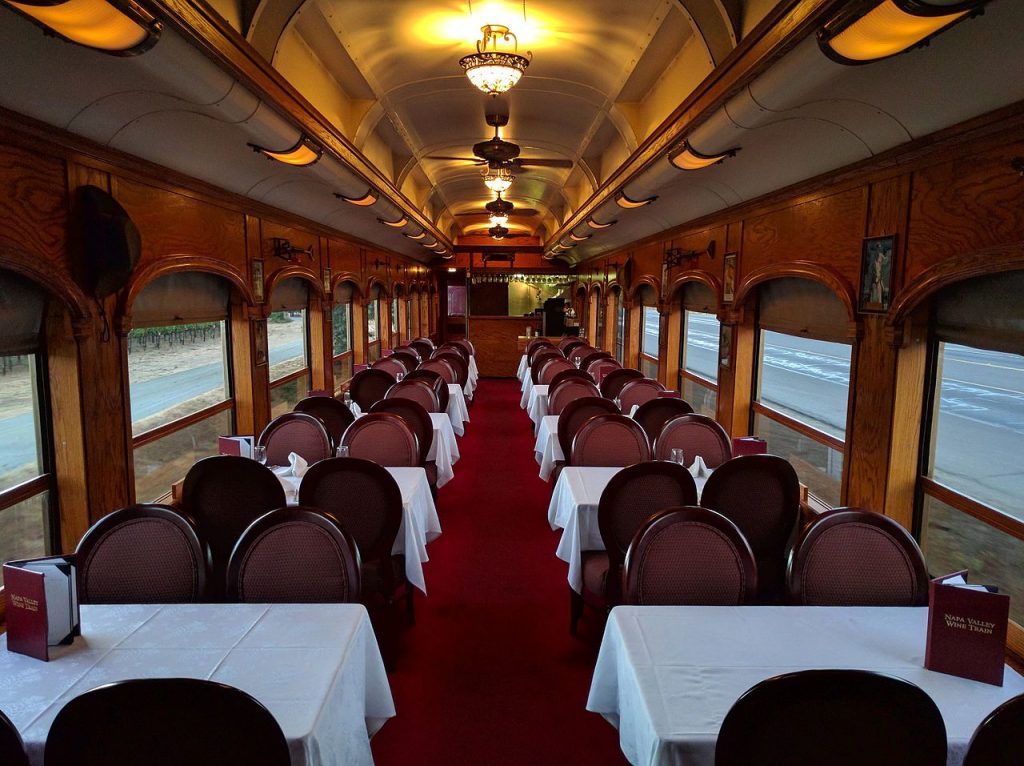
    With diesel locomotives, the Wine Train runs on standard gauge rails. Its many first class coach cars were built by Pullman in 1915 and have gone through extensive renovations, with Honduran mahogany paneling, etched glass partitions and velveteen fabric armchairs. The results offer today’s passengers the same opulence and luxury that those of the early 20th century enjoyed.

    Seating Options

    The railroad offers traditional railway seating, with couples seated on the same side on four person tables. Parties of four will be seated together.

    There are two classes available on most train tours:

    • First Class – Seating is assigned in coach cars and open gondolas.
    • Private Class – Private dining is exclusive to the Vista Dome car, where luxury dining is upstairs and a state-of-the-art kitchen is housed downstairs.

    Riding Options

    Excursion Trains in California - Camping World

    The Napa Valley Wine Train has five different categories of train rides, each with different time limits, seating and opportunities:

    • Lunch Trains – Gourmet Express, including Vista Dome private lunches, are offered.
    • Dinner Trains – Gourmet Express and dining in the Vista Dome are also offered for dinner trains.
    • ½ Day Winery Tours – All ½ day tours include lunch. The tours offered are the Grgich Hills Estate Tour, Ambassador Winery Tour, Raymond Winery Tour and Castle Winery Tour.
    • Full Day Winery Tours – All full day tours include a multi-course gourmet meal. Tours include the Legacy Tour, Collective Tour and the Estate Tour.
    • Special Events (see Specialty Trains below)

    Specialty Trains
    Excursion Trains in California - Camping World
    Photo Credit: Grendelkhan (CC BY-SA 3.0)
    • Murder Mystery – Join in the intrigue of solving a murder on your three-hour train ride. Transformed into a vintage speakeasy, the Napa Valley Wine Train hosts mayhem and mystery along with a three course gourmet meal.
    • Romance on the Rails – Enjoy a romantic three-hour evening train ride in the two-story Vista Dome car, complete with a taste of sparkling wine, a multi-course gourmet meal and two glasses of private label wine.
    • Tequila Train – The wine train is taken over by its smooth sipping cousin on National Tequila Day, with a tequila cocktail, Mexican appetizers, tequila shots and entertainment on this two-hour journey.
    • Happy Hour Hop Train – Wine plays second fiddle to beer on a two-hour trip through the Napa Valley. Enjoy two pints of local craft beer, bar bites and entertainment in an open air train car.

    Length of Season

    The Napa Valley Wine Train runs year-round with half and full day wine tour trains, dinner trains and specialty events. Here is a schedule to plan your visit.

    Yosemite Mountain Sugar Pine Railroad
    Excursion Trains in California - Camping World
    Photo Credit: YMSPRR.com

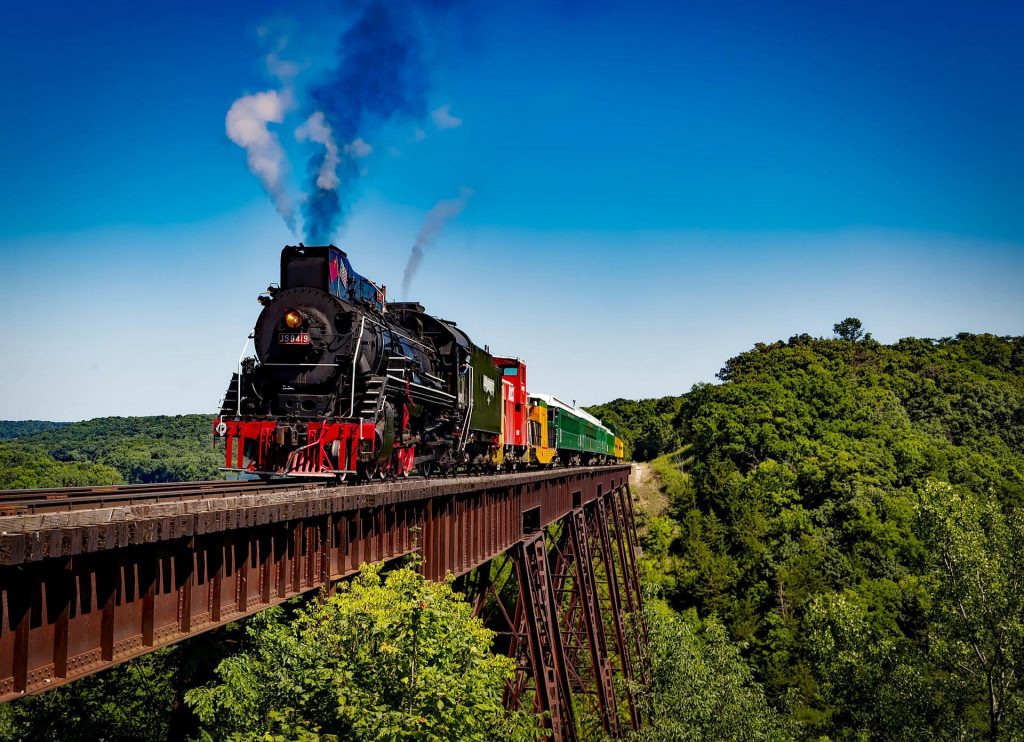
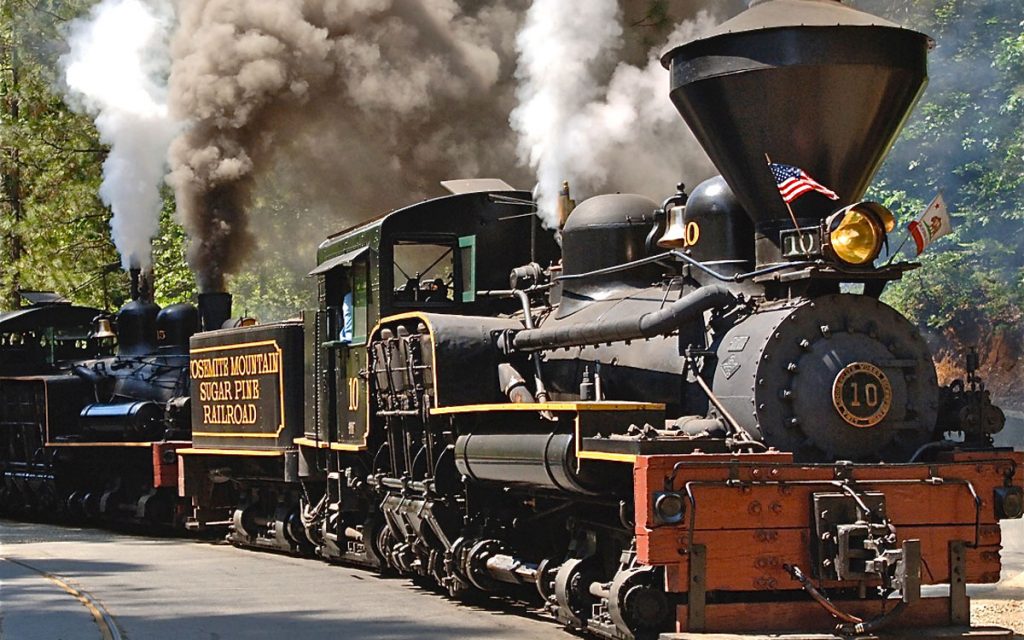
    Built in the Sierra Nevada Mountains as a means of transport for the lumber industry, the Yosemite Mountain Sugar Pine Railroad runs on four miles of track just outside Yosemite National Park’s south gate. Used by the Madera Sugar Pine Lumber Company around the turn of the 20th century, the steam locomotives would haul felled trees to a sawmill, and today they continue their duty, taking passengers along a little piece of California’s history.

    Railway and Locomotive Types

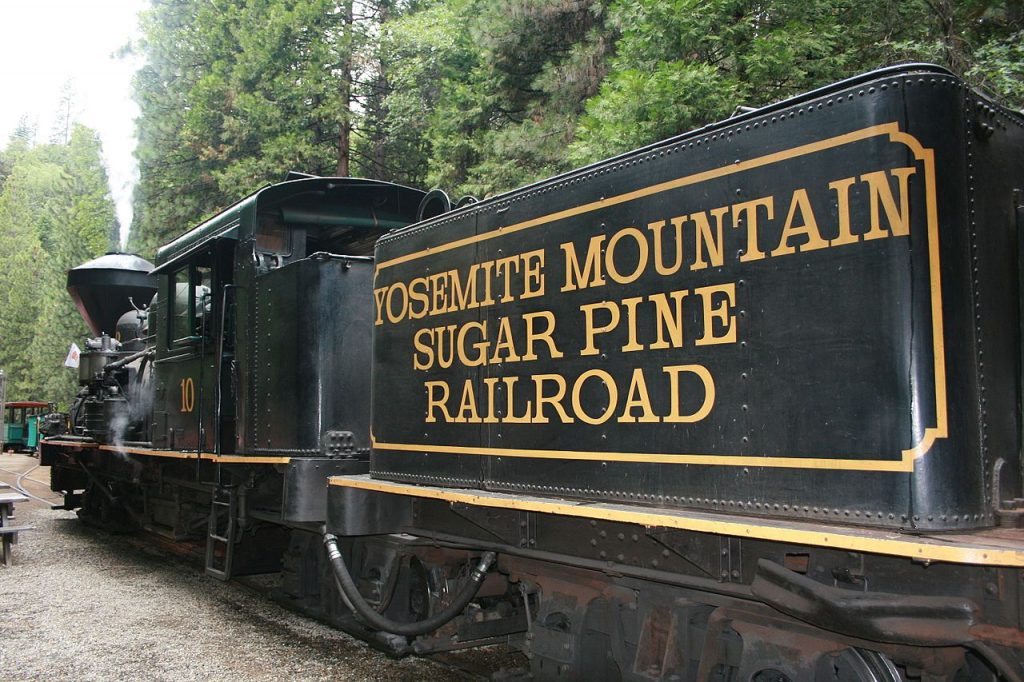
    This narrow gauge train is pulled by one of two steam locomotives on site, built in 1913 and 1928. Passengers ride in open gondola cars on this narrated excursion through the forestland of the Sierra Nevada.

    Seating Options
    Excursion Trains in California - Camping World
    Photo Credit: NearEMPTiness (CC BY-SA 4.0)

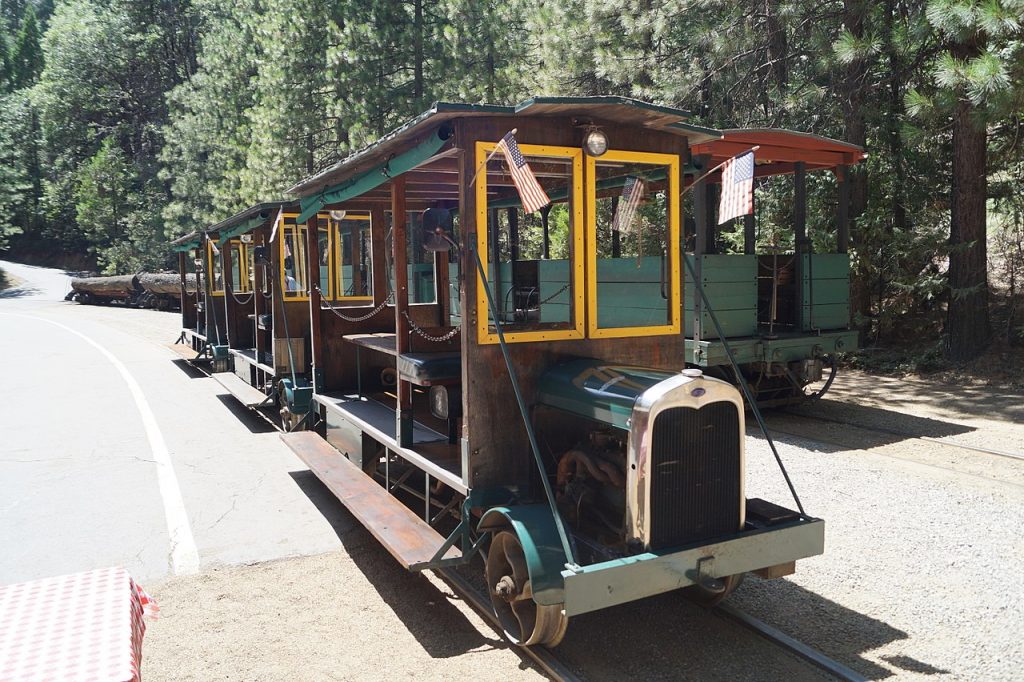
    Open seating is available to all on the steam train and Jenny railcars. The passenger cars are covered open gondolas, and open rail cars with seats carved from logs are also available.

    Riding Options

    The Yosemite Mountain Sugar Pine Railroad offers two types of rides:

    • Logger Steam Train – The trip lasts one hour and the train holds up to 200 passengers.
    • Jenny Railcar – The trip in a Model A powered car lasts 30 minutes and holds 8 to 10 passengers.

    The logger steam train runs from April through October, but the rails can also be enjoyed on a Jenny railcar ride during and after the steam train season ends.

    Specialty Trains
    https://creativecommons.org/licenses/by-sa/4.0/deed.en
    Photo Credit: Ian Gratton (CC BY-SA 2.0)
    • Moonlight Special BBQ Train – Take the night train up to Lewis Creek Canyon to enjoy a tasty BBQ dinner and songs around the campfire.
    • Gold Panning – Although not a specialty train ride, visitors can try their hand at panning for gold outside the station while waiting for train departures.

    Length of Season

    The Sugar Pine Railroad runs its logger steam train from April 6 through the end of October. Jenny railcars may be accessible outside of the regular season, but contact the depot for specific dates. Here’s the train schedule.

    Sacramento River Train
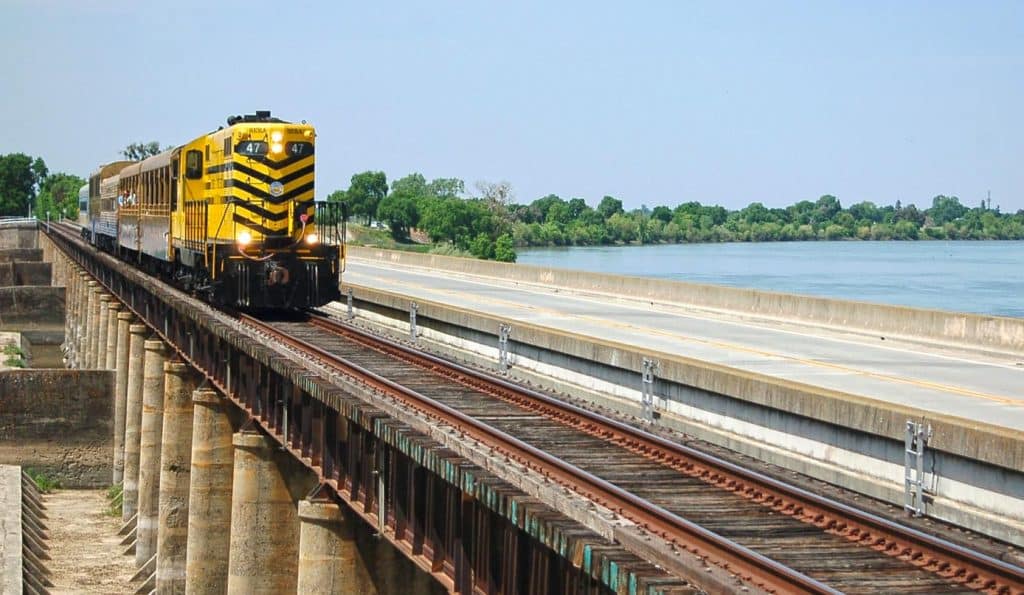
    Excursion Trains in California - Camping World
    Photo Credit: SierraNorthern.com

    The 14 miles of track that the Sacramento River Train run on originated in 1911 as the Sacramento and Woodland Railroad, carrying freight and passengers until 1940 and World War II. Wartime required cargo to move quickly on the rails, but by 1960 the line began to break up and various spurs were retired.

    Luckily the Yolo Shortline Railroad Company purchased the section that eventually became the River Train. Today customers enjoy elegant dining and train travel in the “Plantation Style,” with wood paneling, ceiling fans and rattan furniture in the luxuriously restored coach cars.

    Railway and Locomotive Types

    Diesel engines power the train on standard gauge tracks, with three open air cars and three enclosed air conditioned coaches. Enjoy a comfortable journey through open farmland along the Sacramento River and through the Yolo County Wildlife Refuge.

    Seating Options

    The Sacramento River Train has a variety of train specials, many on a monthly basis, and all have assigned seating in enclosed coach cars. Passengers can move about the train and enjoy the open cars, as well.

    Riding Options
    Excursion Trains in California - Camping World
    Photo Credit: SacramentoRiverTrain.com

    Although there are several unique train experiences, all tickets are round trip, leaving from the West Sacramento boarding station. The train travels along the Sacramento River with a stop at a park before returning to the station. There are no one-way tickets sold.

    Specialty Trains

    Excursion Trains in California - Camping World
    Photo Credit: SacramentoRiverTrain.com
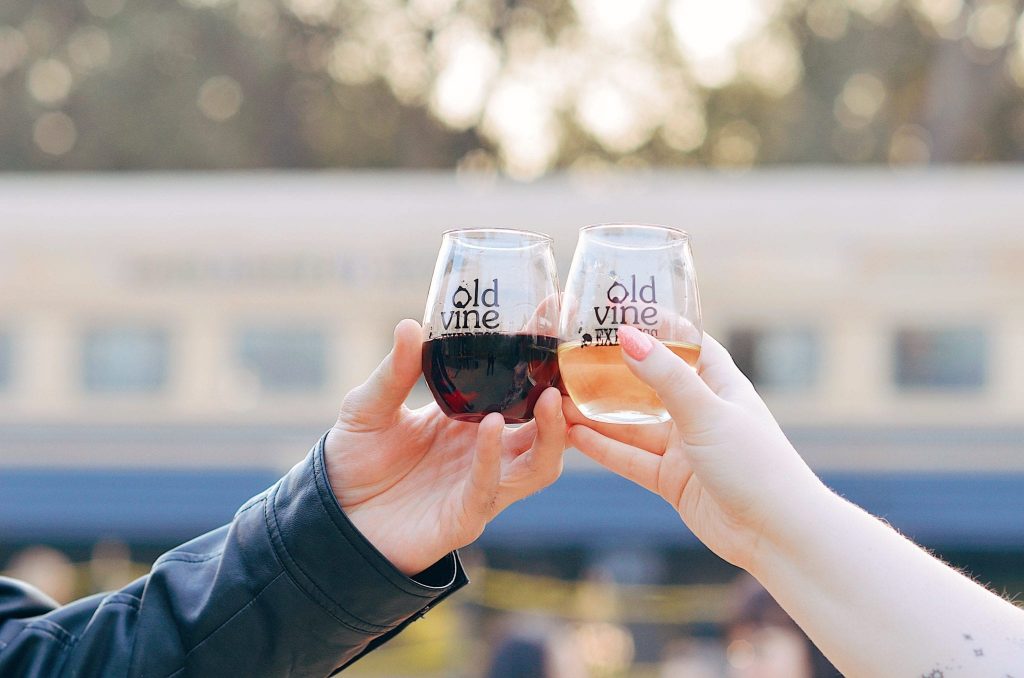
    • Old Vine Express – Sip from a selection of 15 California wines as the train takes you through open farm country. Entertainment and a commemorative wine glass are included, and a meal is optional. This train is offered once a month during the operating season.
    • Great Train Robbery – Experience an old western showdown as the train is derailed by bandits, then hit the chuckwagon for a BBQ lunch before heading back to the station.
    • Murder Mystery – Help solve a mystery aboard the train, as a cast of quirky characters accuse each other of a dastardly deed. Period costumes are encouraged!
    • Pumpkin Train – Travel through Autumn colors to arrive at a pumpkin patch, where all passengers can select the perfect jack-o-lantern to carve for Halloween.
    • Easter Egg Express – Join the Easter Bunny for a train trip to his hunting grounds, where children can enjoy games and collecting Easter eggs before a return trip to the train station.

    Length of Season


    The Sacramento River Train runs from April through September with a wide range of meal trains, specialty events and seasonal railroad excursions. Check out their schedule to find the perfect trip!


    Join the thousands of RVers that have a love affair with trains and ride the rails on your next camping trip. Check out the other excursion trains available on a state-by-state basis in our series, RVing the Rails. Another article will go up every Friday.


    Source link

  • Camping World’s Guide to RVing Grand Canyon National Park

    Camping World’s Guide to RVing Grand Canyon National Park


    Of all the national parks out there, Grand Canyon National Park is the second most visited national park, just behind …


    Source link

  • Best Lakeside Camping Destinations

    Best Lakeside Camping Destinations


    Summer is prime camping season, but if you don’t pick the right destination you may find yourself sweltering in the heat instead of enjoying yourselves. That’s why finding a great campground near the water is key!

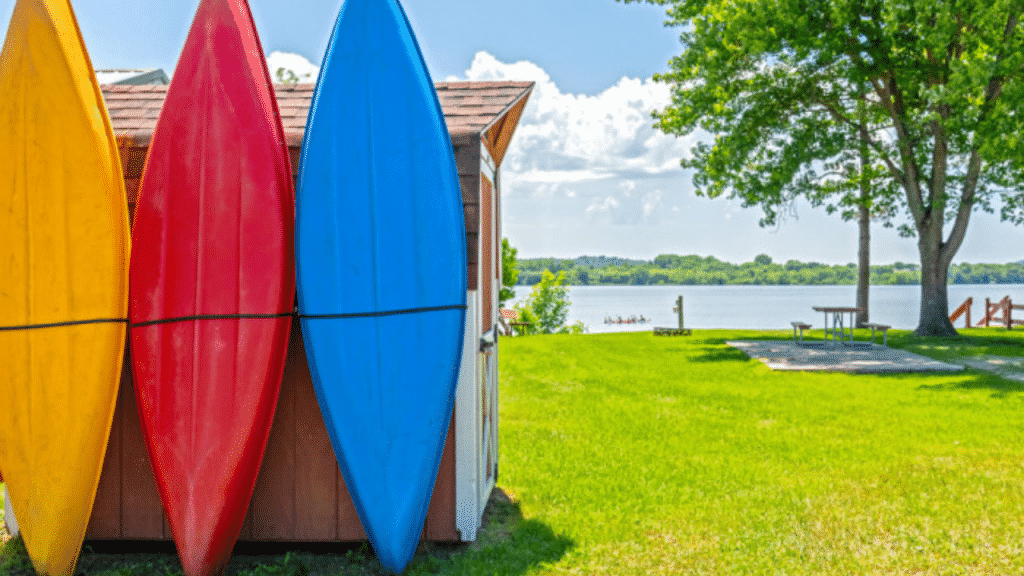
    Summer is prime camping season, but if you don’t pick the right destination you may find yourself sweltering in the heat instead of enjoying yourselves. That’s why finding a great campground near the water is key! So pack up your swim suits, fishing poles, and kayaks and head to one of these fabulous lakeside campgrounds.

    Lakes are wonderful for caming and most have some amazing campgrounds to choose from. You can build some wonderful memories with your family at a lake. So, pack up your swim suits, fishing poles, and kayaks and head to one of these fabulous lakeside campgrounds.

    Davis Lakes Campground – Virginia

    Forget about camping on just one lake…try three! Davis Lakes Campground has it all: fishing, water sports, and plenty of activities for land lovers too. Located in Suffolk, Virginia this campground in only an hour away from Virginia Beach and Colonial Williamsburg, but you might have a hard time dragging yourself away from all they have to offer onsite.

    Even better than camping on one lake is camping on three! Davis Lakes Campground has it all: fishing, water sports, and plenty of activities for land lovers too. Located in Suffolk, Virginia this campground in only an hour away from Virginia Beach and Colonial Williamsburg, but you might have a hard time dragging yourself away from all they have to offer onsite.

    For starters, the 25-acre Lake Neal is the primary fishing spot, but don’t miss the six-acre Catfish Lake stocked with blue gill, largemouth bass and catfish. If you’re looking for a sandy beach with a terrific swimming area, try the 18-acre Lake Helen which also boasts an Aquaglide with water trampolines, jungle gyms, and blasts bags.

    Camp Chautauqua Camping Resort – New York

    the 25-acre Lake Neal is the primary fishing spot, but don’t miss the 6-acre Catfish Lake stocked with blue gill, largemouth bass and catfish. If you’re looking for a sandy beach with a terrific swimming area, try the 18-acre Lake Helen which also boasts an Aquaglide with water trampolines, jungle gyms, and blasts bags.

    Since 1968 the Anderson family has been providing a summer retreat for the whole family at Camp Chautauqua Camping Resort. Located on the shores of the 17-mile long Chautauqua Lake in Western New York, this family resort has every amenity you could want including a pool, splash pad, playground, boat marina, and nature trails for starters.

    They also have themed weekends with fun activities all summer long. One of our favorites is the Wet & Wild Weekend in July, which includes a cool twist on kickball, soaker hayride, and giant slip and slide.

    Catherine’s Landing – Arkansas

    Just five minutes away from Hot Springs, Arkansas Catherine’s Landingis aptly named as it features one mile of water frontage on beautiful Lake Catherine. Many sites are waterfront and there are beautiful woods all around. Each paved site has full hook-ups, a picnic table, BBQ grill, and fire ring.

    Just five minutes away from Hot Springs, Arkansas Catherine’s Landing is aptly named as it features one mile of water frontage on beautiful Lake Catherine. Many sites are waterfront and there are beautiful woods all around. Each paved site has full hook-ups, a picnic table, BBQ grill, and fire ring.

    The camp store will even deliver firewood right to your site. Rent a kayak or pontoon boat to explore the windy Ouachita River or stay at the campground and soak in saline pool while kids enjoy the splash pad. If you get adventurous they also have a zip line.

    Be sure to head into town to visit Hot Springs National Park, which is the only national park we’ve visited that is in a city. While there are some nature trails, the main attraction is Bath House Row where you walk down the city streets and tour historic buildings that once housed medical spas. You can even book your own “bathing” experience that includes a private soak in the mineral waters, a steam bath, and a massage.

    Neshonoc Lakeside Camping Resort – Wisconsin

    Situated on the shores of beautiful Lake Neshonoc you will find family camping at its best! Neshonoc Lakeside Camping Resort offers spacious RV sites with two swimming pools, playground, and sports fields. The best part of course is the 600 acre lake perfect for swimming, fishing, and kayaking.

    Situated on the shores of beautiful Lake Neshonoc you will find family camping at its best! Neshonoc Lakeside Camping Resort offers spacious RV sites with two swimming pools, playground, and sports fields. The best part is the 600 acre lake perfect for swimming, fishing, and kayaking.

    This campground is only 15 minutes from La Crosse, a terrific town on the banks of the Mississippi River. The area features a downtown trolley tour, paddle boat cruises, wineries, and farmer’s markets.

    Wahweap Marina RV Park & Campground – Arizona

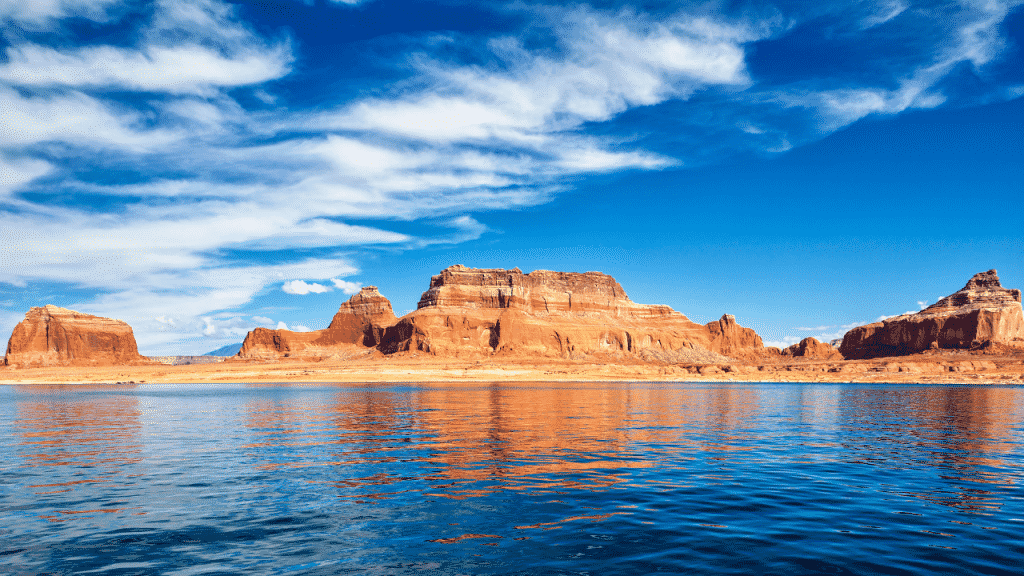
    Wahweap Marina RV Park and Campground is located in the Glen Canyon National Recreation Area

    Enjoy this desert oasis in the southwest! Wahweap Marina RV Park and Campground is located in the Glen Canyon National Recreation Area, which manages the lake as well as a large 1.3 million-acre swath of Arizona and Utah. Lake Powell is one of the largest man-made lakes in North America. It is 186 miles long with 1,960 miles of shoreline and over 96 major side canyons.

    The campground is a quarter mile from the lake, but set on a tiered hillside to provide fabulous views. They provide a shuttle to help you get around, and you can charter a boat or book tours on the lake as well.


    Did we miss one? Let us know what your favorite lakeside camping resort is in the comments below.


    Source link

  • If You Need A New Trailer Jack, Here’s How To Pick The Best One

    If You Need A New Trailer Jack, Here’s How To Pick The Best One


    Every travel trailer out there has one mechanism responsible for doing two things—getting level and getting onto a hitch ball. 

    Getting level requires two types: side-to-side leveling and front-to-back leveling. Side to side leveling is accomplished using levelers under tires on one side. The front-to-back leveling and connecting your trailer and disconnecting your trailer requires the very thing you are reading this article about: a jack.

    trailer electric jack
    Image by author

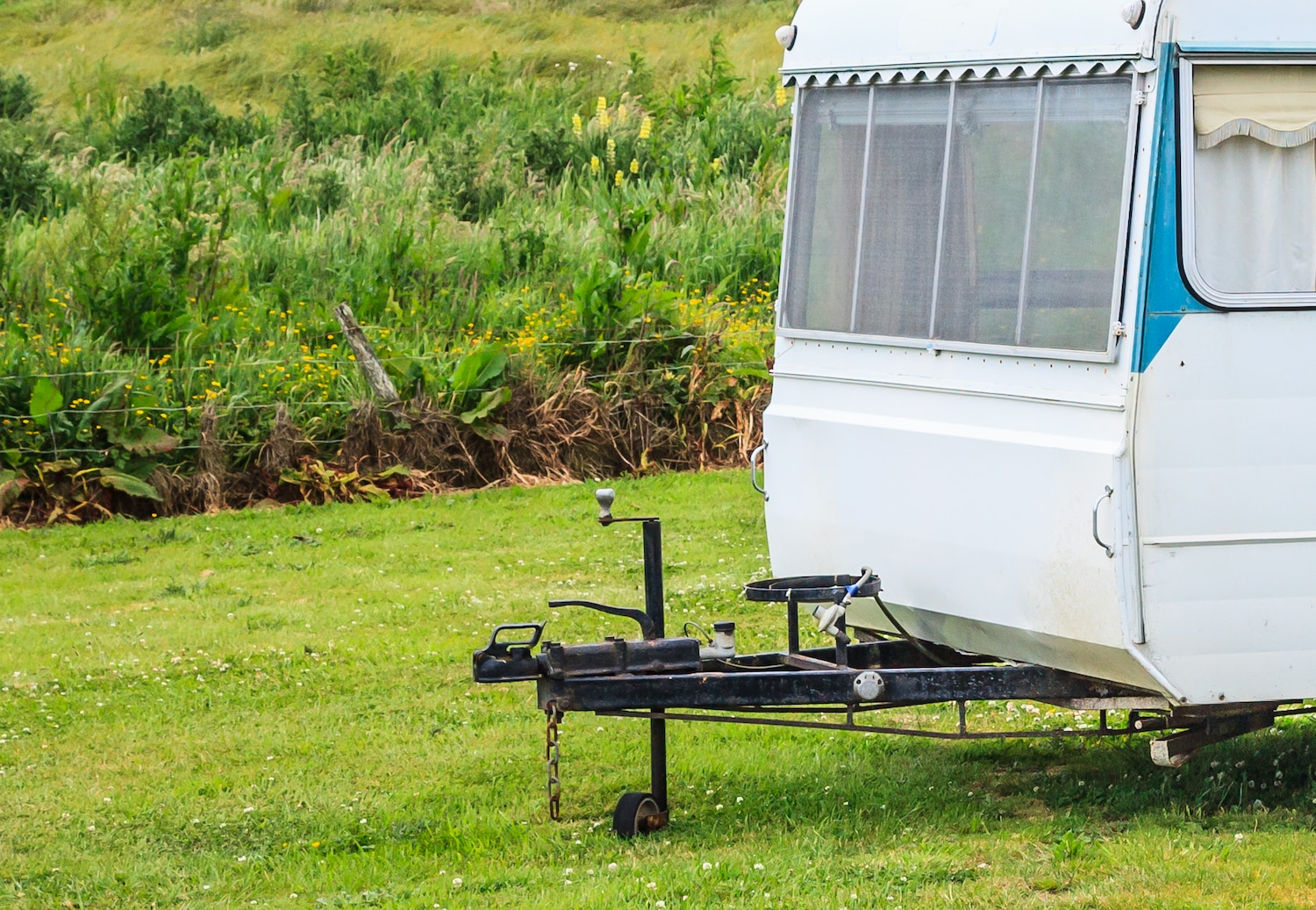
    A jack is a vertical mechanism (leg) installed on the front of the trailer, on the tongue. It has the capability to raise and lower the tongue/front of the trailer. Without a jack, one would have to lift it by hand, which is basically impossible (Unless you’re Arnold Schwarzenegger. And you aren’t). Therefore, you need a jack for your trailer.

    Types of Jacks

    Your travel trailer probably already has one. If it didn’t, that would be really weird—and what else is that trailer missing? LOL!

    You either have one of two types of jacks on your trailer. A manual jack or an electric jack. 

    Personally, I have an electric jack. My business partner, Kelly, had a manual jack for her first three years of full-time RVing. Three. Miserable. Years (If you ask her). I have happily had an electric jack for the duration of my 5 years of full-time RV life. Kelly finally got one. Her back thanks her for it.

    What’s the difference between the two? It’s mostly pretty obvious, but we will dive into the specifics:

    Manual Trailer Jack

    manual travel trailer jack
    Image by Vichai Phububphapan from Getty

    A manual jack is a jack with a hand crank to lift and lower the tongue. The only motors are your own amazing, or not so amazing, muscles. The number of revolutions you have to turn it all depends on how much of a grade you are on, or how high/low your hitch is. 

    Some un-level places will make you feel the burn more than others! My friend Kelly may or may not have thrown a few r-rated comments out while leveling her trailer from front to back in the past!

    That’s it. It’s simple. You crank it up, you crank it down. The good news is that there are fewer parts to break, though you may feel it the next day in your back.

    Manual Jack Pros:

    • Cheaper
    • Potentially more durable
    • You get a little workout
    • Less expensive

    Manual Jack Cons:

    • Physically harder to use
    • Electric jack

    Electric Trailer Jack

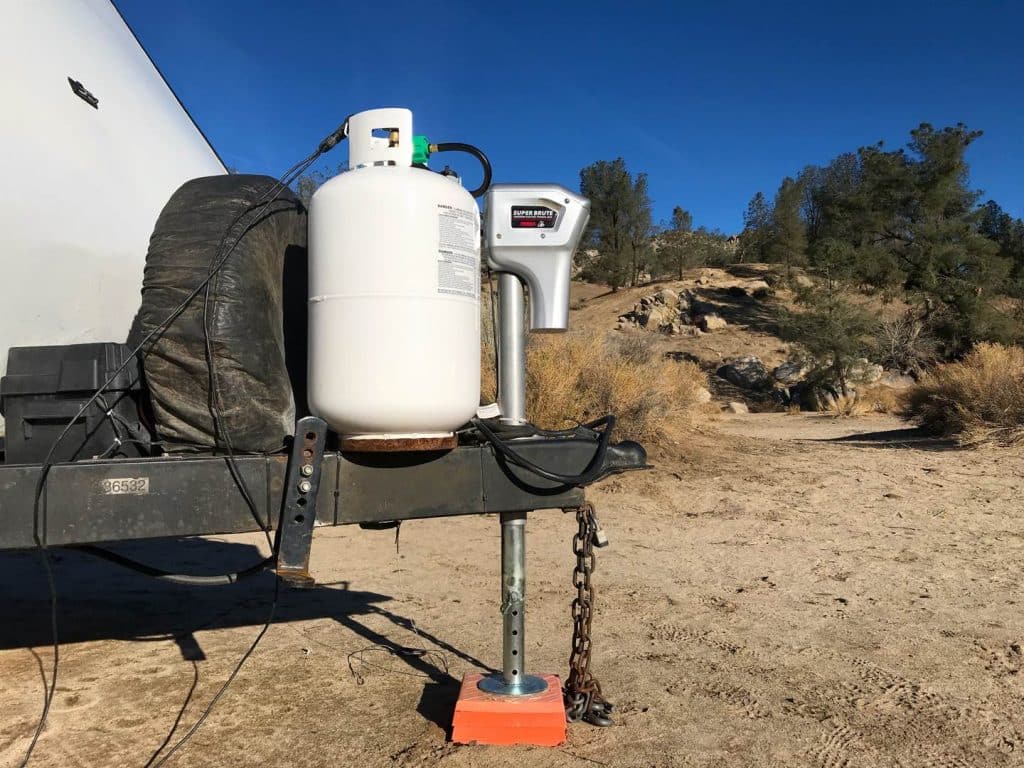
    electric trailer jack
    Image by author

    Now we’re talking! An electric jack does the work for you. It’s a gear-driven mechanism that only requires the strength of a single finger to work it. You either select “up” or “down” (So nice).

    That’s all it takes. The jack obviously has to be connected to your battery in order to work. It runs off of a 12-volt power source only. It has more moving parts than a manual jack. This kind of jack should be quite durable, but still has more chances of breaking. 

    Say you are dry camping and you kill your battery. Of course, you wouldn’t because you already know how to avoid this, right? But say you do.

    What do you do? Well, the manufacturer’s thought of this as well. Your electric jack should have a manual hand crank that you can use to override the electric jack. So even if you are a clunkhead and kill your battery, you can still get hitched up.

    Still, a working electric jack will be way easier to use than a manual jack. Especially if you have a bad back, arthritis, etc.

    Electric Jack Pros:

    • Easiest to use
    • Manual crank if you lose power
    • Remote options available
    • Won’t throw out your back

    Electric Jack Cons:

    • Must know a little about electric to self-install
    • More expensive
    • More parts that can break

    What Size Jack Do I Need?

    Not all jacks are created equal. They come rated in pounds of lifting capacity. Your rig is of a certain weight and you have to get a jack capable of lifting the weight of the front of your trailer.

    This is likely going to be the most difficult part of getting a new jack, manual or electric. You’re going to HAVE to know how much your trailer tongue weight is. The best way to know is to weigh your trailer and weigh your tongue weight.

    If you know yourself and you know you simply will not properly weigh your tongue, then here’s a hack: Tongue weight should not be more than 15% of total trailer weight.

    But it easily could be more if you have a lot of heavy stuff placed near the front of the trailer, and don’t forget full propane tank and battery weight. So, if you know how much your trailer weighs fully loaded (but you will again, have to weigh your trailer to know this), you can guesstimate how much your tongue weight is.

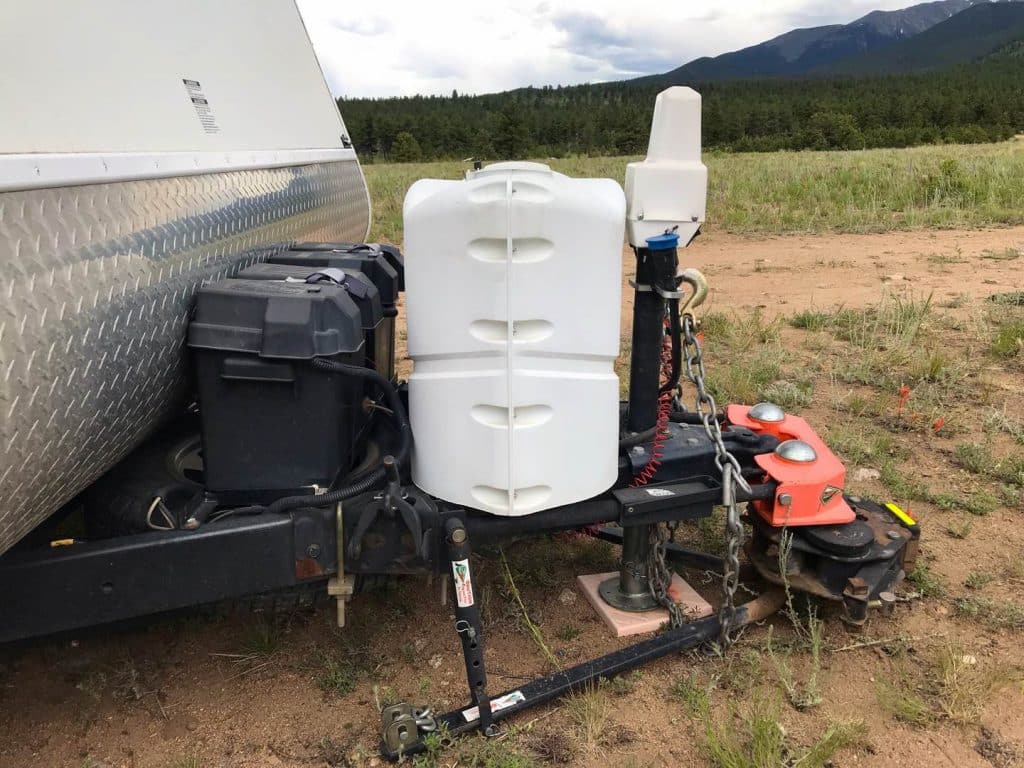
    If you use a weight distribution system then tongue weight is NOT all that you need to know. If you use a WDH, you likely are going to use the jack to lift the back end of your truck and trailer to a certain degree to connect and disconnect the weight distribution hitch. 

    This means you also need to know how much the back end of your truck weighs. You won’t be lifting it off the ground, mind you, but your jack will need to be able to handle the tongue weight as well as the truck end weight.

    Check with your vehicle manufacturer to estimate how much load is on your back axle.

    Once you have an idea of what your tongue weight is plus a portion of what your truck end weighs, you can decide on how heavy-duty of a hitch you need. 

    It’s always better to have too much jack than not enough jack. Otherwise breakage could occur.

    Jack Leg Extensions

    Some jacks have a ‘drop’ leg that brings the bottom of the jack closer to the ground before you even start lowering it. Why is this a good thing? Because first, it will save you power- either manual or electric.

    Some people opt to simply stack boards or levelers under the jack. 

    This seems like an OK thing to do, but we strongly recommend against it. This makes the front of your travel trailer much more unstable. If your rig rolls, it can fall off of the levelers/blocks, causing damage or even injury. (Don’t believe? Just ask Marshall, ha ha.) (Link “Just ask Marshall” to https://campaddict.com/rv-wheel-chocks/#x-chocks-caution)

    Therefore, a leg extension is a good idea as a general rule. 

    Some jacks come with extensions (Such as Kelly’s Husky Super Brute). Others do not. However, if you tend to only stay in level spots, you can get an after-market drop leg (such as the Fastway Flip)

    Jack Feet

    It’s kind of ridiculous, but some jack manufacturers, I suppose, try to save money by not adding a ‘foot’ to the jack. In this case, the jack leg is simply a hollow tube. Now imagine putting that jack down in dirt. 

    Exactly, it’s going to sink. Again, there are aftermarket ‘feet’ that you can purchase and add to your jack. They are especially useful if you dry camp a lot off of pavement.

    Hitching and Unhitching Your Travel Trailer

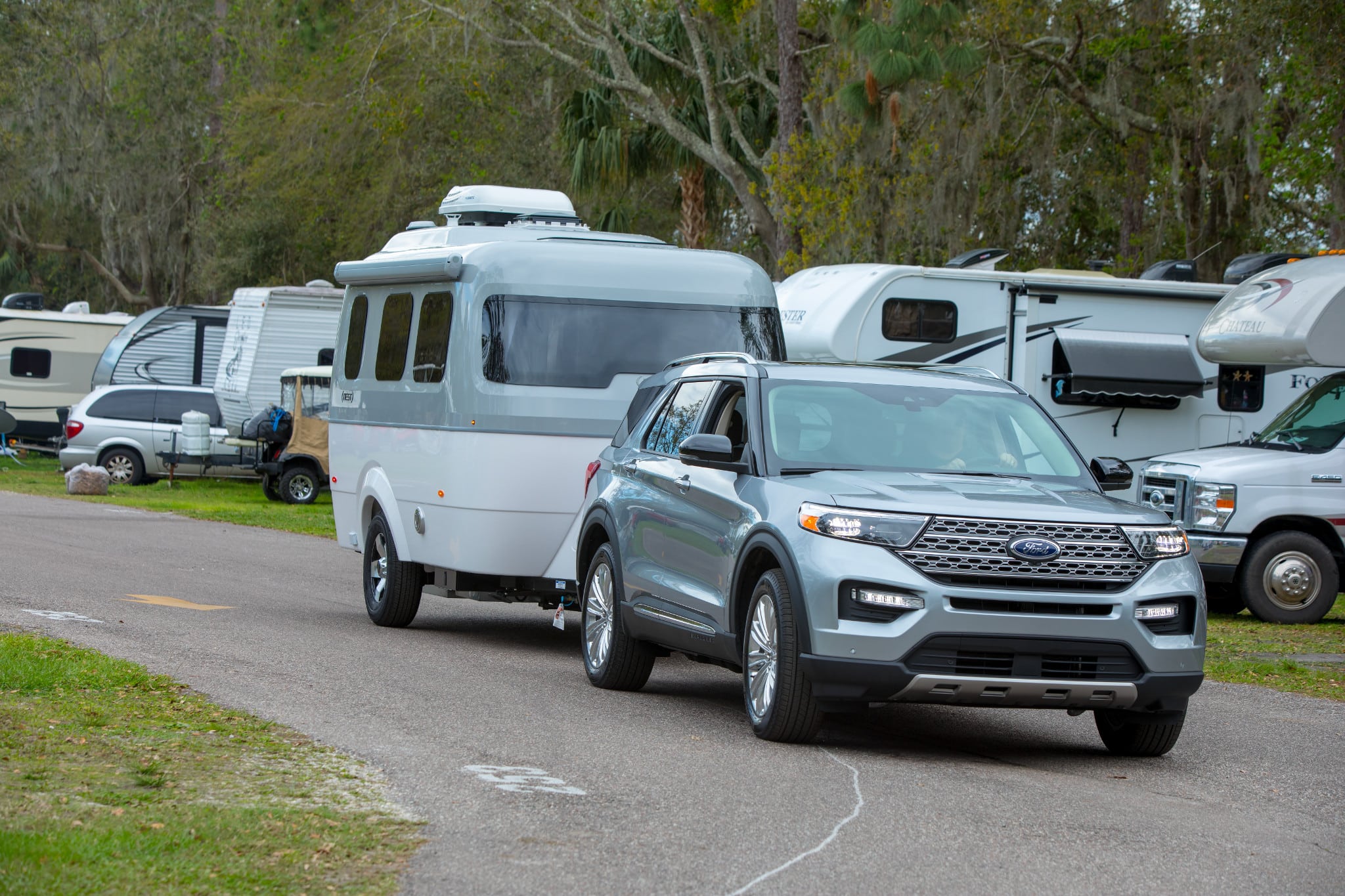
    Travel trailer getting towed
    Image by Shawn Spence

    Hitching up and unhitching is not a difficult process, really. We even explain how to do so.

    Otherwise, here are some important things to remember:

    • Always make sure your trailer is chocked before disconnecting.
    • Keep your chains connected to your vehicle while disconnecting. This way if your trailer rolls, it can only go so far.
    • Use a chain holder to keep chains from dragging.
    • Always cross your chains. This will hold the tongue off the ground in the event of a disconnect.
    • If you have an absorption fridge (the majority of trailers do), you need to be level all around to keep from killing your fridge or worse, from it catching fire.
    • Be sure your trailer doesn’t make the back of your tow vehicle sag. If it does, you need a weight distribution system.
    • Frequently check the tightness of the bolts that hold your jack onto your hitch.
    • Don’t pile up a bunch of levelers or boards to prop up your jack. It could easily fall off and cause damage.

    A Key Takeaway

    Every travel trailer has a jack. Whether you get a manual one or an electric one is really just personal preference. Just remember that a manual jack will be harder to manage, and an electric jack has the capability of breaking more often. Yes, manual jacks can also break, of course, but it’s less common. 

    Make sure you get a jack that is heavy-duty enough to handle your tongue weight and possibly to also lift part of the back end of your tow vehicle. 

    You can’t overdo it but you sure can under-do it! Don’t under-do the jack weight rating, or you may break your jack.

    Well, that’s about it in a nutshell! If you are looking to replace your trailer’s tongue jack, go for it. We recommend electric for ease of use, but not everyone wants or needs one. Go with your gut and make sure you get one that can do the job!


    Have you recently purchased a new jack for your rig? What did you get? Leave a comment below!


    Source link

  • Is Adding Solar to Your RV Worth It?

    Is Adding Solar to Your RV Worth It?


    One of your biggest concerns when RVing is power. It doesn’t matter if you’re a full-timer or a weekend warrior, you need electrical power to make the systems and electrical components and applications work. Without that power, you’ll be much less comfortable and less happy while camping.

    While there are electrical hookups at many campgrounds, solar power is another way of getting power to your RV. While it takes a little doing and a little planning, it can certainly do the trick. Is solar worth it though? Let’s take a closer look.

    Why Solar Power for Your RV Is Smart

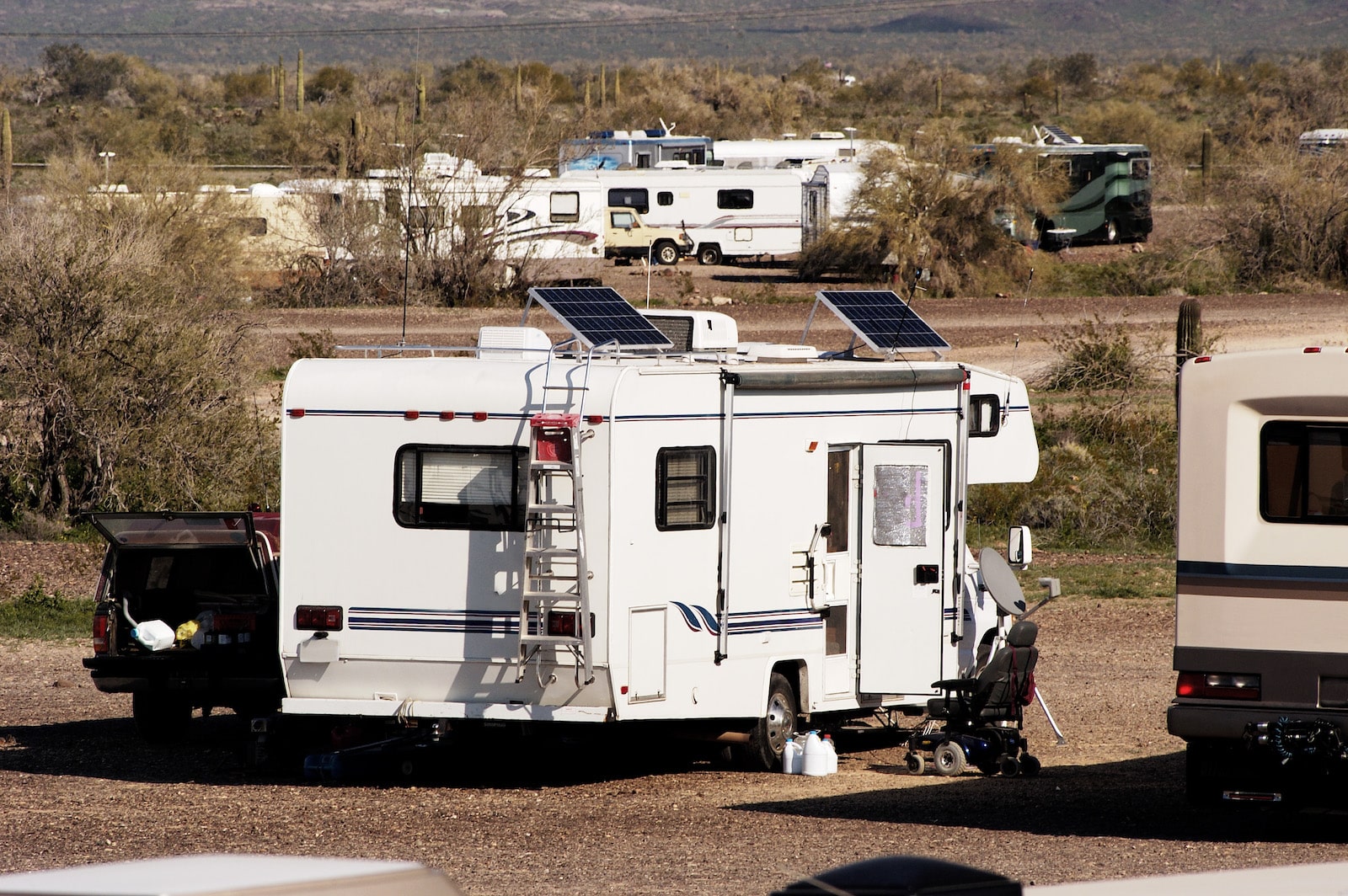
    Camping without campground utilities in the Arizona desert.
    Image by photosbyjim from Getty

    Solar panels installed on an RV is one of the most common ways that people who RV often get power to their rig. It’s a popular option for many reasons. Here are some of the biggest ones.

    Costs are Coming Down

    Solar panels used ot be a massive investment. While you’ll still have to make significant investment, the cost of the equipment in terms of the panels themselves, the inverter, controller, and batteries are coming down.

    According to Energy Sage, the cost of solar power equipment has come down significantly in the last few years. It’s also expected to continue to do so. This means you can make the investment for less money overall.

    You Have Power Anywhere

    If you’re an avid boondocker, then solar power is basically a must-have. When boondocking you’re not plugged into any power grid and this means you’ll need to create your own power.

    Some people do this by using portable gas generators, which work great, but a solar power setup can be a great alternative or supplement to your generators.

    Solar Equipment Works in a Variety of Environments

    Many people think if it’s cloudy your solar panels won’t work. That’s not the case. Modern solar panels can harness the sun’s energy even when conditions are less than ideal. Don’t think adding solar panels to your rig means you’re stuck to only camping in high sunlight areas.

    You can easily use your solar panels even when its cloudy. When doing this, plan ahead and have a backup. Obviously bright direct sunlight will give you the most power, but it’s not absolutely necessary. Keeping a portable generator on hand is still a smart move.

    It’s Not Too Difficult to Install

    Many RVs come prepped for the addition of solar panels. Whiel most of these models are newer, even older RVs can be outfitted with solar panels pretty easily.

    If you don’t have an RV that comes solar prepped, then you can get help from a variety of retailers, who will help you outfit your rig with the necessary equipment. Reach out to your local Camping World location to see if you can have the installation done by our service professionals.

    Why Solar Power Can Not Make Sense

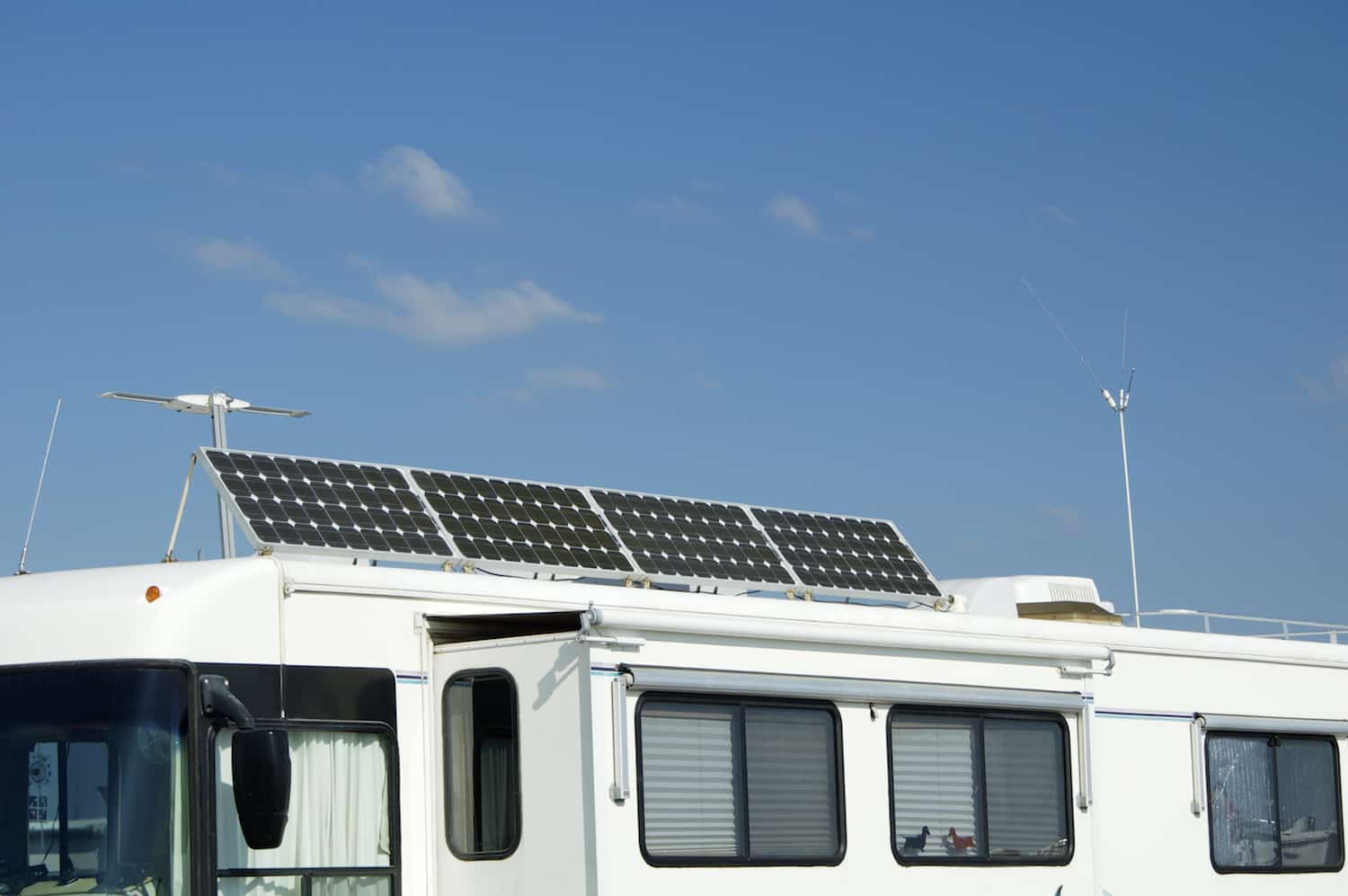
    Camping with solar panels for converting energy from the sun to electricity.
    Image by photosbyjim from Getty

    At this point you might be thinking that solar planes sound great and you want to go out and buy some. Well, that’s fine, but you should know why and when they can not make sense.

    It Can Be a Major Investment and Take Time to Pay Off

    It’s true that the price of solar panels are coming down, but they’re still a pretty big investment for most people. Depending on the size of your rig, you may need a lot of panels to cover your electricity needs. This can make the costs add up.

    Also, if you don’t use your RV extremely often, then it can take a very long time before you really get enough use out of your RVs for the initial investment to make sense. Full-timers should have no problem getting the most out of their solar investment, but many weekend warriors will find the expense tough to justify. Think long and hard about whether or not it’s worth it to make the investment.

    Most RV Parks Have Electric Hookups

    Related to the idea that solar panels can be a big investment is the fact that many RV parks and campgrounds offer electric hookups. So, if you’re camping at locations that already have the hookup, you won’t need your solar panels. If you’re a weekend warrior, this can mean it’ll take even longer to justify the investment.

    However, if you camp solely in locations where there are no electric hookups adding solar can make sense. Think about how and where you camp before you add solar to your rig. It’s really your habits that will determine if adding solar to your RV is worth it.


    Do you have solar panels for your RV? How do you like them? Leave a comment below. 


    Source link

  • RVing the Rails – Excursion Trains in Michigan

    RVing the Rails – Excursion Trains in Michigan


    Many times camping trips involve exploring new territory and discovering enticing attractions along the way. Passenger tour trains have that magnetic appeal for many RVers, providing a novel way to see hidden countryside not normally viewed from the road. Railroad passengers learn about local history, culture and the many colorful characters from the communities visited.  And Camping World wants to make sure you don’t miss the departing whistle, so we have created a series entitled RVing the Rails. You will find the most popular excursion trains to ride in each state, complete with any specialty trains they might offer.

    Excursion Trains in Michigan - Camping World

    Today we will explore the most popular trains in Michigan:

    Adrian & Blissfield Railroad

    Excursion Trains in Michigan - Camping World
    Photo Credit: ABRailroad.com

    This railroad runs on some of the oldest tracks in the nation. Built in 1834 for the Erie & Kalamazoo Railroad, today’s dinner train saunters along 14 miles between the towns of Adrian and Blissfield, so passengers can enjoy a leisurely meal with entertainment before returning to the station. The railway still hauls freight during the week, but giving passengers a unique weekend dining experience is their ultimate goal.

    Railway and Locomotive Types

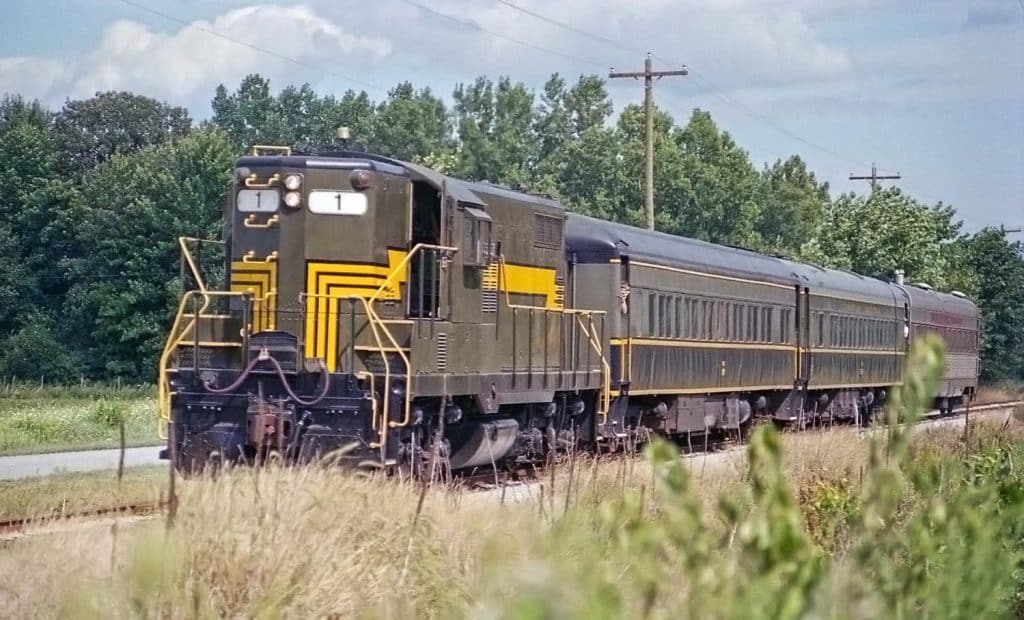
    The Adrian & Blissfield Railroad operates with diesel engines on a standard gauge rail.  All passenger cars are enclosed, climate-controlled coaches restored to their original grandeur.

    Seating Options

    Excursion Trains in Michigan - Camping World
    Photo Credit: ABRailroad.com

    The railroad offers traditional rail car seating, with four to a table. There are no separate classes and all seats are assigned.  Passengers travel in restored enclosed coaches, and most trains include meals and entertainment. See the Specialty Trains section for specific descriptions.

    Riding Options

    The A&BRR has a variety of train schedules, but all journeys are round trip. Train travel time can range from one-and-a-half-hours to three-and-a-half-hours, dependent upon the excursion selected. Dinner trains have evening hours, but other adventures start around midday.

    Specialty Trains

    • Murder Mystery Dinner Train – Help solve the mystery of murder on the train, as you travel the Michigan countryside. A five-course meal is included with your three-hour journey.
    • Grandparents’ Day Pizza Train – Grandchildren will enjoy a two-hour train ride with Grammy and Gramps, complete with entertainment including a magician and coloring activities. Both age groups are welcome to devour pizza along the way!
    • Family Excursion Train – If you are looking for a shorter family outing without a large meal, get a ticket on the Excursion Train. The trip lasts for an hour-and-a-half, just long enough to entertain everyone in your party.
    • Quiet Ride in the Country Train – Relax on a two-and-a-half-hour tour with a scrumptious five-course meal. It’s a great way to get away from the hustle and bustle of everyday life!

    Length of Season

    The Adrian & Blissfield Railroad runs year-round, with trains scheduled every weekend. Specialty excursions are sometimes scheduled during a weekday, so check the schedule to plan your visit.

    Huckleberry Railroad

    Excursion Trains in Michigan - Camping World
    Photo Credit: Drew Jacksich (CC BY-SA 2.0)

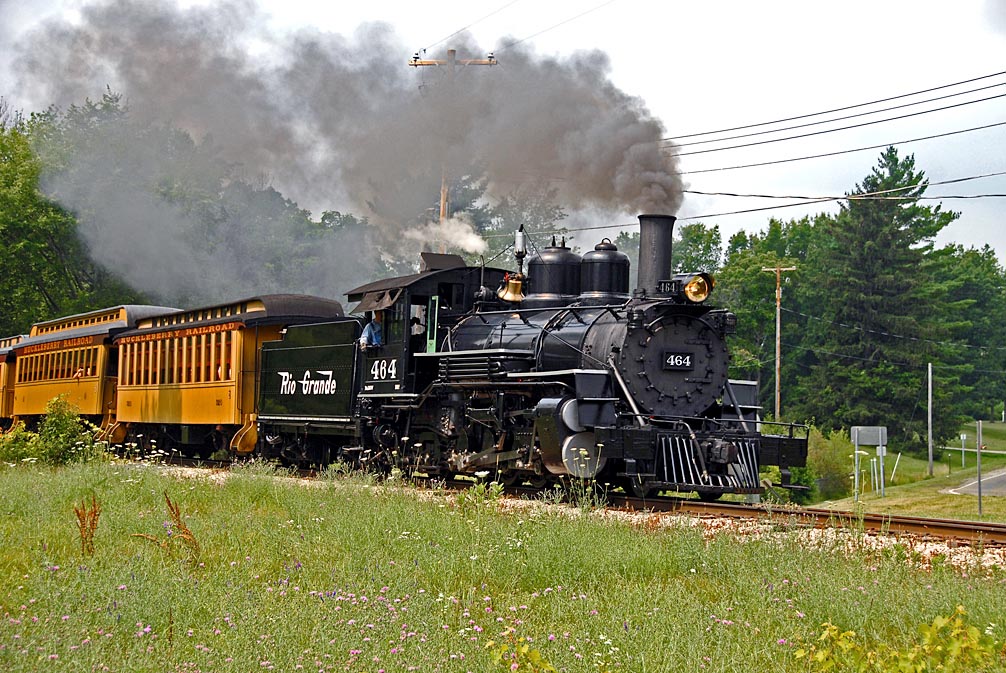
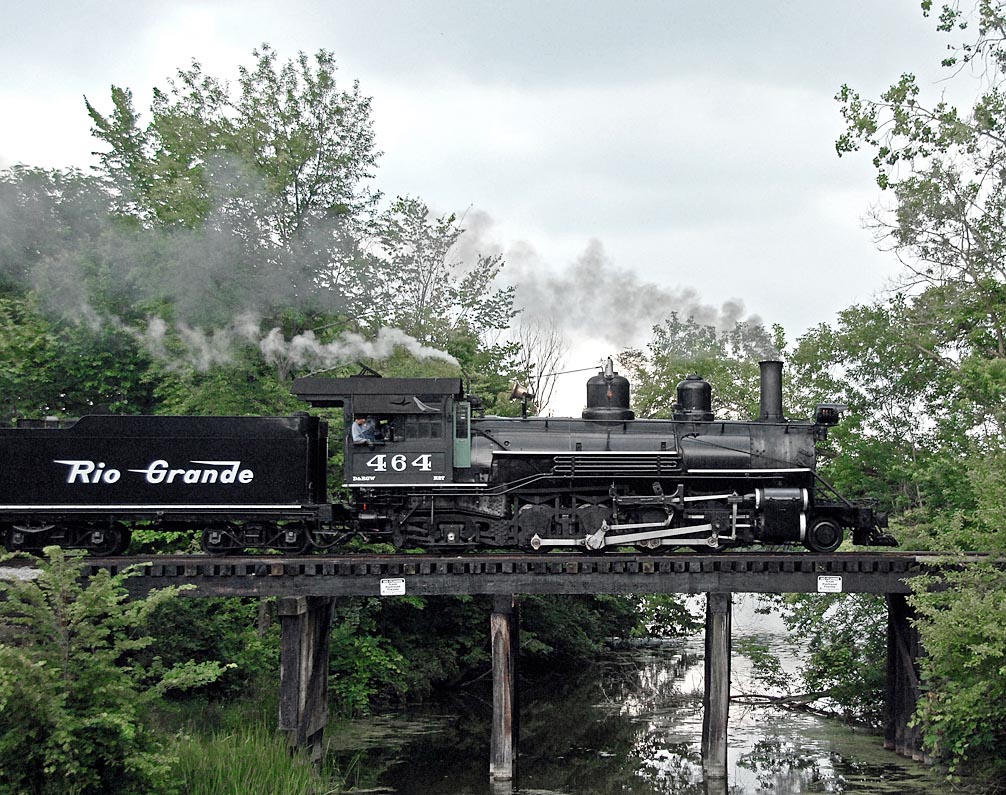
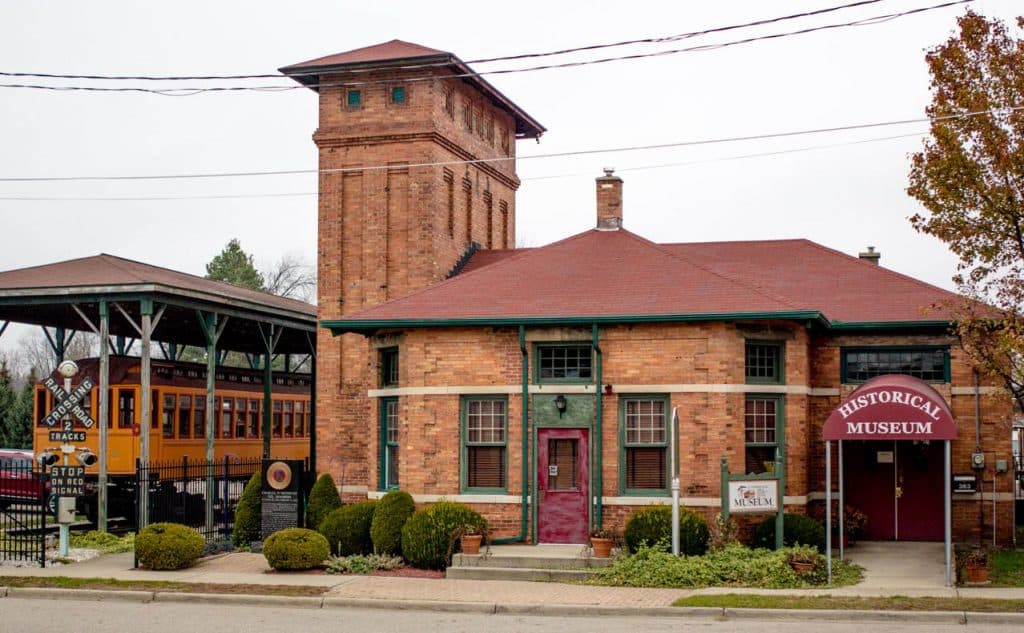
    Beginning its life on the rails, the Huckleberry Railroad was first run as a part of the Flint Pere Marquette Railroad Company in 1857. Today the line runs a 15-mile stretch in about 40 minutes, living up to its moniker by being slow enough to jump off the train and pick huckleberries before jumping back on! You won’t have to pick berries to enjoy a trip along Mott Lake these days. Just grab a ticket and hop aboard!

    Huckleberry Railroad is part of Crossroads Village, a historic rural community filled with restored homes, farm buildings and businesses resurrected from times gone by. Passengers on the train will want to inspect vintage amusement rides like the 1912 carousel or Venetian swings, and take a cruise on the Genessee Belle, a replica of a paddlewheel riverboat.

    Railway and Locomotive Types

    Excursion Trains in Michigan - Camping World
    Photo Credit:
    GeneseeCountyParks.org

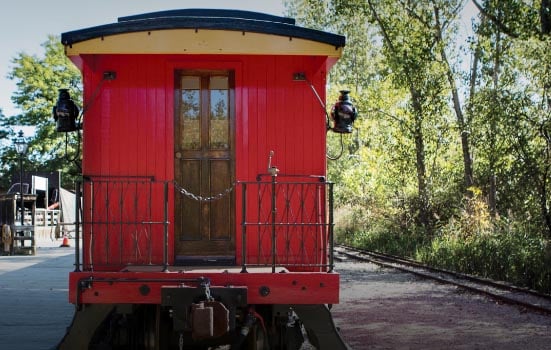
    This narrow-gauge train is pulled by a coal-fired steam engine that tows restored wooden coaches and an authentic redwood caboose.

    Seating Options

    Open seating is available to all, with no assigned seating. Passengers travel in restored covered cars and enclosed coaches.

    Because there is only one ride on the Huckleberry Railroad, there are no spurs or one-way passes.  Passengers will venture through forestland and along the shore of Mott Lake in east-central Michigan.

    Specialty Trains

    Excursion Trains in Michigan - Camping World
    Photo Credit: Drew Jacksich (CC BY-SA 2.0)
    • Railfan Weekend – The first weekend in August brings railroad enthusiasts to town, as the Huckleberry Railroad sponsors railroad shop tours, model train displays, a hobo camp, caboose tours and demonstrations along with a summer train ride.
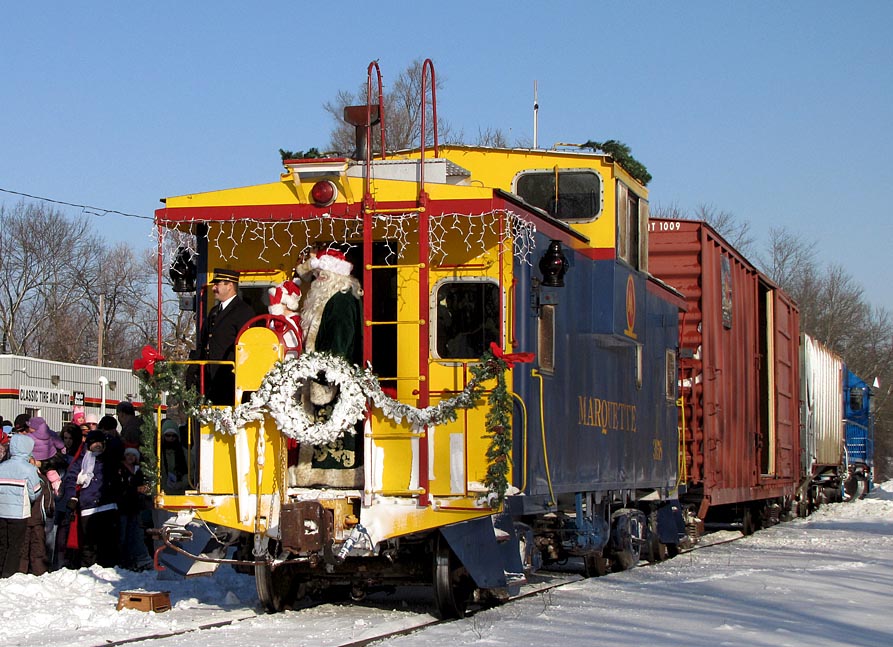
    • Christmas Holiday Magic – Enjoy holiday lights and cheer as Santa visits Crossroads Village and the Huckleberry Railroad.

    Length of Season

    The Huckleberry Railroad is open for the summer season Wednesdays through Sundays from Memorial Day weekend through Labor Day weekend, with specialty trains running on specific dates in October, November, and December. Check out their schedule to find your perfect train ride.

    Coopersville & Marne Railway

    Excursion Trains in Michigan - Camping World
    Photo Credit: Rossograph (CC BY-SA 3.0)

    The tracks where the Coopersville & Marne Railway operate were actually laid in 1848. A colorful history of freight and passenger trains ran between Oakland and Lake Michigan for a number of years. When train traffic slowed, a group pooled their funds to purchase the section of track you see today, opening the C&MRR in 1990.

    The months of January and February are reserved for strictly freight trains, but the other ten months give the railroad an opportunity to treat passengers to the beautiful farmlands of western Michigan.

    Railway and Locomotive Types

    Diesel engines push and pull the train along standard gauge rails. Upon reaching Marne, the engine uncouples and moves to the front of the train before returning back to the depot. The passenger cars are restored enclosed coaches dating from 1919 to 1927.

    Seating Options

    All seating is open, with no assigned seats. Passengers can board any of the four enclosed coach cars for a comfortable ride through the Michigan countryside.

    Riding Options

    Excursion Trains in Michigan - Camping World
    Photo Credit: Russell Sekeet (CC BY-SA 2.0)

    A round trip on the Coopersville & Marne is approximately 90 minutes. There are no side spurs or one-way tickets sold.  However, there are several specialty trains with a variety of entertainment for each.

    Specialty Trains

    • Bunny Train – The Easter Bunny and his pals join kids of all ages on a 90-minute excursion, with performances in the cars. The trip draws to an end when each child picks a toy from Easter Bunny’s baskets.
    • Great Train Robbery – Train deputies take on Jesse James in a western shoot out. Hold on to your valuables, as the Earp Brothers and Doc Holliday try to protect passengers from the bandits!
    • Famous Pumpkin Train – Join the Great Pumpkin, Scarecrow, and Little Crow as they ride the rails, entertaining passengers until you reach the pumpkin patch, where children can pick a jack-o-lantern of their own.
    • Santa Train – Santa and his elves enjoy a decorated train ride with you on a train named in his honor. Princesses read Christmas stories in the passenger cars, while everyone awaits their turn to tell Mr. Claus about their Christmas wishes.  Each child will leave with a special gift.

    Length of Season

    Excursion Trains in Michigan - Camping World

    The Coopersville & Marne Railway runs on Wednesdays and Saturdays from June through September with regular EnterTRAINment trips. Specialty trains run on specific dates from April 6 through December 22. Check their schedule to find a train trip that is perfect for you!


    Join the thousands of RVers that have a love affair with trains and ride the rails on your next camping trip. Check out the other excursion trains available on a state-by-state basis in our series, RVing the Rails. New articles will go up every Friday.


    Source link