Blog

  • 5 Funky Summer Roadtrip Stops You Need to Add to Your Route

    5 Funky Summer Roadtrip Stops You Need to Add to Your Route


    Half the fun of a summer road trip is taking time to discover quirky roadside attractions along the way. This summer we’re helping you add some fun to your RV road trip with this list of must-see stops. Plot your route, and get your camera ready to grab some snaps in front of these five funky summer road trip stops across the U.S.

    Prada Marfa
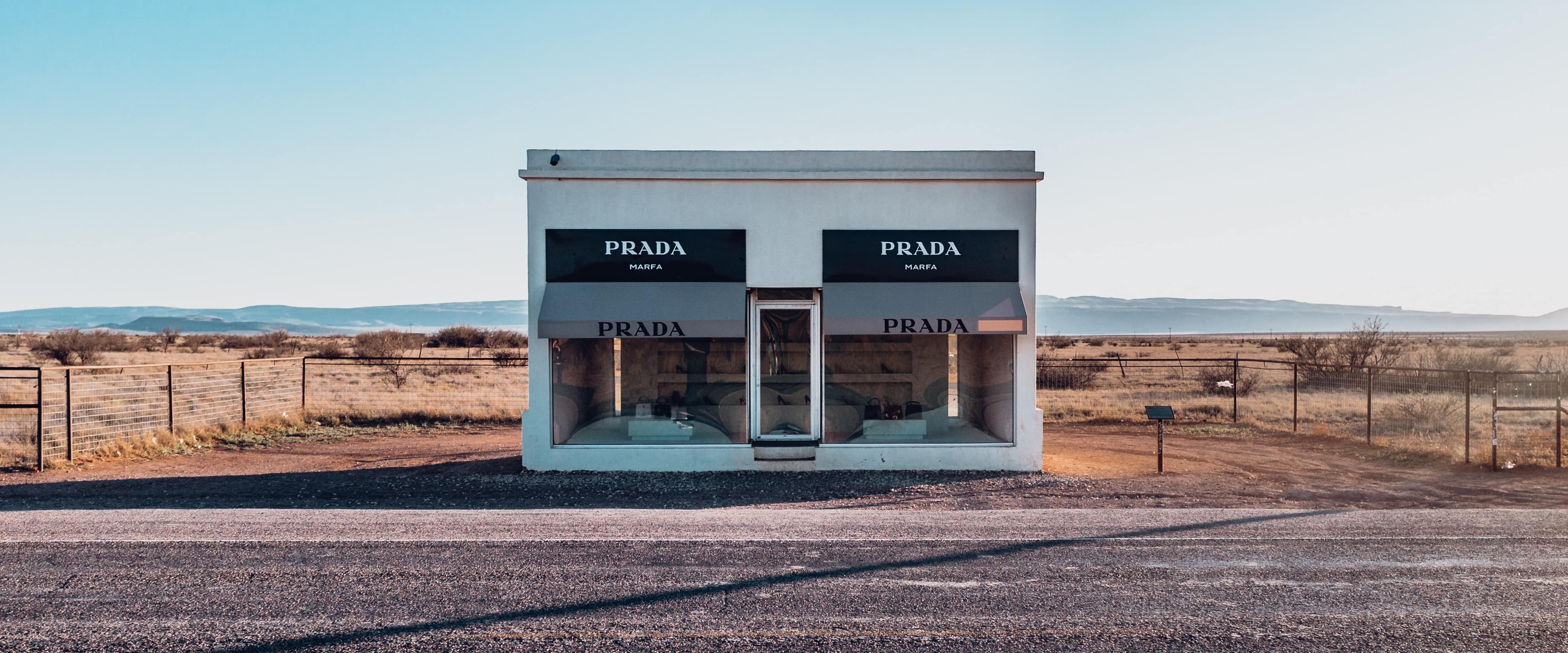
    The iconic PRADA Marfa art installation sits along US-90 in west Texas.
    Image by Robin Benzrihem from Unsplash

    This art installation has entrenched itself as an iconic roadside attraction since its opening in October 2005. The building was built to look like a Prada storefront, complete with authentic shoes and handbags donated by Prada. The items are not for sale, however, and the storefront’s door does not open. The handbags’ bottoms have been removed while the shoes are all right-foot shoes. PRADA MARFA is located along US-90, 35 miles northwest of Marfa in western Texas.

    Along your travels, you’ll likely want to stop in if you’re heading east or west along I-10. When you reach Van Horn, TX head south for 35 miles on US-90. PRADA MARFA will be one mile north of Valentine, TX. If you like PRADA MARFA, be sure to check Ballroom Marfa’s biggest public commission since PRADA MARFA: a sculpture located in the grasslands of Texas called Stone Circle.

    Salvation Mountain
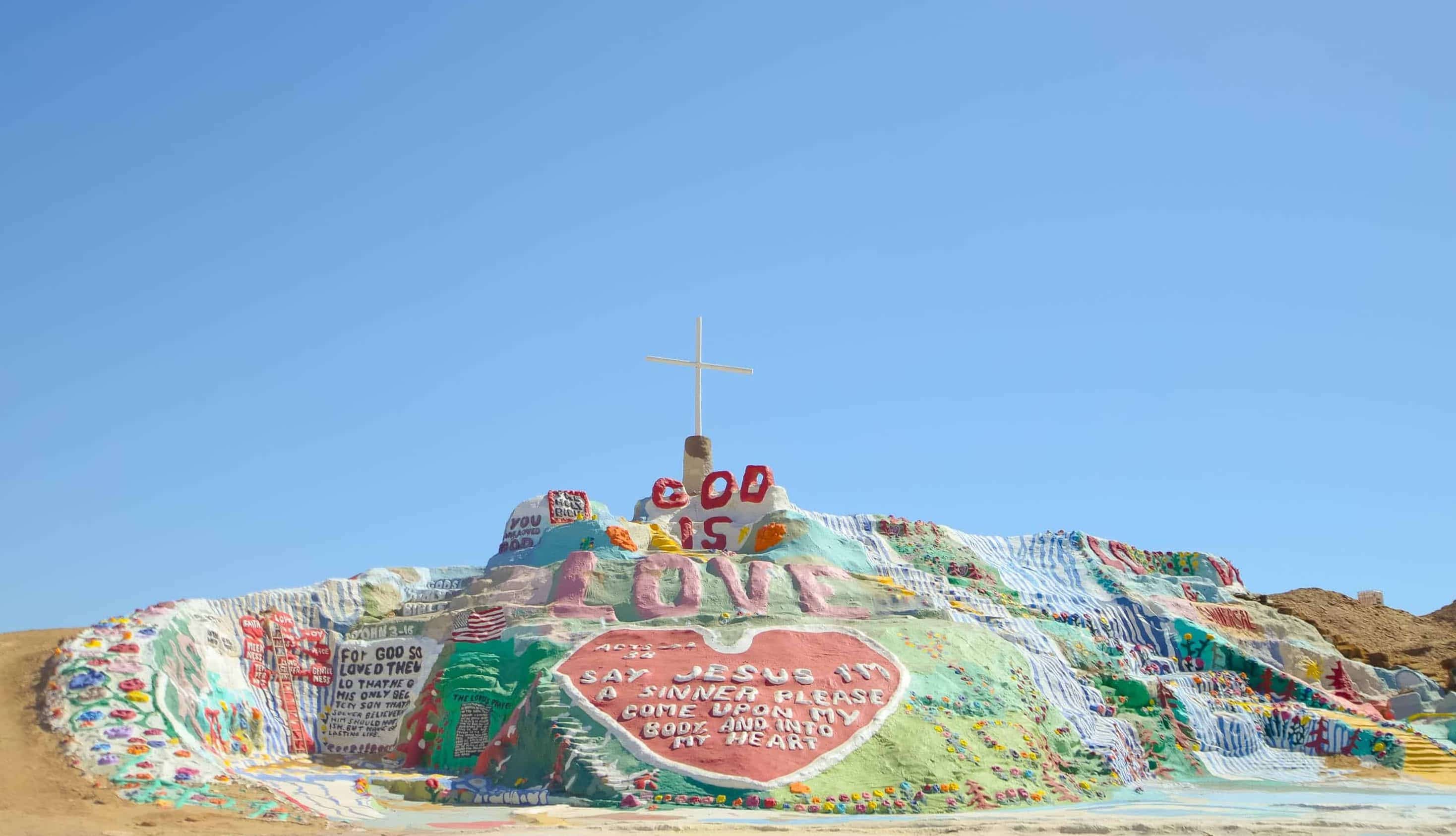
    Salvation Mountain on a bright, sunny day in the Sonoran Desert
    Image by Chelsea Bock from Unsplash

    Colorful Salvation Mountain is the beautiful vision of its creator Leonard Knight. Leonard was steadfast in his mission to share a message of love, working on his creation for nearly 30 years while living out of his camper in the desert.

    Originally, from Vermont, Leonard became very devoted to God at age 35. Unfortunately, his faith and belief in the simplicity of the message that “God is Love” was misunderstood by churches and the religious community around him. Believing that God loves every single human on Earth, he decided he would spread his message via hot air balloon.

    After many years and failed attempts, he found himself out west in Slab City and a new idea to build a mountain struck him. His first attempt failed, collapsing on itself. Always maintaining a grateful and positive outlook, he set out to try again.

    Half a million gallons of donated paint later, his mountain stood five stories high and 150 feet wide, decorated with birds, trees, and flowers. His work and message resonated with those around him, and eventually with visitors from all over the world. He passed away in 2014, but his monument still stands welcoming all.

    You can see Salvation Mountain for yourself if your travels are taking you along I-10 or I-8 in California. It’s 90 minutes from Palm Springs, south of Joshua Tree National Park, and east of the Salton Sea. It’s a great stop if you’re headed to or from Anza-Borrego, Joshua Tree, or San Diego. Take Beal road out of Niland and into Slab City. Don’t forget to bring some paint cans to donate if you can!

    Ben and Jerry’s Flavor Graveyard
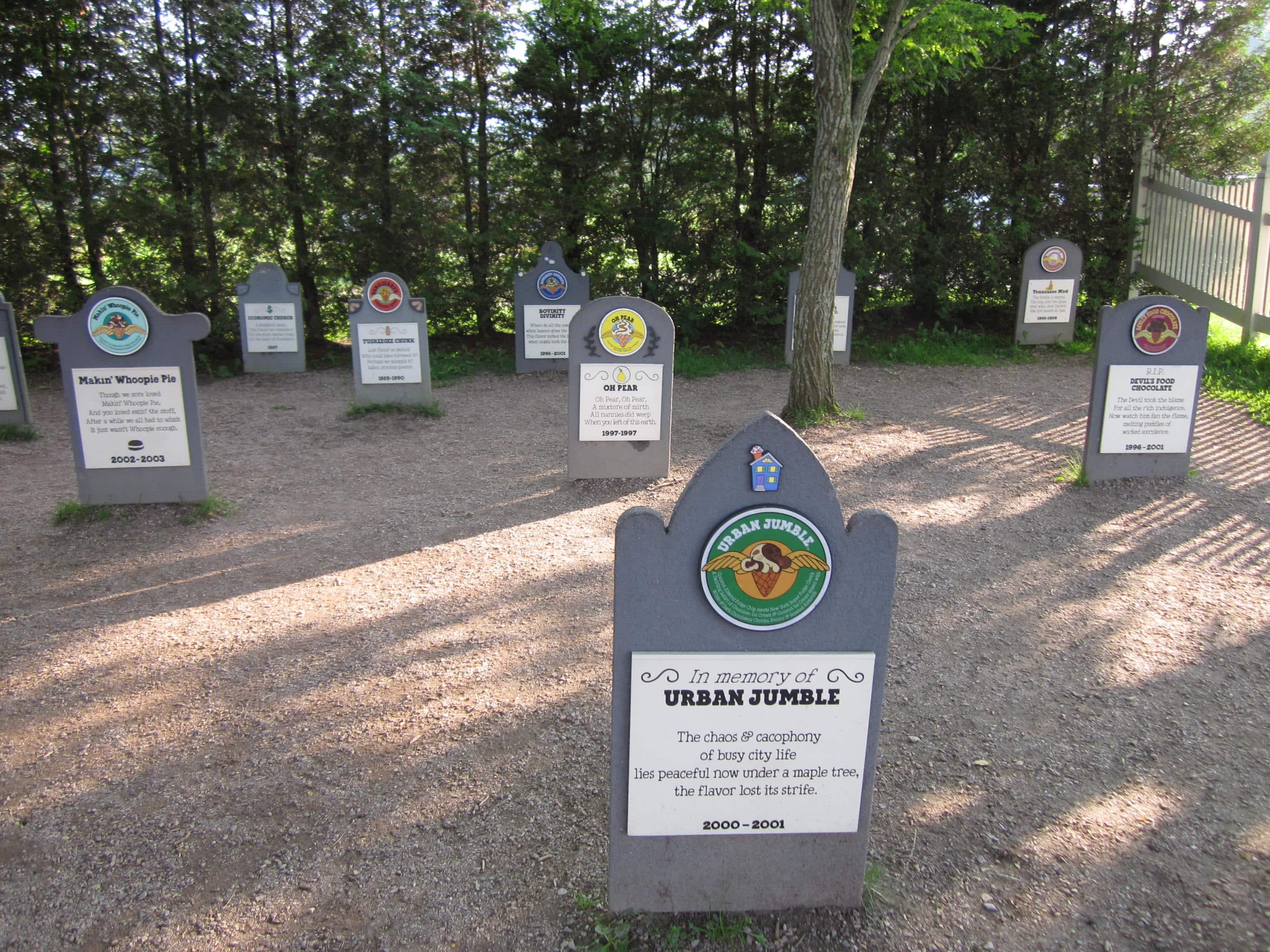
    Ben and Jerry's Flavor Graveyard honors retired ice-cream flavors
    Image by Doug Kerr on Flickr

    Should your travels take you to Leonard’s home state of Vermont, stop in at the Ben and Jerry’s graveyard. The Ben and Jerry’s Flavor Graveyard is where all of their retired or as they say, “dearly de-pinted” flavors go.

    The graveyard is located at the Ben and Jerry’s factory in Waterbury, Vermont. You can combine your walk through the flavor graveyard with a 30-minute guided tour through the factory. The guided tours do fill up, but the flavor graveyard is self-guided and open to all at any time during the day. To get to the flavor graveyard take a walk up the hill, behind the ice-cream plant, and to the left of the playground.

    Market Theater Gum Wall

    A rainbow of gum clings to the wall of Seattle's Market Theater
    Image by Taylor Vick from Unsplash

    When in the Northwest, make time for a stop at Seattle’s Market Theater Gum Wall. It’s an easy stop to make, when in Seattle since it’s right outside the entrance to Pike Place Market. The wall became a gum wall back in the early 90s. At the time, theatergoers began sticking their gum to the brick wall while waiting outside. At first, there were attempts to clean it up, but that never stuck (no pun intended!). Theatergoers and eventually visitors continued to stick their gum covering a 50-foot stretch of wall, transforming the wall into a colorful, well-known attraction.

    More than 2,000 pounds of gum was removed in 2015 for restoration purposes, but the gum wall is now back to its sticky glory. Now you can even find gum illustrations and gum sculptures. While in Seattle you can make some other quirky stops: the Fremont Troll, the largest Hat ‘N’ Boots, and the Giant Shoe Museum. If you really, really wanted to see a gum wall, but aren’t going through Seattle, you’re in luck. There is a gum wall in San Luis Obispo, CA and a small one in Greenville, OH.

    Meow Wolf House of Eternal Return
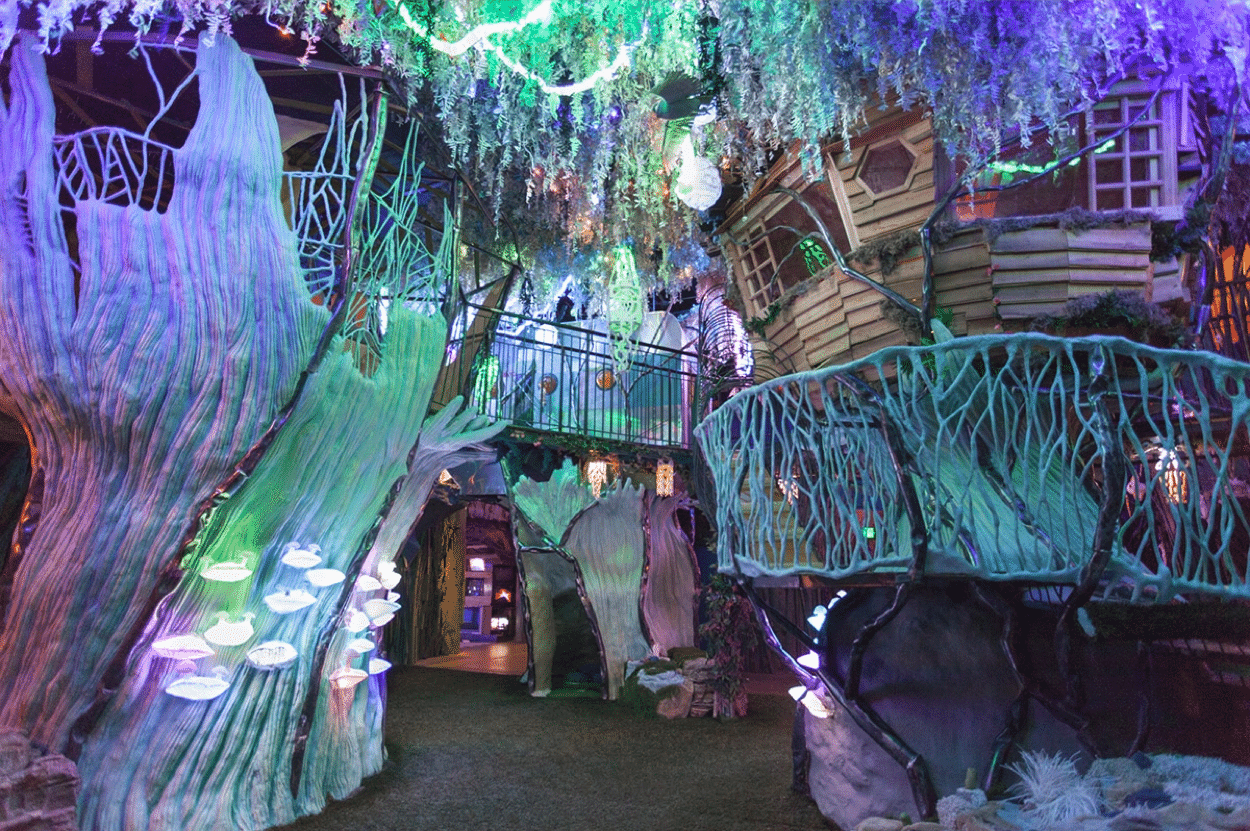
    The House of Eternal Return at Santa Fe's Meow Wolf
    Photo Courtesy of Meow Wolf

    Meow Wolf’s House of Eternal Return in Santa Fe is a must-see that’ll have your imagination running wild. How would you like to walk through a mysterious house where the properties of time and space have dissolved? Go ahead, step through a washing machine and into another dimension.

    This award-winning permanent art installation is completely immersive and interactive. This is an experience unlike any other you’ve had and it’s great fun for both adults and kids. Playfully walk, crawl, and climb through the mysterious environment all while solving a mystery.

    Those of you who are Game of Thrones fans might be interested to know the House of Eternal Return installation was launched with the support of George R.R. Martin. There is so much to play with and discover, you’ll probably want to go back. Word has spread so soon Meow Wolf will be opening locations in Las Vegas (2020) and Denver (2021), too!


    As you continue your RV road trips this summer be sure to let us know what some of your favorite road trip stops have been! Leave a comment below!

    Source link

  • RVing the Rails – Excursion Trains in Missouri

    RVing the Rails – Excursion Trains in Missouri


    Many times camping trips involve exploring new territory and discovering enticing attractions along the way. Passenger tour trains have that magnetic appeal for many RVers, providing a novel way to see hidden countryside not normally viewed from the road. Railroad passengers learn about local history, culture and the many colorful characters from the communities visited. Camping World wants to make sure you don’t miss the departing whistle, so we have created a series entitled RVing the Rails. You will find the most popular excursion trains to ride in each state, complete with any specialty trains they might offer.

    Excursion Trains in Missouri - Camping World

    Today we will explore the most popular trains in Missouri:

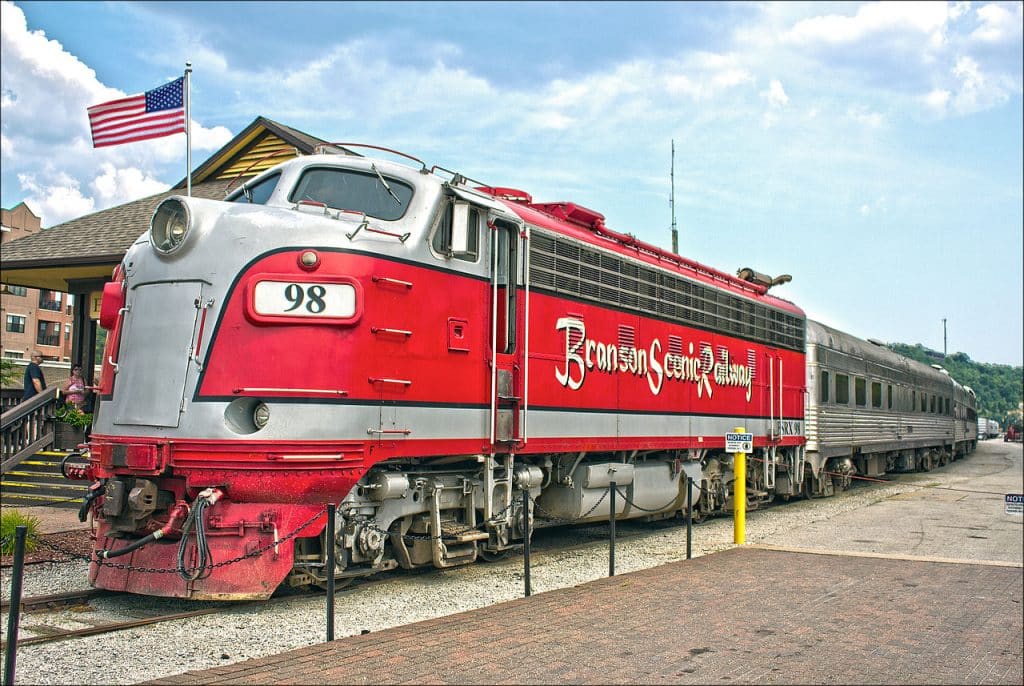
    Branson Scenic Railway

    Excursion Trains in Missouri - Camping World
    Photo Credit: Doug Wertman (CC BY-SA 2.0)

    Started as part of the Missouri Pacific Railroad, running from Kansas City to Little Rock, Arkansas, this railway was responsible for introducing tourism to the Ozarks in the early 1900s. Back then, the local spur was called the White River Railway, and with the advent of visitors to the area, Branson became known as a local getaway for Missourians.

    Today, the city is nationally recognized for its family-friendly entertainment venues, and the Branson Scenic Railway provides tourists with a beautiful trip through Ozark mountain landscapes on historic rails.

    Railway and Locomotive Types

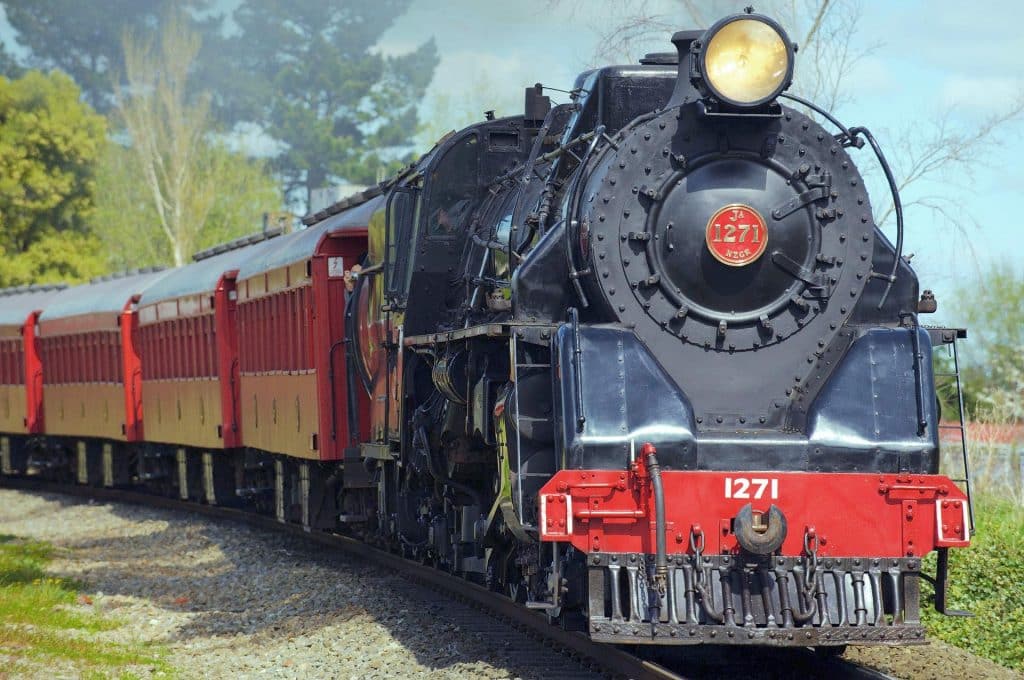
    The railroad is run on standard gauge tracks by a diesel engine pulling restored first class passenger coaches, lounge cars and a caboose.

    Seating Options

    All seating on the Branson Scenic Railway is open, but with several enclosed passenger cars and two dome cars, boarding is done in the order reservations were received. So reserve your tickets early for choice seating selections.

    Passengers are encouraged to move throughout the train and inspect each of the restored vintage cars during the trip. You won’t miss a thing, though, as music and narration are piped through each car.

    Riding Options

    Leaving the Branson Depot, passengers have the option to take the train north or south:

    • Northern travelers will venture to Galena, Missouri, and the James River Valley.
    • Southern passengers travel into northern Arkansas to the Barren Trestle.

    Both trips are narrated and point out the historic tunnels, trestles and extinct railroad towns, with information on how train travel helped to shape the Ozark Mountains in this area. Each tour is approximately 20 miles and is completed in two hours. Much of the journey is through forested mountainous topography, over trestles and through railroad tunnels.

    Specialty Trains

    • Dinner Train – Enjoy a first class meal in a restored coach car, as you wind your way through the Ozark Mountains. Dinner trains run on Saturday evenings from April through October.
    • Polar Express – Take a trip to the North Pole to pick up Santa for the return ride. During that time all guests will enjoy cocoa and cookies, the story of the Polar Express, and talking with Santa about that special Christmas wish!

    Length of Season

    The Branson Scenic Railway runs from March through December, with daily departures twice a day during the week, and four times daily on weekends. Check their schedule for specialty trains and season departures.

    St. Louis, Iron Mountain & Southern Railroad

    Excursion Trains in Missouri - Camping World
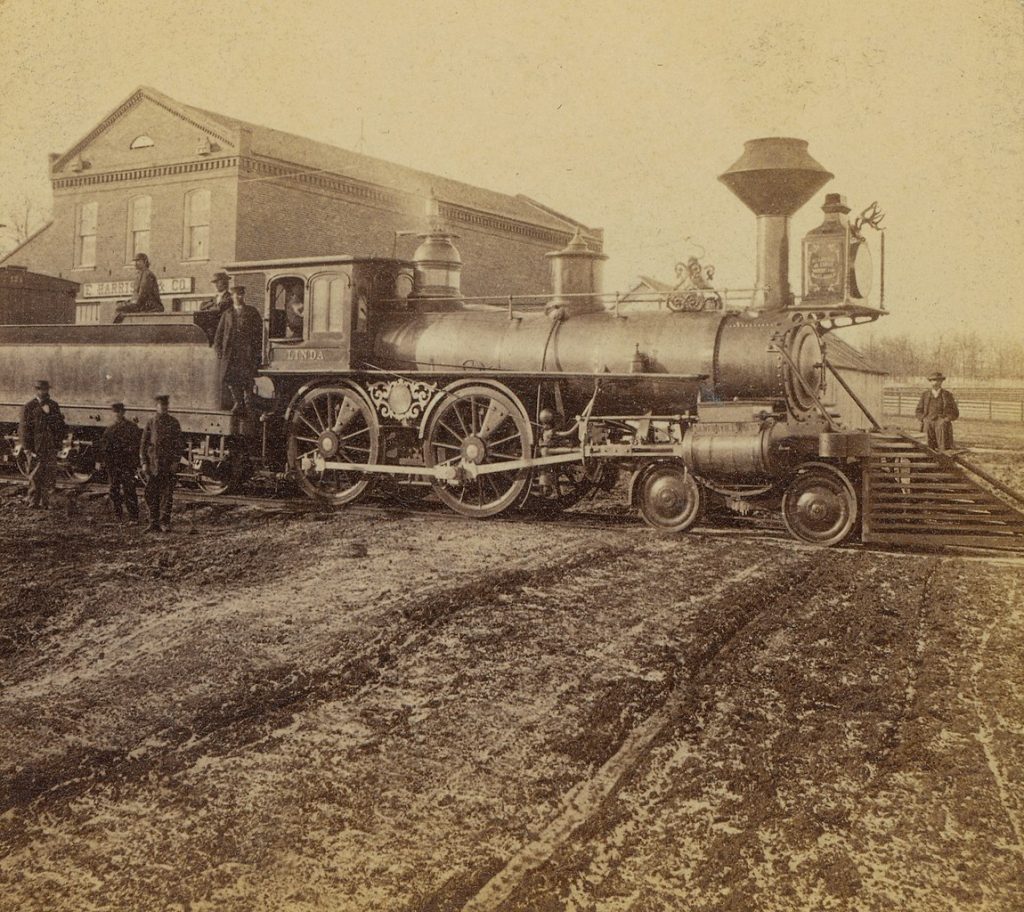
    Photo Credit: Missouri History Museum

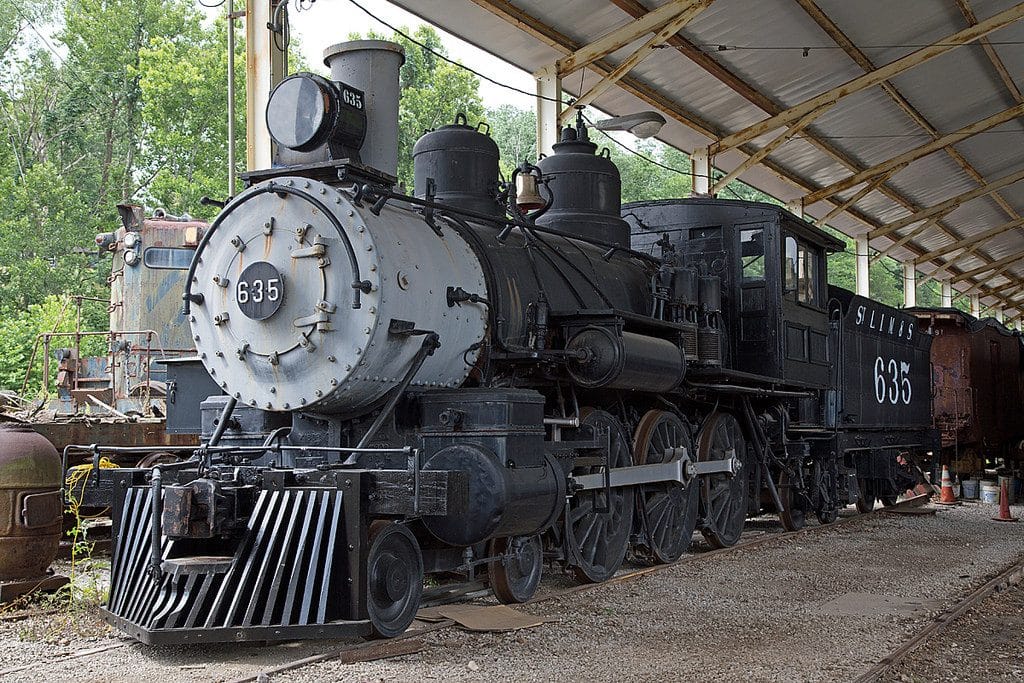
    With a name that is not remotely descriptive of its location, the St. Louis, Iron Mountain & Southern Railway explores the area around Jackson, located near Cape Girardeau in the southeastern corner of Missouri. The initial tracks ran from Texarkana, Arkansas to St. Louis, bringing iron ore from Iron Mountain to the Gateway of the West.

    Today, this small portion of track is a shortline railway, preserving the heritage of historic railroads in the Ozark Mountains.

    Railway and Locomotive Types

    The Iron Mountain train is pulled by a diesel engine on standard gauge tracks. Its rolling stock includes several passenger coaches and a red caboose, all restored and run by volunteers who want to keep railroading alive by highlighting historical equipment and travel.

    Seating Options

    Seating is not assigned on the St. Louis, Iron Mountain & Southern Railroad, with open seats available in enclosed passenger cars. An optional ticket for a cab ride in the engine is also available for an additional cost.

    Riding Options

    Excursion Trains in Missouri - Camping World

    The railway is five miles long, with most train rides about two hours in length. This allows for a stop at Cactus Gulch, where passengers can disembark and sit by the campfire to make s’mores, listen to music and play games. There are no side spurs or one-way tickets sold, but all trains are specialty trains, so check the schedule to see which train will be running on your day of departure.

    Specialty Trains

    Excursion Trains in Missouri - Camping World
    Photo Credit: Feral Boy (CC BY-SA 4.0)
    • Murder Mystery Dinner Theater – Each month a murder mystery gets solved on an evening dinner train. Don’t miss the intrigue or the departure!
    • James Gang Train Robbery – Jesse and the boys hale from Missouri, so it’s only fitting that they rob the local train before hitting banks out of state. And believe it or not, this very railroad was robbed by the James-Younger Gang back in 1874!
    • Dinosaur Train – Learn about these leftovers from the Jurassic Era, and dig for fossils at a train stop that every child will love!
    • Cowboy Chuck Wagon Dinner Train – Mosey right up to the chuck wagon dinner train, with a stop for great vittles and some bluegrass music.
    • Chocolate Express – Chocoholics will think they have taken the train to heaven when they realize the chocolate is unlimited on this sweet journey!
    • Santa Express – Watch as Santa attempts to land on the moving train. If he is successful, everyone can celebrate with songs, games and Christmas magic on this popular ride.

    Length of Season

    The Iron Mountain runs every Saturday from mid April through December. Because the Santa Express is their most popular train, departures are increased and run Friday through Sunday from Thanksgiving weekend through December 22. Check out their full schedule here.

    Belton, Grandview & Kansas City Railroad

    Excursion Trains in Missouri - Camping World
    Photo Credit: KCRRM.org

    Begun as the Burlington Northern that ran from Kansas City to Springfield, the current railway began to take shape when service was cut off at Clinton in the 1970s. The Belton, Grandview & Kansas City Railroad began excursion tours in 1991 as a project of the Smoky Hill Railway and Historical Society.

    The heritage railroad was a way to preserve rail travel and railroading history in the South Kansas City area.

    Railway and Locomotive Types

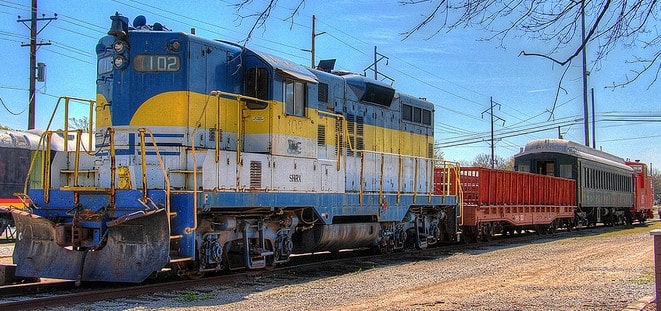
    A 1950s diesel locomotive pulls a passenger coach and an open excursion car from the 1920s along a standard gauge track. The rail yard also has several pieces of rolling stock to explore, including two steam locomotives and freight and club cars.

    Seating Options

    All seating is open, with no assigned seats in an enclosed passenger car that holds 60. The five mile excursion can also be enjoyed from an open air gondola car.

    Excursion Trains in Missouri - Camping World
    Photo Credit: KCRRM.org

    The Belton, Grandview & Kansas City Railroad does offer engine rides at an additional cost. These seats are limited to two customers per train. Tickets sell out frequently, so purchasing online in advance is usually a good idea.

    Riding Options

    The train runs a five-mile track through old town Belton and beyond. There are no side spurs or one-way tickets sold, but if there is need to add another train to the roster on a busy day, the railroad will gladly put new departures on the schedule to meet customer needs.

    Specialty Trains

    • Ice Cream Train – Beat the summer heat with an ice cream social during your tour of the Missouri countryside. The open car is outfitted with picnic tables for a tasty train ride.
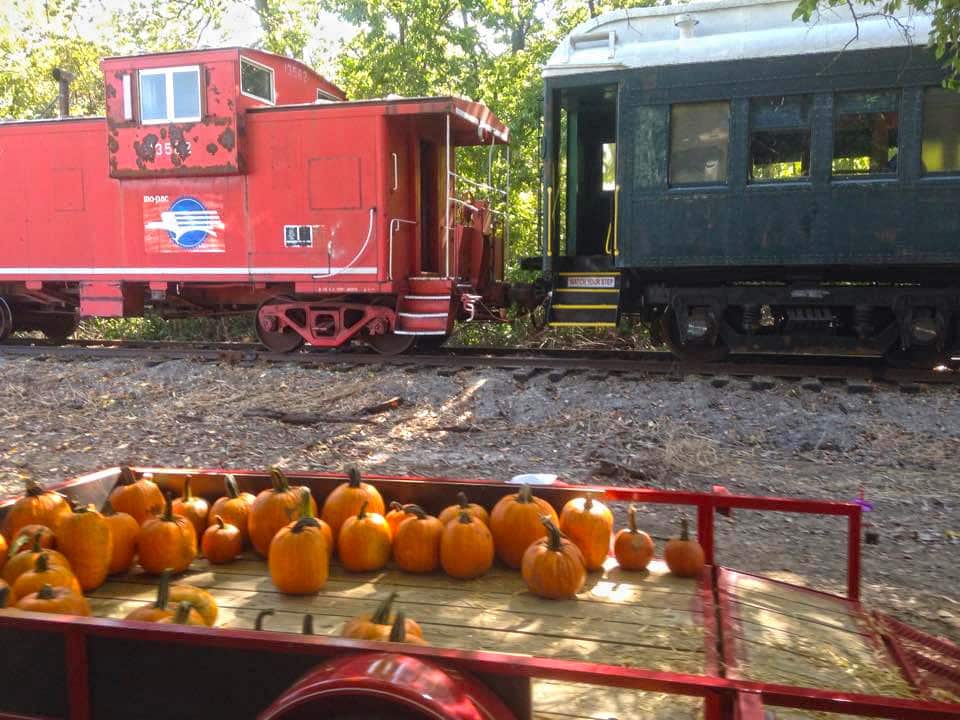
    • Halloween Train – Kids of all ages will enjoy a journey to the pumpkin patch, where games and goodies await, along with jack o’lanterns available for your own carving fun!
    • Santa Train – Join Santa on a trip along the tracks, as children discuss their Christmas wishes with him. Once back at the depot, passengers enjoy cocoa and cookies.

    Length of Season

    The railroad is open on weekends from May through October, with the Santa trains scheduled on two weekends in December. The ride takes approximately 45 minutes and passengers need to be ready to board 20 minutes before departure.


    Join the thousands of RVers that have a love affair with trains and ride the rails on your next camping trip. Check out the other excursion trains available on a state-by-state basis in our series, RVing the Rails.


    Source link

  • SftR 069: Preparing to Travel with a Baby with Lindsey Nubern

    SftR 069: Preparing to Travel with a Baby with Lindsey Nubern


    Preparing to Travel with a Baby with Lindsey Nubern We brought back Lindsey Nubern from Nuventure Travels! She’s been on the podcast twice before, talking about RVing in New Zealand and part-time travel with a home base. This time, she’s on the podcast to talk about their latest new venture… preparing to travel with a baby! She is currently 7 months pregnant with her first child, but that hasn’t stopped her and her husband Adam from adventuring in their Casita trailer. They even recently went on a month-long tour of Colorado! They plan to get out on the road as soon as possible with their son, starting with some small camping trips and working their way up to international travel.

    In this episode, Sam talks to Lindsey about preparing for the baby, future travel plans, and their new project for travelers called Nomad Collab.

    Some highlights from this episode:

    • 1:30 – Preparing for baby!
    • 5:00 – What they want to teach him on the road
    • 8:00 – Advice and resources from other travelers
    • 13:00 – NomadCollab
    • 23:00 – Traveling while pregnant

    Nomad Collab

    Nomad Collab is a membership site & community for couples living or seeking a location independent lifestyle. This has been a really cool project for Adam and Lindsey, who co-founded the community with Dan and Lindsay from Follow Your Detour and Dan and Tracy from The Money Smart Nomad. It’s a place for couples (and some solo travelers!) to network and grow a travel lifestyle. They have frequent Zoom meetings on various topics to help couples grow their online brands and businesses and also to help navigate the lifestyle on the road.

    Links mentioned in this episode:

    ** Subscribe to Stories from the Road on iTunesSpotify, or Google Play **


    Source link

  • Camping World’s Guide to RVing Yosemite National Park

    Camping World’s Guide to RVing Yosemite National Park


    When you think about national parks, there are certain names that come to mind. Yellowstone, Grand Canyon, Zion, and, of course, Yosemite.

    Yosemite is one of the earliest and most popular parks in the national park registry. And that’s for good reason. The grand views and spectacular natural features in Yosemite are second-to-none.

    Ansel Adams spent his life trying to capture the essence of this beautiful landscape, and he did a pretty good job. However, you can’t really understand the full glory of Yosemite until you visit it yourself.

    History of Yosemite National Park

    Yosemite National Park

    The gem of California’s Sierra Nevada mountain range, Yosemite National Park has a storied history. For thousands of years, the Ahwahneechee people called the area home.

    The name “Yosemite” comes from the Miwok, a neighboring tribe. They thought of the Ahwahneechee people as violent neighbors because of their fights over land. The word “Yosemite” is a variation on their word meaning “they are killers”.

    On June 30, 1964, President Abraham Lincoln signed the Yosemite Grant, a bill that set aside money to preserve the land that would later become the national park. Although Yellowstone was the first national park, the Yosemite Grant was signed a full eight years prior to Yellowstone’s formation.

    In the years following the grant, sheep overgrazed the meadows and logging took down many of the ancient giant sequoia trees. In 1890, after persistent lobbying by explorer John Muir, Congress passed the act that made Yosemite National Park and protected the land from further destruction.

    Tourism spiked after the completion of the Transcontinental Railroad and during the California Gold Rush. And since that time, Yosemite has consistently ranked at the top of the list of most popular parks. In 2018, the park saw over four million visitors.

    Why Visit Yosemite In Your RV?

    There’s so much to see and do at this huge park, that taking your RV is a must. Hike the trails all day and enjoy a beautiful campfire after sunset. You can see some of the major features of the park in one day. But it’s highly recommended to spend at least a weekend in Yosemite.

    Places To Go

    There is so much to do here, we could go on and on. We’ve gathered some of our favorite sites to see in Yosemite National Park.

    Yosemite Valley

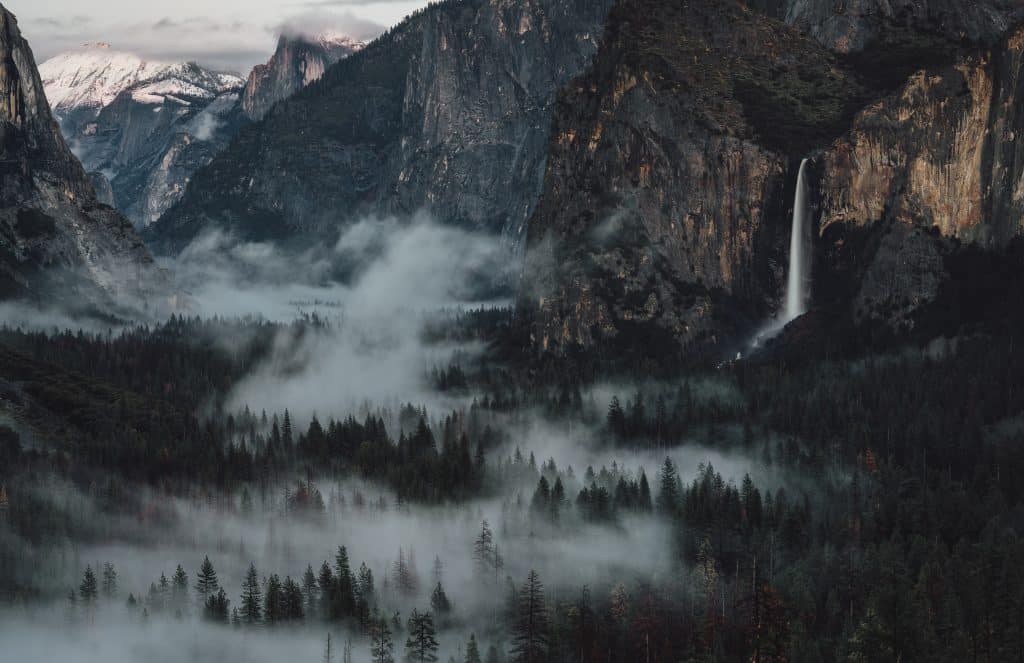
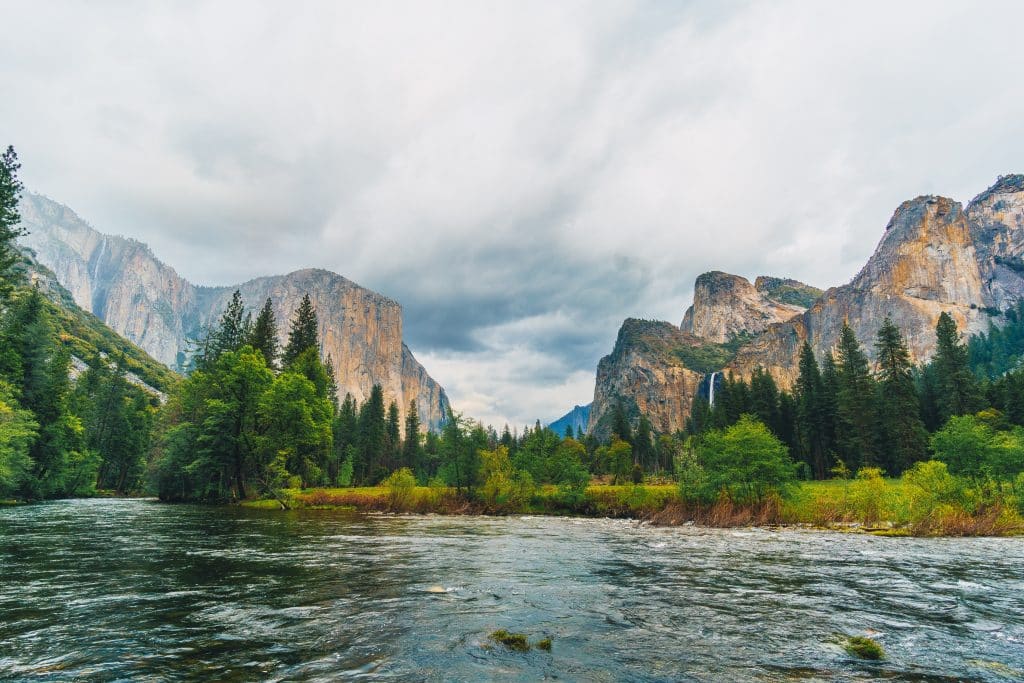
    When you think of the quintessential landmarks in Yosemite, you’re probably thinking about Yosemite Valley. Tunnel View Outlook is the most popular photo-op in all of the park. In this breathtaking vista, you’ll get a photo of El Capitan, Bridalveil Falls, and Half Dome all in one frame.

    Down in the valley is Yosemite Village where you’ll find all sorts of amenities. There are campsites, hotels, and plenty of shopping.

    You’ll find dazzling meadows and boardwalks throughout the valley with some of the best hiking in the park. Plan to spend at least a whole day exploring Yosemite Valley.

    Wawona & Mariposa Grove

    The Wawona area wasn’t added to the park until 1932, but it’s one of the must-see destinations on an RV visit. Visit the beautiful Big Trees Lodge and the Pioneer Yosemite History Center to learn about the rich history of this former Native American encampment.

    Mariposa Grove is an ancient grove of about 200 giant sequoia trees. Visit Grizzly Giant, the oldest tree in the grove, estimated to be over 2000 years old with a circumference of 92 feet at the base.

    Wawona is surrounded by some of the most spectacular waterfalls in Yosemite. It’s located on Wawona road about 27 miles from Yosemite Valley.

    Tuolumne Meadows

    The Tuolumne River meanders through this beautiful meadow, set in a basin and surrounded by granite domes. It’s less crowded than Yosemite Valley but has wide views of the Cathedral Range and plenty of good hiking trails.

    Drive the Tioga Road, which runs through the Tuolumne area, offering a 47-mile drive full of scenic views and turnouts. Tenaya and Siesta Lakes are both located in this beautiful meadow and they offer great swimming and fishing spots. Or take a short hike to Soda Spring, a cold, carbonated water spring flowing out of the ground.

    Glacier Point & Half Dome

    glacier point and half dome

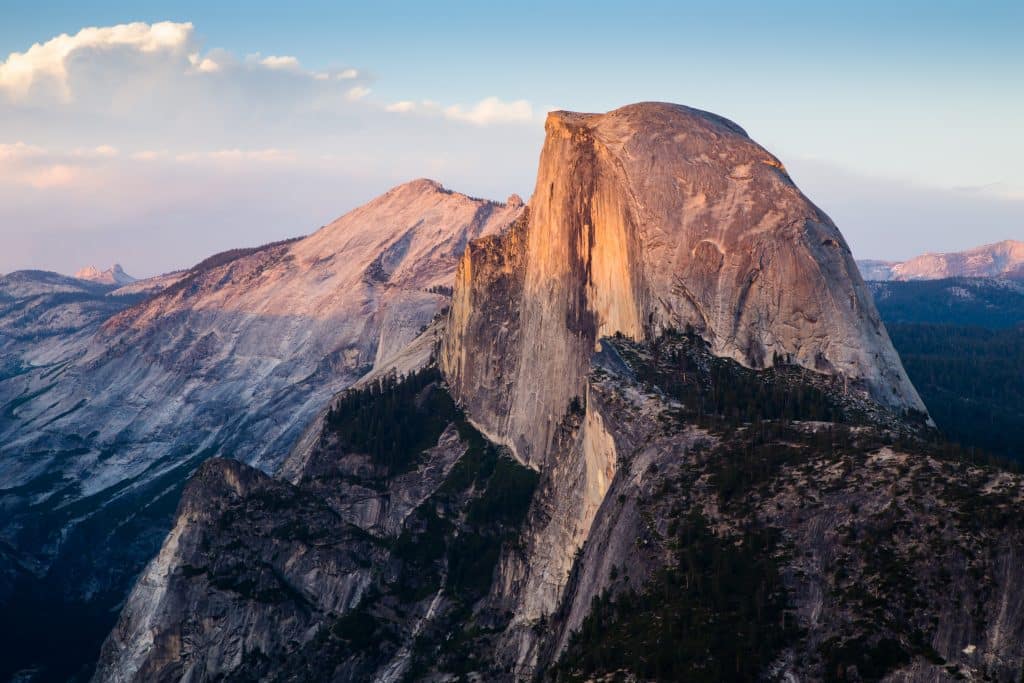
    At Glacier Point, you’ll find one of the best viewpoints in the park. It has sweeping views of Half Dome and many other granite formations from this view. Plus, you’ll get a great view of waterfalls like Yosemite Falls and Vernal Falls.

    Half Dome is one of the most recognized features in Yosemite National Park. There are views of this huge, granite dome all around the park. You can even hike or climb to the top.

    Visit Mirror Lake to see Half Dome up close. There’s a two-mile paved trail that takes you right to the base of the famous rock.

    Things To Do

    You won’t run short on activities in Yosemite. Here are a few of our favorite ways to pass time inside the park.

    Hiking

    Of course, hiking is at the top of the list. There are tons of beautiful hiking trails for all ages and hiking abilities.

    There are 10 hiking trails in Yosemite Valley alone. Bridalveil Falls Trail is an easy, half-mile hike that takes you to the base of this whispy waterfall.

    If you’re looking for a more moderate hiking experience, take the Yosemite Falls Trail on a two-mile, round-trip hike to Columbia Rock. Or continue on to the top of the Falls. It’s a more strenuous hike, but worth it if you want to see the best views of the falls.

    Water Activities

    Swimming is allowed almost everywhere in the park, with a few exceptions. Enter the rivers and lakes through sandy beaches to preserve rocky shoreline. And beware of swift currents and cold water.

    Rent a raft and take a rafting trip down the Merced River. Or take a kayak onto Tenaya Lake to enjoy some beautiful scenery. Fishing is allowed in all lakes and reservoirs year-round. And stream fishing runs from the end of April through the middle of November. You’ll need a California fishing license if you’re over the age of 16.

    Climbing

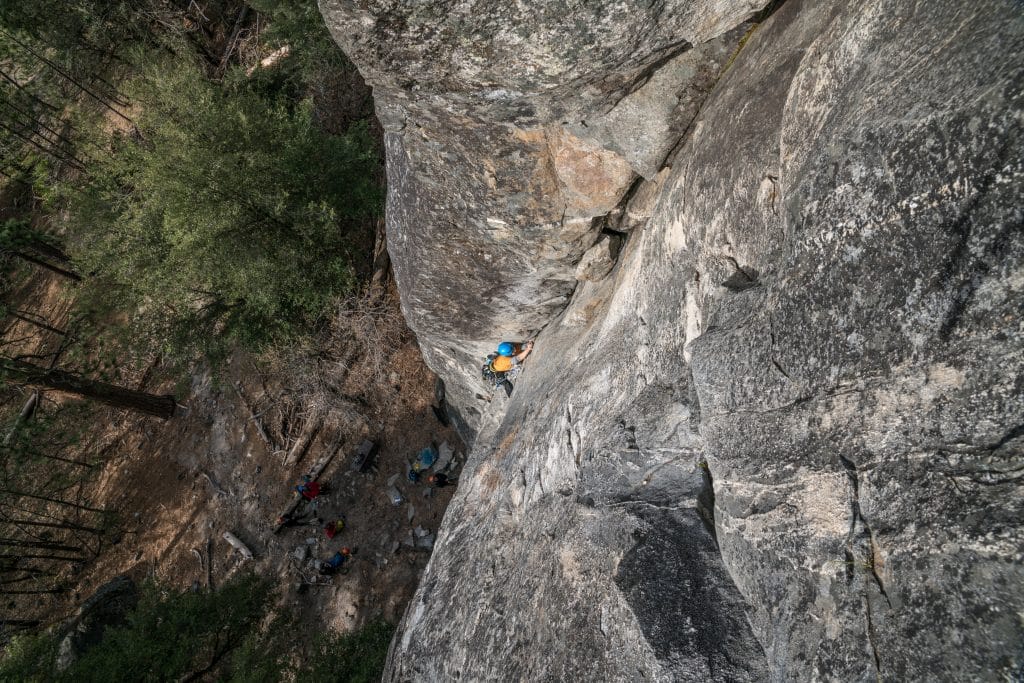
    Yosemite is one of the most popular rock-climbing destinations in the world. The solid, vertical face of El Capitan is a favorite of many thrill-seekers. But there are all different types of climbs to be done in Yosemite.

    Many of the walls along Yosemite Valley are available for multi-day climbs. Or you can climb the cracks in the walls of the Merced River Valley. And many climbers love to tackle the granite domes surrounding Tuolumne Meadows.

    When To Visit Yosemite

    You can visit Yosemite any time of year. If you’re RVing, it’s best to go in the late spring through early fall. You’ll find that all of the park areas are open from June through September. This is the busiest time, too, so be prepared to share the roads and parking lots.

    Many of the rivers and waterfalls are fueled by runoff from snowmelt. So these tend to slow down or dry out during the late summer months. Throughout June and July, visitors can see thousands of wildflowers blooming in the valleys and meadows.

    Where RVers Can Stay

    Yosemite has 13 campgrounds and you can reserve sites in seven of these up to five months in advance. Most of these campgrounds have RV sites available for rigs of various sizes. Amenities vary from site to site.

    The park offers free wilderness permits for backpacking and camping in the wilderness. Apply for your permit in advance if you plan to camp in the wilderness. These trails are popular destinations for hikers.  

    Getting To and Around Yosemite

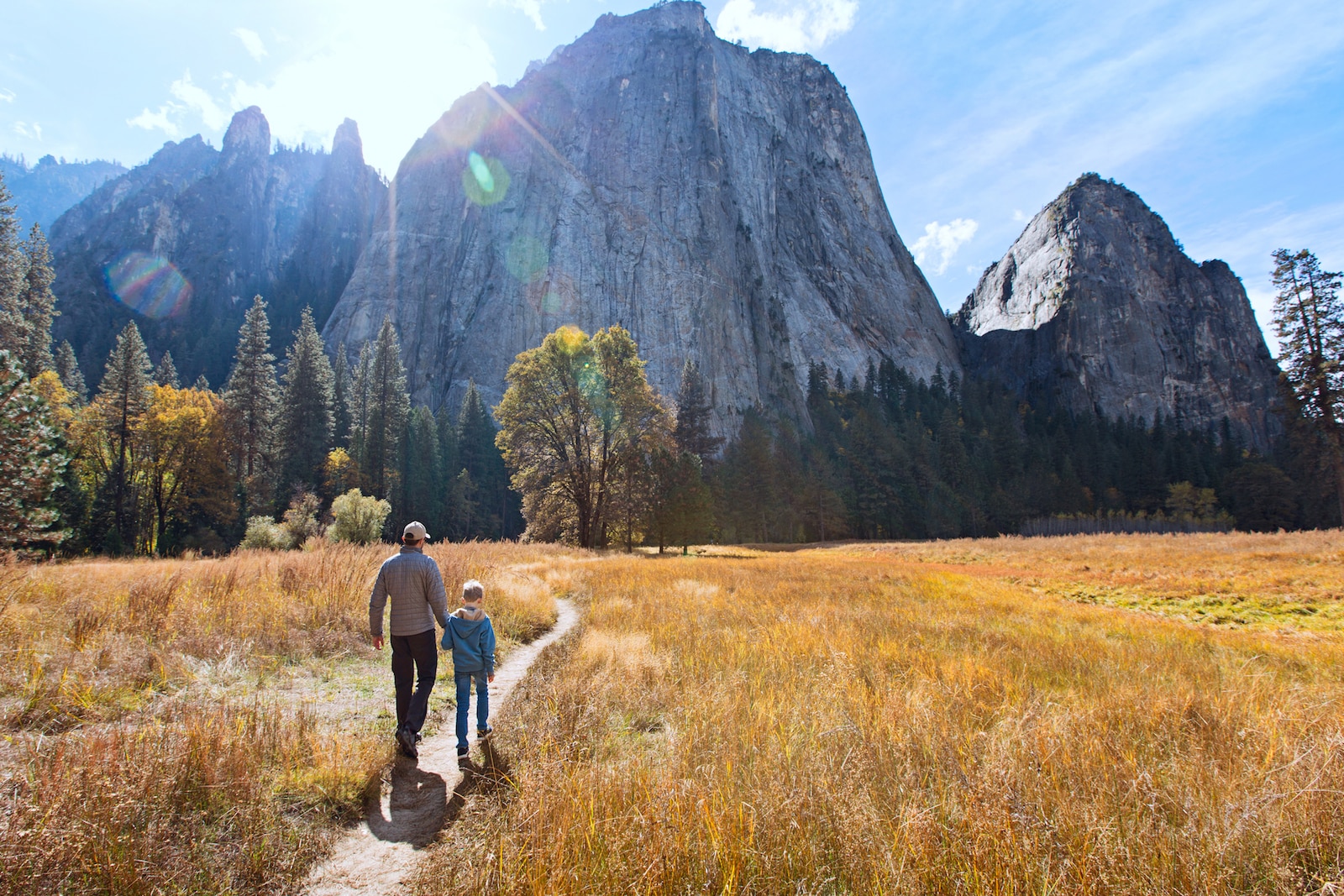
    back view of active family of two, father and son, enjoying valley and mountain view in yosemite national park, california, active family vacation concept (back view of active family of two, father and son, enjoying valley and mountain view in yosemit
    Image by noblige from Getty

    If you aren’t staying in the park, it’s advised to park your RV outside the park and take public transportation in. Once you’re in the park, there are free shuttle buses that can take you around to many attractions.

    Most of the roads inside the park are safe to drive on with your RV. But some of them do have restrictions against very large rigs. Check these restrictions before you enter the park so you don’t enter these areas unknowingly.

    There’s limited parking inside the park. And even more so for large RVs. Arrive early to ensure you get a parking spot.

    Check out the NPS website for detailed driving directions to Yosemite from major surrounding cities. And to find out all the latest weather and road closure updates, click here.


    Have you been to Yosemite? What did you think? Leave a comment below!


    Source link

  • Where to See Bald Eagles Around the Country

    Where to See Bald Eagles Around the Country


    The bald eagle is one of the most majestic birds in the world. Chosen early on in the history of America as the national bird, this large bird of prey has almost always been associated with strength. The bird was officially designated as the national bird by Congress on June 20, 1782. Since then, it has featured on currency, official documents, and so much more.

    It makes sense then that you should find some time to go and see this symbol of our great nation in its natural habitat, but where do you go to see bald eagles? Here’s a look at locating some of these amazing birds during your next RV trip with the whole family.

    Where to Go

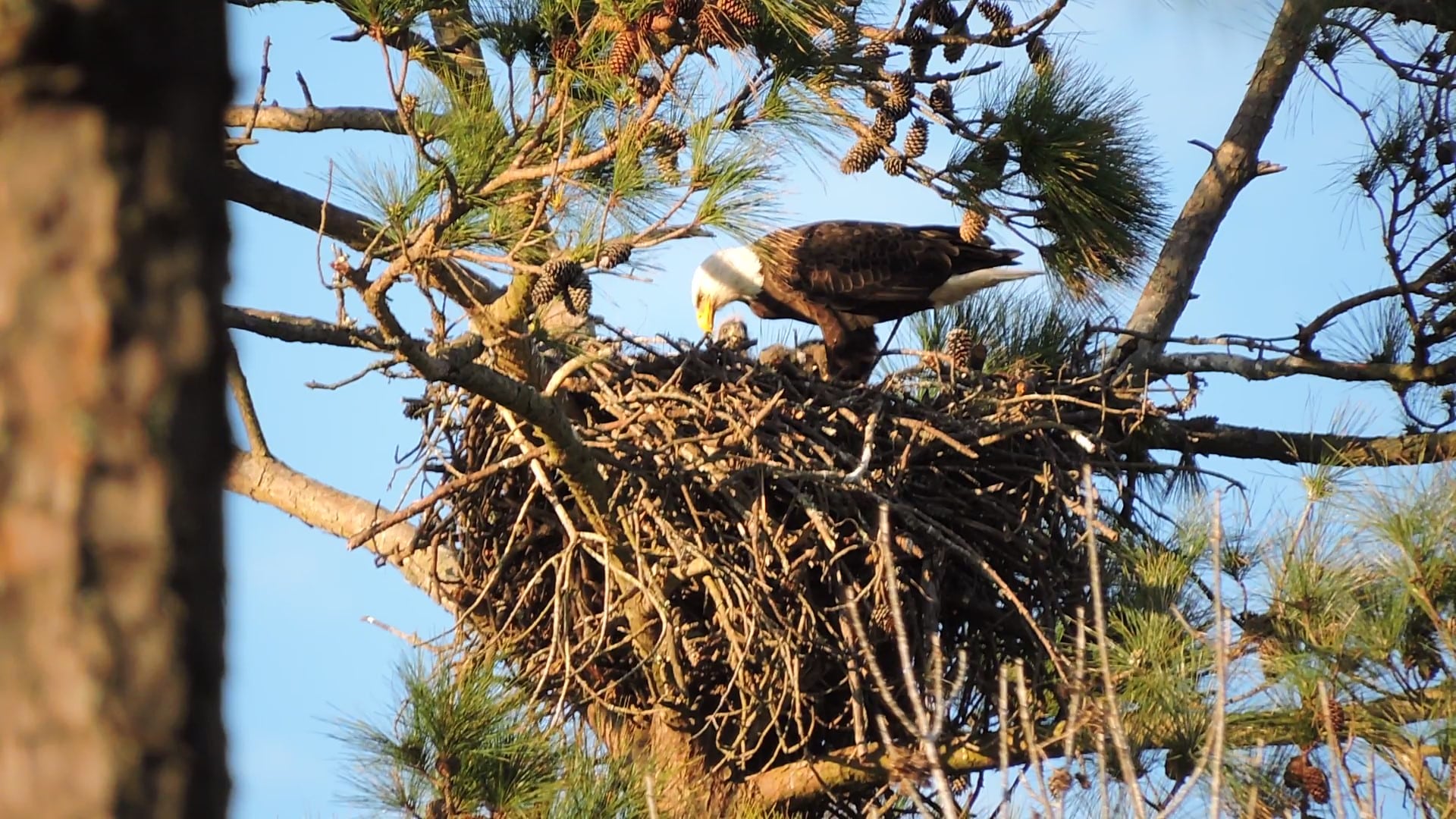
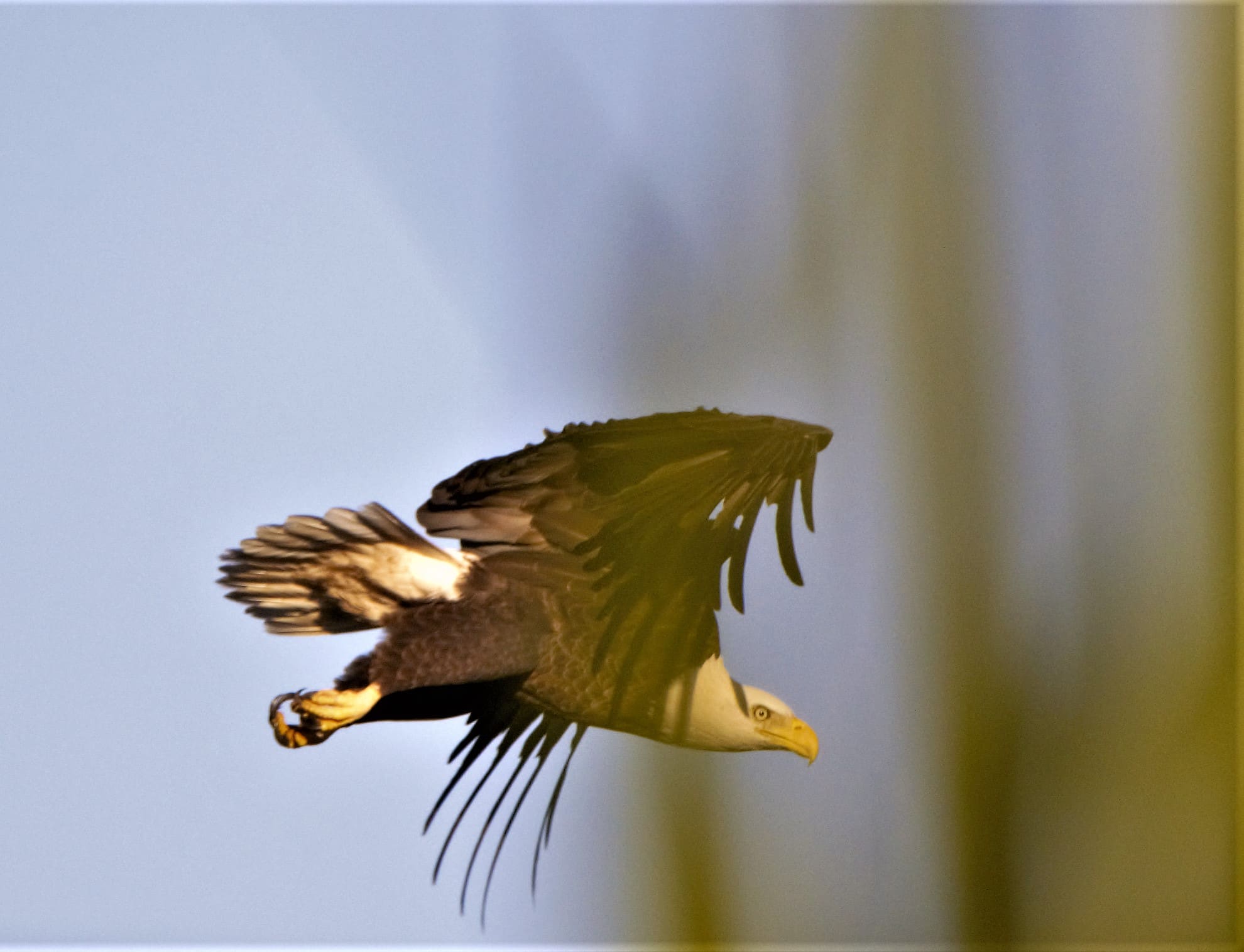
    Bald eagle in nest
    Image by Greg Moser

    Even though the bald eagle plays a very big symbolic role for America and Americans, the bird was pushed to near extinction. According to History.com, bald eagle population numbers dwindled from over 100,000 in the late 1800s due to the destruction of the bird’s habitat and hunting. It got as low as about 600 pairs of birds.

    In the 1940s, Congress passed laws designed to protect the species. Thanks to these laws and the work of many dedicated environmentalists, the population has been creeping back up for decades and is not on the endangered species list. You now have a good chance of seeing these birds if you visit the right areas of the country.

    The Top 5 Places to See Bald Eagles

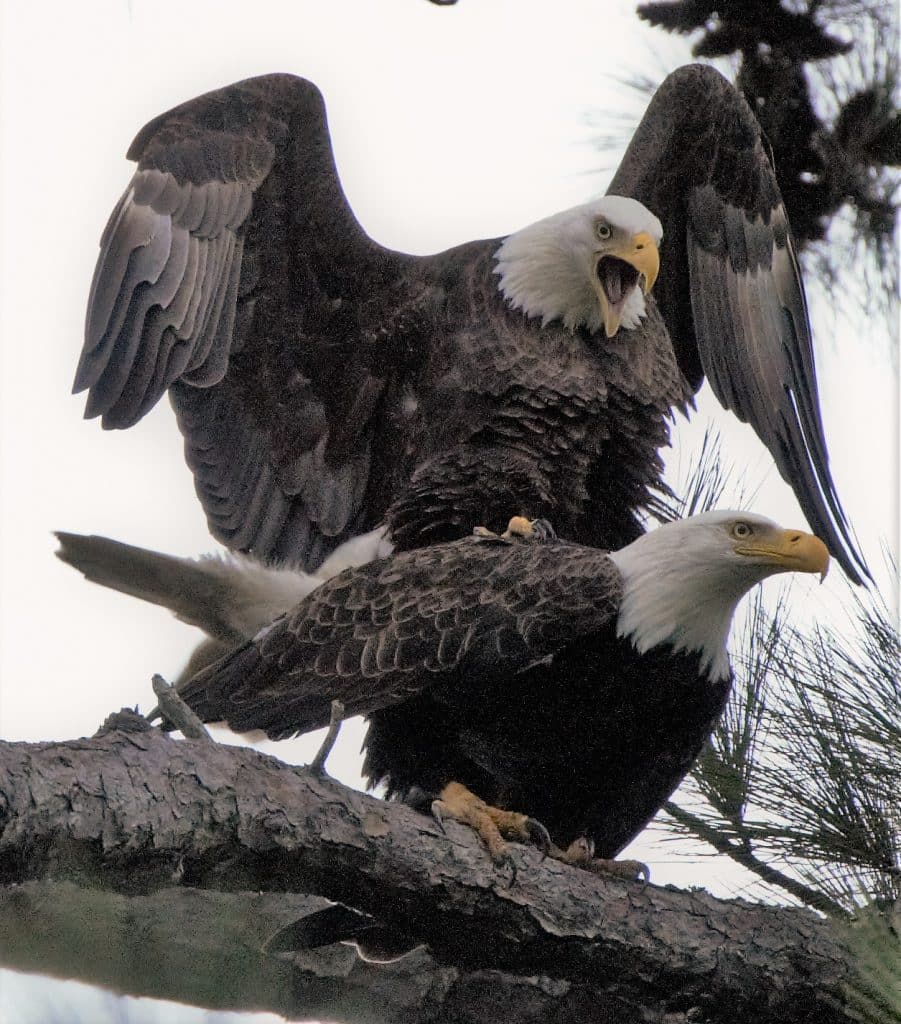
    Bald eagles
    Image by Greg Moser

    Bald eagles can be found in every state of the U.S. except Hawaii, according to the U.S. Fish and Wildlife Service. That means, there’s probably a location in your home state where you can go to see the birds in the wild. However, if you’re looking for a good place to go on a longer RV camping trip to see these amazing birds, then here some of the best places to go.

    1. Alaska Chilkat Eagle Preserve – Alaska

    The largest concentration of bald eagles is in Alaska. If you really want the best chance of seeing the nation’s bird in a truly wild habitat, then you should visit the Alaska Chilkat Eagle Preserve. This 48,000-acre area in Haines, Alaska, sees somewhere around 4,000 bald eagles during the annual salmon run.

    2. Klamath Basin – Oregon and California

    This area, located right on the border of Oregon and California is home to many bald eagles. It’s one of the highest concentration levels of anywhere in the lower 48 states. If you’re thinking of making the trip out west or already live out near that area, then make sure to stop in the Kalamath Basin to see at least a couple bald eagles.

    3. Starved Rock State Park – Illinois

    If you’re in the Midwest or will be traveling to it, you must make a stop at Starved Rock State Park in Illinois. Not too far of a drive from the beast of a city that is Chicago, Starved Rock State Park is home to hundreds of bald eagles, especially during the colder winter months. It’s a wonderful place to stop and there’s plenty to do and see.

    4. Chassahowitzka National Wildlife Refuge – Florida

    If you’re looking for a good place to go down south to see bald eagles, then look no further than the Chassahowitzka National Wildlife Refuge in Florida. This refuge is home to plenty of bald eagles. The birds come seeking new food sources and many can be easily spotted if you camp nearby or hike the right areas.

    5. North Platte National Wildlife Refuge – Nebraska

    Located in the western panhandle of the state of Nebraska, the North Platte National Wildlife Refuge is another excellent place to go to see bald eagles. Nebraska is home to many great areas to see wildlife, hike, and camp, but this area, in particular, is perfect for spotting bald eagles.

    When to Go

    bald eagles
    Image by Greg Moser

    Generally, the best time to go and see bald eagles is during the winter months. Bald eagles follow food supplies and that generally means coming down from Canada to other states to get to open water where they can fish and live. They migrate annually, so you can often come back to specific places again and again to see these amazing creatures.

    Seeing bald eagles in the wild is an exhilarating experience for anyone, but if you like to travel and camp as a family, it can be a fantastic thing to do. Your kids won’t forget seeing one of the most iconic birds in the whole world. Visiting one of the locations mentioned above or anywhere else closer to your home will be worth it.


    Have you seen bald eagles in their natural habitat? What was it like? Leave a comment below. 


    Source link

  • Tips for Driving While Towing a Travel Trailer

    Tips for Driving While Towing a Travel Trailer


    Towing a trailer can be one of the most stressful things about camping with a travel trailer. This is especially true for people who don’t tow that much. Most of the time, towing is something that people do occasionally if at all. This means they’re likely not going to be very comfortable doing it. If you’re one of these people, keep the following tips in mind. They should help make towing your travel trailer a little easier.

    Make Sure Everything Works and Is Connected Correctly

    Family vacation trip, leisurely travel in motor home, Happy Holiday Vacation in Caravan camping car. Beautiful Nature New Zealand natural landscape Scenic route with camper van in New Zealand.
    Image by Vichai Phububphapan from Getty

    My first tip is a simple one and actually starts before you set off. Make sure everything is connected properly and working correctly. This goes for the hitch, chains, lights, trailer brakes and anything else on your rigs, like a backup camera or some kind of proximity sensors.

    Setting off without something properly connected means you’ll have a hard time and could be dangerous. Before you head out on the road, make sure to check everything. Also, double-check your weights. If the RV is overloaded, it can negatively impact your tow vehicle or the RV itself. Here’s our Towing Guide to help.

    Go Slow and Give Yourself Plenty of Braking Room

    Your tow vehicle will accelerate slower and take longer to slow down. Be ready for this. While you’ll need to keep up with traffic and stick to posted speed limits, you should take things slower when your travel trailer is attached to your rig. Most travel trailer tires are rated for 60-65 mph, so keep that in mind when on the highway, too.

    When driving, look far ahead to see if you’ll need to brake. Don’t wait to brake like some drivers do in a car. Also, make a point of giving yourself more room between you and the car in front of you. The added weight of the travel trailer will increase stopping distances, you need to account for that on the road. Sudden stops with a travel trailer attached to your tow vehicle are not advised, so give yourself plenty of room at all times.

    Take Turns Wide and Go Slow

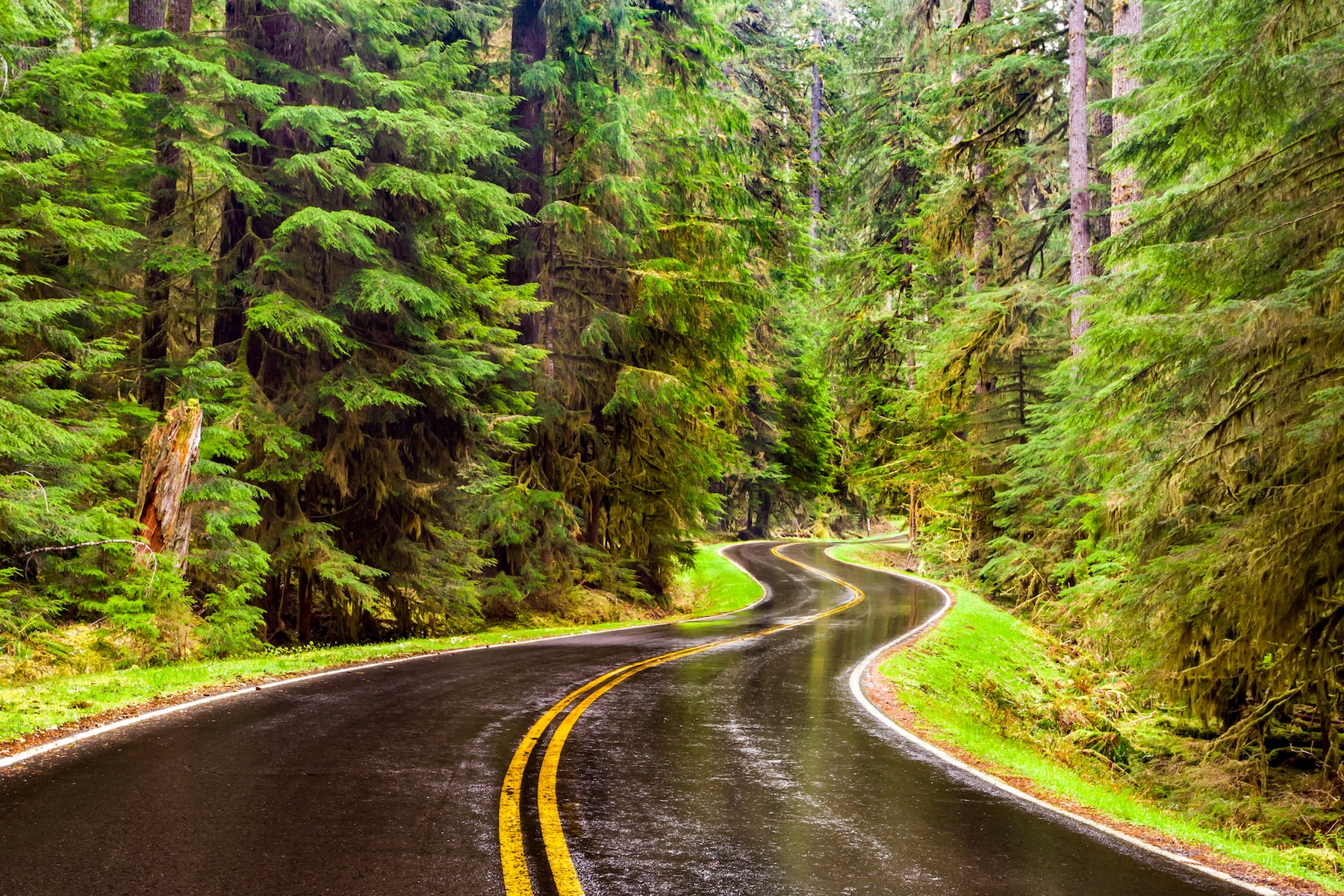
    Wet winding road through a lush green forest in the Pacific Northwest

    When turning, you need to remember the length of your rig. If your trailer is short, you’ll have an easy time. Long trailers are where things can get a little tricky. The longer your travel trailer the wider you’ll need to take turns. The RV will follow the path of the tow vehicle, but taking wider turns helps ensure you won’t clip things on the inside of the turn.

    Going slow in turns is also important. It will help ensure your RV doesn’t lean too far or the other. The chances of it tipping are extremely low, but you’ll likely have items like dishes inside your RV. The last thing you want is for them to go thrashing about because you took a turn too quickly. Go slow and you’ll have a smoother drive and all your camping gear will be right where you left it.

    Avoid Backing Up Under Pressure

    You want to give yourself plenty of time to back your travel trailer up properly. Unless you drive with the travel trailer all of the time, the more time you give yourself, the less stressful backing up your trailer will be. Try to avoid any situations that can put you under pressure. Let other vehicles move past you or around you if there’s someone waiting on you.

    If you find yourself in some traffic congestion, take steps to avoid tight spaces whenever possible, and look for areas where you can simply pull through instead of backing up. If you must back up, try not to let the impatience of others impact you. You need to be able to think clearly and not rush. This will help you avoid any accidents or issues when backing up your rig.


    What tips do you have for towing a travel trailer? Leave a comment below!


    Source link