On this Stories from the Road episode, Sam talks to Marshall Wendler and Kelly Beasley, the co-founders of Camp Addict. As exclusive boondockers, they’ve both learned a thing or two about dry camping in an RV without hookups. In this interview, they share all of their tips and resources so you can learn everything you need to know about boondocking. Hear about how to find places to boondock, how to update your rig for solar, common boondocking questions and misconceptions, boondocking with friends, and must-have RVing products!
Some highlights from this episode
1:30 – Finding the best boondocking spots
3:30 – Solar updates for boondocking
12:00 – Common boondocking and RVing questions
18:00 – Misconceptions around boondocking
22:00 – Xscapers Convergences
27:00 – Must-have boondocking products
Marshall and Kelly’s advice for boondocking
Have a plan for where you are going to park for the night, and a backup plan in case that area is full.
If you’re considering installing rooftop solar panels, do it now. Don’t wait until later. It’s so worth it and will make your boondocking set up even easier.
Boondocking is not as hard as most people think it is. It’s not unsafe and doesn’t make you more likely to get attacked by bears. It’s a great way to get closer to nature and save a lot of money.
Read the reviews online for boondocking campsites to find places to park.
Start practicing at campgrounds and pretend you don’t have hookups. Then, you’ll be more prepared to go off the grid.
Befriend someone who is an avid boondocker and camp with them on your first boondocking trip.
Go to an event, like an Xscapers convergence, where you’ll get experience boondocking with other people who can help you.
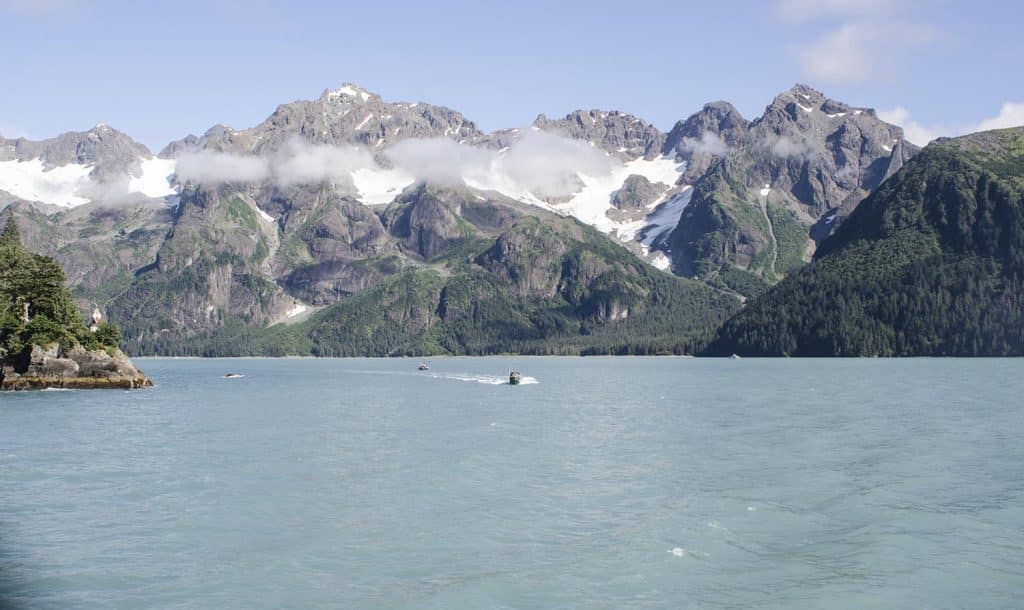
At 670,000 acres, Kenai Fjords National Park is no small playground. Its vast icefields, with ancient glaciers scouring the land and deeply carved bays teeming with wildlife offer just a glimpse into its allure. Very few places host killer whales and mountain goats within the same boundaries, yet this icy wonderland is full of stunning anomalies.
From Resurrection Bay to Exit Glacier visitors discover life at sea and life on land are vastly different and dramatically astounding. From the world’s largest mammals to the planet’s smallest, Kenai Fjords is a park of exclamation points, and one well worth exploring to the fullest.
History of Kenai Fjords National Park
Photo Credit: Shelley Dennis
The first inhabitants of this region where the Alutiiq people, a somewhat nomadic tribe who hunted and traveled the Kenai Peninsula coast for more than 1,000 years. Archaeological evidence suggests that they ventured along the shoreline here, capturing fish and game, and eating off the land during summer months. An earthquake in 1170 AD lowered the coast by almost six feet, possibly inundating many campsites.
There were no settlements within the park until Alexander Baranov set up a fur trade post on Resurrection Bay in 1793. A small community grew around the bay, and by 1903 the southern terminus of the Alaska Railroad was built in what would become the town of Seward.
A few gold mining camps were established in the Nuka Bay area of the park in the 1920s, but it wasn’t until 1970 that locals put forth a suggestion to include the Kenai Fjords region in the national park system. In 1978, it was named as a national monument to protect its unique natural resources and wildlife. Finally, in 1980 the monument became Kenai Fjords National Park.
Why Visit Kenai Fjords National Park in Your RV?
Photo Credit: Shelley Dennis
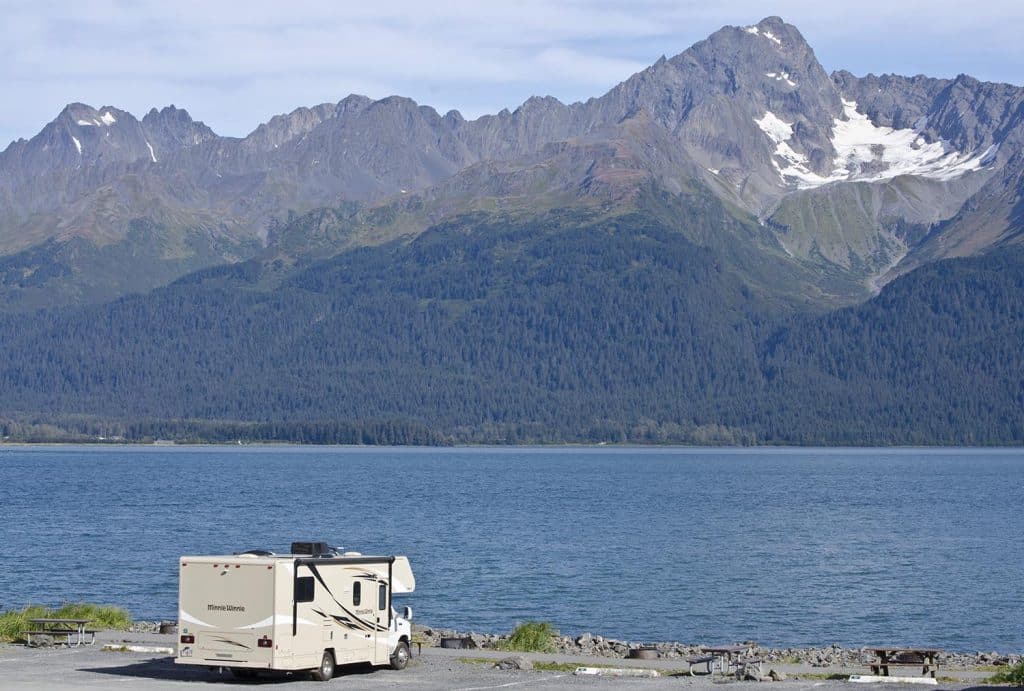
Only a very small portion of Kenai Fjords is accessible by vehicle, but the jumping-off spot for the park (Seward) is very friendly to RVs. The town has set aside hundreds of RV dry camping spots along the shoreline just for motorhomes and travel trailers.
Is there a more amazing view to wake up to than Resurrection Bay out your front window, with sea otters playing in the water just offshore? Glaciers line the mountaintops across the bay, and you can cast a line into the water from your front yard. This place is what RVing is all about!
Places to Go
Here’s a look at all the places you can go while visiting this amazing national park.
Kenai Fjords Visitor Center
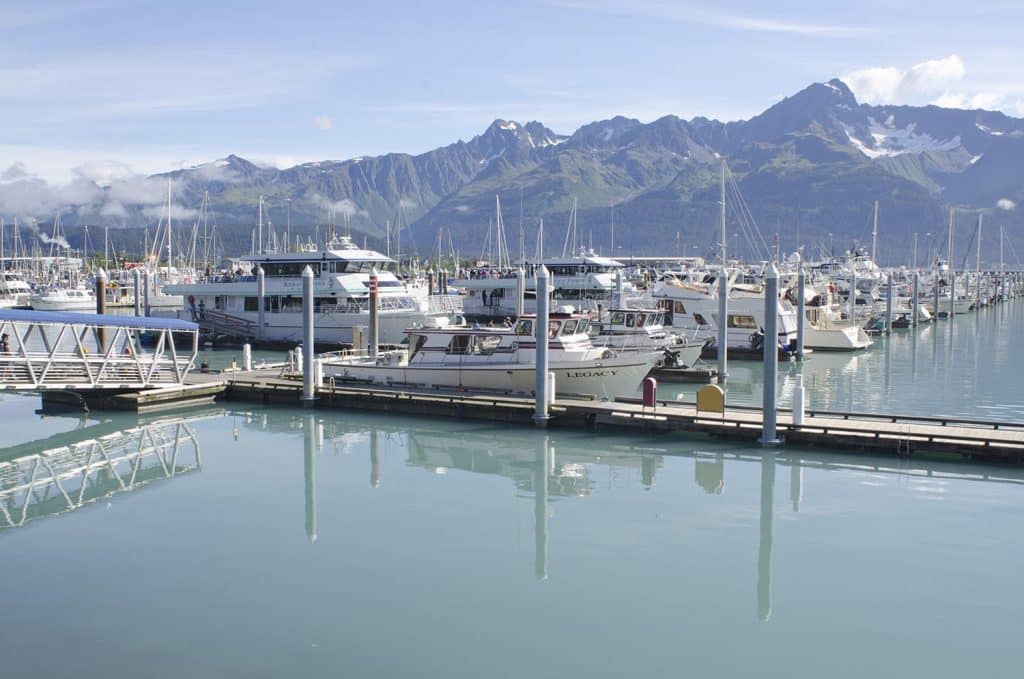
Located in Seward on the small boat harbor, the visitor center houses a bookstore, film about the park, and rangers are available to answer questions.
Exit Glacier
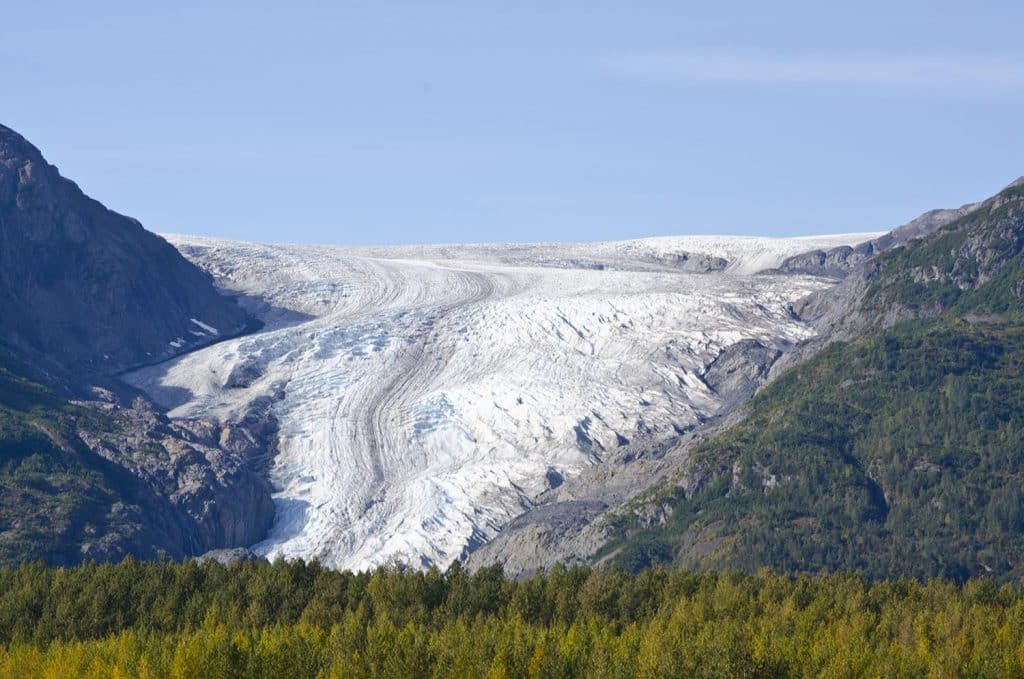
Open year-round, the Exit Glacier is at the end of the only road in Kenai Fjords National Park. With winter snows, the road closes to cars, but visitors can snowmobile, dog sled, cross-country ski or snowshoe up to the glacier. In summer, take a short hike from the parking lot to the glacier’s edge.
Photo Credit: Shelley Dennis
Exit Glacier Nature Center
Located at the base of Exit Glacier, the Nature Center has rangers on staff to answer questions, there are exhibits of the glacier and an Alaska Geographic Bookstore is onsite. The trailhead for the Harding Icefield Trail is located here, as well.
Things to Do
There’s plenty to do inside the park. There’s no chance you’ll feel like you’re without much to do. Here are some of the best activities to do.
Boat Tours
Since a good deal of Kenai Fjords is only accessible by water, a boat tour is a great way to get your feet wet when it comes to understanding this immense park. Many tours leave from the small boat harbor in Seward and are run by private vendors. Park rangers provide geology presentations at the Kenai Fjords Tour’s lunch stop on Fox Island.
Half-day tours normally stay within the protected region of Resurrection Bay and full-day tours may take visitors out into the Bay of Alaska, where marine life and a wide variety of birds can be seen.
Photo Credit: Shelley Dennis
Hiking
The Harding Icefield Trail leaves from the Exit Glacier Nature Center and is a strenuous eight-mile hike from the valley floor to overlook this extensive icefield and the terminus of the Exit Glacier. In many years the last several miles of the hike are still covered in snow during the summer season, so hikers should be prepared for ice, avalanches and intense sunlight.
Kayaking
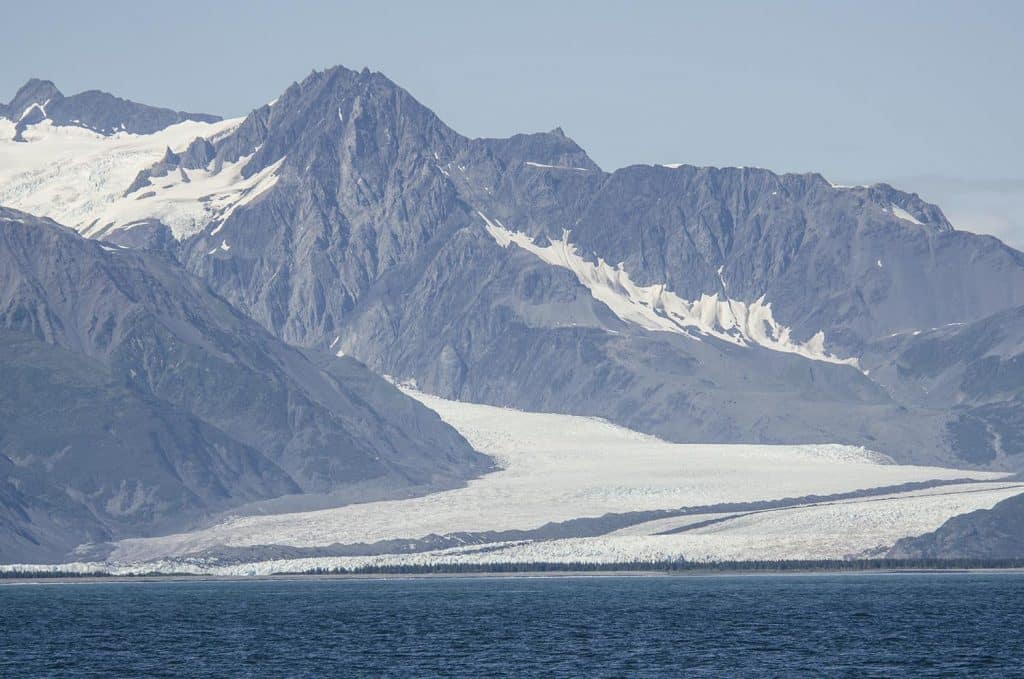
Bear Glacier Lagoon is a stunning location for experienced sea kayakers to view this tidewater glacier as it calves icebergs into the Bay of Alaska. However, because the lagoon is 12 difficult miles from Seward, a water taxi to the area is suggested.
Once there, kayakers need to stay at least a half mile away from the edge of the glacier and be mindful of glacier lake outburst floods that can quickly raise the water level near these icefields. Fog is also a concern, along with high surf on a coast with few landings. Taking a guided tour is a good option for many.
Fishing
There are many opportunities for freshwater and saltwater fishing in Seward, along Resurrection Bay and in backcountry lakes and streams. Salmon, halibut, Dolly Varden, and rockfish are plentiful in this area, and fishing licenses are required.
Mountaineering
The Harding Icefield is an exceptional place for experienced mountaineers. Icefield explorers should have extensive crevasse rescue training and glacier travel skills. Groups should be connected by rope when moving together, and all participants must be proficient skiers.
Snowshoeing on the glaciers is also a great way to experience the icefields. The best time of year to explore is in April when daylight is getting longer and the temperatures are warming up.
Photo Credit: Shelley Dennis
Wildlife Viewing
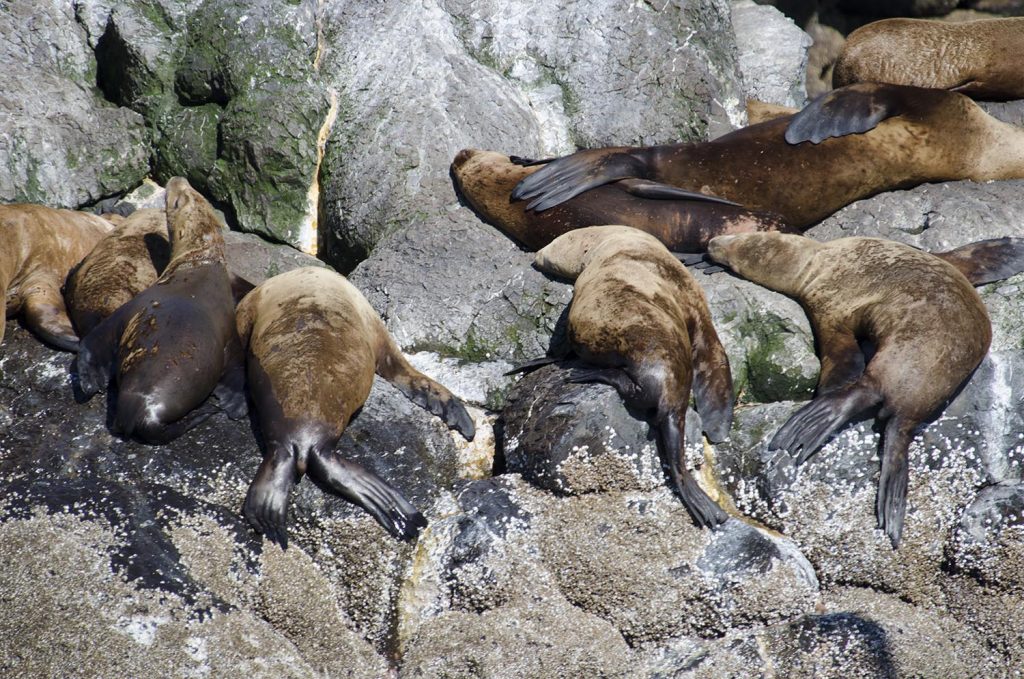
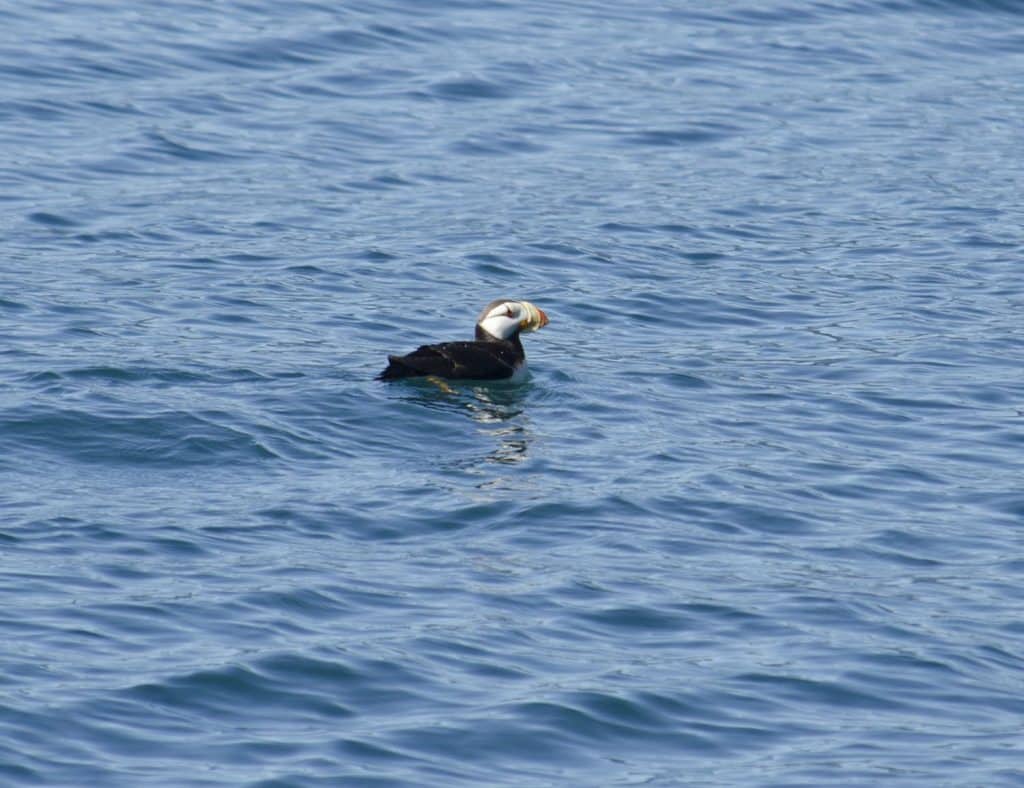
Land adventurers will find black and brown bear, moose, and mountain goats in great numbers throughout the region. Sealife in the area consists of birds like cormorants, puffins, and bald eagles, along with mammals ranging from stellar sea lions, sea otters, humpback and killer whales, harbor seals, and porpoises.
When to Visit Kenai Fjords National Park
Photo Credit: Shelley Dennis
Kenai Fjords is accessible year-round but by different means of travel. If you enjoy winter sports like snowshoeing, cross-country skiing, and mountaineering, make this park your destination during March and April.
Sea kayaking can be enjoyed any time of year, as can fishing and flightseeing. Summer will offer warmer temps for those activities, as well as boat tours to view certain sea life that migrates south in the winter.
Where RVers Can Stay
Photo Credit: Shelley Dennis
The town of Seward has dedicated several miles of shoreline for RV camping. RVers can wake up with Resurrection Bay out their front windows, walk to the small boat harbor and hop on a boat tour in 15 minutes, or walk into town for lunch or dinner in 10. The sites are dry campsites located on paved parking lots but sit right on the bay. Many even have their own picnic tables.
If you can’t find a campsite available, there are many RV campgrounds around Seward. Here are just a few options:
Stoney Creek RV Park – Located six miles north of town, this campground has full hookups, and a free shuttle to town.
Silver Derby Campground and RV Park – This campground has 54 dry camping sites for RVs and tents and is located on a beach just south of Seward.
Bear Creek RV Park – Located seven miles north of Seward, this campground has full-hookups, and RV maintenance and repair available onsite.
Getting to and Around Kenai Fjords National Park
Photo Credit: Shelley Dennis
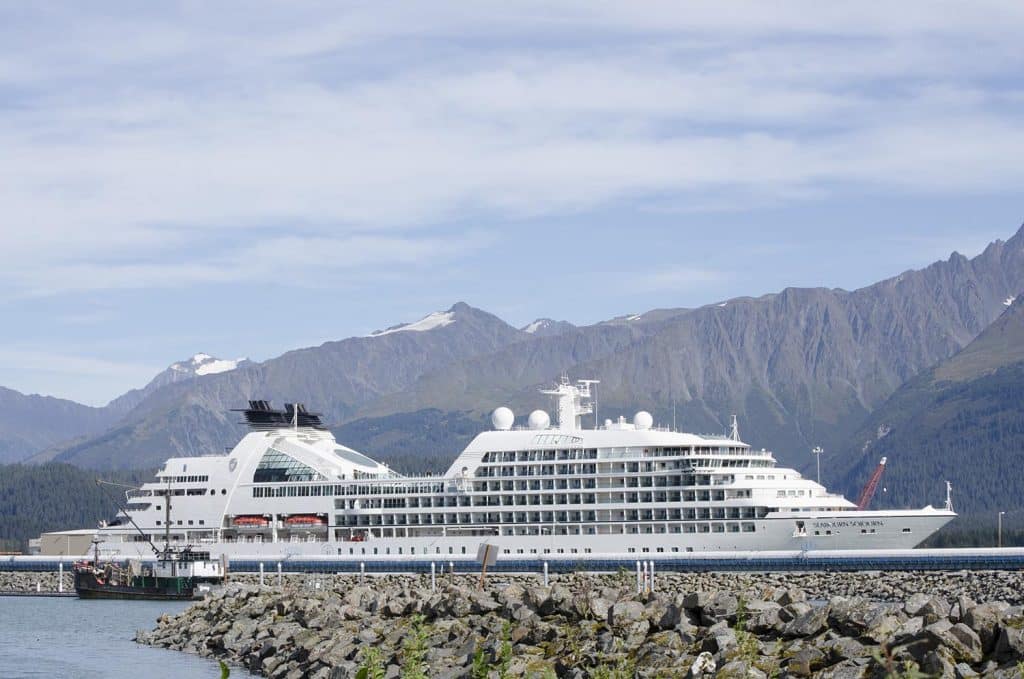
Getting to Kenai Fjords by car is relatively easy. Travel to Seward, located on the Kenai Peninsula, via the Seward Highway. Small planes can fly into Seward’s airport, located just outside of town. Also, many visitors arrive by cruise ship.
Once you arrive, there is only one road in Kenai Fjords National Park. It extends about 12 miles from Seward to the Exit Glacier Nature Center. So, exploring the rest of the park is done by boat, plane, hiking, and mountaineering.
Extreme Adventure
A visit to Kenai Fjords National Park will open eyes to the wonder of extremes. From peaceful fishing along the shoreline of Resurrection Bay to the heart-pumping exhilaration of a mountaineering trip across crevasse-filled glaciers, travelers here will have a difficult time returning to the mundane when they leave. Whale breeching, glacier calving, and sea kayaking are hard to compete with back at home!
Have you ever been to Kenai Fjords National Park? What were your experiences there?
Class C motorhomes tend to be the RV that first comes to mind when many people think camping and road trip. The design has been around for decades, and it’s a proven one that continues to get better as time goes on.
Class A and Class B motorhomes offer serious benefits, but Class C motorhomes are a good middle of the road option between the other two types of motorhomes. It works for families large and small. Speaking of that, if you have the need for a camper that can sleep up to 8 people, look no further than the venerable Class C motorhome. Here are five units that will sleep eight people with ease.
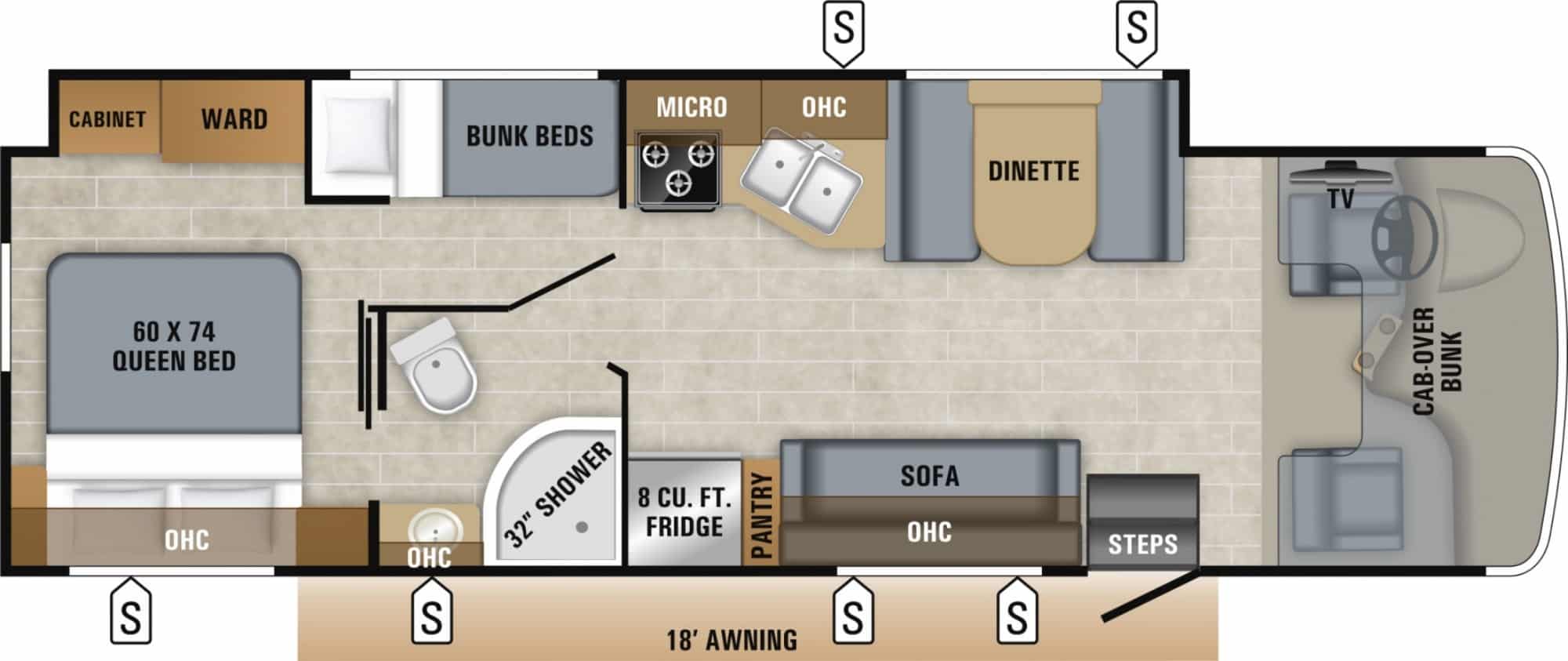
2019 Thor Freedom Elite 30FE
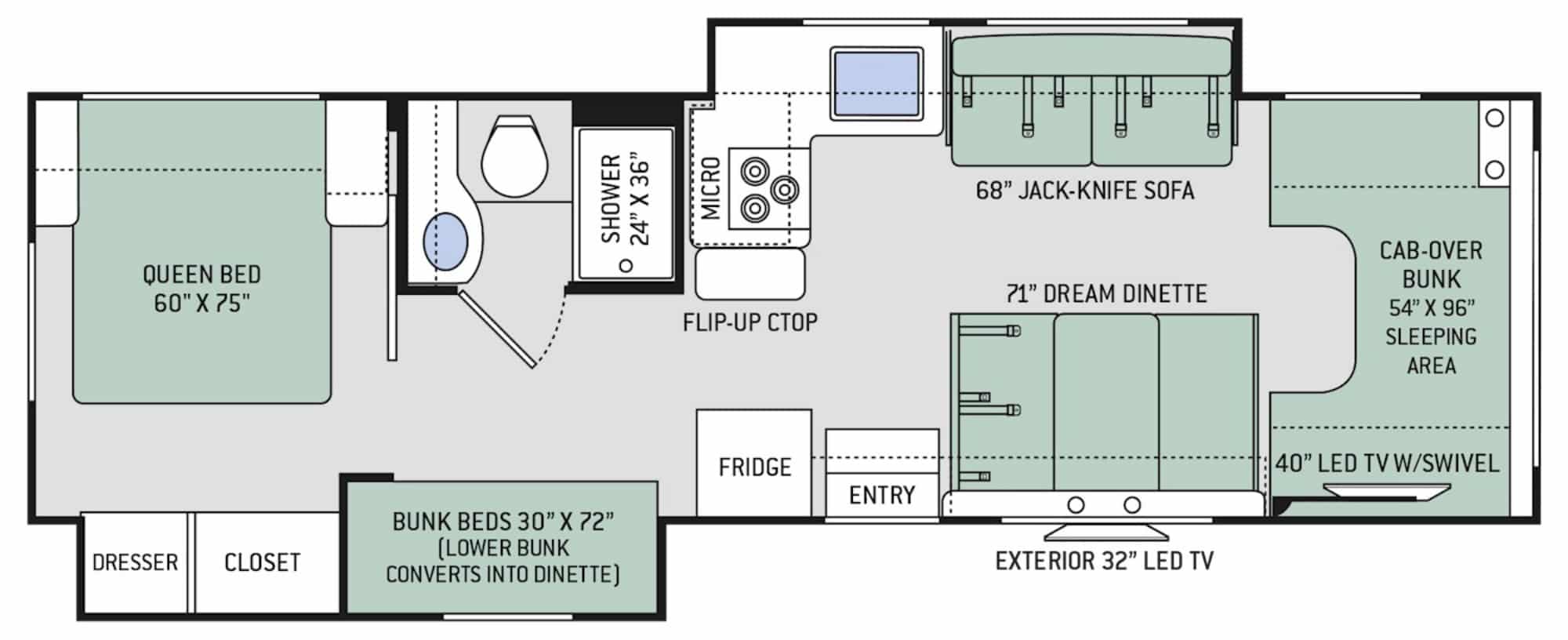
The Freedom Elite 30FE offers a smart layout. It’s a floorplan with two slides to either side of the RV. There’s a cab-over bed up front, a jackknife sofa in the main living area and a dinette that can all be used for sleeping. There’s also a set of bunks on the rearmost slide and a large queen bed. The rest of the floorplan features a full kitchen and bathroom on the driver’s side of the RV, making this a fantastic weekend getaway vehicle or longer haul machine.
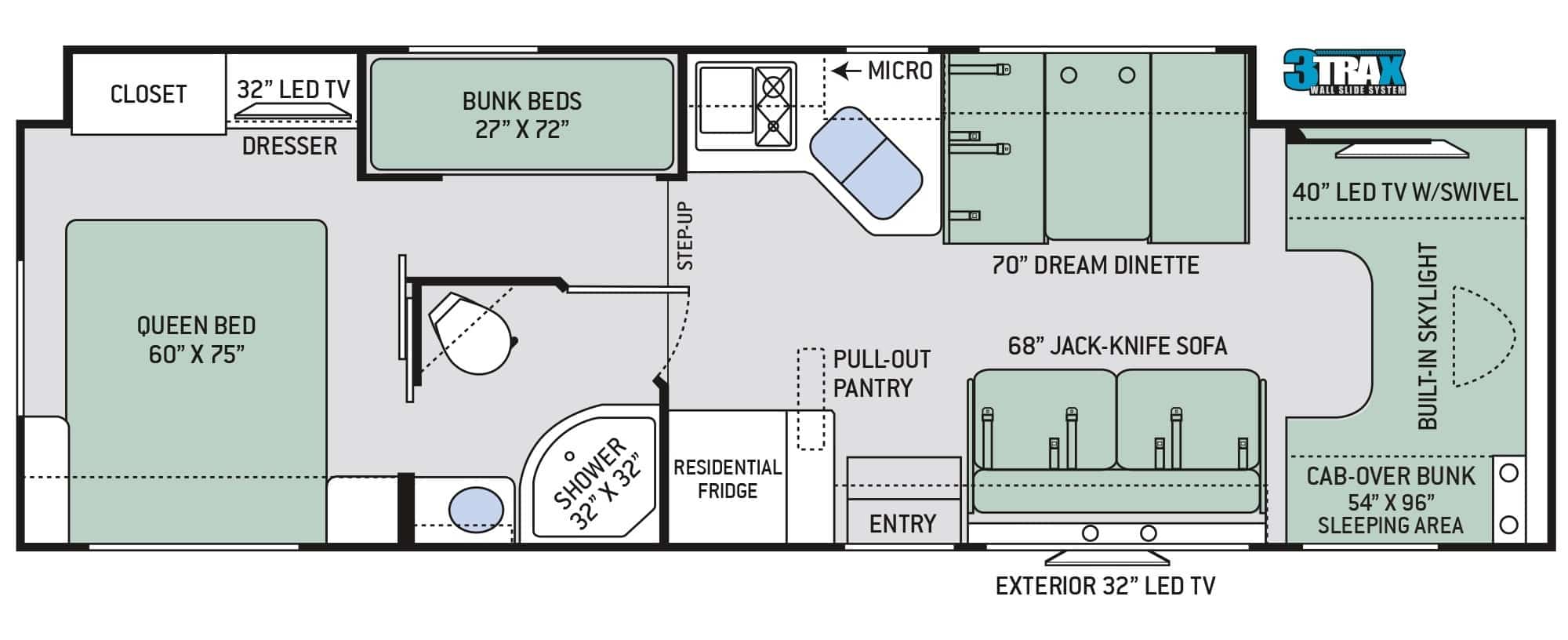
The Quantum LF31 is a Class C RV that has a very different layout than the unit featured above. This model has a single large slide down the driver’s side of the RV. At the front of the unit are a cab-over bunk, a jackknife sofa, and large dinette that all provide ample sleeping space. Also, on the driver’s side slide are bunk beds. At the rear of the unit is a queen bed. The single large slide really opens up space and makes enjoying the floorplan possible.
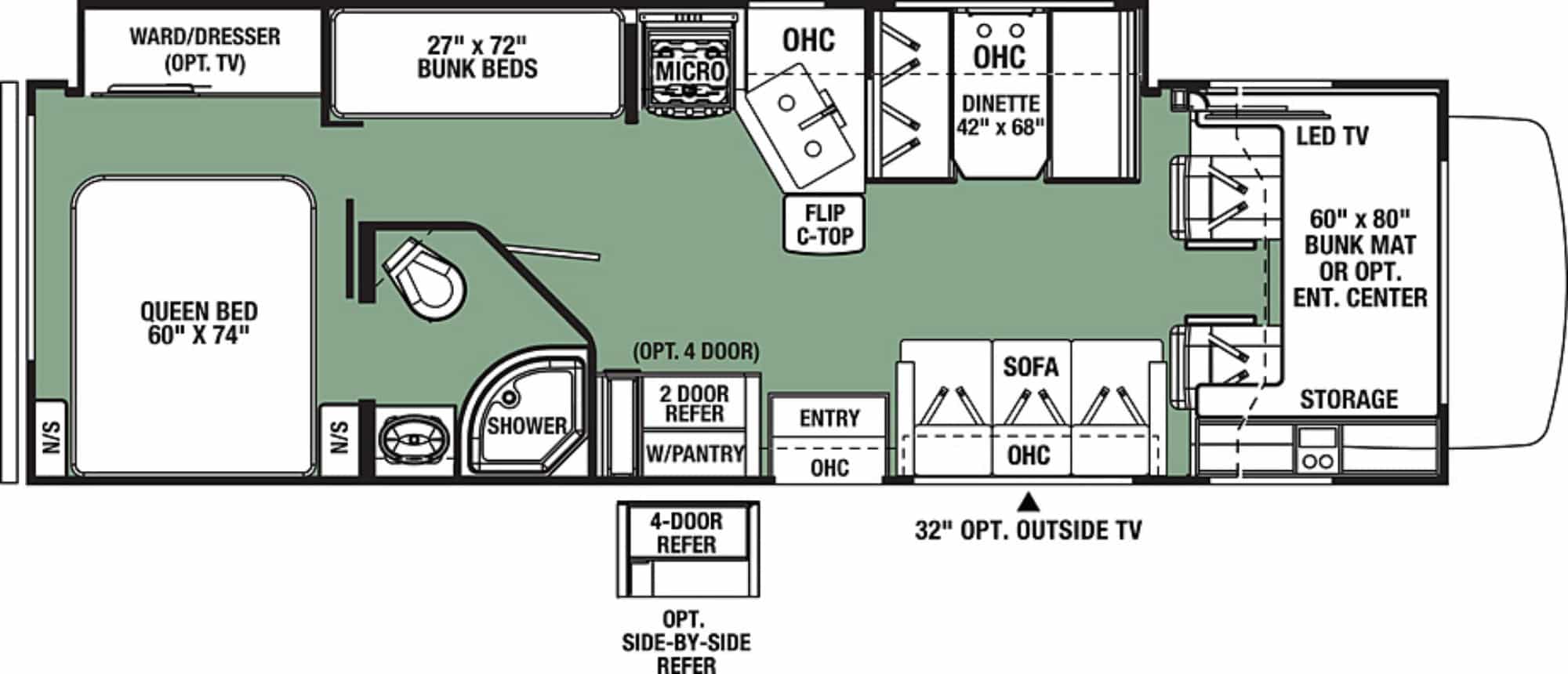
Another option very similar to the Quantum LF31 is the Forest River Forester 3271SF. This unit also has a single large slide down the side of the RV. At the front of the unit is a cab-over bunk. On the passenger side at the front of the living area is a sofa and across from that is a dinette that doubles as sleeping space. Housed in the side are some bunks, and at the rear of the unit is a queen bed, giving you all the sleeping space you need for up to eight people.
Another option similar to the two above but with a slightly different configuration is the Jayco Redhawk 31F. This unit features a cab-over bunk at the front of the RV. In the kitchen and living area, there’s a sofa and a dinette. The dinette can double as a sleeping area. The slide on the driver’s side of the RV features bunk beds and there’s a queen bed in the master bedroom at the rear of the RV. While the RV’s layout is similar to the others, this unit does have its entry door closer to the front of the unit.
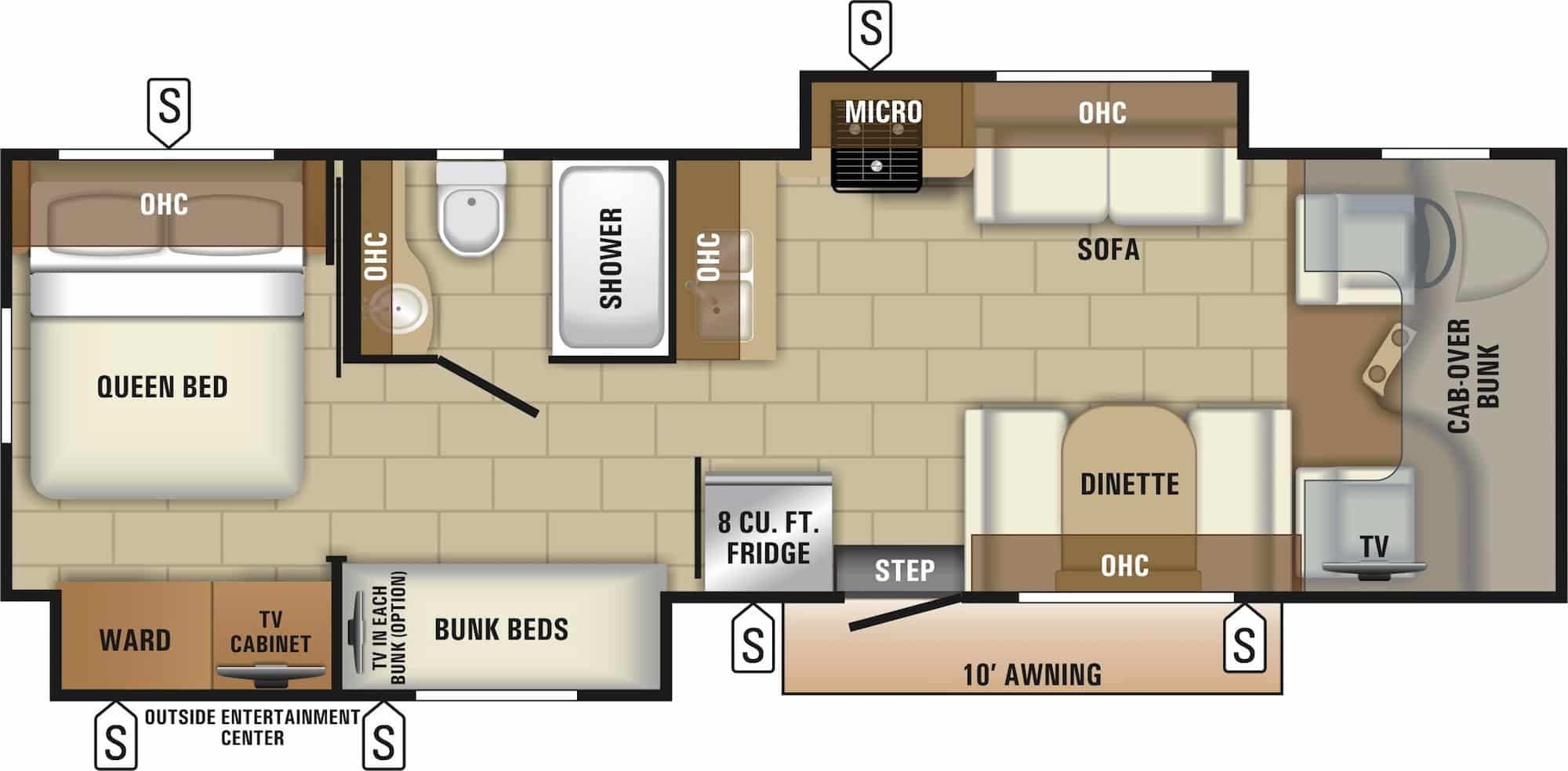
If you’re looking for something a little different, consider the Esteem 31L. This unit features two different slides to either side of the RV. At the front is a cab-over bunk. On the passenger side of the RV is a dinette that can double as a bed and there’s a sofa across from that. In the rearmost slide out are some bunk beds. At the very rear of the RV is a queen bed that completes the list of sleeping areas. As you can tell, the slides really help open up the floorplan and make sleeping this many people possible.
Are you planning to RV with kids? In order to do so, you’ll need to make sure everyone can travel safely in your RV or in your tow vehicle. This means getting some car seats. Before making a purchase or inviting the grandkids along, get to know what an RV must have for you to be able to travel safely with car seats. We’ll also share some tips for RVing with booster seats for older kids.
What Should an RV Have for Car Seats and Boosters?
Image by Daiga Ellaby from UnspIash.
For those of you who are grandparents, aunts, and uncles, you might be surprised at how much car seat laws have changed since your time as a parent or child.
Kids are required to ride in car seats longer and boosters into the tween years. You may remember the days when kids stopped riding in any type of car seat as soon as they began kindergarten. Now, according to best practice, a child may grow out of needing a car seat or booster somewhere between the ages of 10 and 12.
By law, some states leave it up to the parent to make the call once a child has reached eight years of age. Be sure to check the law in the states (or provinces) you’ll be traveling in.
So, now that you know how long you might need to RV with a car seat or booster, the next step is knowing what to look for. First, check your car seat’s manual.
RVs must have everything any regular passenger vehicle (cars, trucks, SUVs, vans, etc.) needs in order to properly install a car seat. Most states in the U.S. and provinces in Canada require proper use of “child restraints” by law. This means that, by law, child car seats must be installed according to the car seat manufacturer’s instructions.
As you’re RV shopping or evaluating your own RV, keep an eye out for the following when looking at motorized RVs.
Front-Facing Seats
If you’re traveling with kids that need a car seat or booster, you’ll need front-facing seats. You might see seat belts on seats in the RV living area like in dinettes and sofas, but, unfortunately, these seats are often rear or side facing. Rear and side-facing seats will not work, especially if they’re in slide outs.
LATCH or Top Tether Anchor for Car Seats
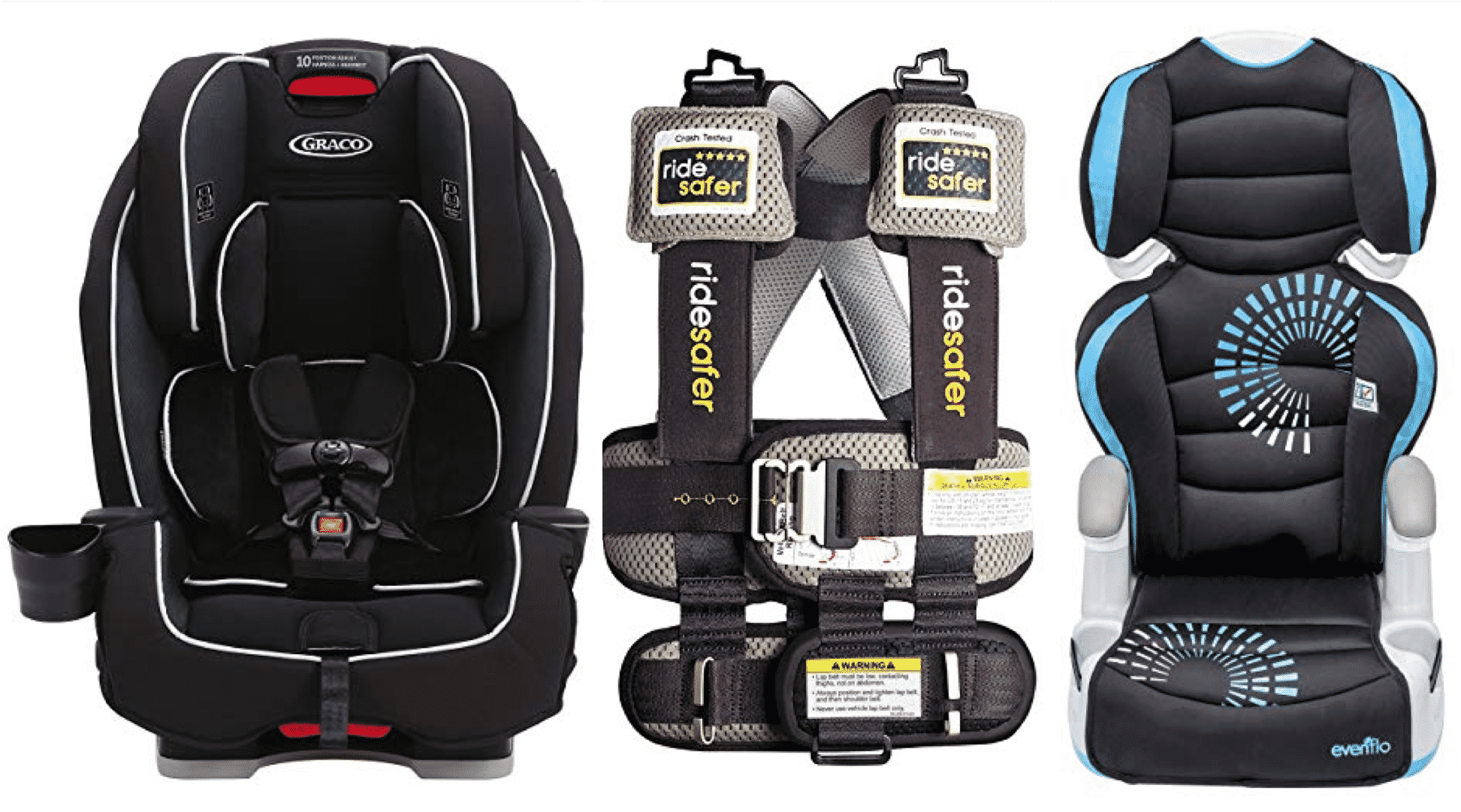
Images courtesy of Graco, RideSafer, and Evenflo.
If the child you’re traveling with hasn’t yet met the milestones for a booster, you’re going to need to use a forward-facing (or rear-facing for infants) car seat. Forward-facing car seats must be installed either using the LATCH (lower anchors and tethers for children) system, or a three-point seat belt with top tether anchor.
A vehicle with the LATCH system will have lower metal anchors where the seat cushions meet. LATCH allows a car seat to be secured without using a seat belt. Whether using LATCH or the seatbelt to secure the car seat, you’ll need a top tether anchor. You’ll find tether anchors behind seats, on the floor, ceiling, or back panel of the seat.
For booster seats, all you need is a three-point seat belt. If all an RV has is (a structurally sound) lap belt, you could look into a RideSafer Travel Vest. The Travel Vest can be an alternative to the booster. It can also serve as an alternative to a forward-facing car seat. Let’s look a little more closely at seat belts.
Real Seat Belts
When you find seat belts on dinettes and other areas outside the cab, make sure that they are “real” seat belts. A “real” seat belt is designed to meet crash standards.
First, make sure the seat belts lock. Seat belts must lock in to properly secure a booster or car seat. Then, check to see what the seat belt is anchored to. If it’s a “real” seat belt it will be anchored to metal, not wood. Also, check that the seat belt is anchored to the metal frame of the vehicle, not floor boards.
If the belts you see in the RV, don’t meet the above, they may be intended for holding items in place, and will definitely not work for securing your car seat or booster. In the case of older children and adults, they’re better than nothing, but if they are secured to wood, they are not considered structurally sound. Which means they can come apart or aren’t strong enough.
Generally, you’re also going to want to look for three-point seat belts, also known as shoulder-lap belts. as like we mentioned, the RideSafer Travel Vest will work with a structurally sound lap belt.
Motorized vs. Towable RVs and Car Seats
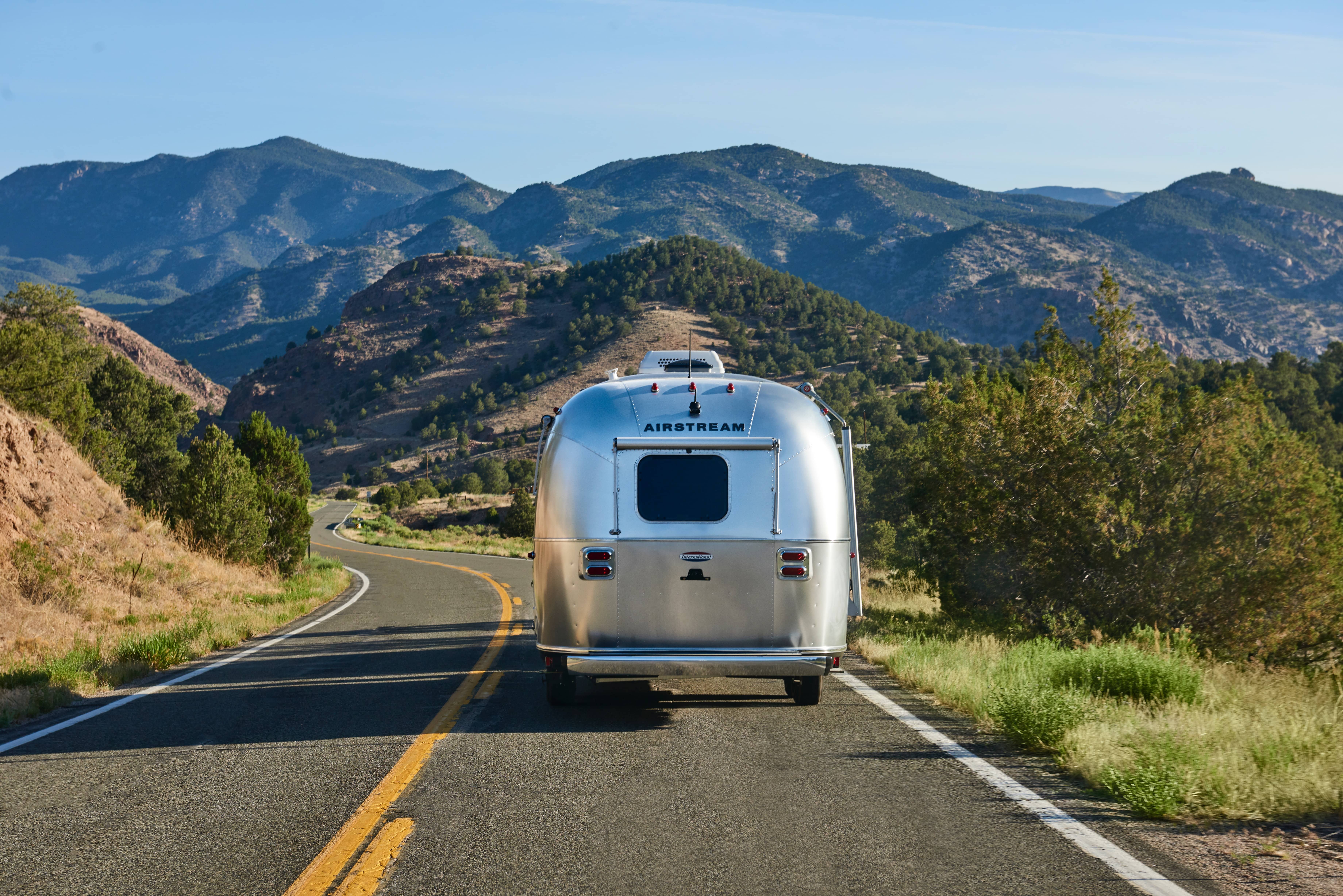
Image by Airstream, Inc. from Unsplash.
There are differences you need to know about when it comes to using car seats in motorized RVs versus towable RVs. Here’s a quick look at the differences.
Motorized RVs
Class B and Class C cabs are not built out by RV manufacturers, but rather by the vehicle manufacturers. That being the case, the cab area of Class B and Class C RVs must meet the same safety standard as the front of any other passenger vehicle.
Class A motorhomes are in a different weight class and are built out differently. They are not required to adhere to the same safety standards, even in the cab area.
Class As and Class Cs often have slides. Slides make the RV less structurally sound than regular vehicles and than RVs without slides. This could make the passenger seat the safest place to place a car seat. Keep in mind, that’s a compromise because, it’s considered safest to always place children in the back seat. Make sure to follow your car seat and your RV’s recommendations in both products’ owner’s manual.
When it comes to motorized RVs, you might find that a Class B comes closest to checking off all the boxes, if everyone will be traveling in the RV.
Towable RVs
In the case of a towable RV, like a fifth-wheel or travel trailer, everyone will be riding in the regular passenger vehicle or truck used to pull it. All cars, trucks, and vans are required to meet federal crash safety standards. And, the LATCH system has been required in all regular vehicles since 2002.
An undeniable benefit of a towable RV is that everyone rides together in their regular vehicle, meaning there’s no change at all to your regular car seat routine.
Many states have laws saying passengers can ride in towable RVs. However, it’s not recommended, and we would highly suggest that any children ride in your tow vehicle and not in the RV.
What Are Your Options?
Each situation is unique. Your best option will depend on your exact situation and preference.
You have two options for towable RVs that require no changes to your car seat routine:
Choose a towable RV. Everyone rides together and car seats and boosters remain in a regular vehicle meeting all standards.
Choose any RV type you like, but drive children in a regular vehicle separately. Many RVers tow a vehicle behind their motorized RV for daily driving. Skip the flat towing or the dolly; and have a second driver drive the regular vehicle and the kids to your destinations.
If you’re traveling in a motorized RV, you also have some options available depending on your needs, preferences, and state laws:
Choose an RV that meets car seat manufacturer installation requirements.
Choose an RV that meets requirements for a travel vest (for children 30 lbs.+) instead of using a car seat or booster.
If the airbag can be turned off, you might be able to place the car seat in the front passenger seat of a Class B or Class C. This is a compromise, but the seat is required to meet federal safety standards. Be sure to check both your car seat owner’s manual and your RV owner’s manual before doing so.
If you already have a motorhome, check your local fire, police, or hospital for help from certified car seat technicians. You will often need an appointment, but they can help you with proper installation.
Tips for RVing With All Kids
Image by Jekaterina Voronina from Getty
Whether traveling with kids needing car seats and boosters or those who’ve outgrown them, remember everyone should be seated while a motorhome is being driven. Any available seat belt is better than none. Also, remember that drawers and cabinets can fly open on sharp turns and along the drive.
Do not place heavy items like cans and books in upper cabinets. Be mindful of where you store sharp or pointy utensils. These items will come spilling out, and can hit passengers riding in the rear of the RV. Kids strapped in car seats won’t be able to duck out of the way. Just be mindful of this when you pack your RV up for your trip and you’ll be good to go.
RV road trips make for memorable family vacations. But, the reality of traveling with kids in an RV can catch us by surprise. Now you’re ready to make an informed decision on the best option for your family RV travels.
What has been your experience with family RV travel? Leave a comment below!
One of the most popular activities for RV travelers is hiking. What better way to get out and enjoy nature than to hit the trails? To ensure a safe and fun time, be sure to take precautions against some of the dangers of summer hiking.
What kind of dangers are out there? They can include extreme heat and sudden thunderstorms, which bring the risk of flash floods and lightning.
Having the proper gear, paying close attention to your surroundings, pacing yourself, and staying hydrated will go a long way towards keeping the entire family safe and happy on your next hike. Here are some tips and tricks for staying safe while hiking this summer.
Be Aware of the Weather
Before you head our check the weather forecast. Even better, talk with park rangers to get a better understanding of local weather dangers from high temperatures to flash floods.
Plan for the worst and educate yourself about what to do in case of lightning. The best approach is to try to avoid it. If you’re on the trail and see a storm approaching, descend from ridges, peaks, and elevated areas. If you get caught in a thunderstorm, seek protection in a valley or depression in the terrain.
Before you head out on the trail, try to do a little research to determine if the hike will be in full sun or if you can expect some shade along the way. Get a sense for where the hardest parts of the hike will be and try to set a reasonable pace for yourself.
Don’t forget, summer provides a great opportunity to explore trails at a higher elevation where it’s naturally cooler. Most importantly, no matter where you hike, stop along the way to rest, let your body cool, and enjoy the view.
Get an Early Start
Image by Paul Gilmore from Unsplash
While you might be tempted to sleep in on your summer vacation, hiking earlier in the day reduces your chances of heat exhaustion. In mountainous areas, thunderstorms typically develop in the early afternoon, so hiking early in the day and coming down the mountain by noon is a good idea.
However, there is one thing you should keep in mind if you decide to start early. If the trail is grassy, it will likely be wet with dew. Since few things are more uncomfortable than having wet feet during a hike, you might want to pack an extra pair of dry socks or wear water-resistant hiking shoes.
Dress for the Weather
While tank tops and flip flops are summer favorites, they aren’t a good choice for the trails. Even in the warmest weather, covering bare skin is the best tip to avoid sunburn, bug bites, and poison ivy.
You won’t regret investing in moisture-wicking long sleeve shirts and pants to protect yourself from the elements. Please don’t forget the hat, sunglasses, and sunscreen for any exposed skin.
Bring (and Drink) Plenty of Water
Hiking in hot weather depletes your body of liquids. To make matters worse, the more dehydrated you become, the less efficient your body is at cooling itself down. Be aware that children generate more heat than adults, but they also sweat less increasing their chance of dehydration.
Start your hike hydrated and continue to replace fluids throughout. Drink before feeling thirsty. By the time you feel thirsty, you are already behind in fluid replacement.As a general rule, drink a cup every half hour. Depending on the length and intensity of your hike, you may want to bring along a sports drink. They are specially formulated to help replace fluid and electrolytes lost through sweat.
Know how to Recognize Heat Exhaustion
One of the biggest dangers while hiking in the summer is heat exhaustion. By following all the tips up to this point, you’ve gone a long way towards prevention. However, it is still important to know the early signs of for heat exhaustion, heatstroke and even hyponatremia so that you can protect yourself and any others who may be hiking with you.
According to the Centers for Disease Control, heat exhaustion is identifiable by heavy sweating, clammy skin, rapid pulse, nausea, muscle cramps, headache, and fainting. If these are present, stop hiking immediately. Focus on moving to shade, cooling down with wet cloths, and slowly sipping water. Learn more about heat-related illnesses here.
We hope these tips will help you have a fun & safe hiking adventure this summer!
Sam and Kelsey talk RV trends in this camping conversations episode! Hear the latest on updates in the RV industry, such as lighter RV interiors and the growing popularity of small RVs. Plus, hear about Instagram worthy camping trips, and Kelsey’s experience growing up in different types of RVs. They even share each of their dream RV models and why certain RVs are better than others, depending on your camping style.
Some highlights from this episode:
1:00 – Lighter interiors in RVs
4:30 – Smaller RV models gain popularity
14:30 – Instagram worthy RVing
17:15 – Kelsey’s experience growing up in different RVs
21:00 – Dream RV models
Lighter interiors in RVs
This trend has started to show up a lot lately in new RV models. It seems that the days of dark wood interiors are on the way out. Perhaps it’s because lighter wood makes the interior feel more spacious, or maybe customers just like it better? Tune in to hear Sam and Kelsey’s views on this trend.
Smaller RV models gain popularity
Class B and other small RVs and vans have been popular in Europe for a while, but now the trend is catching on in the U.S. Is it because of the tiny home and minimalism movement, the efficiency, or do people just think they are adorable? Hear Sam and Kelsey’s thoughts on why these RVs are so popular right now. Kelsey is even in the market for a small RV. Will she pick a Class B, a teardrop, an A-liner, or something else entirely?
Instagram worthy RVing
There is a huge movement towards Instagram worthy camping experiences, whether it is a glamping themed campground with vintage trailers or a renovated RV interior. Hear Sam and Kelsey’s thoughts on how this trend is changing the RV and camping industry.